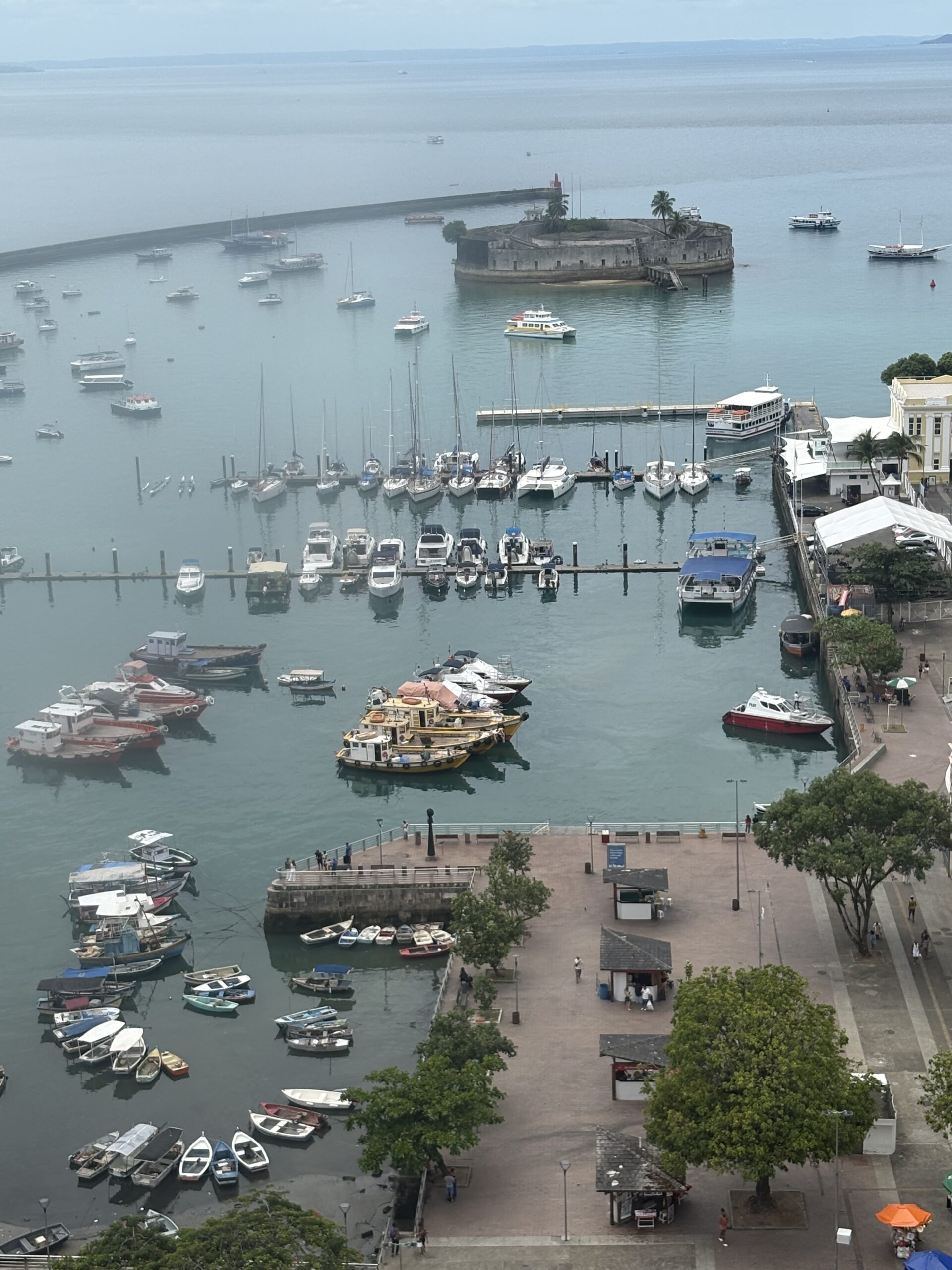
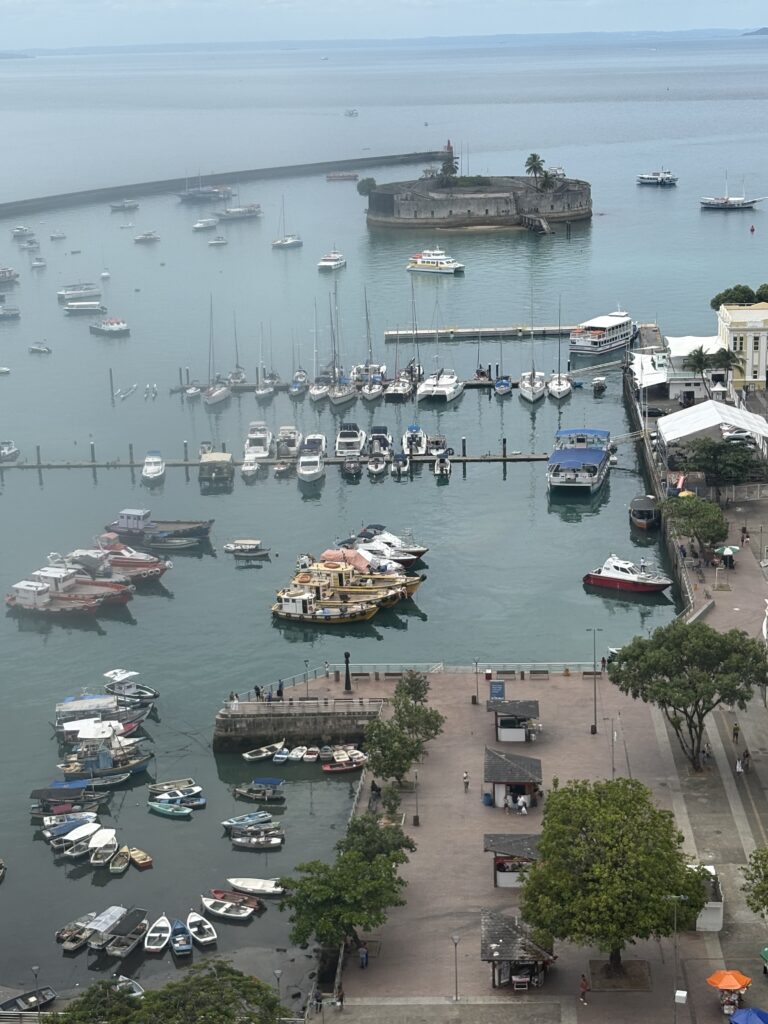
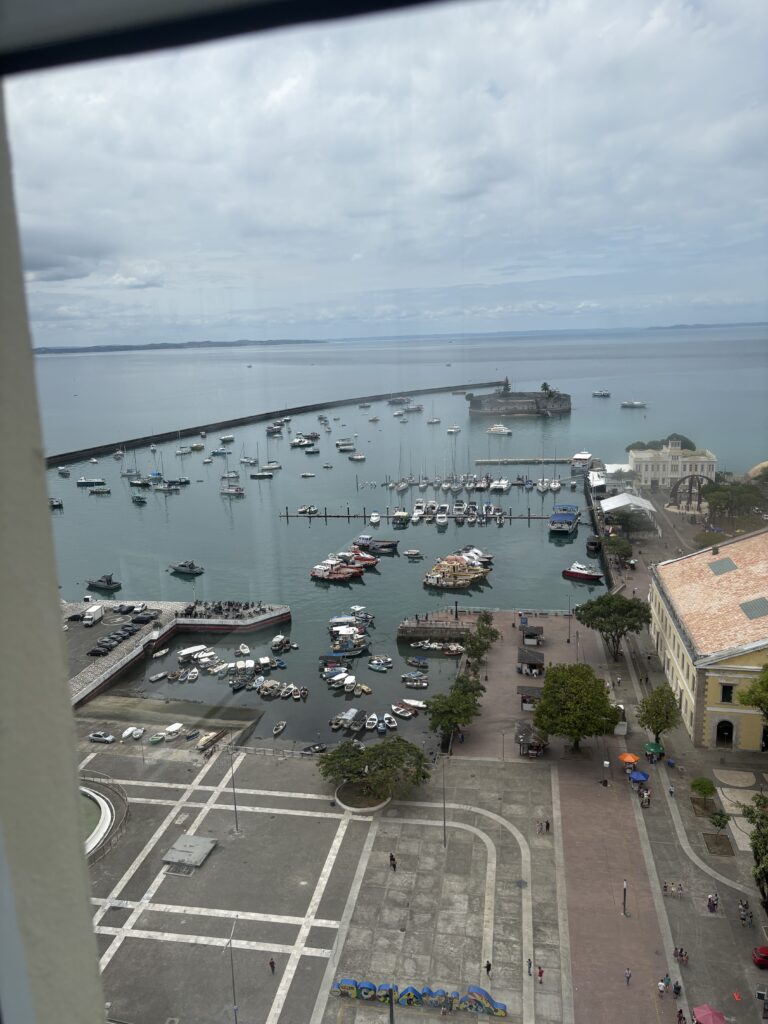
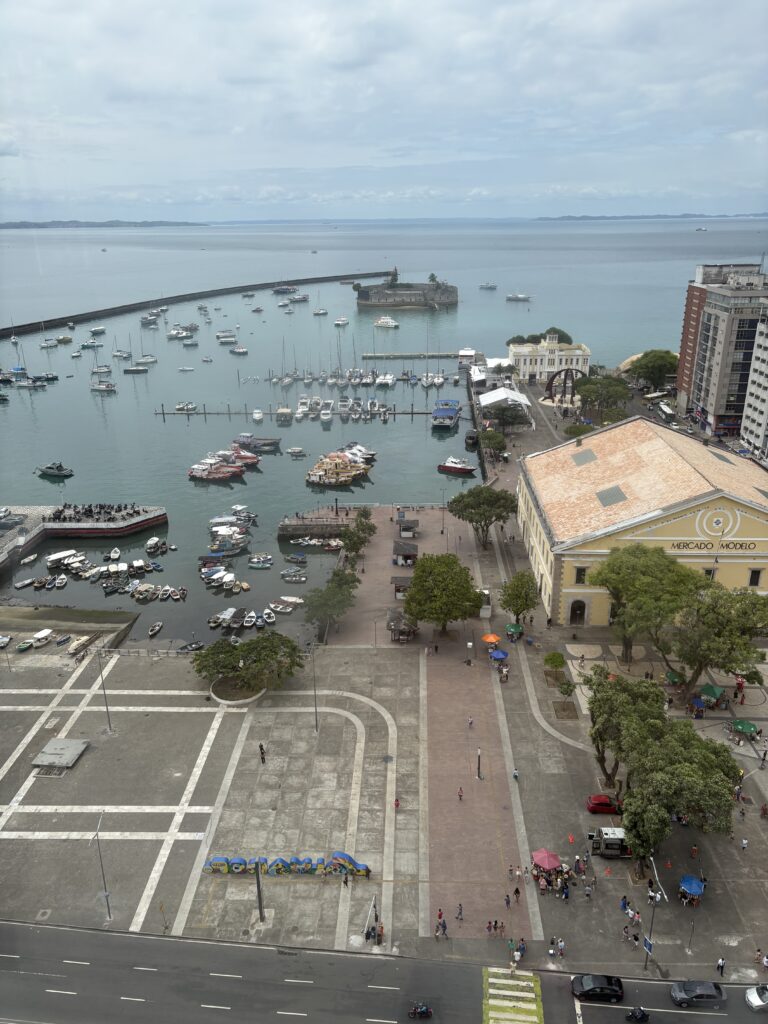
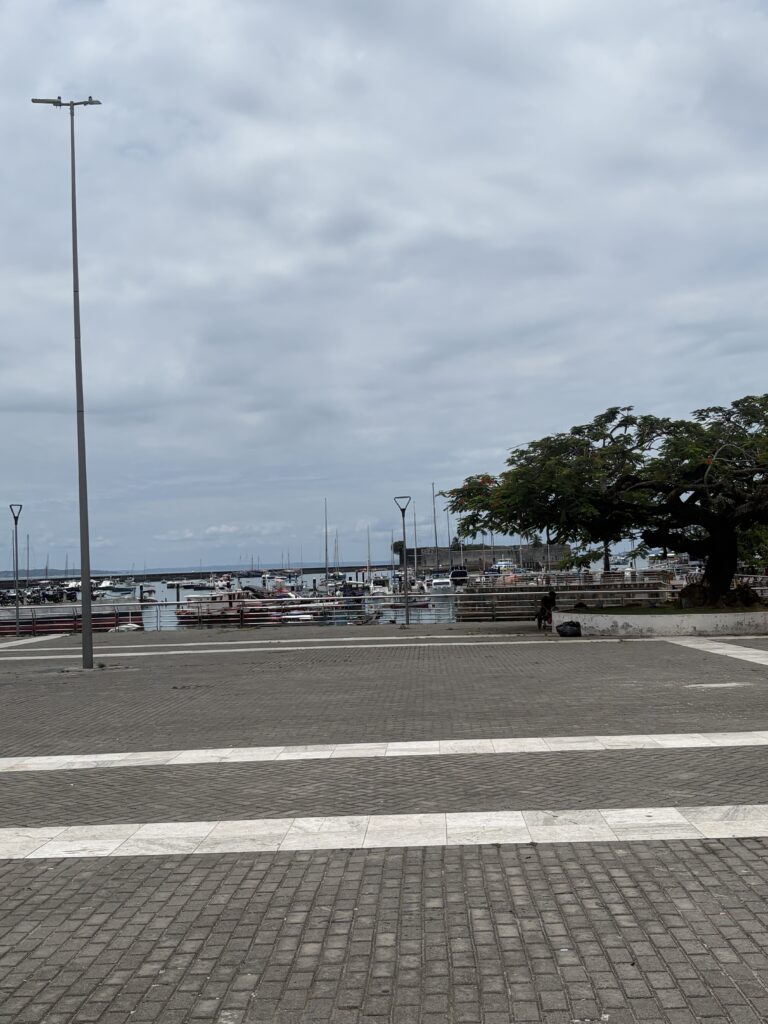
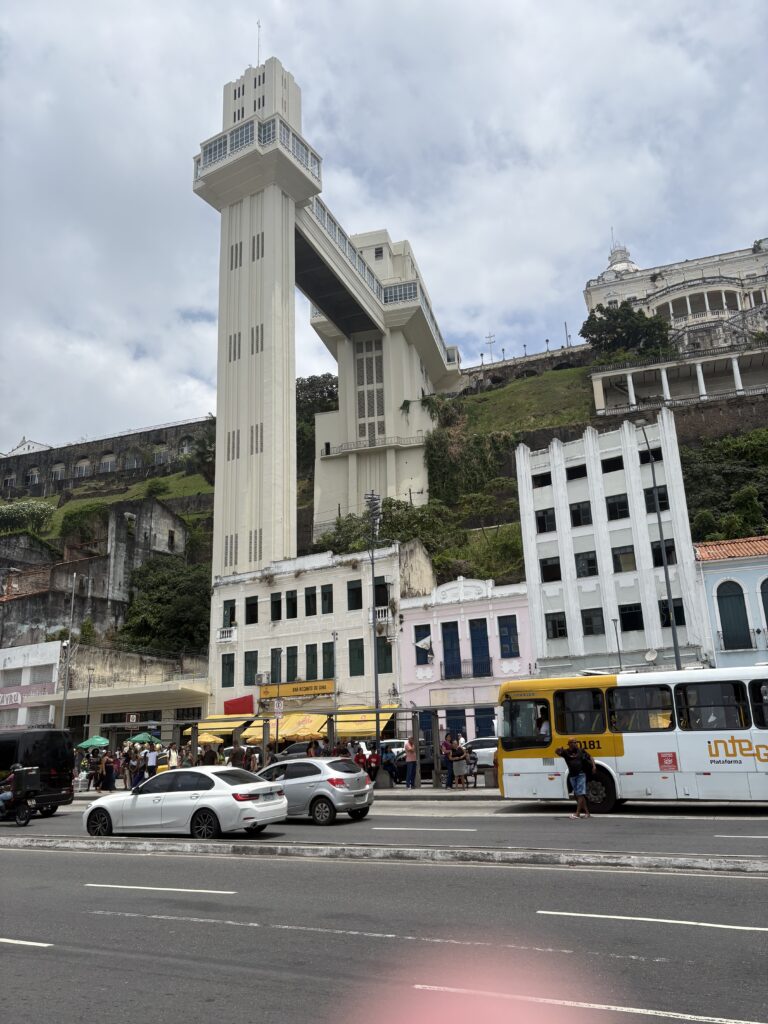
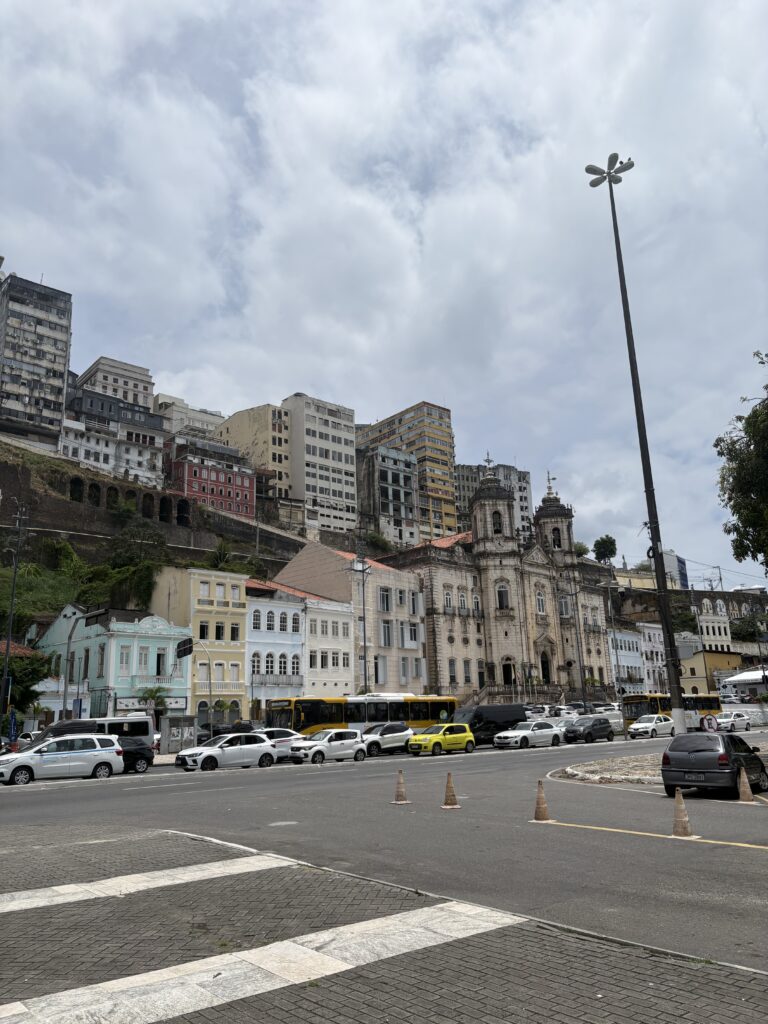
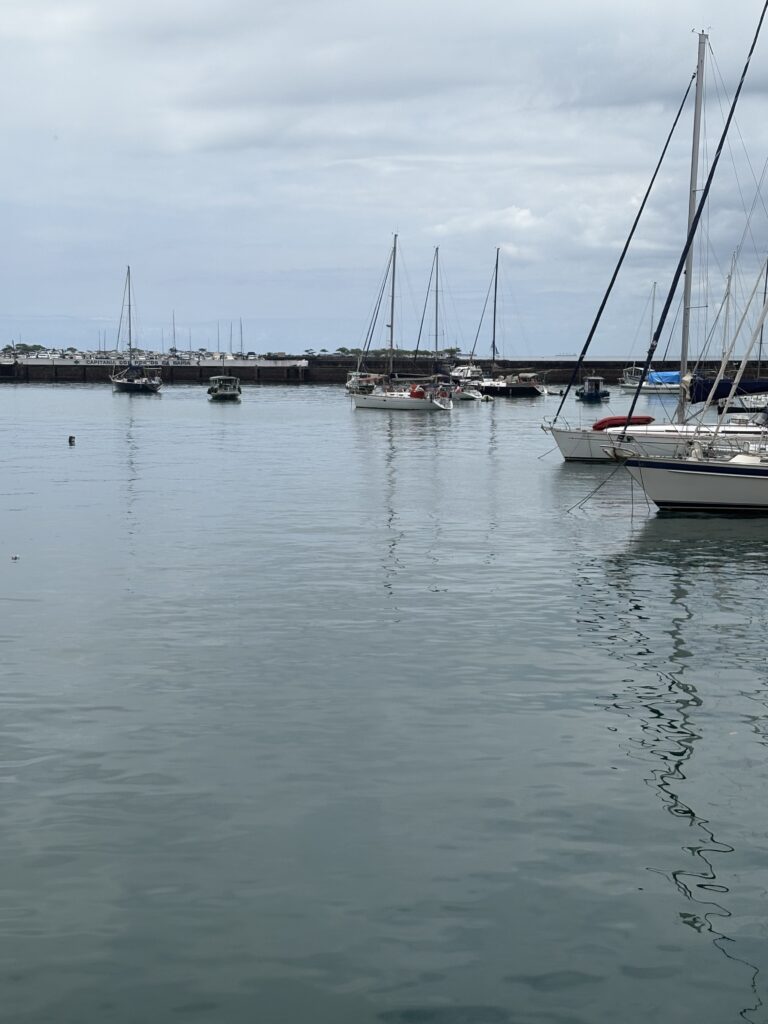
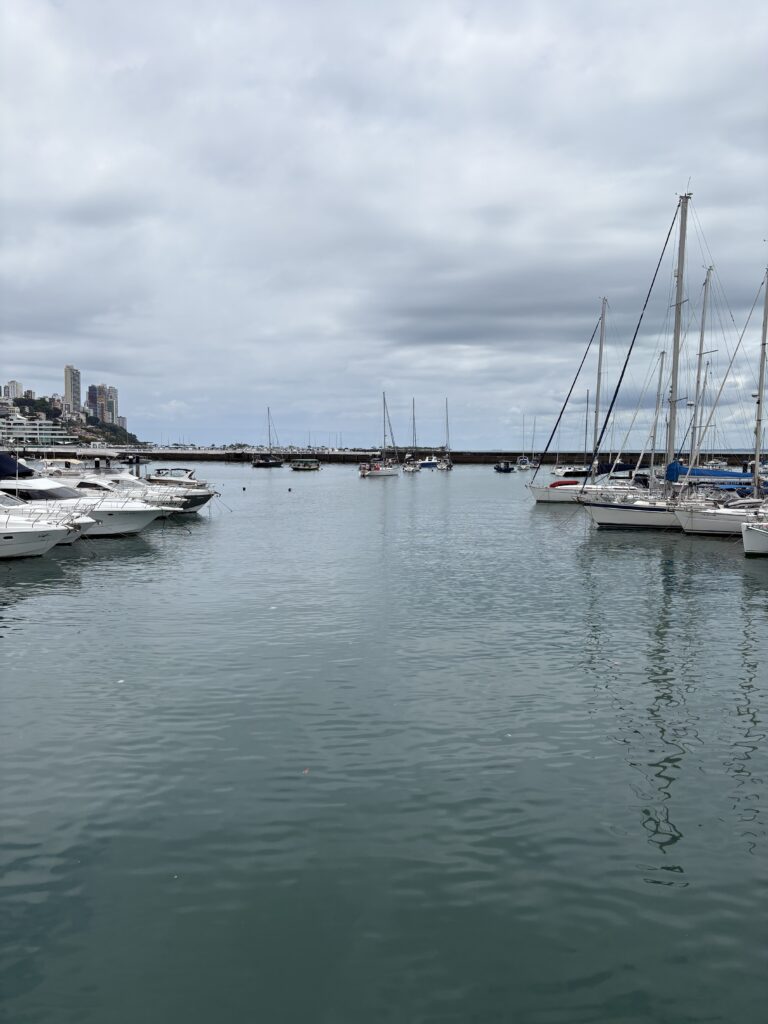
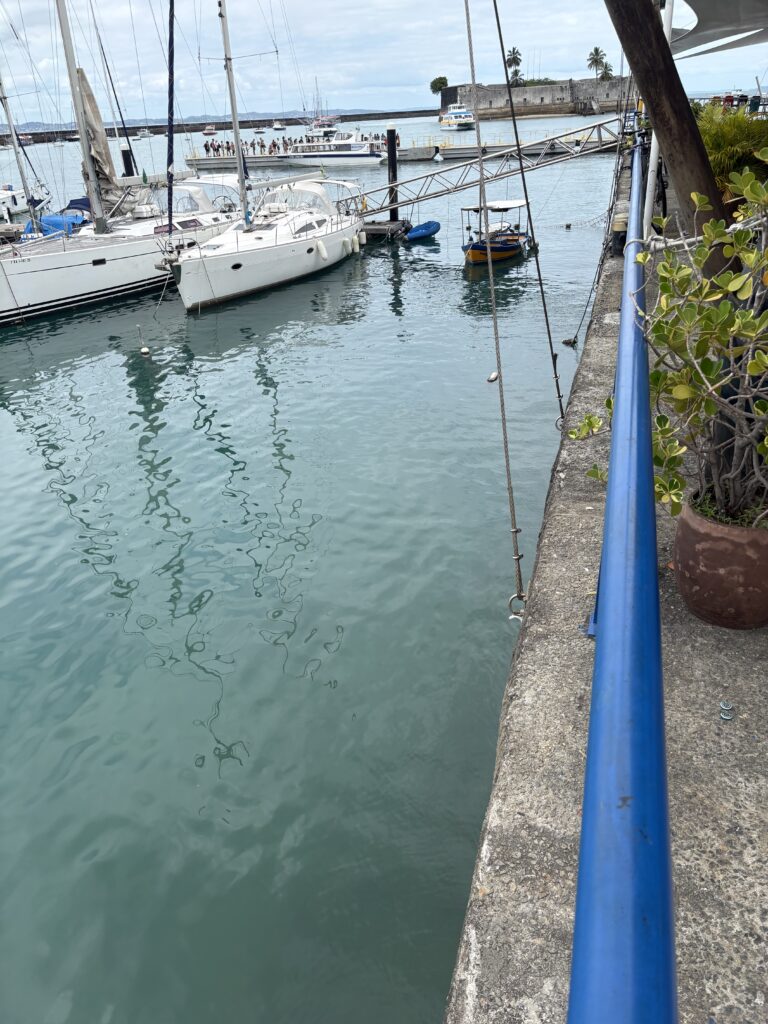
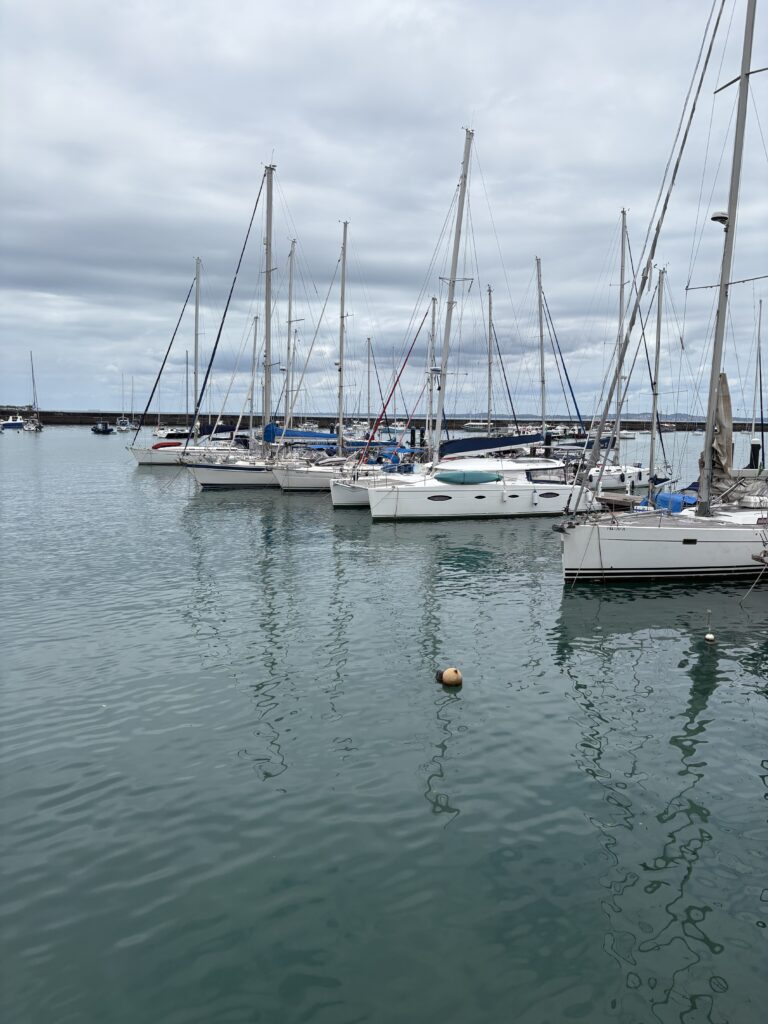
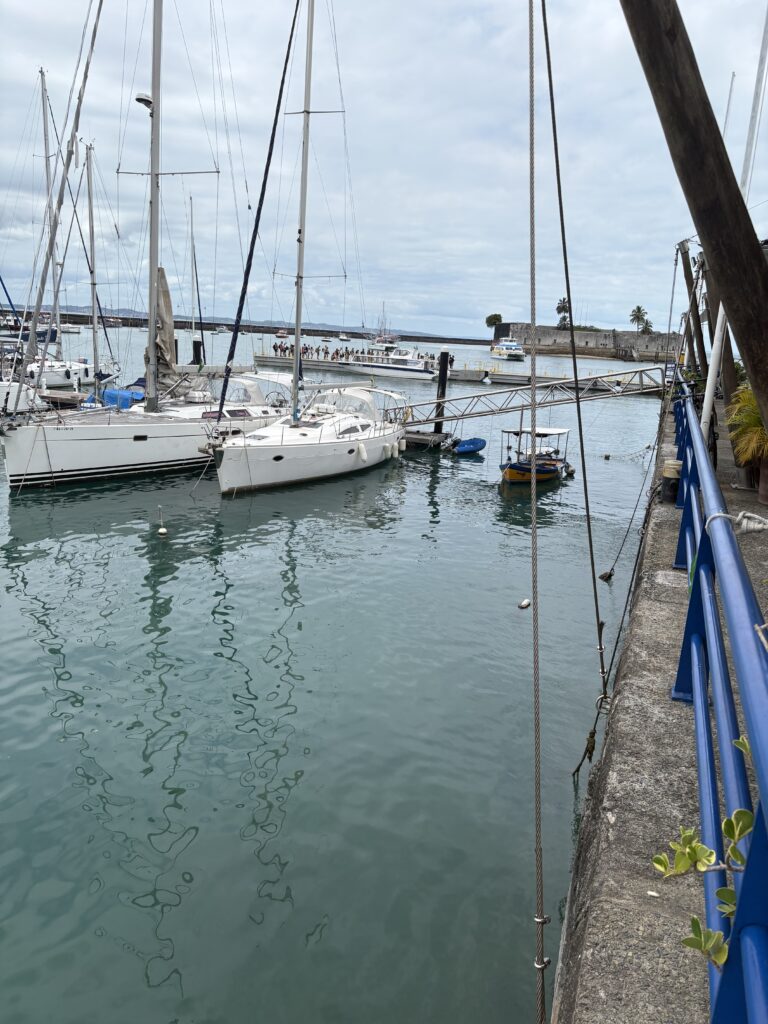
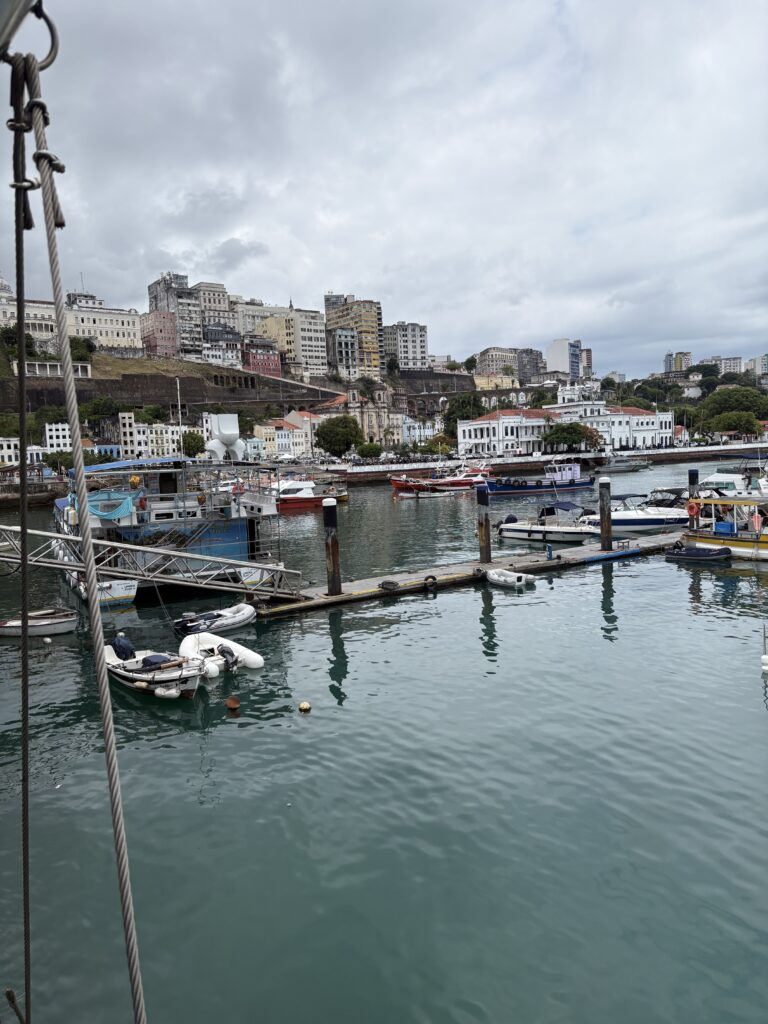
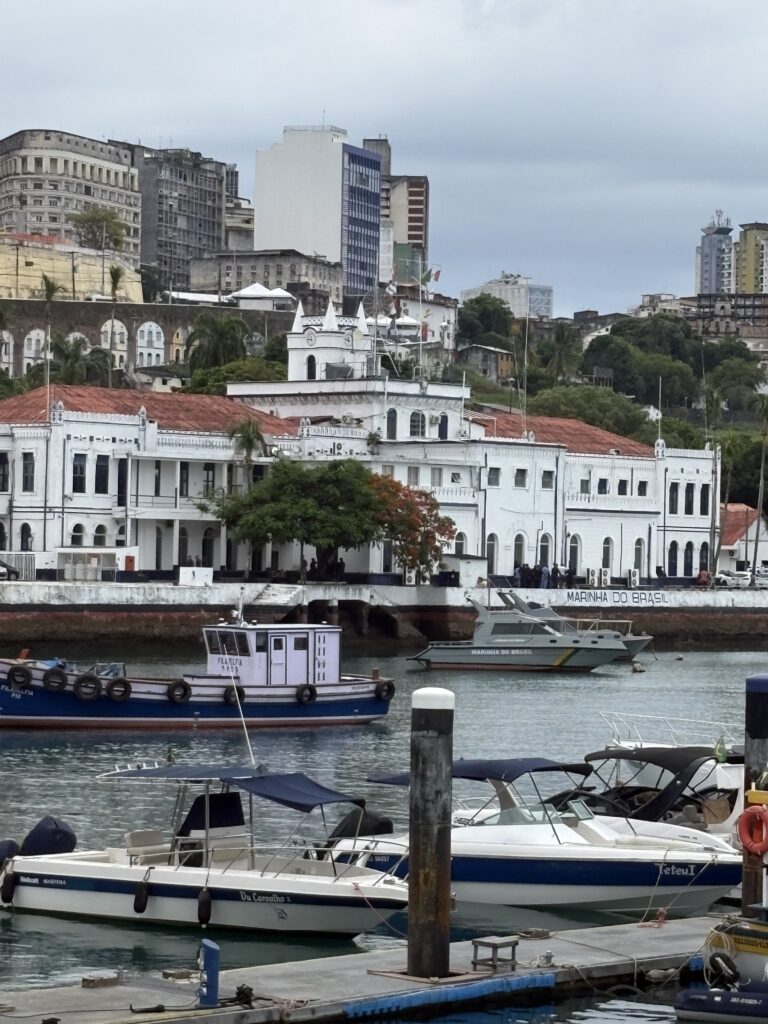
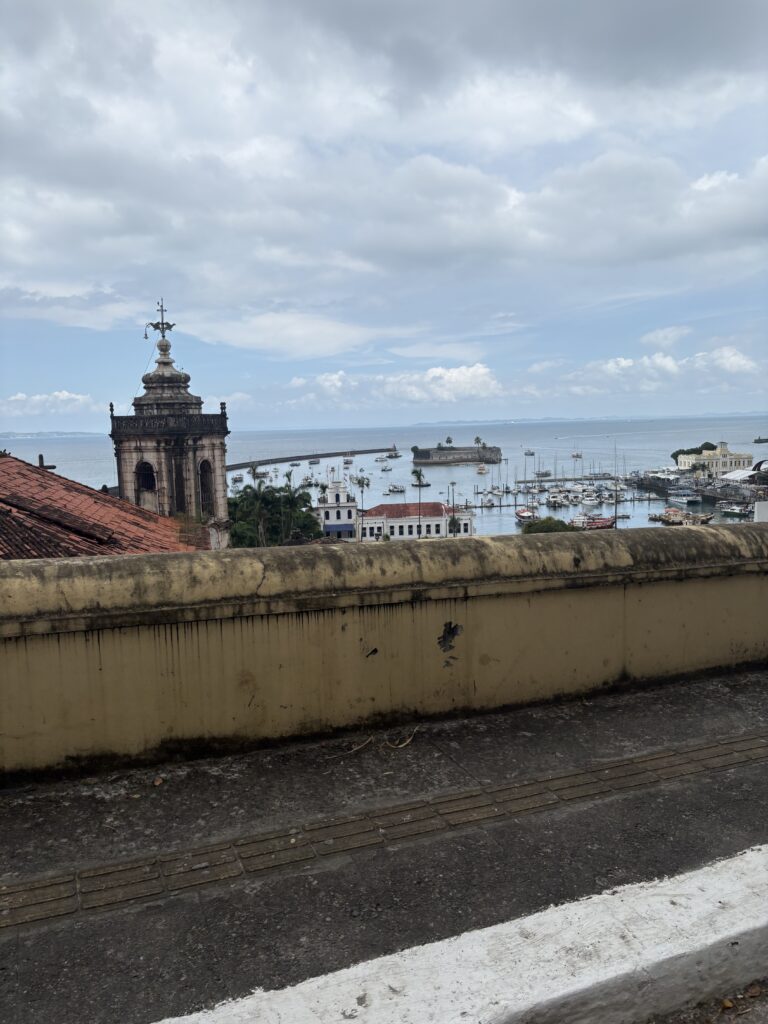
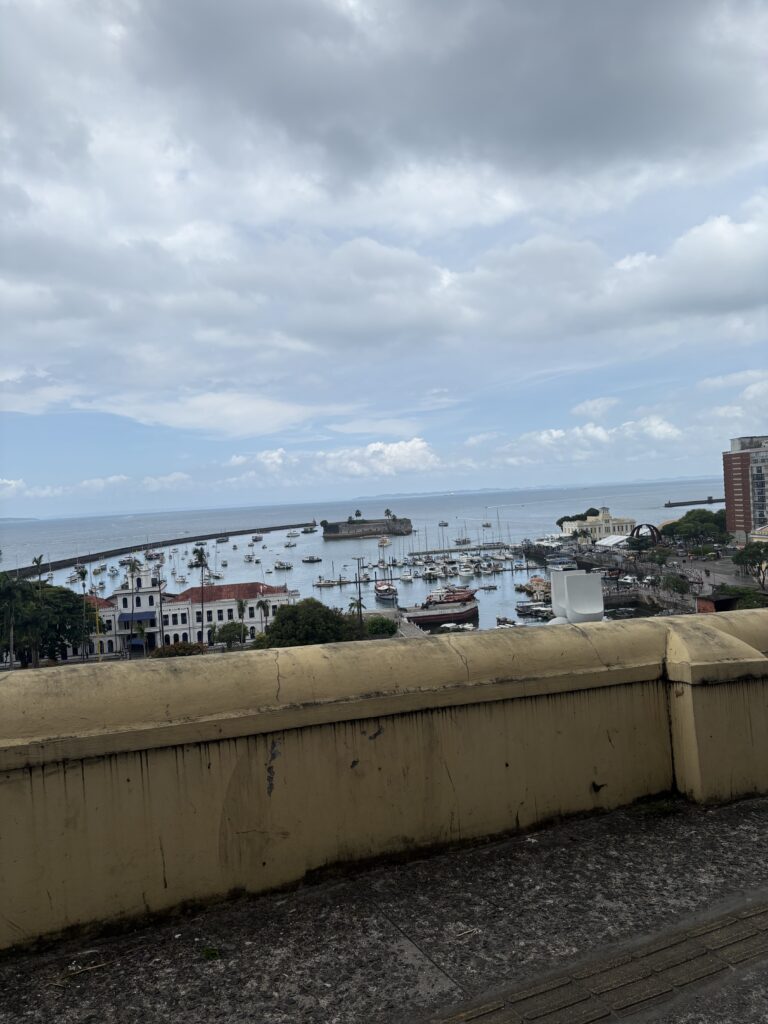
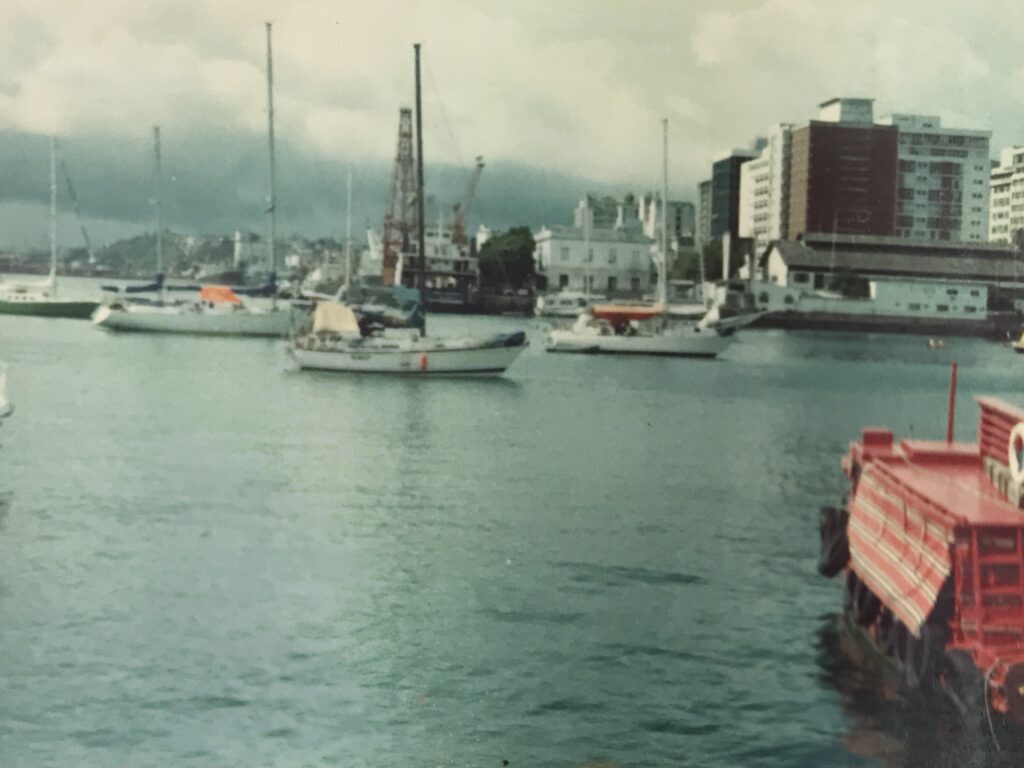
On the day that I set about finding the port, harbour, or marina where Scally had been moored in 1982, I had to get a taxi down to the lower part of old Salvador, to the sea. I just asked to be taken to the elevator and the closest access to the sea. It took about twenty minutes. My memories included the lift, a market, leather flip flops and a white dress, a beautiful sandy beach, and that’s it. I did not want to bother my brother again for his memories. I had the feeling, after my St Helena leg of this sabbatical, that I was asking him to go down parts of memory lane that he maybe didn’t want to and I didn’t want to bother him with unnecessary angsts. I had not been able to get the log book yet, so asked my youngest brother to send me a photo of the pages from Brazil. There’s an entry in my mother’s hand writing about an old Portuguese fort. And indeed, this is precisely what I discovered, smack bang in the middle of the old city port, with anchorage and small boats, about fifty metres away from the elevator.
My emotions got the better of me. I cannot deny that this was an exceptionally emotional moment. I could actually not believe that I had been here before. That I had stood on this very square when I was sixteen. That Scally had been anchored in this tiny bay. That Scally and her crew had crossed the southern Atlantic Ocean from South Africa to South America. In a tiny 31-foot sail boat. What an achievement.
Like most marinas in the world, there is no public access. I had to explain to the security guard the reason for my being there. I was reminded of how different security guards can be. In Cape Town, at the yacht club, once I’d explained my reason for being there, it was all smiles, happiness and willingness to help. Here, it was more military style, little understanding, reluctance. But I guess everyone has a job to do. He did finally let me in, so I thanked him kindly.
I paced up and down. Found a bench and sat down trying to access any memory of being here. I was not successful. Then I saw two people who looked like husband and wife, about my age, on a small dinghy, approaching the wharf. I decided to speak to them. They were French, and had just arrived from crossing the Atlantic from the east coast of Africa, Zaire. Like most yachties, they were very happy to chat and when they heard about my reason for being there, staring out at the little port, and the other yachts, they were very chatty and engaging. I was happy to talk to them.
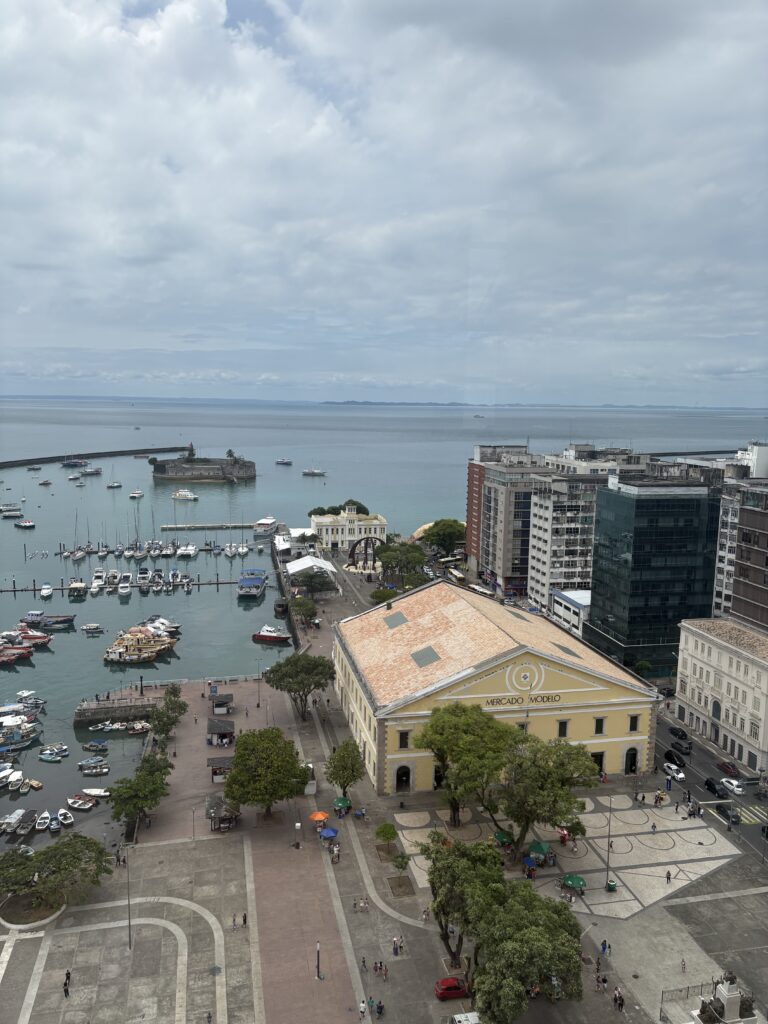
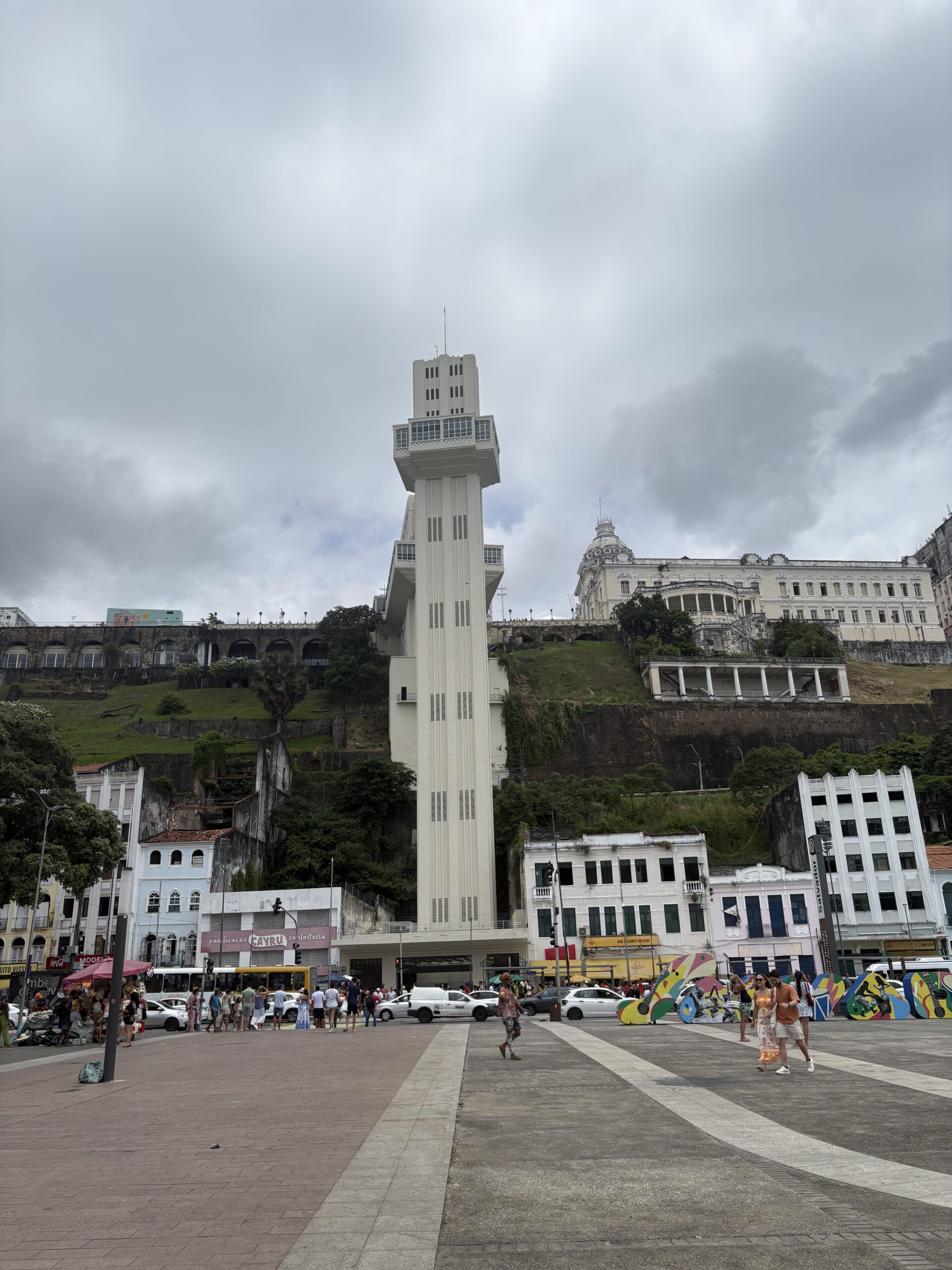
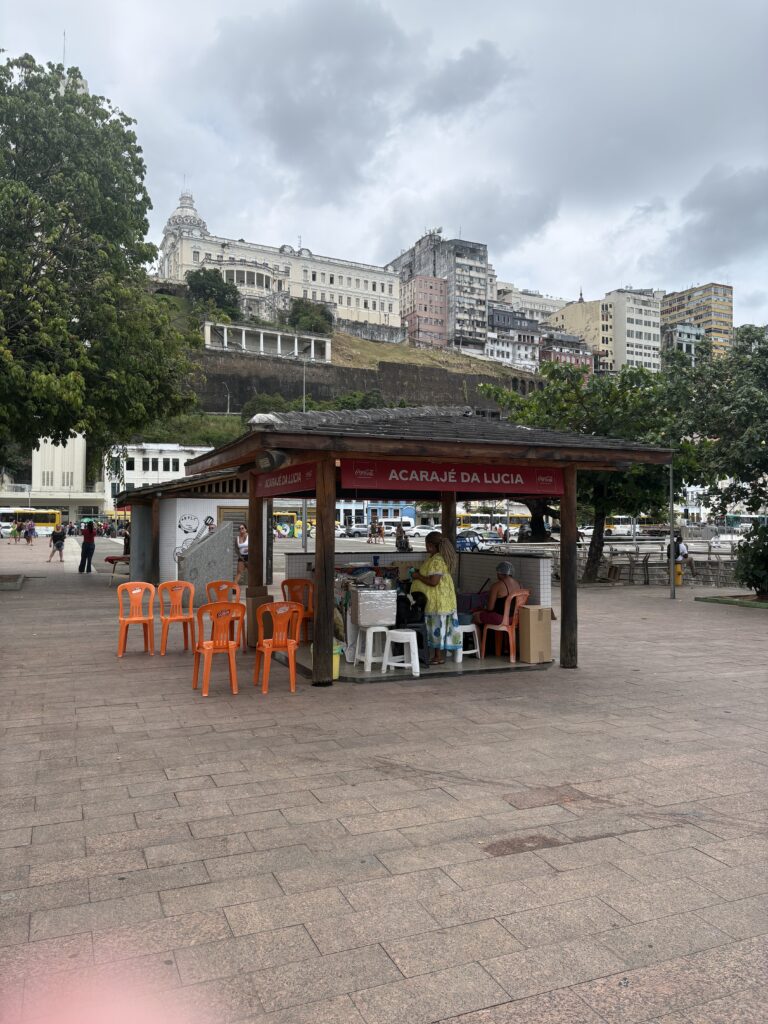
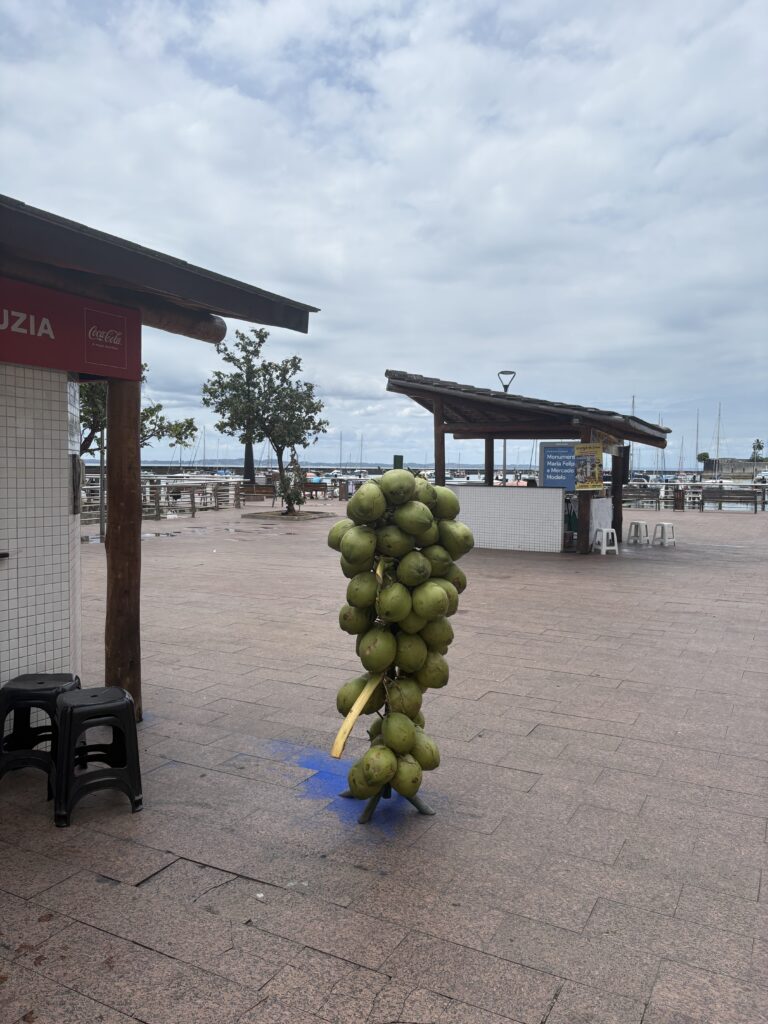
I, too, then leave the guarded port area and walk out onto the big square where the market is located, where according to my mother’s memories we bought food and fresh groceries from back in 1982 for our next leg, and to find the Elevador de Lacerda, which you could not miss.
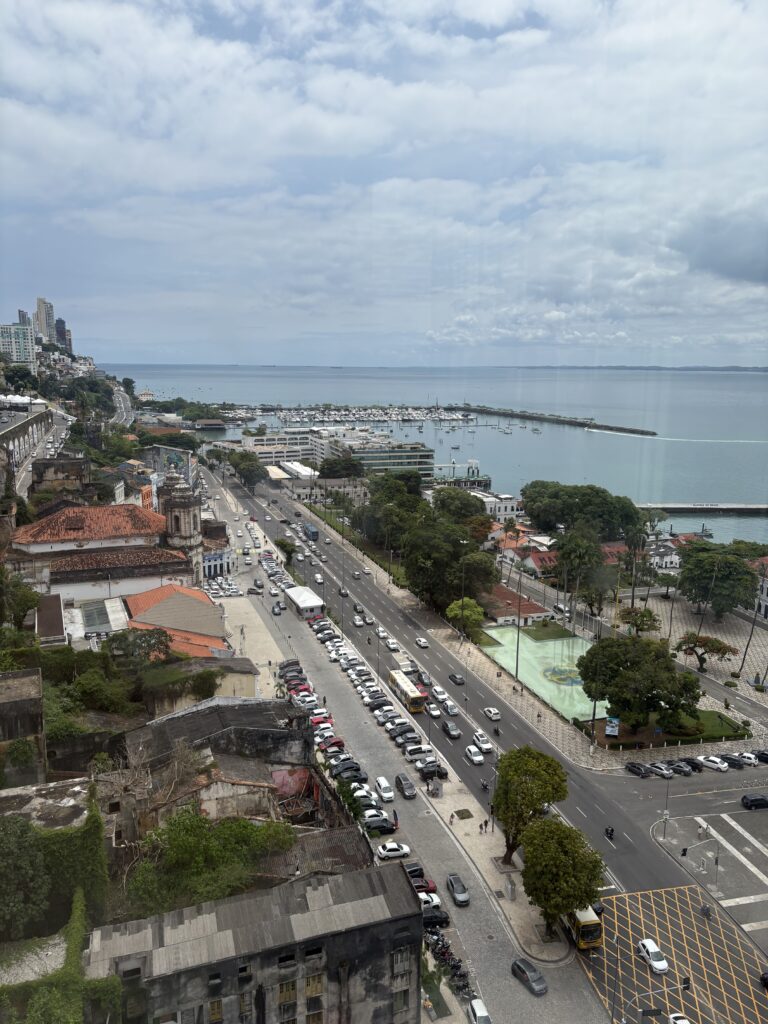
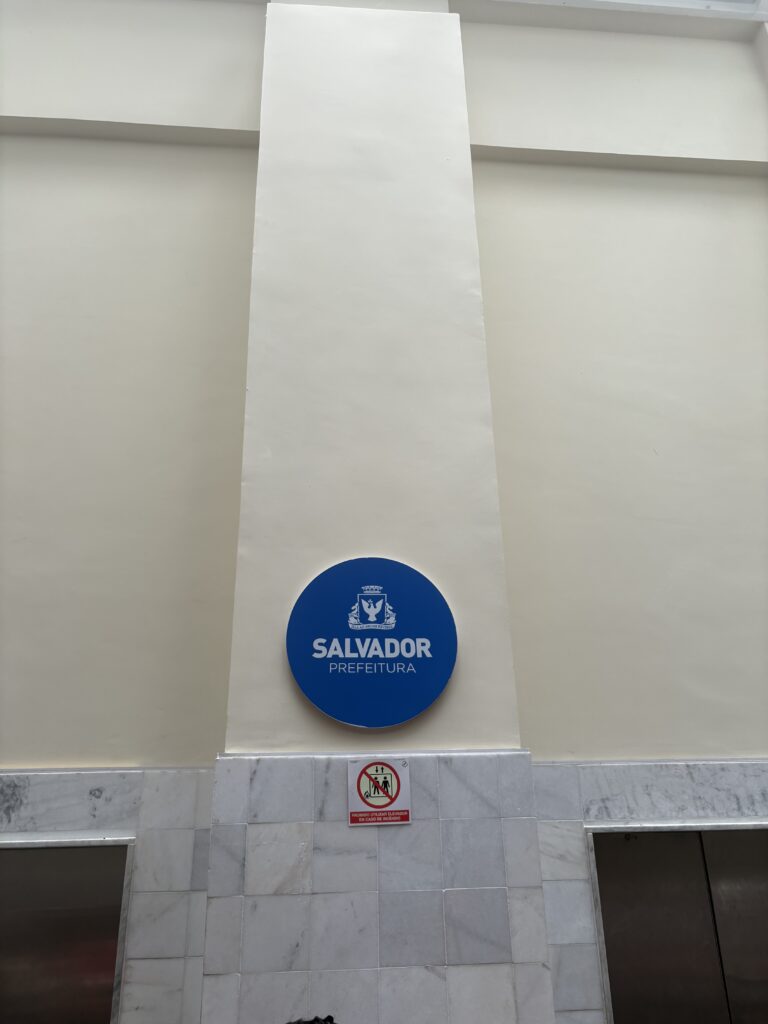
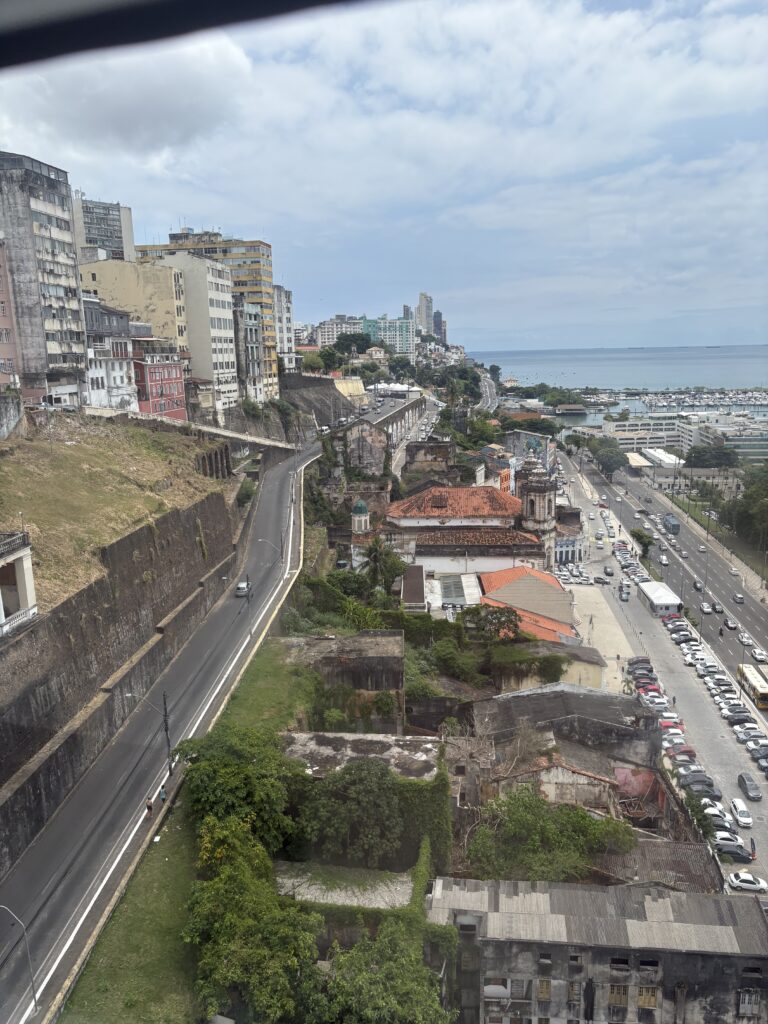
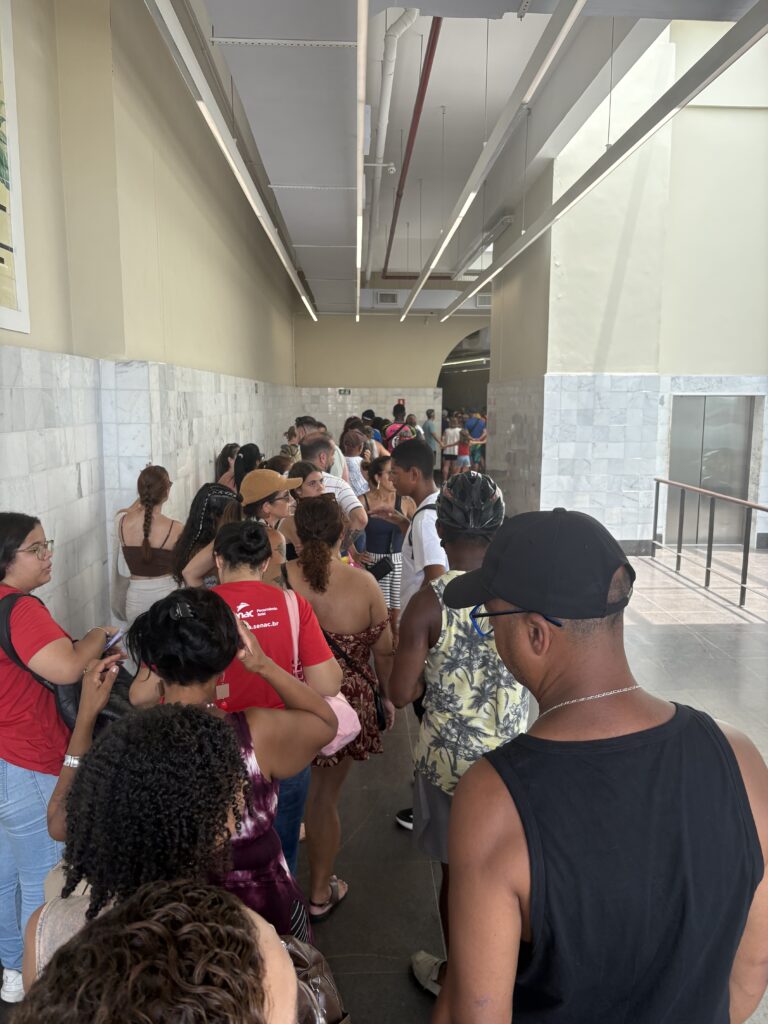
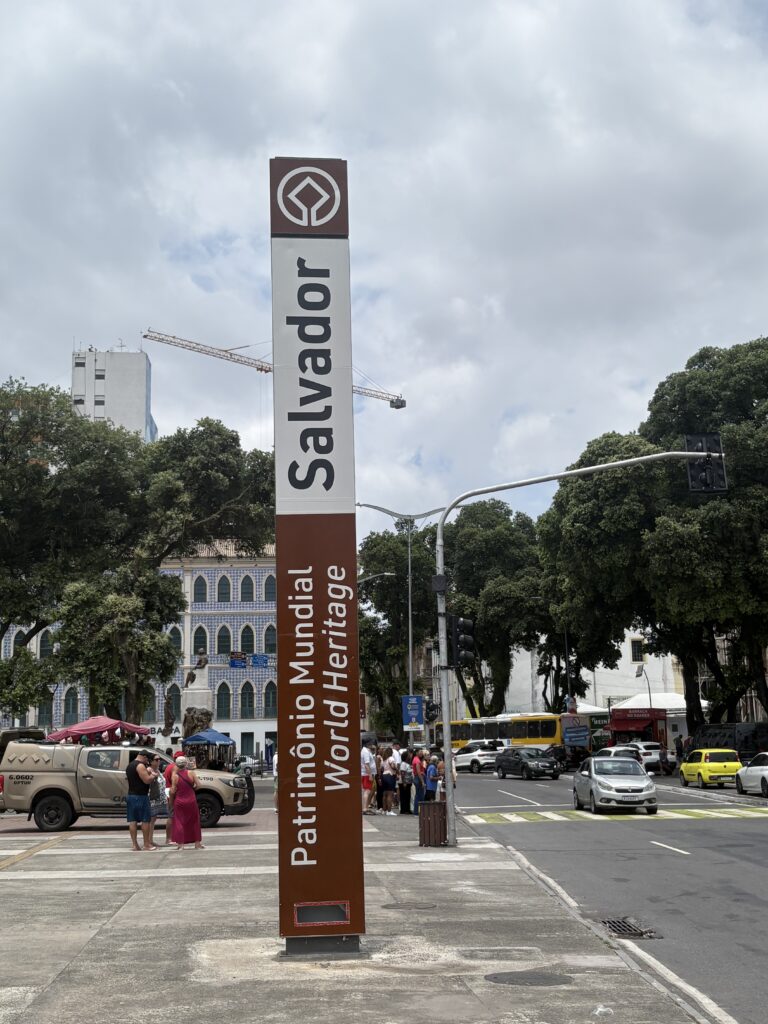
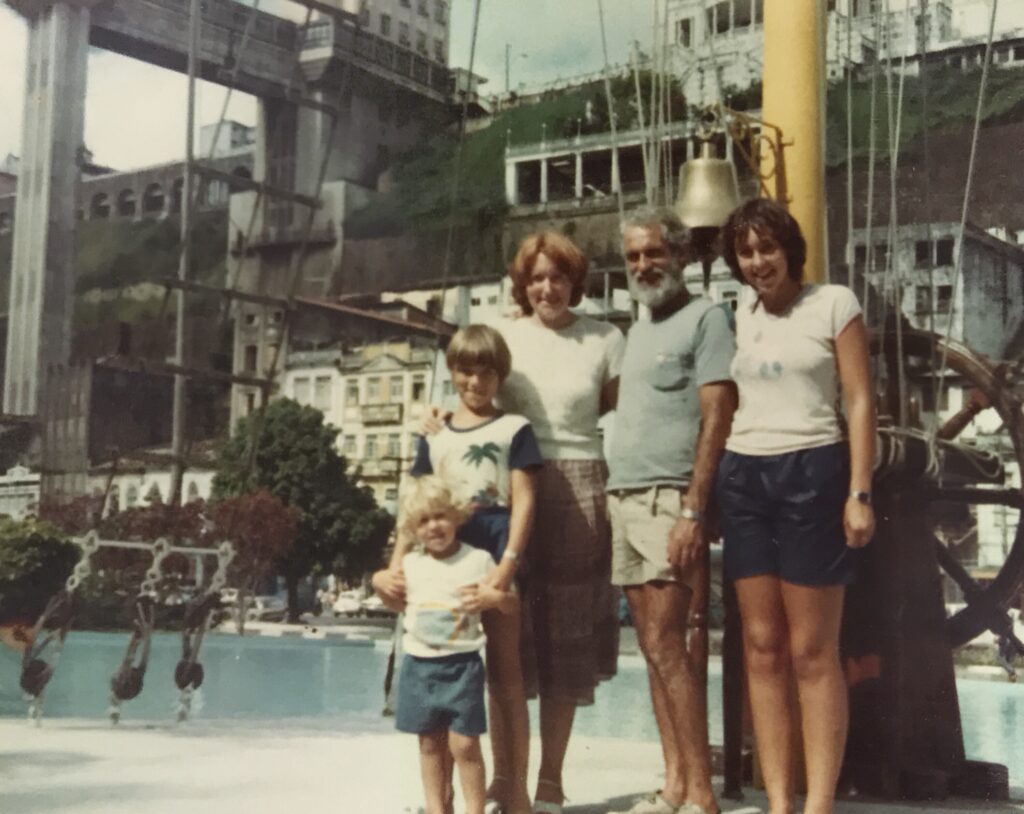
I have a photo of all of us standing at the foot of the Elevador da Lacerda, one of Salvador’s iconic landmarks, about fifty metres away from where Scally had been moored. This elevator, now free for everyone, takes passengers from the lower part of Salvador up to Pelourinho. It only takes a minute or so. The queues are long, but everyone is happy to stand in the sun and wait for their turn, including me. People chat with each other happily. I am reminded again of how wonderful and inclusive this city is. The people standing in the queue are of all skin colours, all different types of clothing from very skimpy to full on drag, from business person to Bahiana. No one cares. No one stares. No one worries. You are who you are. And off I go, up to Pelourinho for my second visit.
Dates: February 2026


Leave a Reply