Author: Nina Blättler
-
On the Atlantic Ocean: spotting whales
The Azores, and particularly the island of Horta, is an island of whalers. There are outlooks all over the island where spotters would sit and stare out at the ocean for hours until whales were spotted, then call the alarm and out would head the whalers in a small boat with harpoons. Even whalers from the east coast of the United States would make it as far as the Azores in the hunt for whales. I have since come to read that the migration of many species of whales, but particularly sperm whales, passes close by.
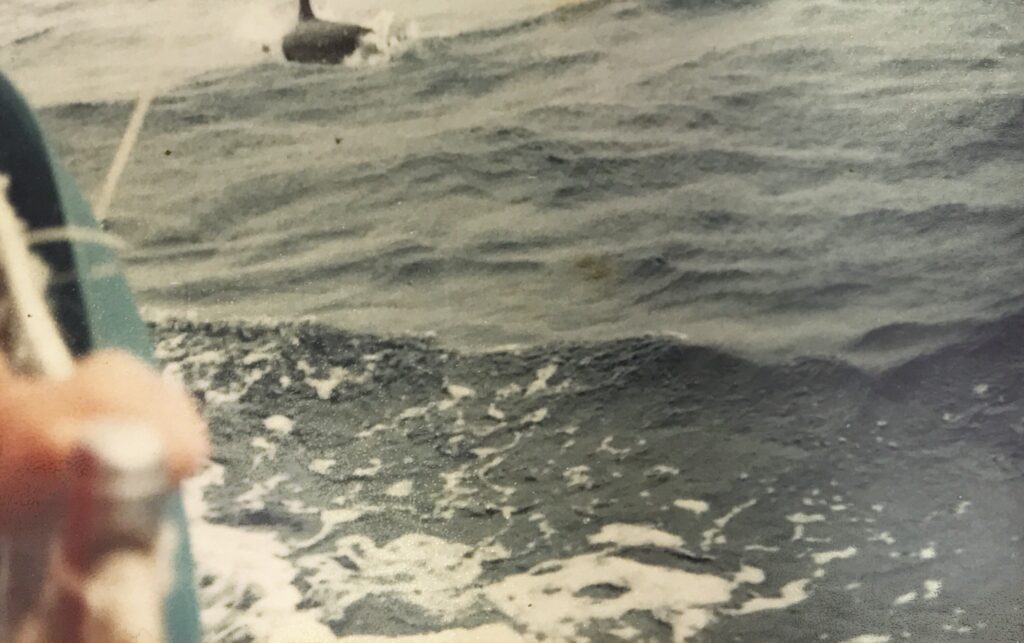
I do not know how many days or nautical miles before arriving in Horta that our whale spotting happened, but I remember it distinctly. I have a photo of a whale close by. It’s hard to see, but for me, it brings back all the memories of that scary but exciting day.
We now know that whales can and do attack sailing ships. Maybe my father knew that then too, but us kids certainly didn’t. We suddenly found ourselves in the midst of a pod of sperm whales, each one twice as long as Scally. They are slow and majestic. I don’t remember their eyes looking at us, although I’m sure they did, intelligent species that they are. I do remember their proximity to Scally, that I was frightened but in awe and I remember the smell of their spray when they surfaced. We were certainly very lucky that nothing happened to us or Scally.
In 1982, whaling had not yet been banned worldwide and it was still an industry in the Azores. Scrimshaw was a craft that was handed down from one Azorean generation to the next and much like my country of birth, where elephant tusks were also used for craft in statues, jewellry and other art; even though I am an owner of both, I am happy that both South Africa and Portugal, countries of my birthright, have banned and outlawed all hunting of these two magnificent species of animals.
Dates: 1982
The whales close by -
Azores: Peter’s Cafe Sport
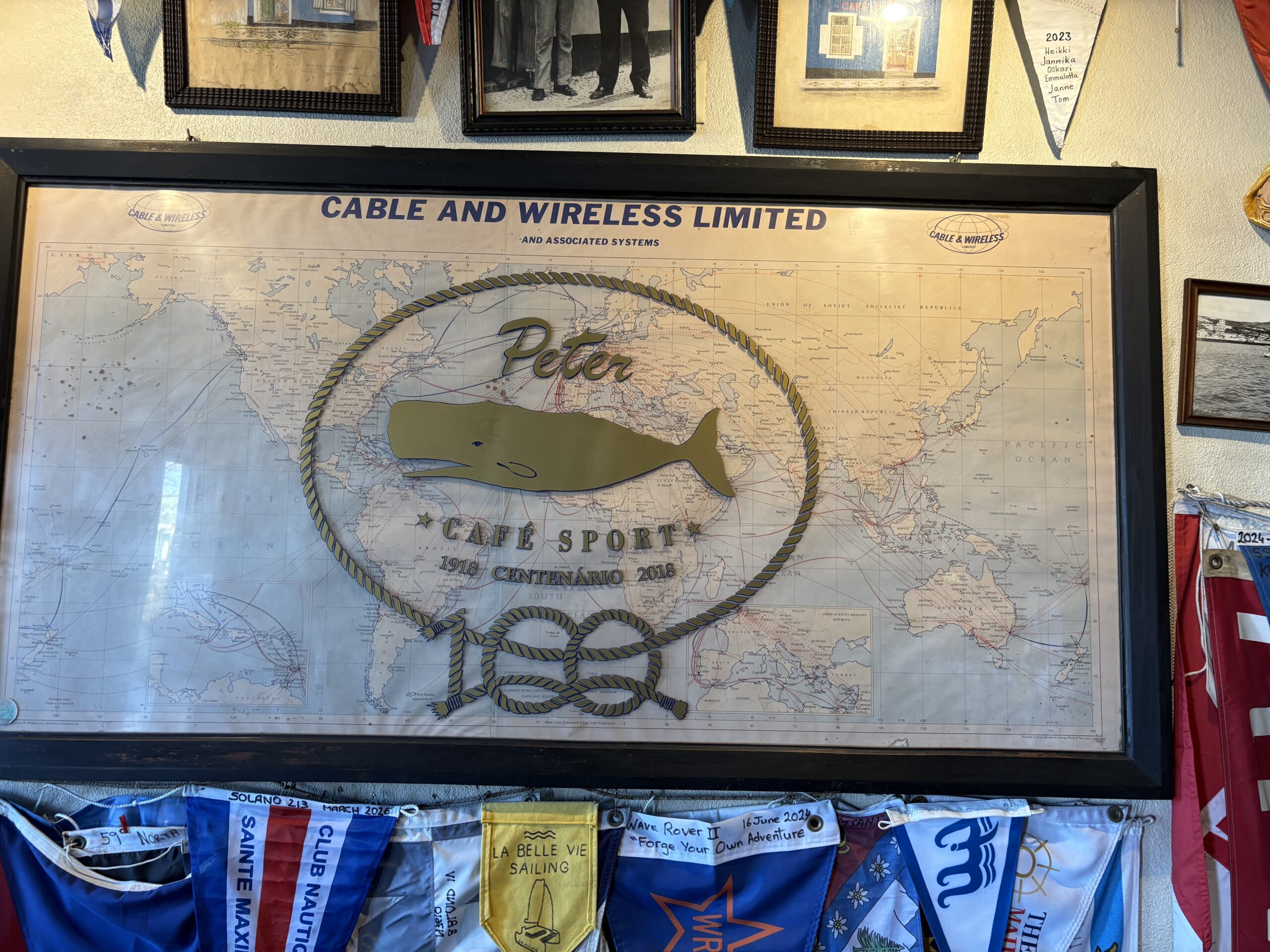
This is an iconic cafe for yachties in Horta. It’s still there and currently being run by the original Peter’s nephew. I have a photo of all of us standing outside the cafe From 1982. Of course, a visit this time round was planned.
It’s quite small and dark inside; there are flags of all descriptions hanging from the ceiling; the walls are covered in stickers and photos; there’s a bar where you can order food and drink; there’s a little corner showcasing jewellry and other wares made out of (mostly sperm) whales teeth which you can buy; and upstairs is the scrimshaw museum, which was not open at the time of my visit.
Back in 1982, when we were on Horta, and when whaling was still in full swing by the island fisherman (commercial whaling in the Azores ended in 1984 after the global ban by the International Whaling Commission), I distinctly remember the powerful and foul odour wafting over the channel from Pico, where a whale was being dissected.
My father ordered some scrimshaw items for all of us, and I have both of mine to this day. I had taken it with me to show them at Pete’s Cafe Sport, and they were really amazed to see it. I was lucky it wasn’t confiscated, as I have since come to learn that they can and will be confiscated by customs, since whales are a protected species. I would have hated to lose mine; it’s accompanied me wherever I go for all these years, like a talisman.
I sat and enjoyed a glass of wine by myself, reflecting and imagining us all here all those years ago. Coincidentally, my youngest brother, who was two at the time, and is now in his mid forties and a musician, has been invited to perform live at the cafe more than once. When I mentioned his name, they all knew him.
Dates: March 2026
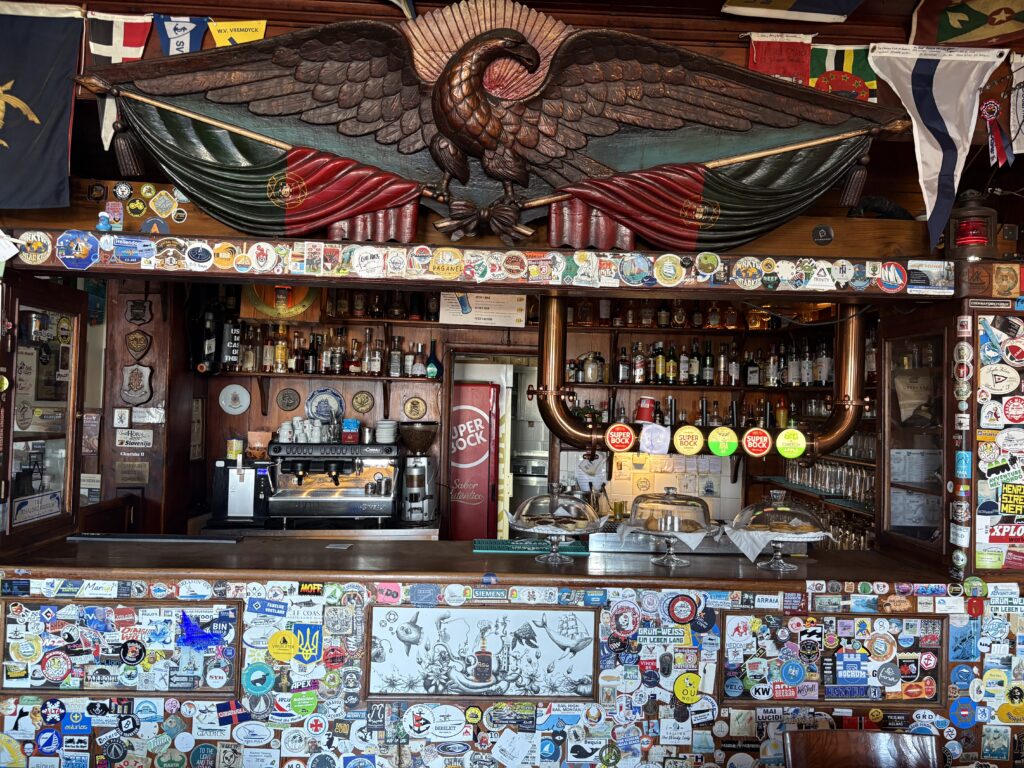
The bar inside the cafe 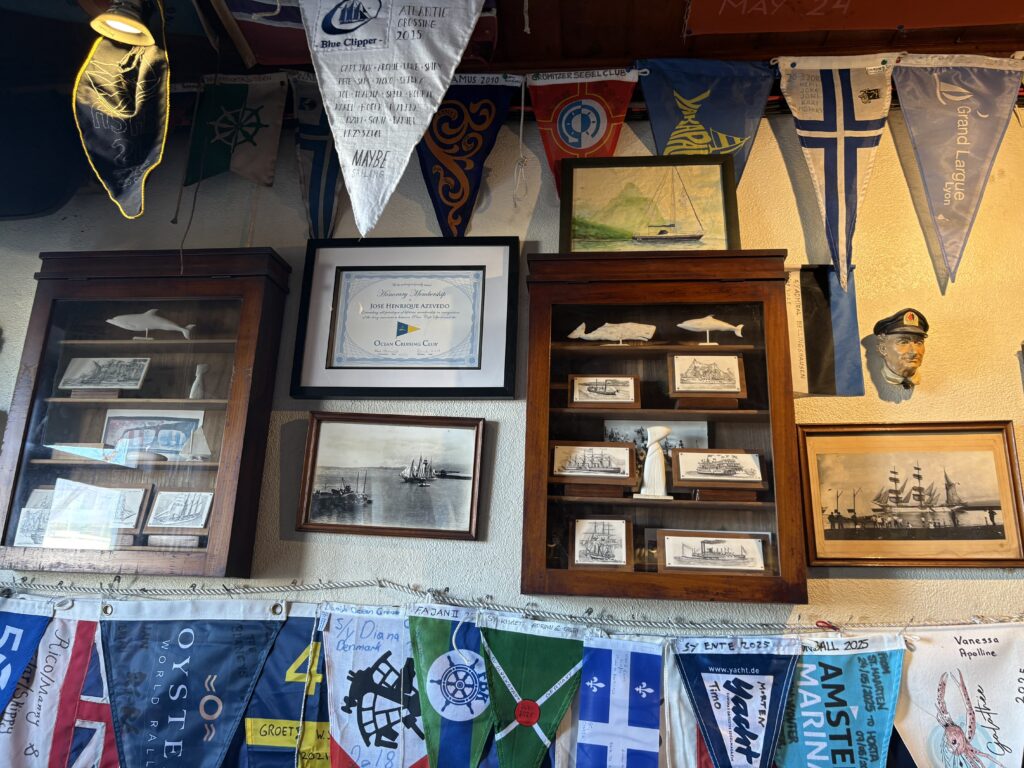
Flags, photos and scrimshaw 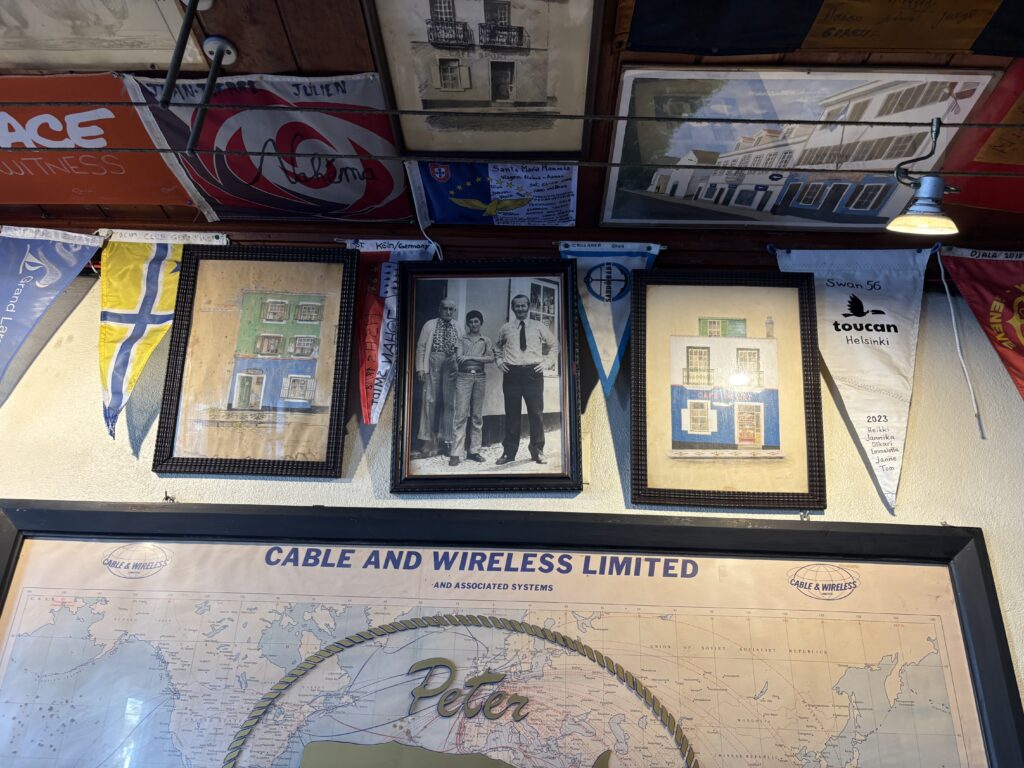
The original Pete 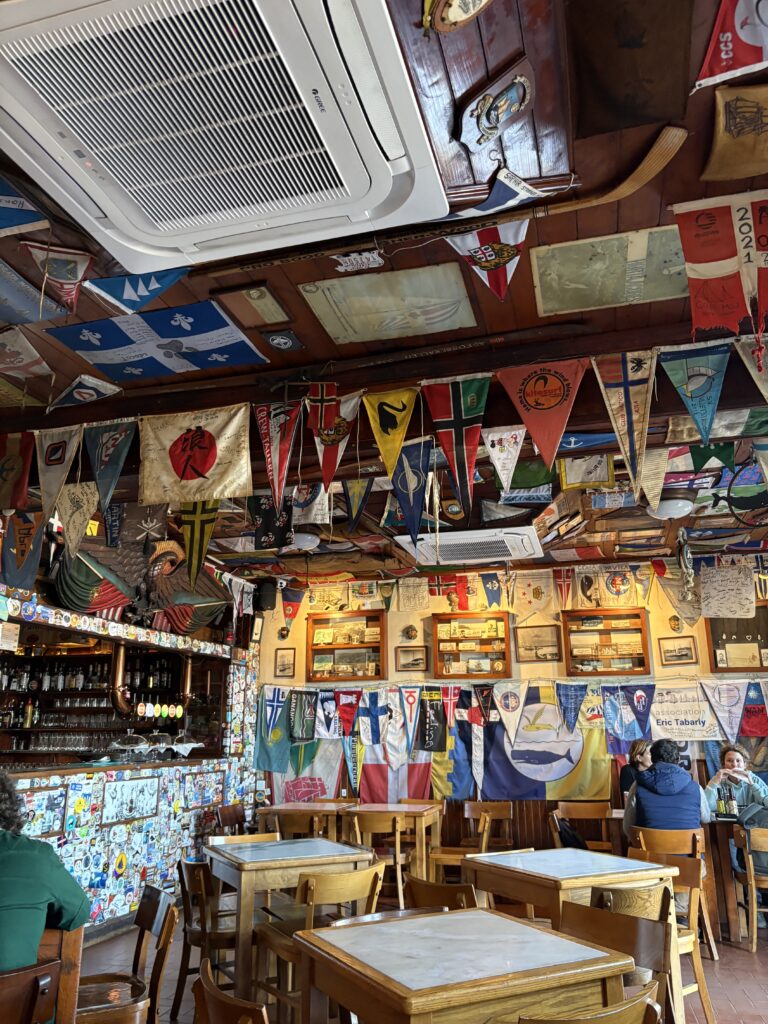
Flags and stickers everywhere 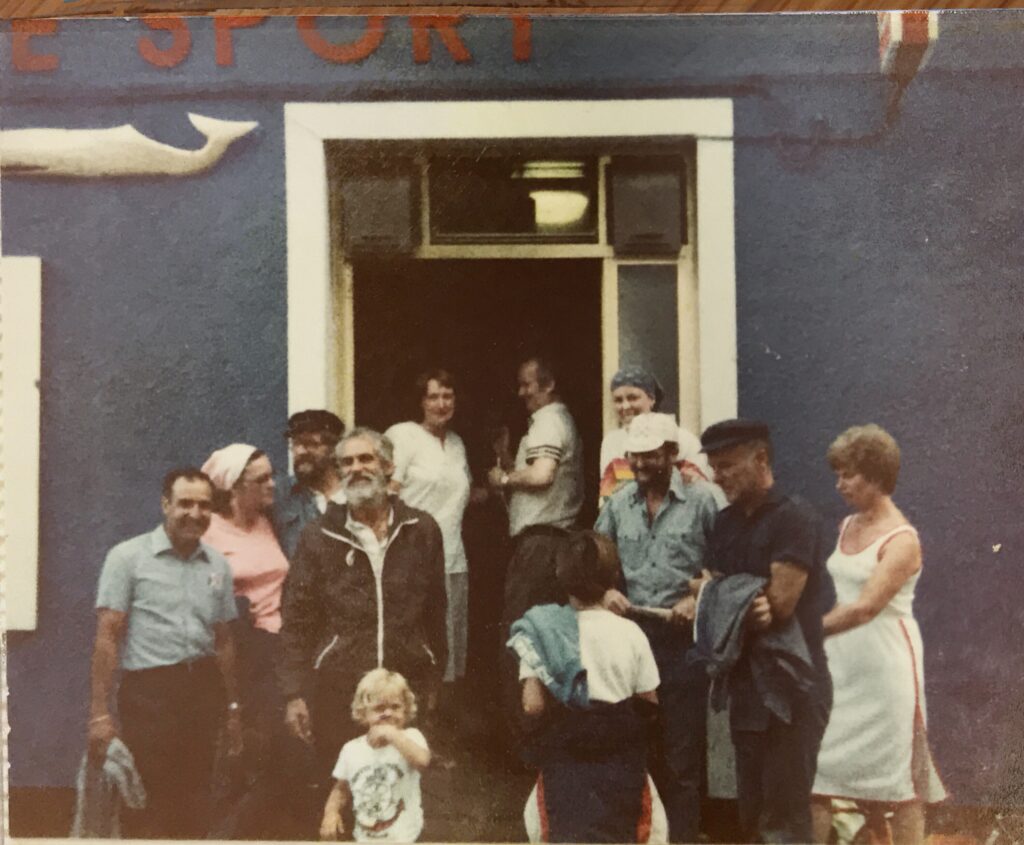
My mother, father, youngest brother and middle brother outside Pete’s Cafe Sport -
Azores: Faial
Horta is an island for yachties. Almost every sail vessel crossing the Atlantic from west to east, heading for Europe or the Mediterranean, will stop at Horta. For us, after spending twenty eight days at sea, it was a sight for sore eyes. I can only imagine the feelings that my father must have had at arriving and finally reaching his home territory safely.
Forty four years ago, we were greeted by and escorted into Faial Harbour by a Portuguese frigate, whose officers had heard over the radio waves that Scally was approaching. I believe either the captain or one of the senior officers was a fellow naval officer from the fifties and sixties when my father himself had been a member of the Portuguese navy.
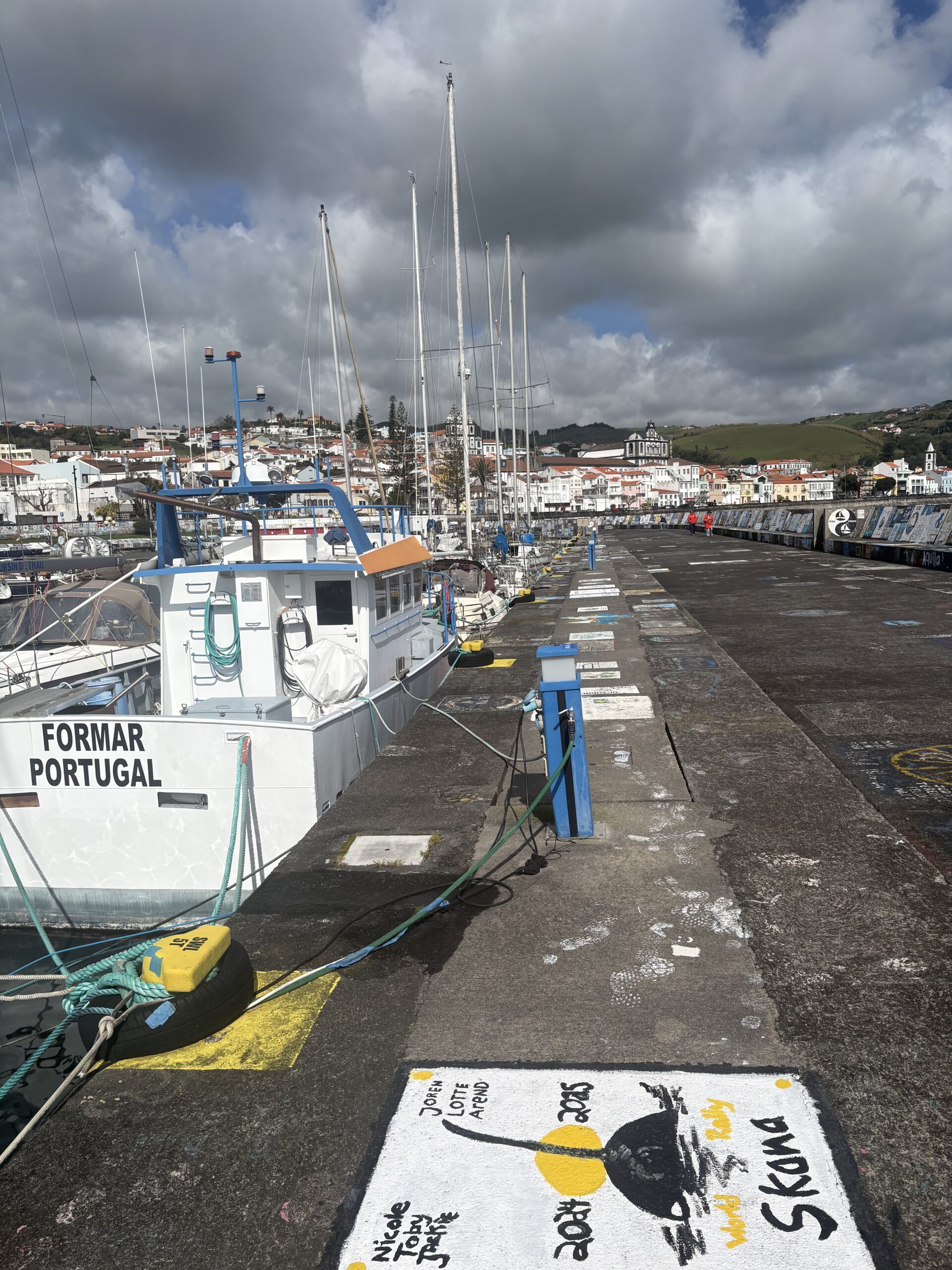
Today’s marina is very different from what it was in 1982, with an entirely new marina having been built with pontoons and jetties. The original sea wall is still there but unfortunately I was not allowed access; it’s restricted to the public because cargo ships tie up alongside.
What still sticks out at first sight, and everywhere you look, is the art work on the walls and pavements, creations by the yachties to memorialise their trip, crew, and time on Horta. We also did one for Scally, but it would have been on the original sea wall and certainly no longer visible after so long. I walked for a couple of hours up and down the quayside and looking out over the marina and boats. Most of the flags were not Portuguese. Most likely boats which had reached Horta and been left there for a while until the crew returned to sail onwards.
I wanted to find two artworks in particular. Spotting them is like trying to find a needle in a haystack. One would belong to one of my closest friends, a very keen and avid sailor from New Zealand, who often sails with us now on Illustrious 6, and who crossed the Atlantic a few years ago. I regretfully could not find that piece of artwork. The second one I did, but only after being told by my brother its approximate location. My oldest brother and his crew arrived in Horta about seven years ago having crossed from the Caribbean. One of the crew members was my niece, his daughter, a teenager at the time, who designed the artwork. She was very happy to know that I had found it.
I honoured all the artworks visible and invisible and all the brave captains, crew members, families and children who reached Horta after crossing the mighty Atlantic.
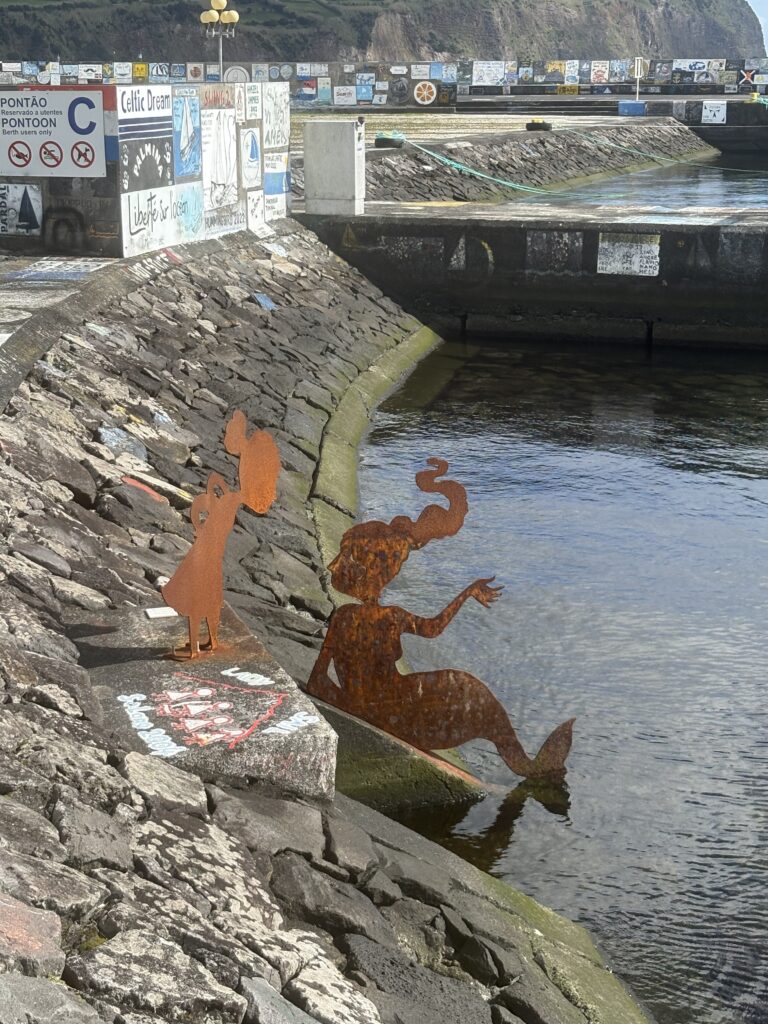
The mermaid and the child playing in the marina 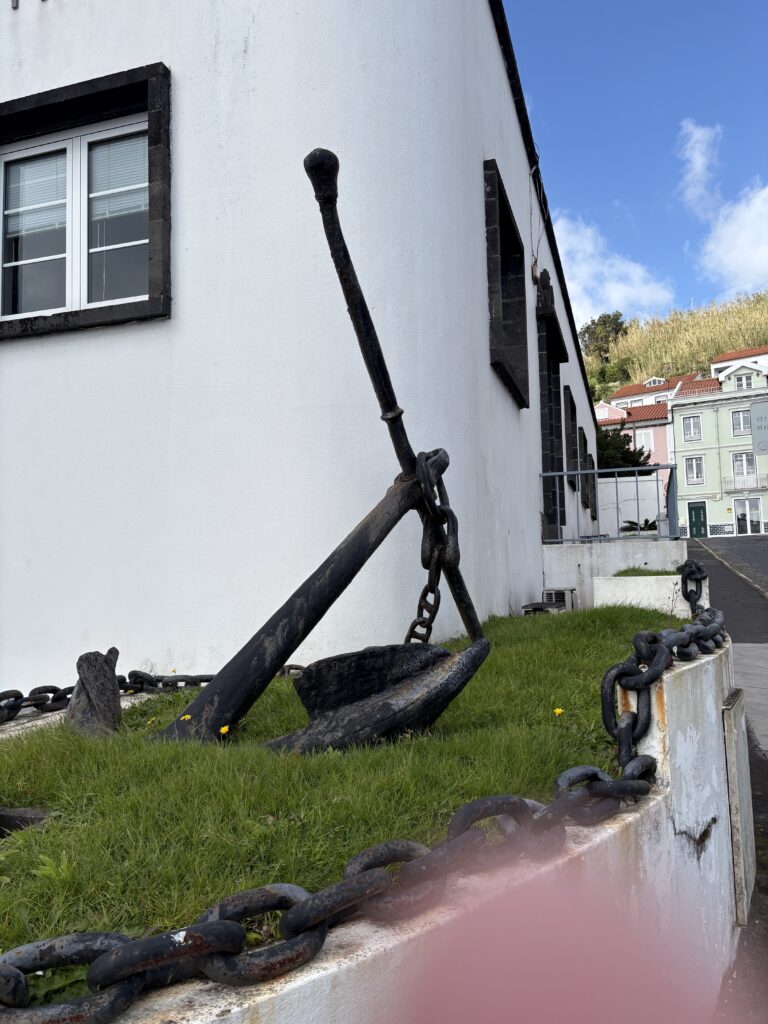
An anchor in the marina 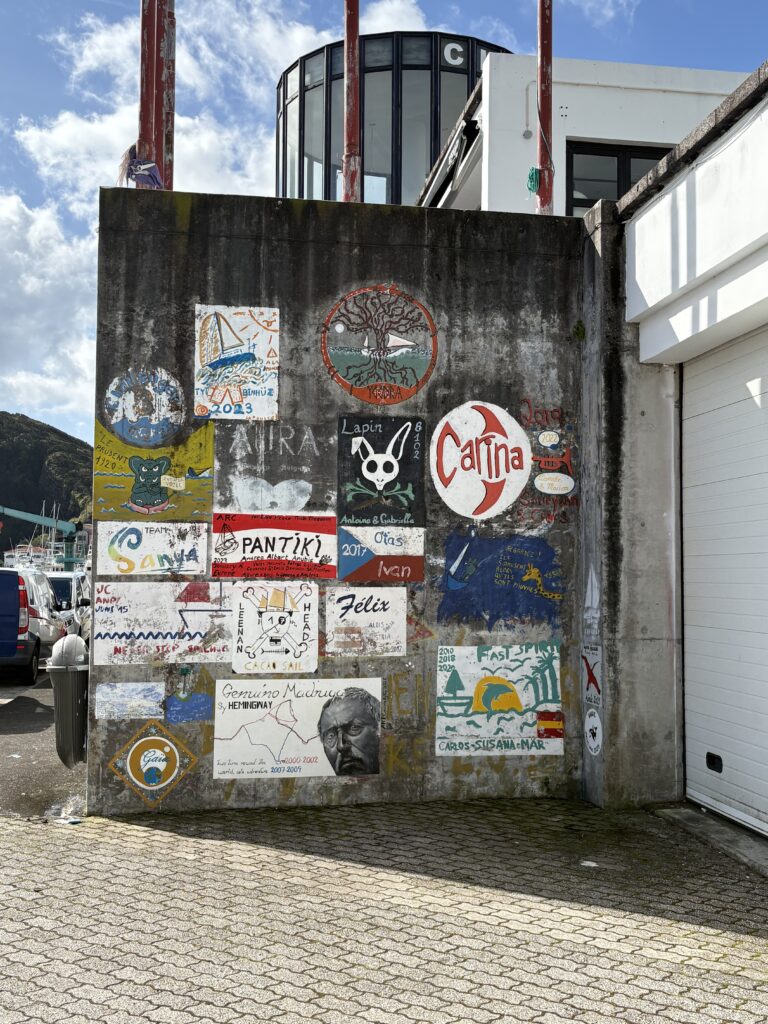
Artwork everywhere 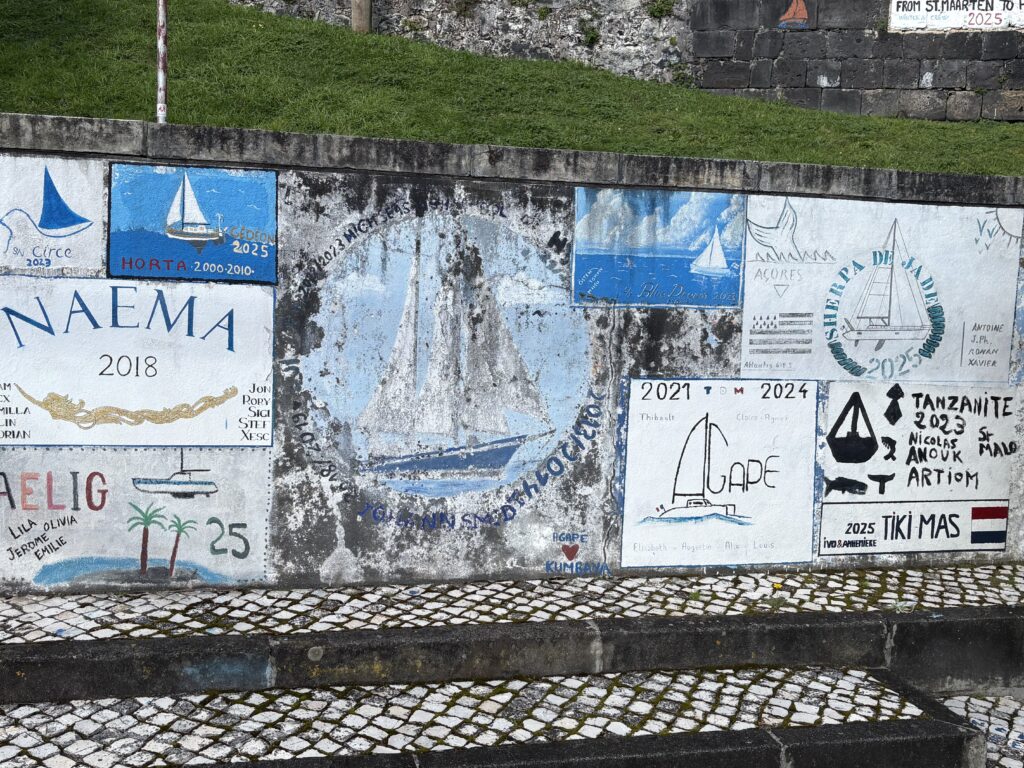
More artwork 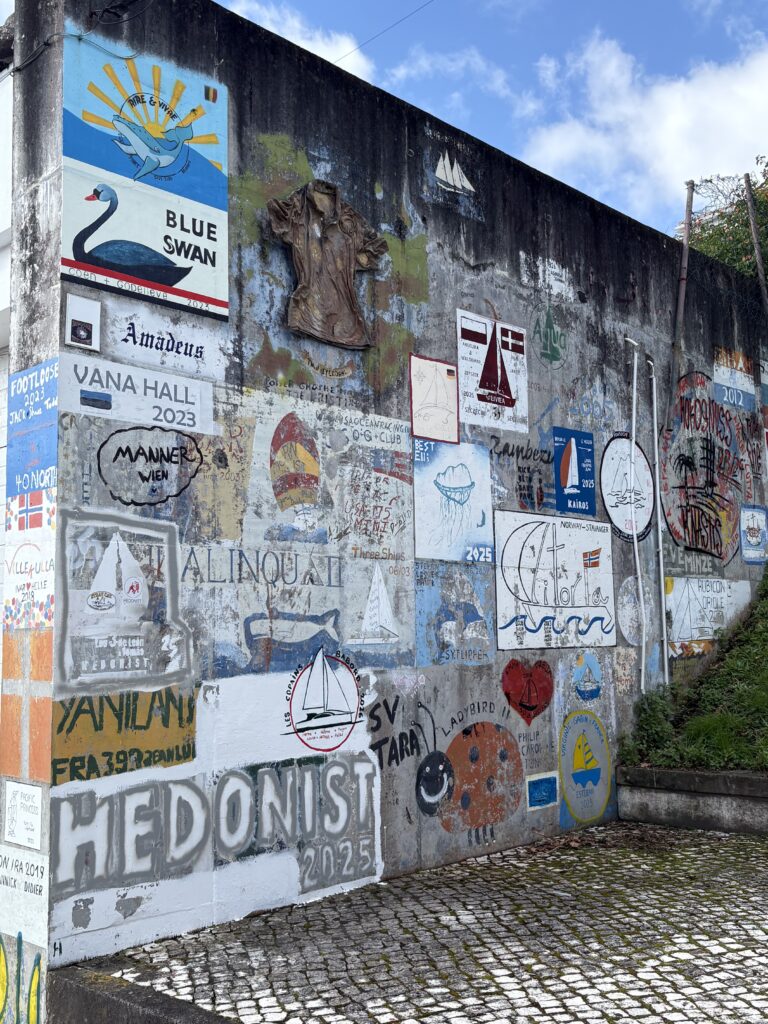
More artwork 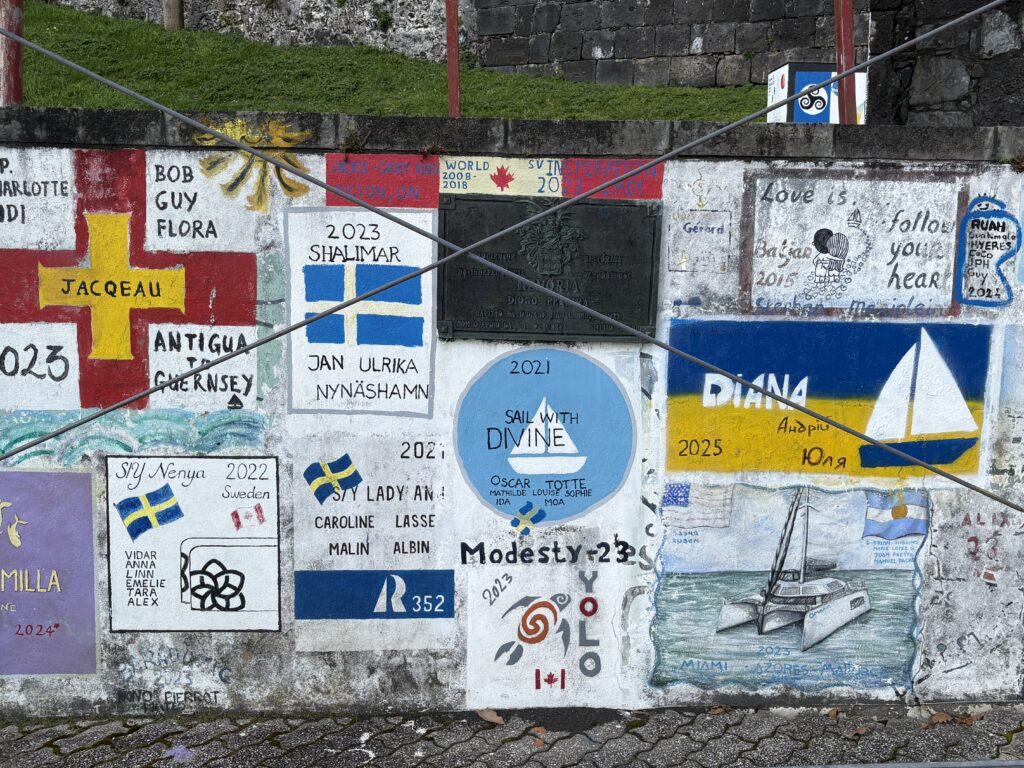
More artwork 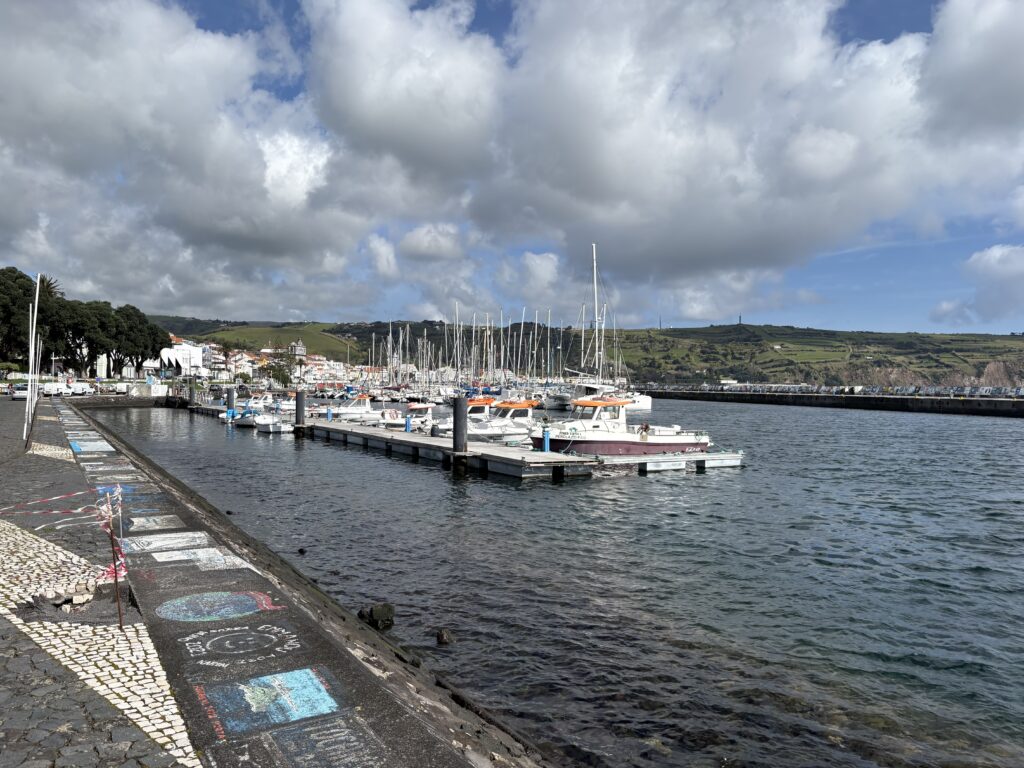
The marina in Horta 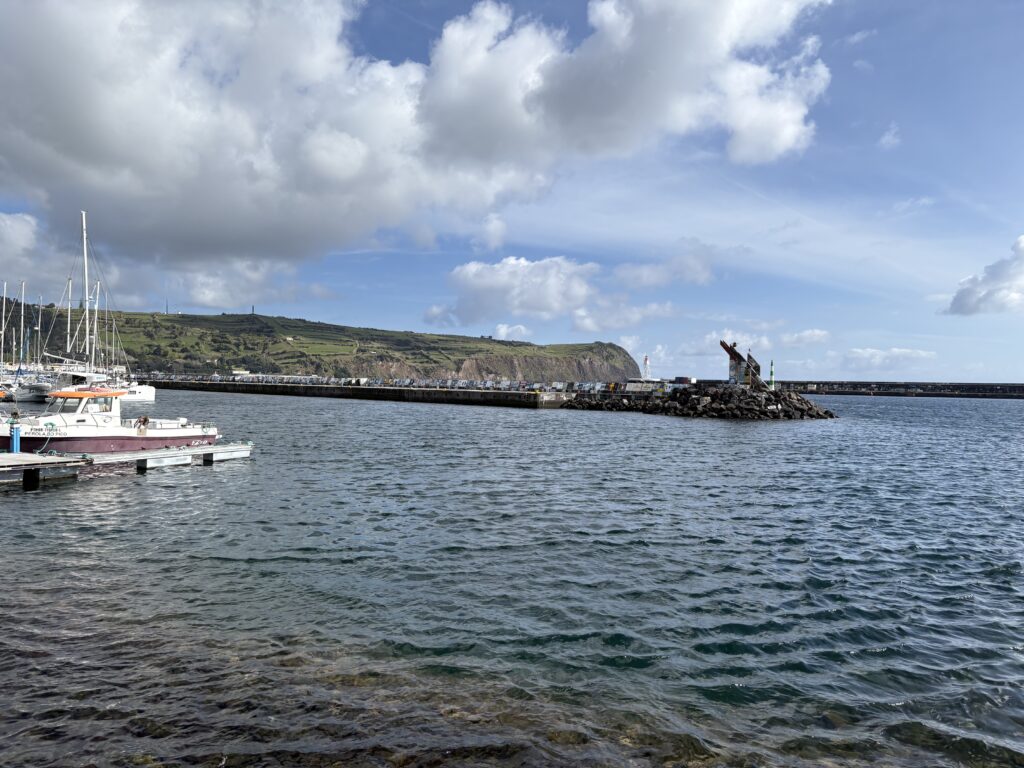
The original sea wall (where Scally was) in the far background. 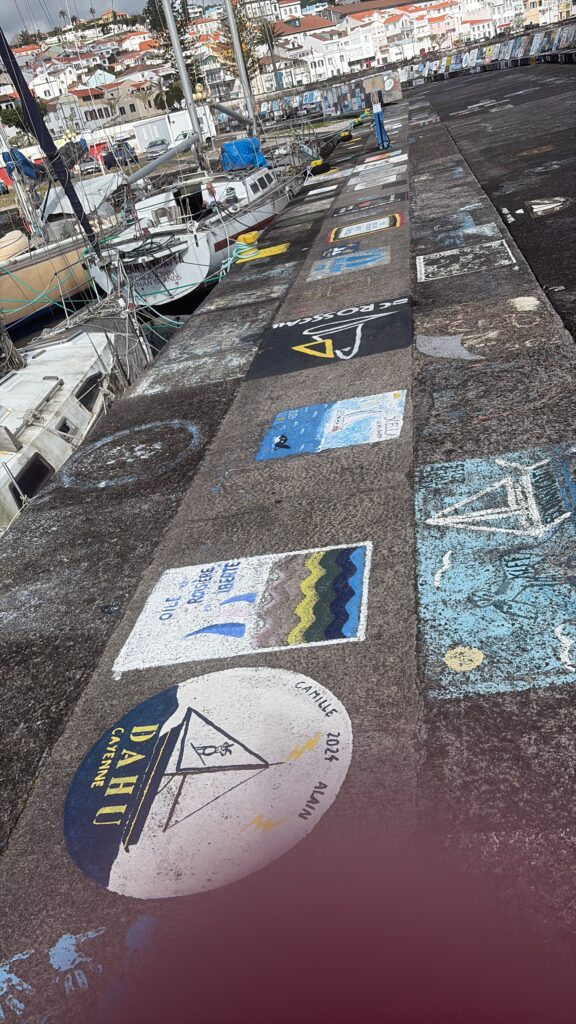
More artwork 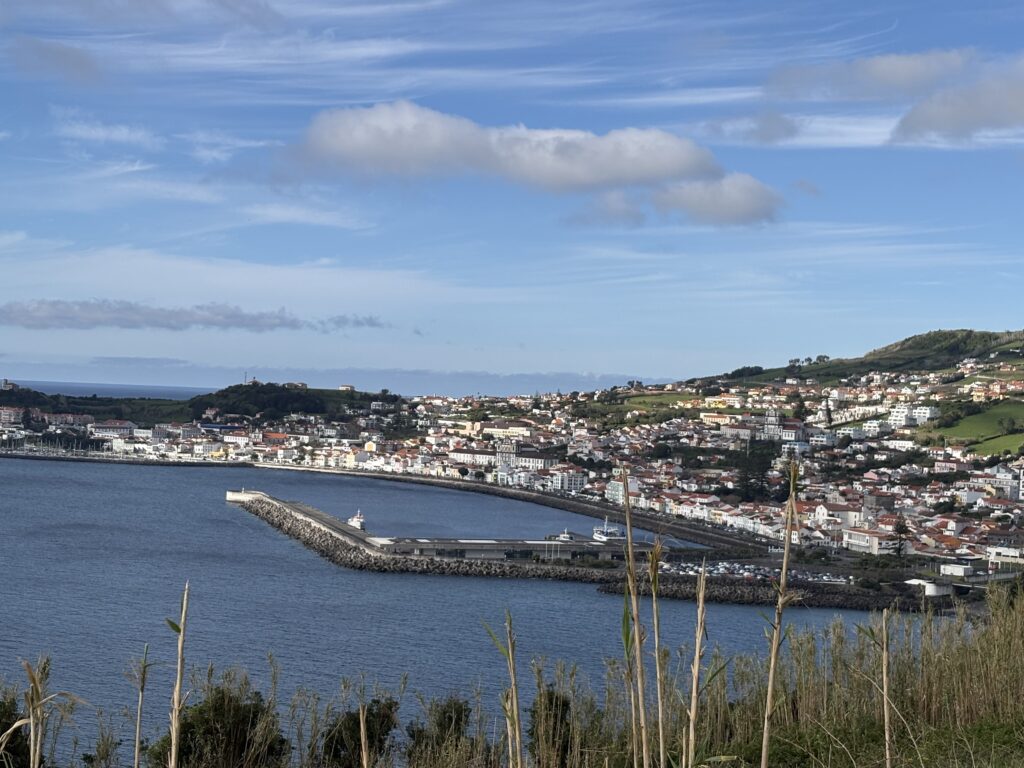
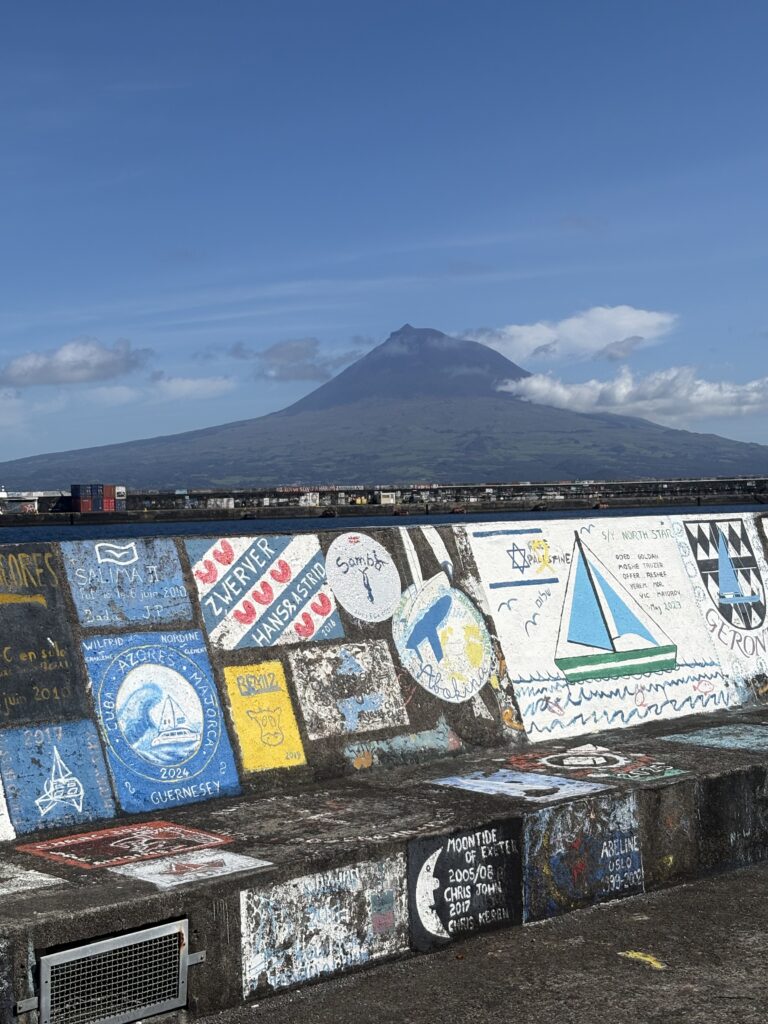
More artwork and the island of Pico in the background. 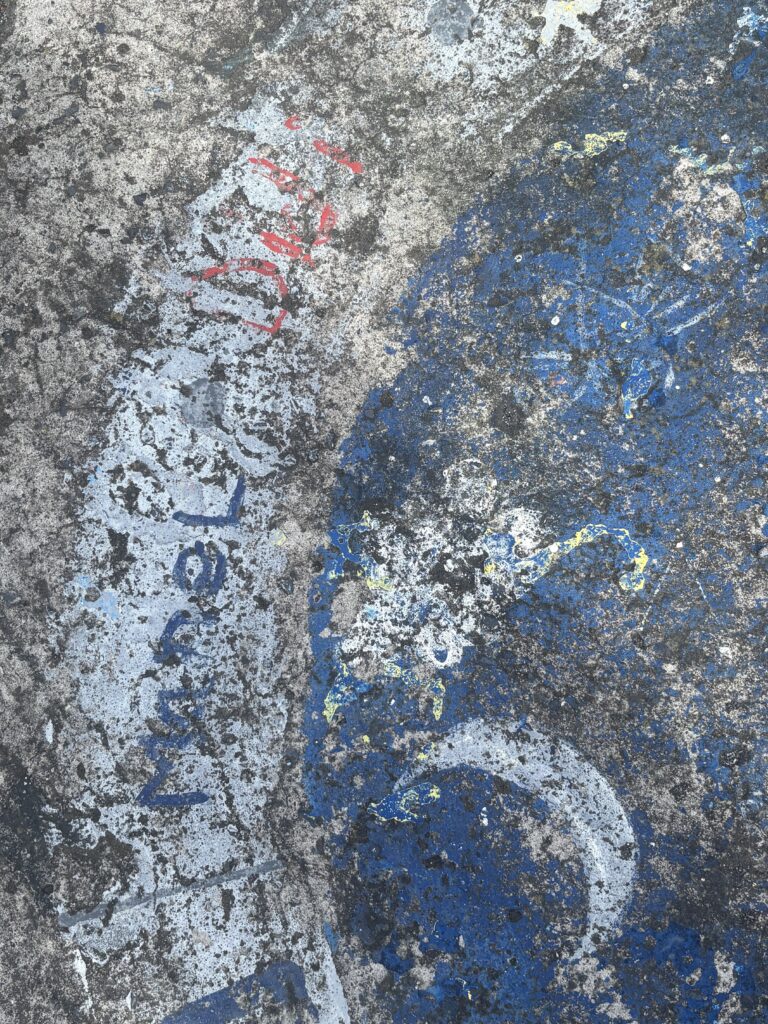
A close up of the artwork of my niece. 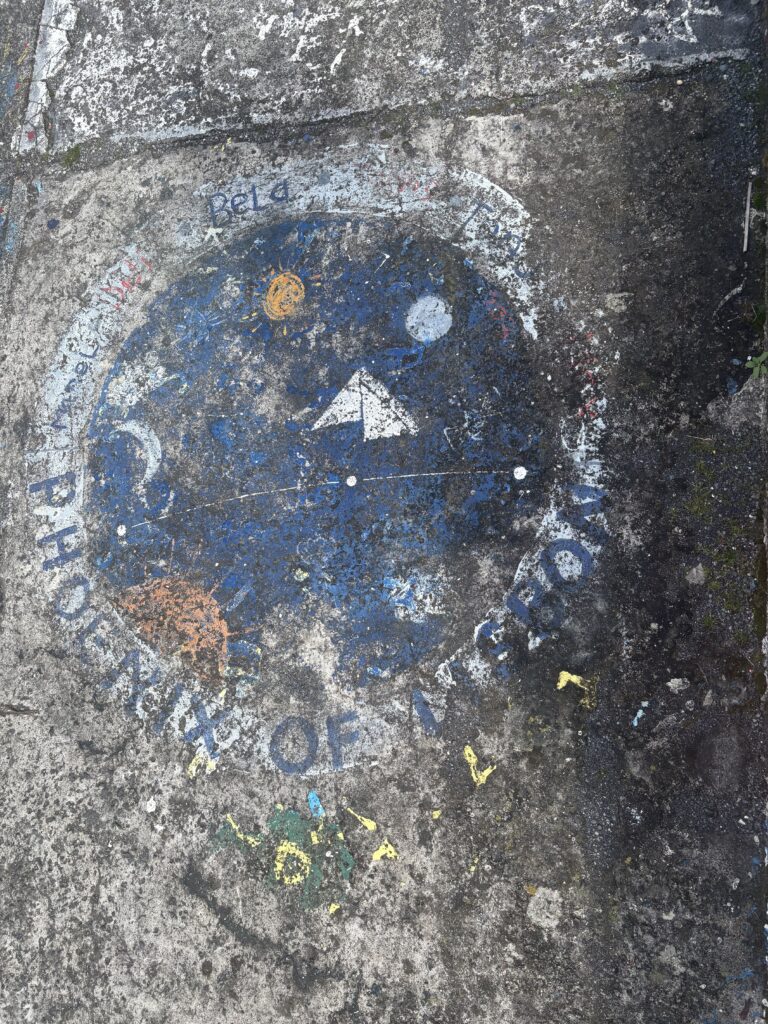
The artwork I found for my niece and brother. 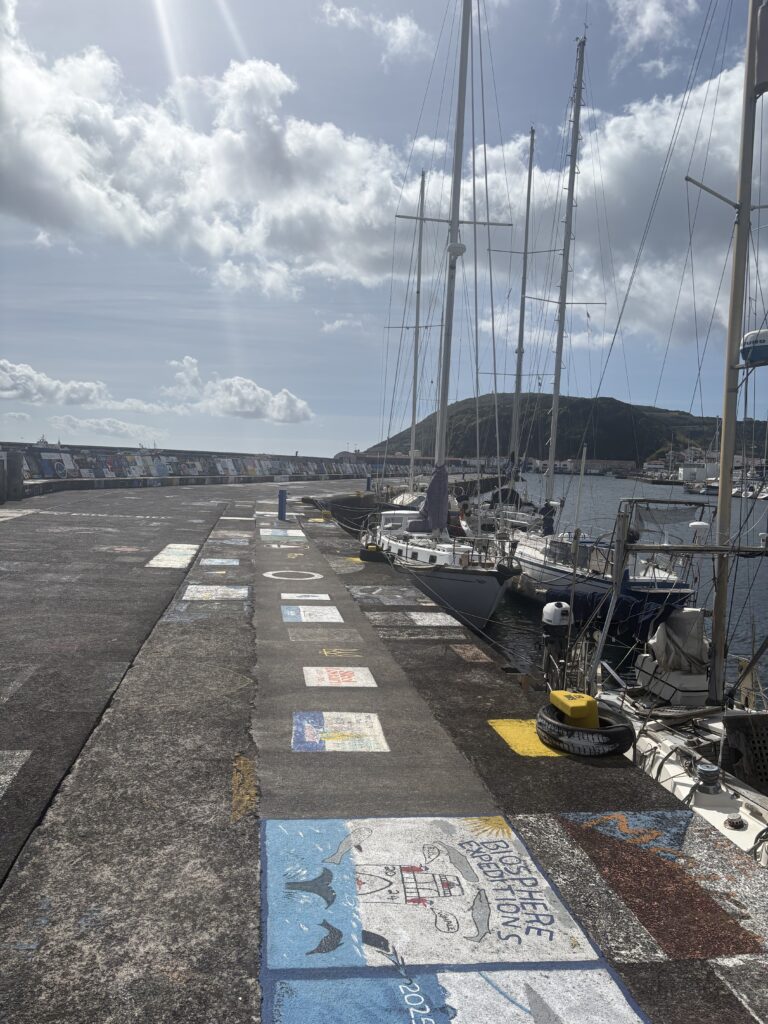
The marina sea wall (not the one where Scally would have been tied alongside) -
Brazil and Fernando de Noronha: My reflections
I have met many Brazilians in my adult life; most in Portugal, but also in many of the other countries I have visited and I have always thought how open and friendly they are. And, indeed, this is what struck me most about the mainland, in Salvador de Bahia, as well as the island of Fernando de Noronha.
This is a country of great extremes. There are huge expanses of land (it’s an enormous country) and there are huge expanses that divide the haves and have nots. But everyone has a smile at the ready and is open and welcoming to foreigners like myself. Whoever I met was polite, friendly and willing to share. The sun shines everywhere and the ocean is warm and inviting.
These were destinations quite unlike where I have thus far travelled, with the obvious exclusion of St Helena island, and I was extremely appreciative and grateful for the lessons I learnt from being in Brazil.
Smile, laugh, be open and talk to strangers, be friendly and warm, and take one day at a time.
Live for today and go to the beach whenever you can.
Enjoy time for what it is, a gift to experience whenever you have moments to yourself.
Learn and understand that there are great differences in life and be grateful for everything you have.
Believe in whatever you want to believe in, but believe in something, whether you’re in a church or meeting a Bahiana or hearing about the Orixás.
Swim in the South Atlantic wherever you can; it’s beautiful and healing.Thank you Brazil. I will be back.
-
A day at sea: how we spent our time
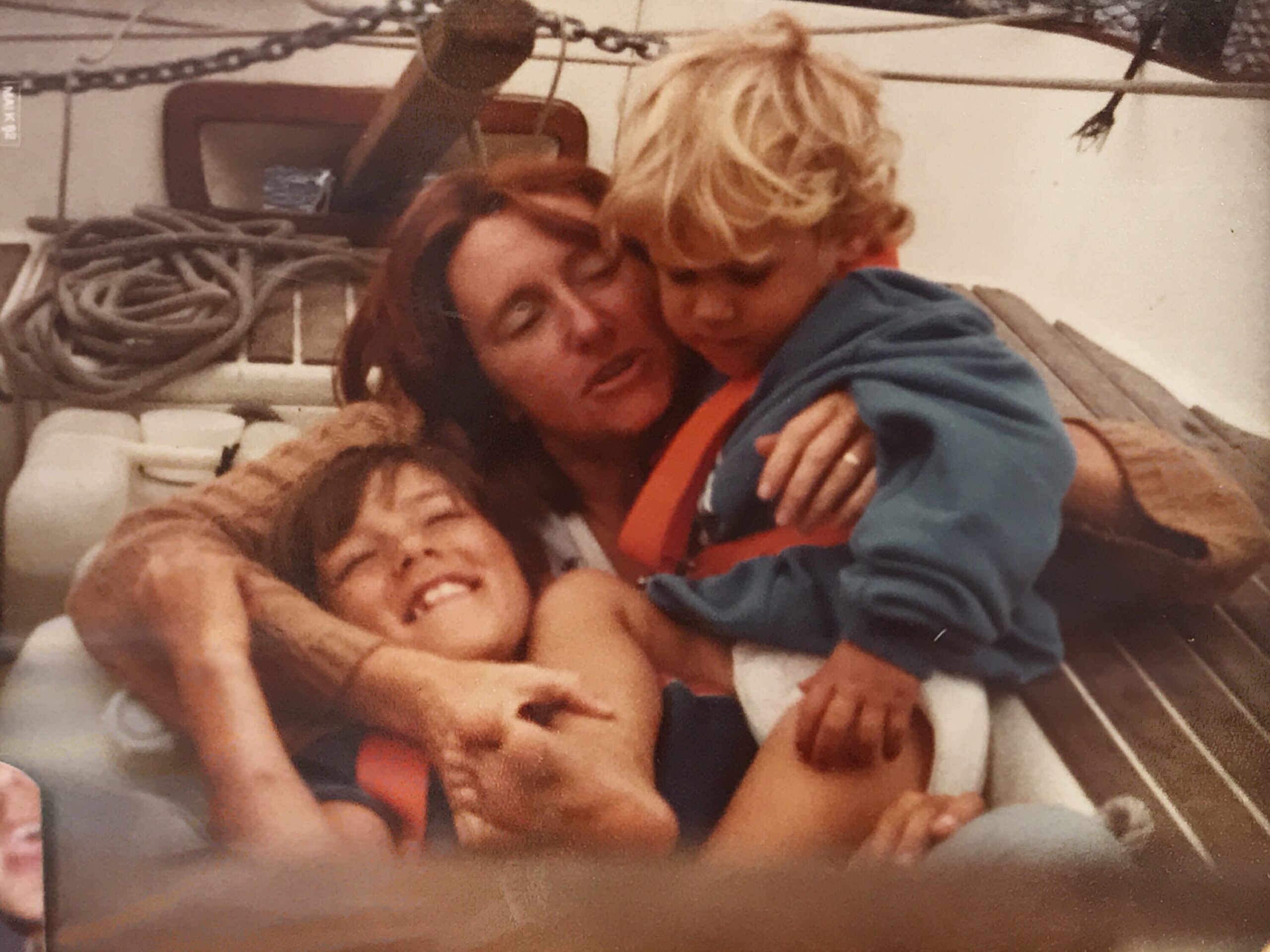
Scally was not a large sailboat, and at a mere 31-feet, space was a premium. When we think about young children nowadays; ages nine and two years old, happily playing and running around their homes or local playgrounds, I find it hard to imagine how difficult it must have been for my two youngest brothers. There were no Ipads, no Disney movies, no distractions of the kind that parents take for granted these days. The two of us older ones had chores to do, which kept us occupied, and also our shifts, which taught us responsibility. They are skills that serve me well to this day.
Our chores on deck included washing and scrubbing the decks daily with salt water pulled up from the ocean in a green canvas bucket tied to a rope and special detergent which lathered in salt water, and a small hand held brush. We began up at the forepeak and worked our way down the port and starboard sides on our hands and knees, to the cockpit and the stern. Other chores included polishing the chrome stanchions to keep rust at bay; winding the lines into round coils on deck to dry them out and make it look nice; checking the jerry cans lining the starboard and portside decks to ensure that they were properly strapped down; keeping the cockpit tidy, and looking out over the horizon to spot potential squalls or other threats. We sang songs, endlessly. Me on the guitar and everyone else joining in. Yellow Submarine. Slip Sliding Away. Country Roads.
Down below, we made our beds every day. Mine and my youngest brother’s had to be stowed away every day because it was needed as sitting space during the day for us to eat round the saloon table. Cleaning and tidying up was also done a few times a day; Scally could get quite messy with the six of us during the day. We played backgammon, trivial pursuit and dominoes for hours on end; read the tomes my father had chosen for us to read on the trip; and sang. We wrote daily in the logbook and observed my father plotting our position on the charts. We made no noise as we listened quietly and carefully to my father connecting with other Ham radio enthusiasts, somewhere in the world. This was our only connection to others and we were all grateful for it. Charlie Tango Delta Romeo India November Alpha. We were all fluent in the international radio alphabet.
Food and drink: water was in limited supply, you never knew when it might run out. One cup of water. There was a powder orange drink which when mixed with water made orange juice; and Coca Cola. My middle brother, aged nine, developed the skill for baking fresh bread in our little oven on gimbals. It was always delicious. Sometimes there was fresh tuna, if we had managed to catch one, and it often lasted for days. There were no fresh vegetables and fruit because after one or two days at sea it went off; so we had tinned instead. We were never hungry.
Exercise: non-existent.
Sleep: a lot.
Contentedness: we were a happy family
-
Brazil: Fernando de Noronha, Beach Day 2
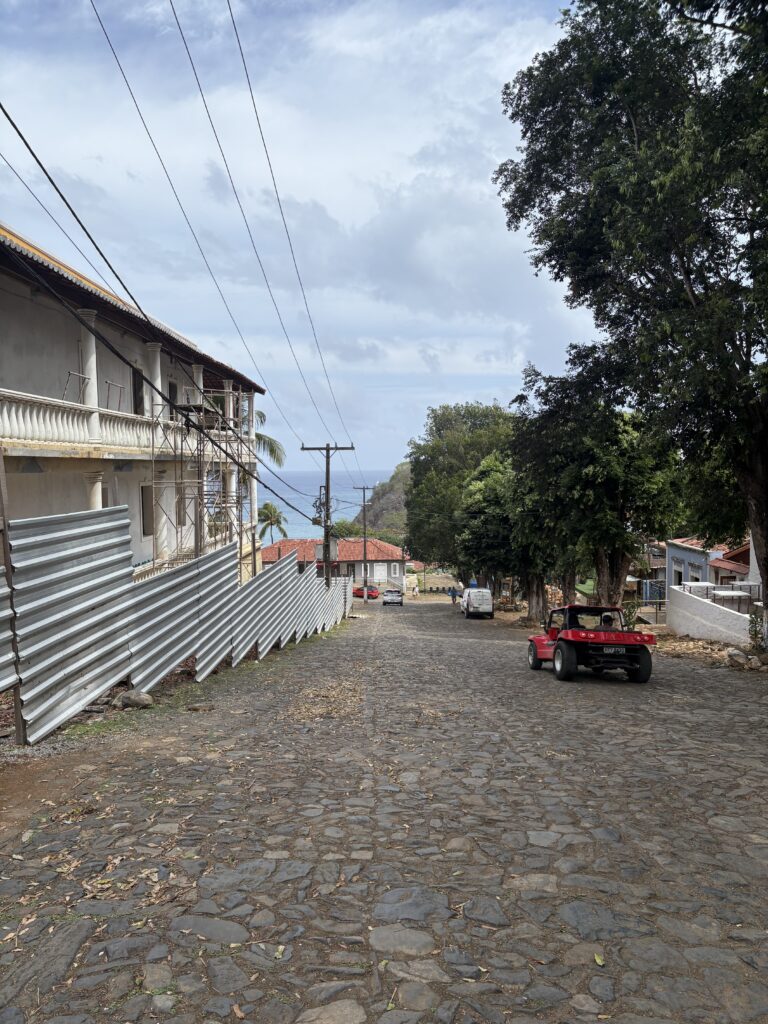
Having accomplished my mission to find where we had been anchored in 1982, I woke up to my last day in Fernando de Noronha with plans to have another beach day. The closest to where I was staying was Praia do Conceição, according to the concierge, only ten minutes away.
So I packed water, a light picnic, and headed off, following the rudimentary signage. It was all downhill and about fifteen minutes in the end.
Like on Praia do Boldrió, I paid one hundred Reais for a deck chair, umbrella and small table; there were very few beachgoers, and there was a stall selling coconuts, Capirinhas and water.
I forgot my suncream, stupidly, because I suffer from sun rash. I’m not young anymore and long gone are the days when I’d use olive oil for sun-tanning, but I didn’t fancy losing my spot and walking all the way back uphill to get it. So I risked it. (Silly idea because I broke out in rash later that evening).
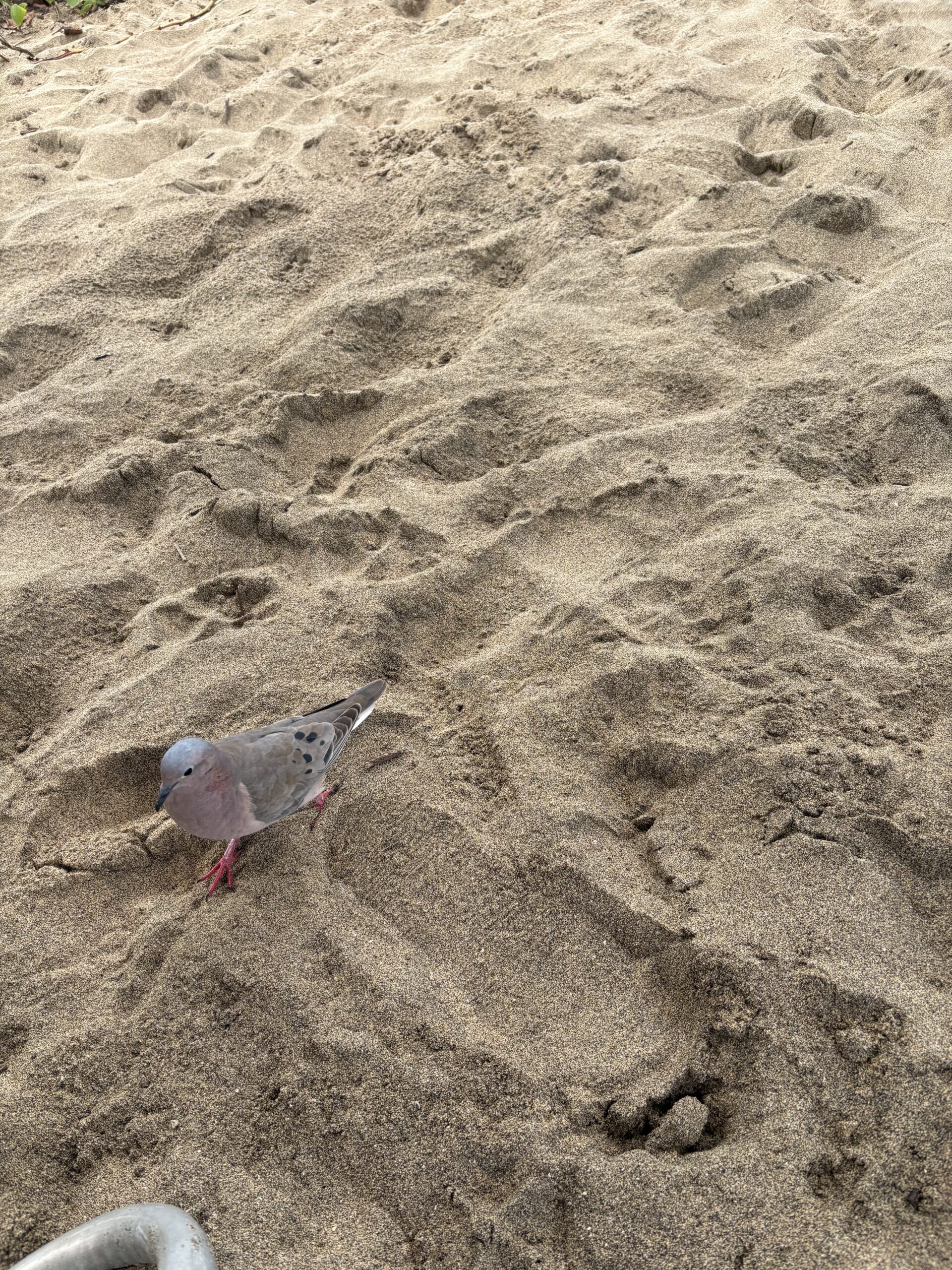
It was a wonderful beach day, though. The ocean was warm and inviting. I went in and out. I slept. I read. I remembered. I could not resist a Capirinha with the flavour of “ciriguela.” I have no idea what it is but it was delicious.
I ended my day at the same restaurant I had been to the entire time (there are very few to choose from) and listened to the mellow tones of the Brazilian music in the background, my skin itchy, but feeling healthy, happy, relaxed, sunburnt, appreciative, grateful, and dreaming of one day returning to this paradise.
Dates: February 2026
Heading down to Praia de Conceição 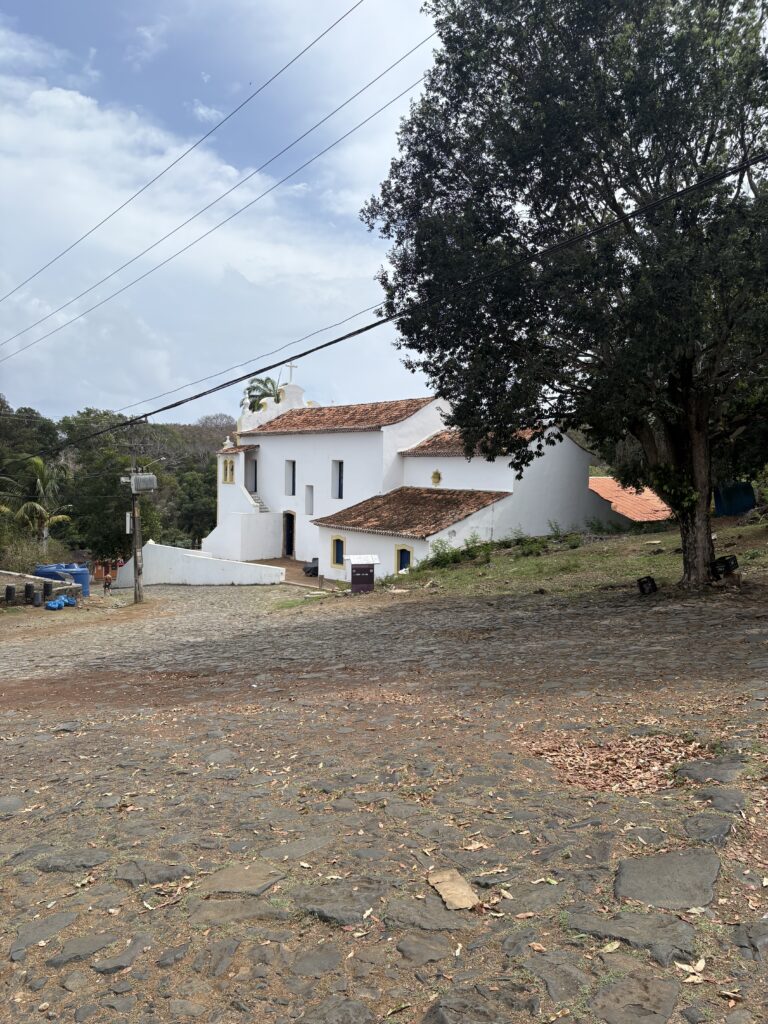
The church 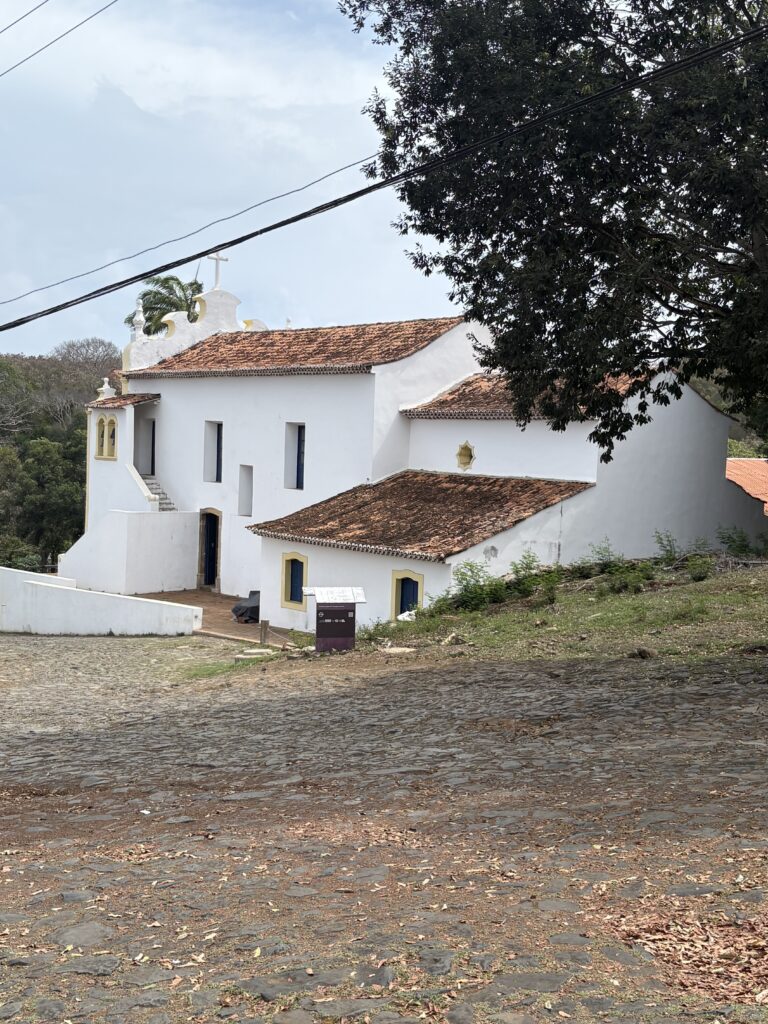
The church on the way 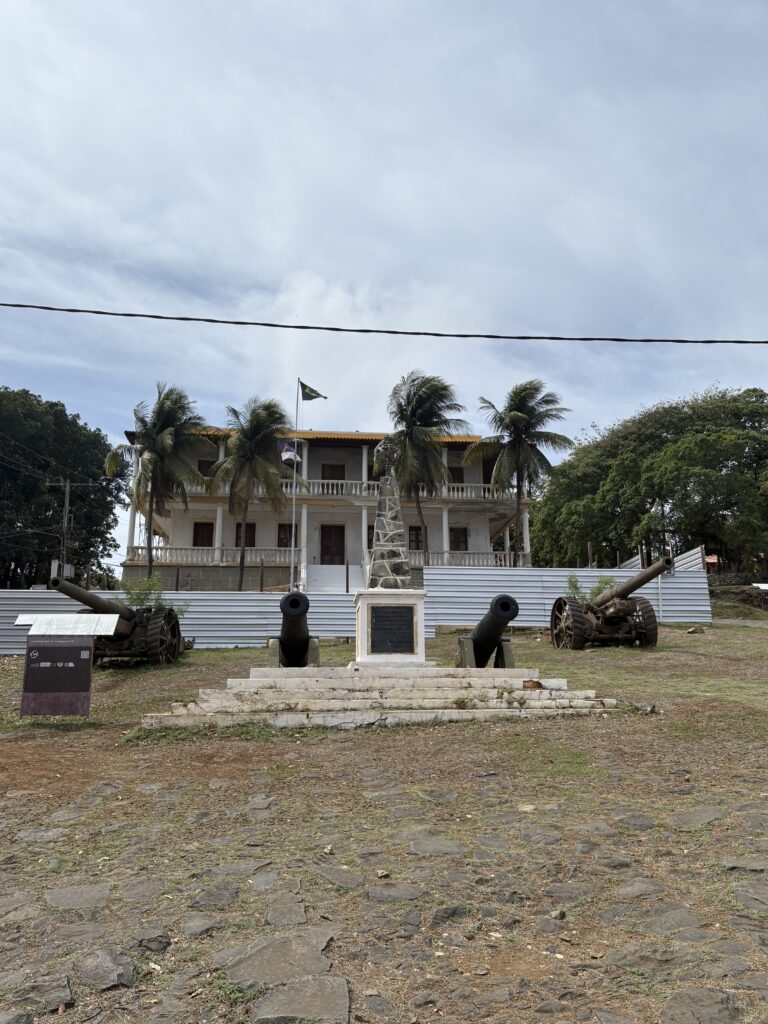
The fort on the way 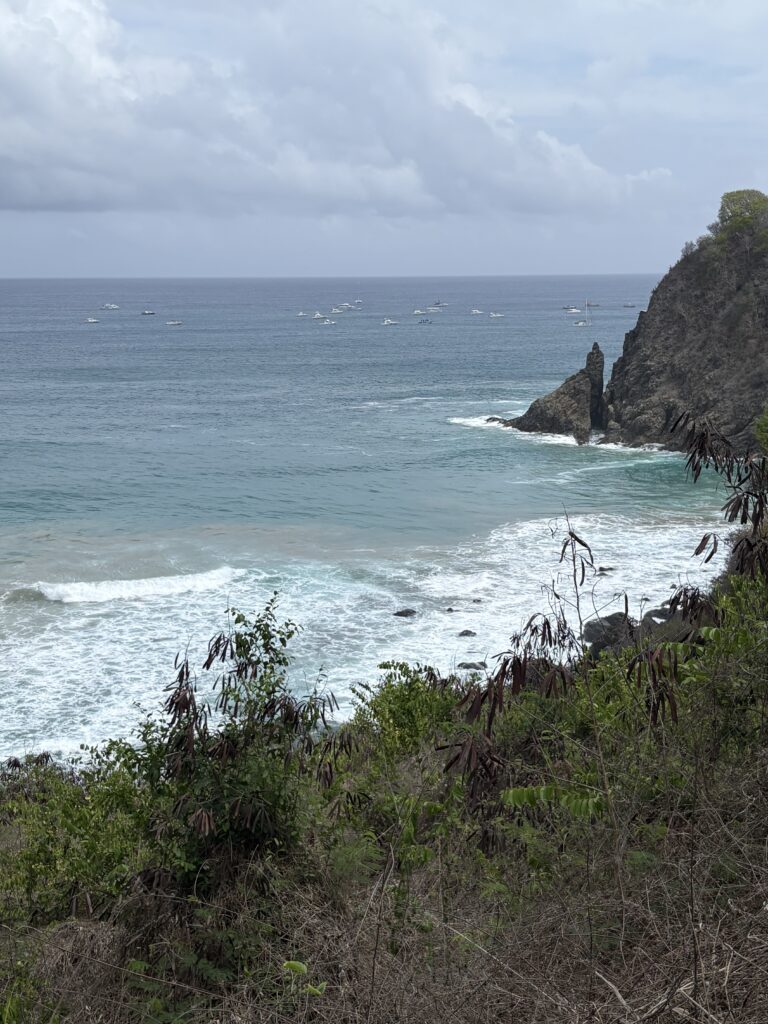
Praia de Conceição 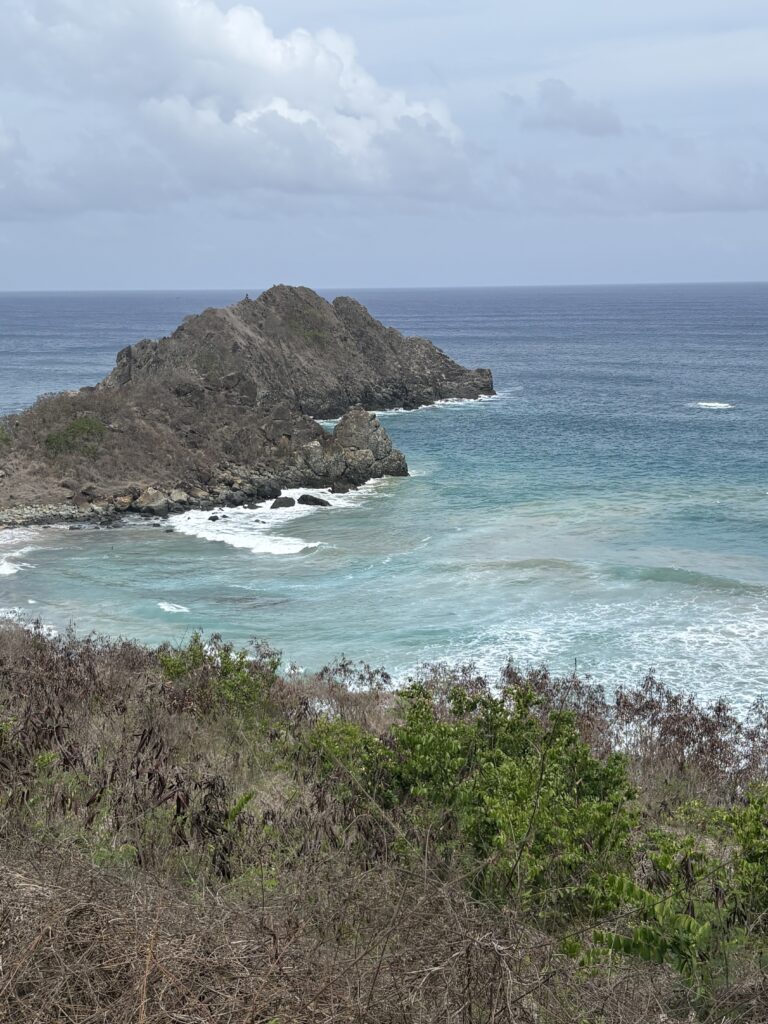
Praia de Conceição 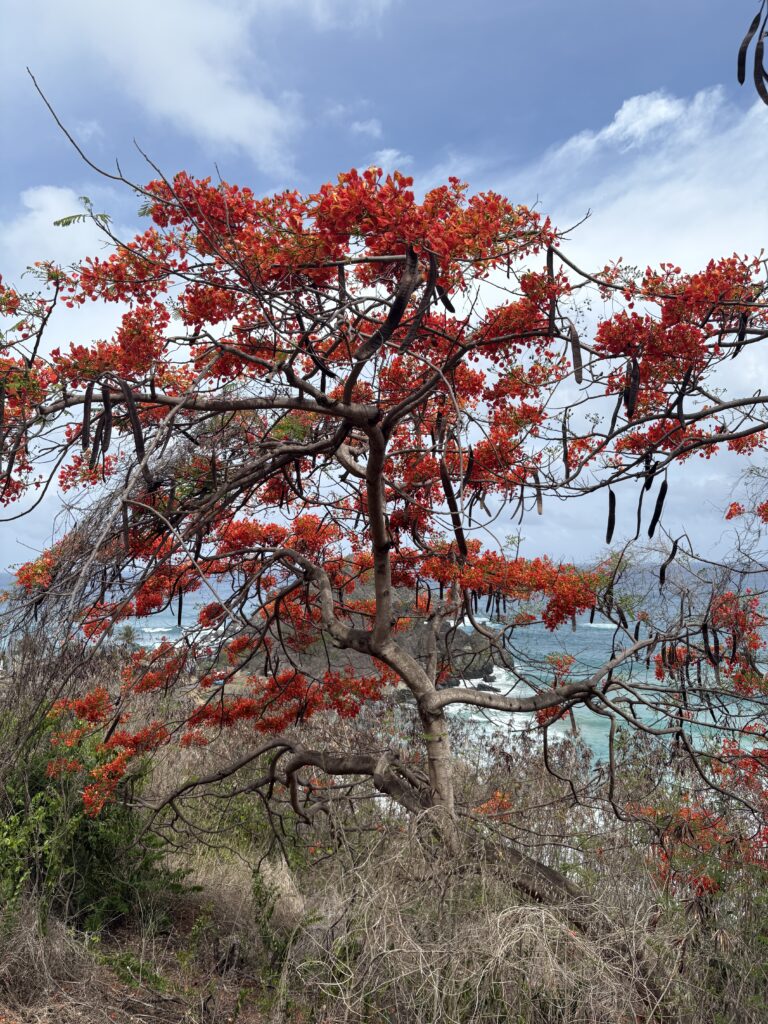
Fire trees 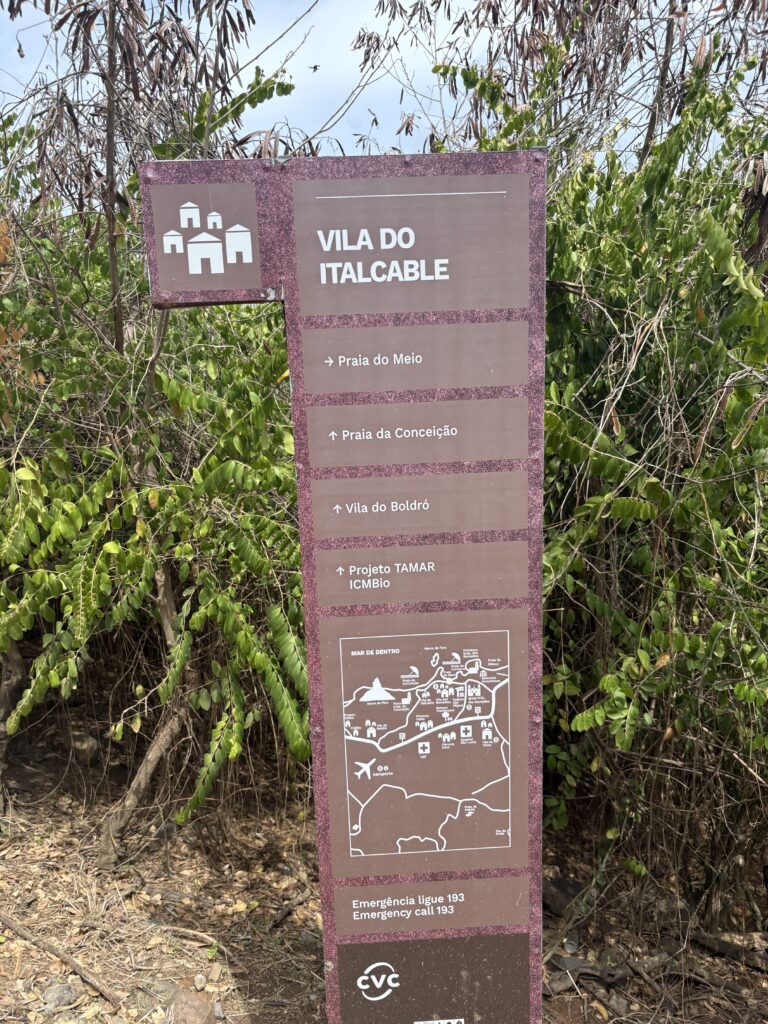
Unpronounsable 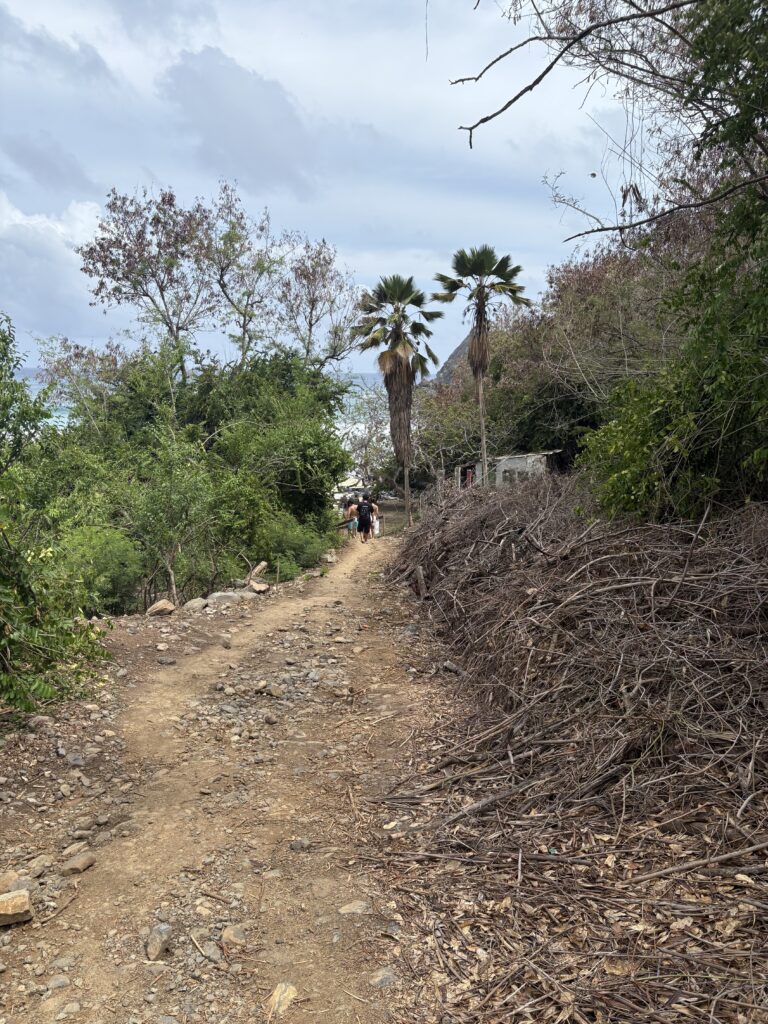
The path to the beach 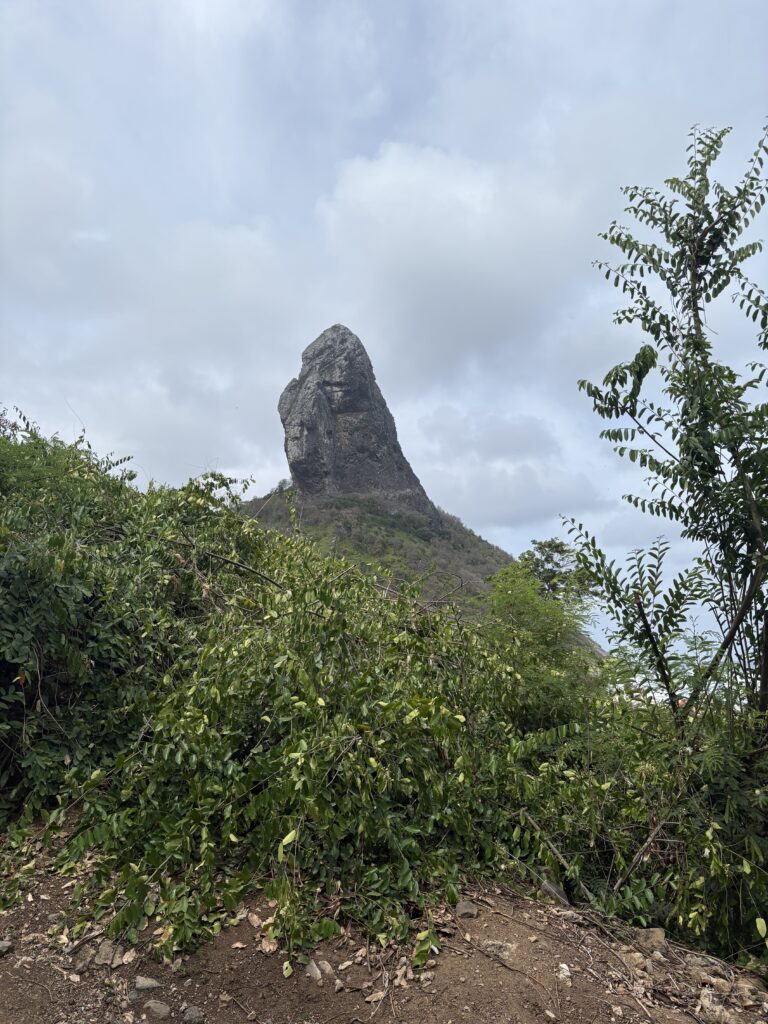
The landmark, spottable anywhere 
Praia de Conceição 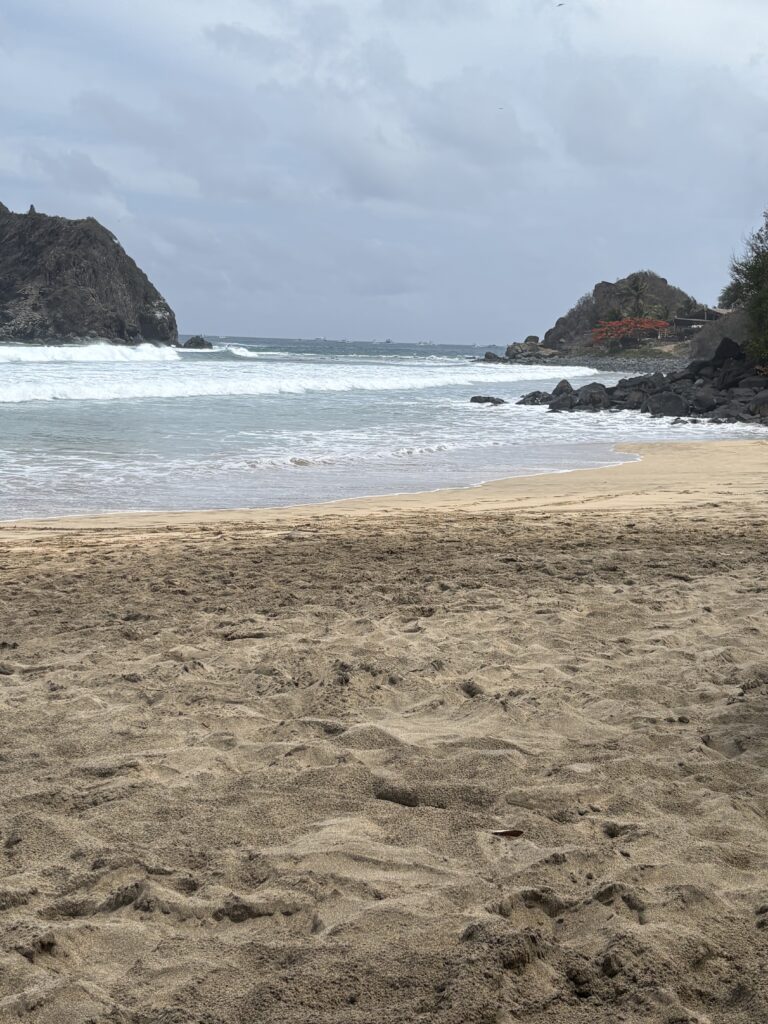
Praia de Conceição 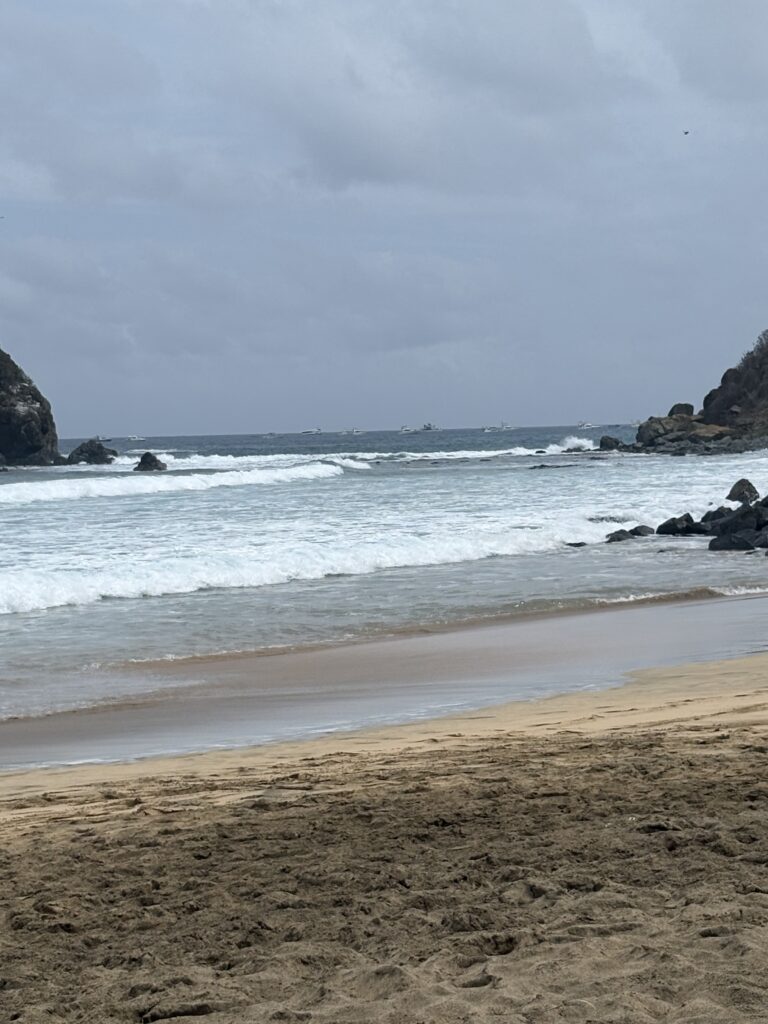
Praia de Conceição 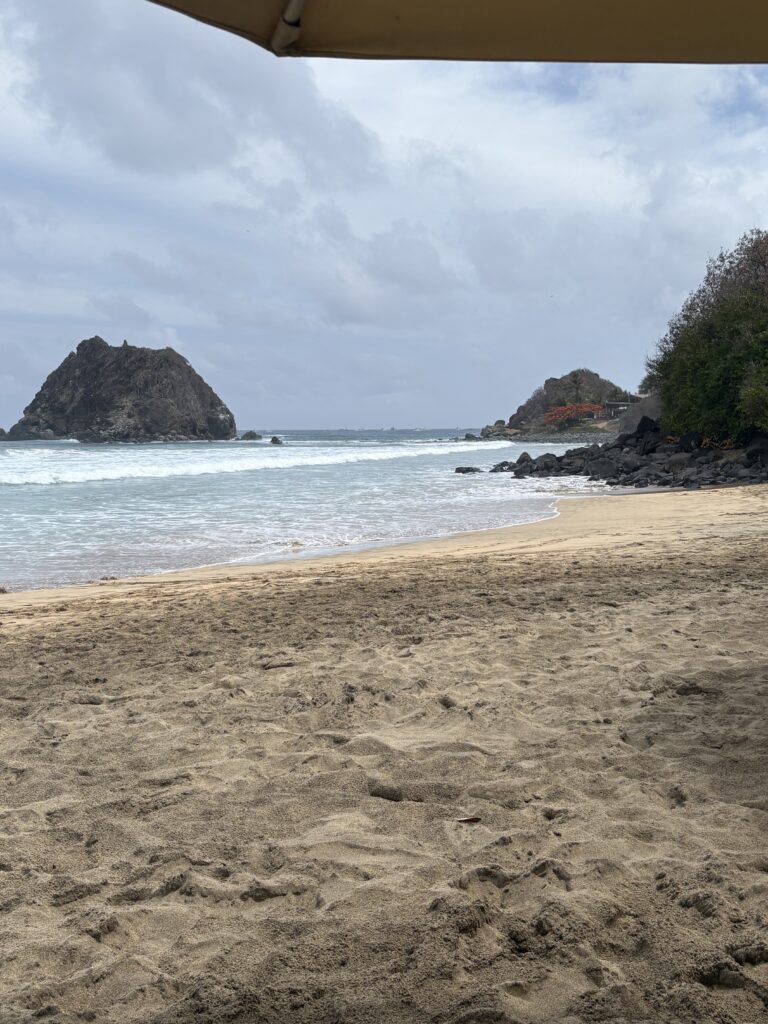
Praia de Conceição 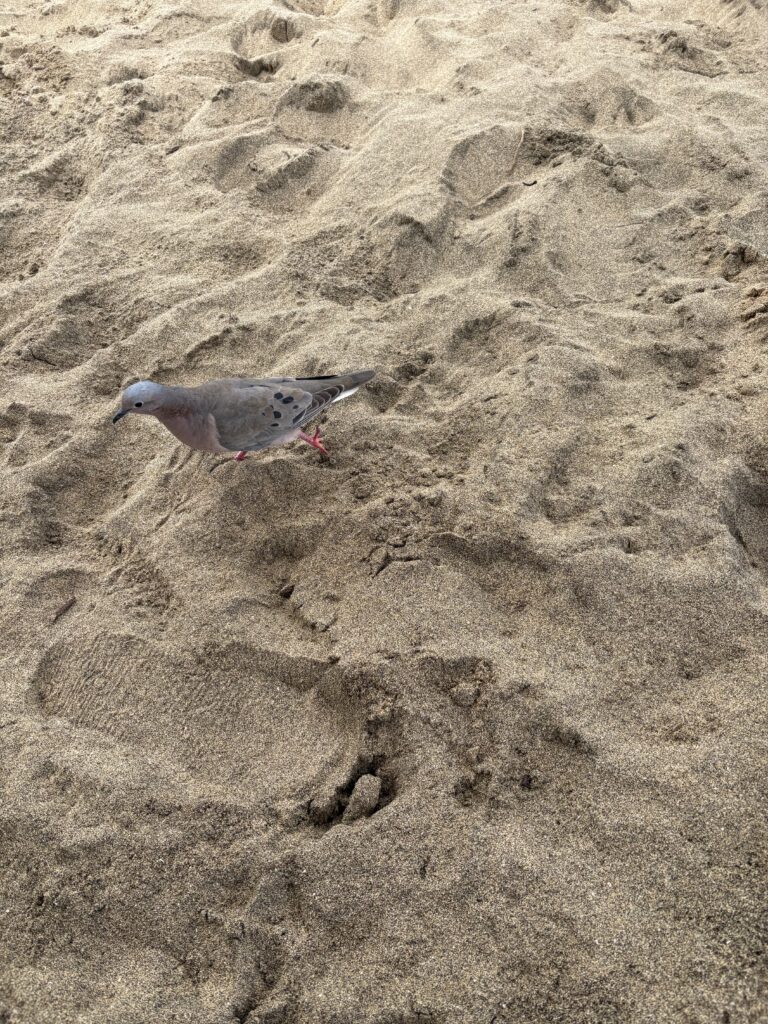
Praia de Conceição 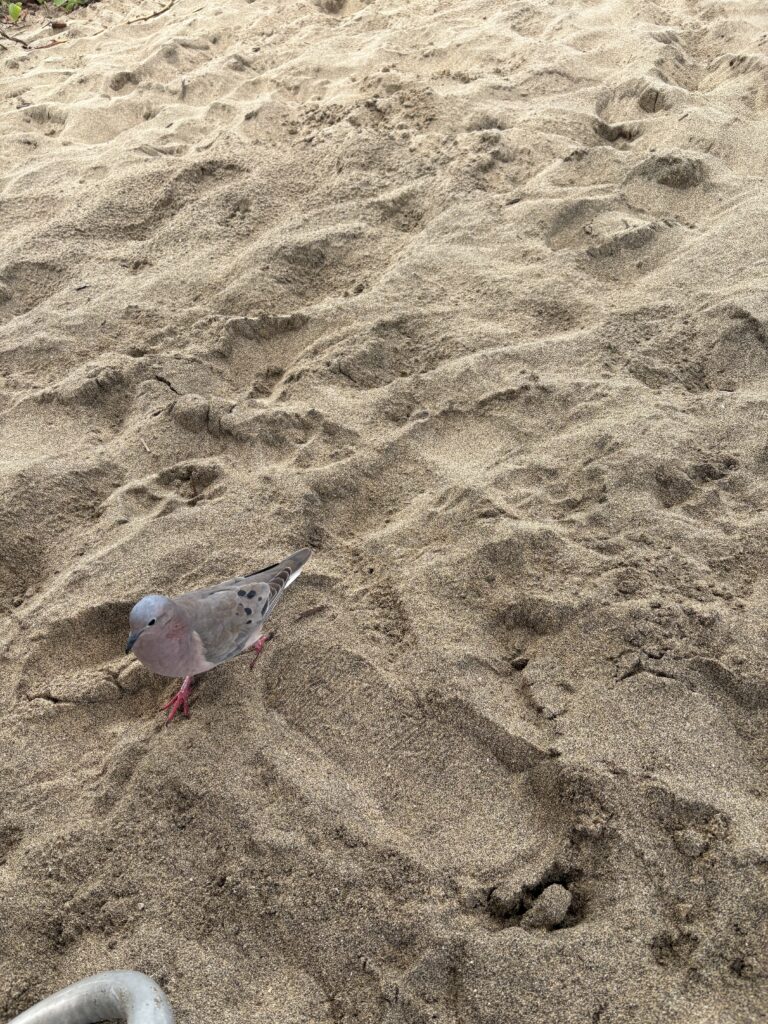
Praia de Conceição 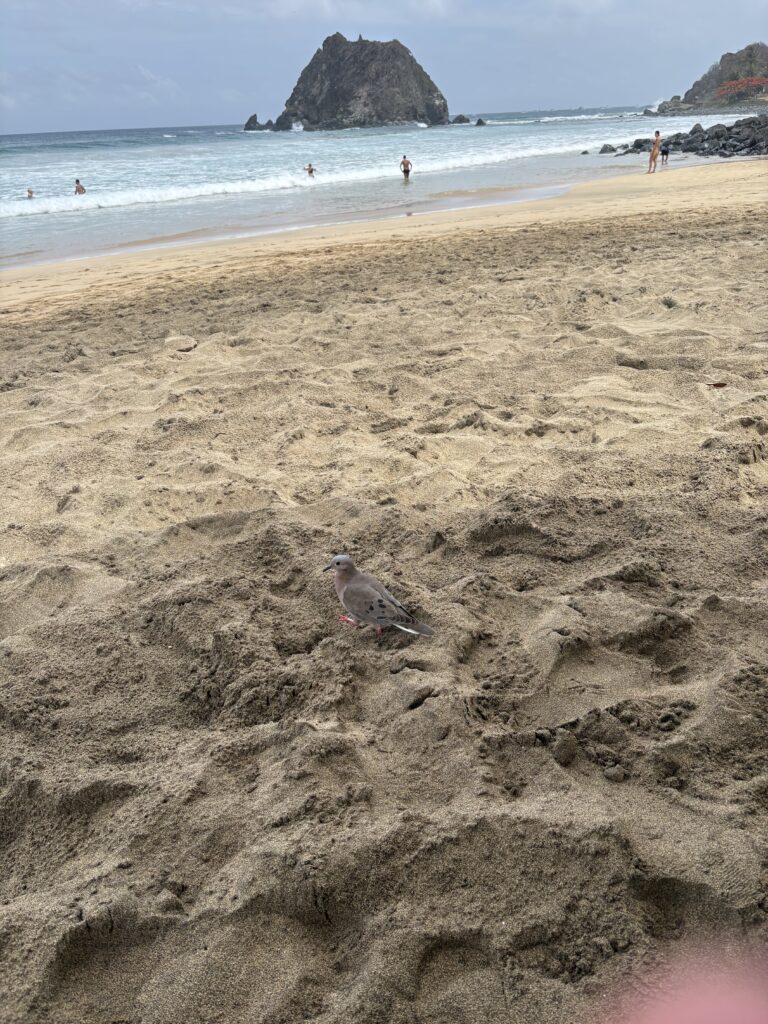
Praia de Conceição 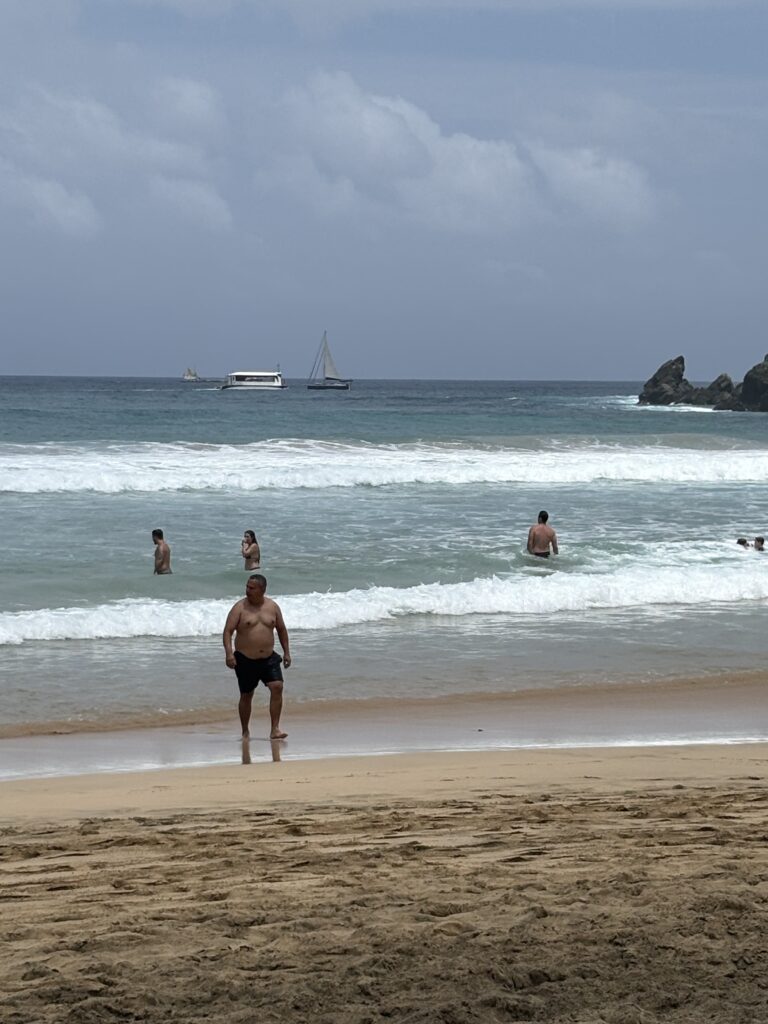
Praia de Conceição 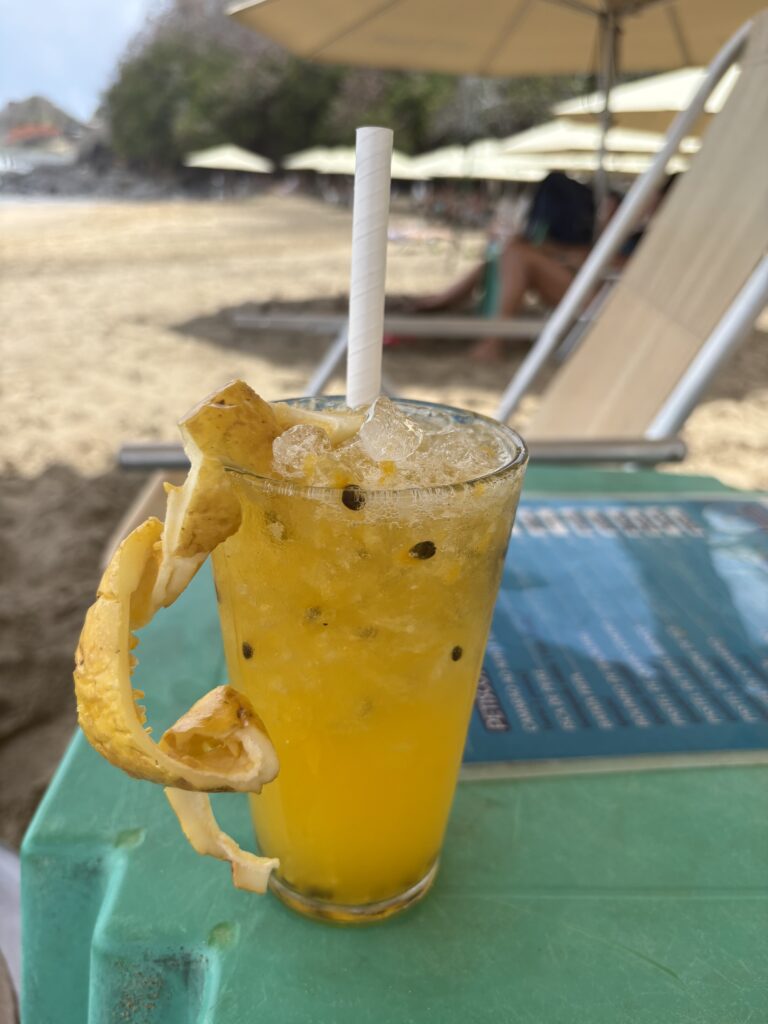
Capirinha de maracujá 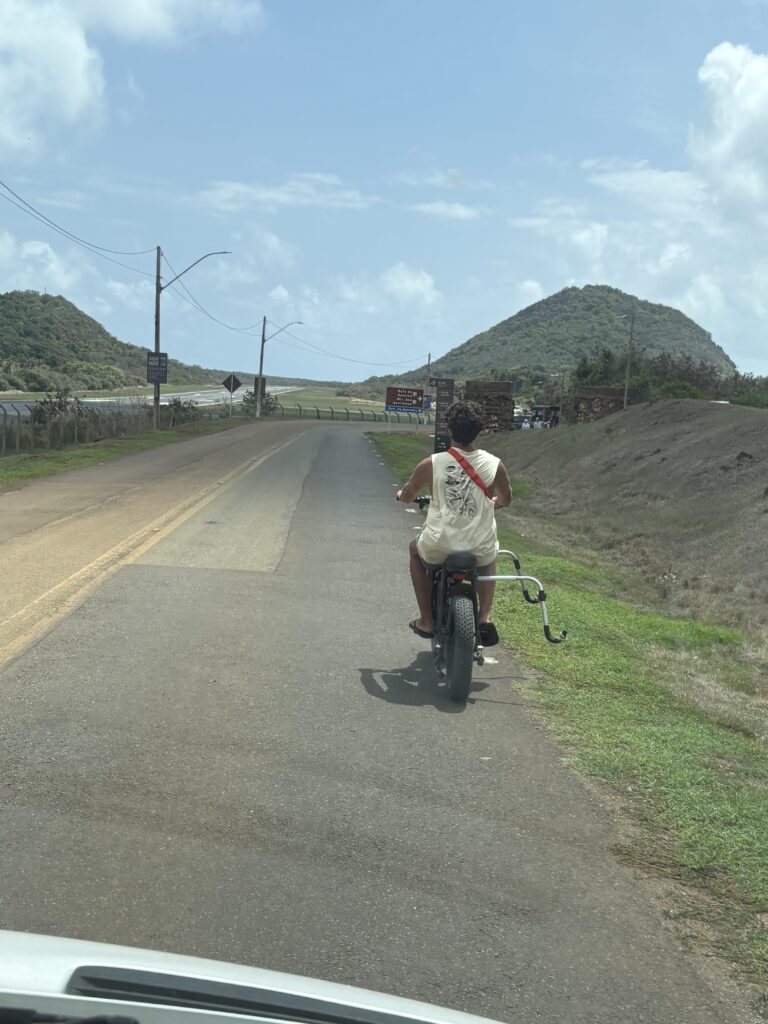
How cool – a bicycle with surfboard holder -
Brazil: Fernando de Noronha, Fact Finding Mission Day
After yesterday’s wonderful, albeit unsuccessful for the purposes of my mission, beach day at Praia do Boldró, I went back over the photos that I still had, scanned in from our very old and faded Scally album, to see if there was anything I could find to identify where we might have been anchored. And realised to my great delight that indeed, there was one. Why hadn’t I thought of that yesterday? So back I went to the concierge, and he assured me that it must be Praia do Porto de Santo Antonio.
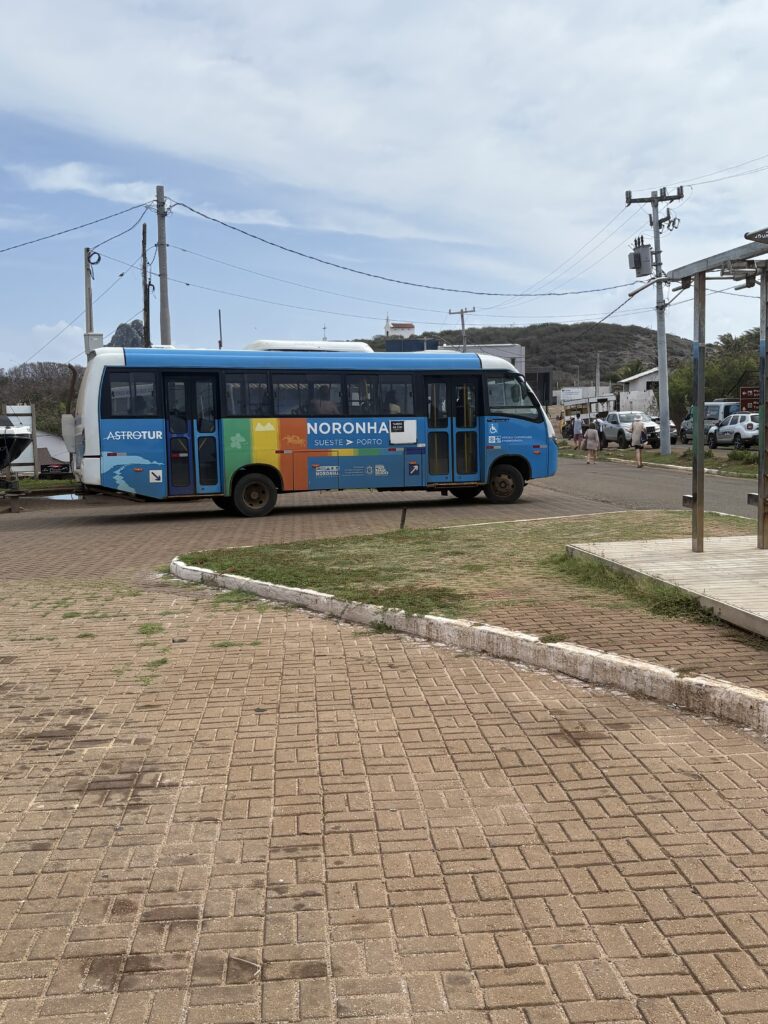
I wanted to hire a buggy for some fun and adventure but they were only available for a three day hire, minimum. I didn’t want to take a taxi and would have loved to go by bicycle or walk. But everyone said that it would not be a good idea, much too far (in the end it wouldn’t have been – possibly an hour only). Anyway, when in Rome, listen to the locals. So I caught the bus and got dropped off at Praia do Porto.
It’s a little bay, now with a wharf and jetty to protect fishing boats, rubber dinghy’s that take divers out to sea and the tourist boats and catamarans that take tourists and visitors around the island. Much as I would have loved to see it from the sea, with the same view as from Scally, I was not going to risk seasickness in that choppy sea. So I had to be content on land.
I walked up to the lifeguards, who doubled up as fire fighters, and asked for a few minutes to explain my story and show them the photograph. There was little doubt in their mind, but more importantly mine, that this is indeed where we had been anchored. The wharf had only been built in 1987, a few years after we had been here. Prior to that, it was a simple protected bay.
I was overjoyed at locating where we had been moored and spent a few hours sitting on the sand, watching and observing and remembering. There were some rock formations too, not the same size or length as on Praia do Boldrió, but they were there. This was undoubtedly the beach where my brother and I had capsized in the Wag, Jerry cans all afloat, and swam to shore, pulling the painter in tow, to get fresh water and help for my father.
Dates: February 2026
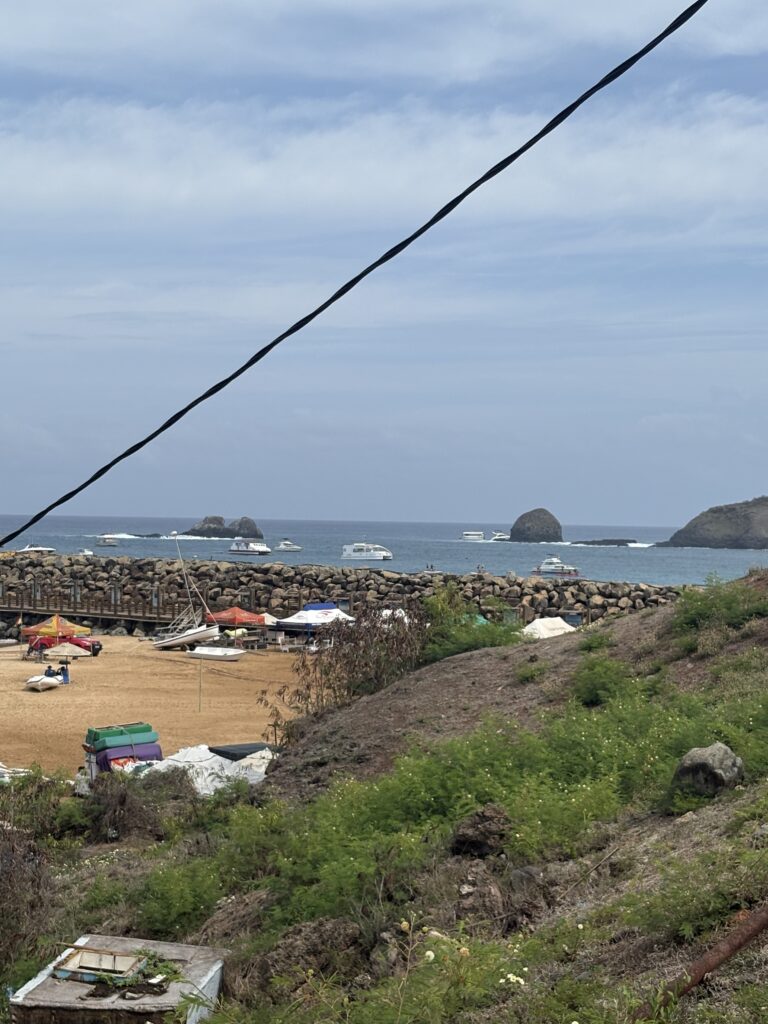
Where we might have been anchored 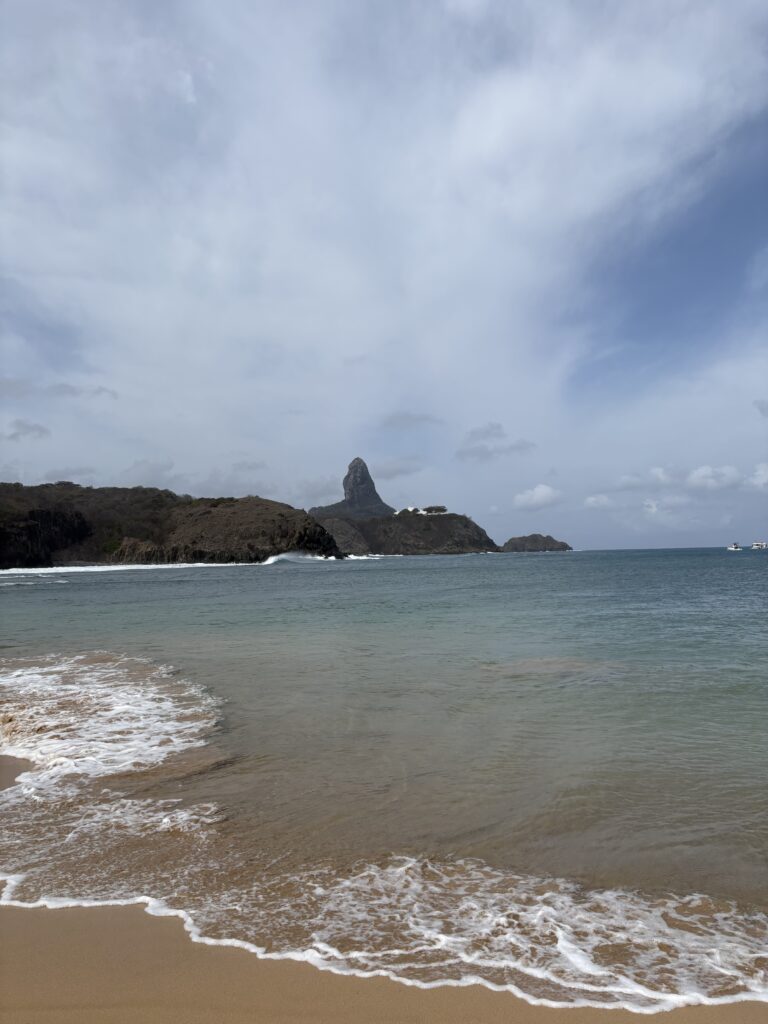
The landmark in our photo 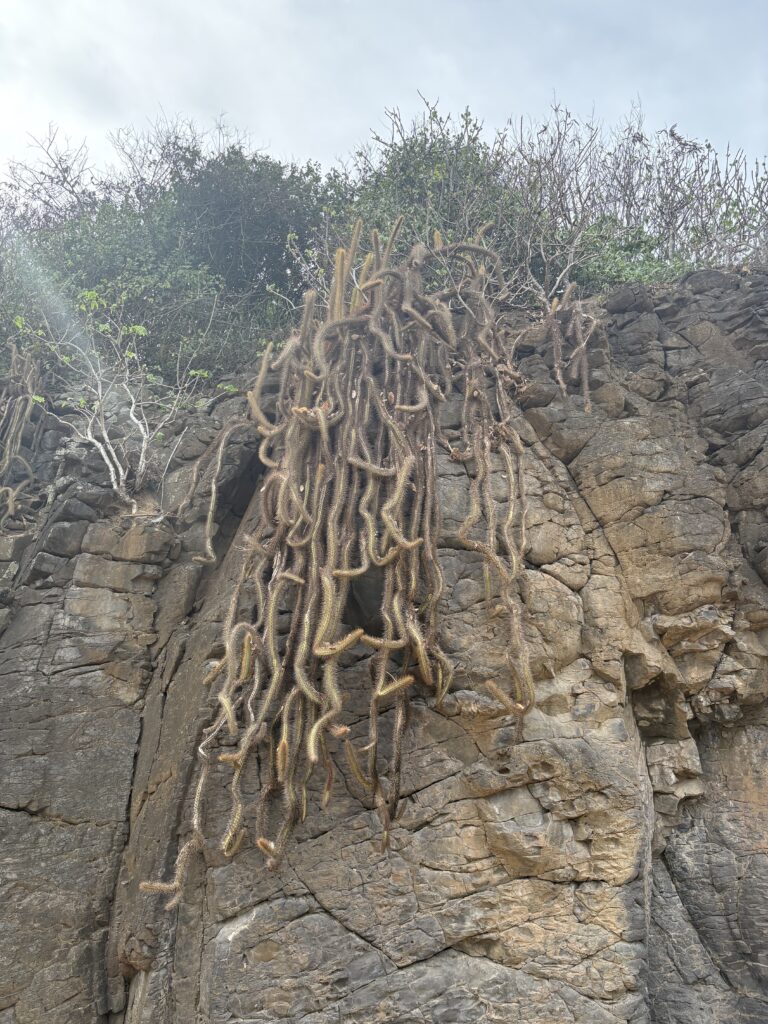
Very strange flora on the beach 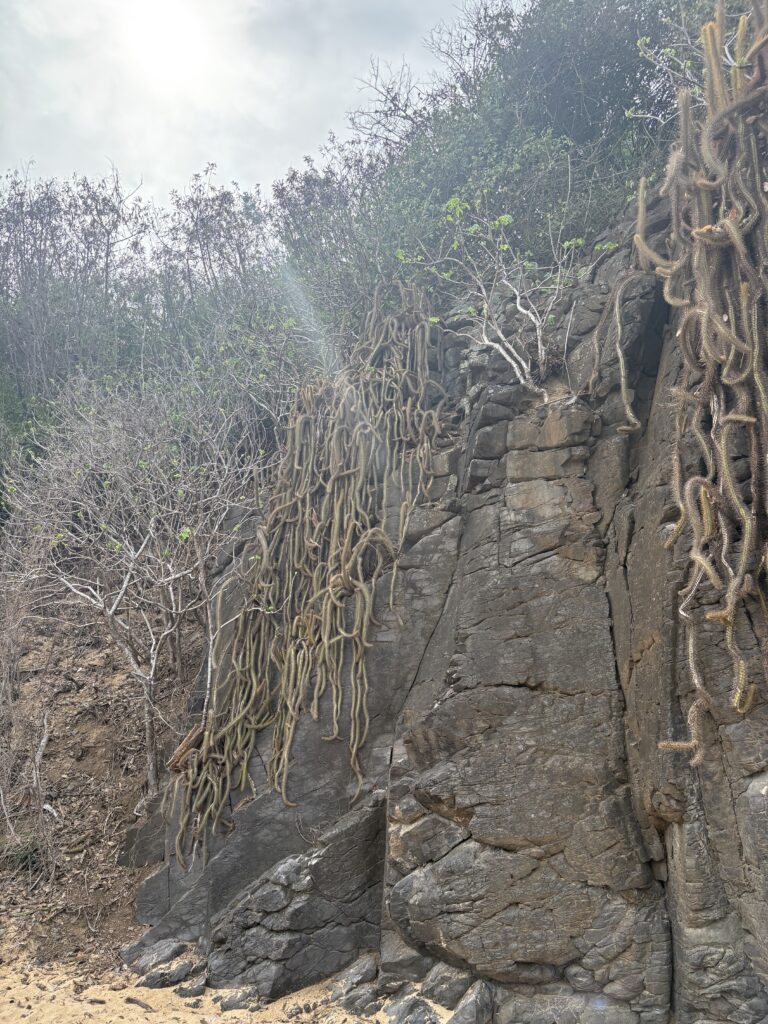
Strange flora on the beach 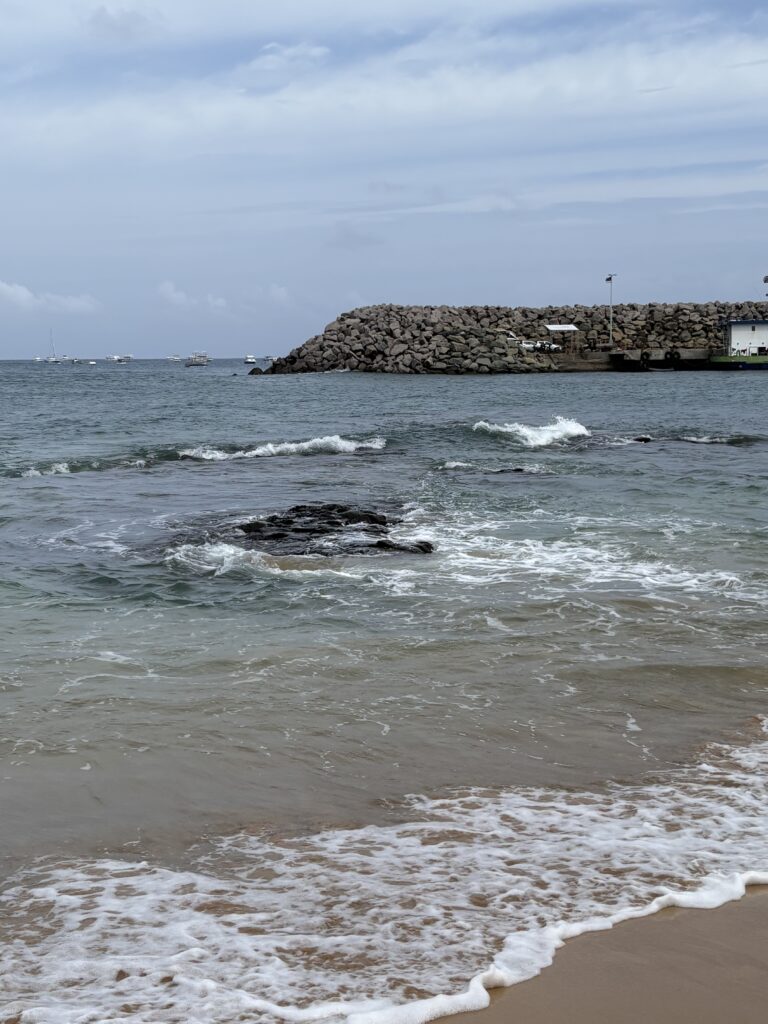
The new sea wall with sail boats out in beyond, where Scally would have been 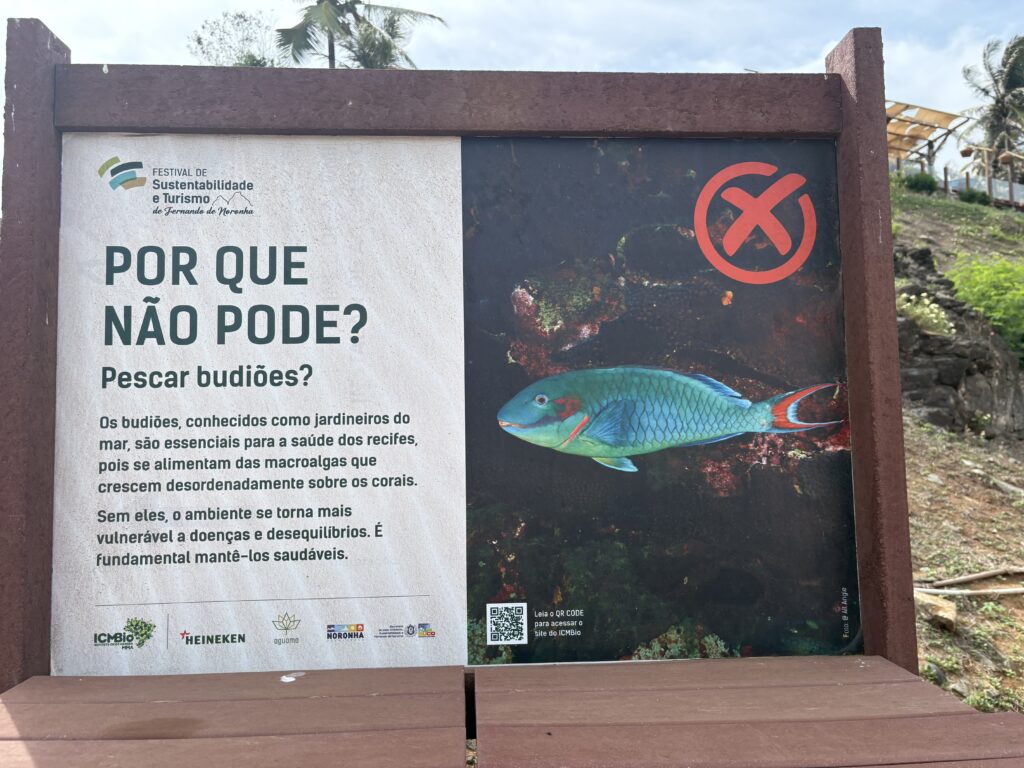
Protecting wildlife 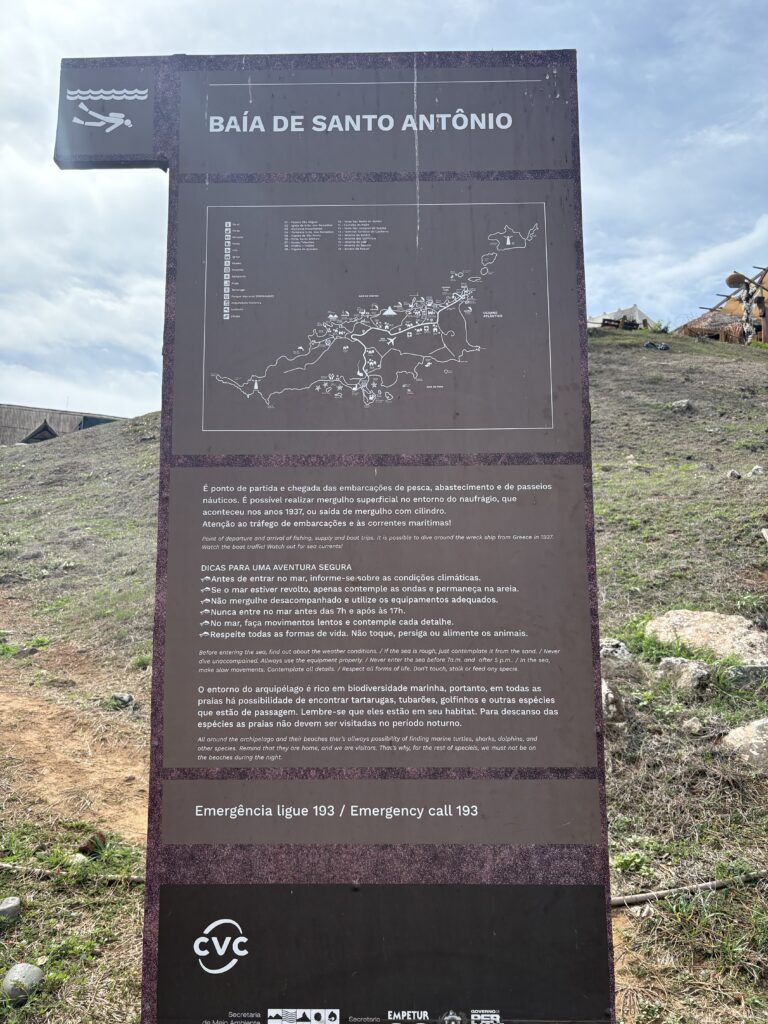
Praia do Porto de Santo Antonio 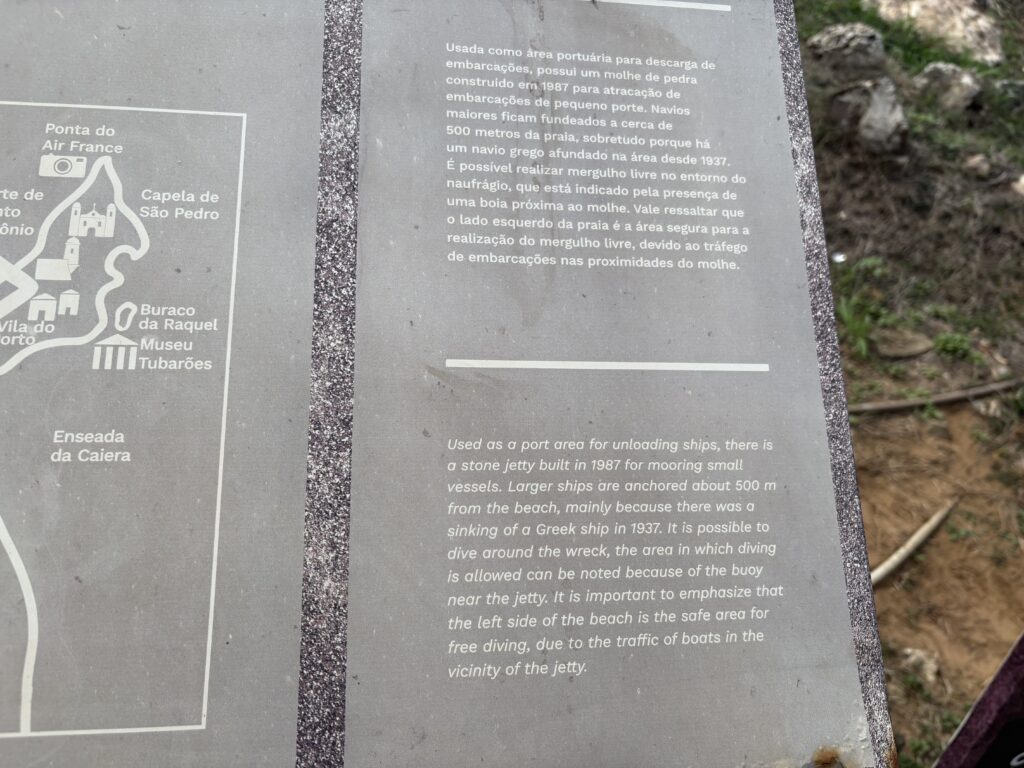
Information about the bay 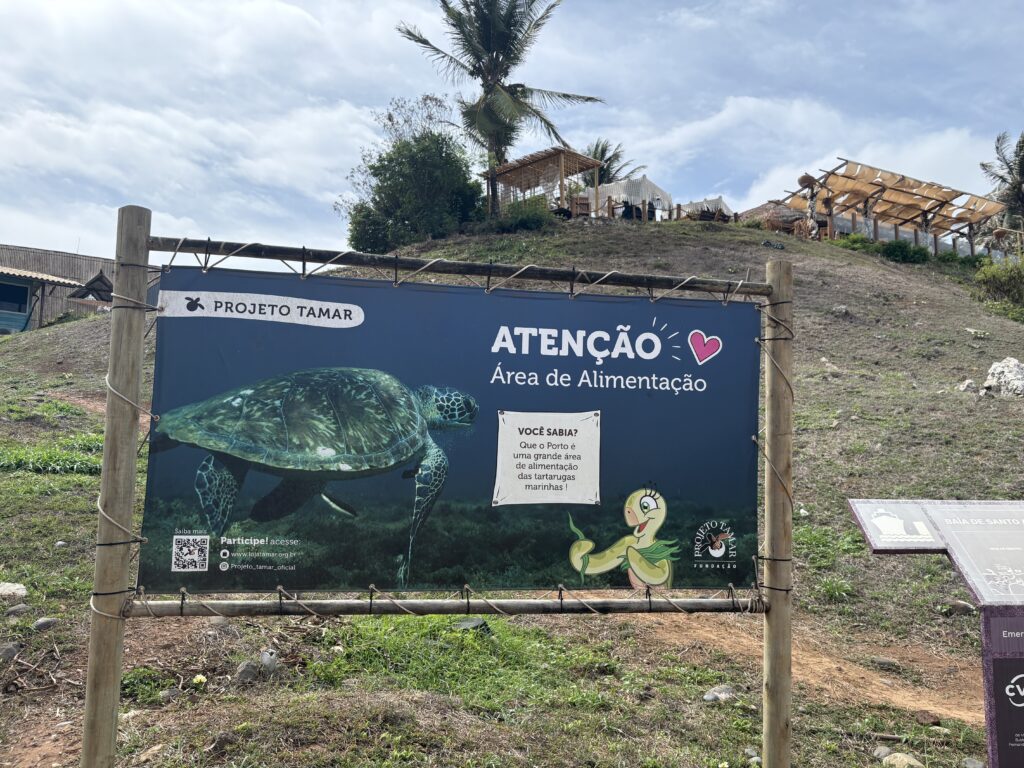
Protecting wildlife 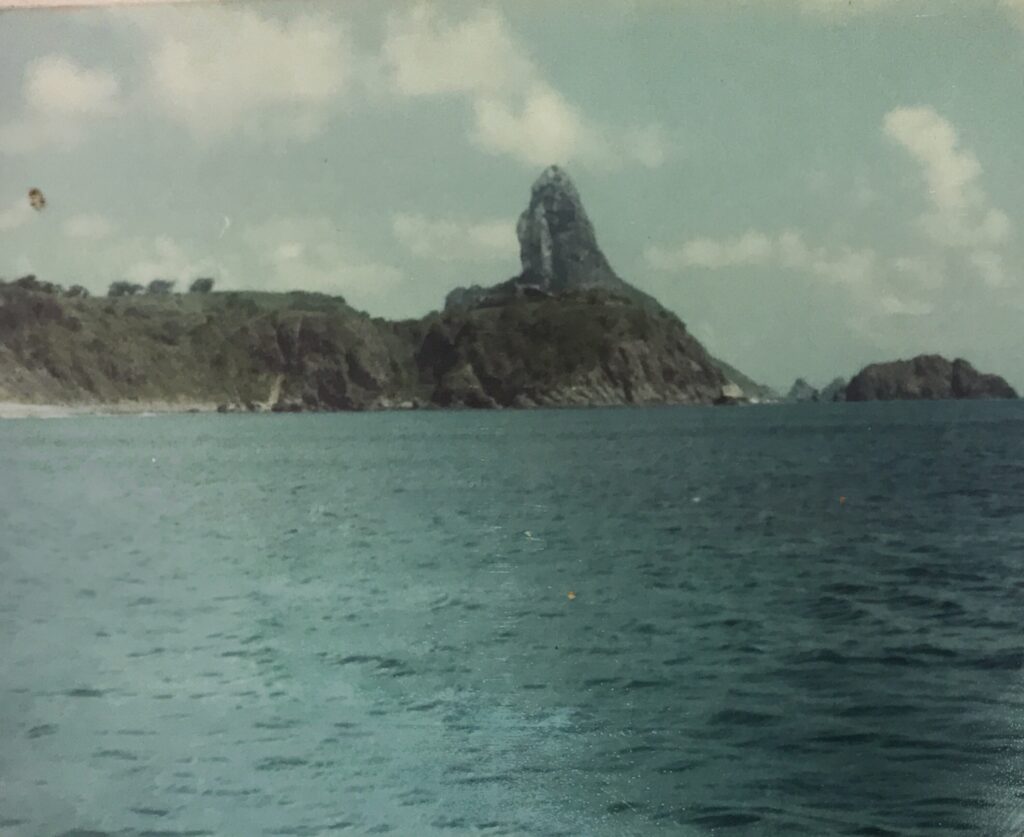
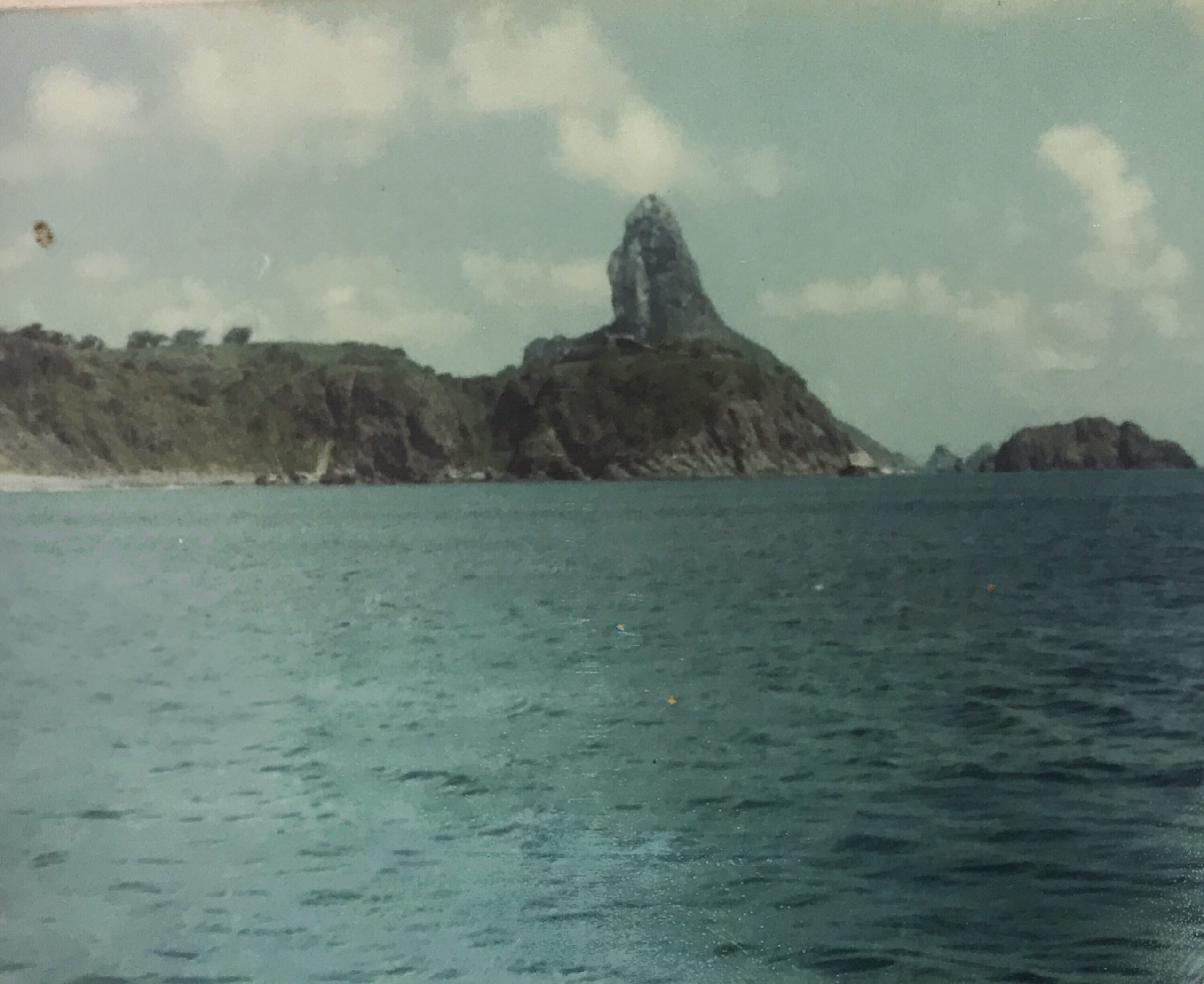
Our only photo of Fernando de Noronha 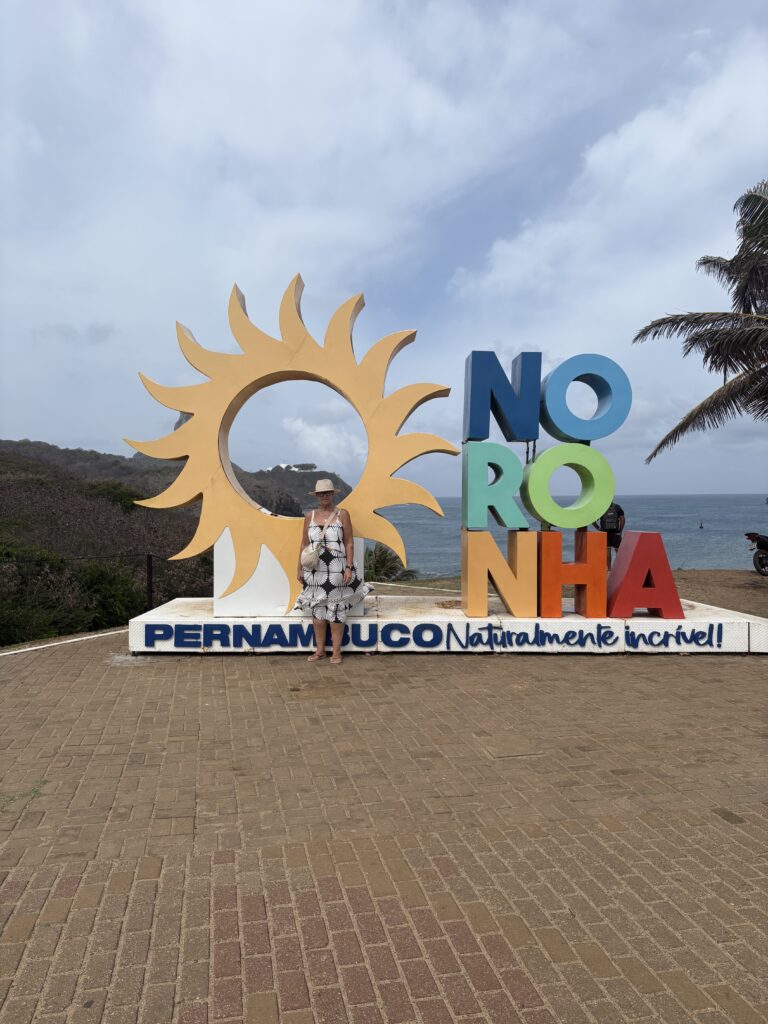
-
Brazil: Fernando de Noronha, Beach Day 1
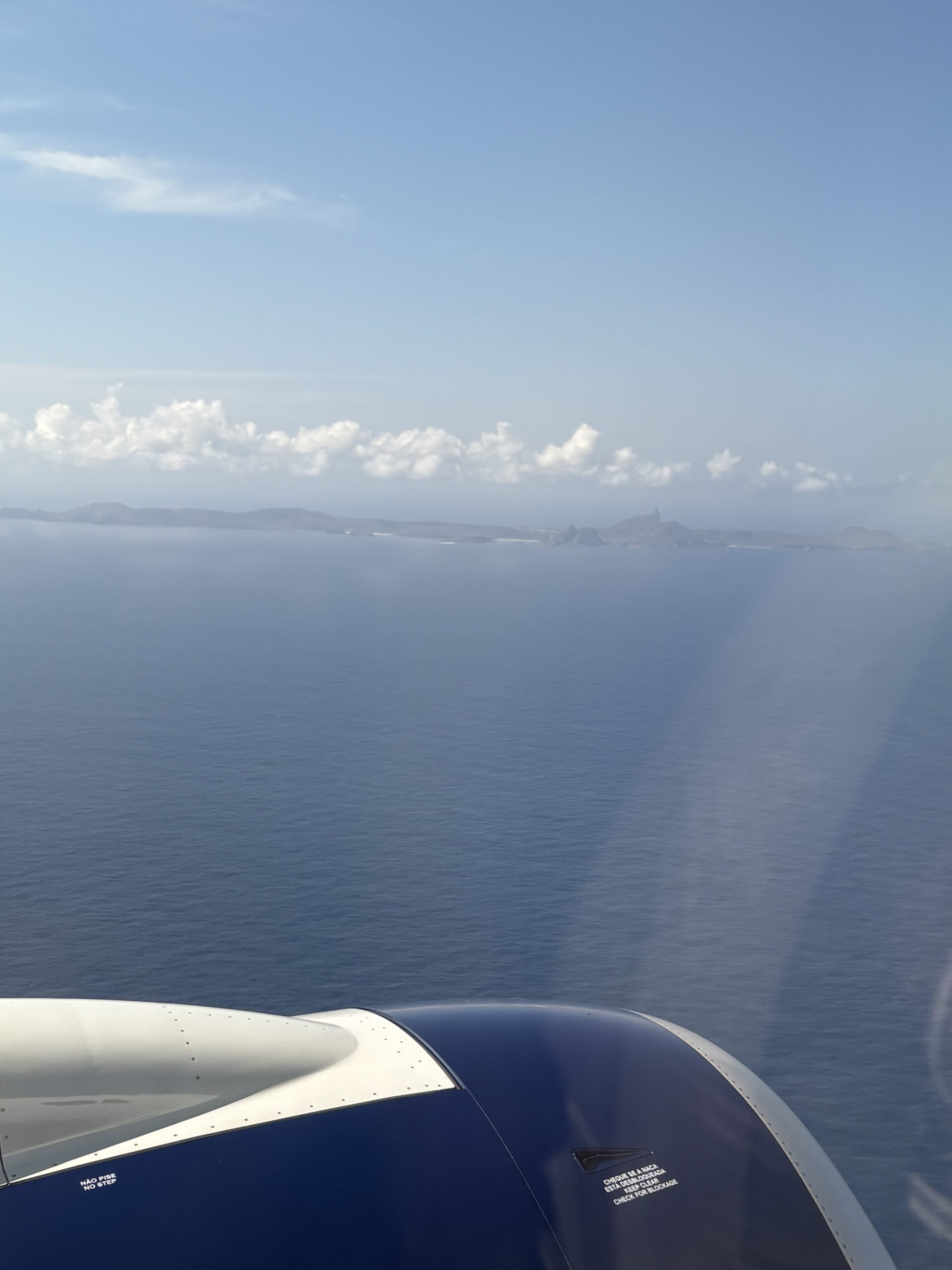
We arrived at Fernando de Noronha after five days at sea after leaving Salvador. Now here I was, forty four years later, but this time I flew in from Salvador via Recife. It was a short flight of just under an hour from Recife. I had read up a little on the island but nothing could have prepared me for how undeveloped the island has remained. In 1982, I distinctly remember the view from Scally after anchoring safely. Long stretches of beautiful sandy beaches, coral reefs and surf, and many many palm trees along the shoreline. I remember dusty dirt tracks, and a couple of shack-like houses. It is still exactly the same, pretty much.
My taxi took me to the pousada, which was basically a set of a few one storey bungalows. They were very friendly and welcoming, smiles and relaxation everywhere, typical to a beachy paradise. This is a beachy island paradise. There are beaches everywhere and it’s what people do. Go to the beach.
I have visited many beautiful beaches. Portugal, has some of the most magnificent ones anywhere in the world, so does the United States on east, west and southern coasts; so does Italy; so does the east coast of the United Kingdom; and don’t even get me started on South Africa. But here, it seems like one of the last places on earth that remains simple, low key, undeveloped, a complete absence of any buildings above two stories, a complete absence of high street shops, fast food chains, supermarkets, bars and cafes. It’s a simple, easy, extremely laid back, original place and I was completely taken in. It is a beauty the likes of which we do not often encounter.
It’s a very small island with one main road and there are beaches everywhere. I really was not sure which one Scally had been on, except that it must have been on the western side of the island, as we had approached from the south west.
On my first morning, after explaining my mission to a young concierge who was more than helpful in trying to identify the beach in question, I headed for Praia do Boldró, with the surity that this was the beach with the most rock formations which at low tide are visible and which at high tide caused large surf and waves. (I had believed from memories that they would be coral reefs, but they are indeed rock formations, much like the pools in Praia de Barros in Brazil. But I remember them vividly, as me and my brother had cut our feet on them when we capsized in the Wag while heading for shore with Jerry cans to get fresh water).
Praia do Boldró is truly a beautiful beach. Long and sandy. Huge surf crashing over the rock formations visible and invisible. Only a handful of people. No buildings; (I did ask myself what people would do if they needed the toilet, but I guess the palm trees and dense bushes behind served the purpose). There was a kind old Brazilian man at the entrance who, for a hundred Reais (about twenty Swiss francs) would set up an umbrella, deck chair and little table. I was very grateful for the shade and happy that I had brought a little picnic and lots of water. It was a very hot day, with the sun blaring down on the beach, the sand too hot to walk on without slip slops. There was one stand selling Caipirinha, water, coconuts and watermelons and that’s that.
I settled in for my day at the beach, going in and out of the beautiful, clear, fresh, warm and unpolluted water, and staring out beyond the rock formations, trying to picture Scally anchored there. Towards the end of the day I was absolutely sure it was not this beach, it was too exposed, too open to the wide open sea, and I could not imagine my brother or I setting anchor here.
My mission had failed, but I still had some days left on the island and I had had a magificent day at the beach, including a wonderful Caipirinha.
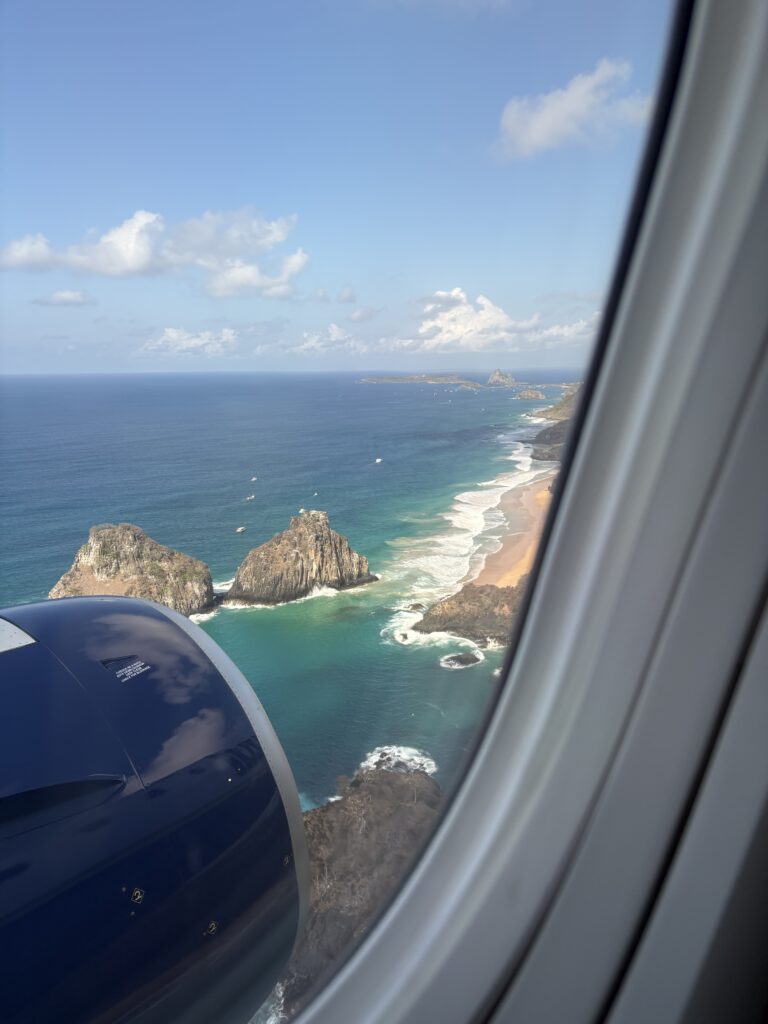
Fernando de Noronha from the air on arrival 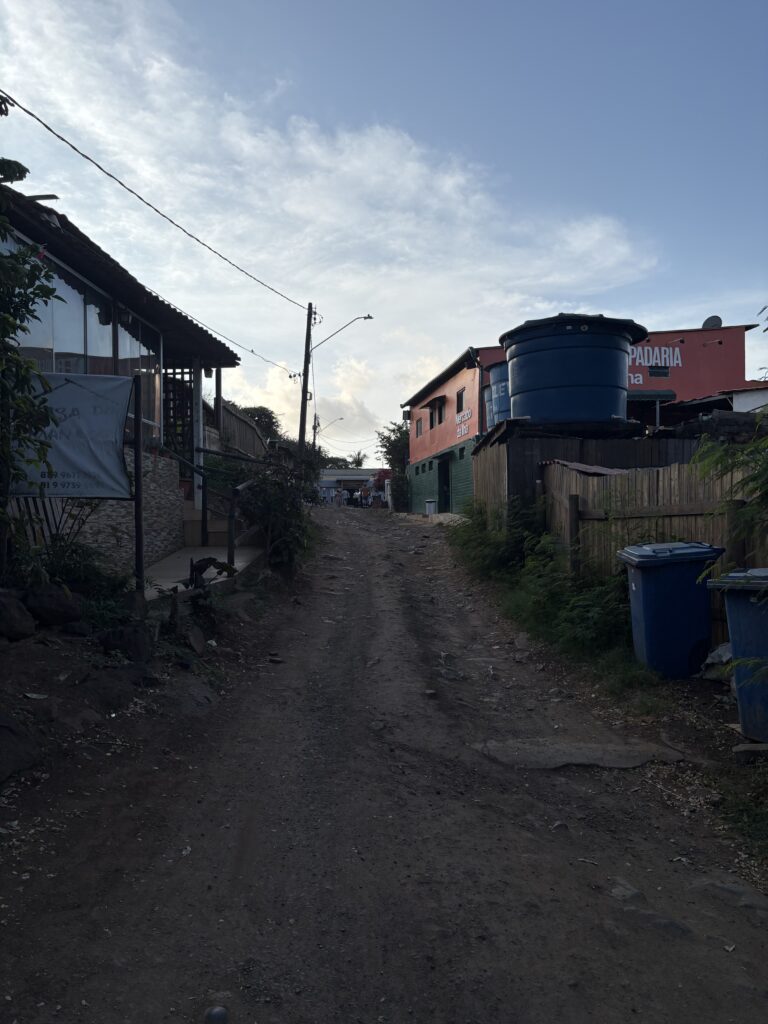
The side street leading away from the pousada 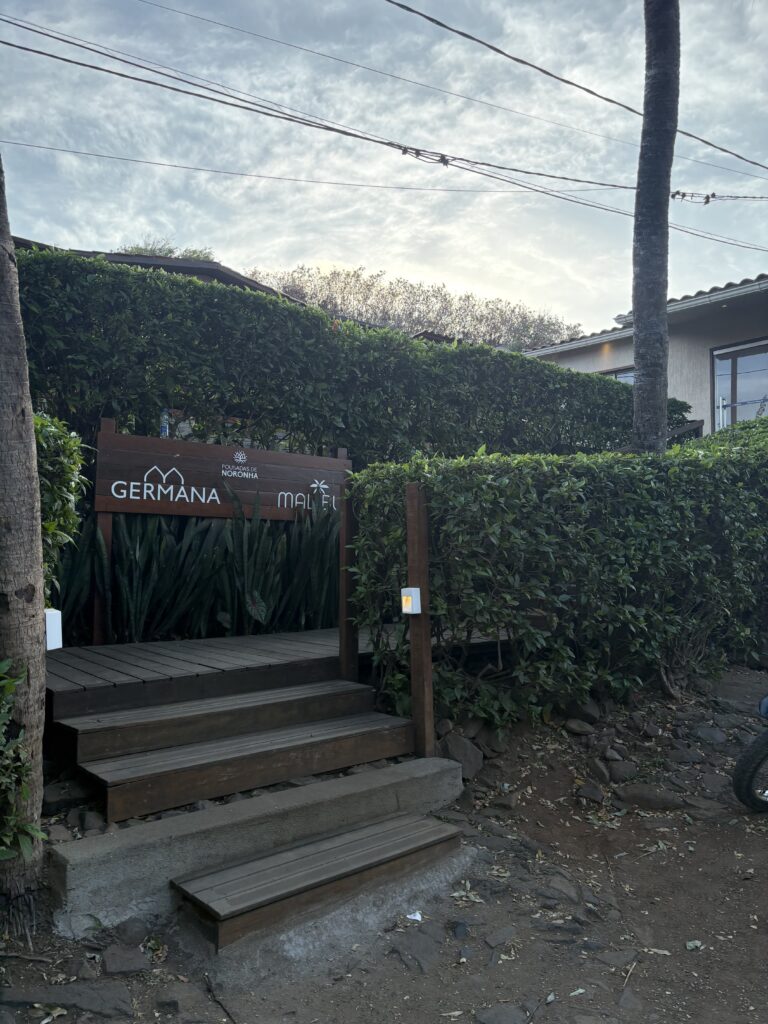
The entrance to my pousada 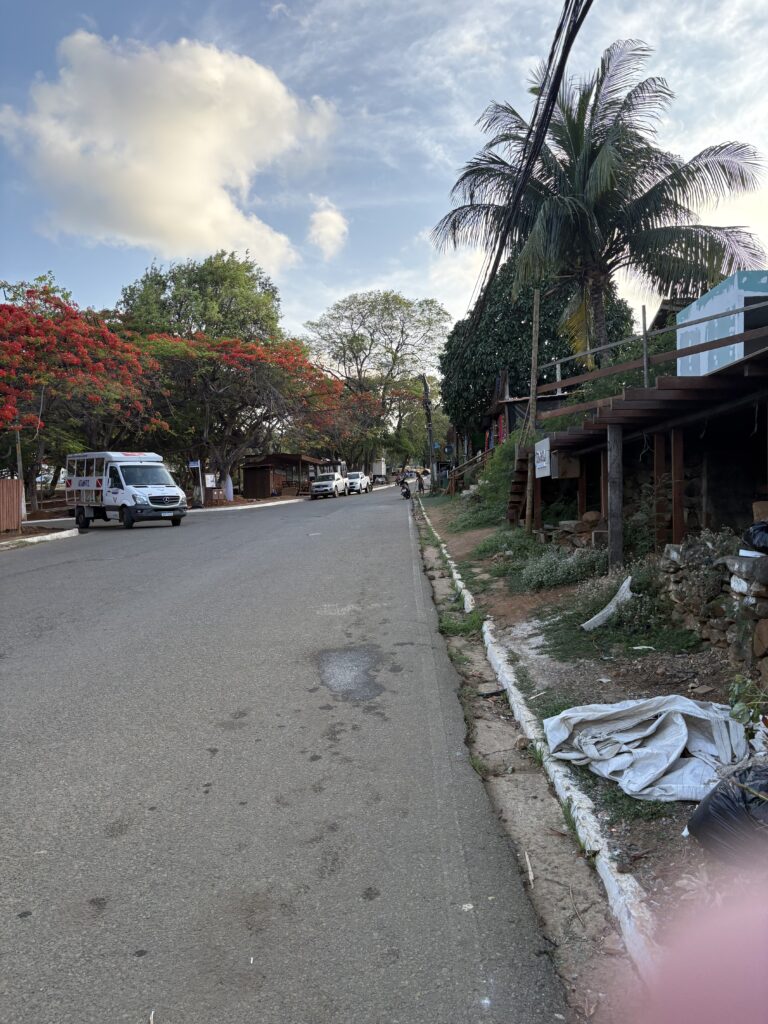
The Main Street 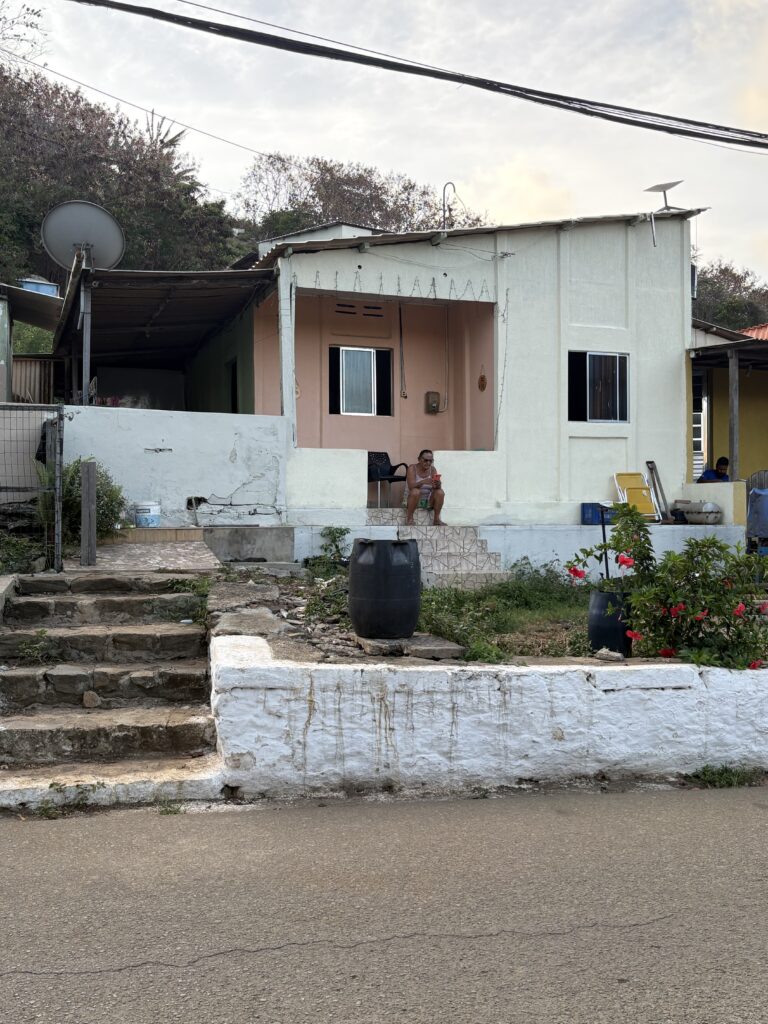
The types of houses 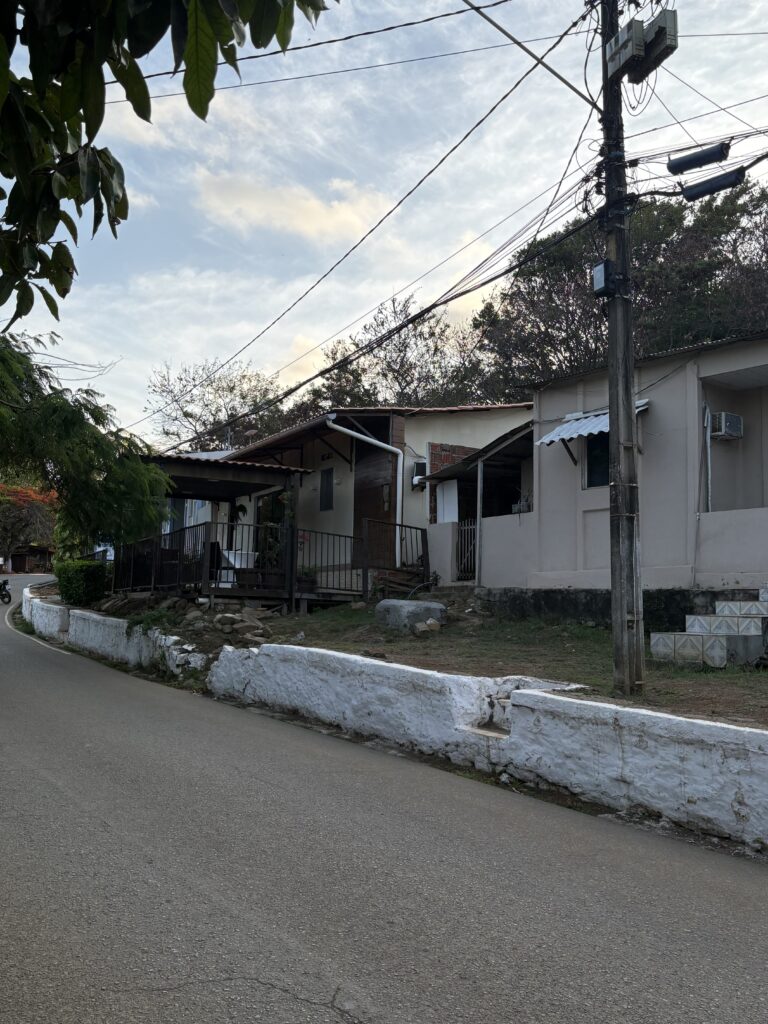
More houses along the Main Street 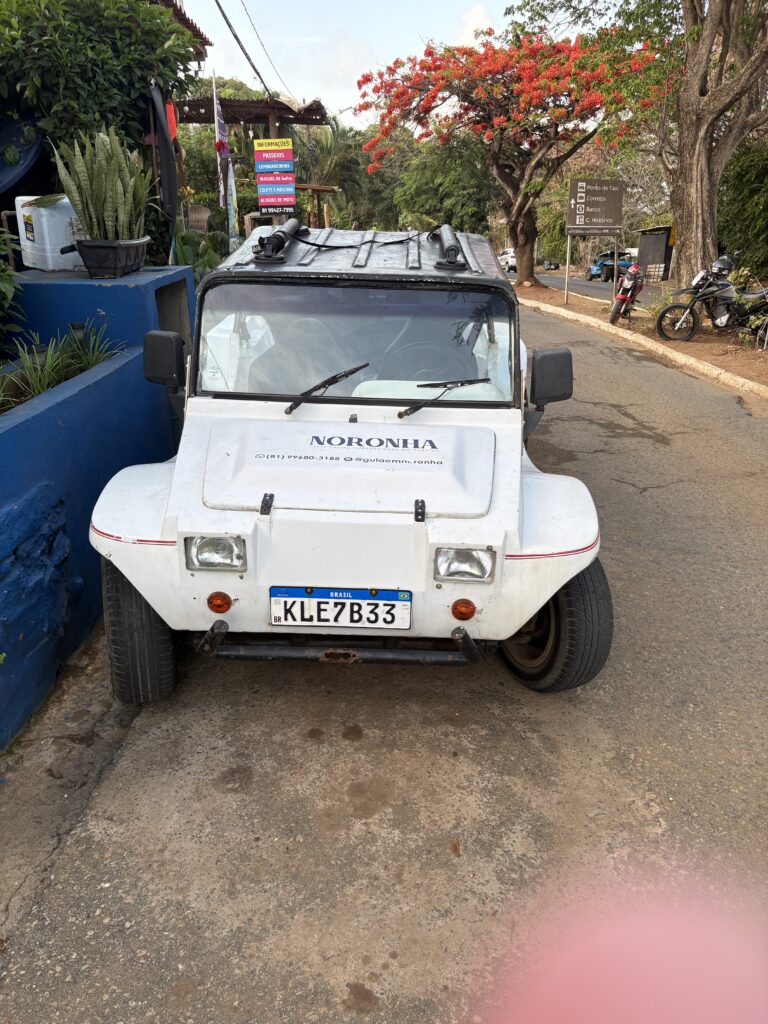
Beach buggies everywhere 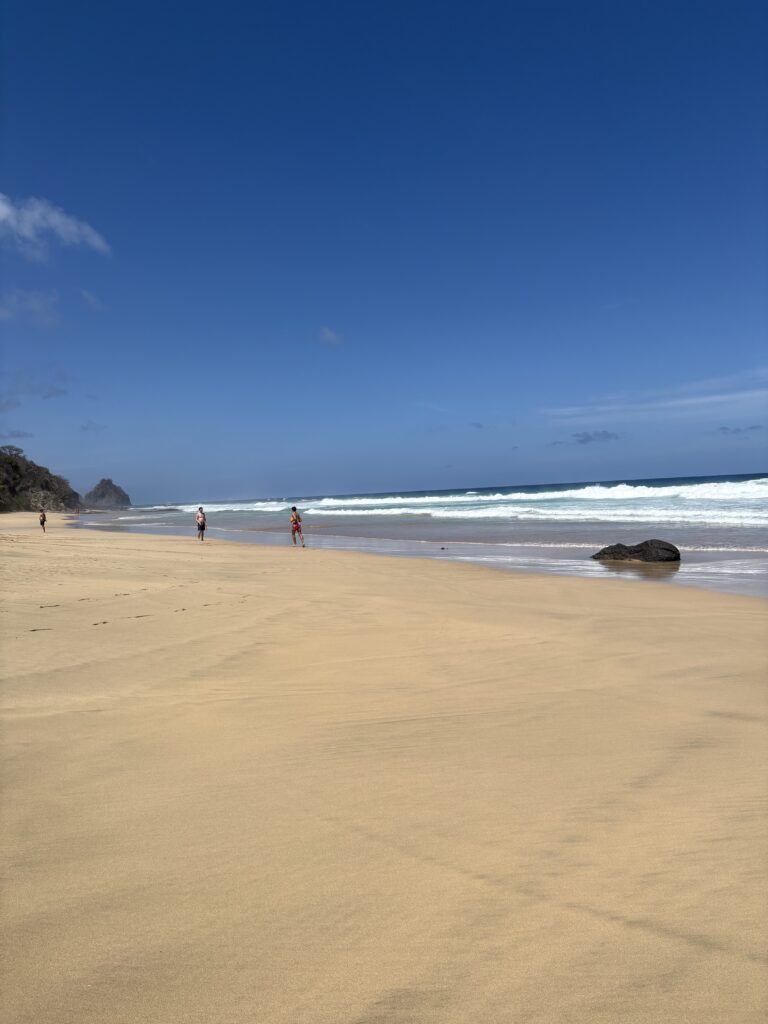
Praia do Boldró 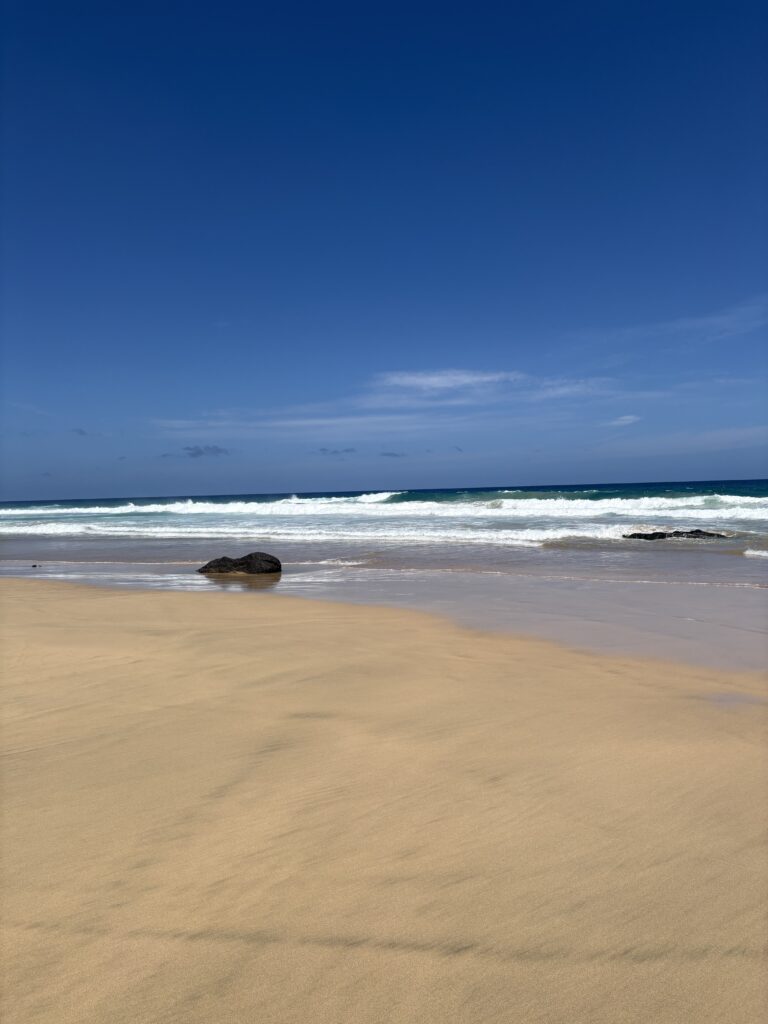
Praia do Boldró 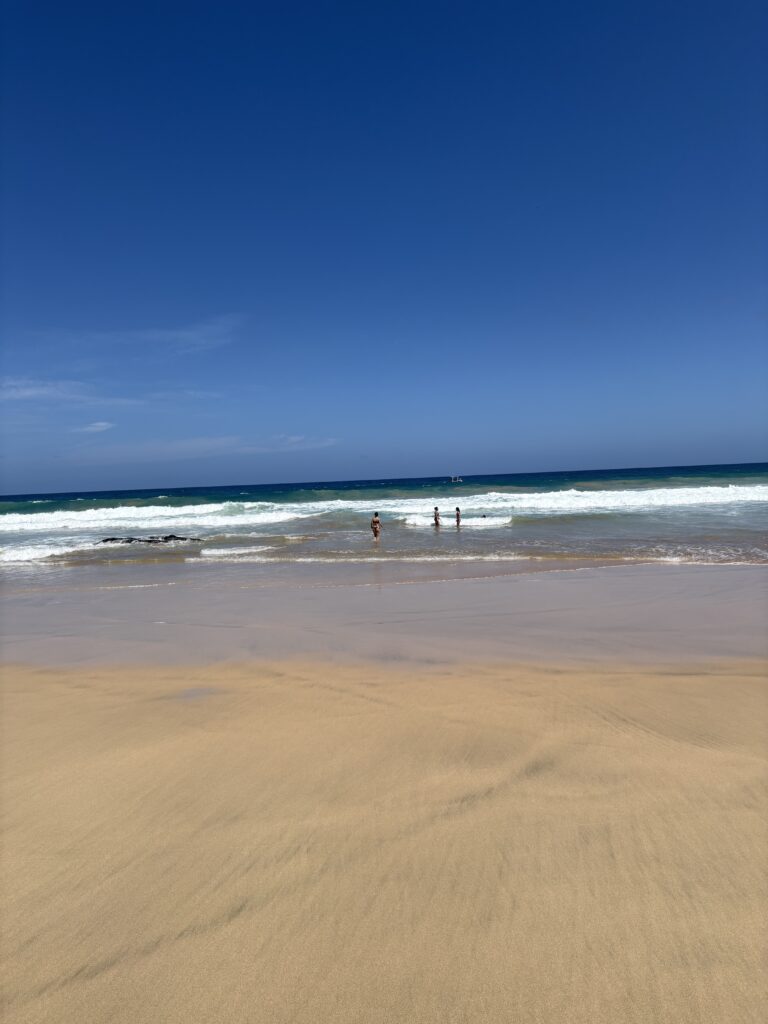
Praia do Boldró 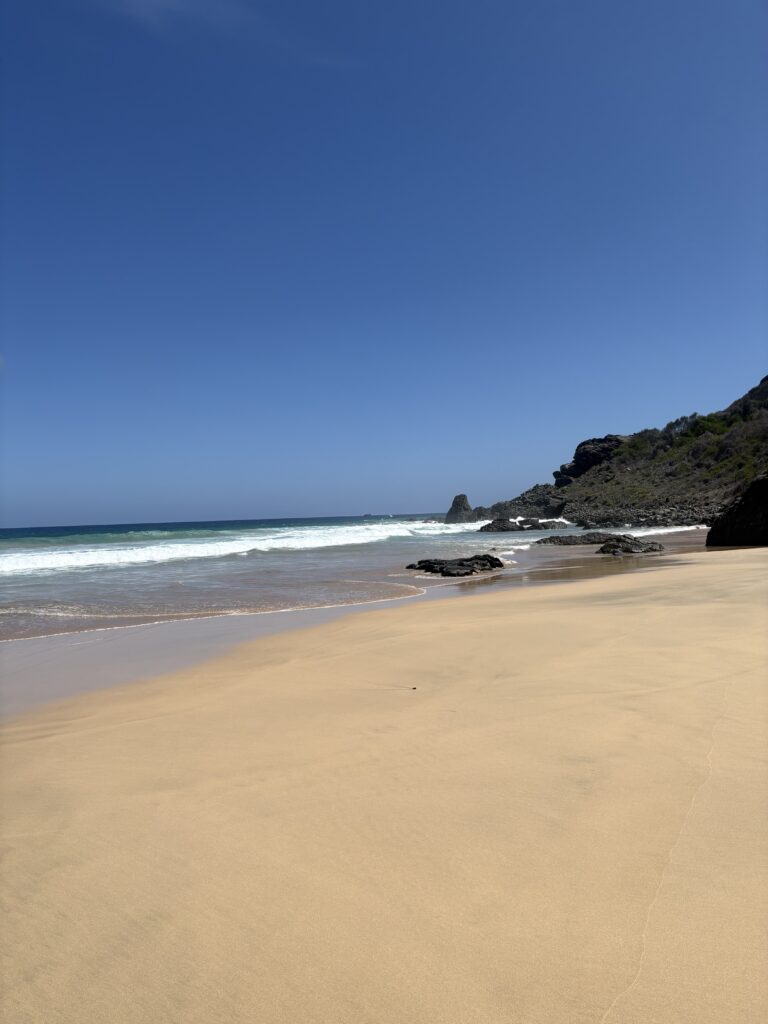
Praia do Boldró 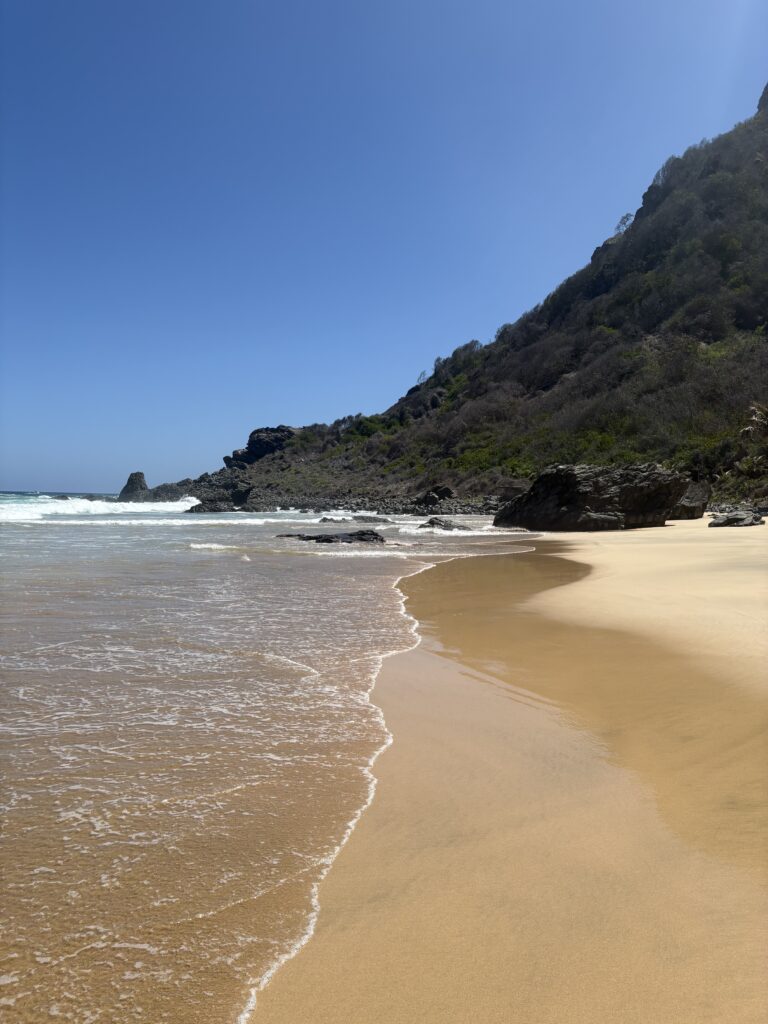
Praia do Boldró 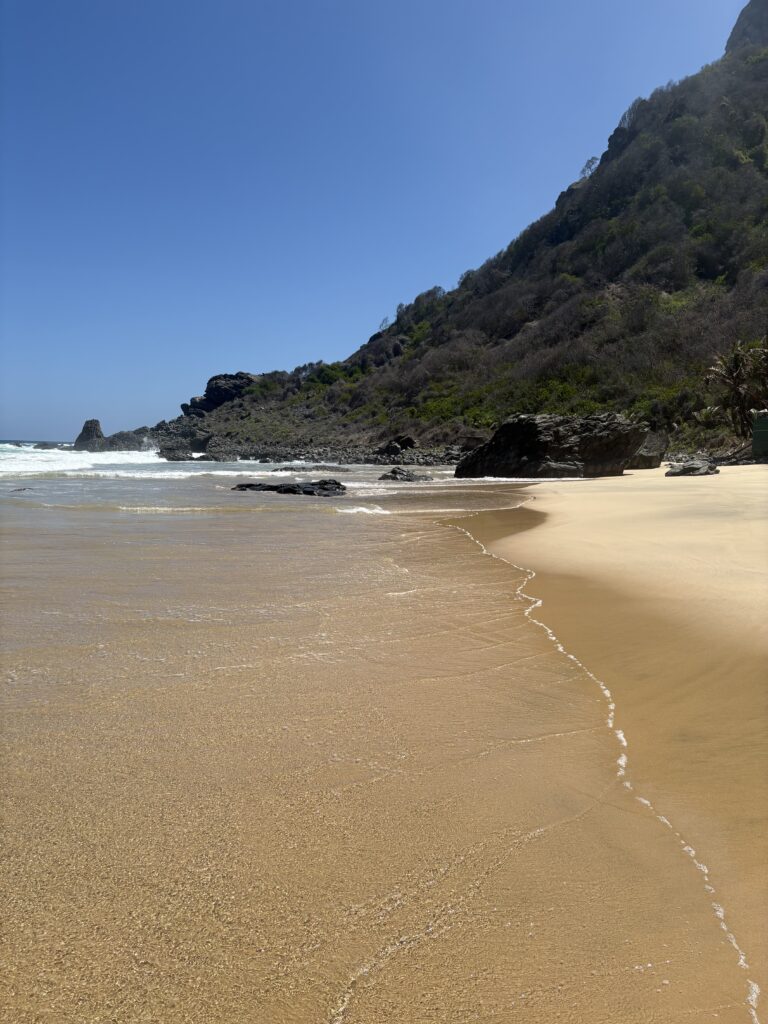
Praia do Boldró 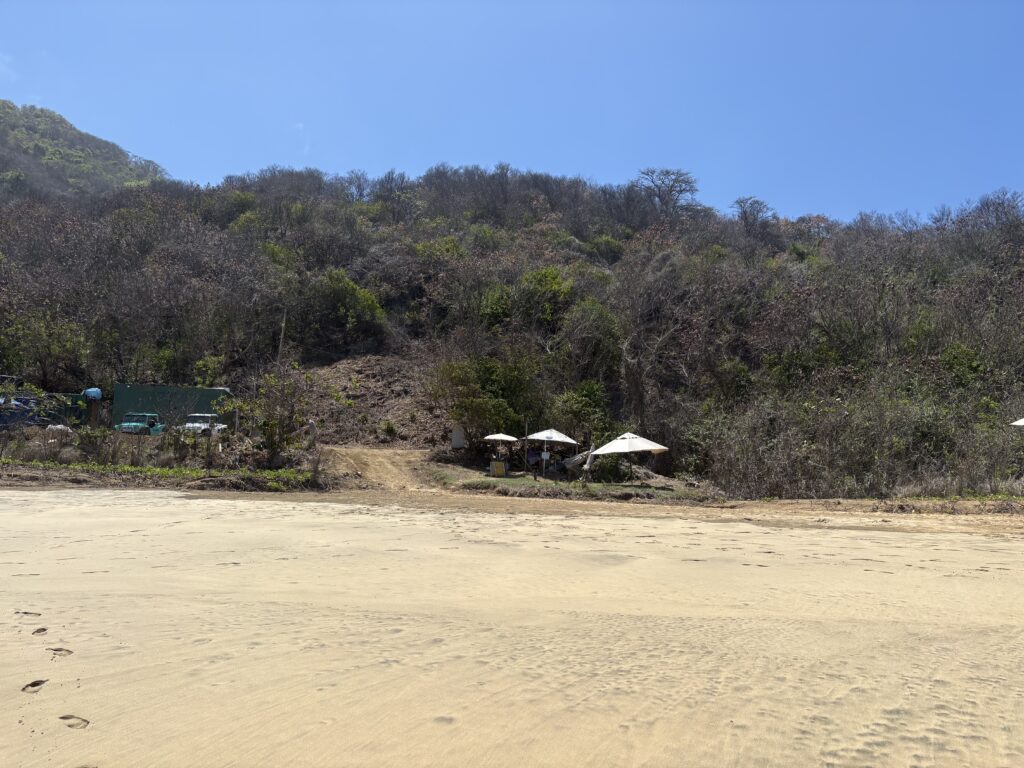
Praia do Boldró 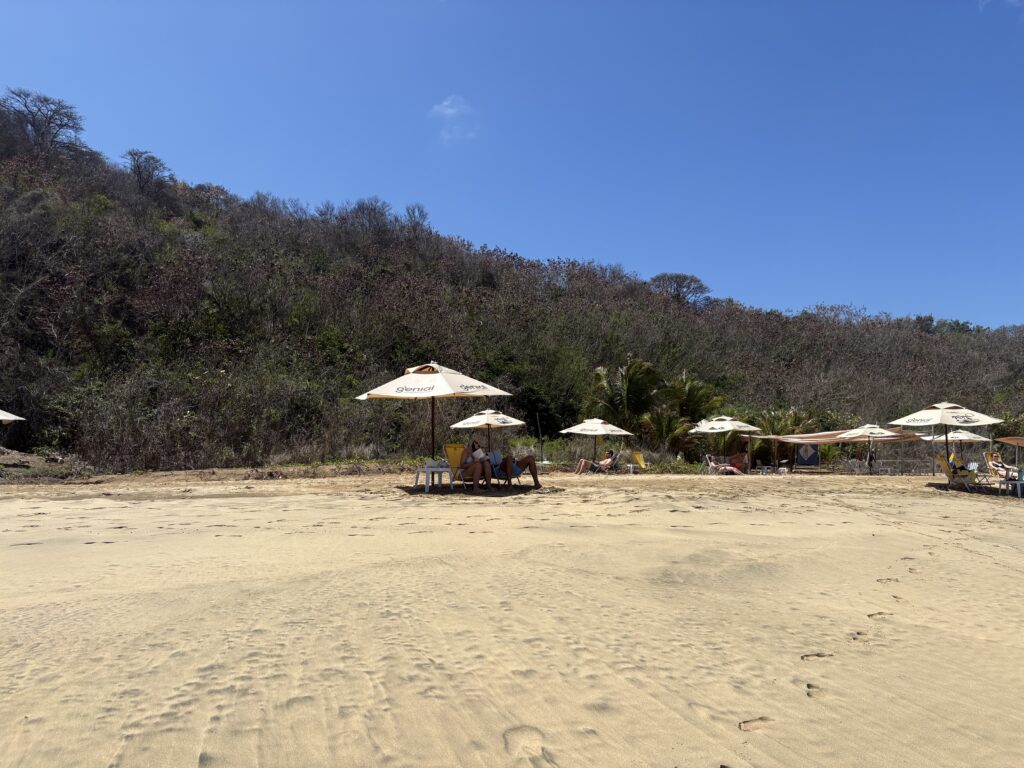
Praia do Boldró 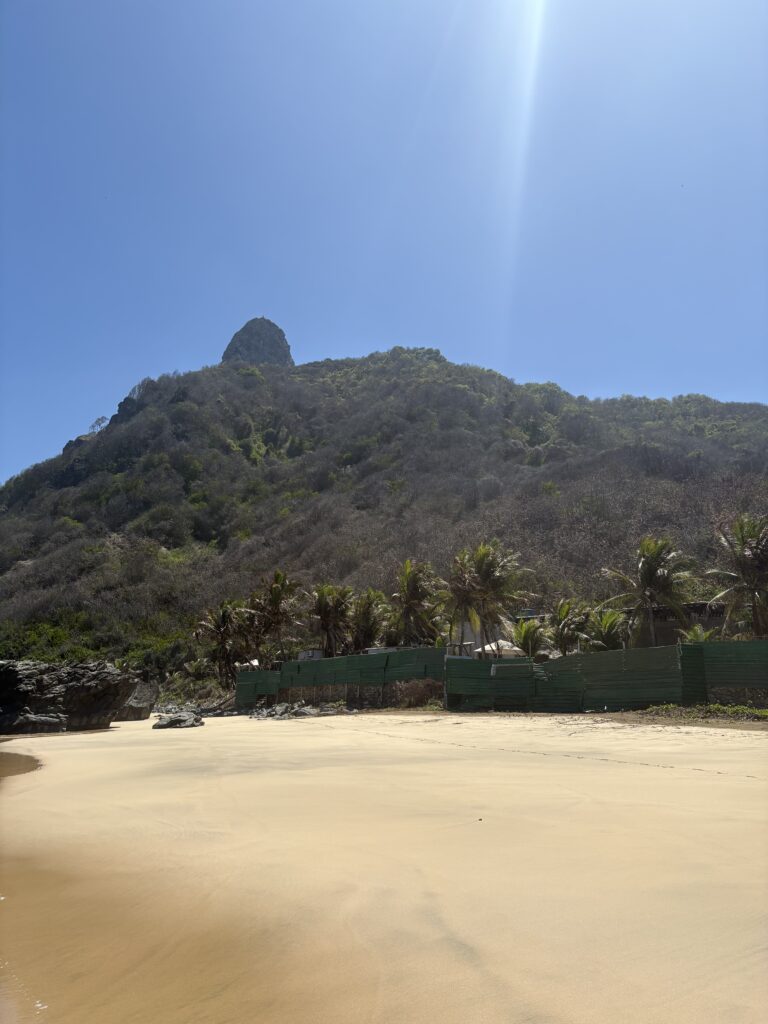
Praia do Boldró 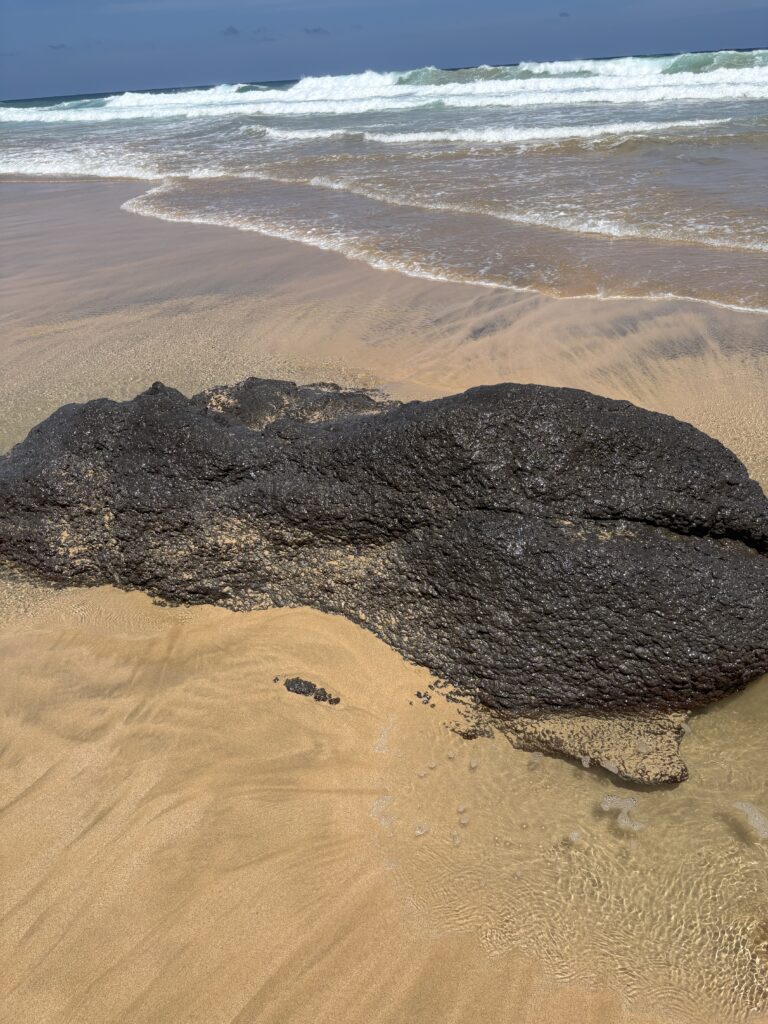
Praia do Boldró 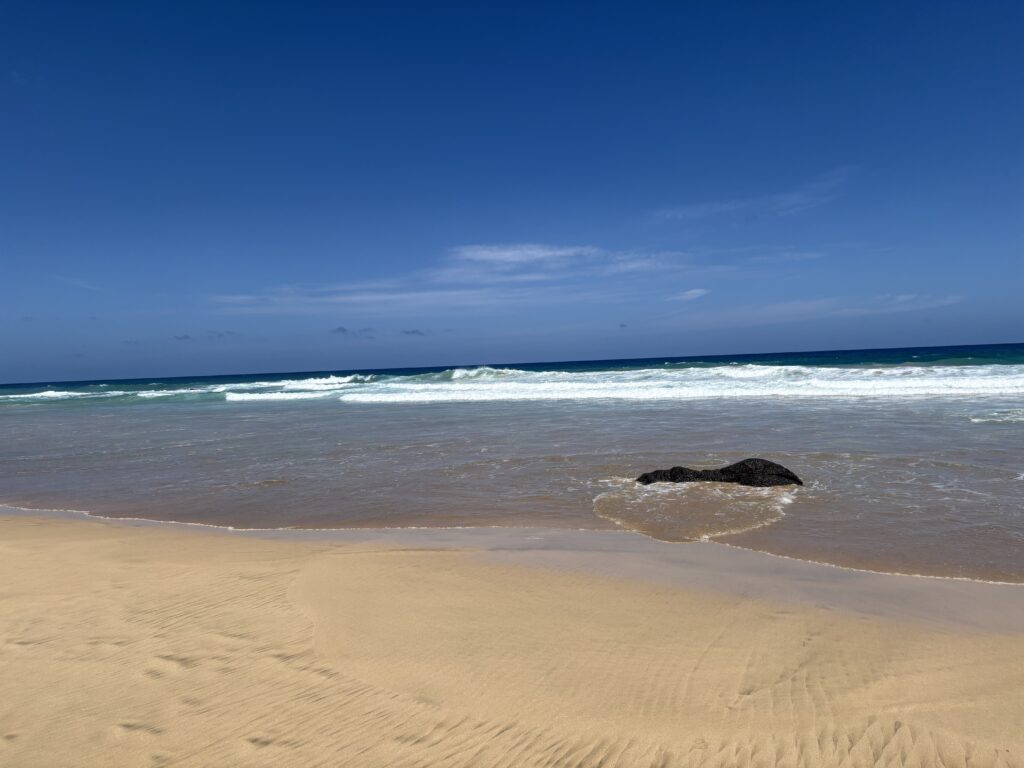
Praia do Boldró 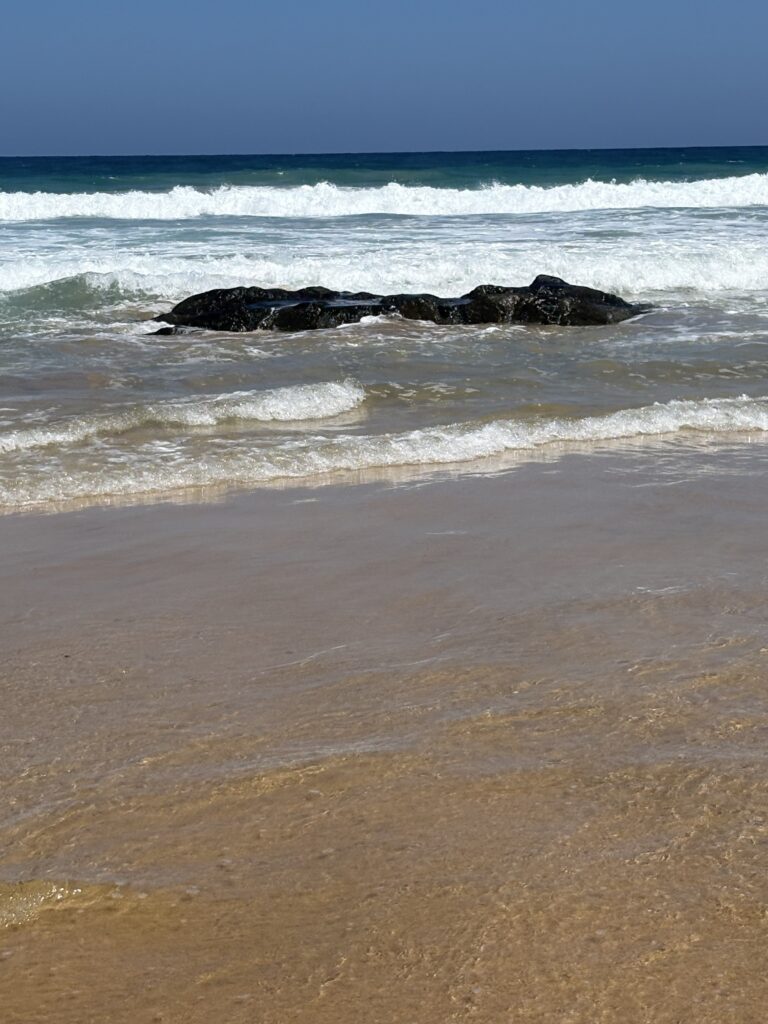
Praia do Boldró 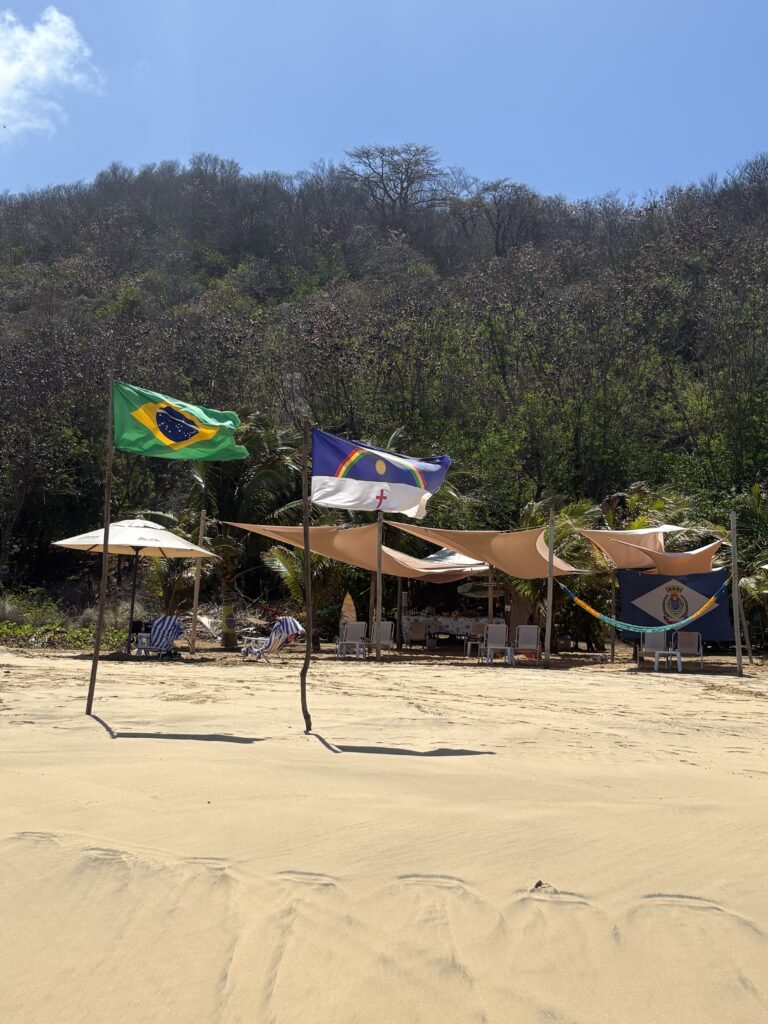
Praia do Boldró 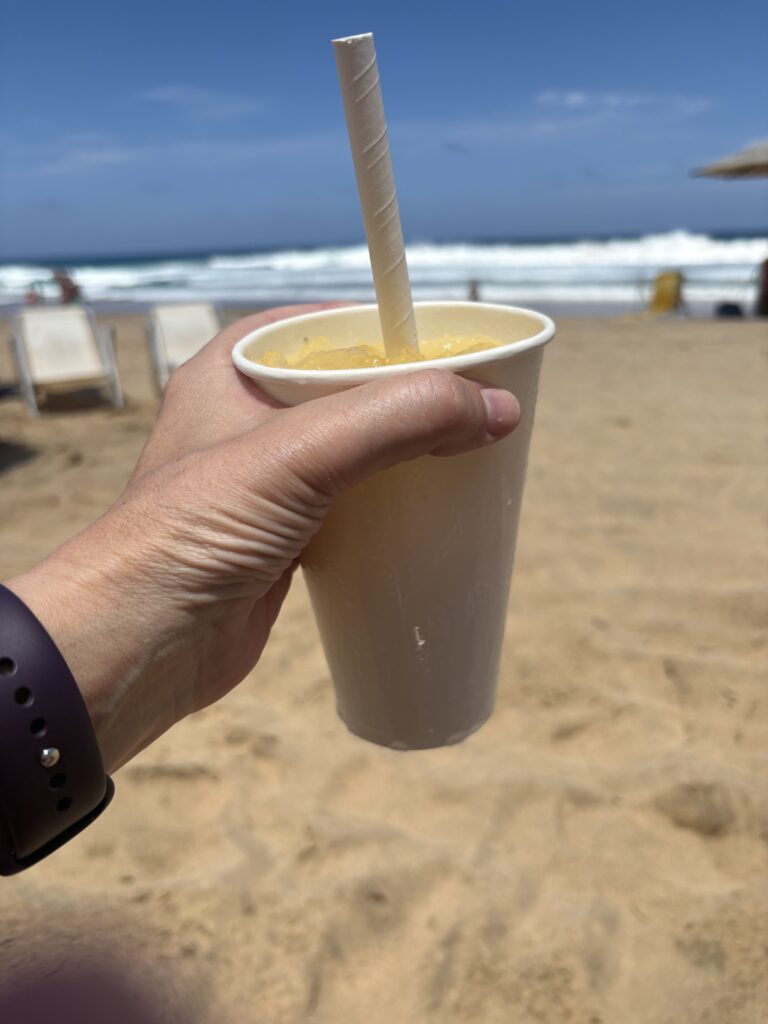
Praia do Boldró -
Brazil: Leaving Salvador and the fire.
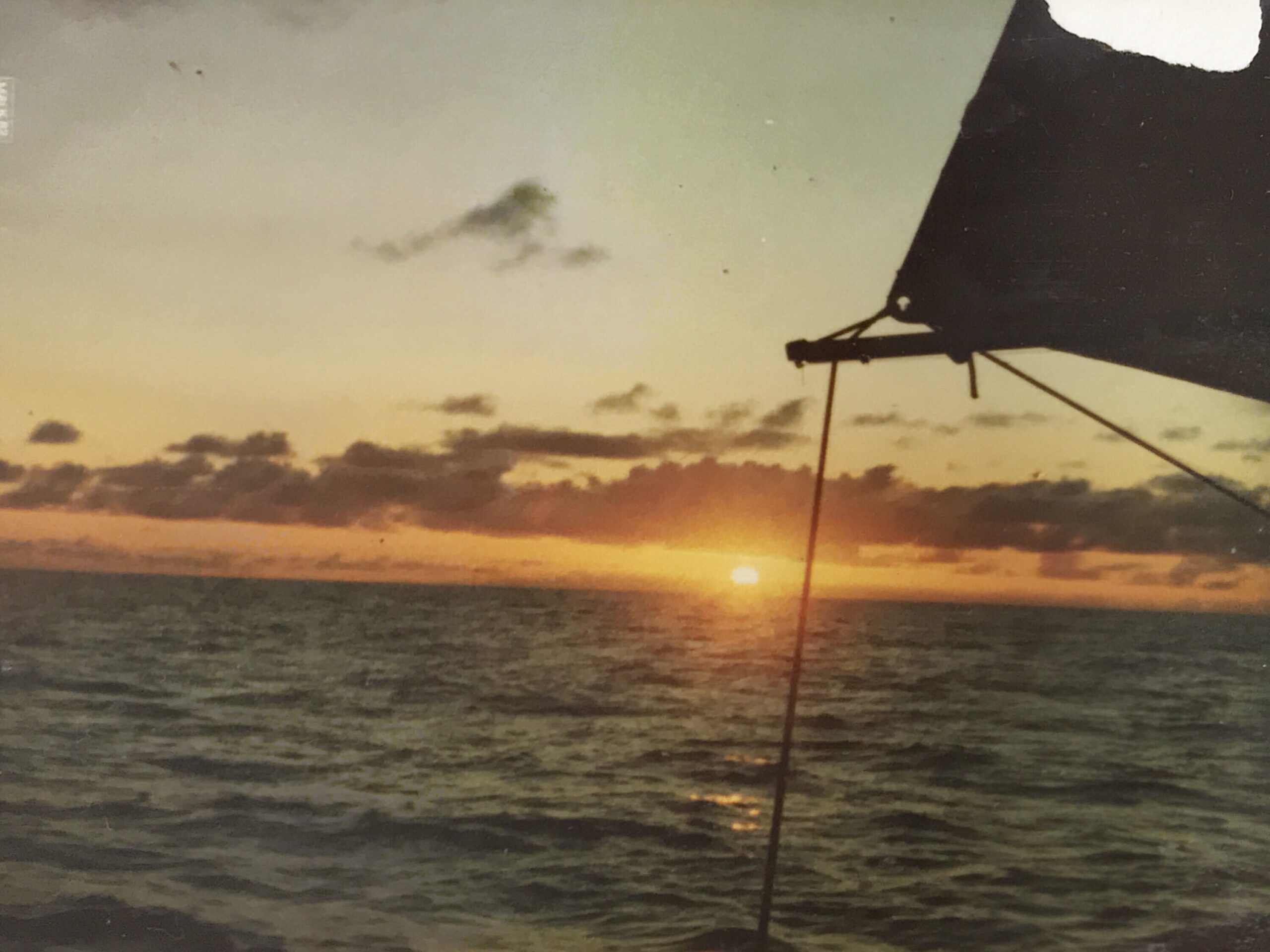
We left Salvador to head across the vast Atlantic, to cross the Equator, and to head in the direction of Portugal. It would be many thousands of nautical miles. According to the logbook, we departed Salvador on a particular day, but returned to the safety of Salvador due to the bad weather. We must have set off again soon after.
My memories of the five-day trip to Fernando de Noronha are not good, but vivid.
The weather: inclement.
The waves: gigantic.
Scally: tipping and dipping and tossing and turning in the surf of the giant waves, her mast often parallel to the horizon.
My mother: utterly convinced she could smell gas emiting from the galley (and she was right).
My father: absolutely convinced there was no gas.
A lighter.
An explosion.
A fire.
A fire extinguisher.
My brother jumping to the rescue.
CO2 powder sprayed everywhere.
My father blacked out.
My mother panicking.
The real possibility that we might sink.
The real possibility that we might need to release the liferaft.
White CO2 powder everywhere.
Our voices disappeared.
Shock.
Fear.
What about our captain?He had been burned all down his right side from the fire and was passed out. I had placed Jellonet all over his burns and he was sleeping in the forepeak.
It was up to me and my brother to navigate our way to Fernando de Noronha. Luckily, we had learnt how to use the sextant, how to calculate the position, how to plot the route.
Two days later we spotted the island, and sought anchor and help.
-
St Helena, My reflections
In January 2026, I spent ten days on the island, retracing our steps from 1982. I spent hours walking up and down the wharf and looking out over the bay, imagining Scally anchored there. This was a visit to reminisce and reflect. I had hoped to access memories locked away, and failed, mostly.
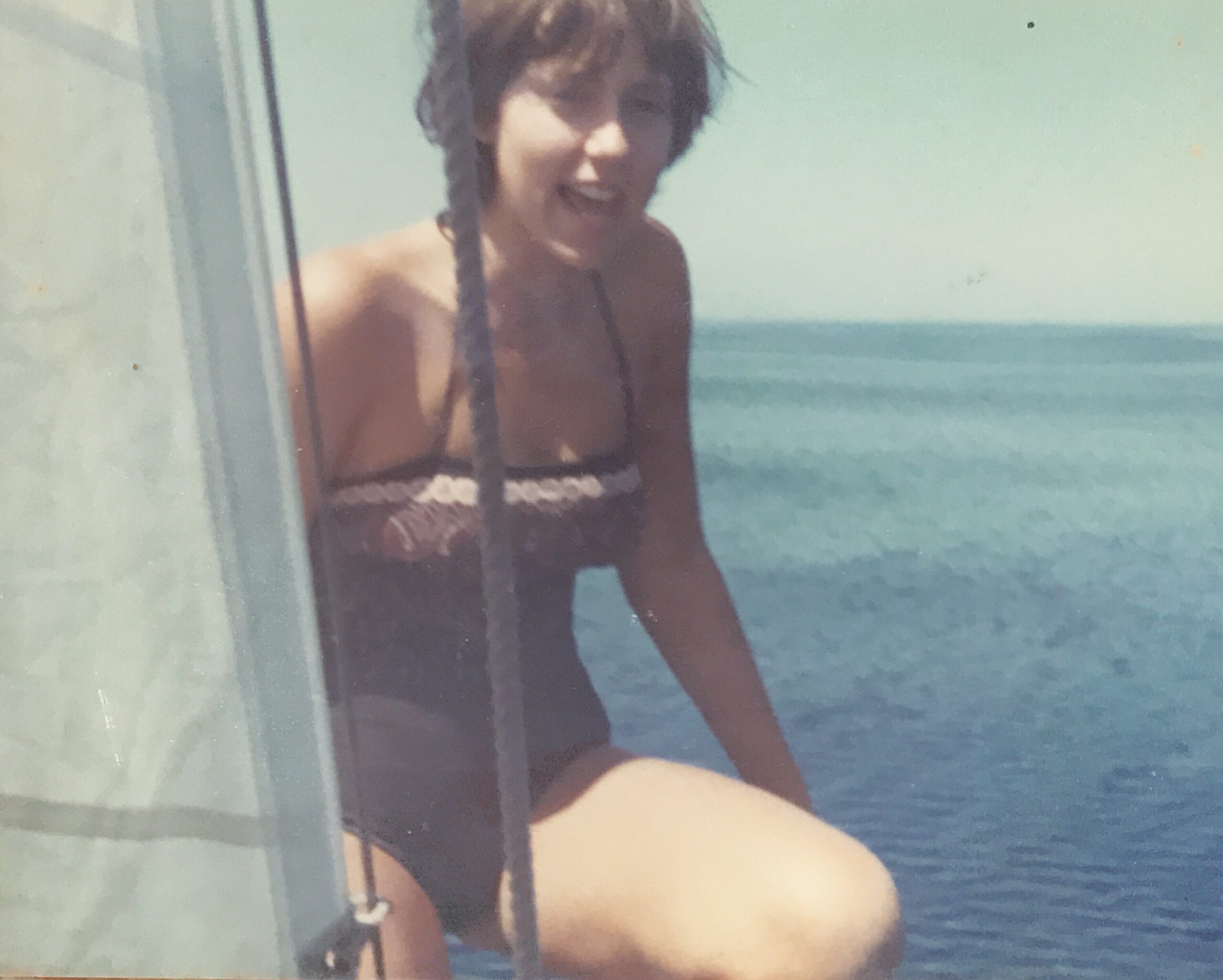
The purpose of my visit to the island was absolute. It was a journey to retrace Scally’s voyage across the south and north Atlantic Oceans, with her crew of six. In 1982, I was sixteen. I celebrated my sixteenth birthday on the island. I got my very first period somewhere in those fourteen days between Cape Town and St Helena. I experienced deep fear and uncertainty for the first time in my young life. I experienced for the first time being stuck in a place with no way out. I experienced loss and grief for the first time.
In 2026, I am approaching sixty. I returned to the island, willingly, with life experience, the senses of an adult, the emotions of a wife and mother, the luxury of living in one of the world’s safest and most developed nations. I returned with the knowledge of a traveller, a reader, a lover of learning, a teacher. I returned for me, for my own gain and no one else’s, on my own time, under my own conditions. Because I wanted to.
I was confronted by thoughts and emotions and many many questions. I wanted to ask my father but cannot. I wanted to ask my mother, and did. I wanted to ask my brother, and did. I am very grateful to them both for sharing memories that I do not have and for confirming facts that I was not sure of. I continue to be in awe of the accuracy of both their recollections. Precise, after over forty four years. Accurate and clear.
I know that the weather between Cape Town and St Helena was bad and had had this fact confirmed by more than a few. I know that I was extremely sea-sick and spent three days huddled alone in the forepeak, secluded and extremely nauseous. I know that we lost a sail to the sea. I know that the seas were dangerous and violent. I know that I desperately wanted the loving safety of my grandparents. I know that I was unhappy and didn’t want to be there. I know I had to care for my beloved baby brother Filipe. I know that there were weights placed on my brother Manuel’s shoulders, at the age of fourteen, that should not have been. I know that my father was very brave. I know that we all trusted him. I know that we found St Helena and the safety of the bay of Jamestown. I know we arrived safely.
I know we read on board. My father had made sure that most of Charles Dickens’ novels were available to us. Once I found my sea-legs, we played Backgammon, Trivial Pursuit and Dominoes every day. We’re still quite unbeatable. We wrote in the log book after sharpening pencils carefully. We listened to my father checking in daily with the ham radio network of the world. Charlie Tango Delta One Tango Romeo Juliet. We plotted our route on the charts. We watched and learnt from my father how to read the stars with the sextant. We watched and learnt the mathematical calculations to plot our position of the charts. I learnt about discipline and routine. We sang songs. I played the guitar and the rest of the crew sang along. We listened to Abba and Neil Diamond tapes over and over again. We drank Tang. We caught a fish and ate it for a few days. We saw a hammerhead shark trailing our wake for a few days. We learnt how to get by with very little fresh water, just one cup, just in case. We washed our hair and ourselves with salt water. We polished the stanchions. We sat on deck staring out at the horizon. We watched sunrise and sunset. We saw the moon. I experienced extreme cold and extreme heat. I learnt for the first time the responsibility of being on watch in the dark, alone.
My thoughts, emotions and memories did not let me sleep soundly at the Mantis. I kept returning to the same questions: why did my father do it? How did we all do it? What made him decide to put his entire family on a tiny 31-foot sail boat and set off across oceans? Do I know anyone who would do the same? How did we manage without any exercise? How must my grandparents have felt? How did we face danger? How did we cope with interrupted sleep patterns and watches in the middle of the night? Why did I get so violently sea sick but no one else? Were we happy? Were we sad? Did my father have any regrets? Would he have done it again?