Tag: Brazil
-
Brazil and Fernando de Noronha: My reflections
I have met many Brazilians in my adult life; most in Portugal, but also in many of the other countries I have visited and I have always thought how open and friendly they are. And, indeed, this is what struck me most about the mainland, in Salvador de Bahia, as well as the island of Fernando de Noronha.
This is a country of great extremes. There are huge expanses of land (it’s an enormous country) and there are huge expanses that divide the haves and have nots. But everyone has a smile at the ready and is open and welcoming to foreigners like myself. Whoever I met was polite, friendly and willing to share. The sun shines everywhere and the ocean is warm and inviting.
These were destinations quite unlike where I have thus far travelled, with the obvious exclusion of St Helena island, and I was extremely appreciative and grateful for the lessons I learnt from being in Brazil.
Smile, laugh, be open and talk to strangers, be friendly and warm, and take one day at a time.
Live for today and go to the beach whenever you can.
Enjoy time for what it is, a gift to experience whenever you have moments to yourself.
Learn and understand that there are great differences in life and be grateful for everything you have.
Believe in whatever you want to believe in, but believe in something, whether you’re in a church or meeting a Bahiana or hearing about the Orixás.
Swim in the South Atlantic wherever you can; it’s beautiful and healing.Thank you Brazil. I will be back.
-
Brazil: Fernando de Noronha, Beach Day 2
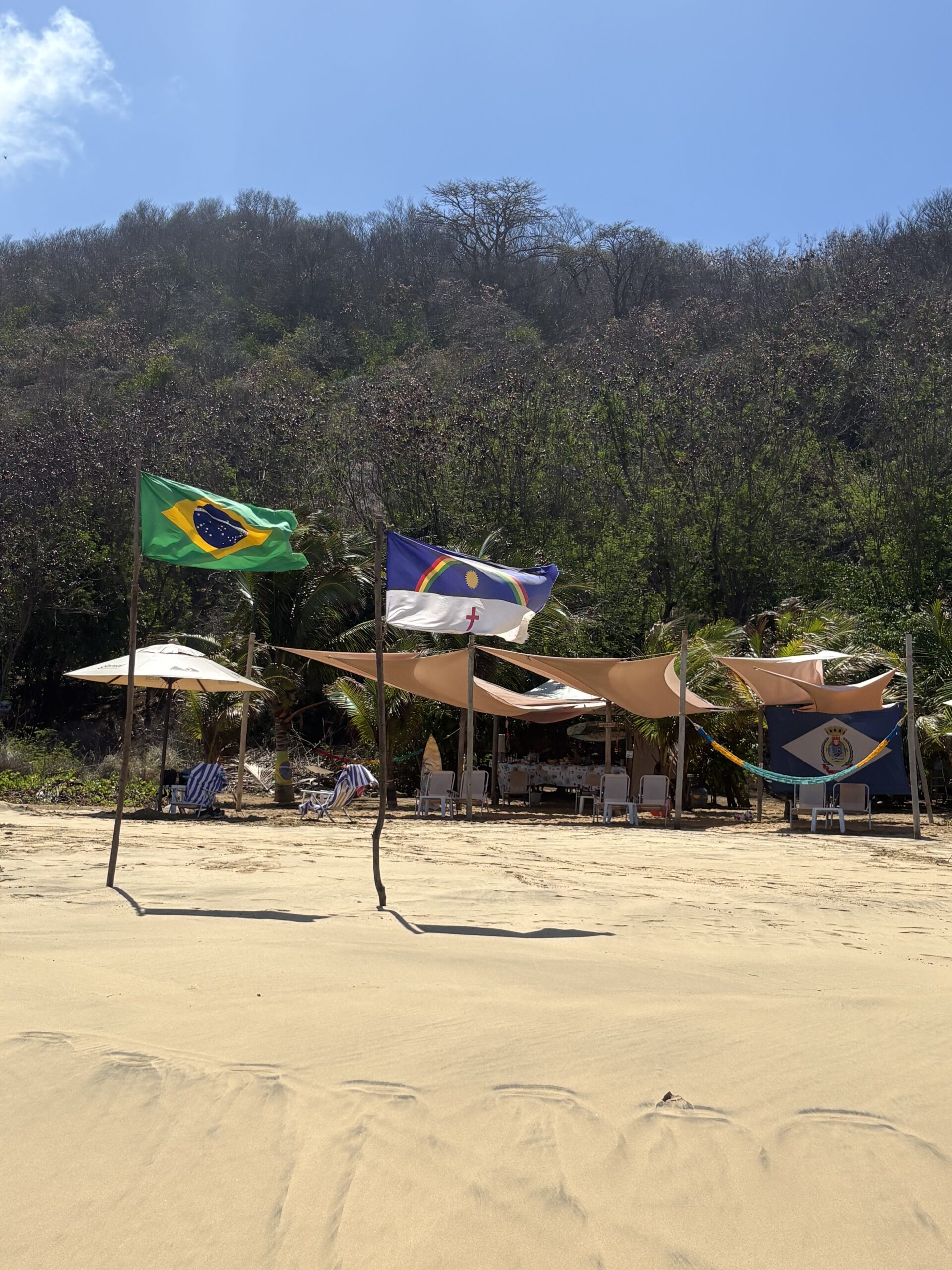
Having accomplished my mission to find where we had been anchored in 1982, I woke up to my last day in Fernando de Noronha with plans to have another beach day. The closest to where I was staying was Praia do Conceição, according to the concierge, only ten minutes away.
So I packed water, a light picnic, and headed off, following the rudimentary signage. It was all downhill and about fifteen minutes in the end.
Like on Praia do Boldrió, I paid one hundred Reais for a deck chair, umbrella and small table; there were very few beachgoers, and there was a stall selling coconuts, Capirinhas and water.
I forgot my suncream, stupidly, because I suffer from sun rash. I’m not young anymore and long gone are the days when I’d use olive oil for sun-tanning, but I didn’t fancy losing my spot and walking all the way back uphill to get it. So I risked it. (Silly idea because I broke out in rash later that evening).
It was a wonderful beach day, though. The ocean was warm and inviting. I went in and out. I slept. I read. I remembered. I could not resist a Capirinha with the flavour of “ciriguela.” I have no idea what it is but it was delicious.
I ended my day at the same restaurant I had been to the entire time (there are very few to choose from) and listened to the mellow tones of the Brazilian music in the background, my skin itchy, but feeling healthy, happy, relaxed, sunburnt, appreciative, grateful, and dreaming of one day returning to this paradise.
Dates: February 2026
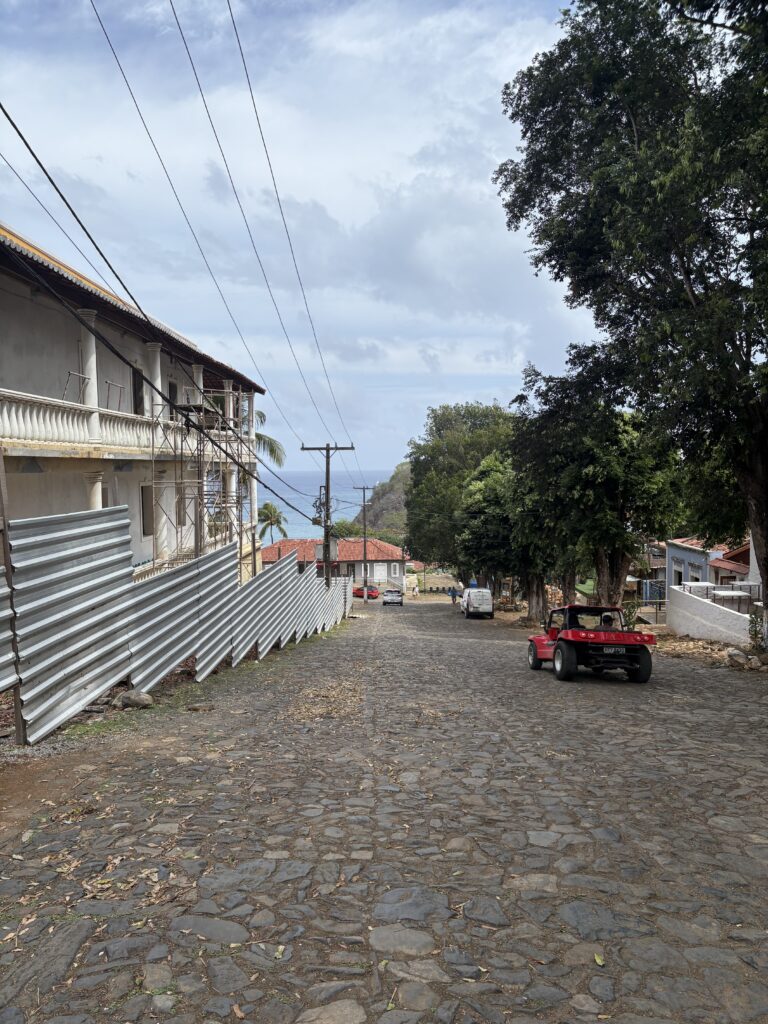
Heading down to Praia de Conceição 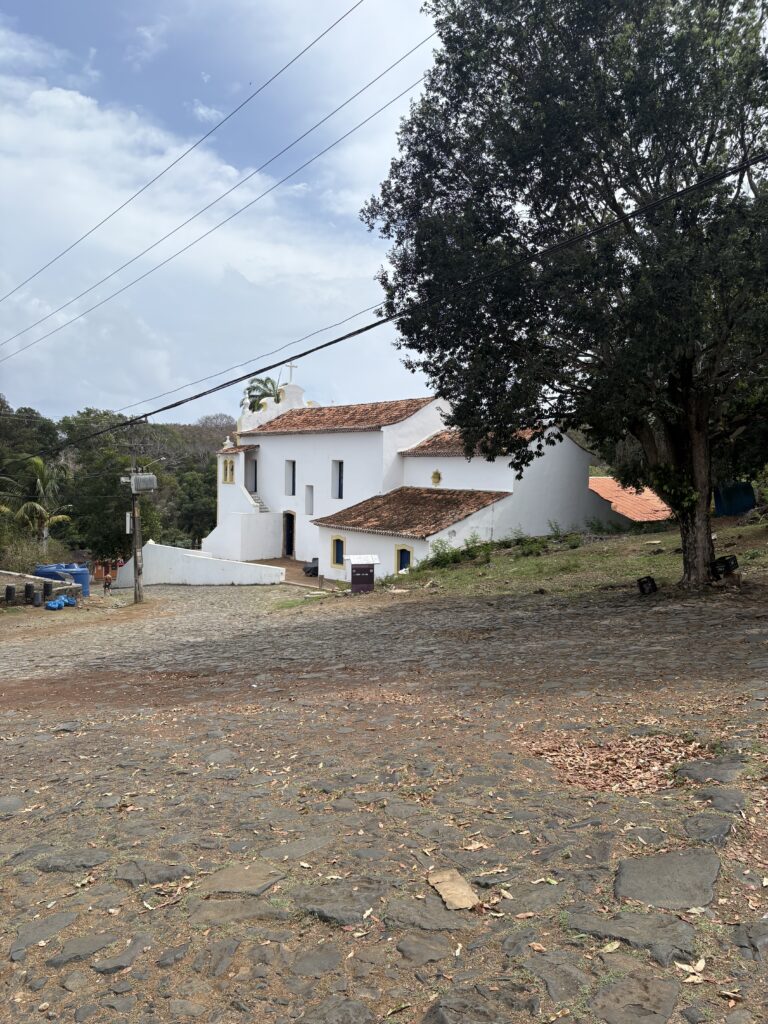
The church 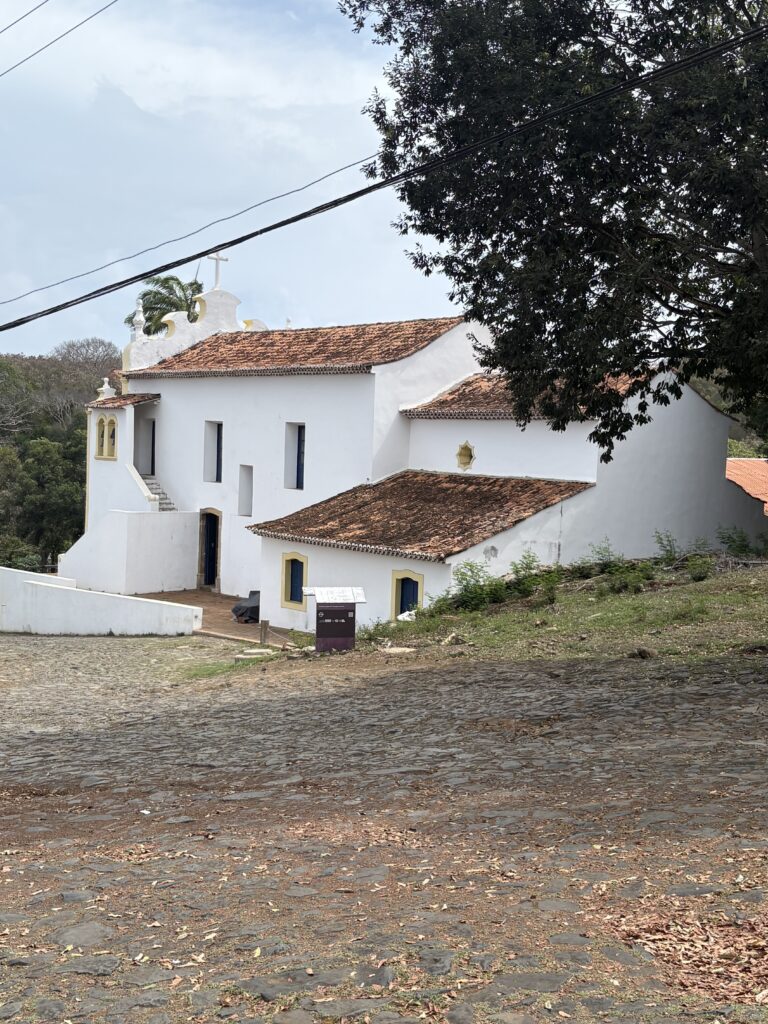
The church on the way 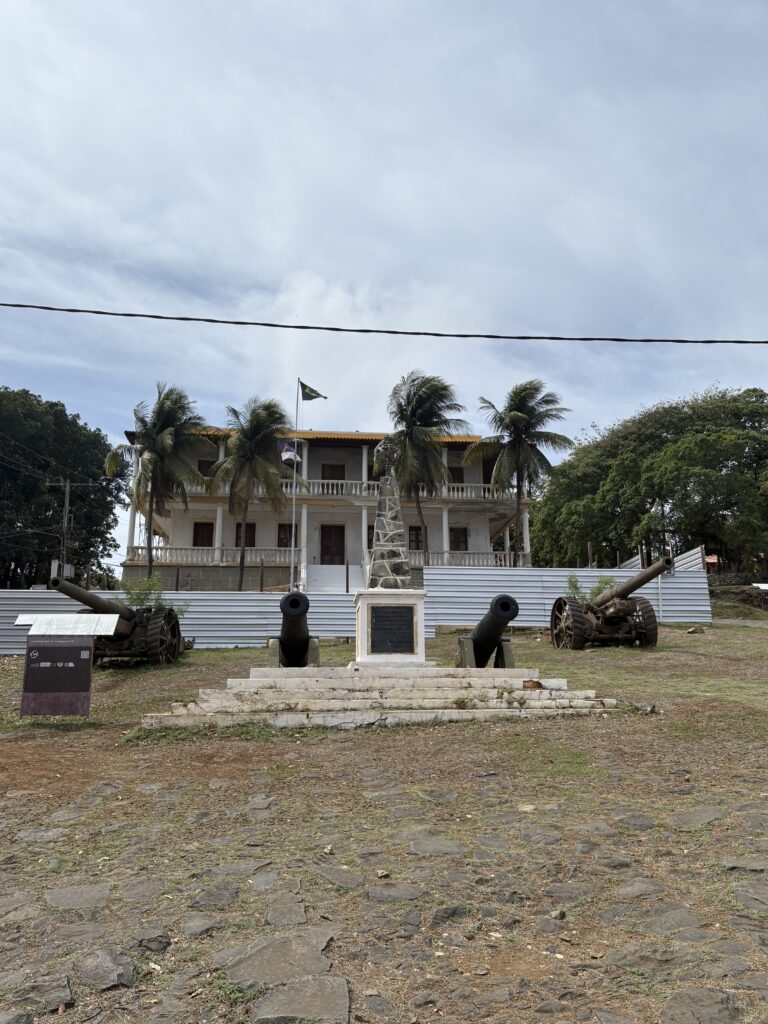
The fort on the way 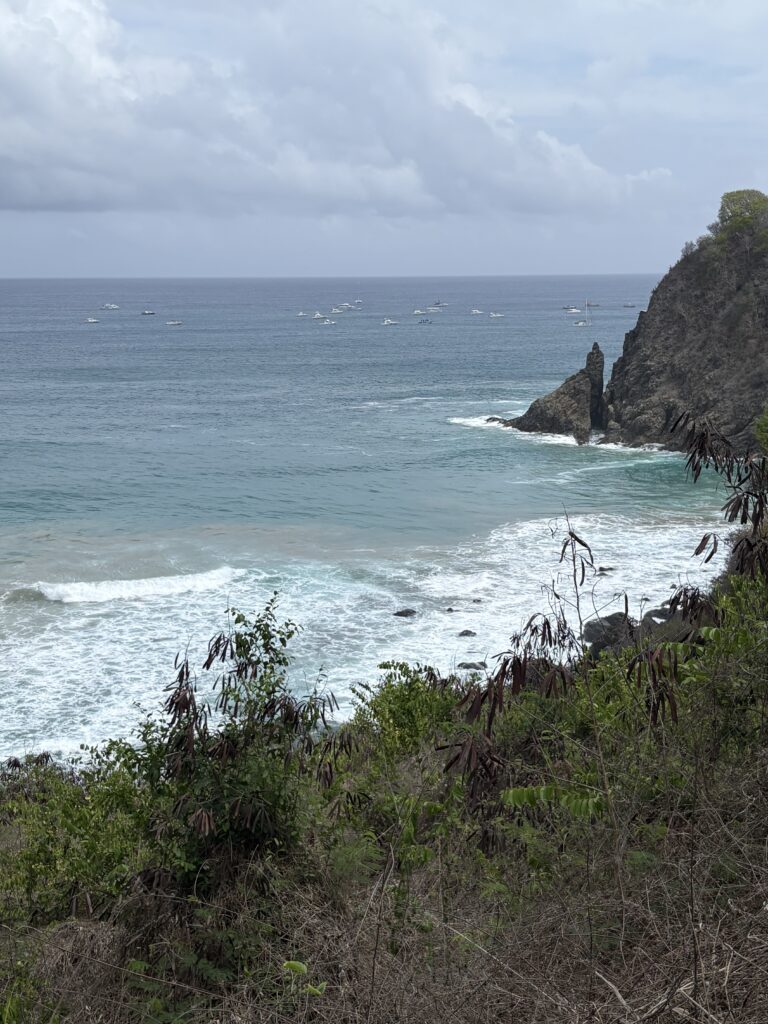
Praia de Conceição 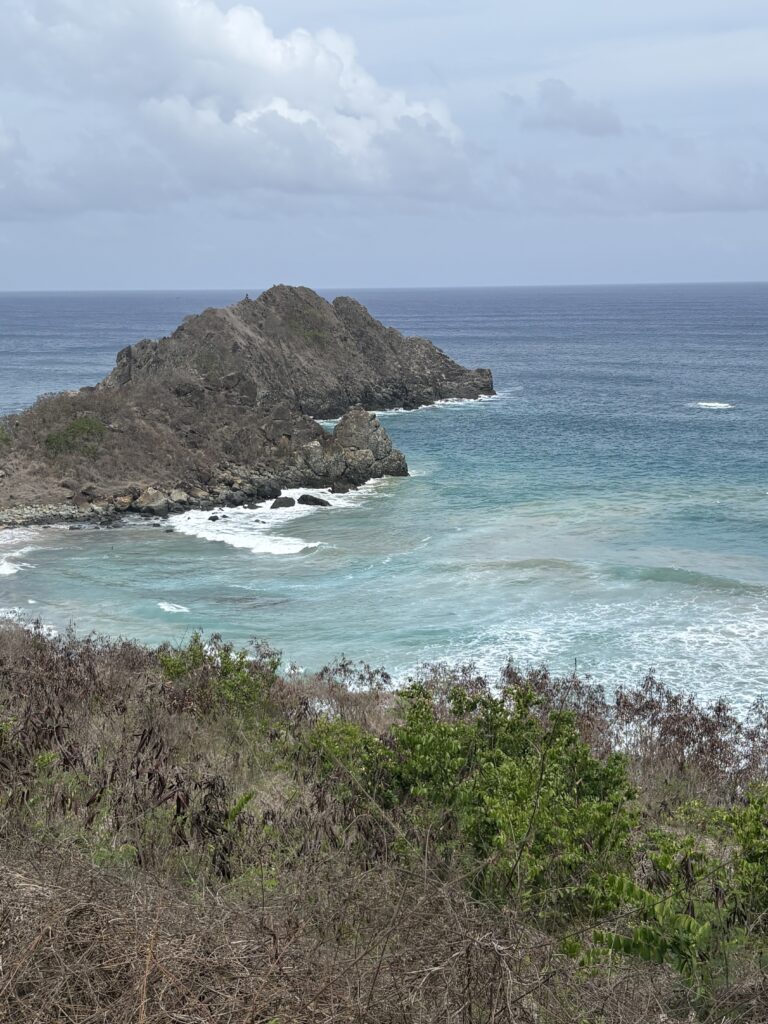
Praia de Conceição 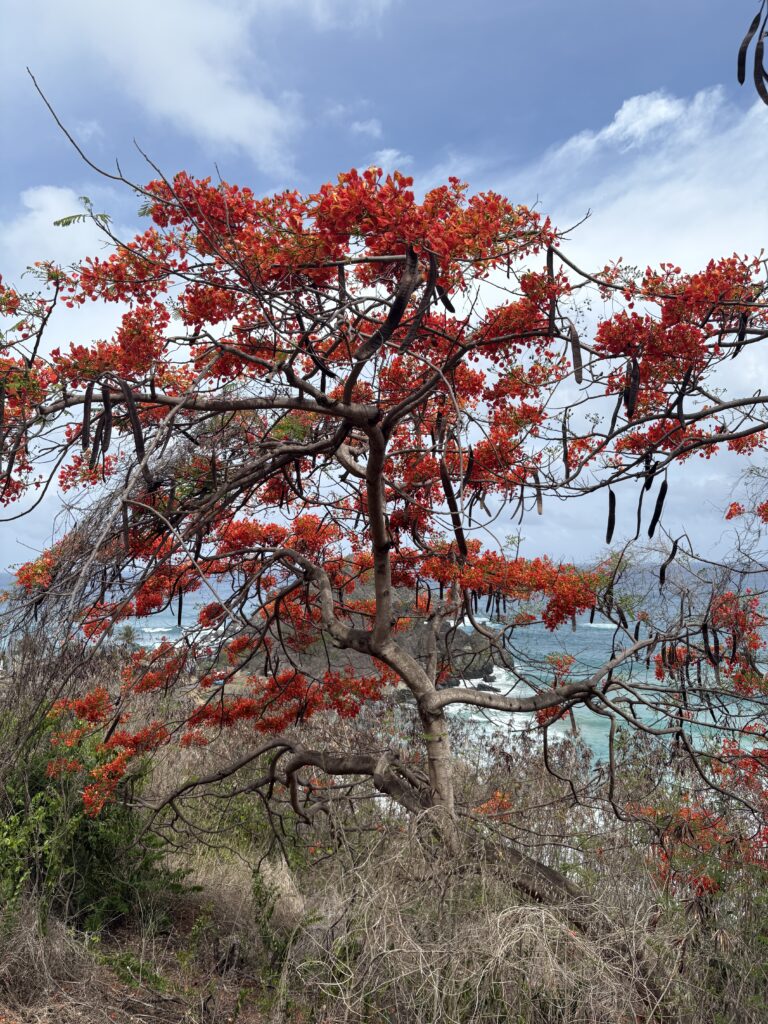
Fire trees 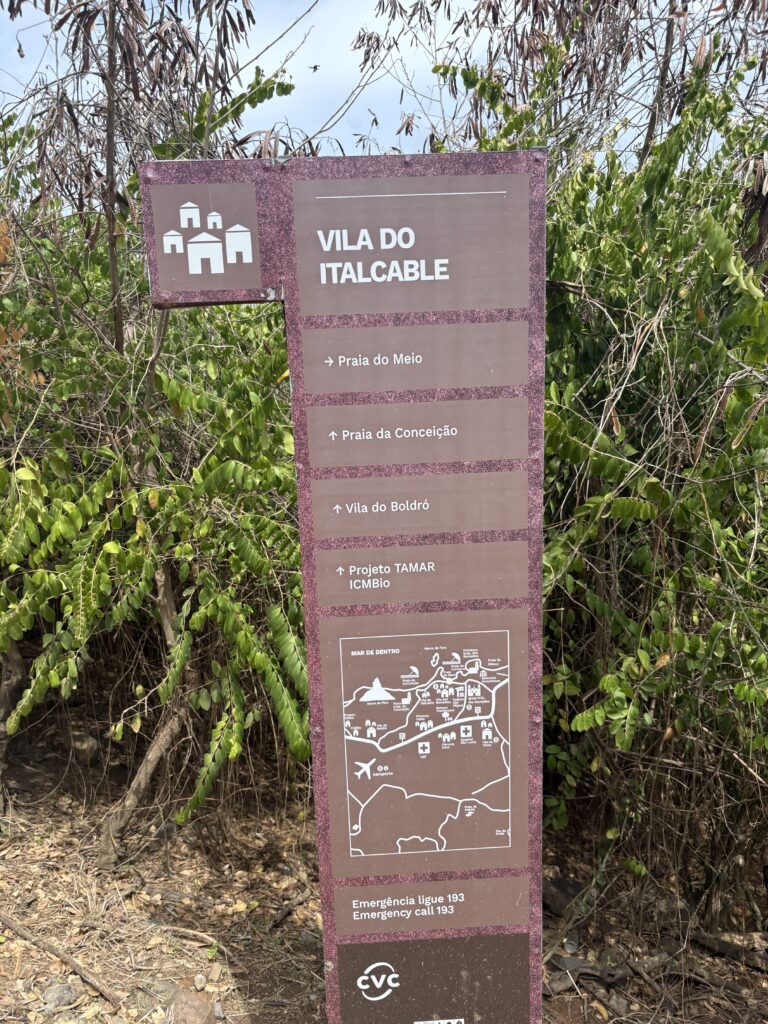
Unpronounsable 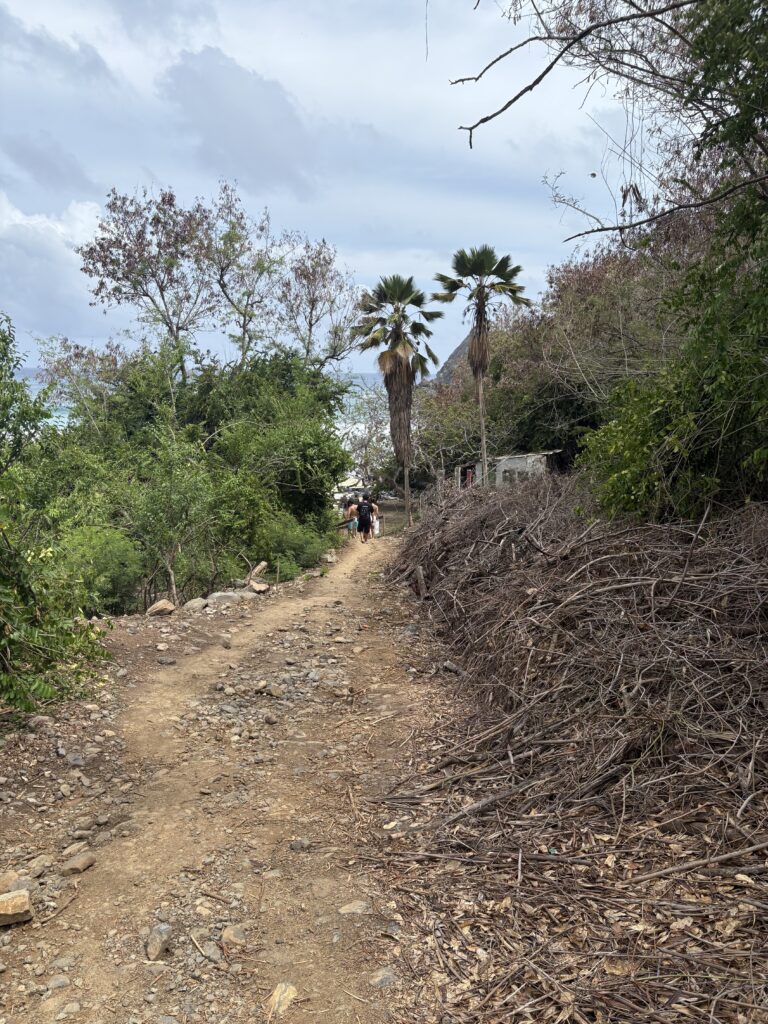
The path to the beach 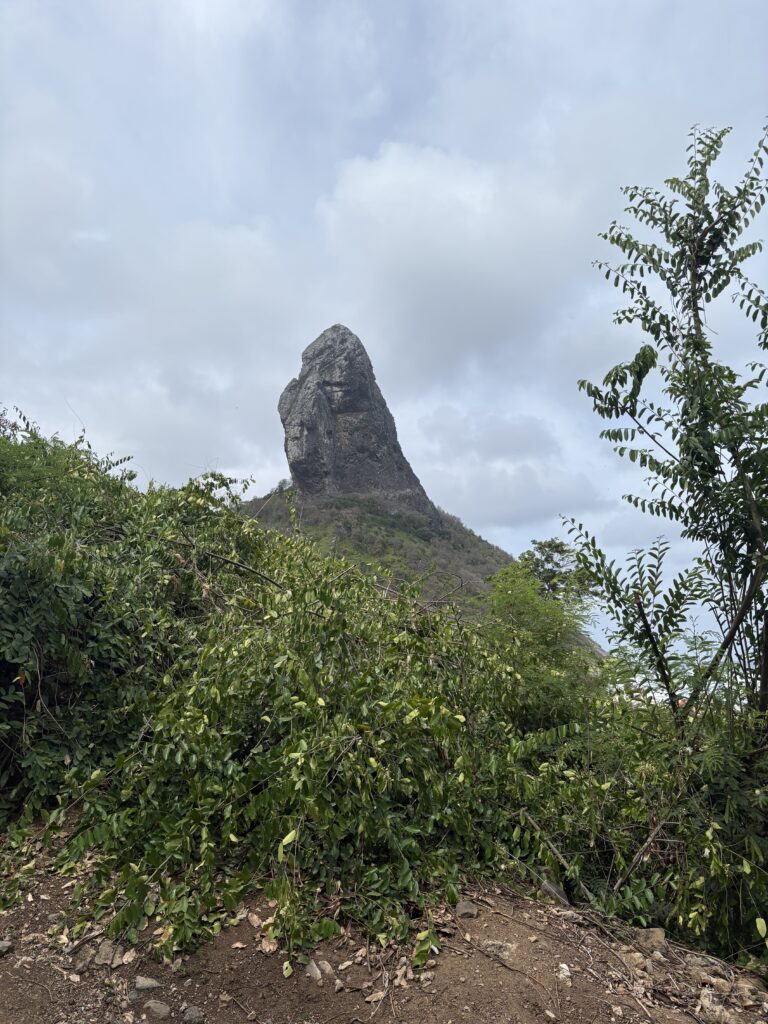
The landmark, spottable anywhere 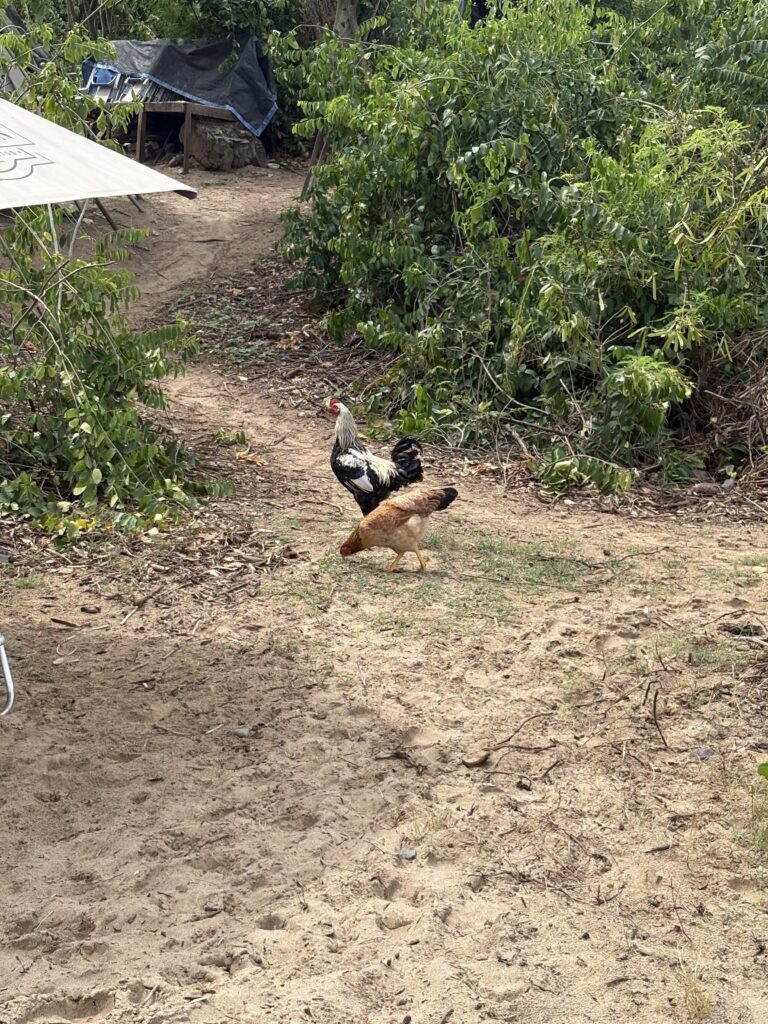
Praia de Conceição 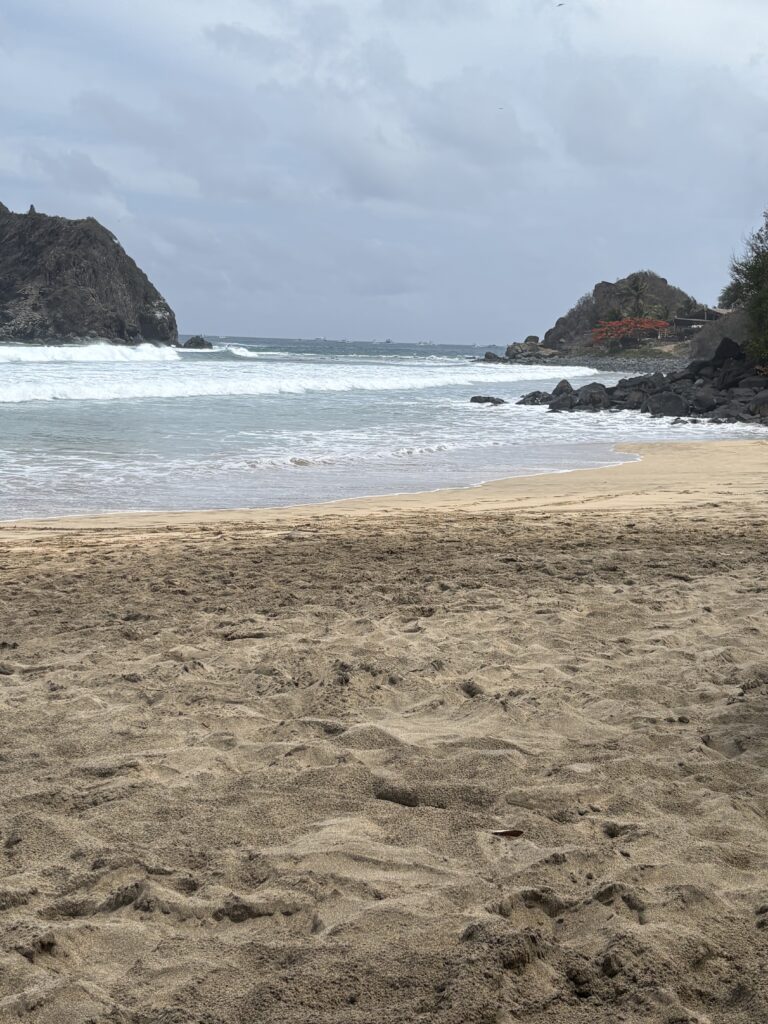
Praia de Conceição 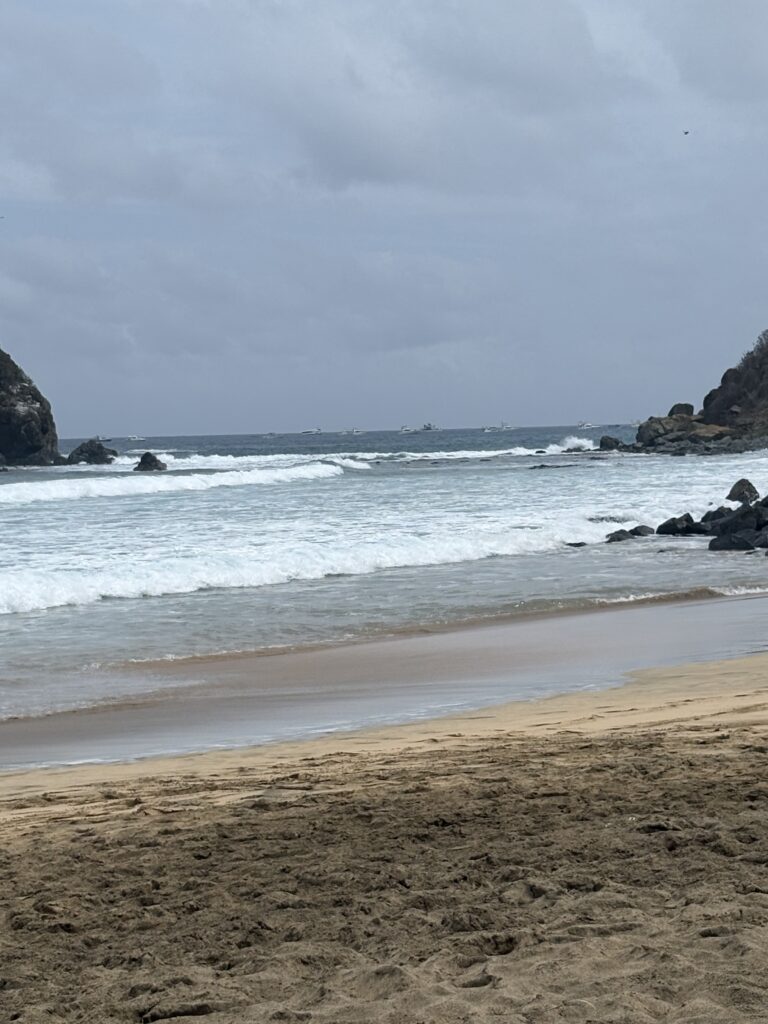
Praia de Conceição 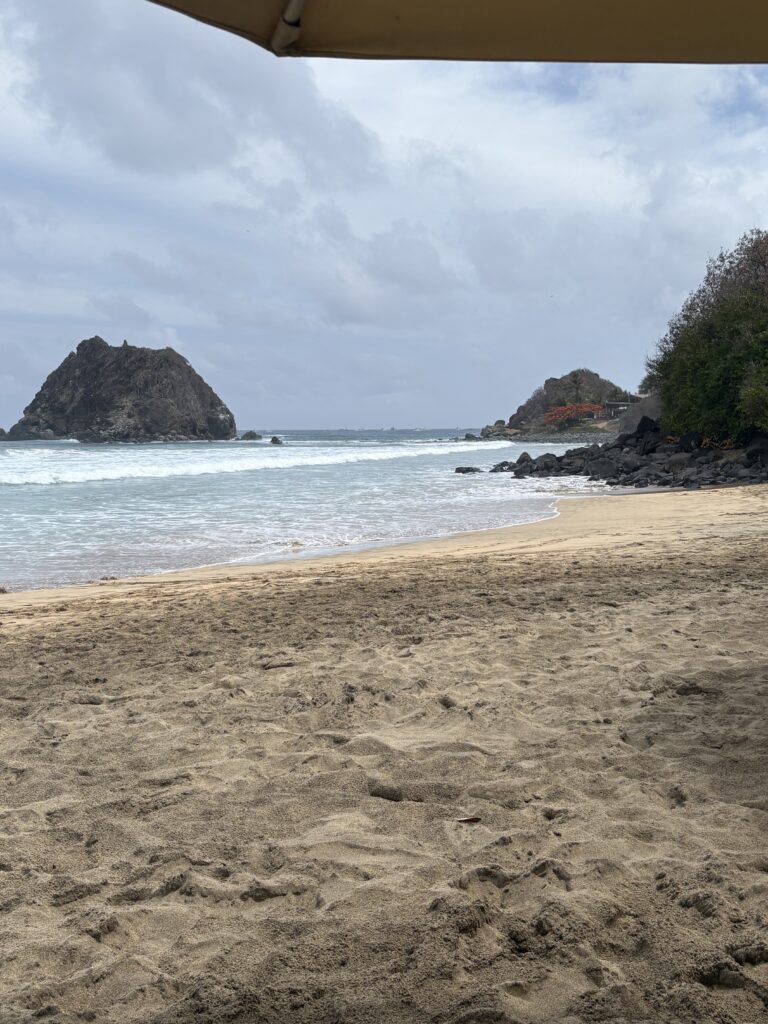
Praia de Conceição 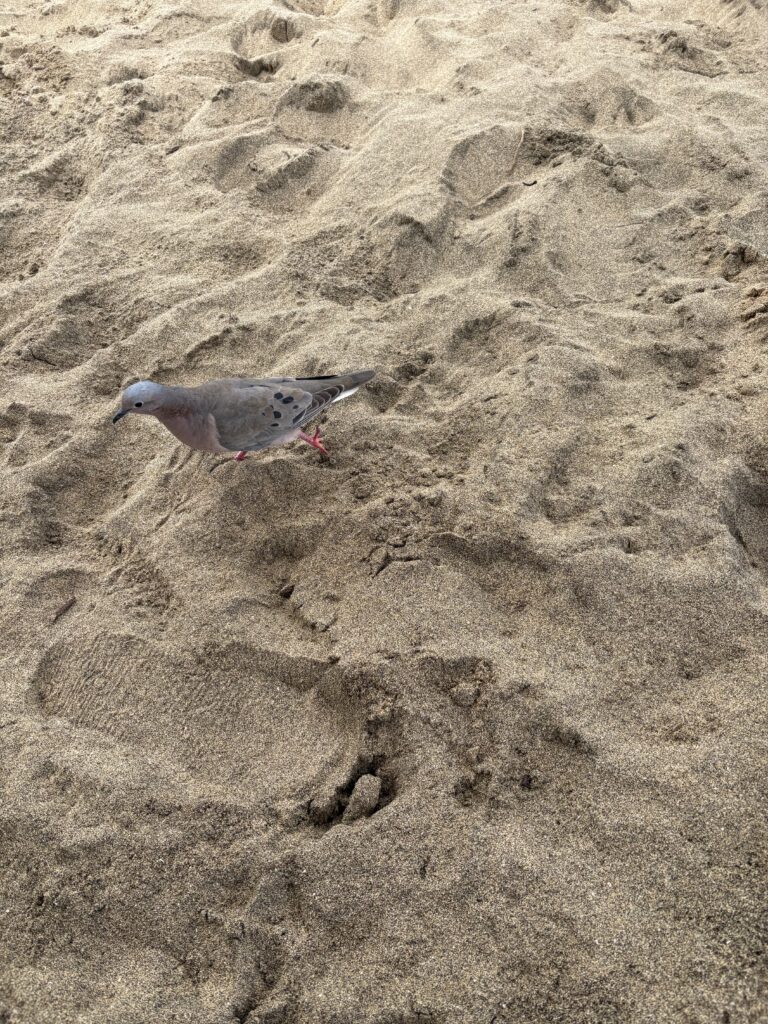
Praia de Conceição 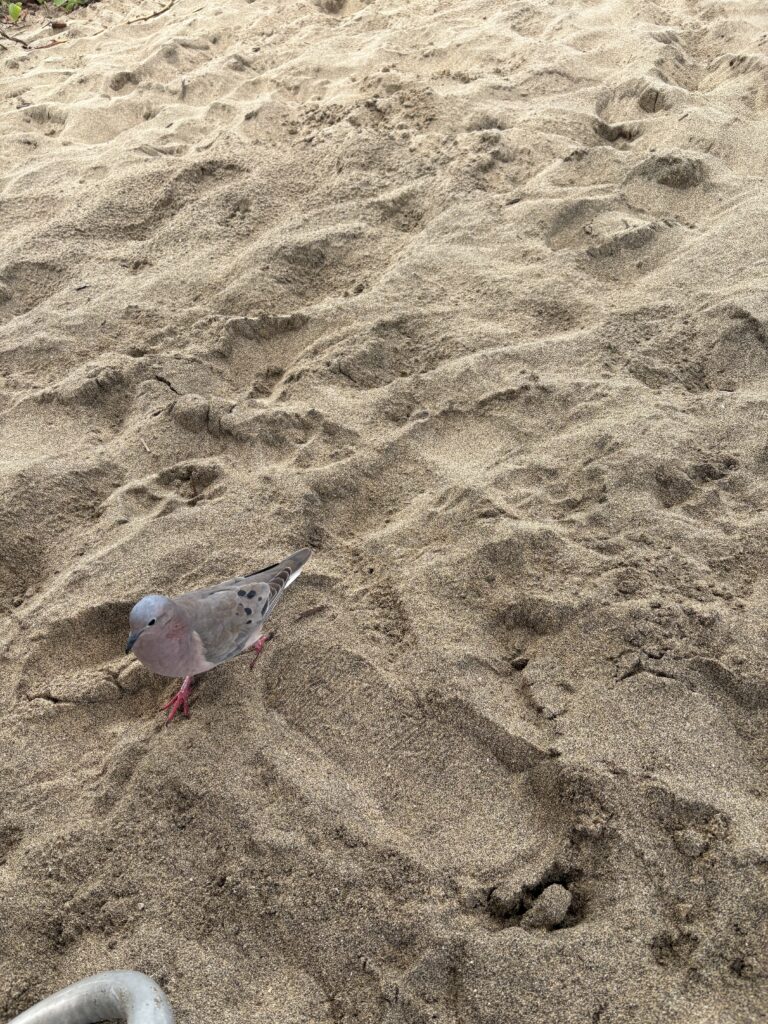
Praia de Conceição 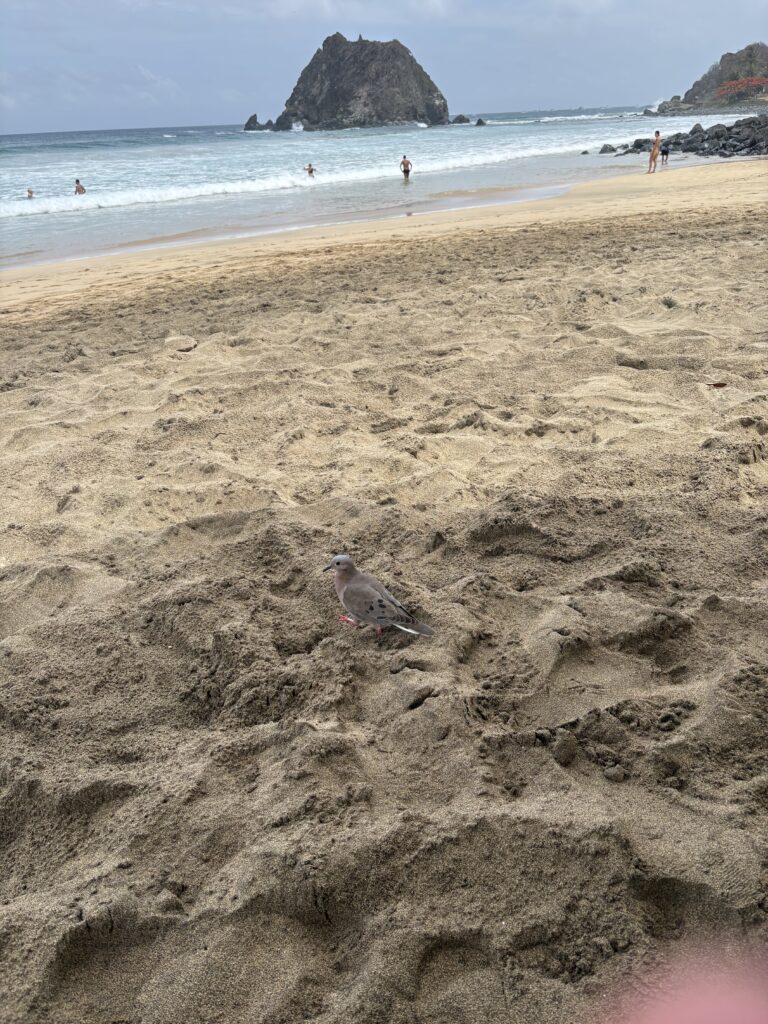
Praia de Conceição 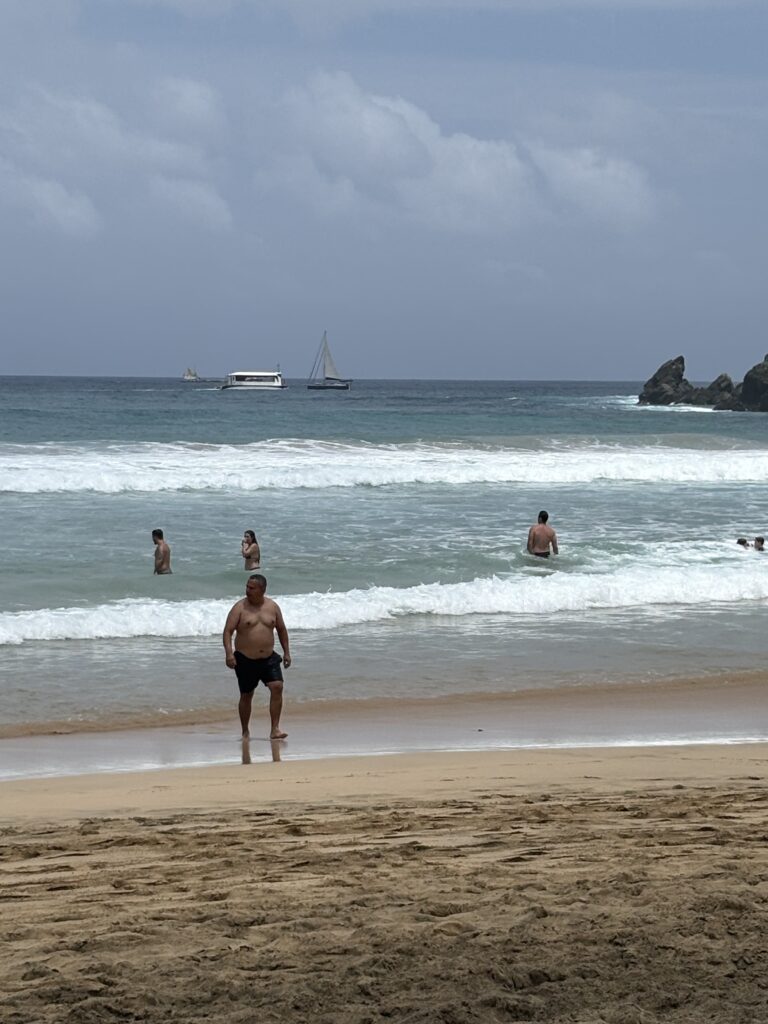
Praia de Conceição 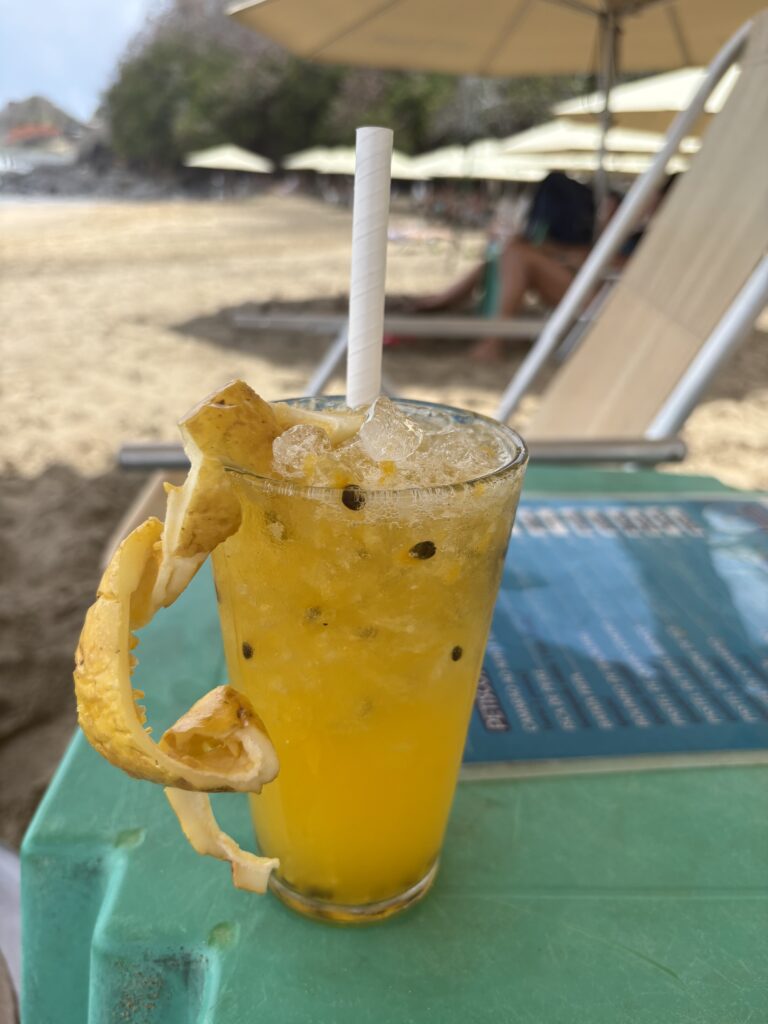
Capirinha de maracujá 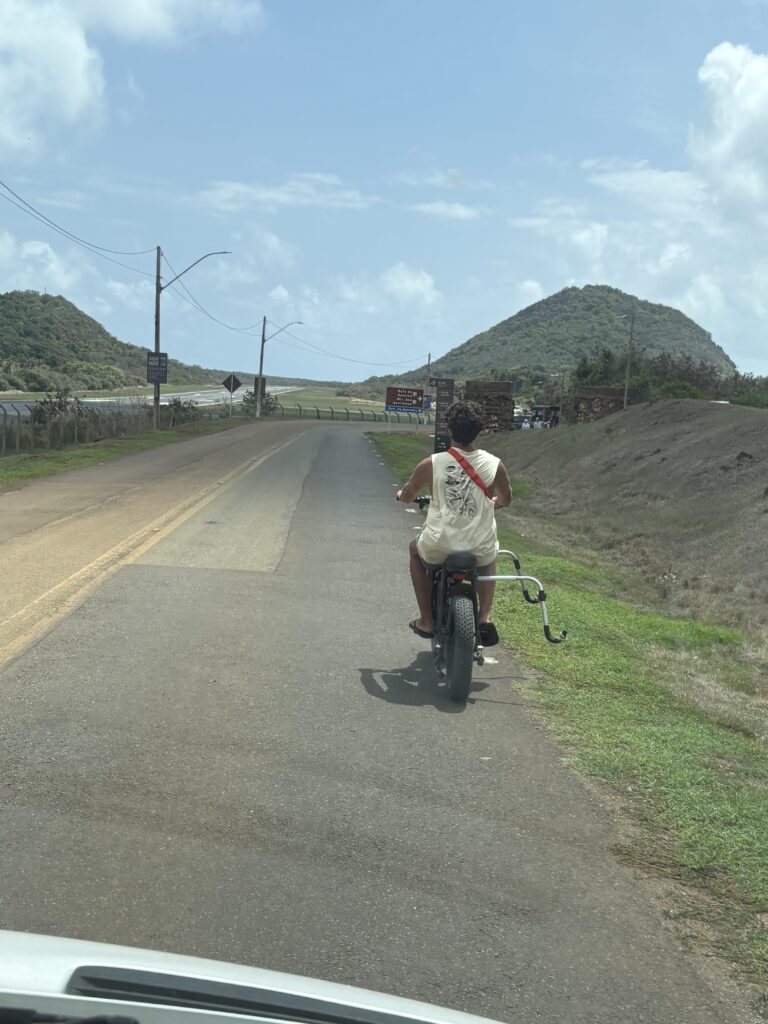
How cool – a bicycle with surfboard holder -
Brazil: Fernando de Noronha, Fact Finding Mission Day
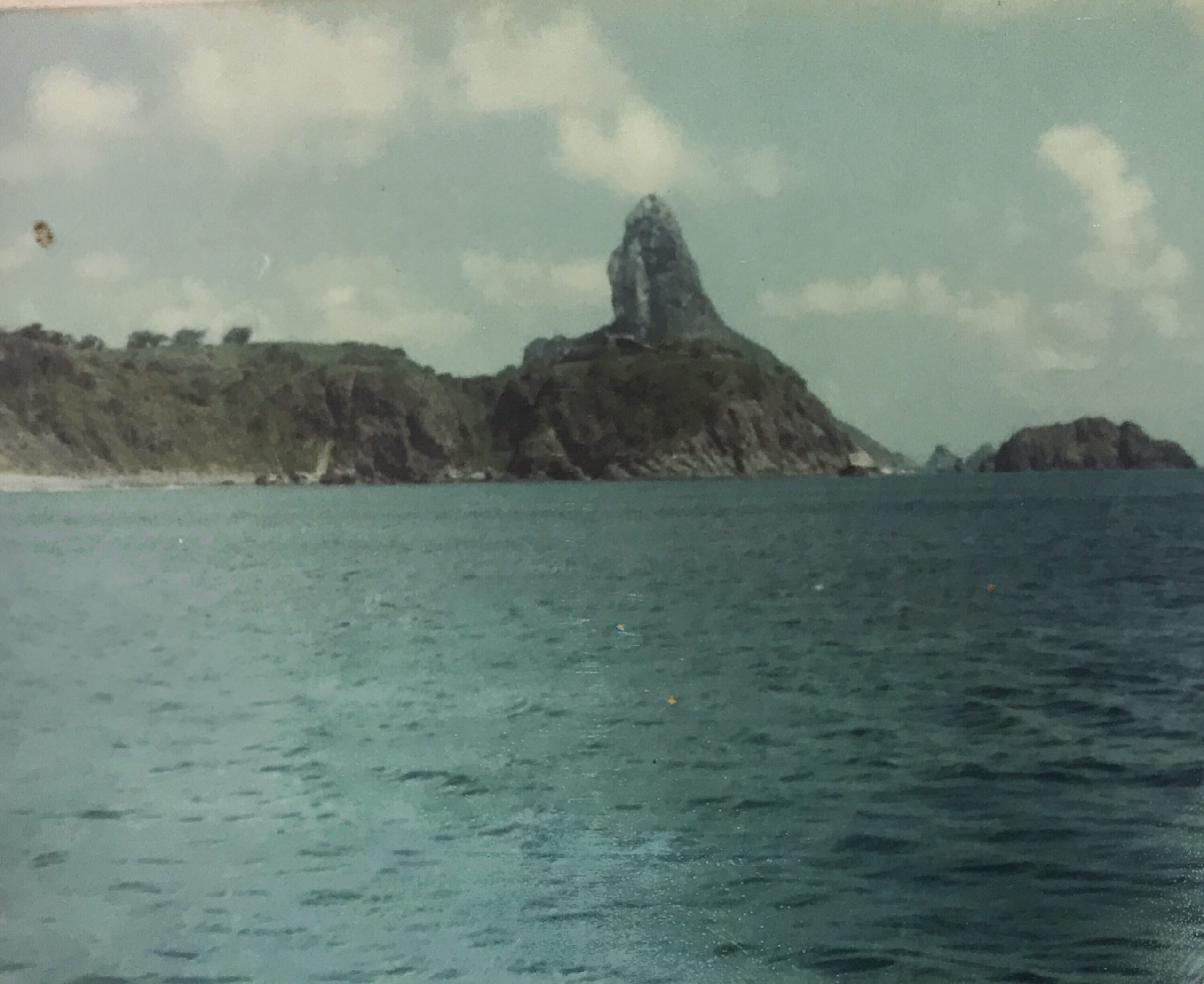
After yesterday’s wonderful, albeit unsuccessful for the purposes of my mission, beach day at Praia do Boldró, I went back over the photos that I still had, scanned in from our very old and faded Scally album, to see if there was anything I could find to identify where we might have been anchored. And realised to my great delight that indeed, there was one. Why hadn’t I thought of that yesterday? So back I went to the concierge, and he assured me that it must be Praia do Porto de Santo Antonio.
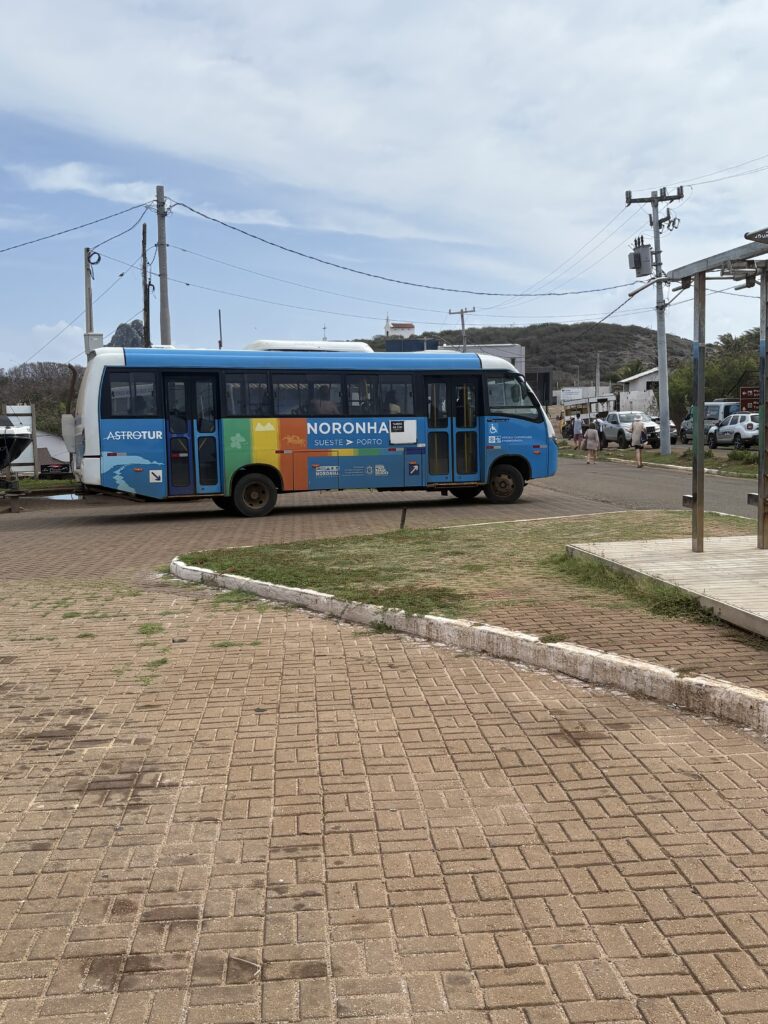
I wanted to hire a buggy for some fun and adventure but they were only available for a three day hire, minimum. I didn’t want to take a taxi and would have loved to go by bicycle or walk. But everyone said that it would not be a good idea, much too far (in the end it wouldn’t have been – possibly an hour only). Anyway, when in Rome, listen to the locals. So I caught the bus and got dropped off at Praia do Porto.
It’s a little bay, now with a wharf and jetty to protect fishing boats, rubber dinghy’s that take divers out to sea and the tourist boats and catamarans that take tourists and visitors around the island. Much as I would have loved to see it from the sea, with the same view as from Scally, I was not going to risk seasickness in that choppy sea. So I had to be content on land.
I walked up to the lifeguards, who doubled up as fire fighters, and asked for a few minutes to explain my story and show them the photograph. There was little doubt in their mind, but more importantly mine, that this is indeed where we had been anchored. The wharf had only been built in 1987, a few years after we had been here. Prior to that, it was a simple protected bay.
I was overjoyed at locating where we had been moored and spent a few hours sitting on the sand, watching and observing and remembering. There were some rock formations too, not the same size or length as on Praia do Boldrió, but they were there. This was undoubtedly the beach where my brother and I had capsized in the Wag, Jerry cans all afloat, and swam to shore, pulling the painter in tow, to get fresh water and help for my father.
Dates: February 2026
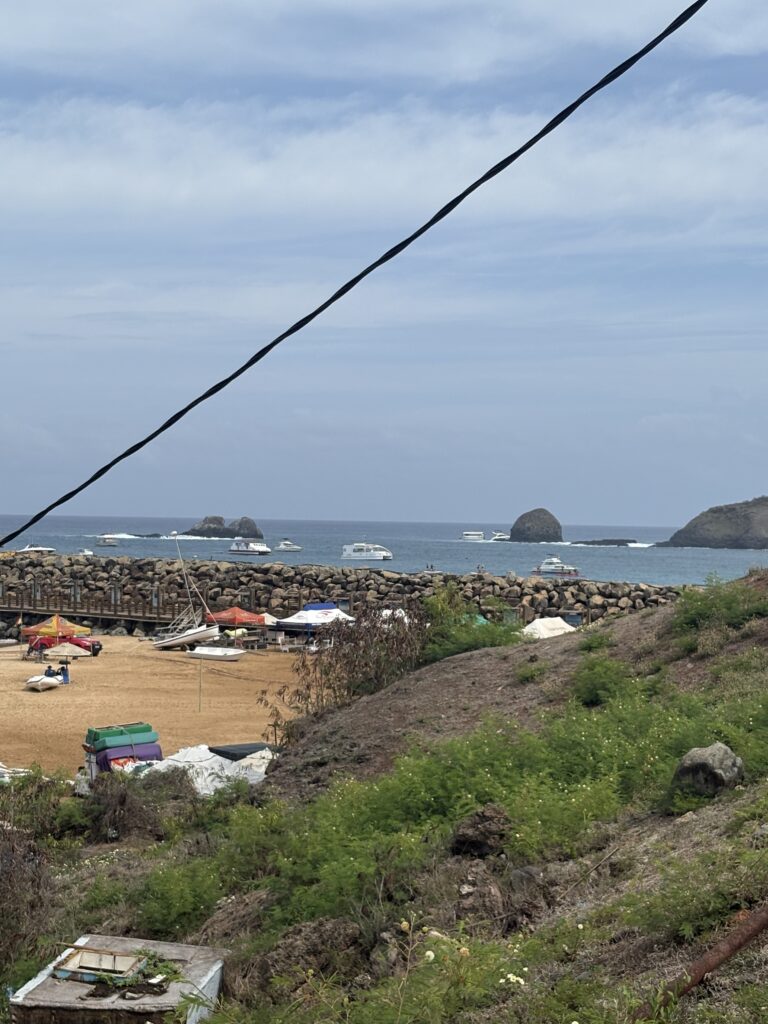
Where we might have been anchored 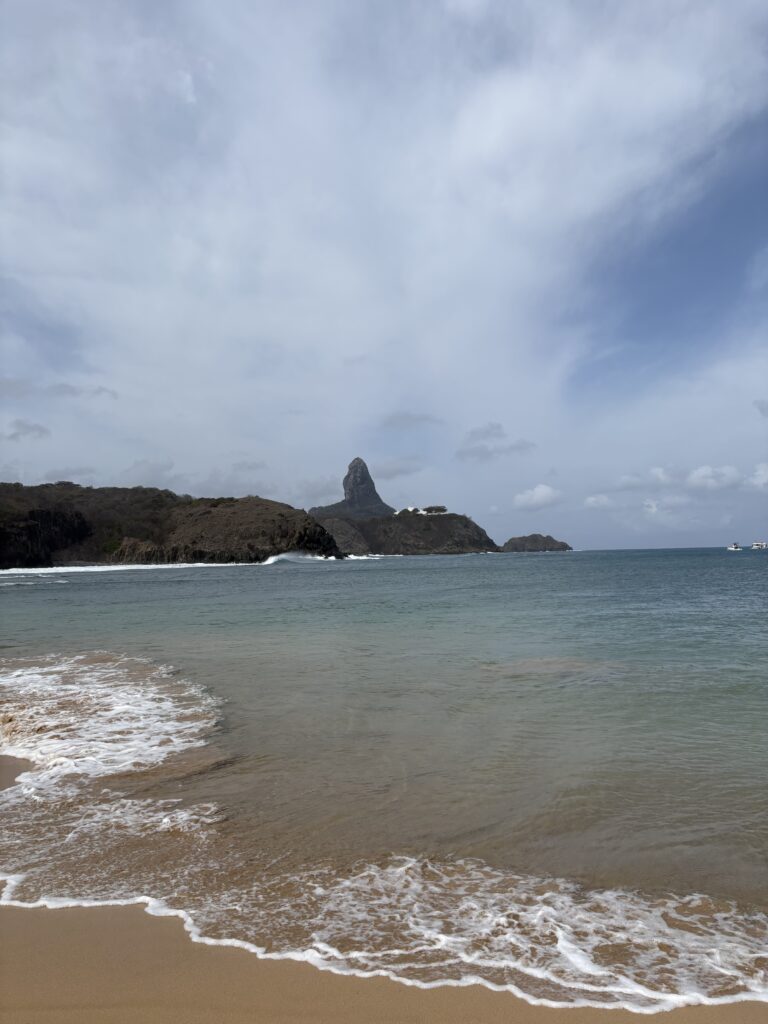
The landmark in our photo 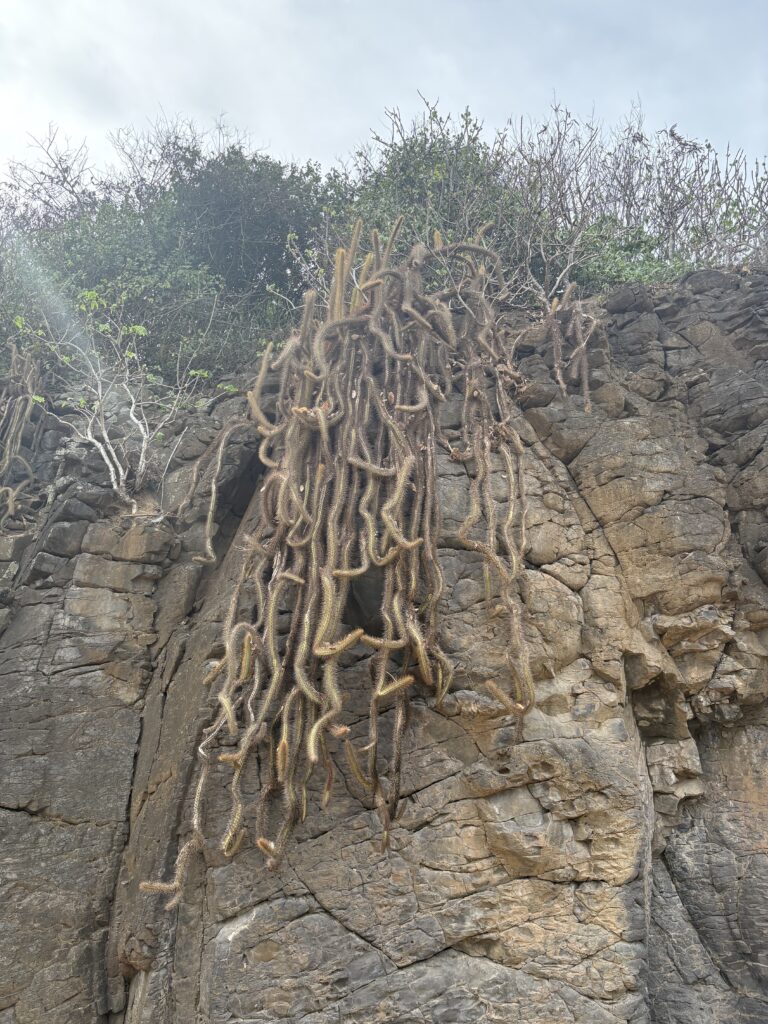
Very strange flora on the beach 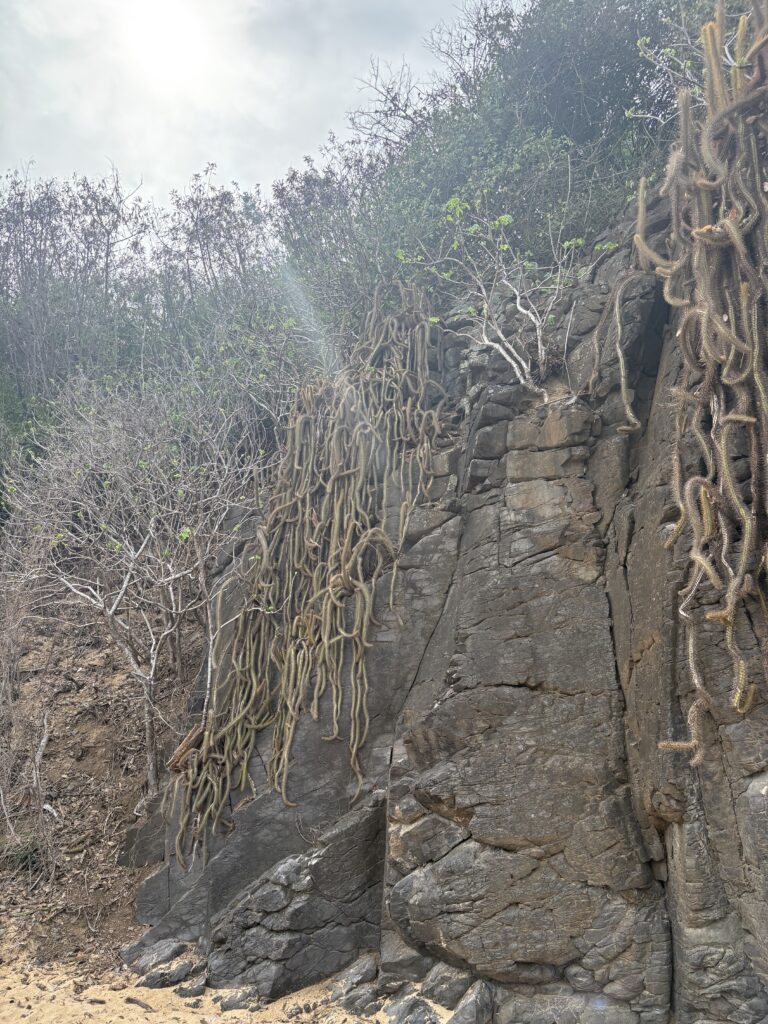
Strange flora on the beach 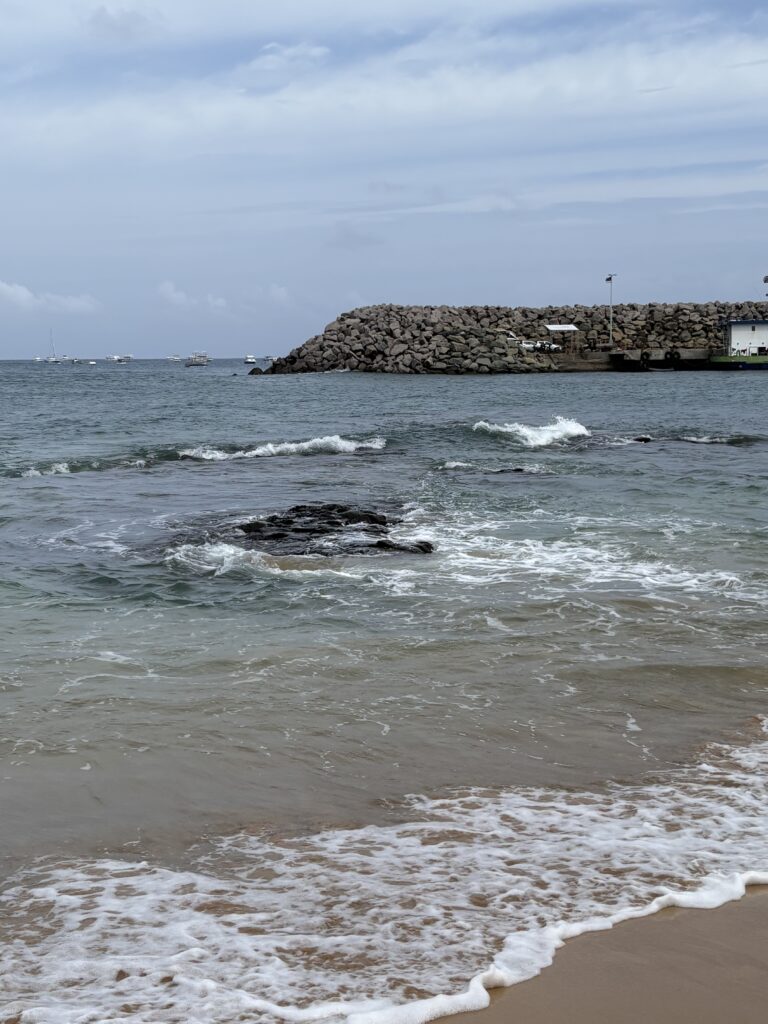
The new sea wall with sail boats out in beyond, where Scally would have been 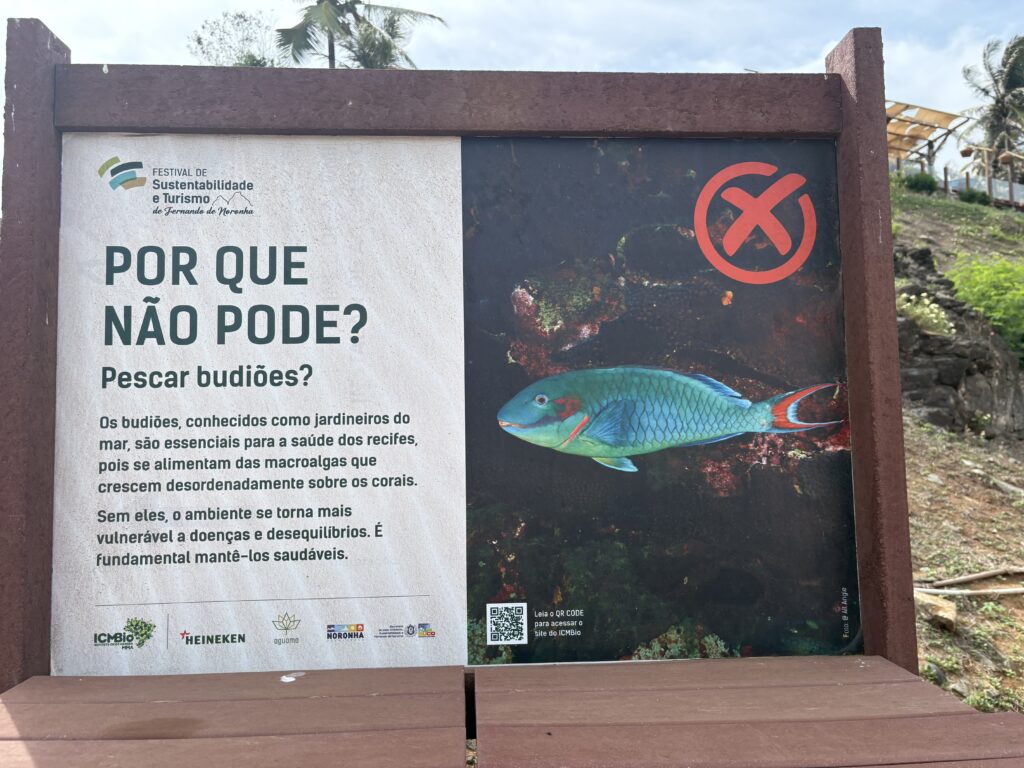
Protecting wildlife 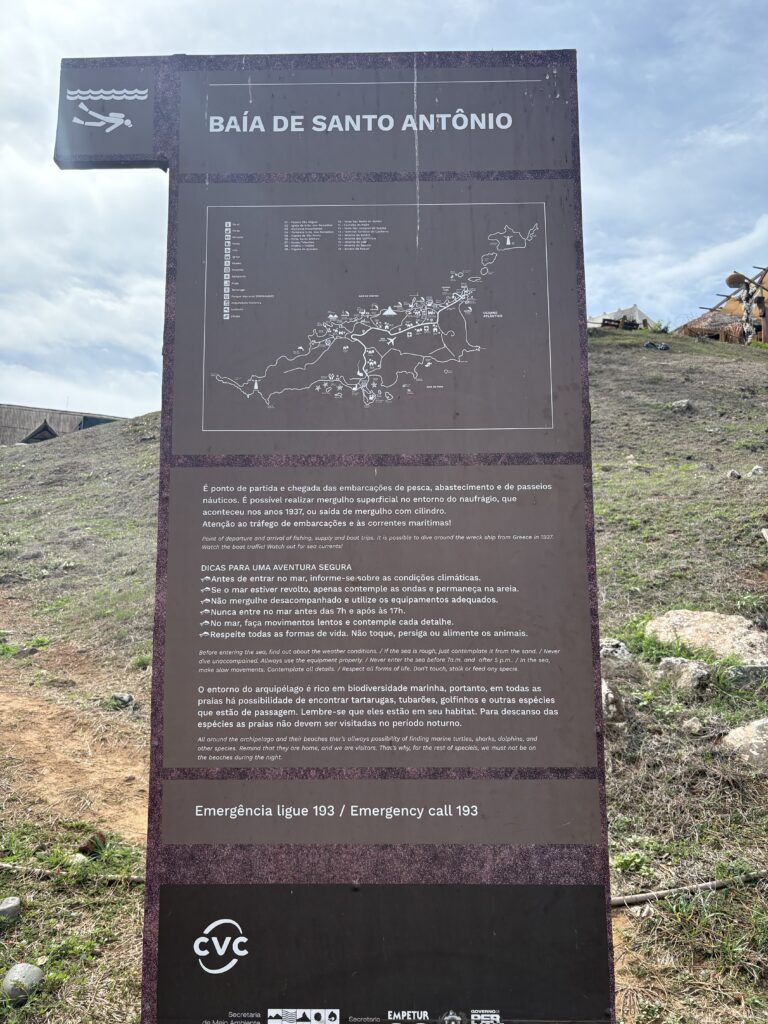
Praia do Porto de Santo Antonio 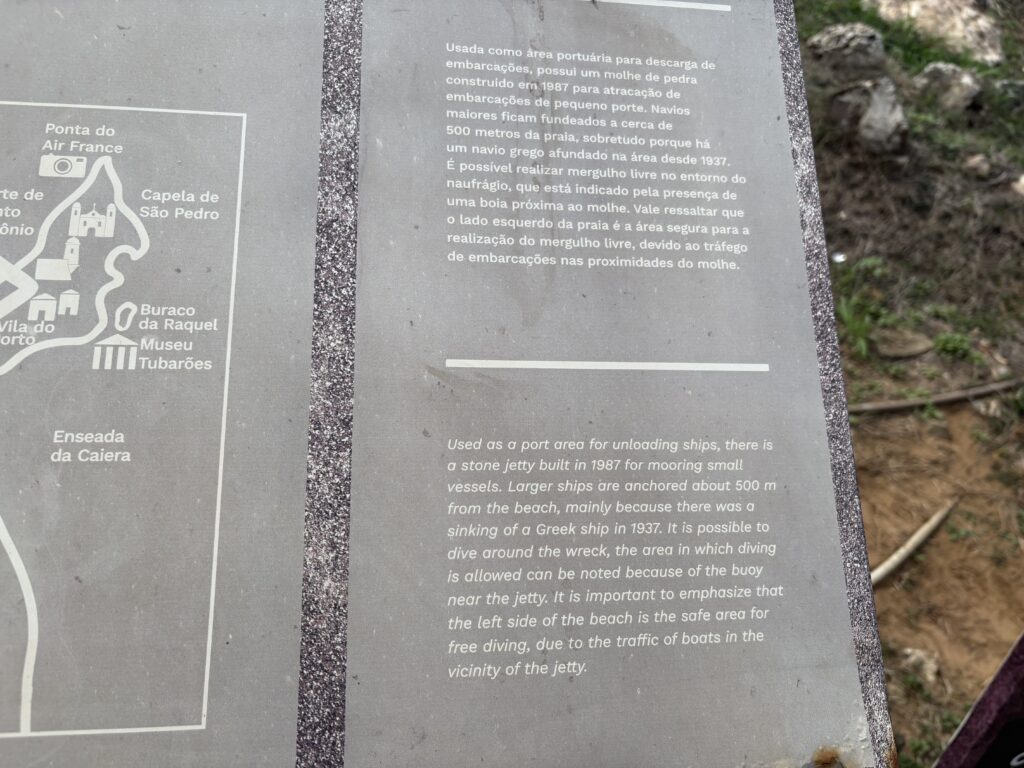
Information about the bay 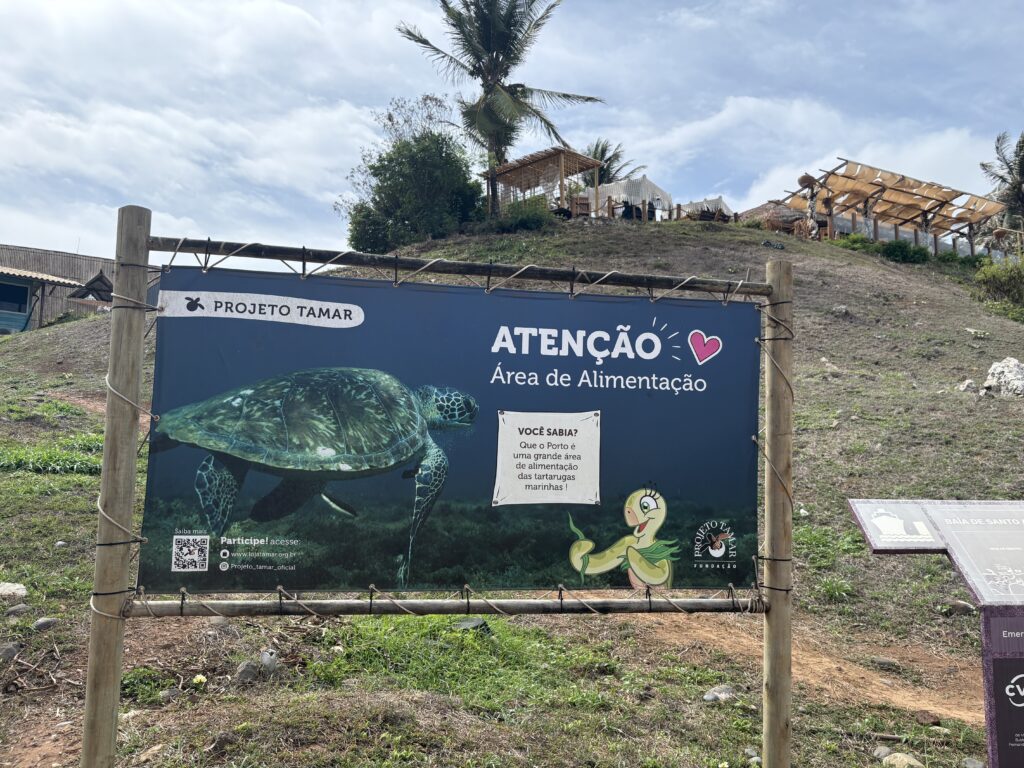
Protecting wildlife 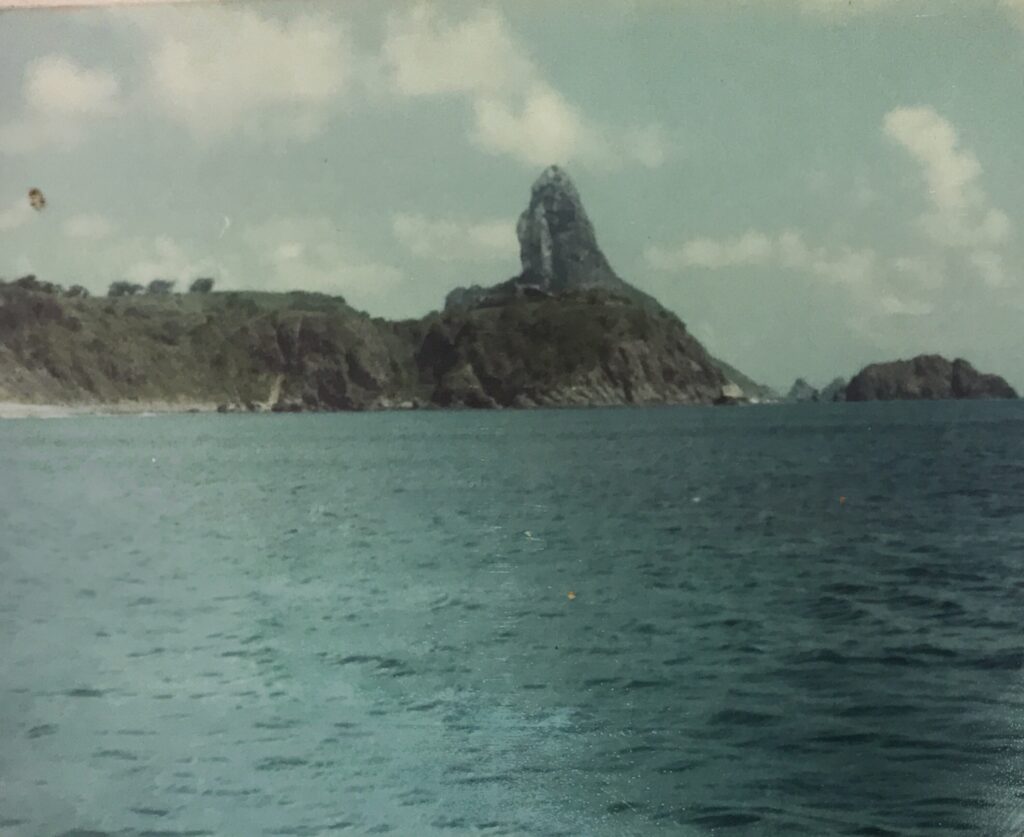
Our only photo of Fernando de Noronha 
-
Brazil: Fernando de Noronha, Beach Day 1
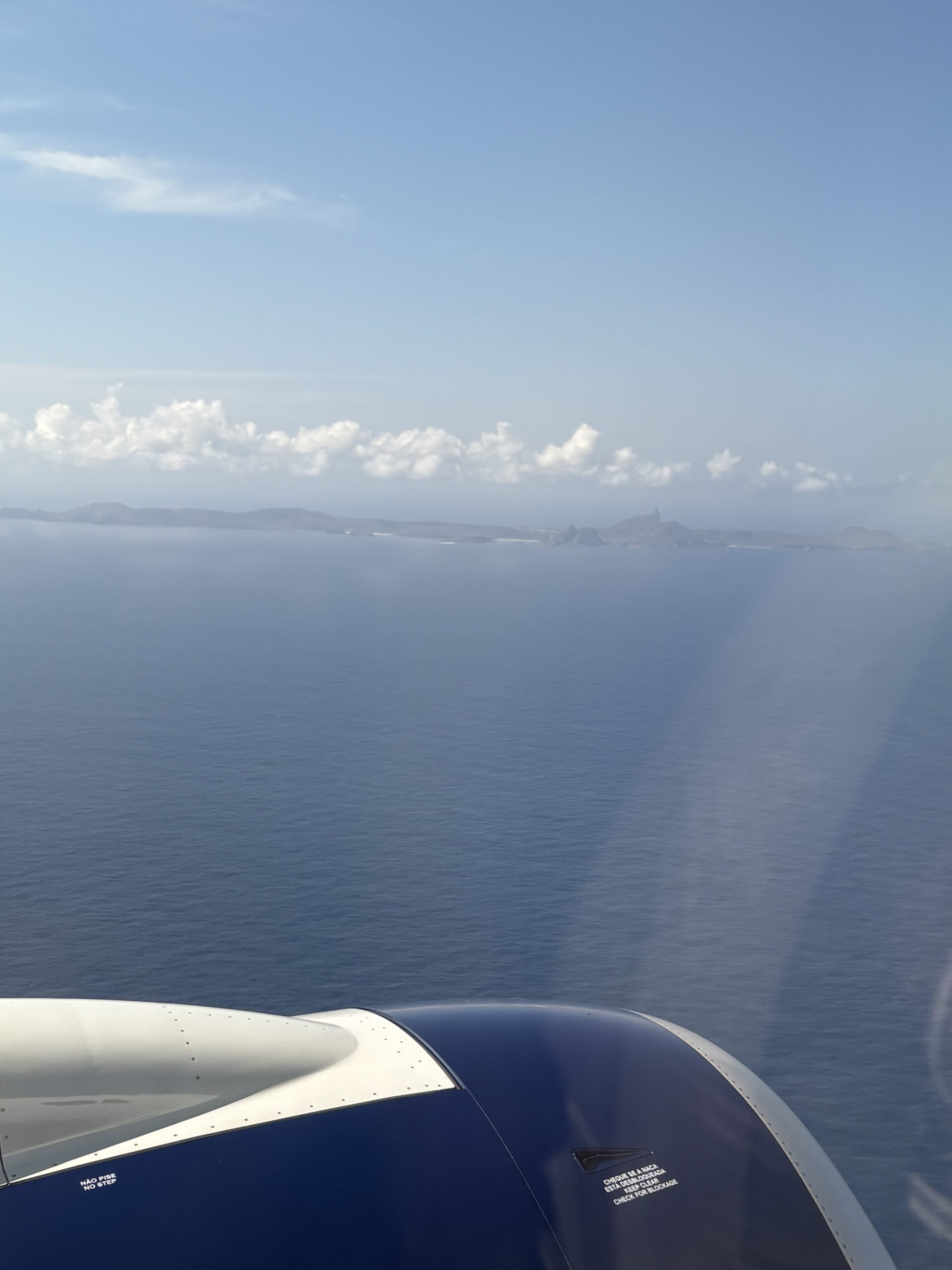
We arrived at Fernando de Noronha after five days at sea after leaving Salvador. Now here I was, forty four years later, but this time I flew in from Salvador via Recife. It was a short flight of just under an hour from Recife. I had read up a little on the island but nothing could have prepared me for how undeveloped the island has remained. In 1982, I distinctly remember the view from Scally after anchoring safely. Long stretches of beautiful sandy beaches, coral reefs and surf, and many many palm trees along the shoreline. I remember dusty dirt tracks, and a couple of shack-like houses. It is still exactly the same, pretty much.
My taxi took me to the pousada, which was basically a set of a few one storey bungalows. They were very friendly and welcoming, smiles and relaxation everywhere, typical to a beachy paradise. This is a beachy island paradise. There are beaches everywhere and it’s what people do. Go to the beach.
I have visited many beautiful beaches. Portugal, has some of the most magnificent ones anywhere in the world, so does the United States on east, west and southern coasts; so does Italy; so does the east coast of the United Kingdom; and don’t even get me started on South Africa. But here, it seems like one of the last places on earth that remains simple, low key, undeveloped, a complete absence of any buildings above two stories, a complete absence of high street shops, fast food chains, supermarkets, bars and cafes. It’s a simple, easy, extremely laid back, original place and I was completely taken in. It is a beauty the likes of which we do not often encounter.
It’s a very small island with one main road and there are beaches everywhere. I really was not sure which one Scally had been on, except that it must have been on the western side of the island, as we had approached from the south west.
On my first morning, after explaining my mission to a young concierge who was more than helpful in trying to identify the beach in question, I headed for Praia do Boldró, with the surity that this was the beach with the most rock formations which at low tide are visible and which at high tide caused large surf and waves. (I had believed from memories that they would be coral reefs, but they are indeed rock formations, much like the pools in Praia de Barros in Brazil. But I remember them vividly, as me and my brother had cut our feet on them when we capsized in the Wag while heading for shore with Jerry cans to get fresh water).
Praia do Boldró is truly a beautiful beach. Long and sandy. Huge surf crashing over the rock formations visible and invisible. Only a handful of people. No buildings; (I did ask myself what people would do if they needed the toilet, but I guess the palm trees and dense bushes behind served the purpose). There was a kind old Brazilian man at the entrance who, for a hundred Reais (about twenty Swiss francs) would set up an umbrella, deck chair and little table. I was very grateful for the shade and happy that I had brought a little picnic and lots of water. It was a very hot day, with the sun blaring down on the beach, the sand too hot to walk on without slip slops. There was one stand selling Caipirinha, water, coconuts and watermelons and that’s that.
I settled in for my day at the beach, going in and out of the beautiful, clear, fresh, warm and unpolluted water, and staring out beyond the rock formations, trying to picture Scally anchored there. Towards the end of the day I was absolutely sure it was not this beach, it was too exposed, too open to the wide open sea, and I could not imagine my brother or I setting anchor here.
My mission had failed, but I still had some days left on the island and I had had a magificent day at the beach, including a wonderful Caipirinha.
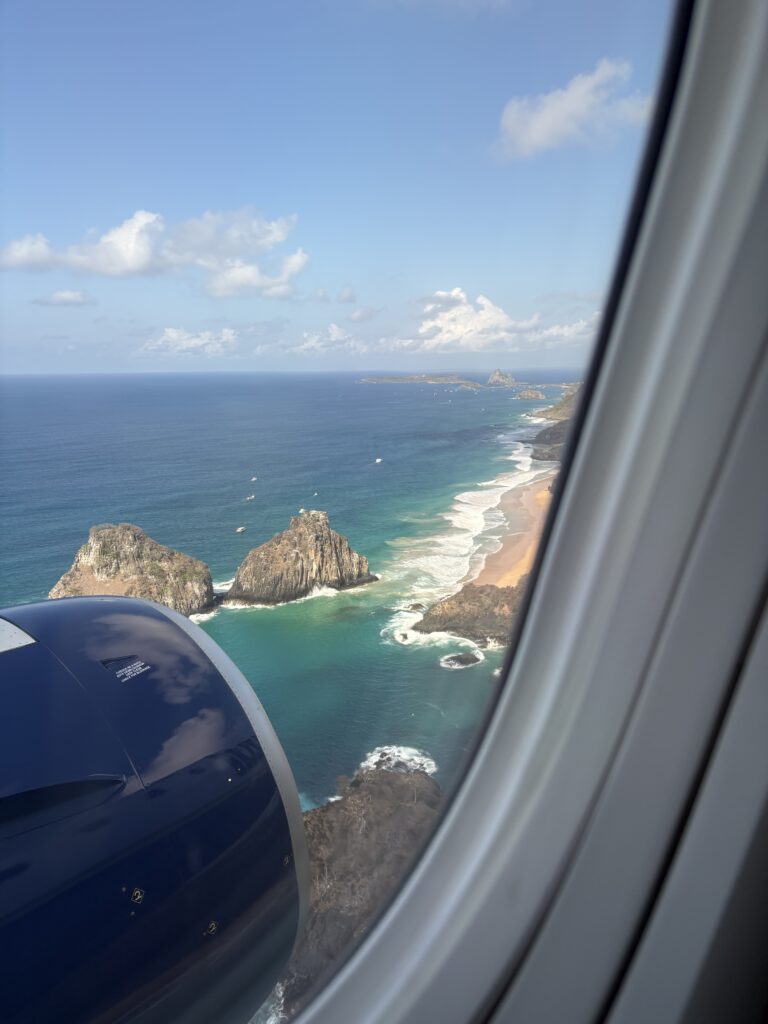
Fernando de Noronha from the air on arrival 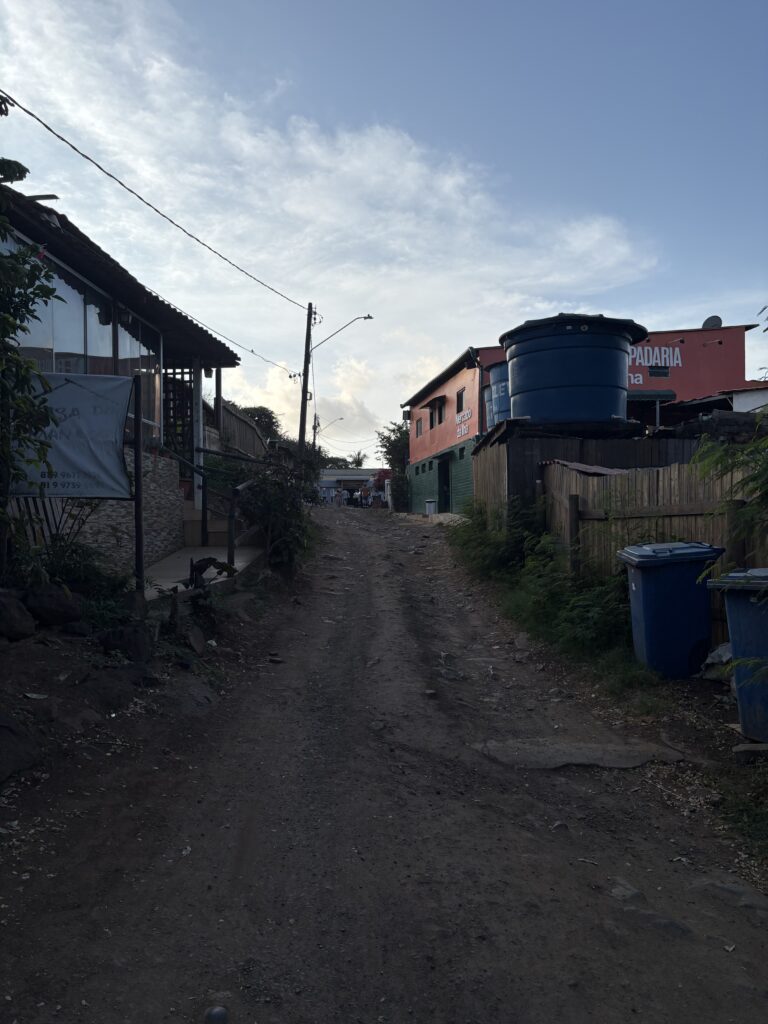
The side street leading away from the pousada 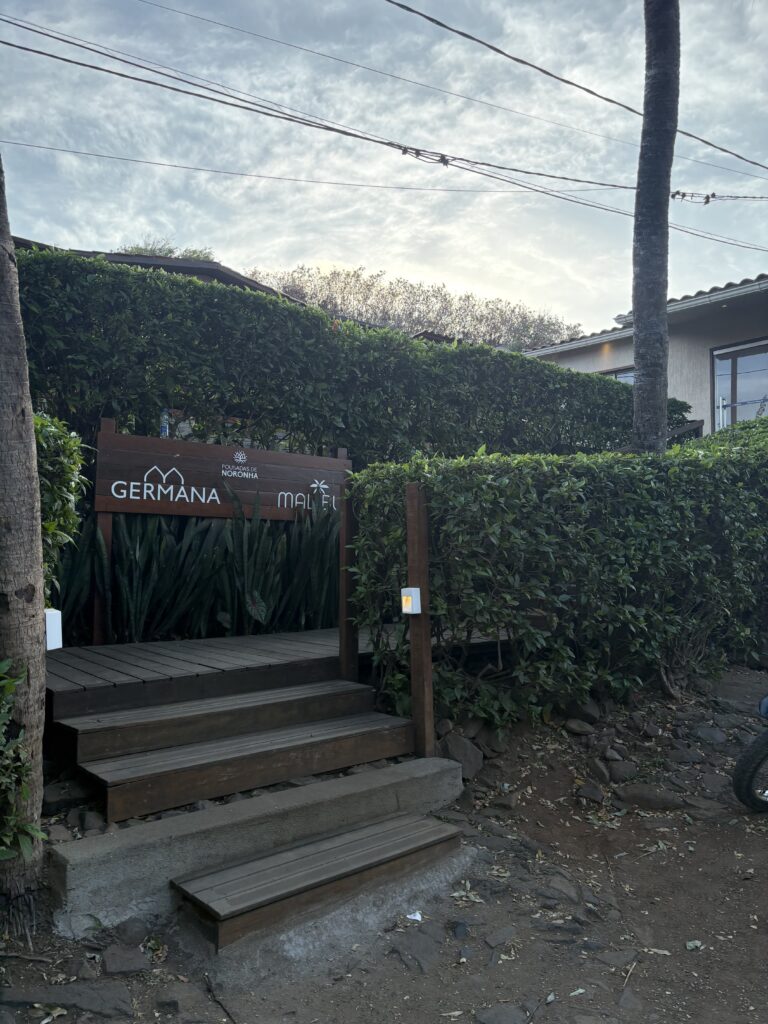
The entrance to my pousada 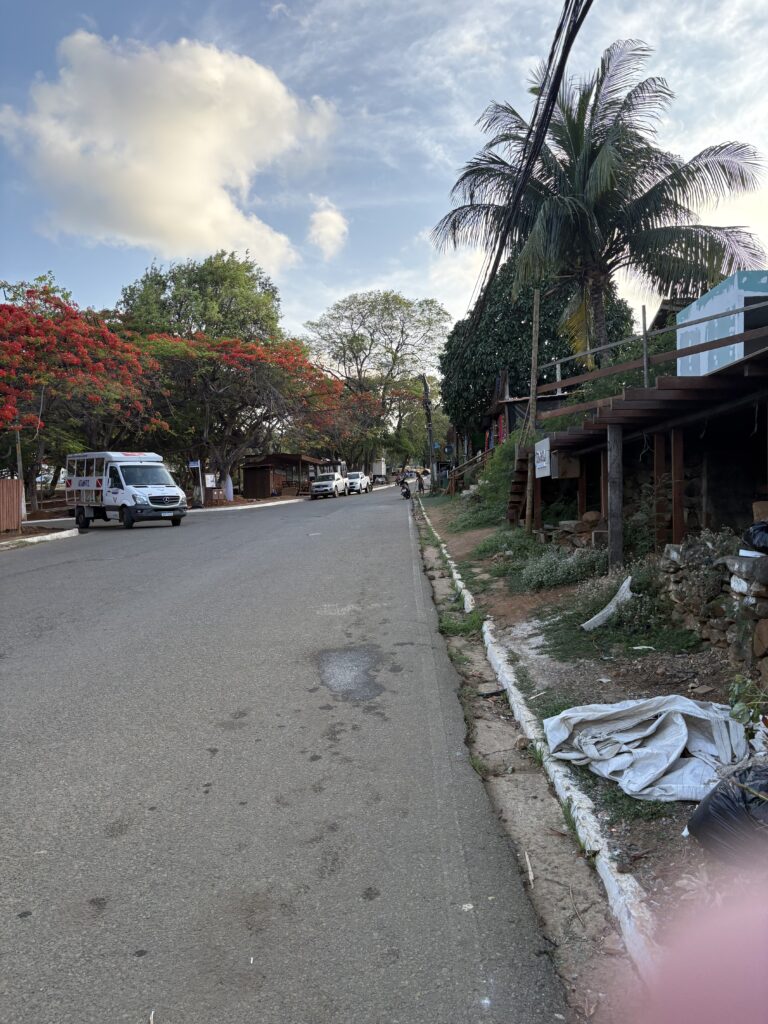
The Main Street 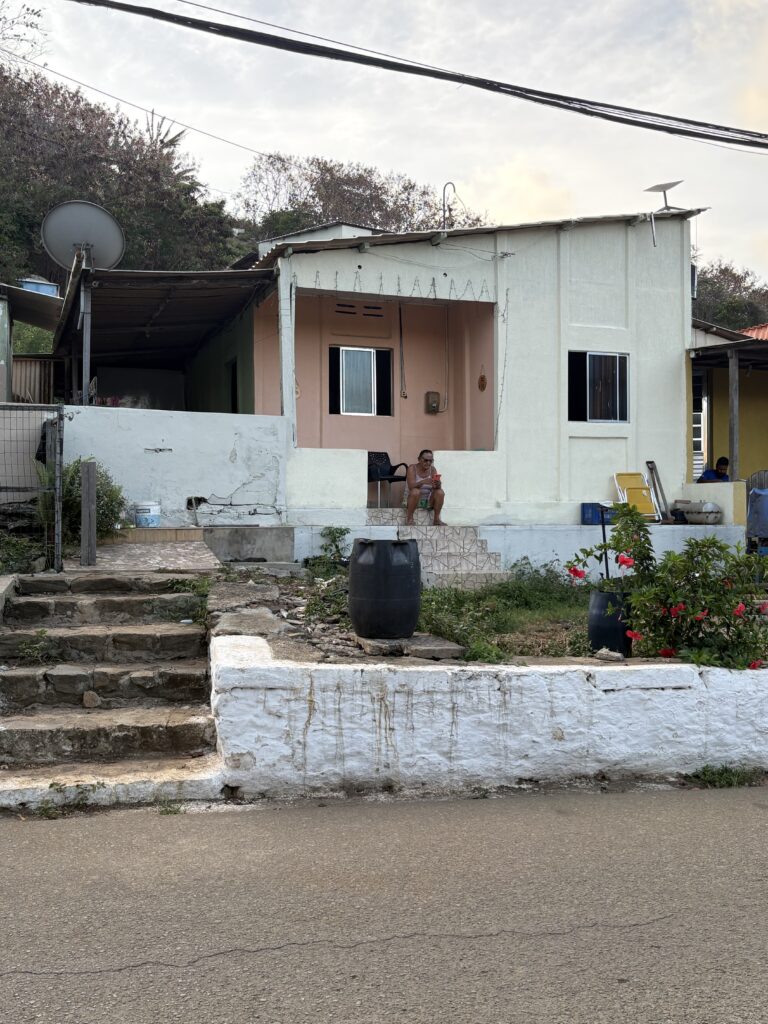
The types of houses 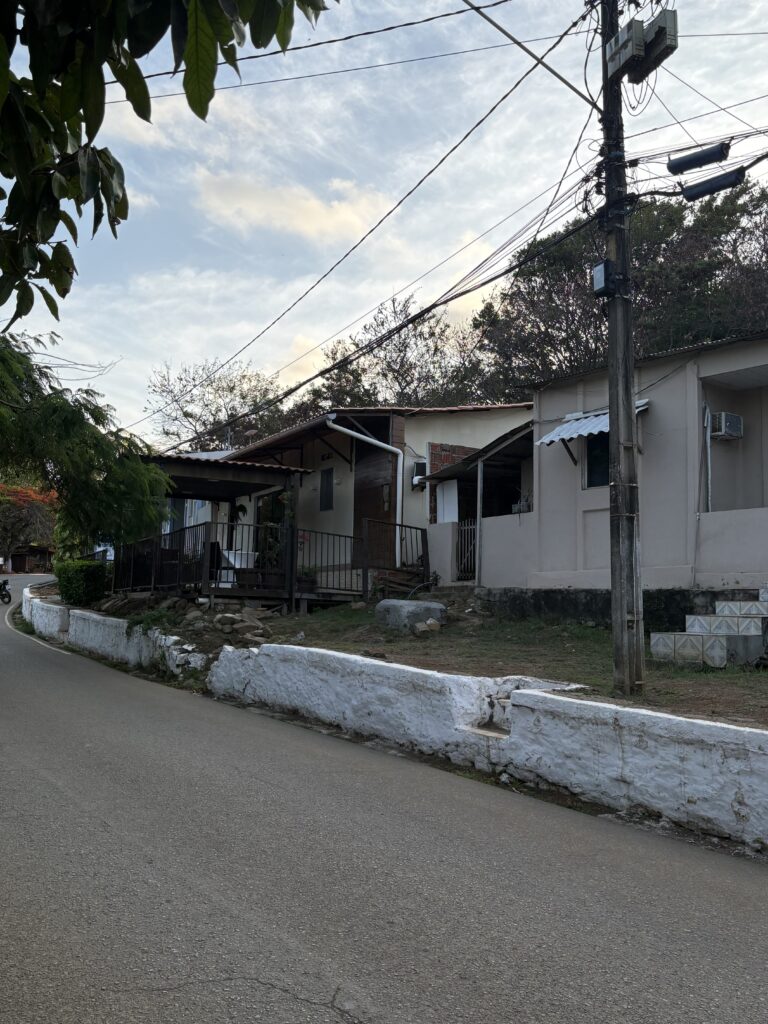
More houses along the Main Street 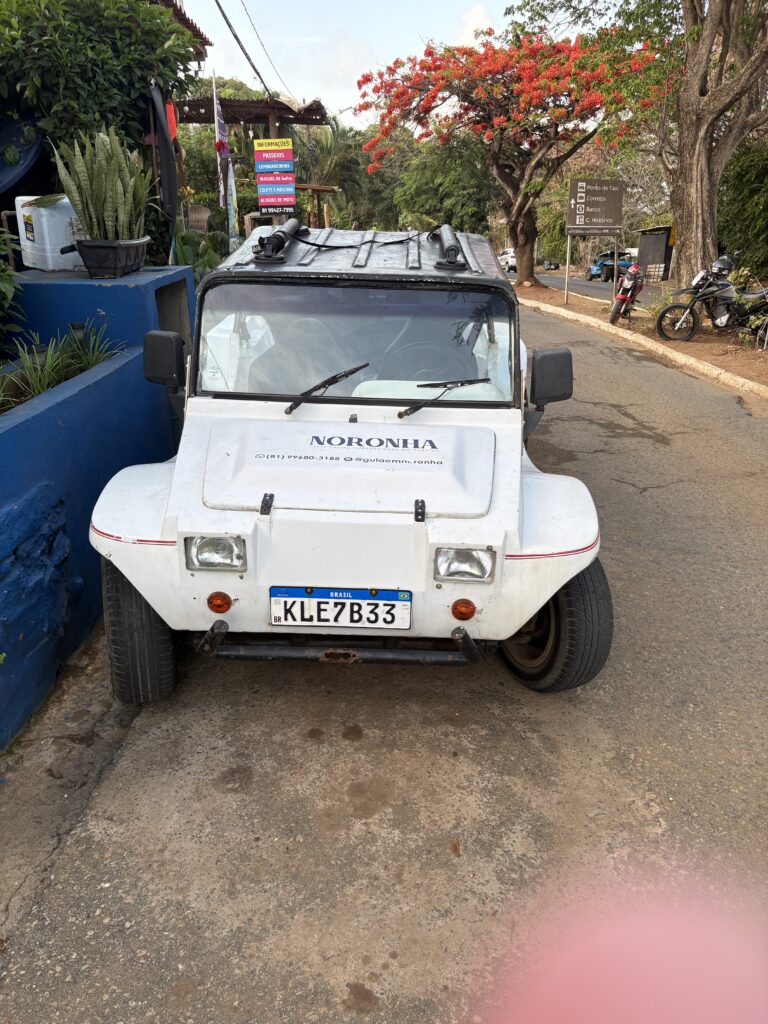
Beach buggies everywhere 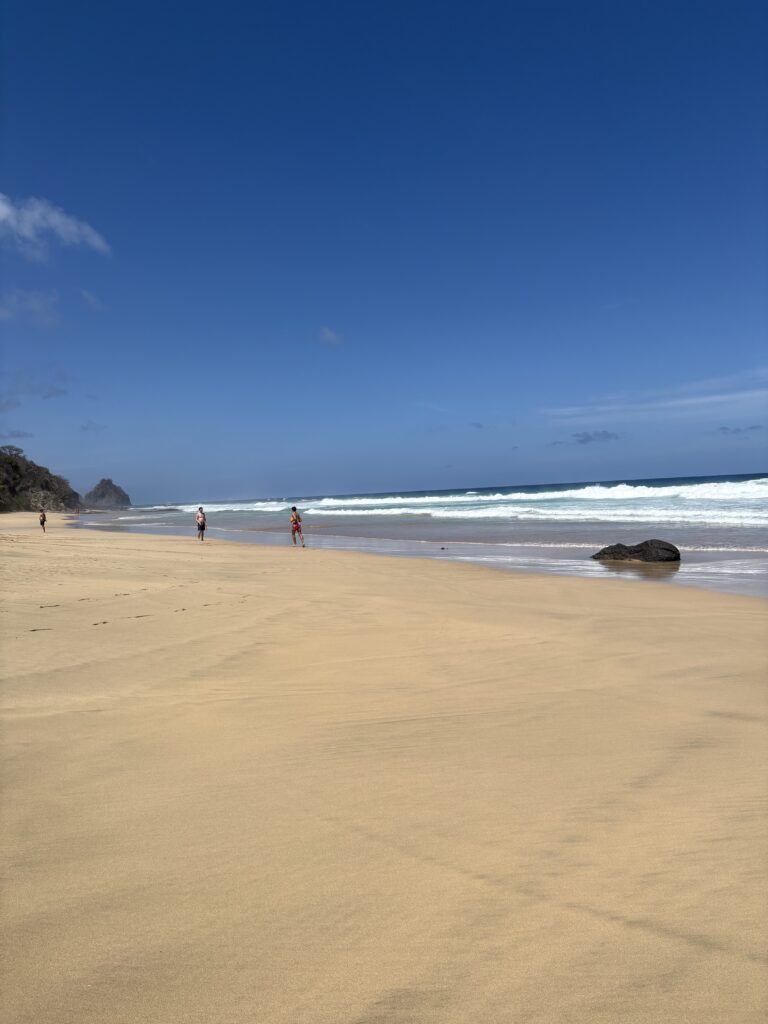
Praia do Boldró 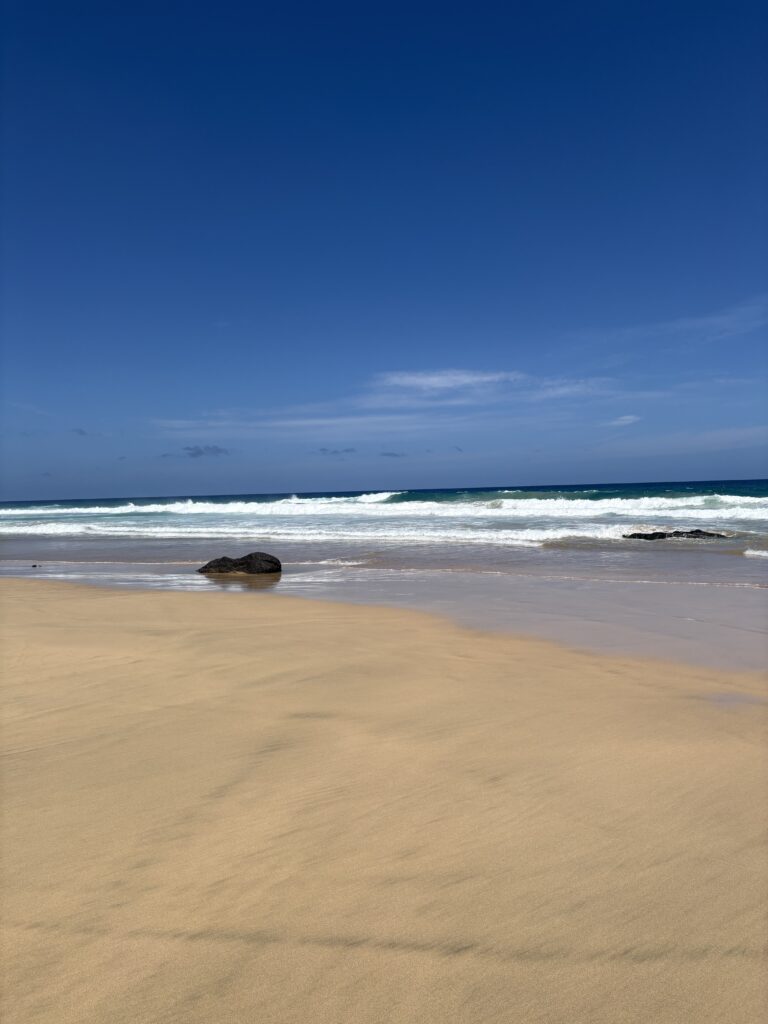
Praia do Boldró 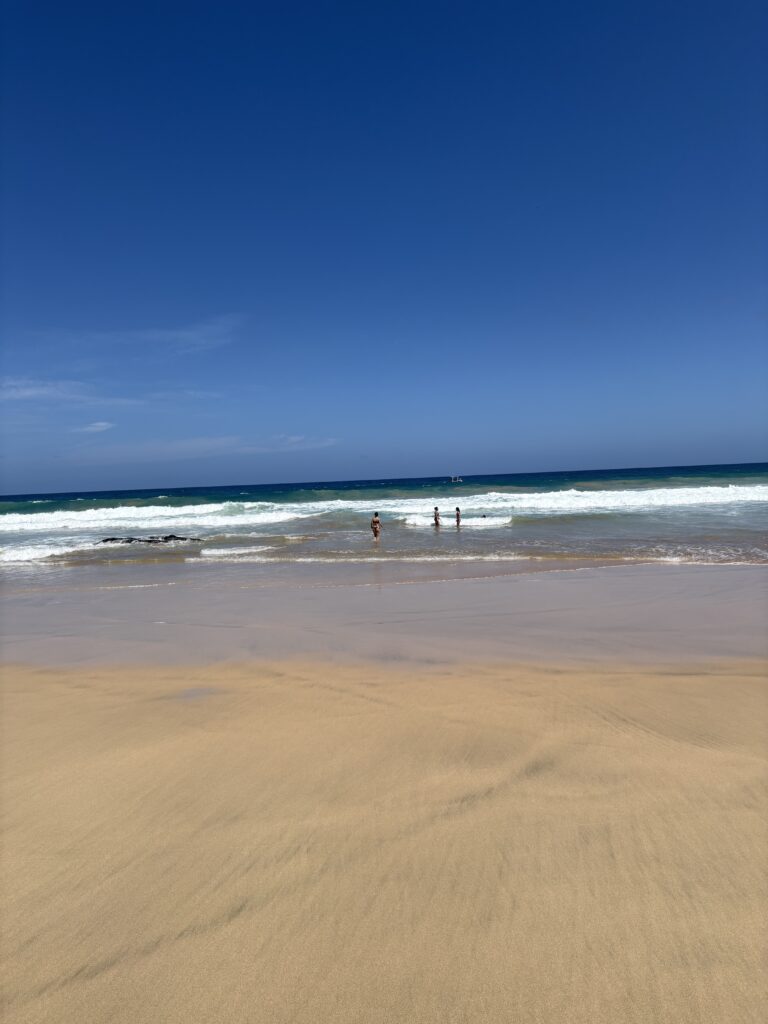
Praia do Boldró 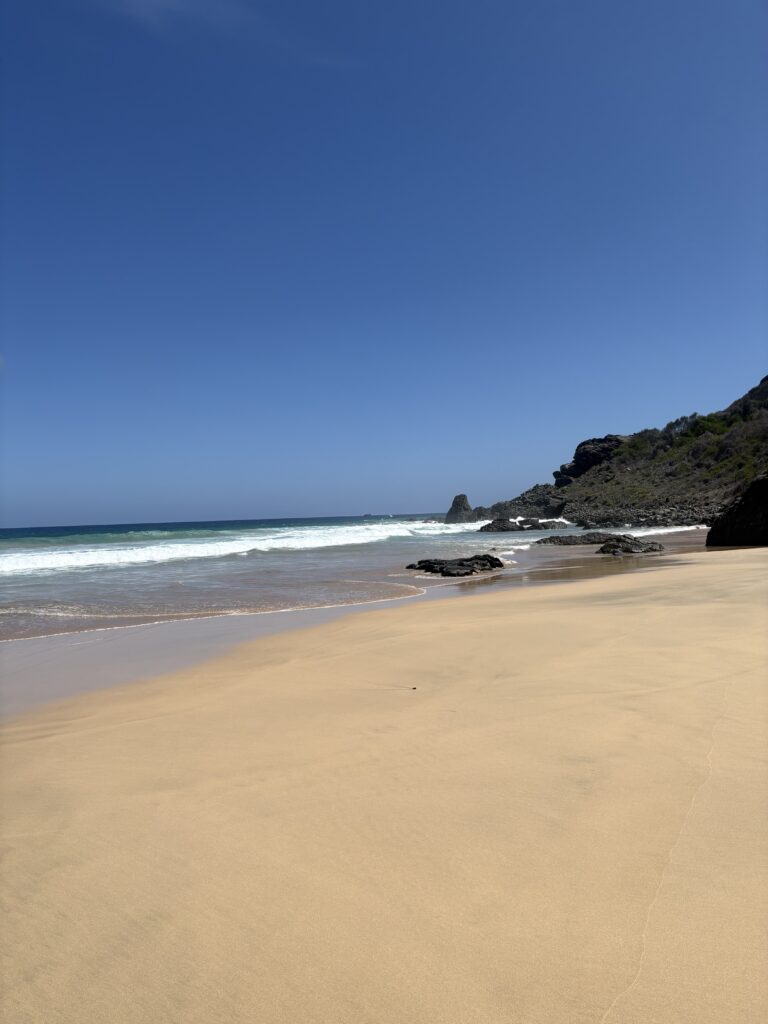
Praia do Boldró 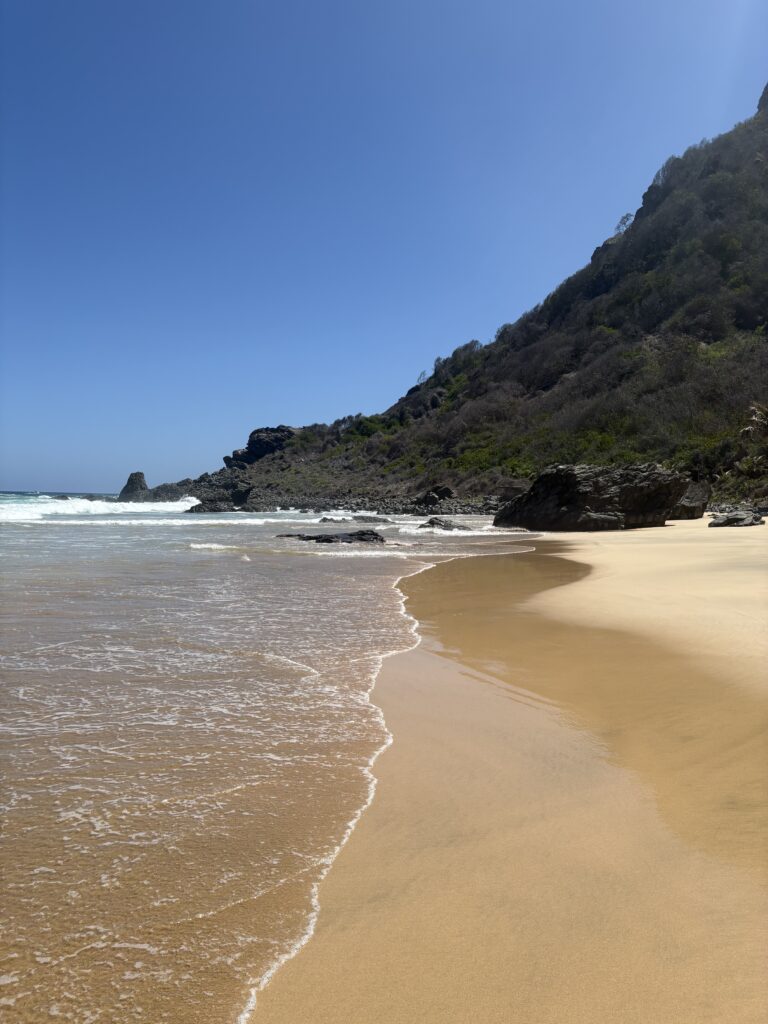
Praia do Boldró 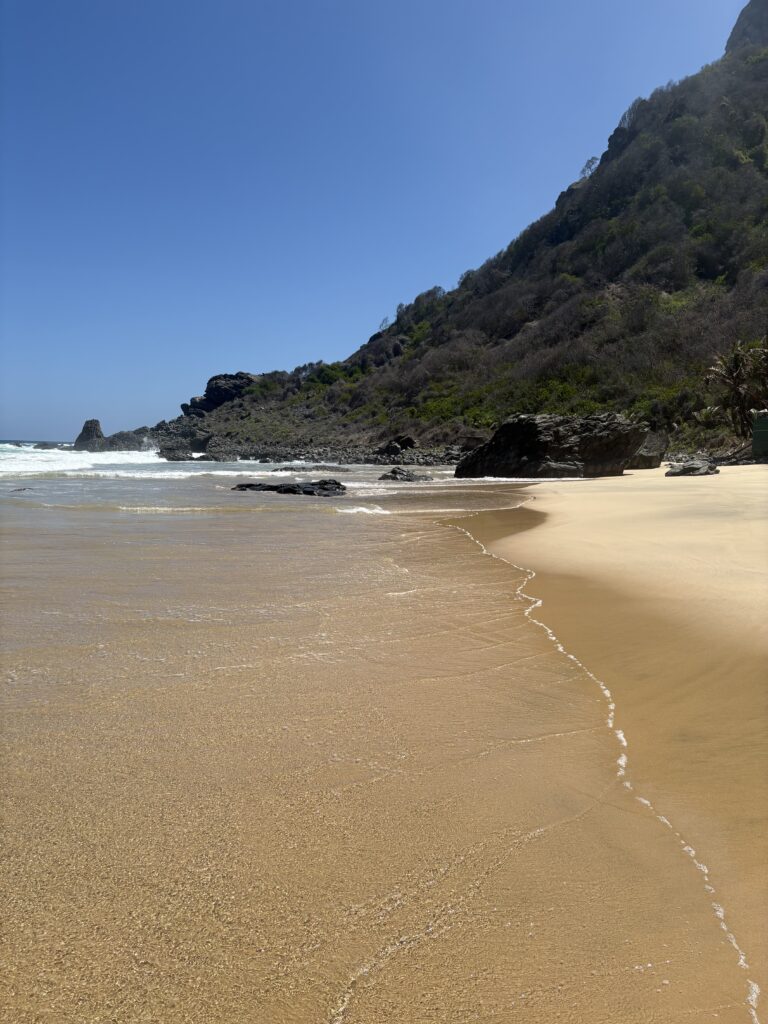
Praia do Boldró 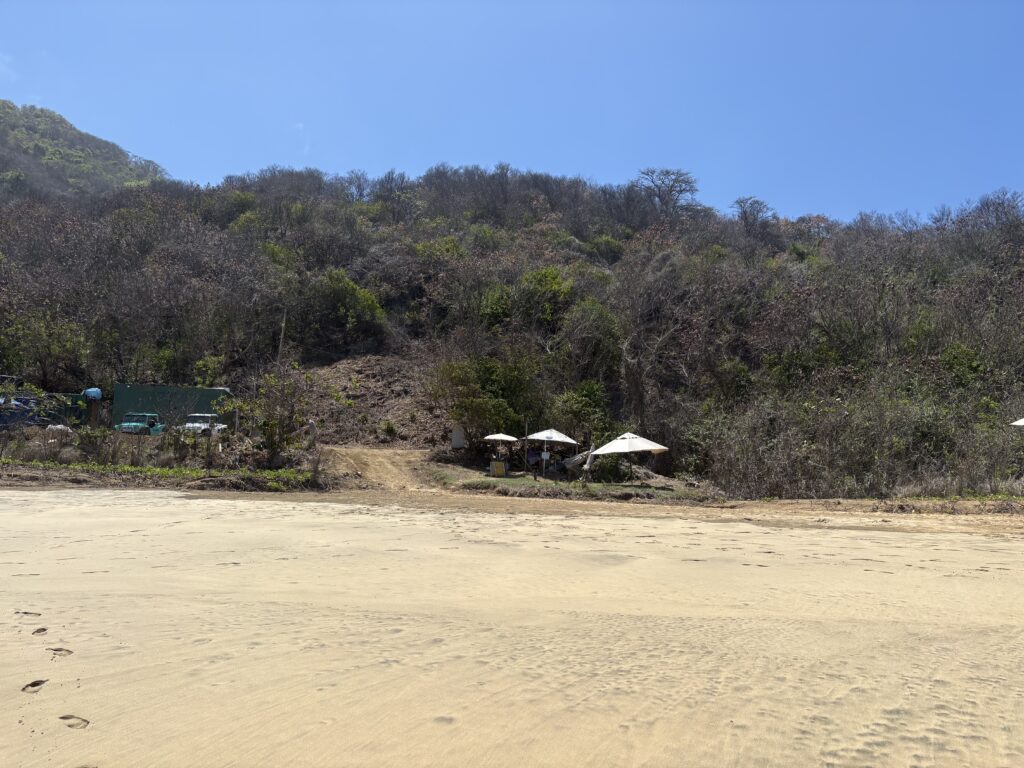
Praia do Boldró 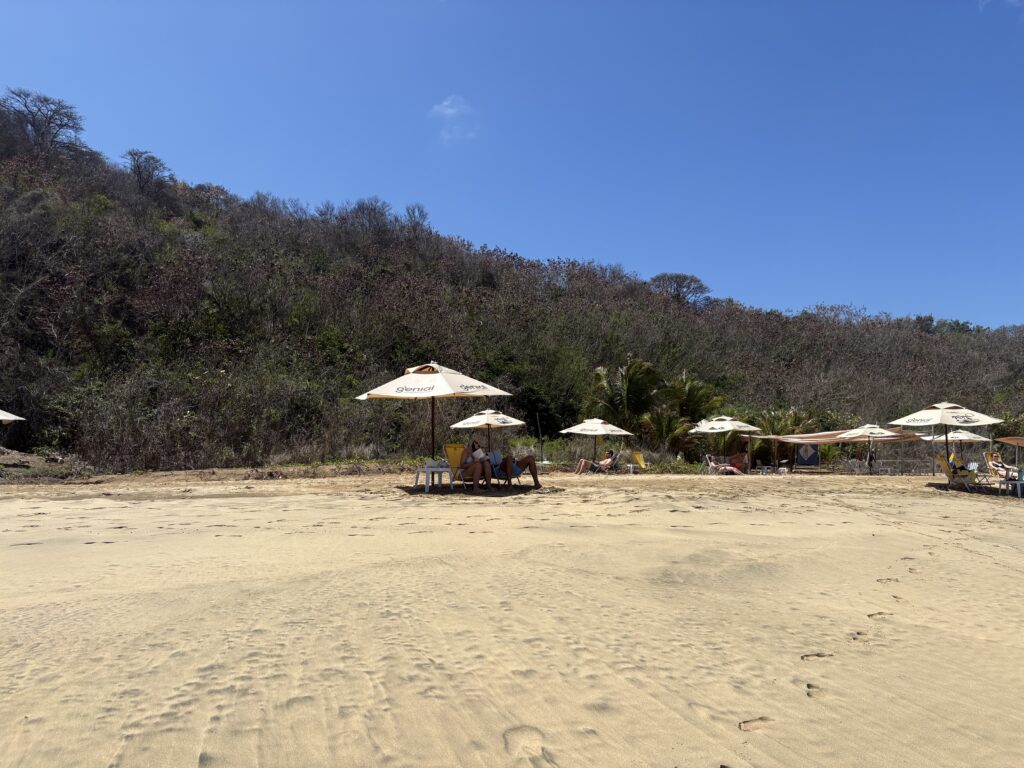
Praia do Boldró 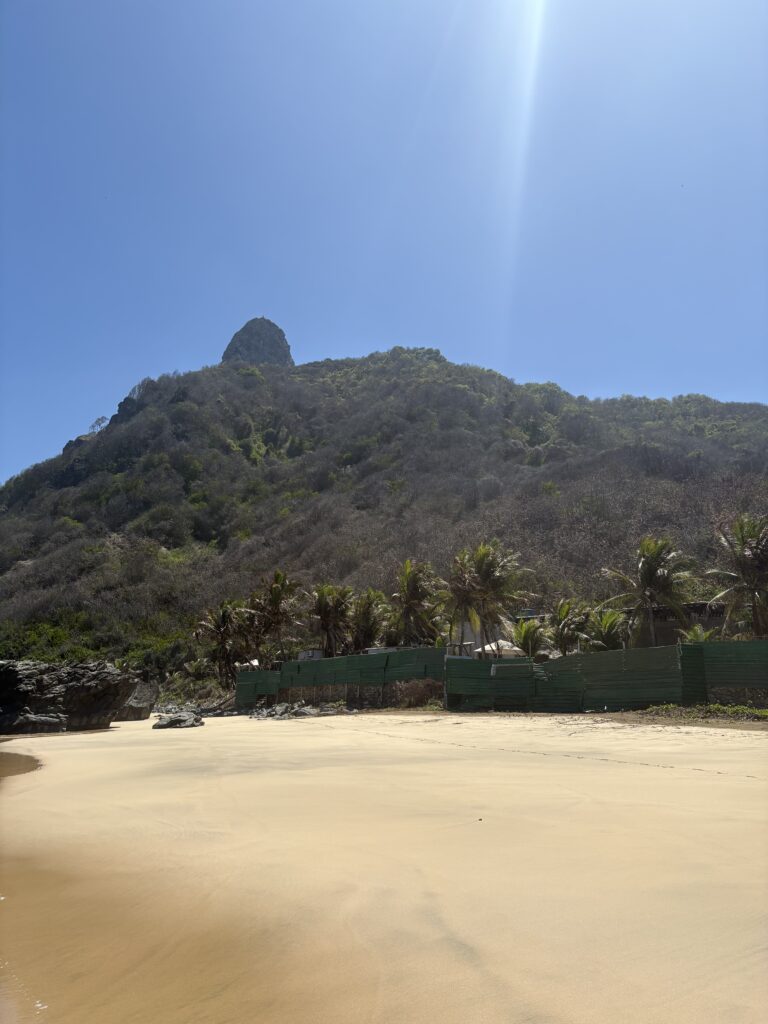
Praia do Boldró 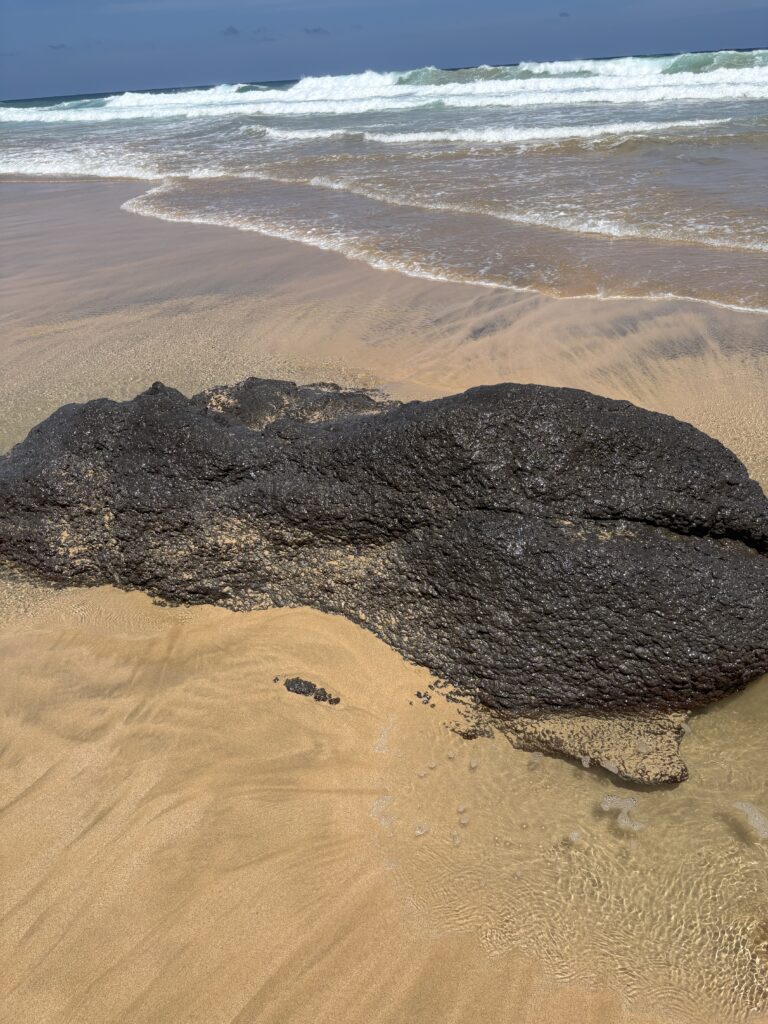
Praia do Boldró 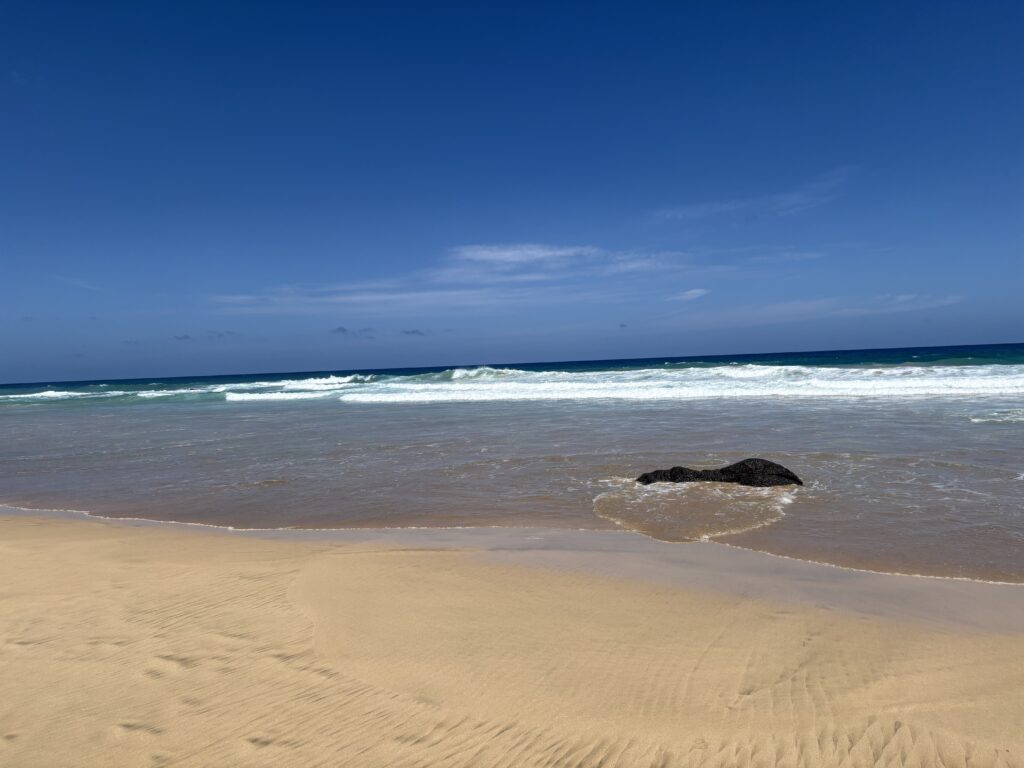
Praia do Boldró 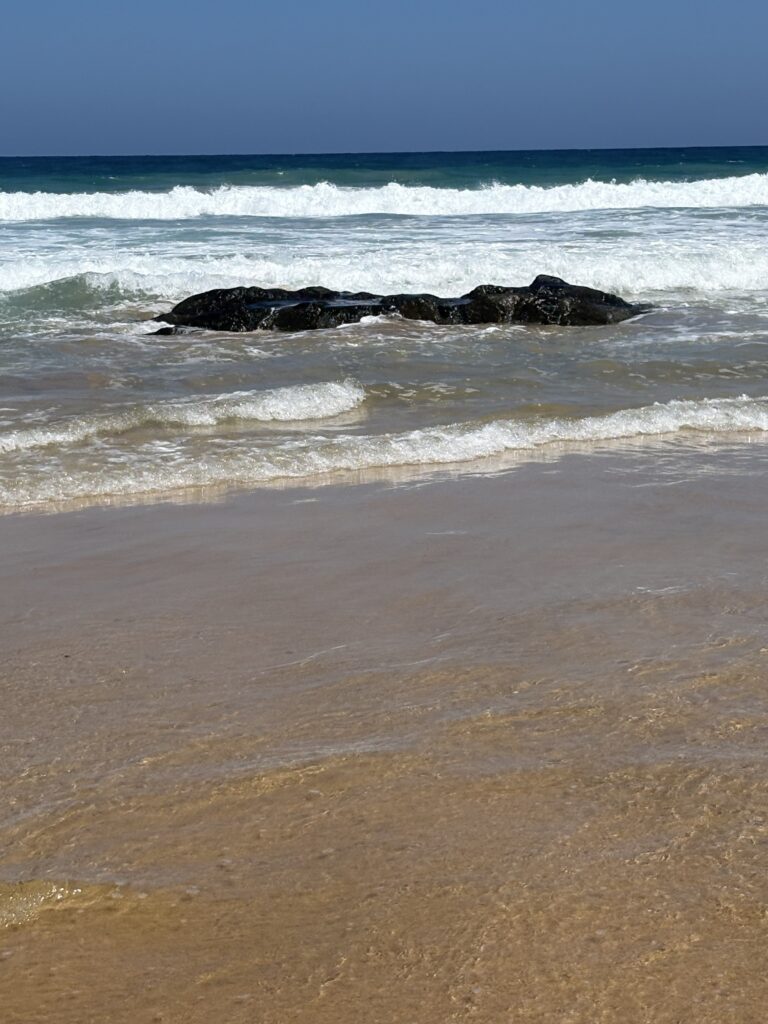
Praia do Boldró 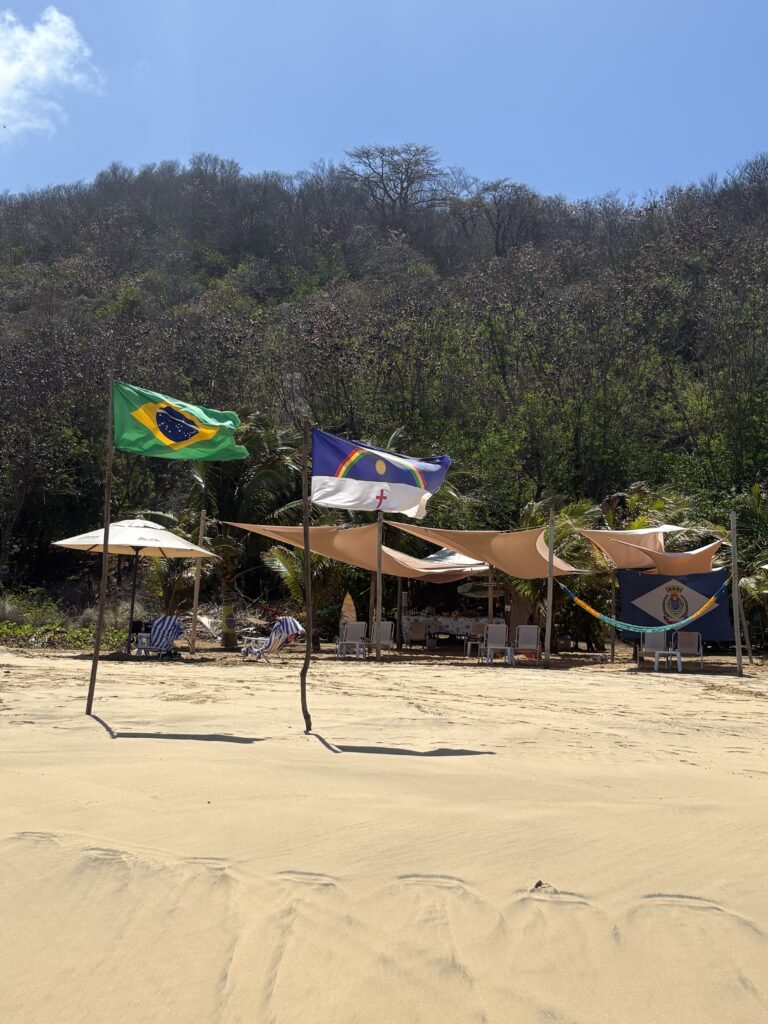
Praia do Boldró 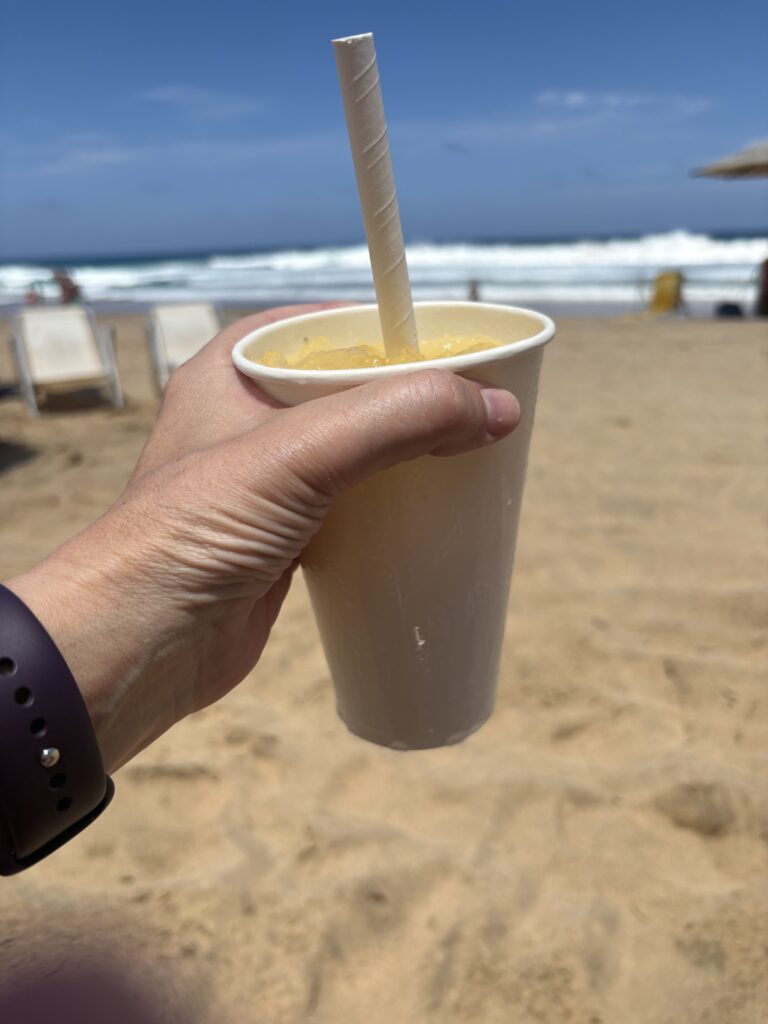
Praia do Boldró -
Brazil: Leaving Salvador and the fire.
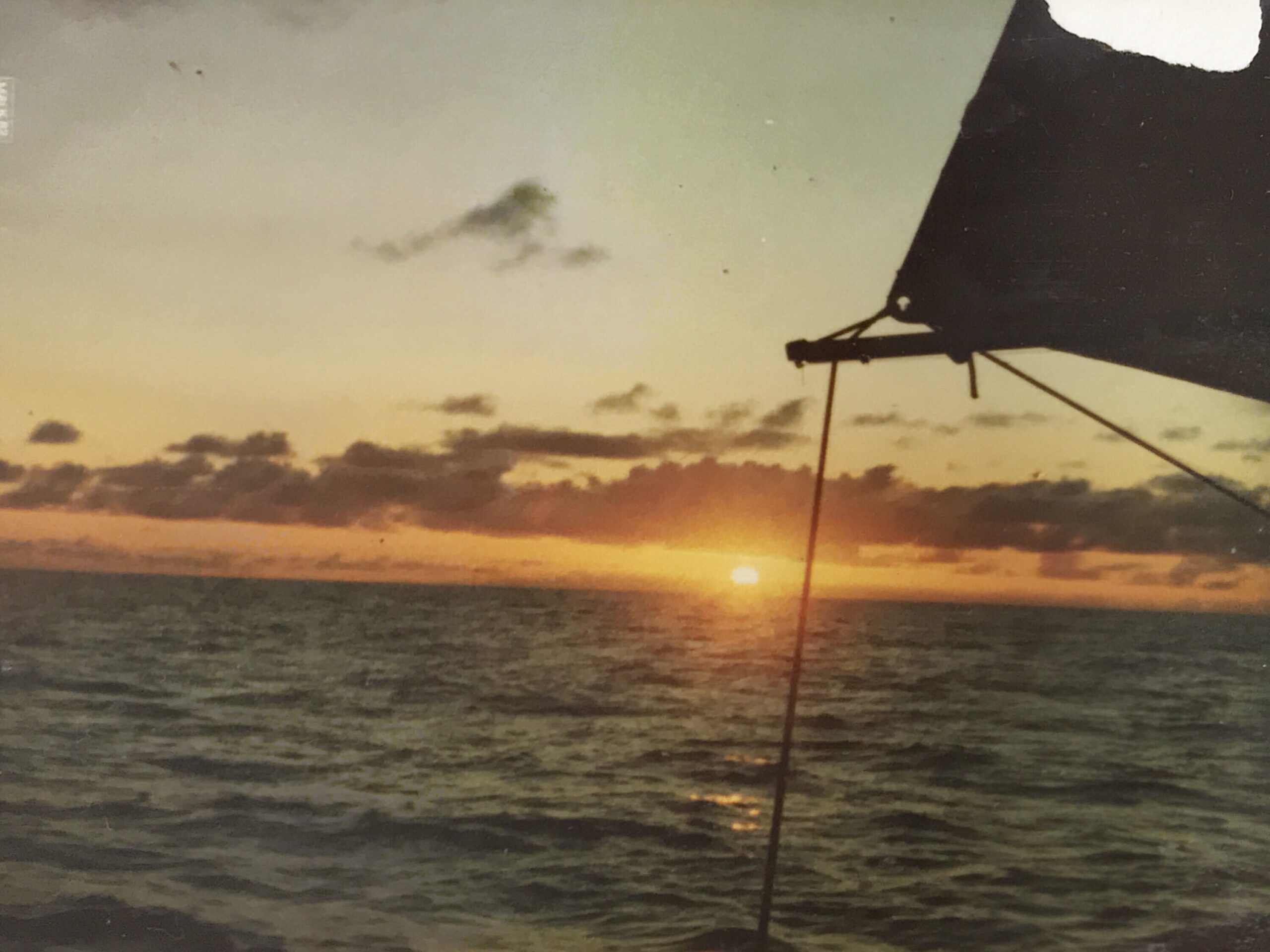
We left Salvador to head across the vast Atlantic, to cross the Equator, and to head in the direction of Portugal. It would be many thousands of nautical miles. According to the logbook, we departed Salvador on a particular day, but returned to the safety of Salvador due to the bad weather. We must have set off again soon after.
My memories of the five-day trip to Fernando de Noronha are not good, but vivid.
The weather: inclement.
The waves: gigantic.
Scally: tipping and dipping and tossing and turning in the surf of the giant waves, her mast often parallel to the horizon.
My mother: utterly convinced she could smell gas emiting from the galley (and she was right).
My father: absolutely convinced there was no gas.
A lighter.
An explosion.
A fire.
A fire extinguisher.
My brother jumping to the rescue.
CO2 powder sprayed everywhere.
My father blacked out.
My mother panicking.
The real possibility that we might sink.
The real possibility that we might need to release the liferaft.
White CO2 powder everywhere.
Our voices disappeared.
Shock.
Fear.
What about our captain?He had been burned all down his right side from the fire and was passed out. I had placed Jellonet all over his burns and he was sleeping in the forepeak.
It was up to me and my brother to navigate our way to Fernando de Noronha. Luckily, we had learnt how to use the sextant, how to calculate the position, how to plot the route.
Two days later we spotted the island, and sought anchor and help.
-
Brazil: Salvador and Beliefs
On my second visit to Pelourinho, I wanted to find out more, if I could, about the Bahianas. I was fascinated. My reading had explained who they are, how they influence life in Salvador, and how their beliefs are handed down from generation to generation. Having been brought up Roman Catholic, been baptised, received first holy communion, been confirmed, the whole shebang, this type of belief was unknown and fascinating to me.
About two years ago, work took me to New Orleans, where beliefs are also unlike my own. I was equally fascinated. Time constraints from work did not allow for finding out more and I hope to return one day to learn.
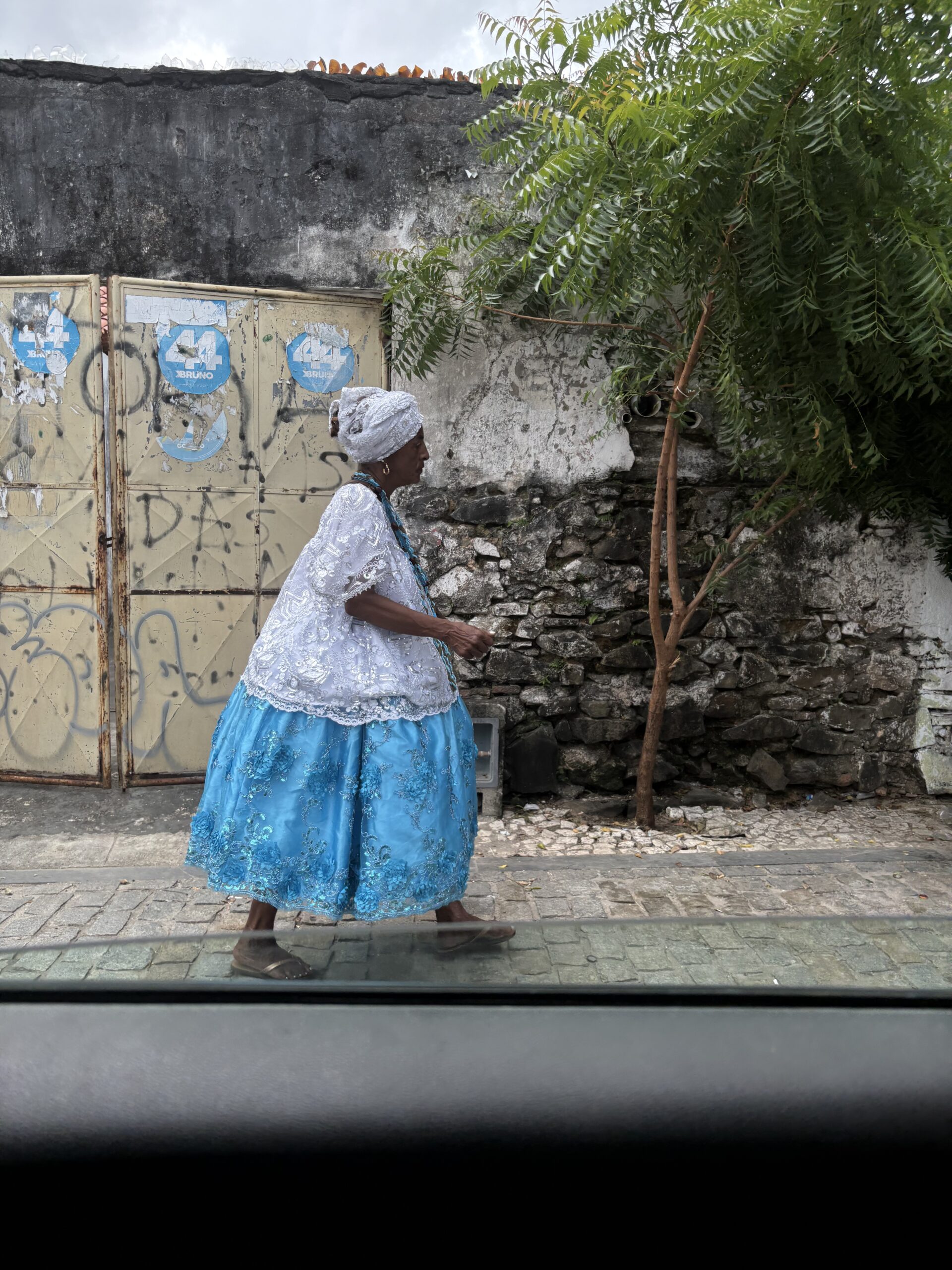
While wandering around Pelourinho, I spotted a beautiful young woman, dressed in red Bahiana gear, (they traditionally wear white) at the entrance to a shop. She smiled at me and gently ushered me in. I understood quite quickly that she was there for the tourists like me, to get them into the store to buy souvenirs and I wasn’t unhappy to get some relief from the heat. So, in I went, obviously.
I browsed, not really wanting to buy anything, but I did find a tote bag in the Brazilian colours – I can always use one of those. The till was being tended to by two young people in their early twenties; young man, young woman. The young man asked me if the tote bag was all I wanted. Was I not interested in purchasing an Orixá. A what, I asked? And so began a wonderful exchange, conversation, and learning experience for me. And how could it get better than having it explained to me by two young students. (They were earning money by working in the store in their free time, like so many students worldwide do). They reminded me of my own students back in Switzerland, although armed with significantly more enthusiasm, friendliness and willingness to explain.
So here it goes. It happened to be that the day I walked in to this shop, attracted by the beautiful Bahiana dressed in red, was the second of February, the day of “Iemanjá,” one of the Orixás. And today, of all days, was the Festa de Iemanja where thousands gather at the Rio Vermelho (Red River) to carry offerings to the sea. Iemanjá is the queen of the seas and oceans, mother of the Orixás, associated with motherhood, protection, fertility and emotional healing. I could not believe what I was hearing from these two young people. Seas and Oceans? Motherhood? Emotional Healing?
I asked more questions. They explained patiently. It’s part of “Candomblé,” they said. Words like Yoruba, Axé, Umbanda, Balamgamdam, Noman, were uttered. I asked them to write them down so that I could read and research more. My fascination only grew.
Why today, of all days, did I discover who Iemanjá was? That there were even Orixás? That I was in Salvador on the second of February? That Iemanjá protects people. It reminded me of how fate stepped in thirty years ago at Heathrow airport, on a trip to Guernsey towards the unknown and my future.
On the way back to the hotel, I asked the taxi driver to pass by the Dique do Tororó, a lake in the centre of Salvador known for its giant statues of the Orixás standing in the water.
I desperately wanted to go to the festival at the shore, to celebrate Festa de Iemanjá, but it was later that night, and I’m not very good late at night, not to mention, the hotel had expressly warned me not to go out after sundown, due to the crime.
I’m sure you’re not suprised to read that I ended up buying a Iemanjá statue, which now sits in my home office in Switzerland, to remind me that I am protected.
I have since read a great deal about the Orixá, the religion of Candomblé, originating out of Nigeria, the Yoruba nation, many of whose descendants live in Salvador, and how beliefs shape who you are.
I am grateful for these lessons.
Dates: 2nd February 2026
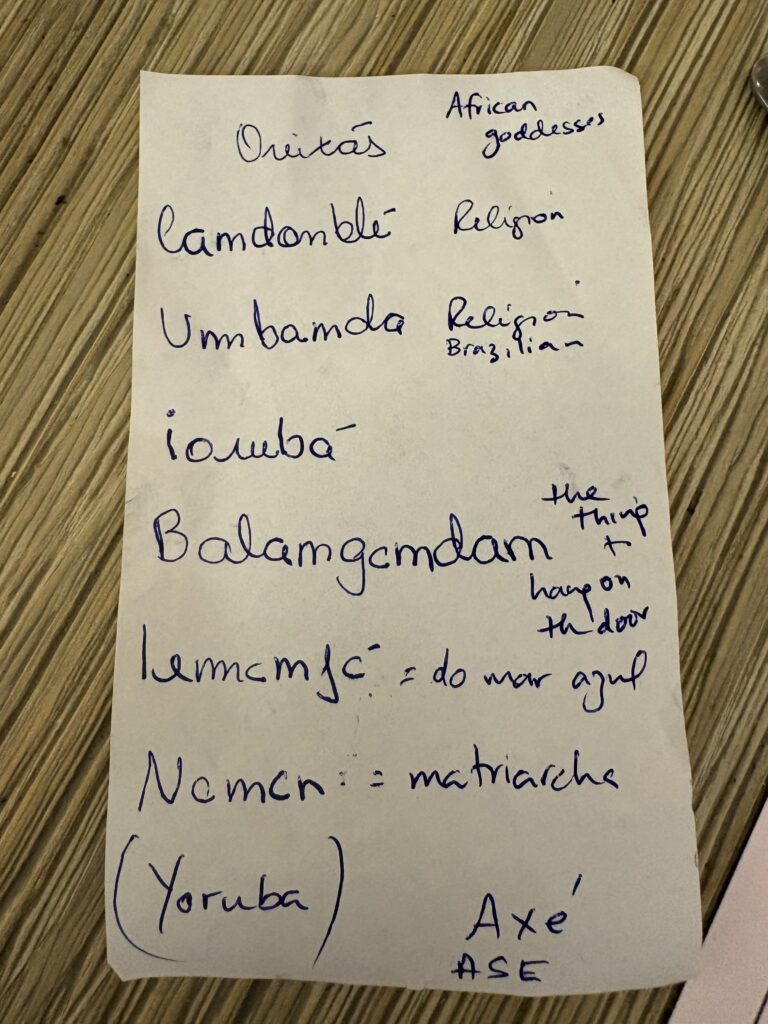
The words written down by the students for me to learn (not my handwriting) 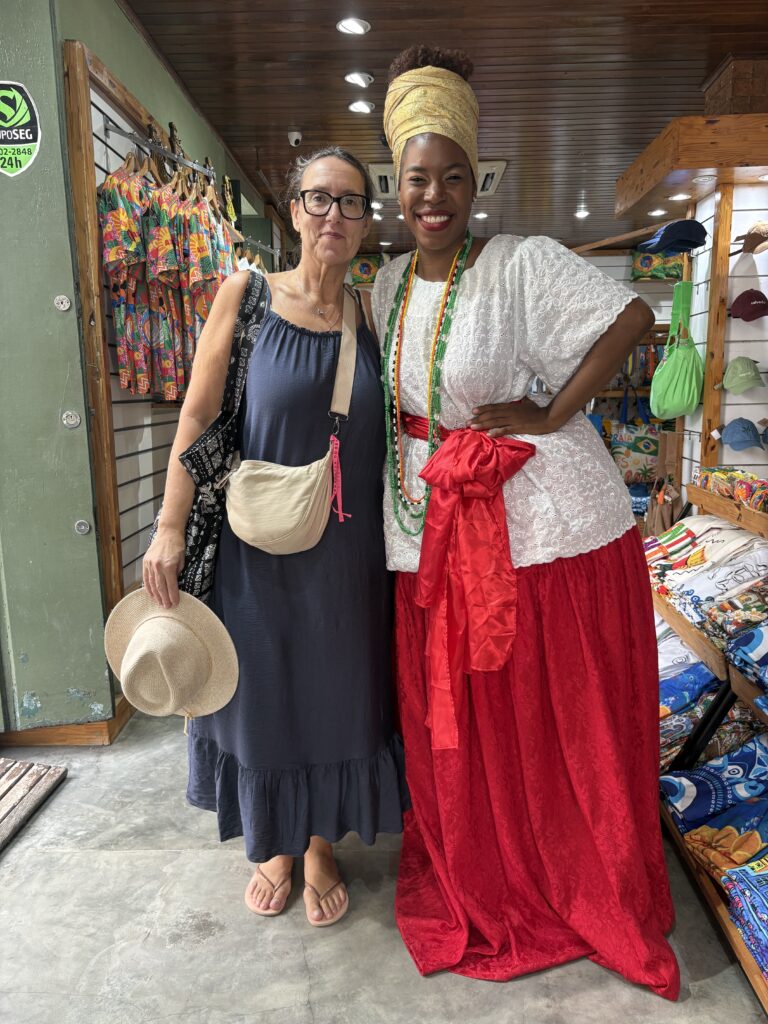
The beautiful Bahiana in red 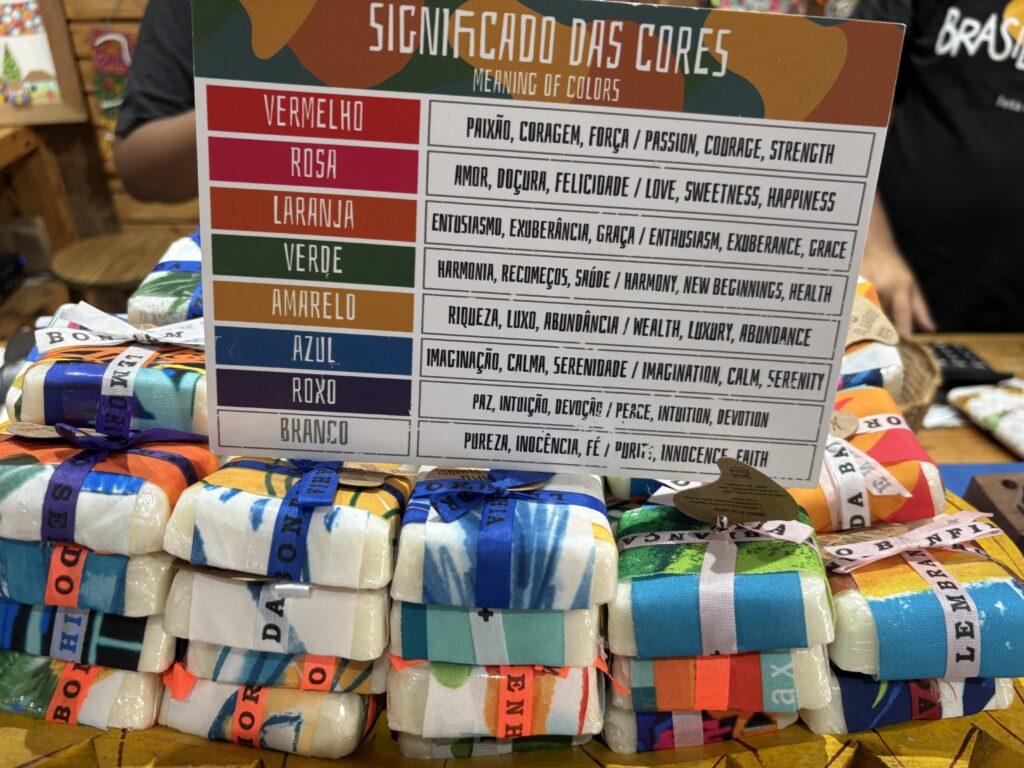
Soaps in the store with the ribbons -
Brazil: Barros Beach
One of the few memories I have of being in Salvador, apart from the white dress, leather sandals, Igreja Senhor do Bonfim and the Elevedor, was a beautiful sandy beach where we went swimming. According to the log book, we had gone there in a dinghy along with French crew of a boat that we met in Salvador and altogether we visited a beach in Barros.
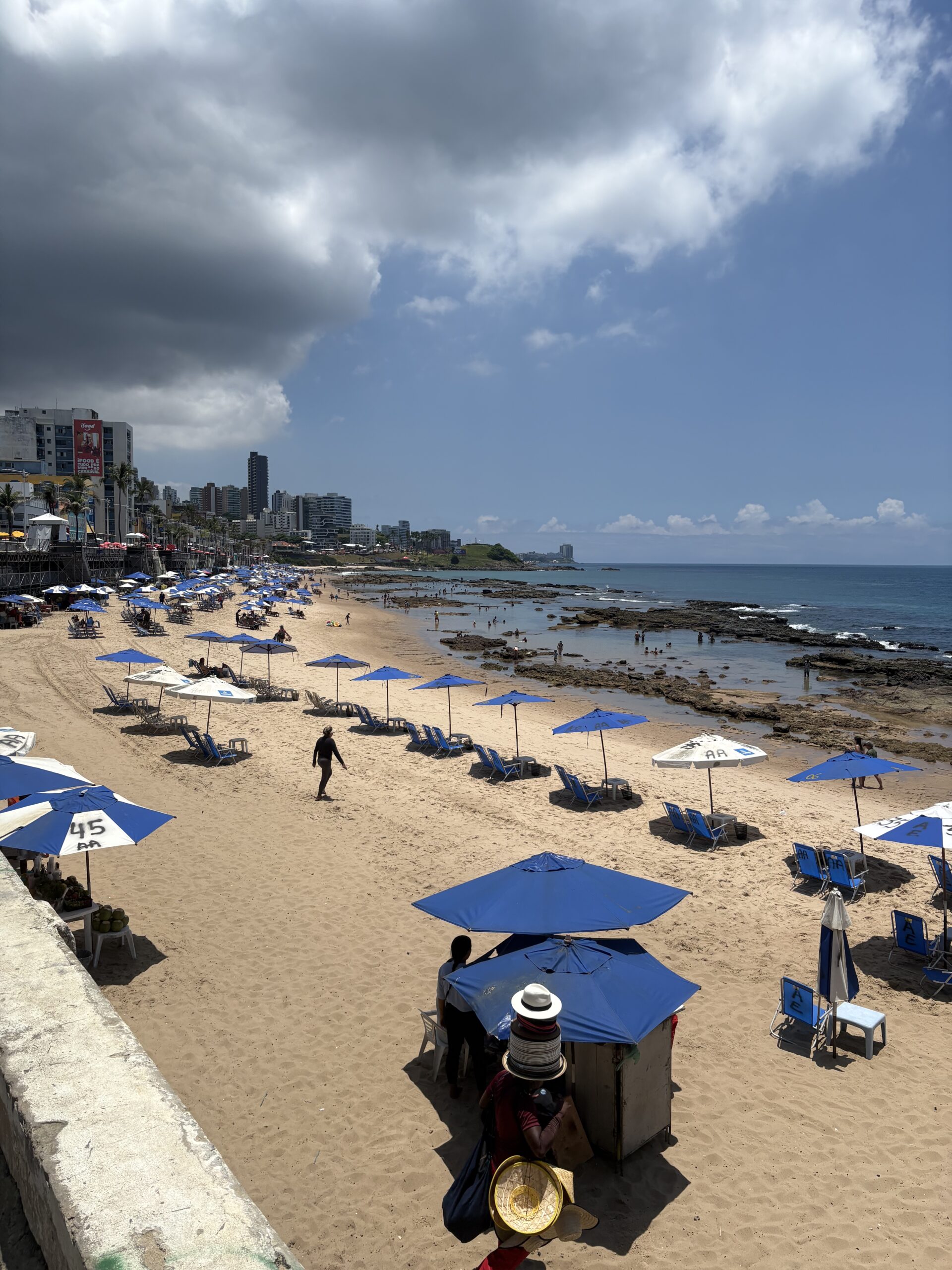
I asked the taxi driver to take me there. Preparations for Carnival were in full swing and traffic was dense. I soon spotted a beach, though, and he dropped me off. I am not sure that this was the place we visited, although forty four years of development changes places significantly. This was a beach town, with restaurants and cafes and apartment blocks. No palm trees in sight.
Nevertheless, I was here and wanted to walk on the sand and feel the sand between my toes and swim in the water like I had done at sixteen. So down to the beach I went. There were quite a few rock formations with tidal pools that people were swimming in and I decided to head off there. I had been warned not to leave my beach bag, towel and valuables on the sand, as thieves were everywhere, so I waded into the a rock pool up to my waist, carrying my beach bag over my head, and found a rocky bit where I could sit and place my towel and bag and enjoy some hours in the sun, swimming.
The water was very warm, like the Mediterranean in summer. It must have been about twenty two degrees. My kind of water. The pools were clear and unpolluted, which surprised me for a big city like Salvador. There were happy people everywhere and I was reminded again of how time can be enjoyed and life made the most of. In my usual day to day life in Switzerland, there is not much place for this and taking time to enjoy yourself on a beautiful day, away from work, is often frowned upon, left to the weekends and time off when the weather is often worse. The fast pace of life and work and family and chores and duty does not leave much space for this type of carefree day and I was envious of the beach-goers and their freedom and happiness.
I am quite sure I was the only foreigner there, although you never know these days. The water was very clear, blue, and little tropical fish of multi colours like in the story Nemo were everywhere in the little pools.
I loved it. I loved being there and could imagine a holiday here where I could spend every day in these rock pools. I tried to remember back to when we were here in 1982, but was not successful. The palm trees were not here, the backdrop of the beach was not the same.
After a few hours of swimming, relaxing, wading, watching the colourful tropical fish, reading, sunbathing and just gazing out to the ocean, I headed back to the hotel. It was a lovely beach day, spent all alone in solitude and reflection, pure and simple relaxation. I wished it didn’t have to end.
Dates: February 2026
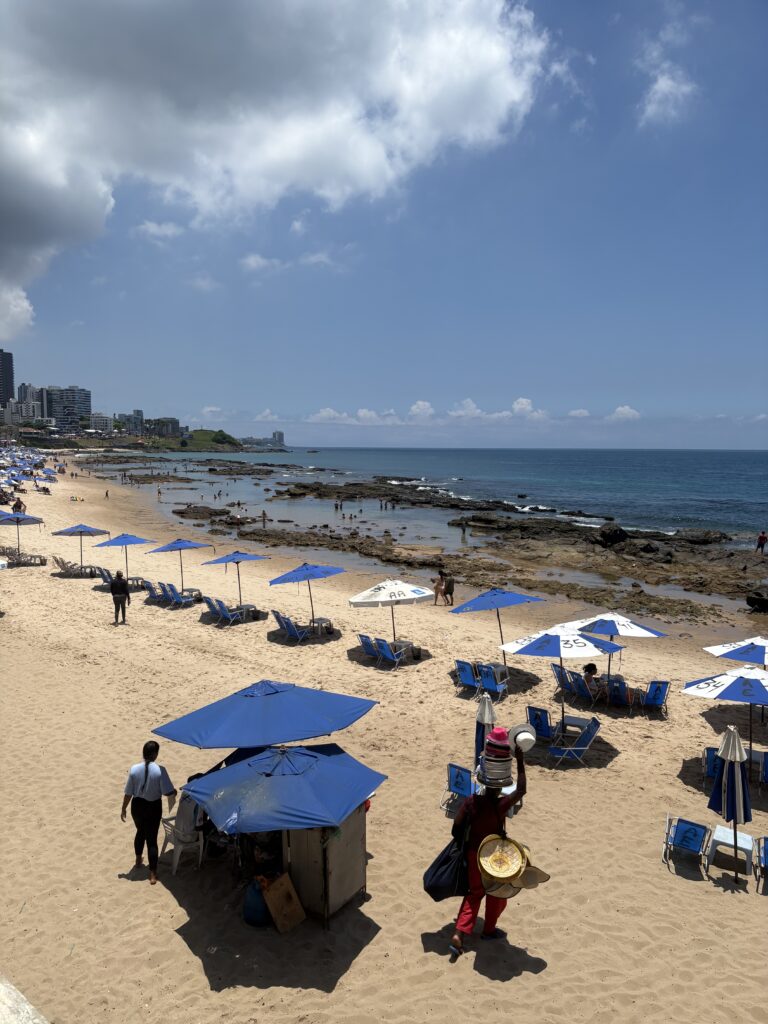
The beach at Barra 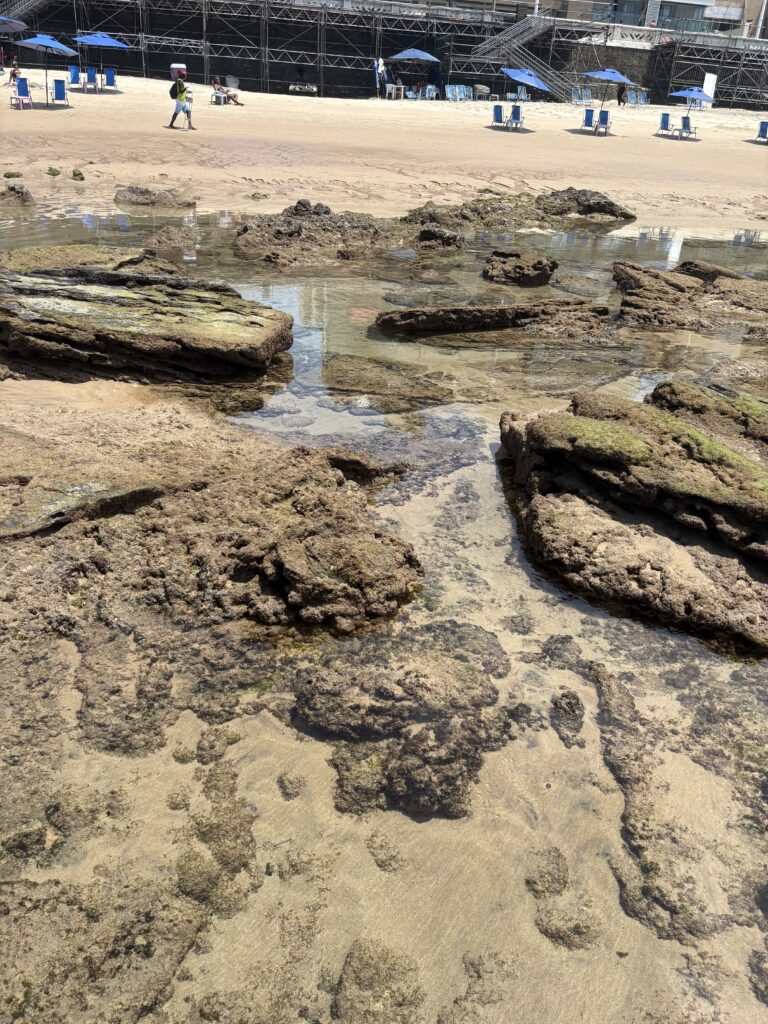
Rock Pools close to the beach 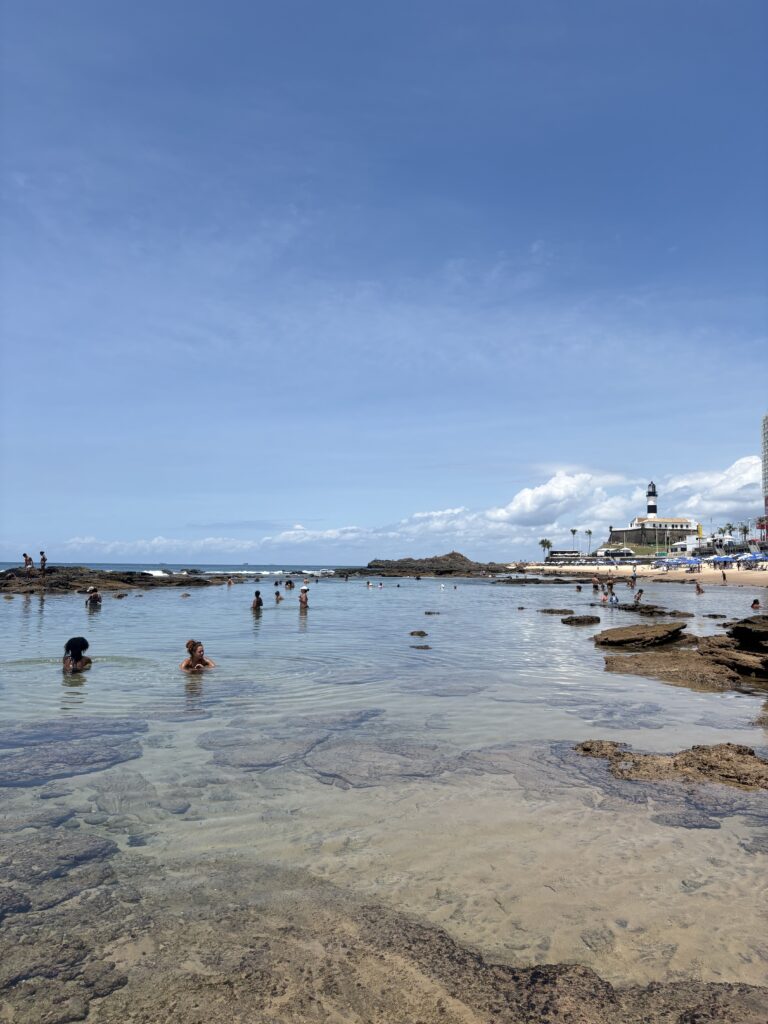
The lighthouse at Barra 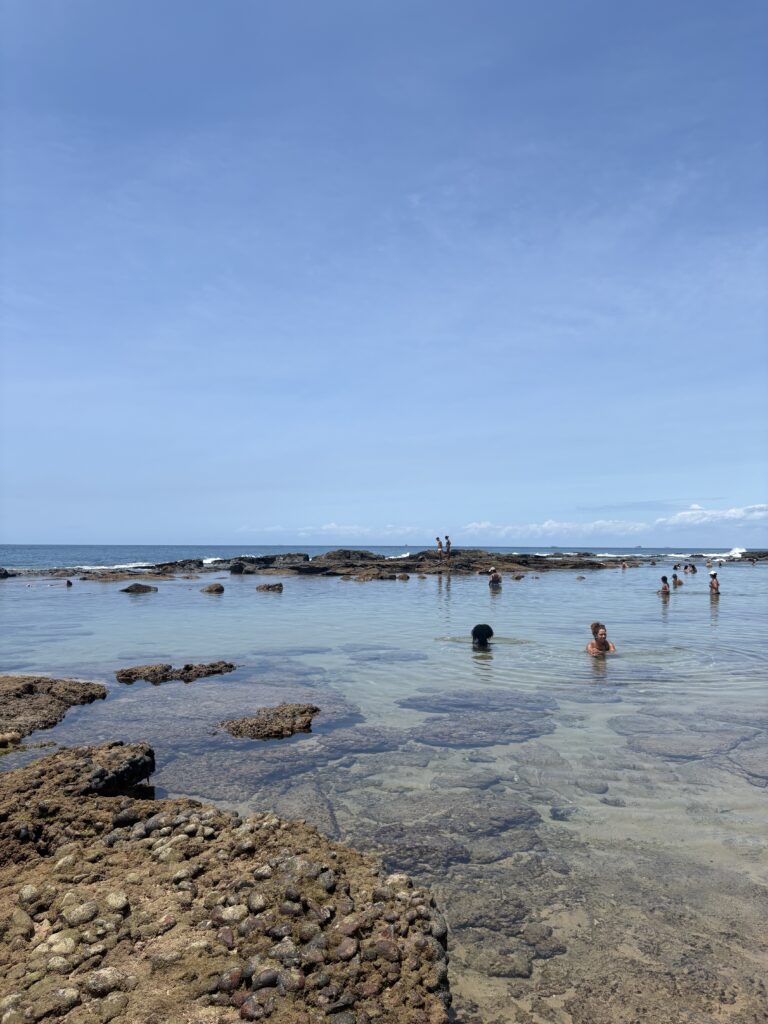
Swimmers in the rock pools 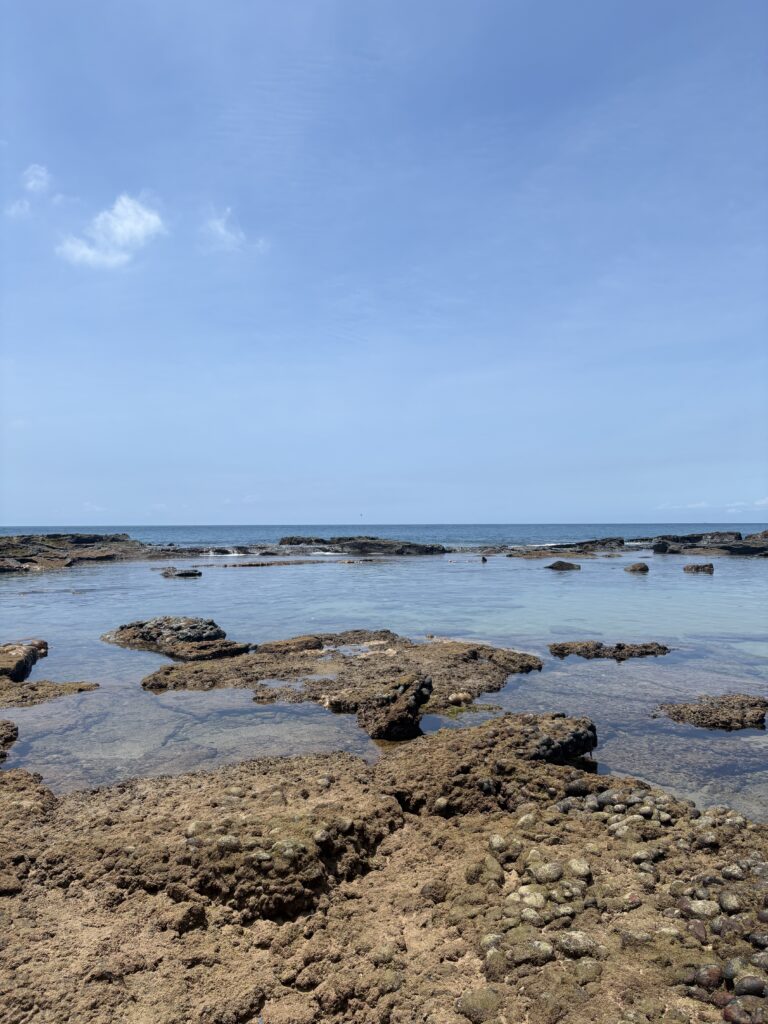
More rock pools 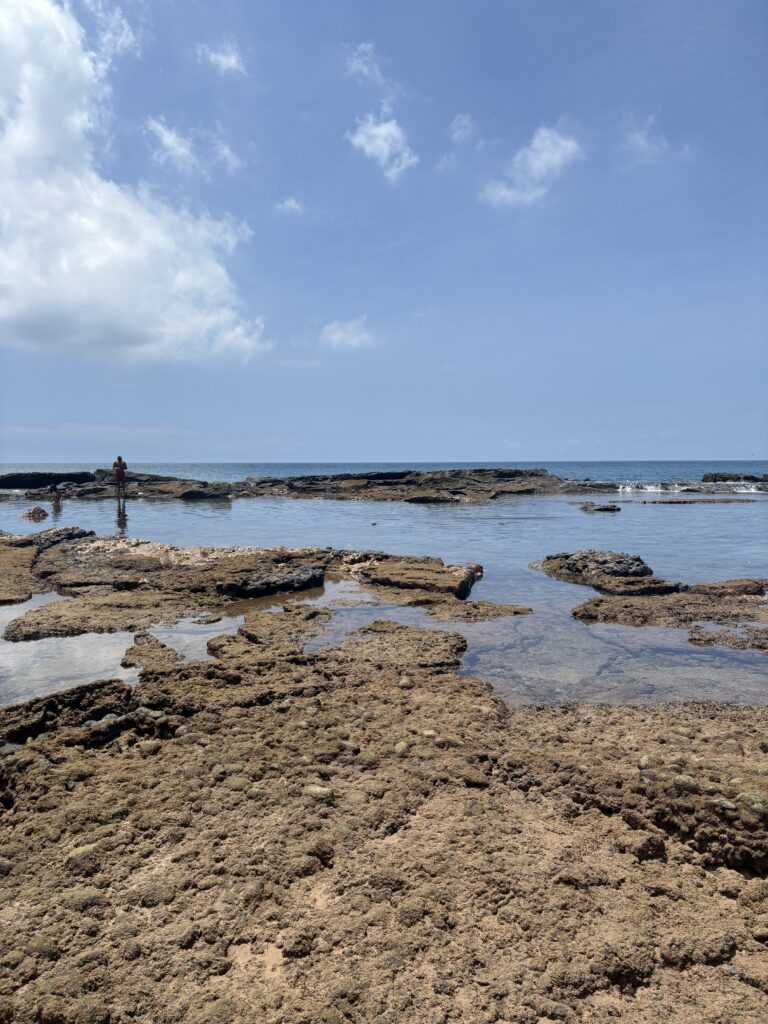
More rock pools 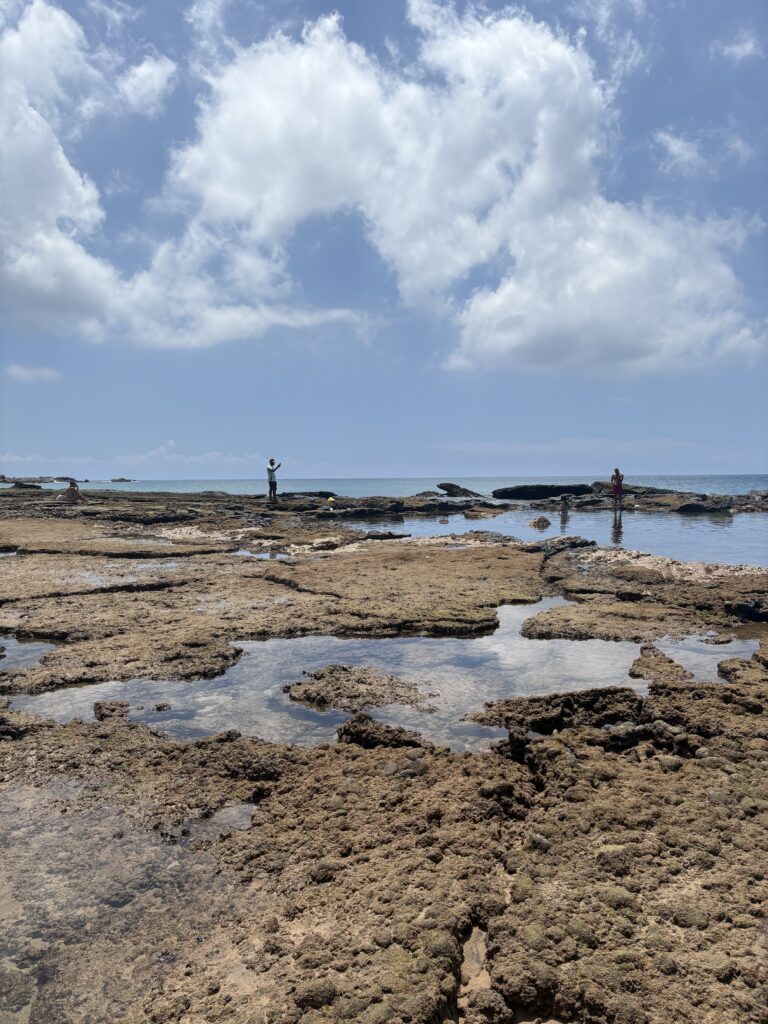
More rock pools 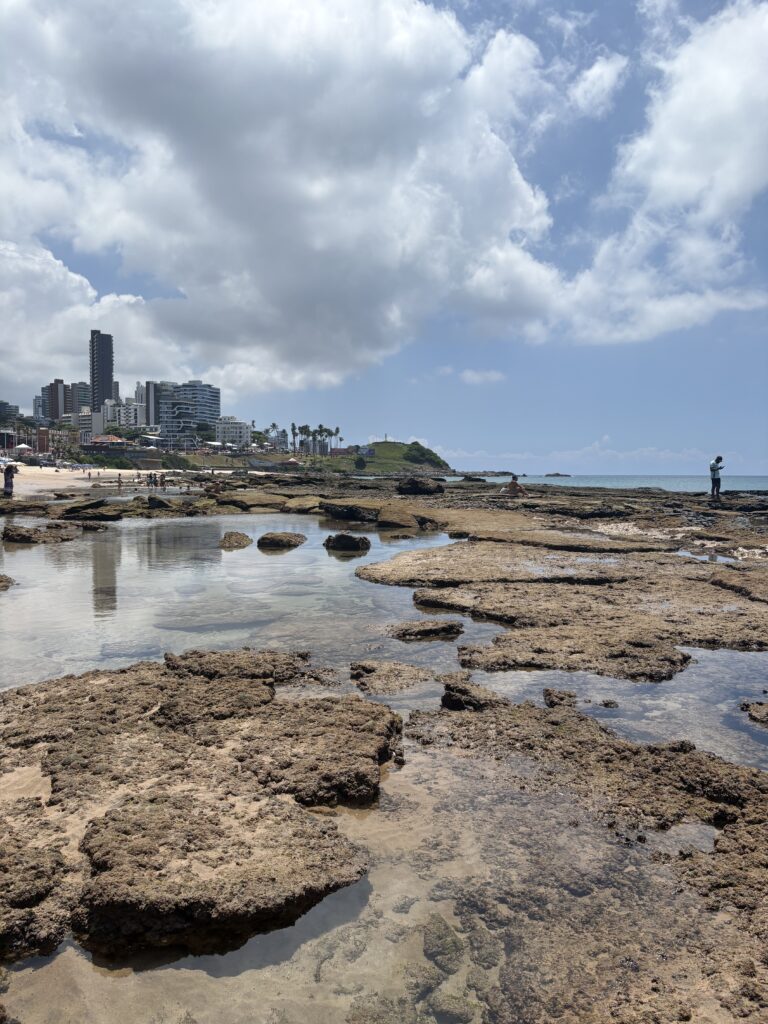
Rock pools in Barra 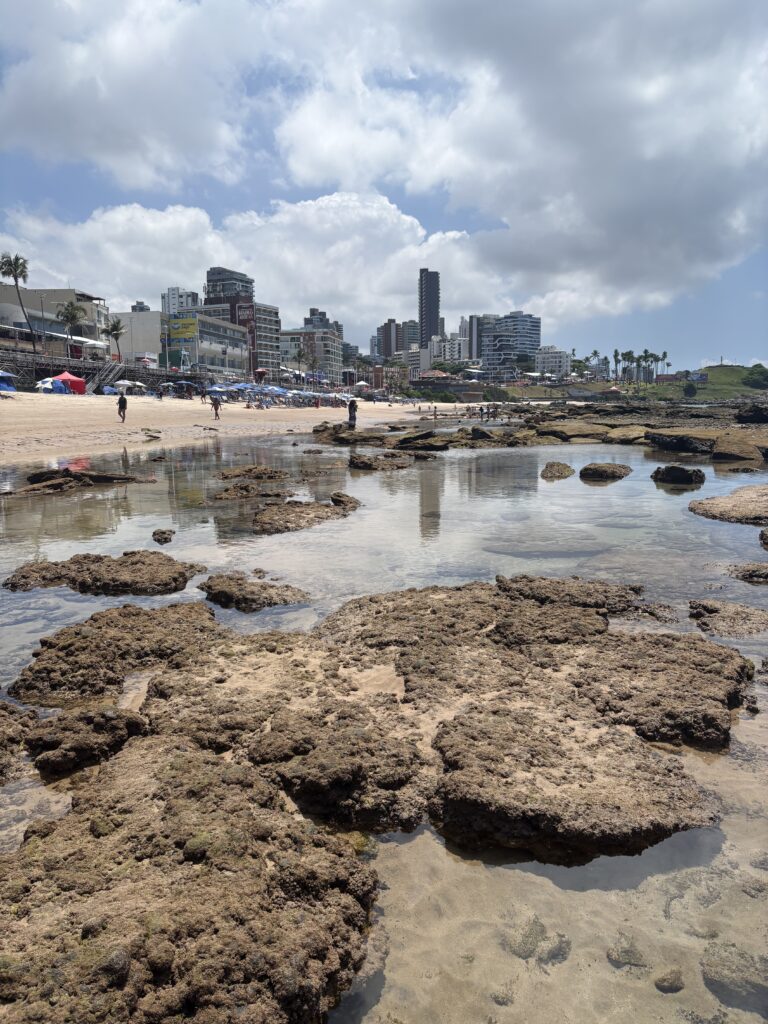
Rock pools in Barra 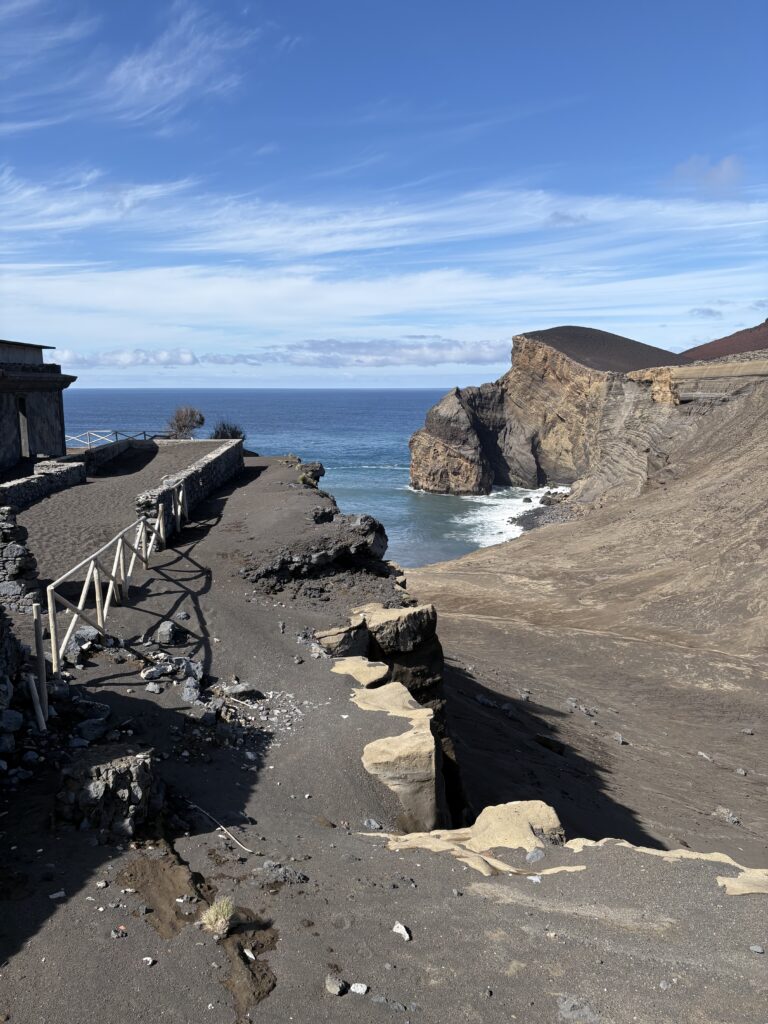
Vulcão and the ocean 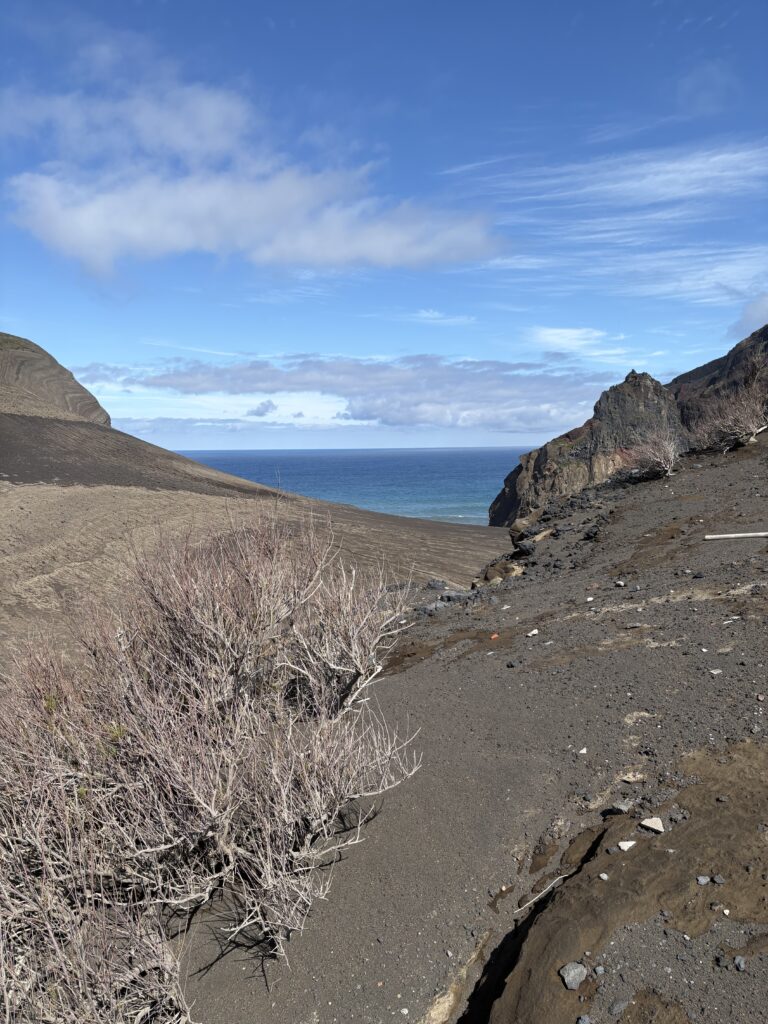
Vulcão 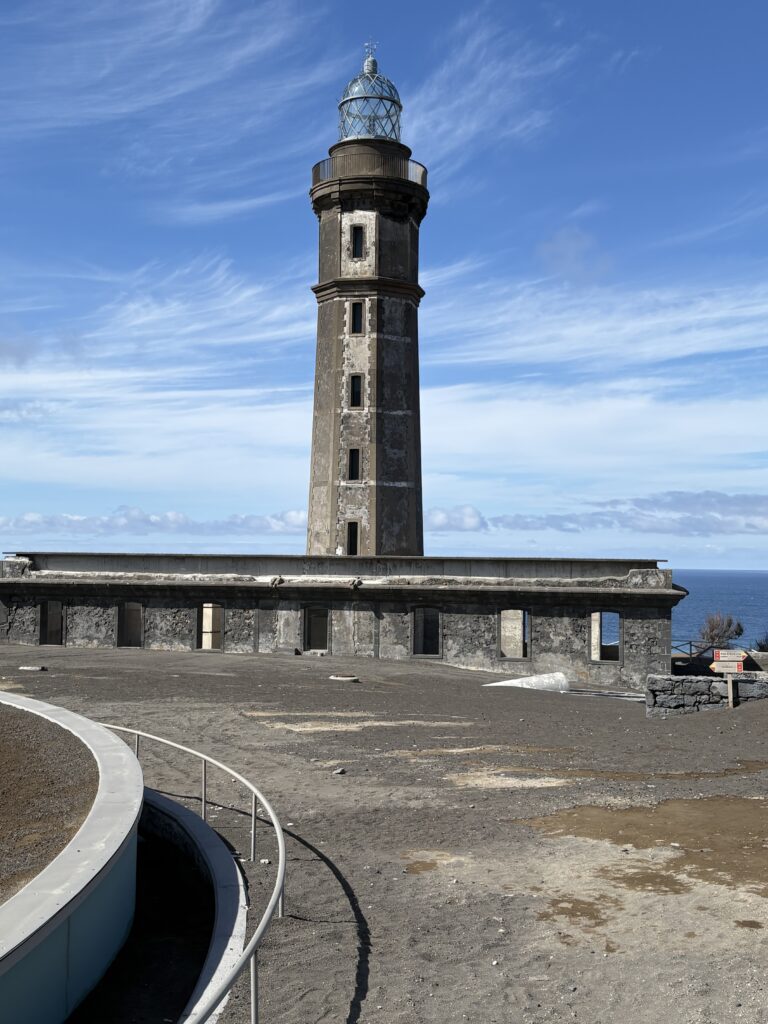
The half buried light house at Vulcão 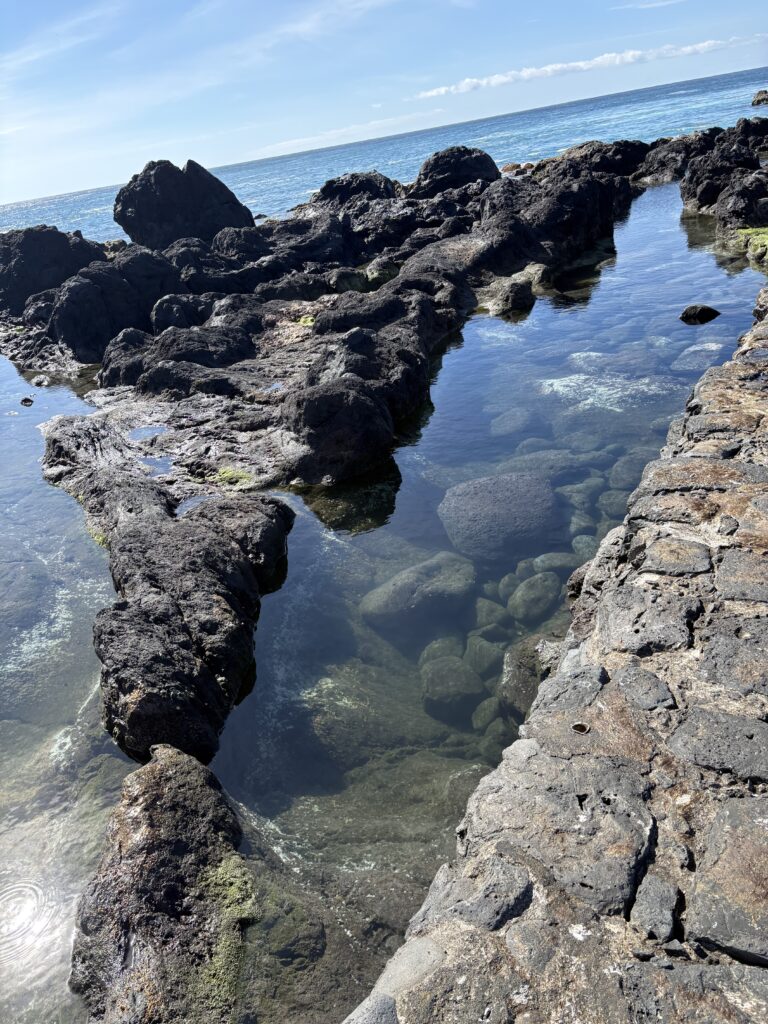
How clear the water is at the rock pools 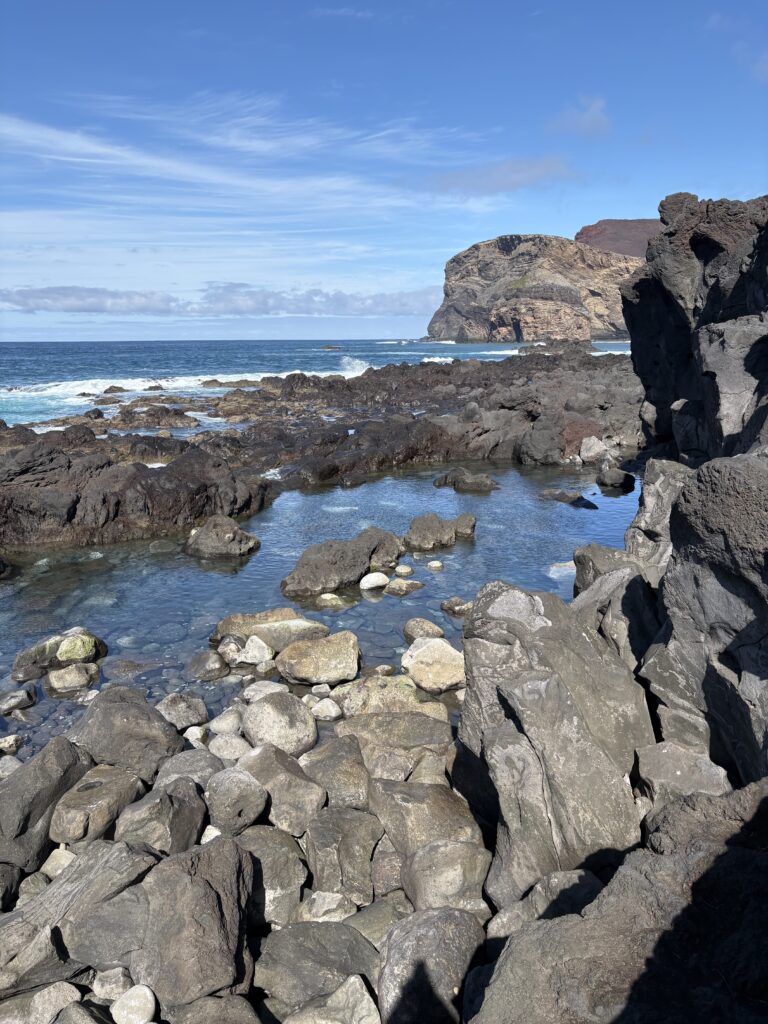
Rock pools at the Vulcão -
Brazil, Pelourinho Part 2
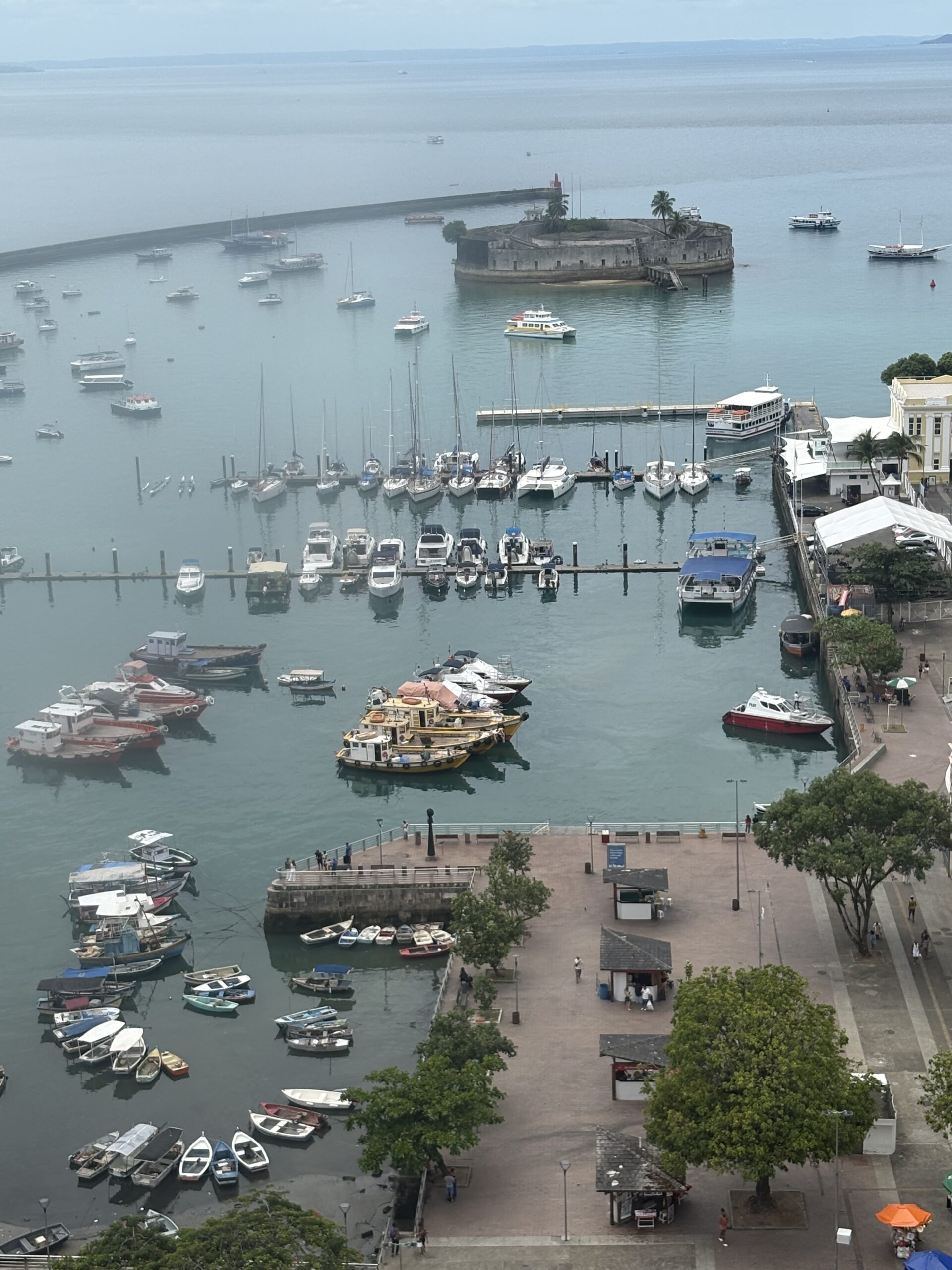
On the day that I set about finding the port, harbour, or marina where Scally had been moored in 1982, I had to get a taxi down to the lower part of old Salvador, to the sea. I just asked to be taken to the elevator and the closest access to the sea. It took about twenty minutes. My memories included the lift, a market, leather flip flops and a white dress, a beautiful sandy beach, and that’s it. I did not want to bother my brother again for his memories. I had the feeling, after my St Helena leg of this sabbatical, that I was asking him to go down parts of memory lane that he maybe didn’t want to and I didn’t want to bother him with unnecessary angsts. I had not been able to get the log book yet, so asked my youngest brother to send me a photo of the pages from Brazil. There’s an entry in my mother’s hand writing about an old Portuguese fort. And indeed, this is precisely what I discovered, smack bang in the middle of the old city port, with anchorage and small boats, about fifty metres away from the elevator.
My emotions got the better of me. I cannot deny that this was an exceptionally emotional moment. I could actually not believe that I had been here before. That I had stood on this very square when I was sixteen. That Scally had been anchored in this tiny bay. That Scally and her crew had crossed the southern Atlantic Ocean from South Africa to South America. In a tiny 31-foot sail boat. What an achievement.
Like most marinas in the world, there is no public access. I had to explain to the security guard the reason for my being there. I was reminded of how different security guards can be. In Cape Town, at the yacht club, once I’d explained my reason for being there, it was all smiles, happiness and willingness to help. Here, it was more military style, little understanding, reluctance. But I guess everyone has a job to do. He did finally let me in, so I thanked him kindly.
I paced up and down. Found a bench and sat down trying to access any memory of being here. I was not successful. Then I saw two people who looked like husband and wife, about my age, on a small dinghy, approaching the wharf. I decided to speak to them. They were French, and had just arrived from crossing the Atlantic from the east coast of Africa, Zaire. Like most yachties, they were very happy to chat and when they heard about my reason for being there, staring out at the little port, and the other yachts, they were very chatty and engaging. I was happy to talk to them.
I, too, then leave the guarded port area and walk out onto the big square where the market is located, where according to my mother’s memories we bought food and fresh groceries from back in 1982 for our next leg, and to find the Elevador de Lacerda, which you could not miss.
I have a photo of all of us standing at the foot of the Elevador da Lacerda, one of Salvador’s iconic landmarks, about fifty metres away from where Scally had been moored. This elevator, now free for everyone, takes passengers from the lower part of Salvador up to Pelourinho. It only takes a minute or so. The queues are long, but everyone is happy to stand in the sun and wait for their turn, including me. People chat with each other happily. I am reminded again of how wonderful and inclusive this city is. The people standing in the queue are of all skin colours, all different types of clothing from very skimpy to full on drag, from business person to Bahiana. No one cares. No one stares. No one worries. You are who you are. And off I go, up to Pelourinho for my second visit.
Dates: February 2026
Salvador lower part 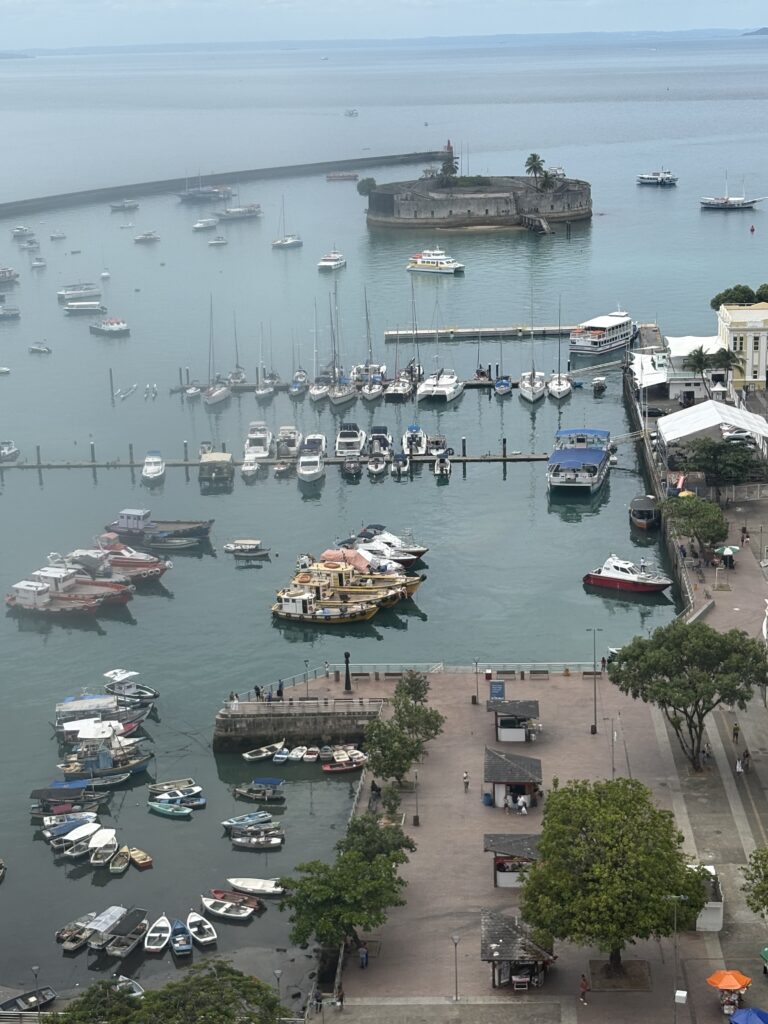
The old fort mentioned in the log book 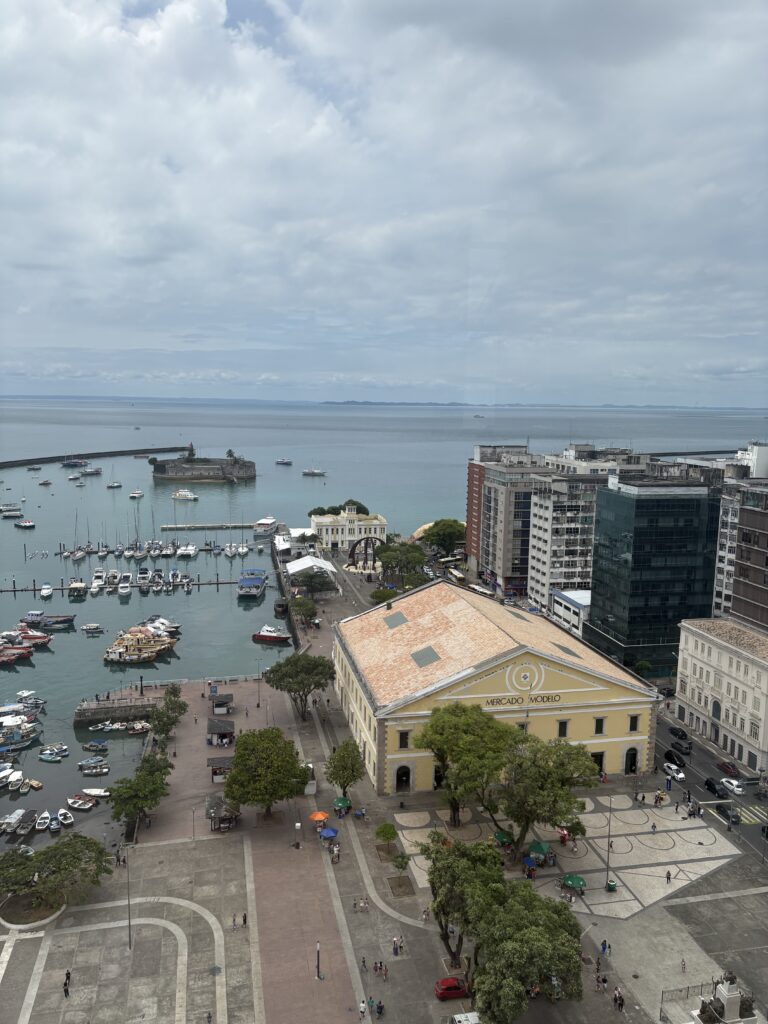
The market, where we had been to buy fresh produce for Scally 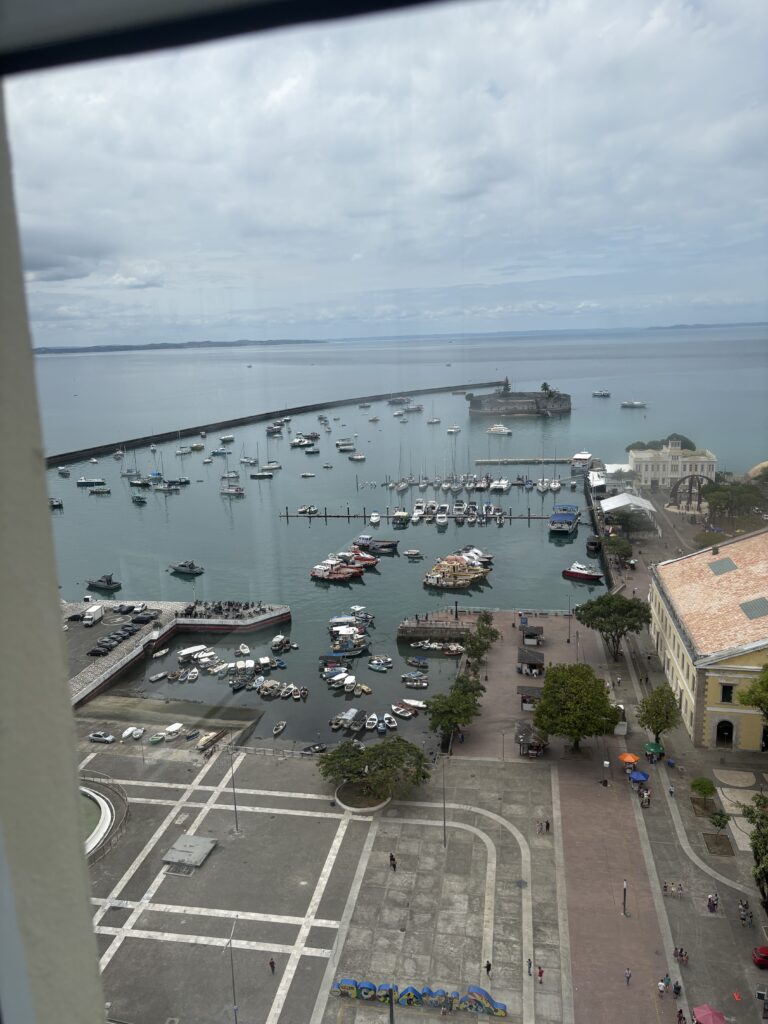
I could not get enough of looking out of the elevator, at where Scally had been 
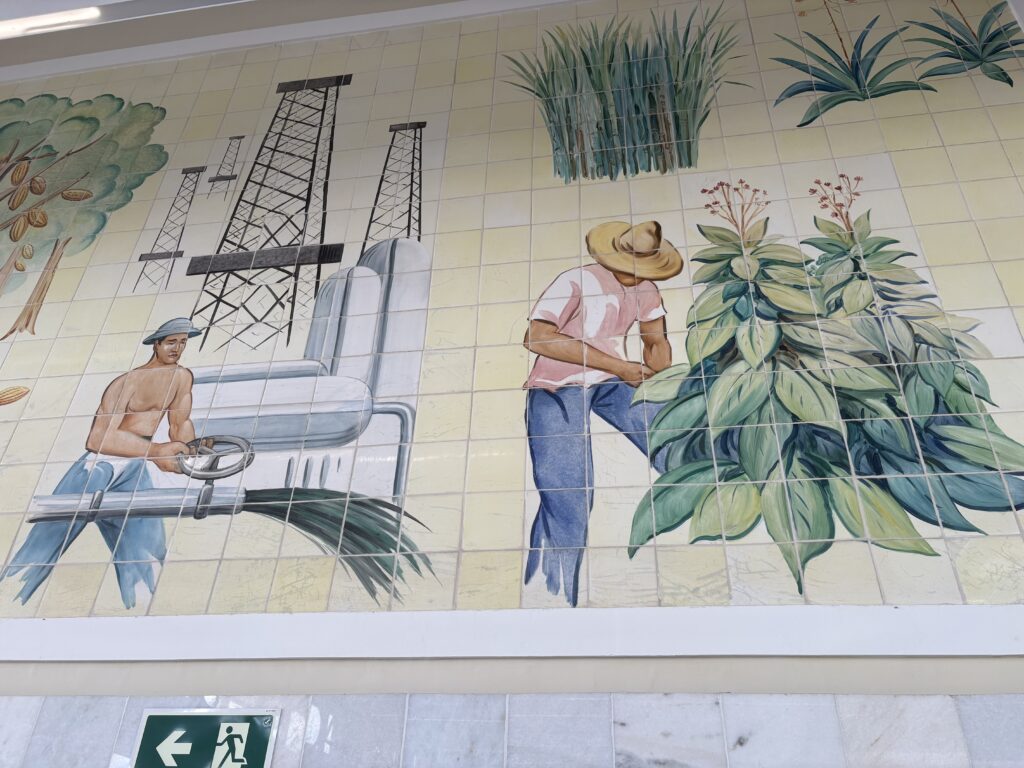
Beautiful azuleijos decorating the elevator 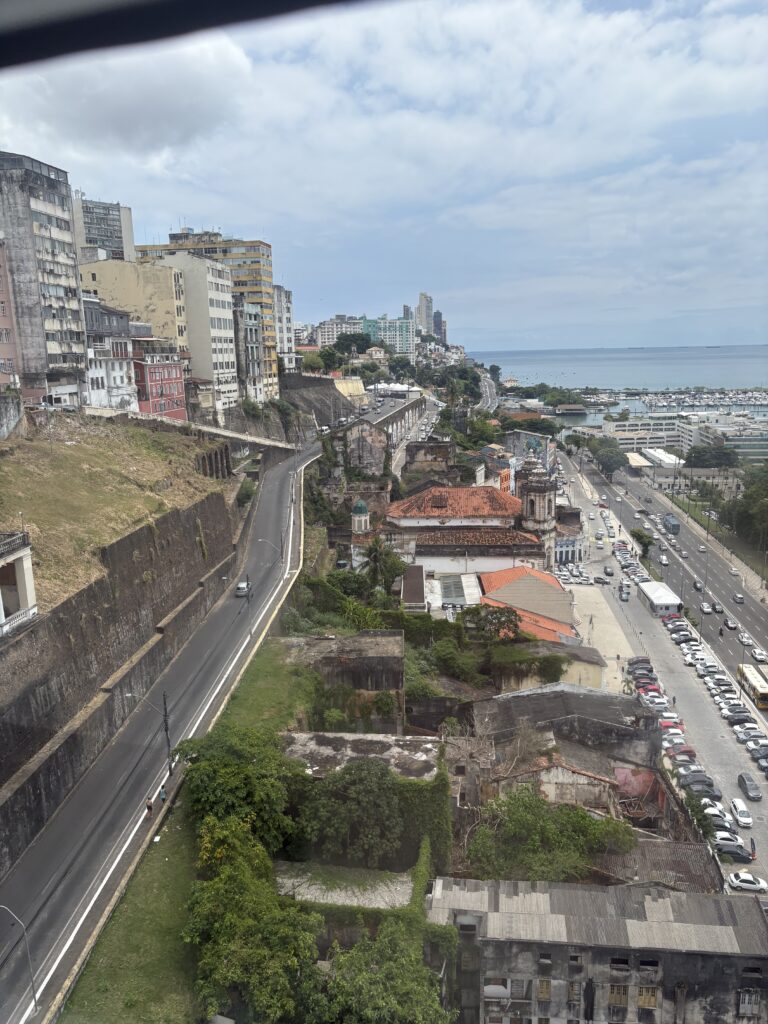
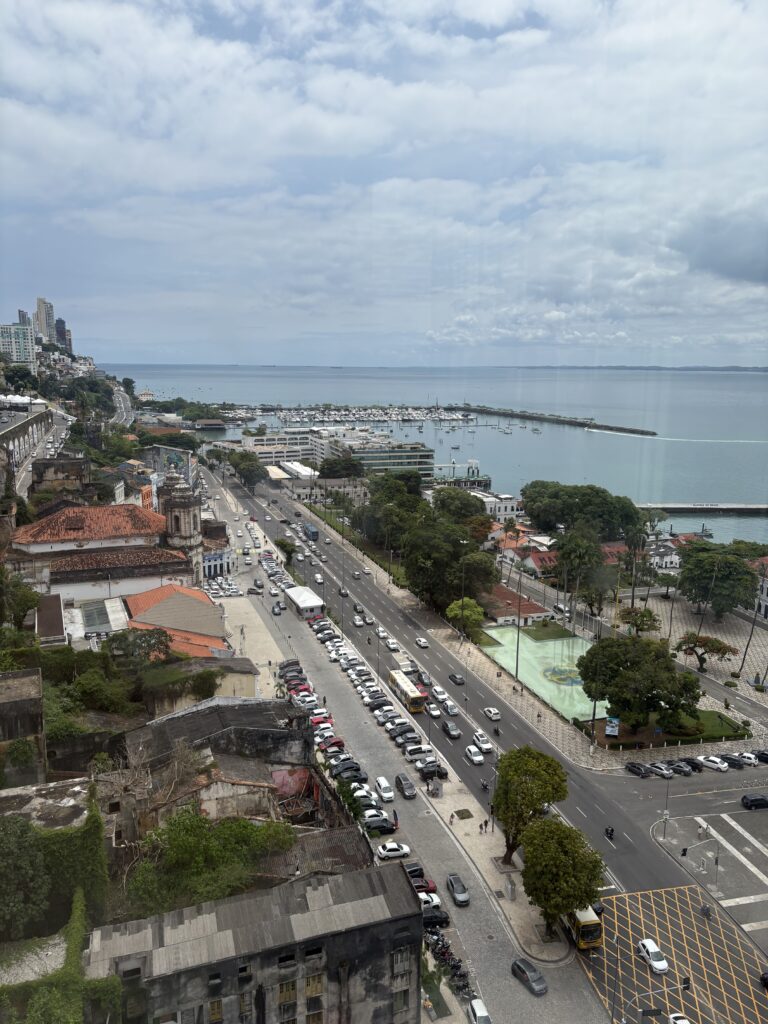
The road I had been up on the taxi and got my first peak of the port 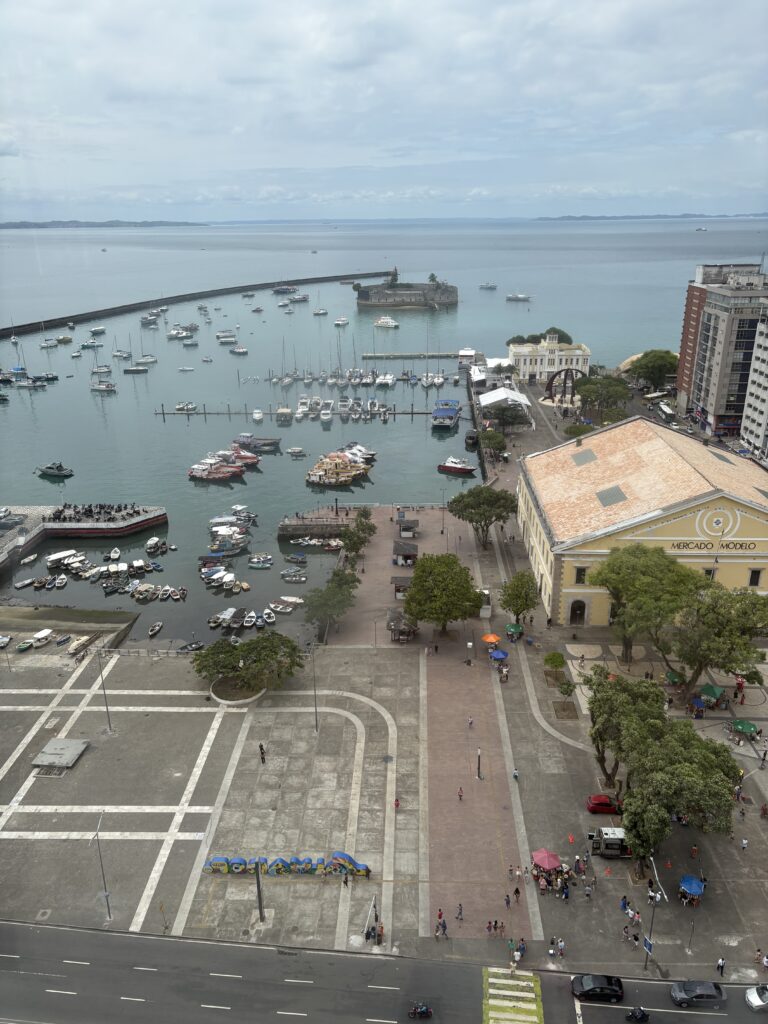
The view from the elevator of where Scally was 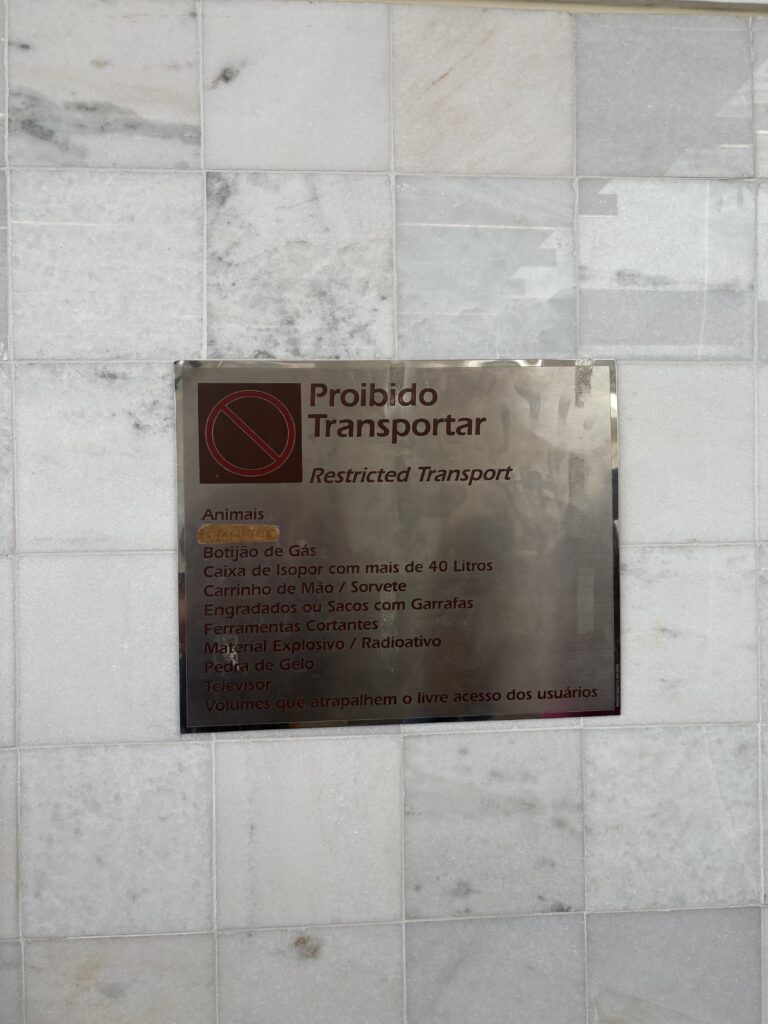
No animals allowed 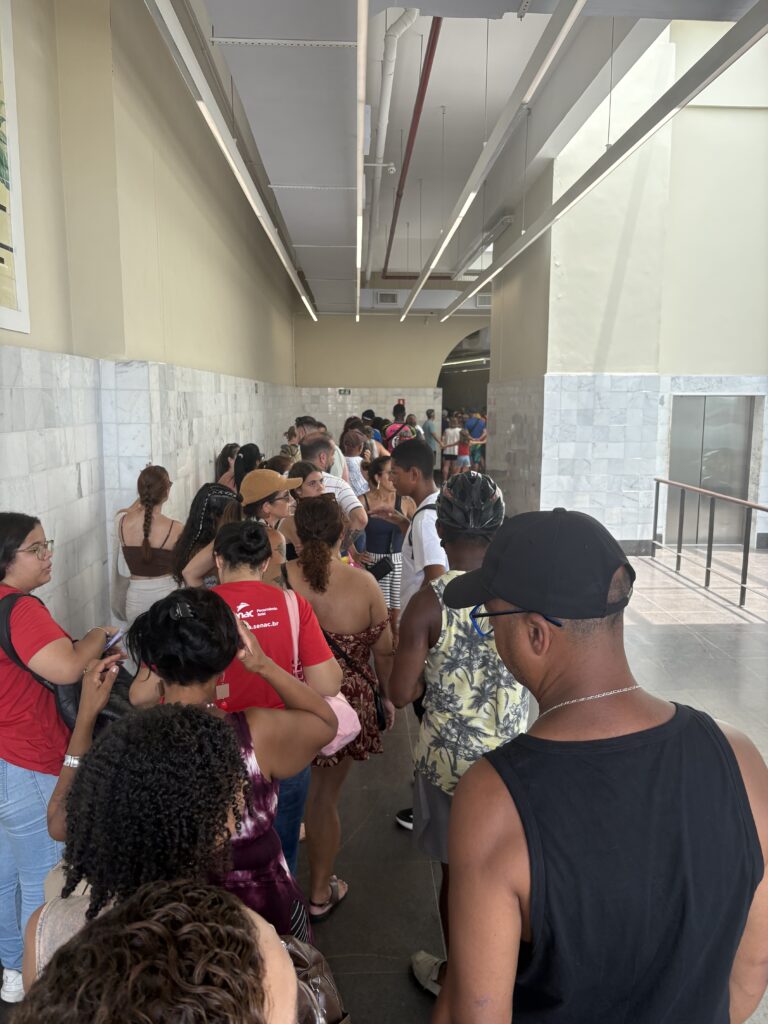
The queues for the elevator 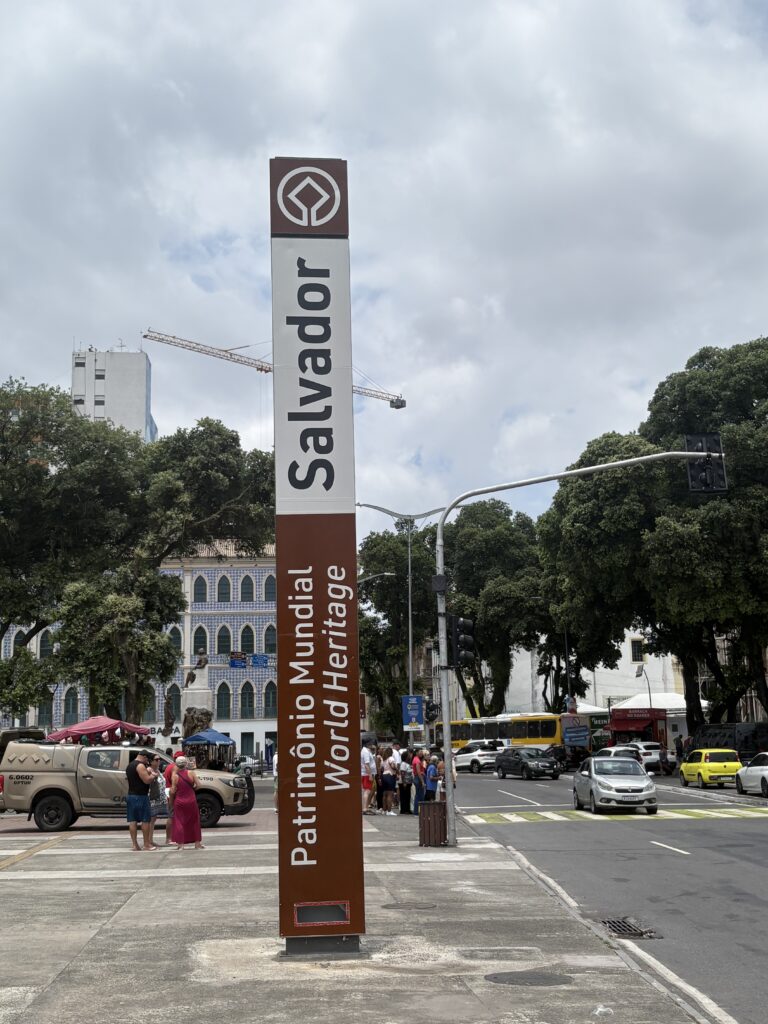
Salvador 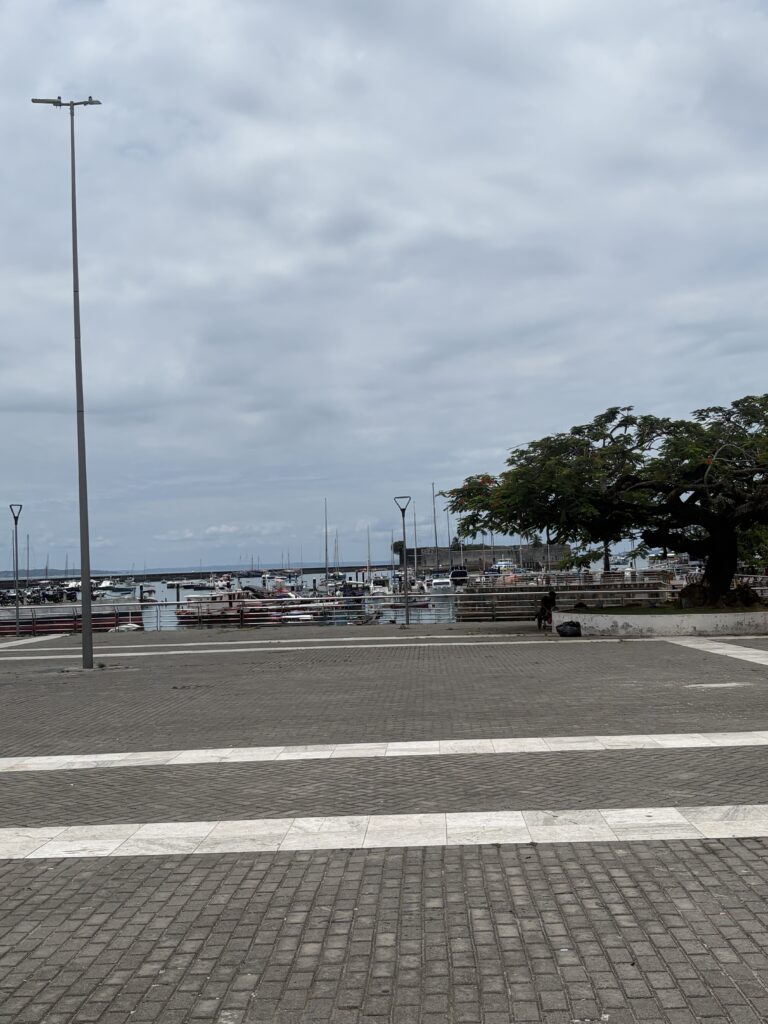
The square looking over the port 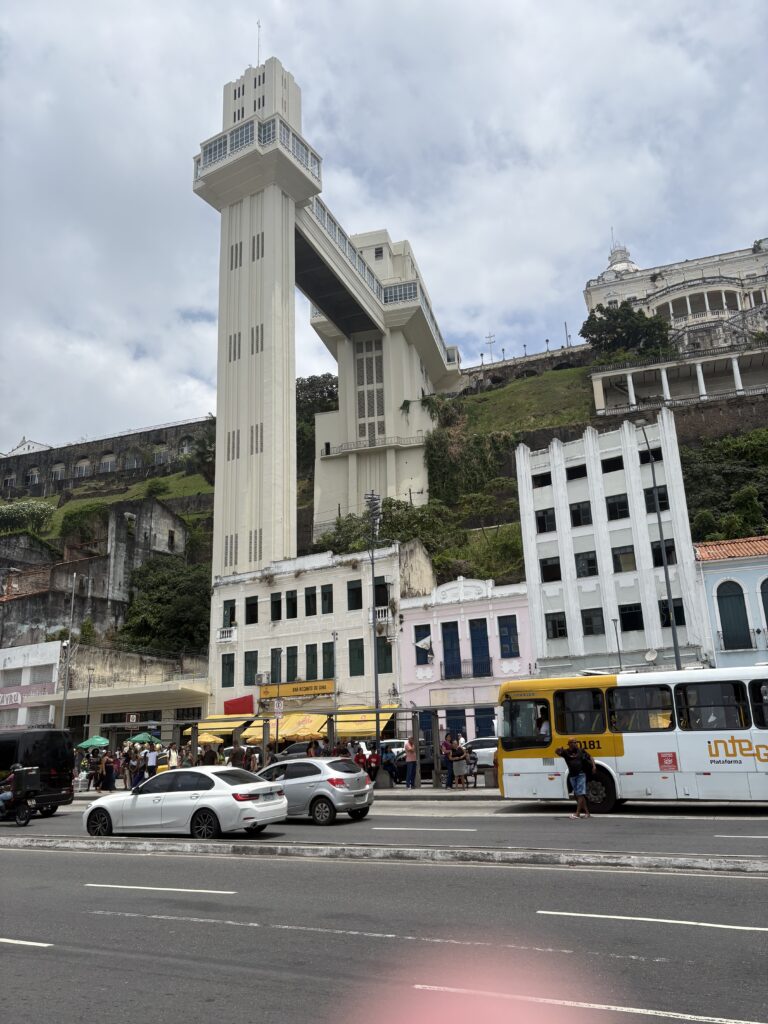
Elevador de Lacerda 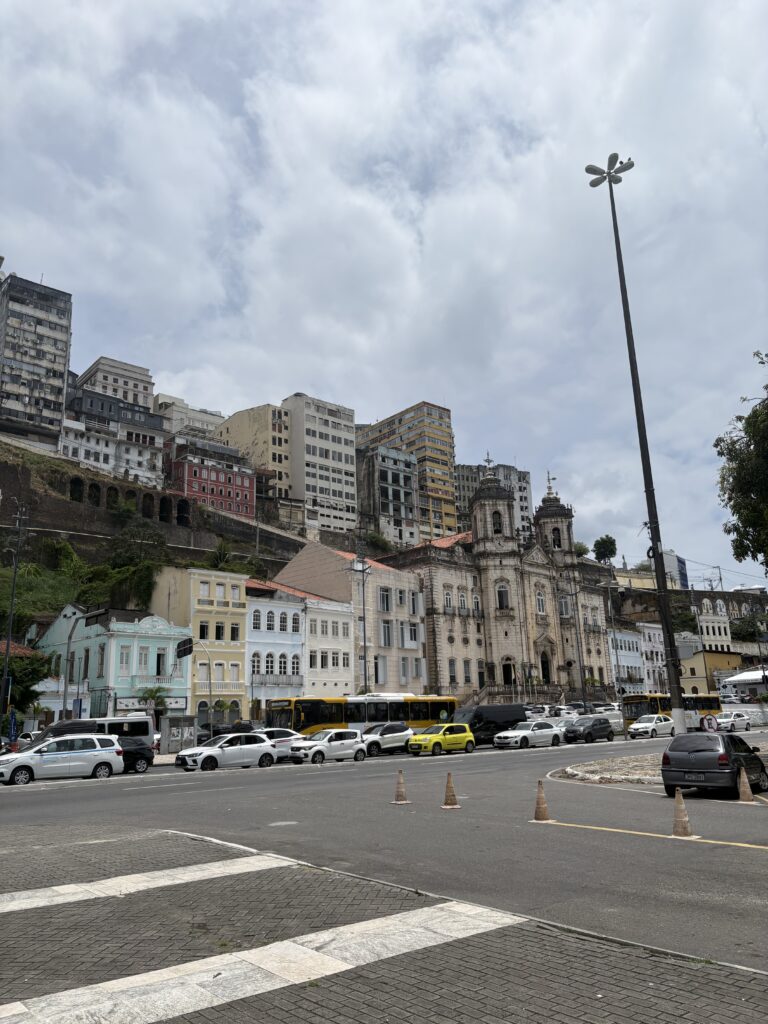
The lower and upper parts of Salvador 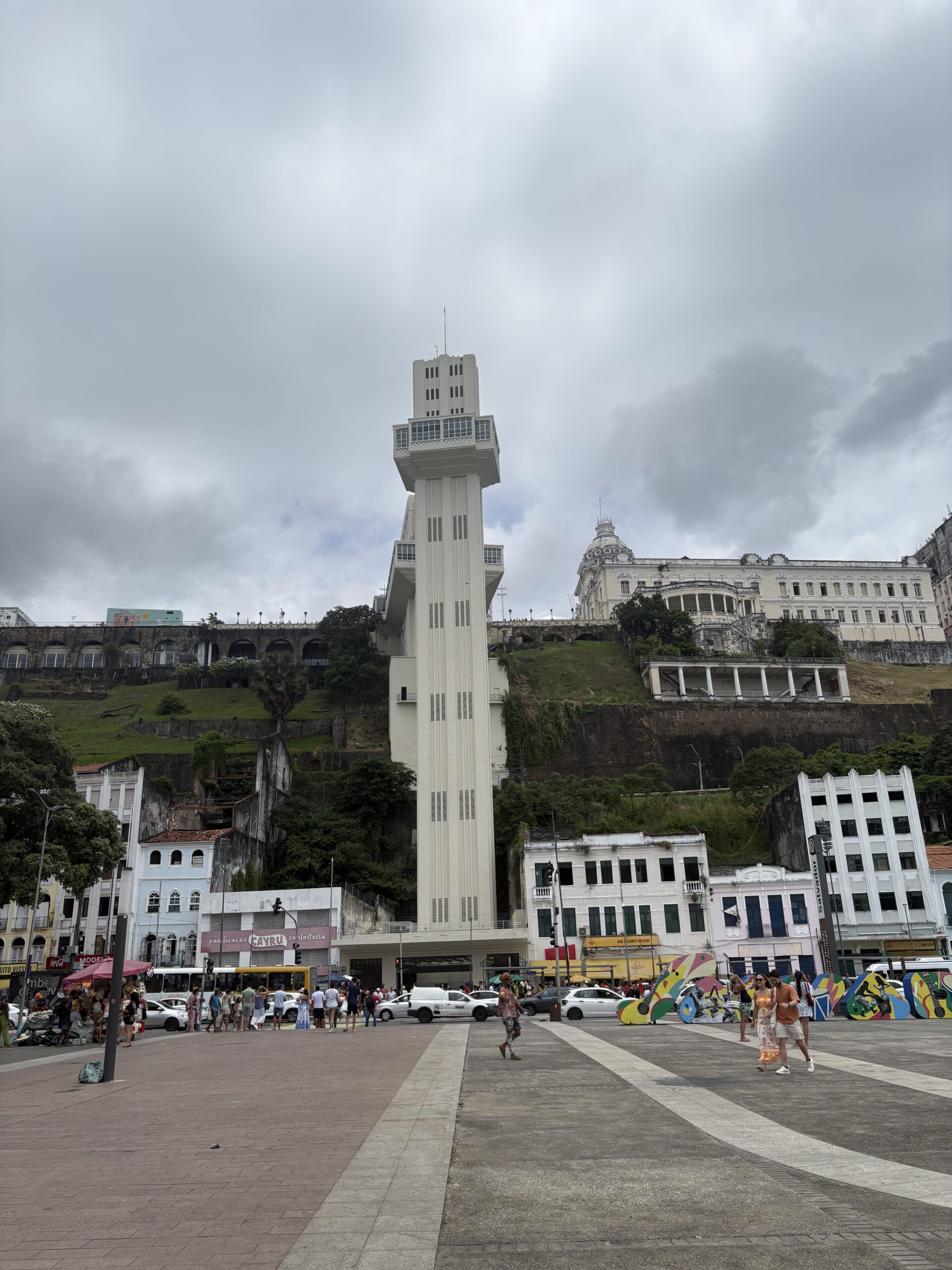
Looking up to Pelourinho 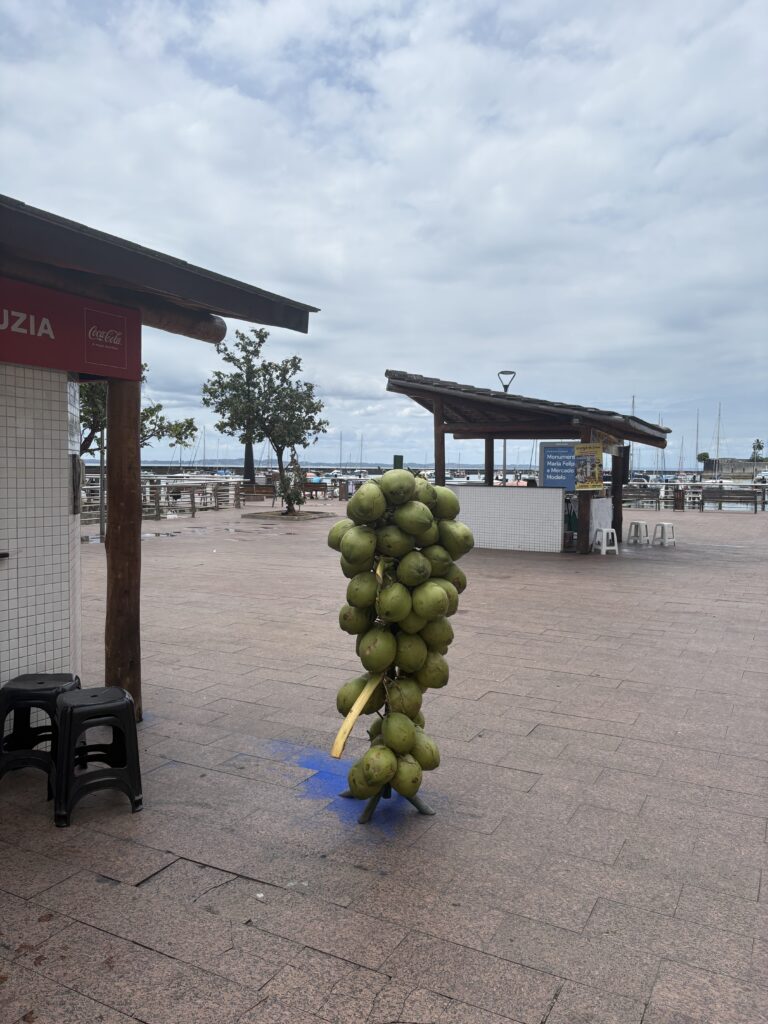
Coconut stands are everywhere 
The square near the entrance to the port 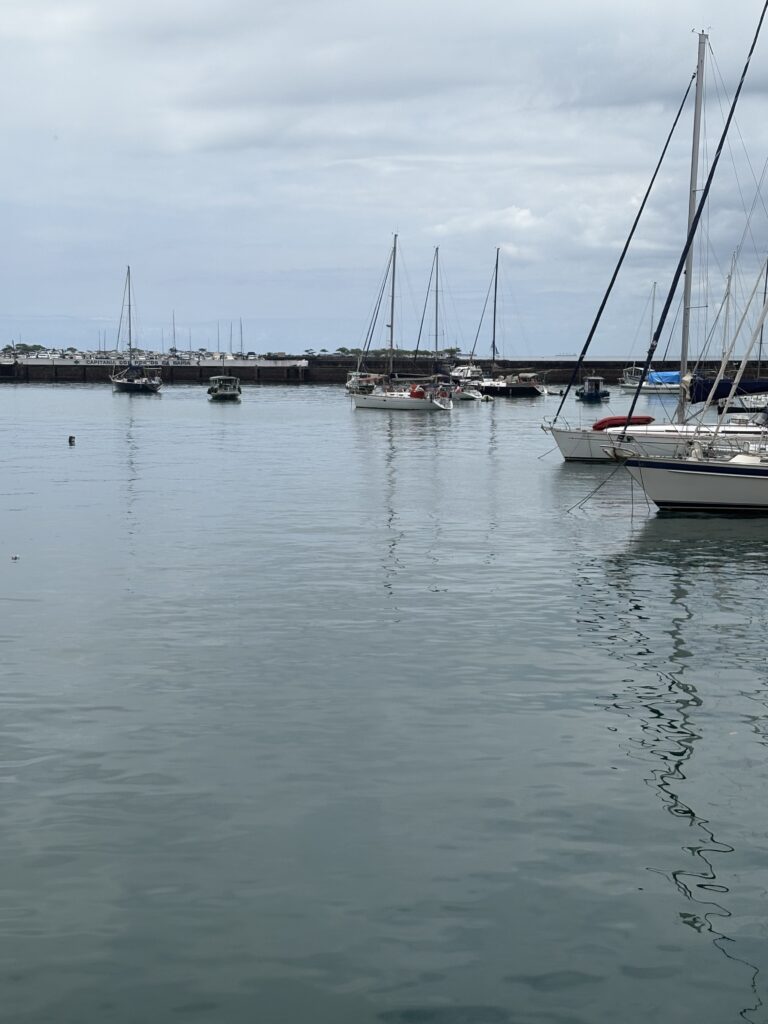
Mooring where Scally might have been 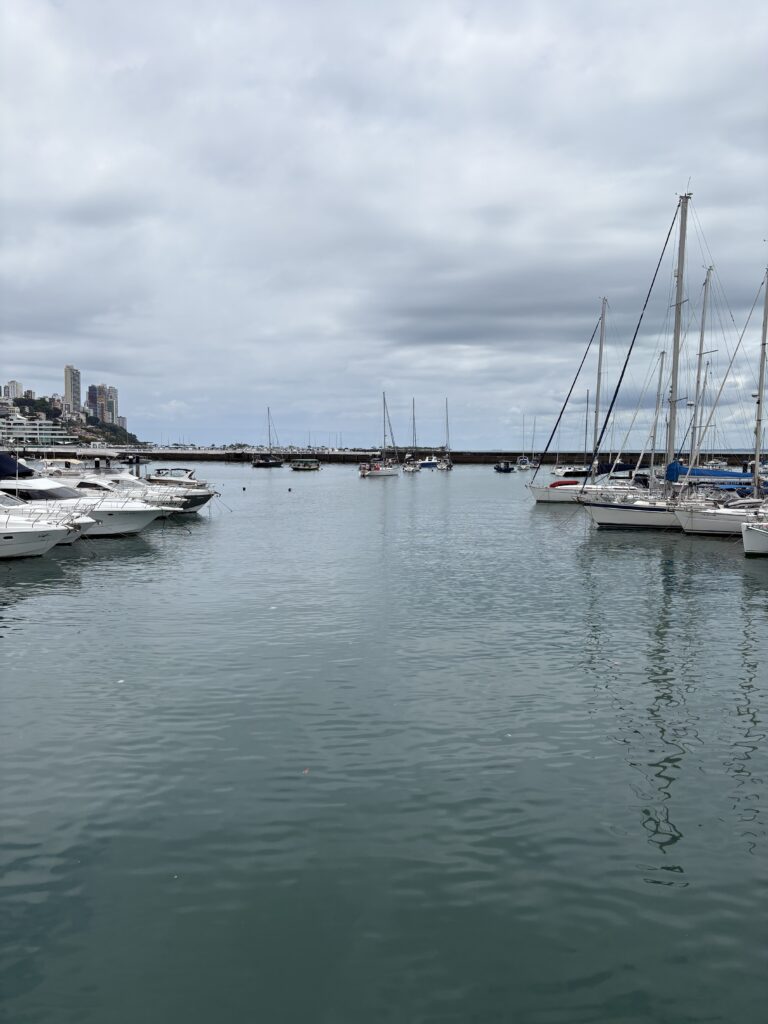
Scally would have been moored out there 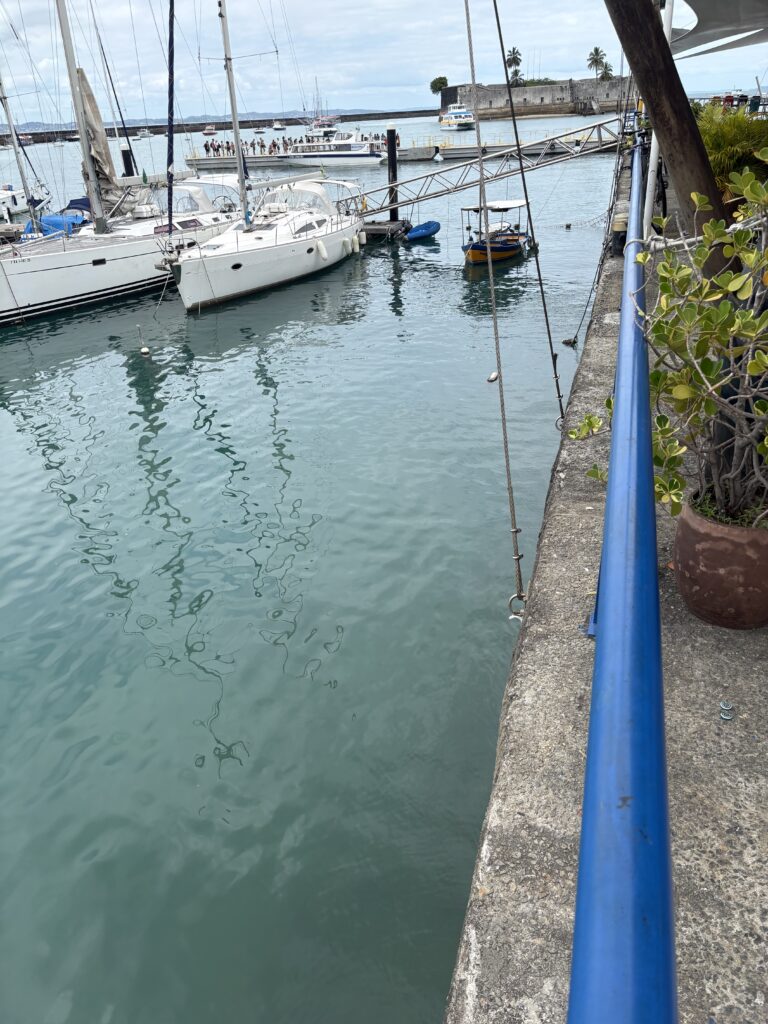
The wharf 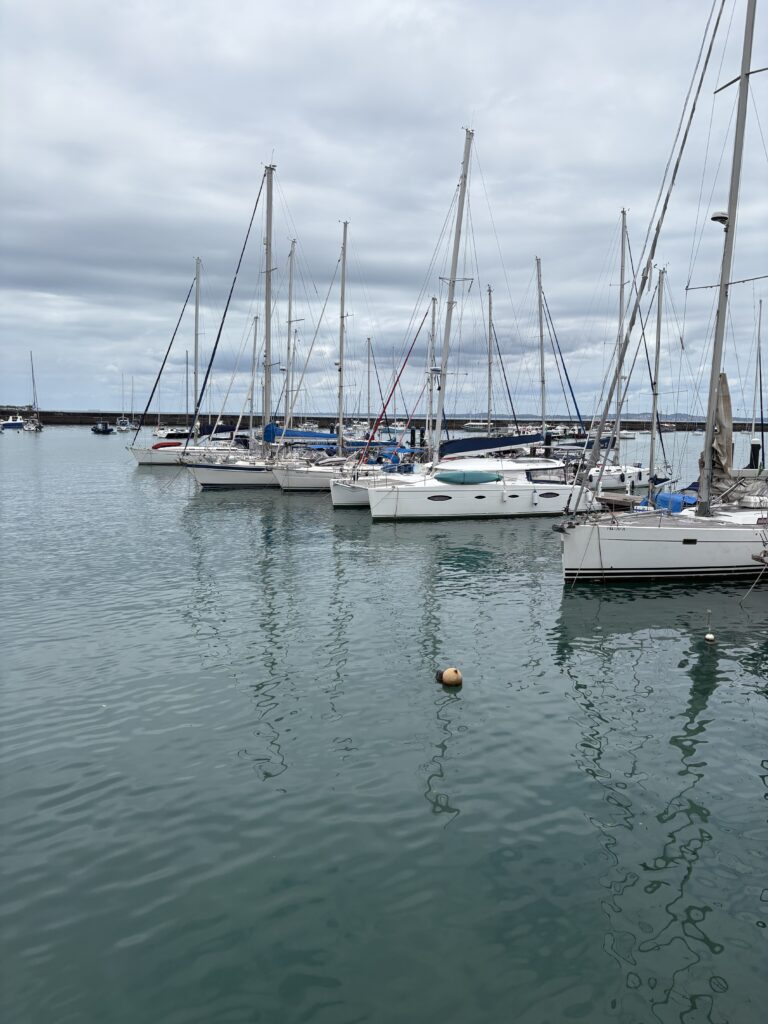
The port where Scally would have been 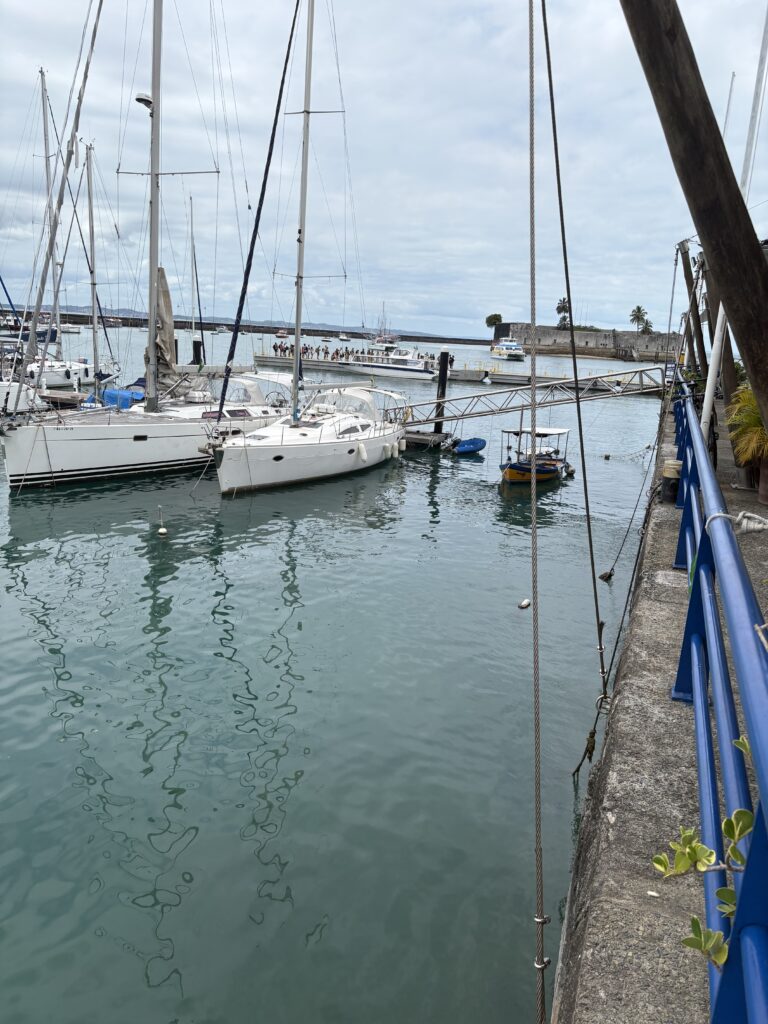
The port 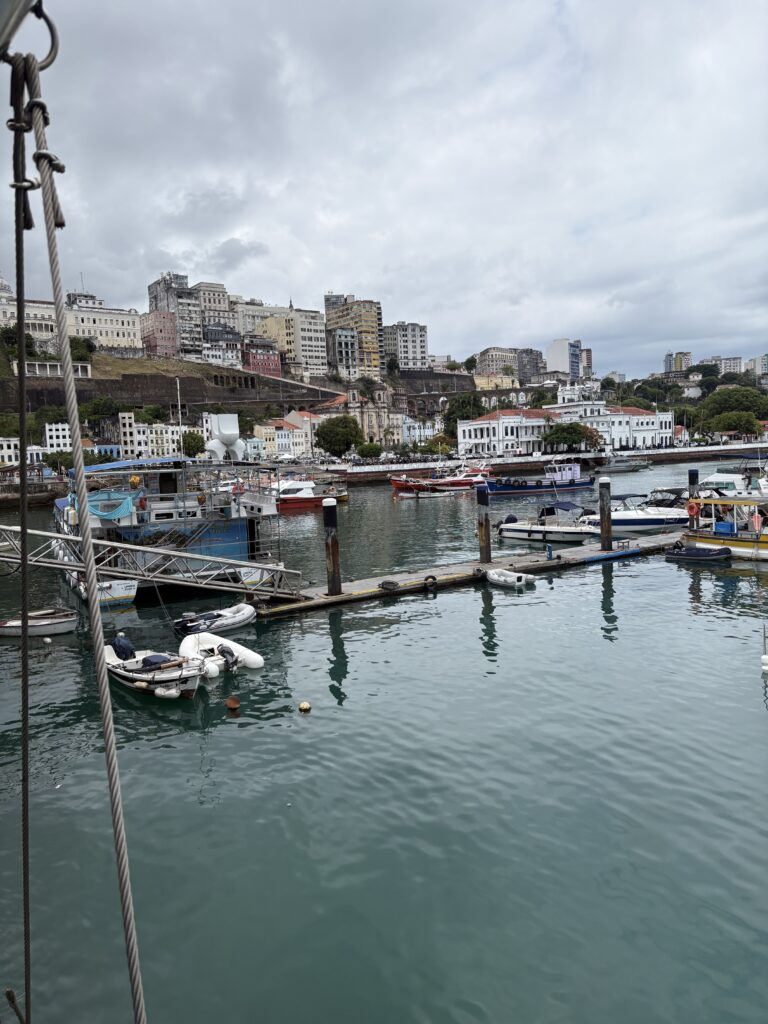
The port 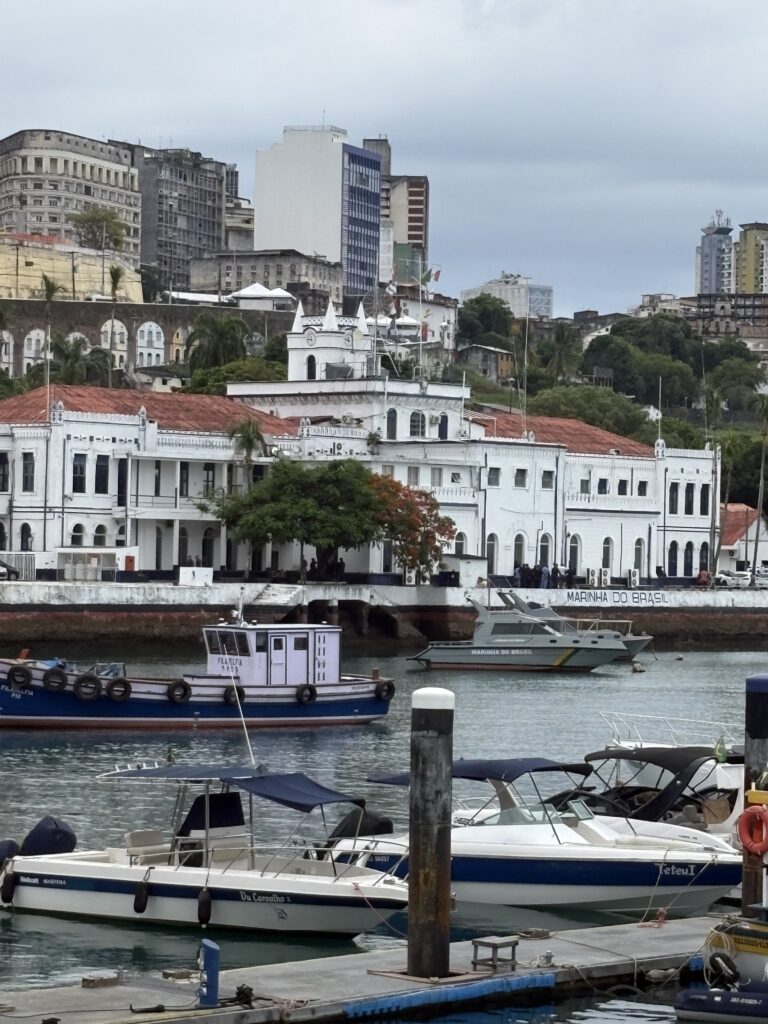
The port authorities and military 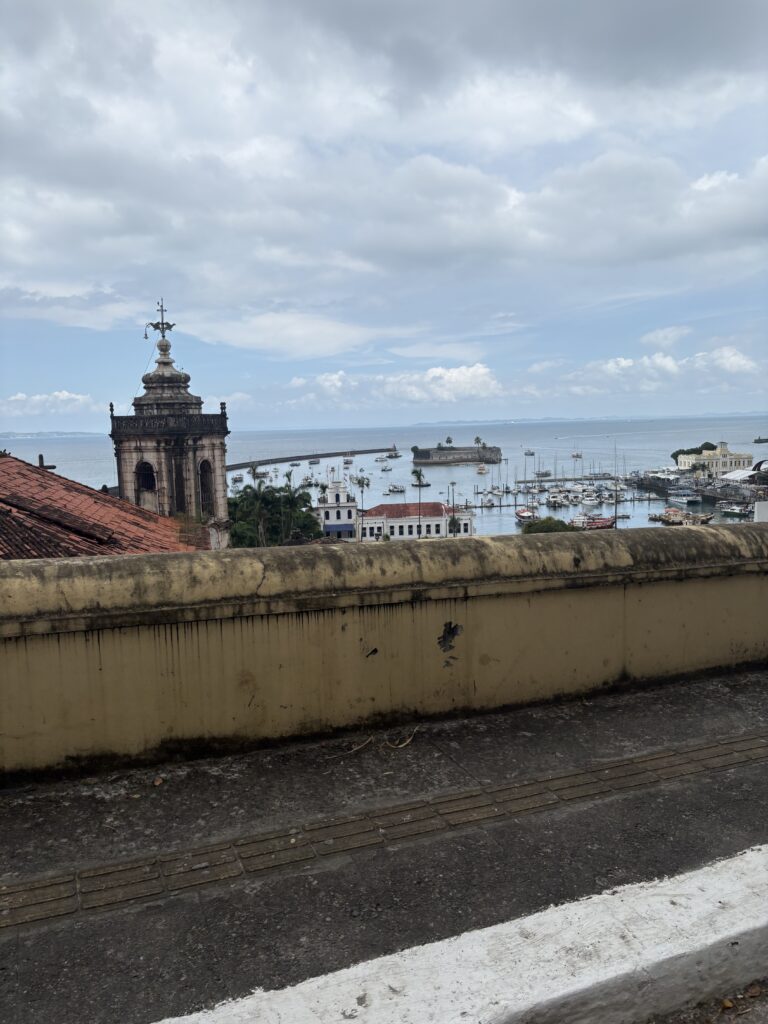
View of the old port from the taxi 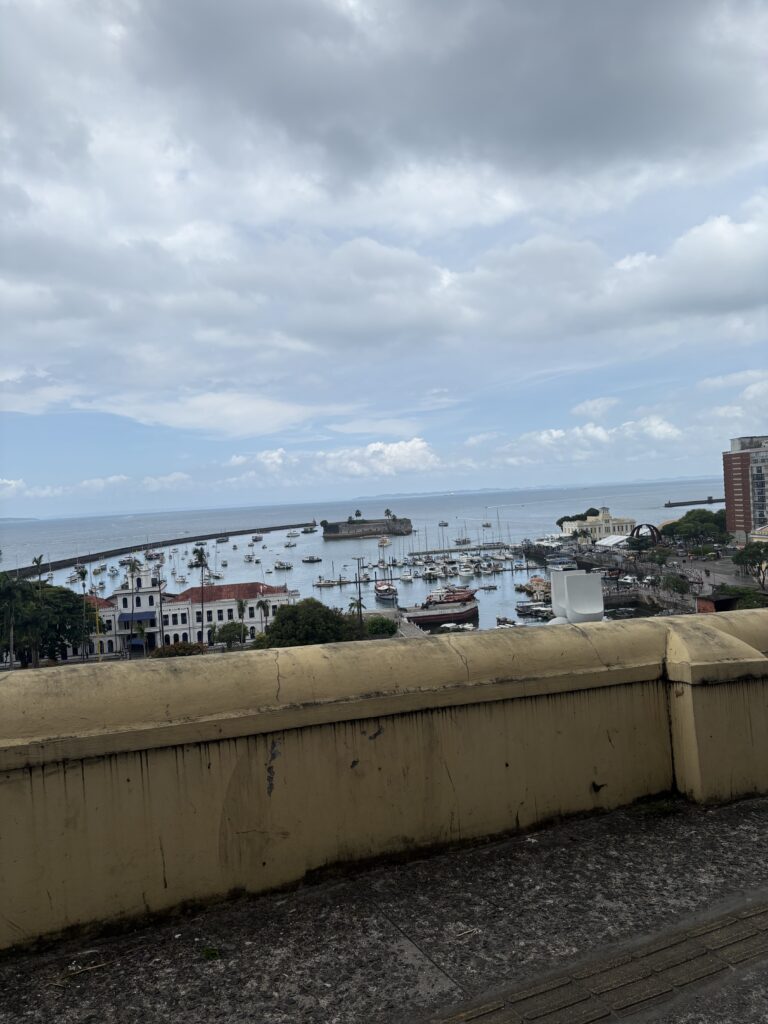
View of the old port from the taxi 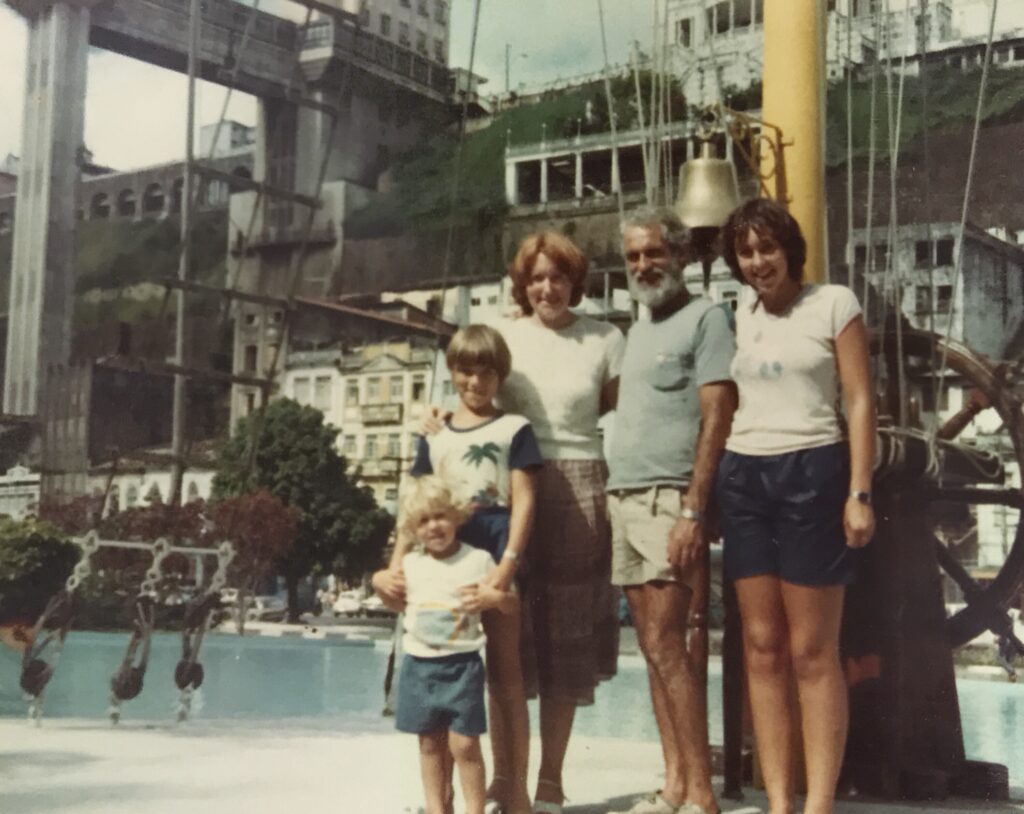
Five of us with the Elevador de Lacerda in the background. 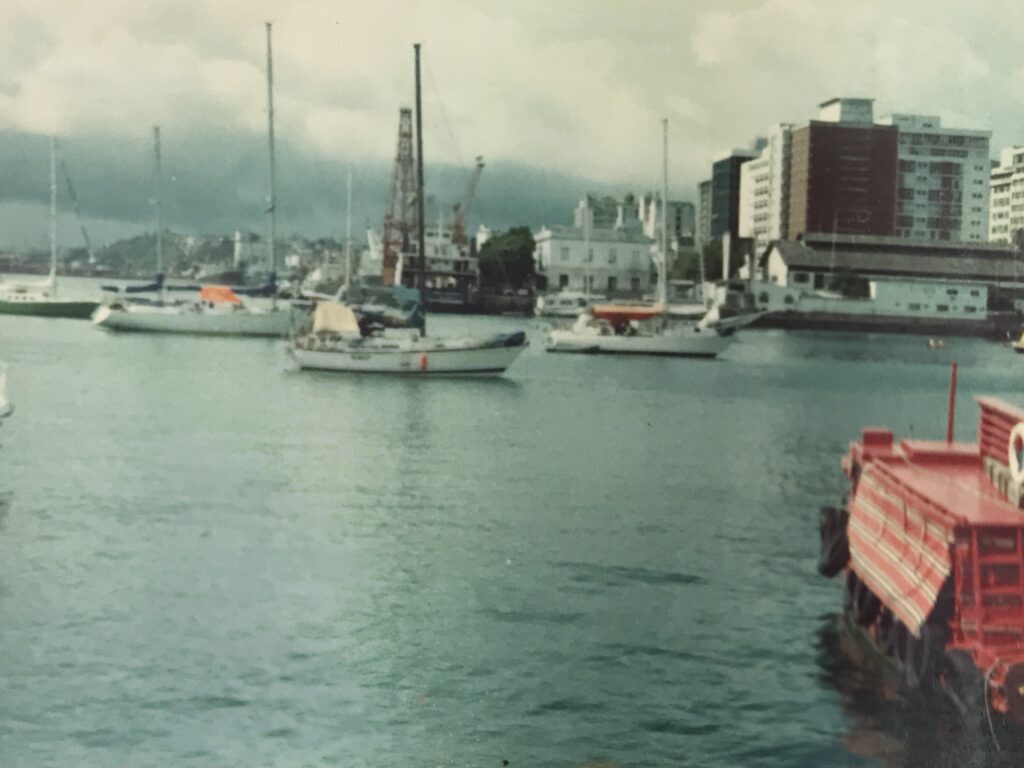
Scally anchored in the old port (it looks very different today) -
Brazil, Pelourinho Part I
WOW!!!
Pelourinho, the heart of the old town of Salvador, is the beating heart of this city. It reminded me so much of the streets of Alfama and Bairro Alto in Lisbon. Large squares dominated by churches, cobbled stoned streets, narrow lanes which are (mostly) car-free, people of all shapes, sizes, skin colours and attire everywhere to be seen. There is colour everywhere, sunshine everywhere, happiness everywhere, music everywhere, food everywhere. Pelourinho is without any doubt, the type of place that pulls me in, makes me feel alive. My senses come alive, I smile, I am happy to be here.I don’t remember visiting Pelourinho in 1982. Perhaps we did. Perhaps we didn’t. No matter, I am here now, in 2026, and loving every minute of this very old part of Salvador with a distinct Portuguese feel.
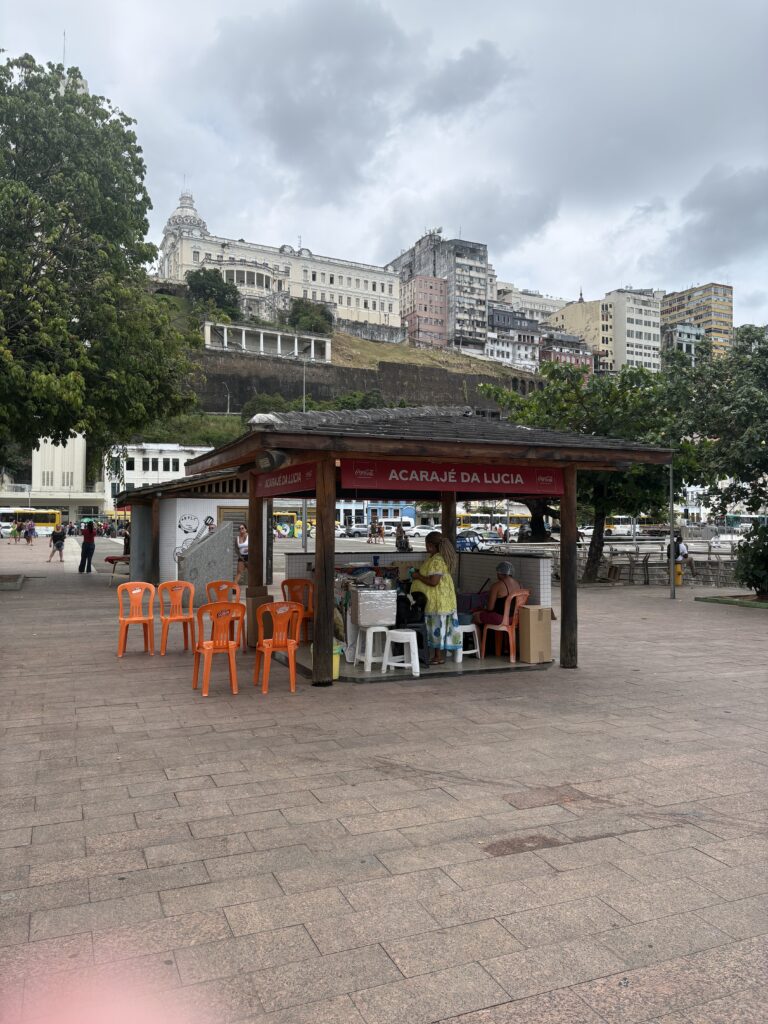
There are market stalls selling “aracajá,” a speciality of this area. I have no idea what it is but am anxious to taste it. I approach a smiling “Bahiana.” She is happy to help me understand exactly what it is, what’s in it, and convinces me that I’d like it. I pay my twenty five reais, and take the aracajá and sit down on a bench, in the sunshine, along with others, and take a bite. It’s delicious. Filling. Messy. It’s too much for me to finish eating it, and I don’t want to throw it away. I stand up, start walking away and spot a hunch-backed beggar, walking slowly, staring down onto the street for whatever he can find. I offer him the rest of my lunch, and he willingly takes it, smiling and thanking me, and I thanked him back. And wished him the rest of a nice day.
I set off for more exploration of Pelourinho. Up and down the streets in the sunshine. Past the Jorge Amado museum.
I wanted to find two items of clothing, which back in 1982, my father had bought for me in Salvador. The first, a pair of hand-made leather flip flops and the second, a white summer dress, reminiscent of what the Baiana’s wear.
I passed by a tiny shop, with a wiry elderly man sitting on the stoop, selling his leather wares. And got my pair of leather flip flops. The white dress was more difficult. But I found a little shop in the end, and got the white dress, which I will wear in Switzerland as soon as the warmer weather arrives.
Thank you Pelourinho. I will remember you and hope to be back one day.
Dates: February 2026
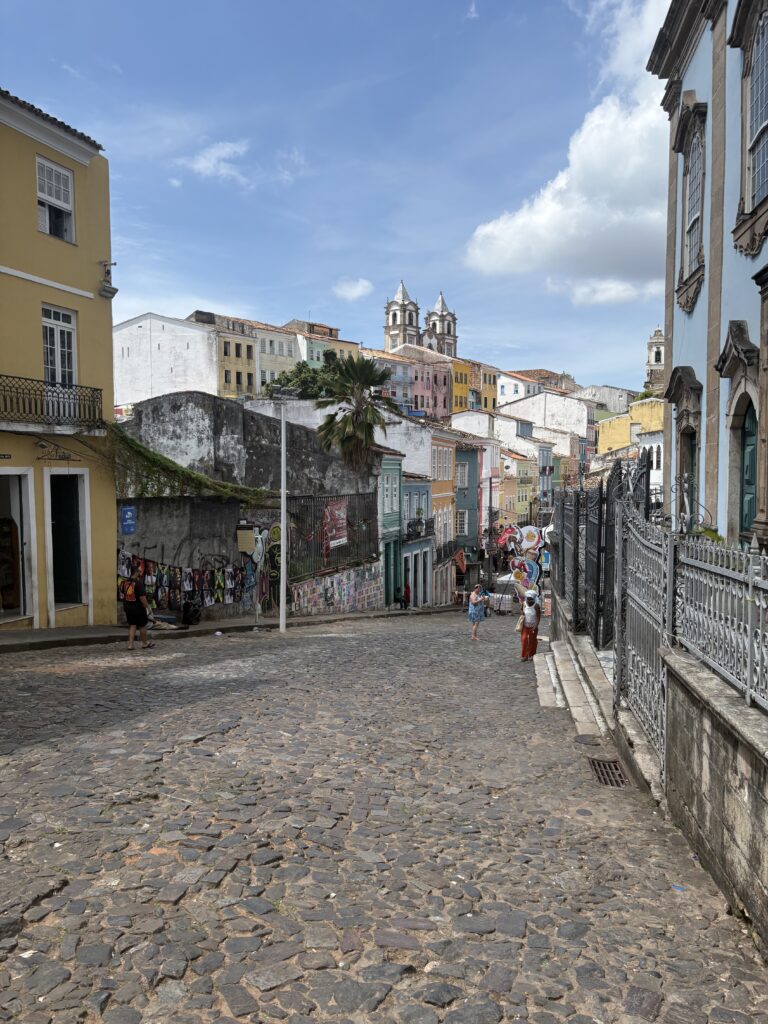
Streets of Pelourinho 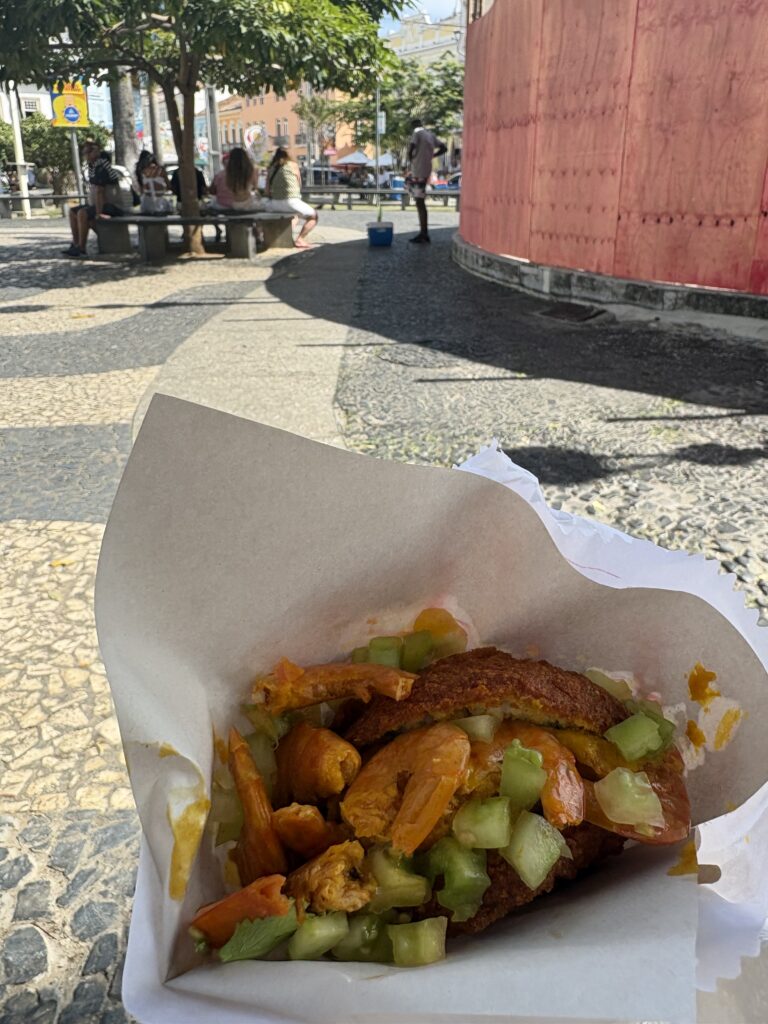
Aracaja 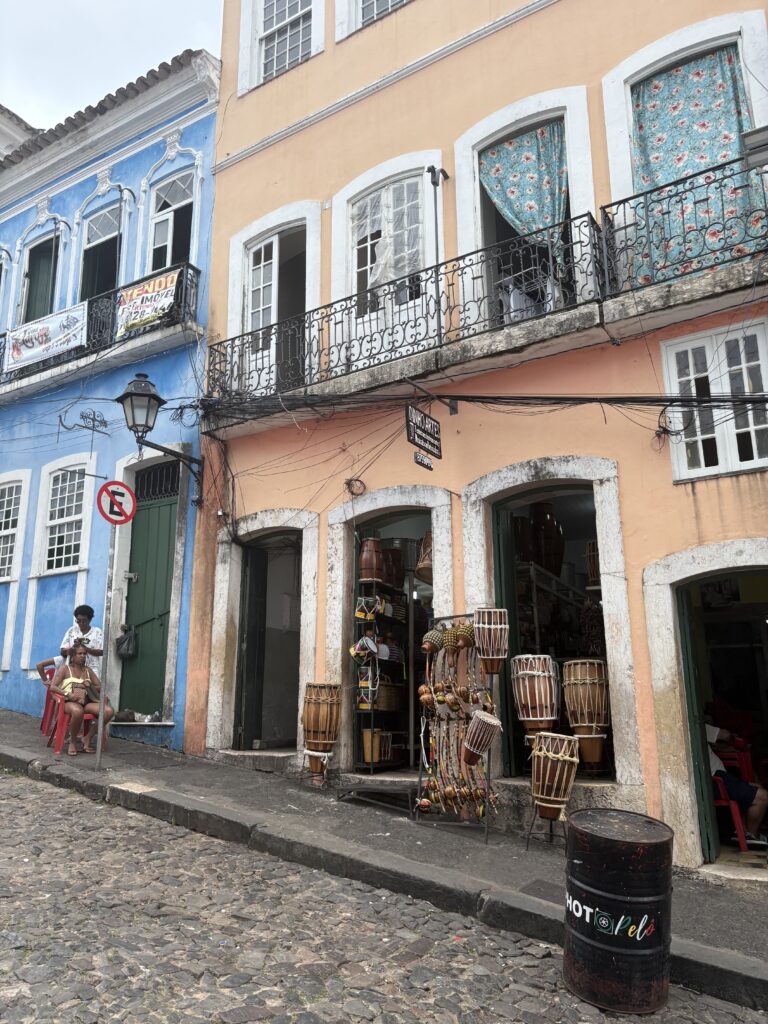
Streets of Pelourinho 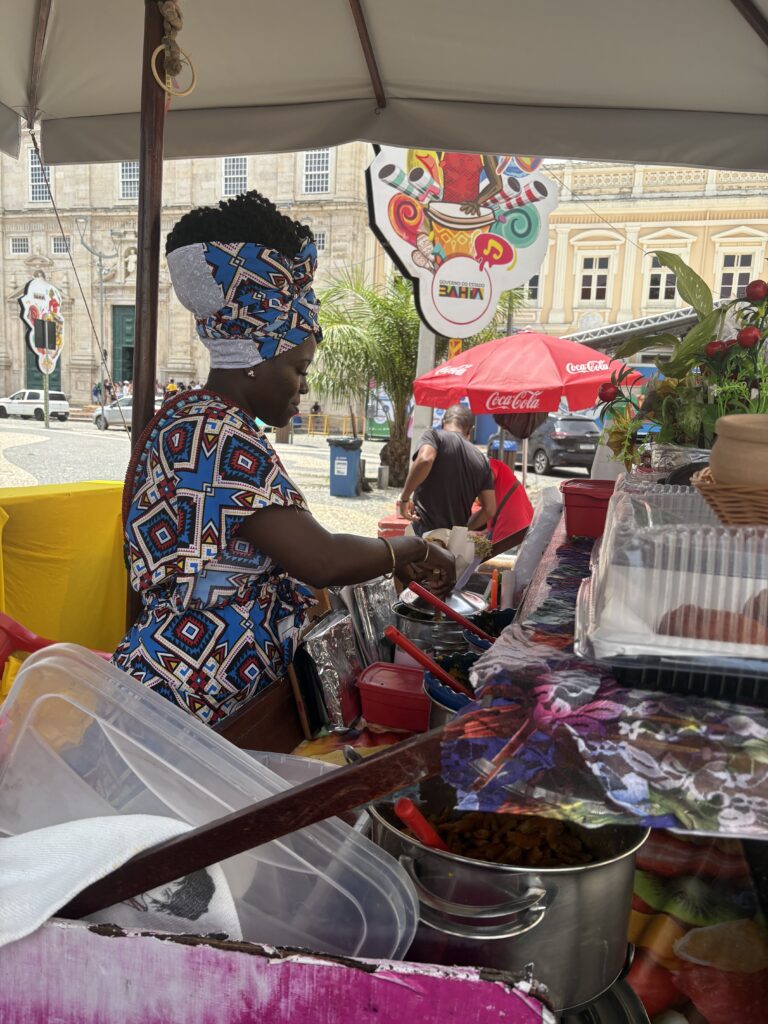
The street food stall selling aracaja 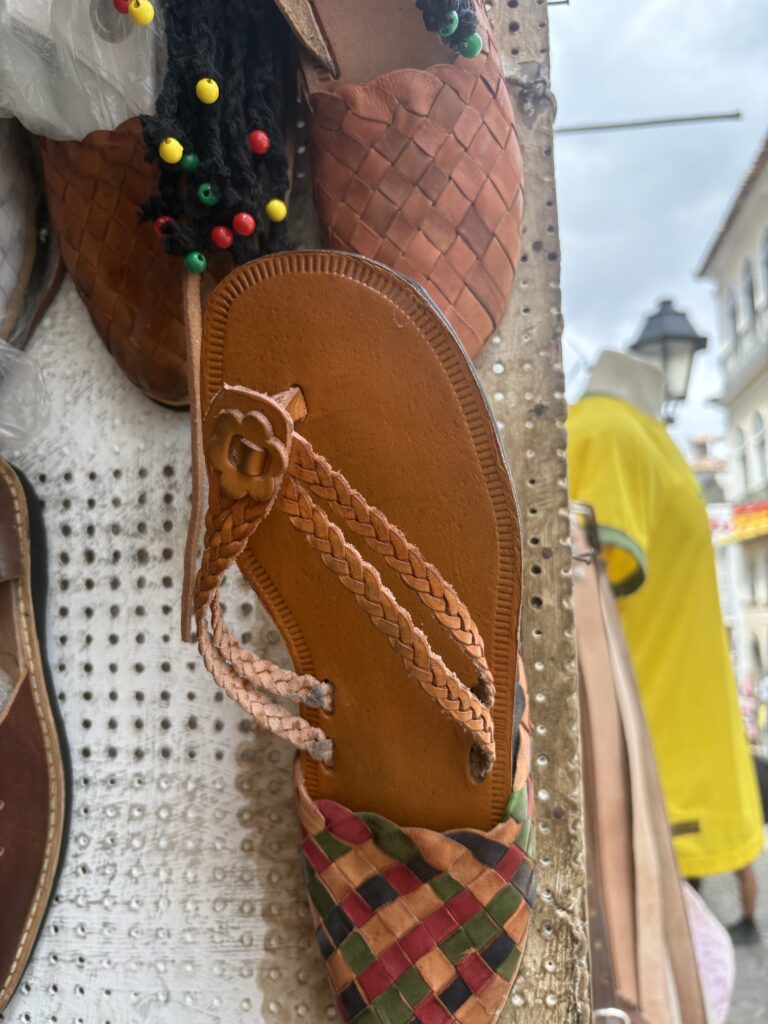
The style of leather flip flops my father bought me in 1982 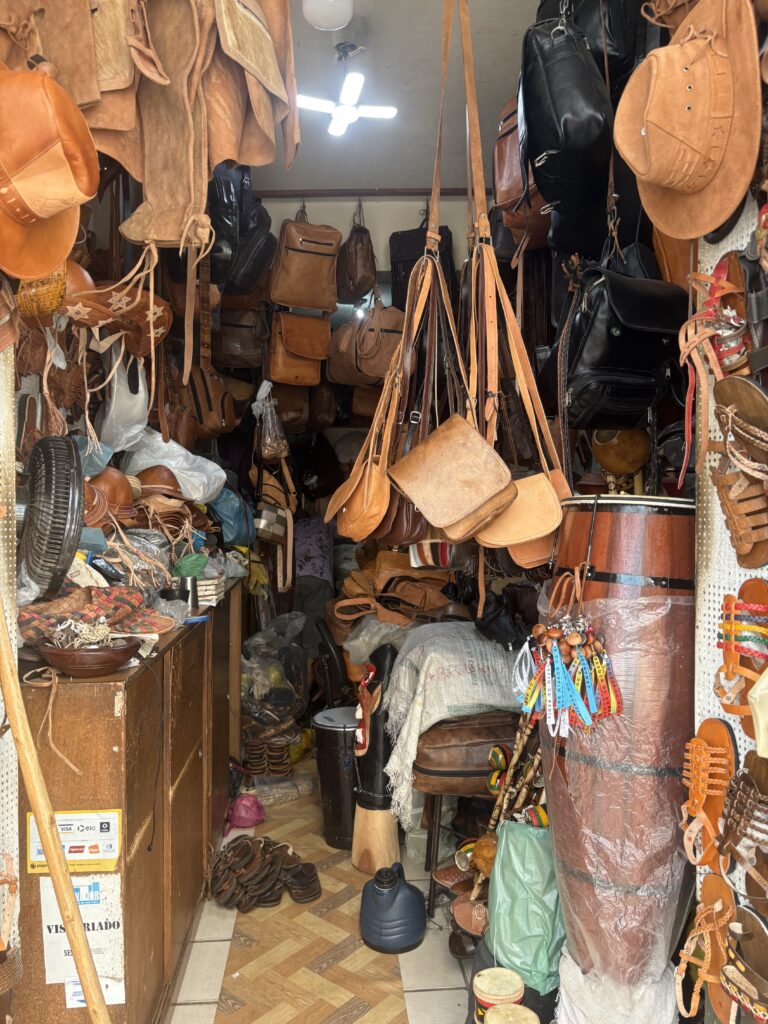
The leather shop in Pelourinho 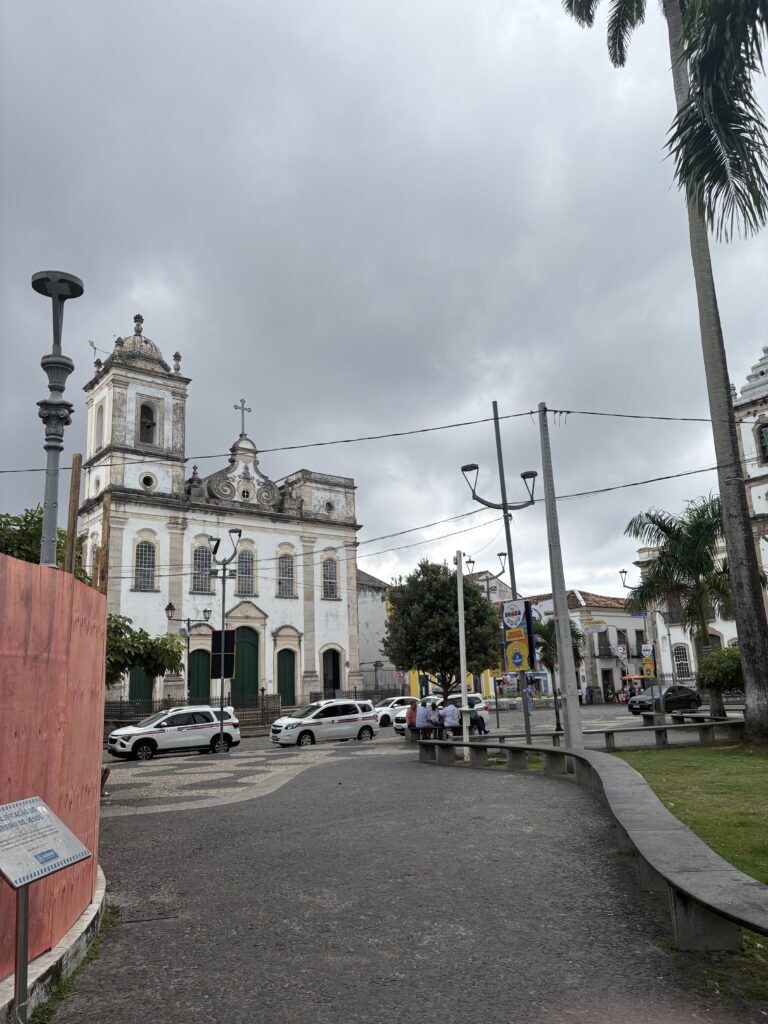
A church in Pelourinho 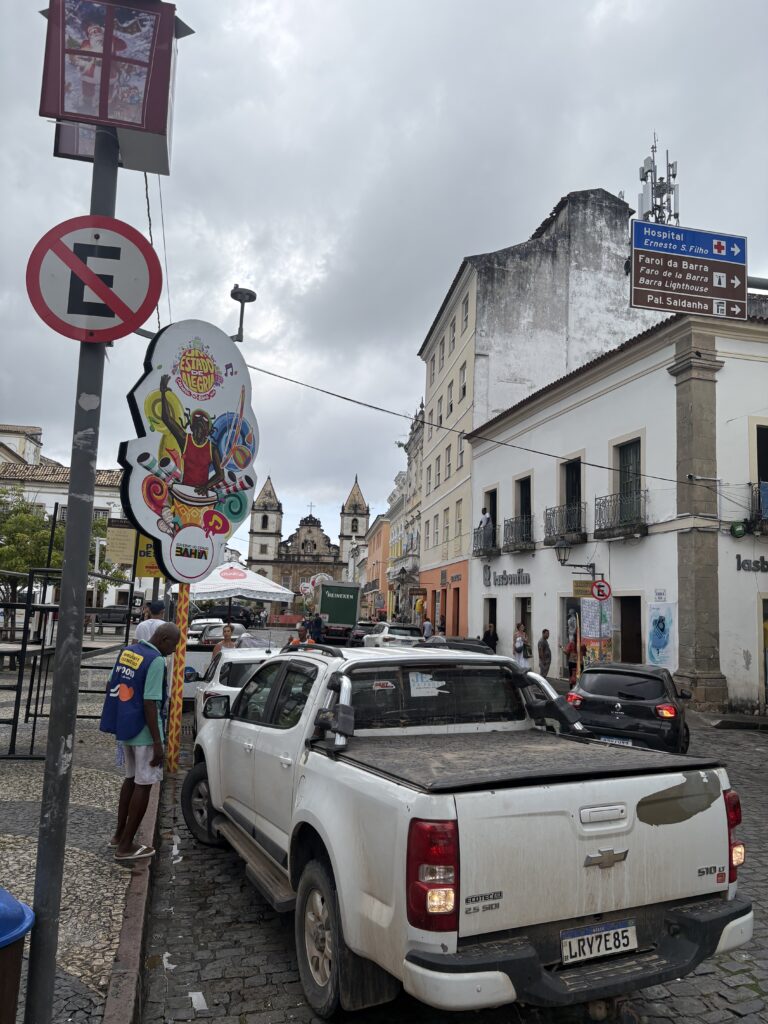
Pelourinho 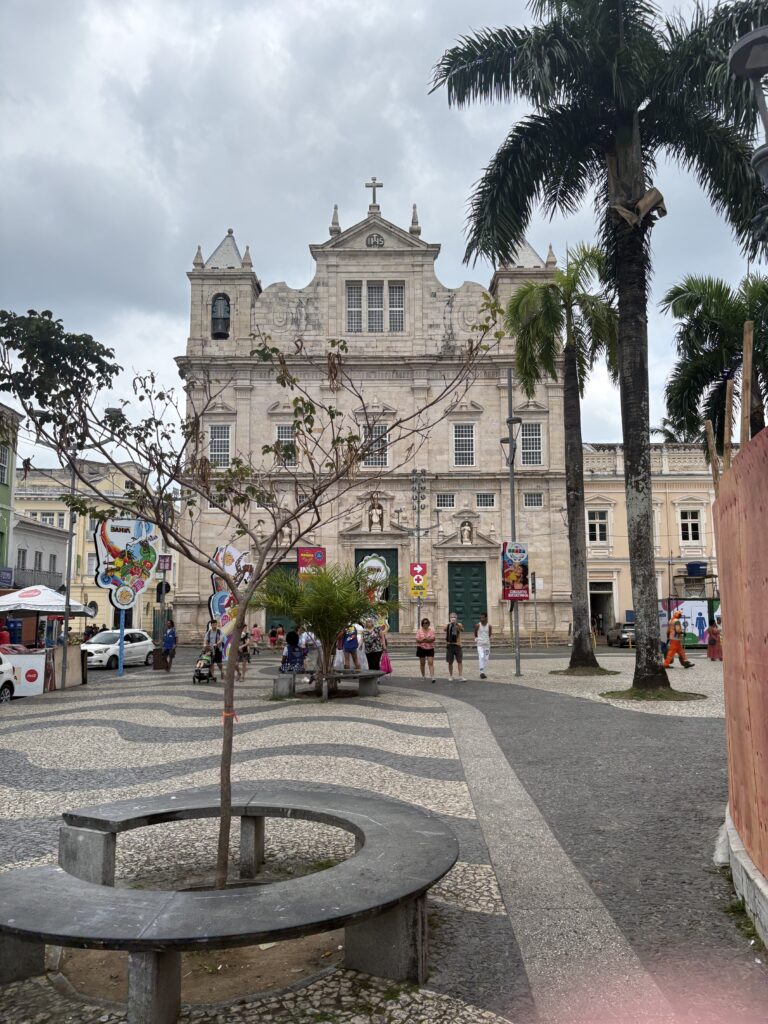
One of the main squares in Pelourinho 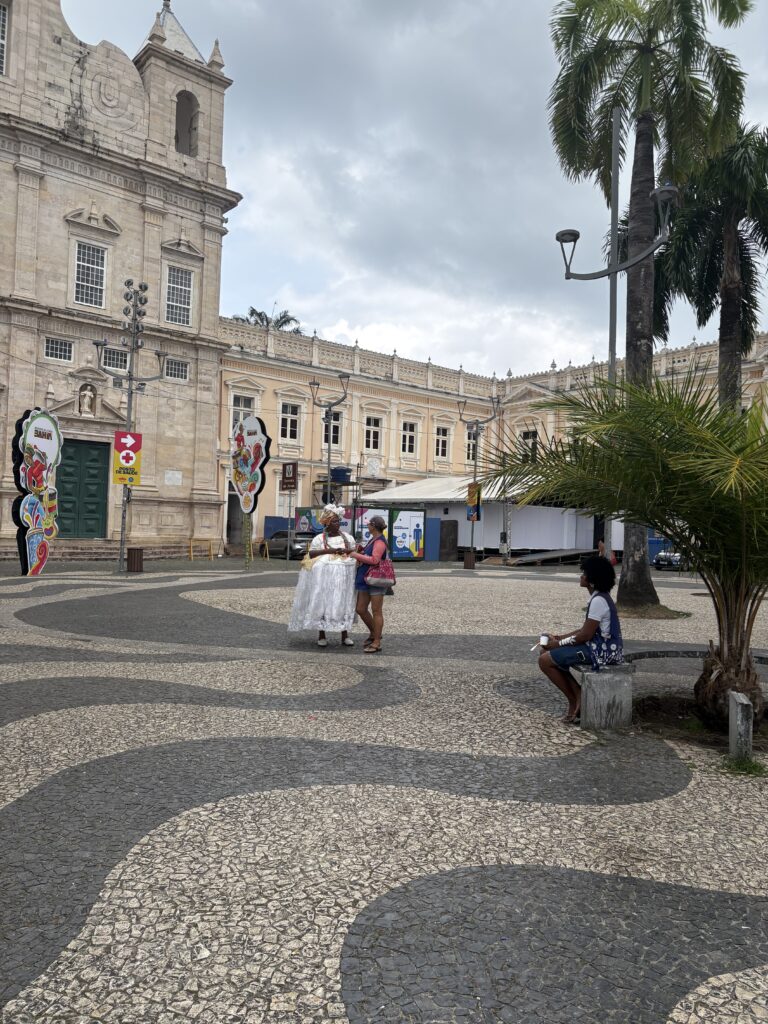
One of the main squares in Pelourinho 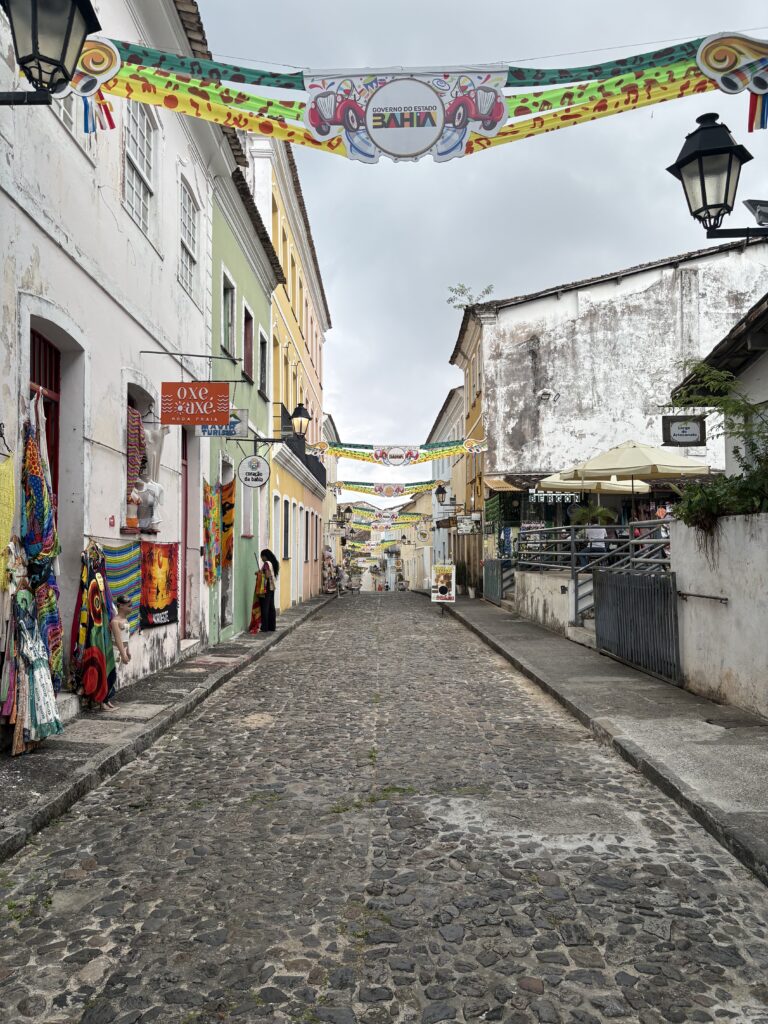
Streets in Pelourinho 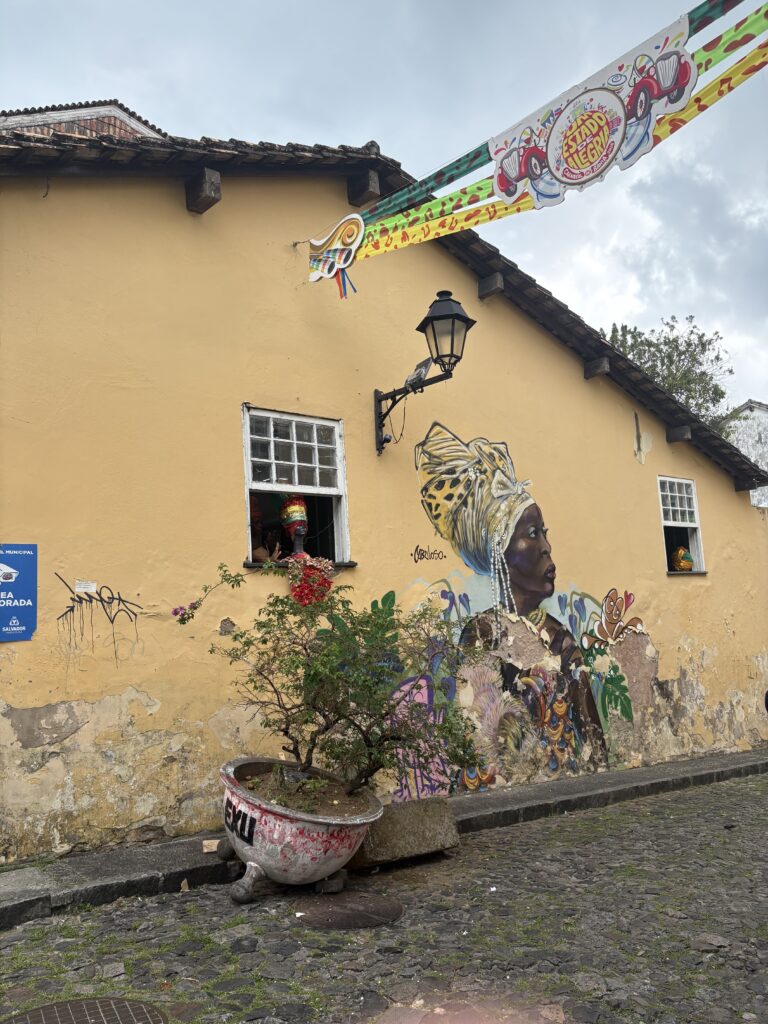
Street art in Pelourinho 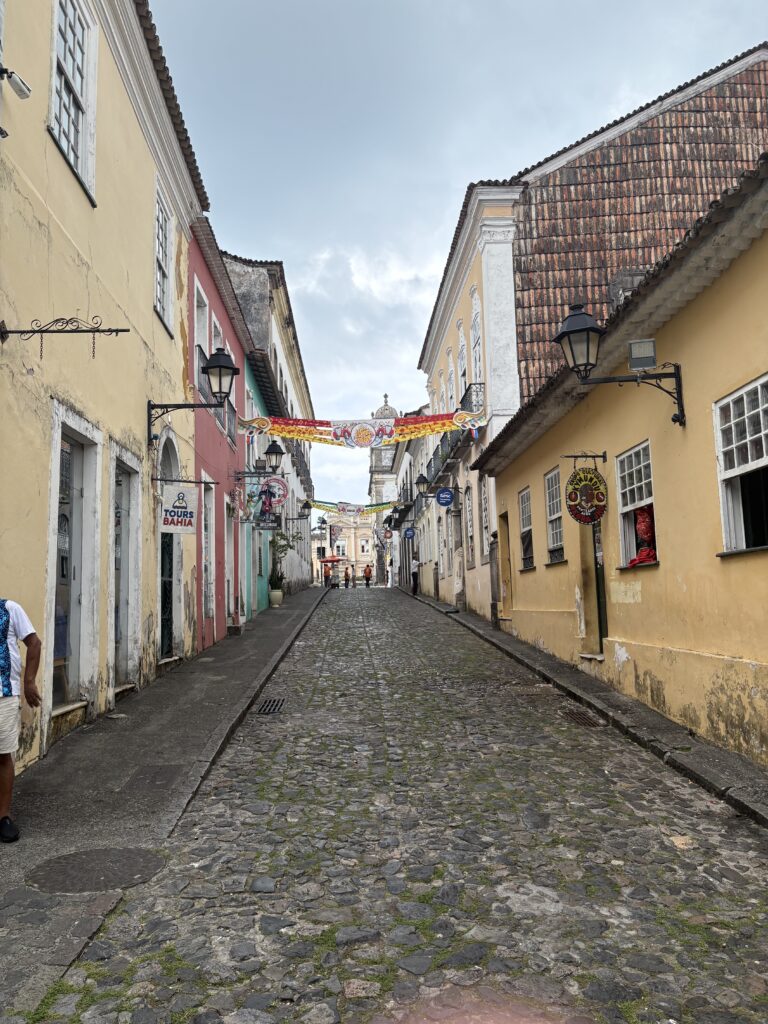
Streets of Pelourinho -
Brazil, Basilica Senhor do Bonfim
I have a photograph of us, taken by my father, standing at the entrance of this church in 1982, and another of my two youngest brothers in the square outside. I have lost many memories of our trip on Scally, but my memories of this church are still vivid. I remember the wax parts of the body, limbs, organs, and every other part of the body you can imagine, internal or external, all made out of wax, to be able to be burnt and sacrificed, in the belief that burning the body part that ails you would heal you, hanging from the ceilings in the aisles. I remember the church being on a hill, majestic and framed by the large blue skies. I remember colourful ribbons that were sold by street vendors outside, and my father buying us each one. I had mine on until it was so tattered it ripped and fell off many months later.
There are so many churches and cathedrals in Salvador, I would love to be able to ask my father why he chose this one to visit. Not my mother, my brother, nor I know the reason. I have to believe that it’s because of my father’s passion for history, the sea, the navigators and a slight dose of superstition.
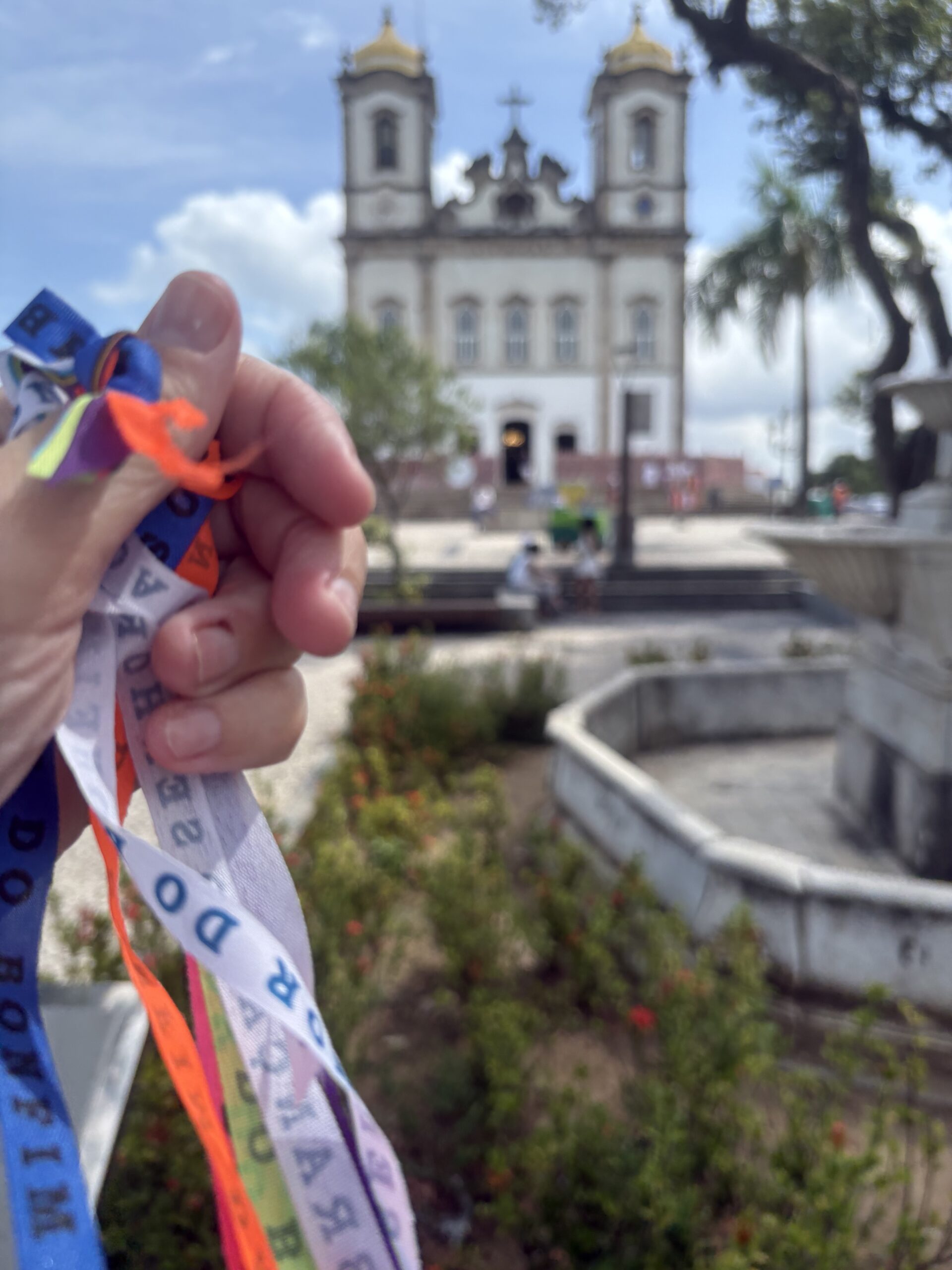
The captain of a Portuguese war ship, and owner slave ships, Theodosio Rodrigues de Faria made a promise that if he survived a bad storm while at sea, he would bring to Brazil from Setubal, in Portugal, images of Senhor do Bonfim and Nossa Senhora da Guia. This indeed he did, bringing with him a replica from Portugal in 1765. The coloured ribbons were introduced in the early 1800s in an effort to raise money for the church. The ribbons are tied on your wrist and each knot is a prayer made silently. Usually three silent prayers are made. I believe my father chose this church because it originated in his home country and possibly as a talisman against tempests at sea, but we’ll never truly know.
My visit in 2026 was on a warm and sunny day. I was not yet in possession of any reais, Brazilian currency, and was hoping that credit cards would be accepted. Indeed, as soon as I stepped out of the taxi in a side lane, I saw the market stalls, selling amongst other religious artefacts, the prized coloured ribbons I so wanted. I chose a female vendor who smiled at me and seemed friendly. Luckily she accepted all sorts of payment methods and I bought my ribbons and a rosary bead.
Then I walked up to the church. The wrought iron railings at the top of the steps were packed with ribbons and I, too, added six before I entered the church, saying a silent prayer for each of Scally’s crew. I then stepped inside. It was much smaller than I had remembered, and a mass was in full swing. I sat reverently in a pew until the singing had subsided and then got up quietly and moved to the aisles in the hopes of seeing the wax body parts I remembered. They are no longer there. Instead, a small section of the aisle has been dedicated to the wax body parts, along with a description of what they are for. There was a German tourist group with a guide in that section at the time, and I could hear, sense and observe their disbelief at such a tradition.
I spent quite a while in the church, listening to the mass and sharing in the happiness of the singing. It was someone’s birthday because suddenly the priest and congregation launched into a happy birthday. I slowly went back outside and sat in the square for some time, remembering.
I am so glad I came. I was brought up a Roman Catholic. I like visiting churches, no matter which country they’re in. Being inside a church always brings me a sense of peace and tranquility, and reminds me that the quick pace of life outside, at work, in my daily life, and the speed of everything nowadays does not have to be so. It is OK to take time out to be quiet, slow, thoughtful, pensive and reflective.
Dates: February 2026
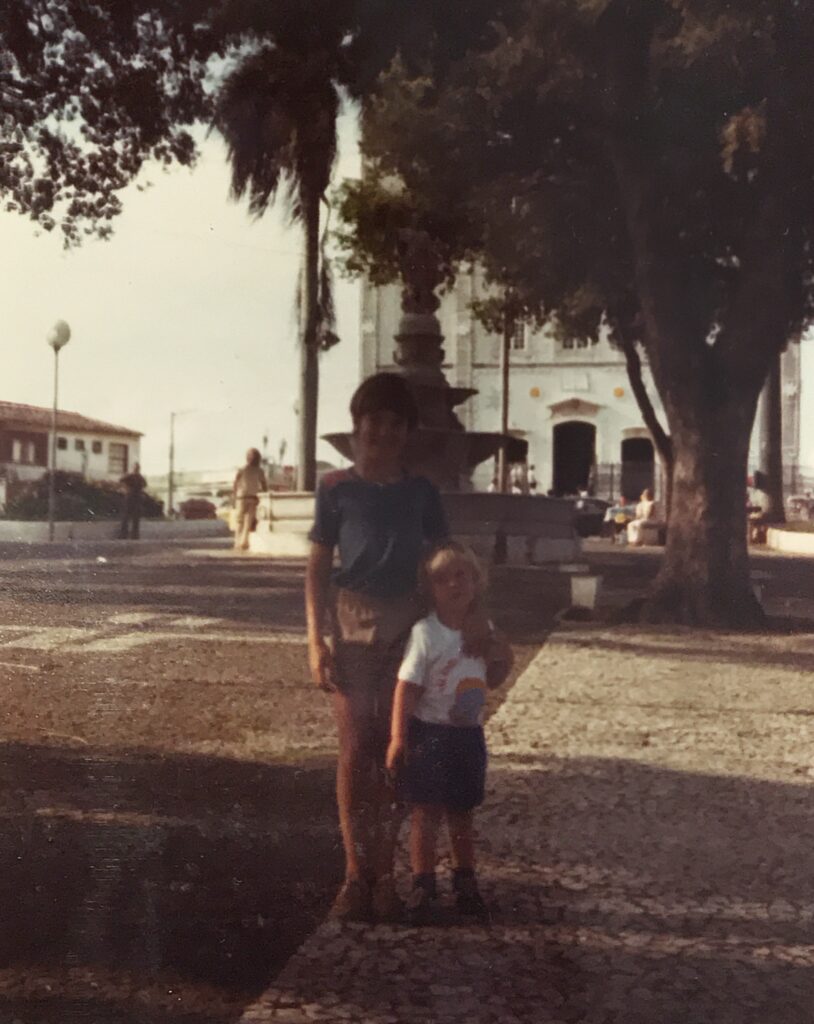
My two youngest brothers outside the church 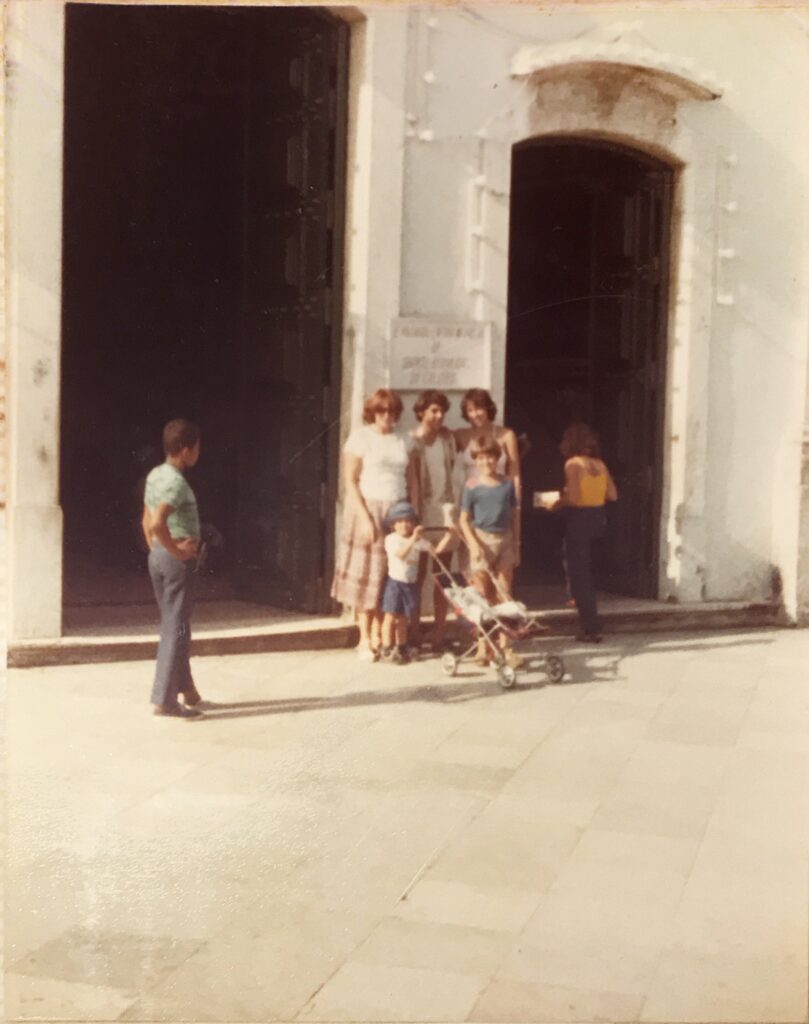
Five crew members outside the church 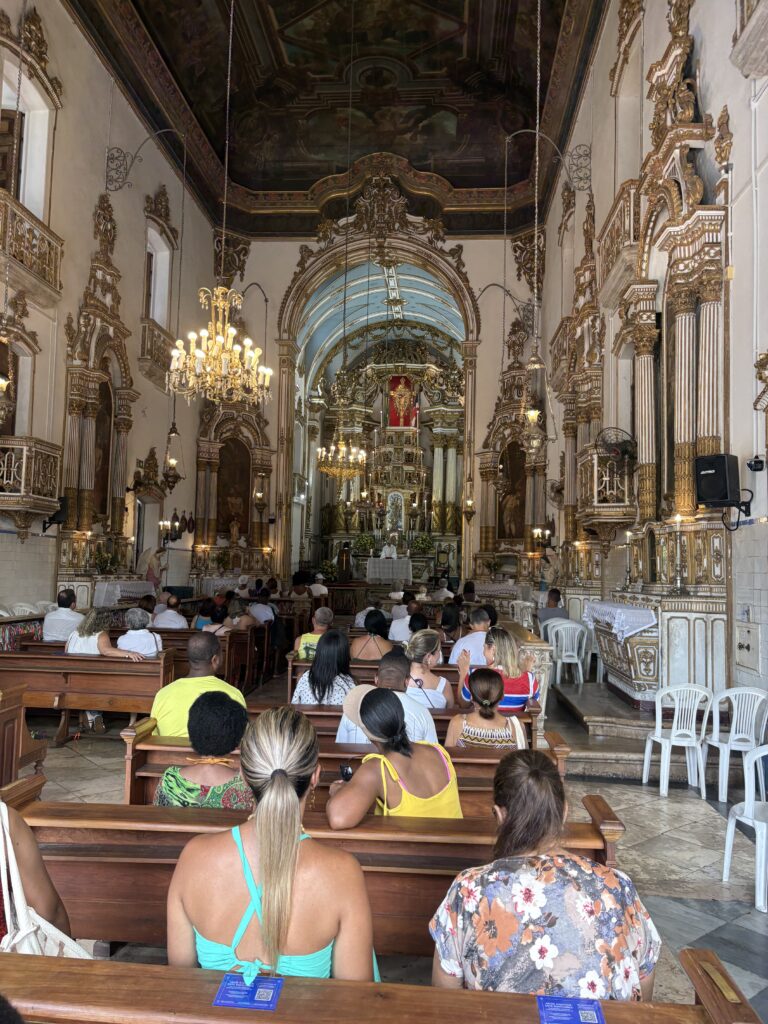
inside the church 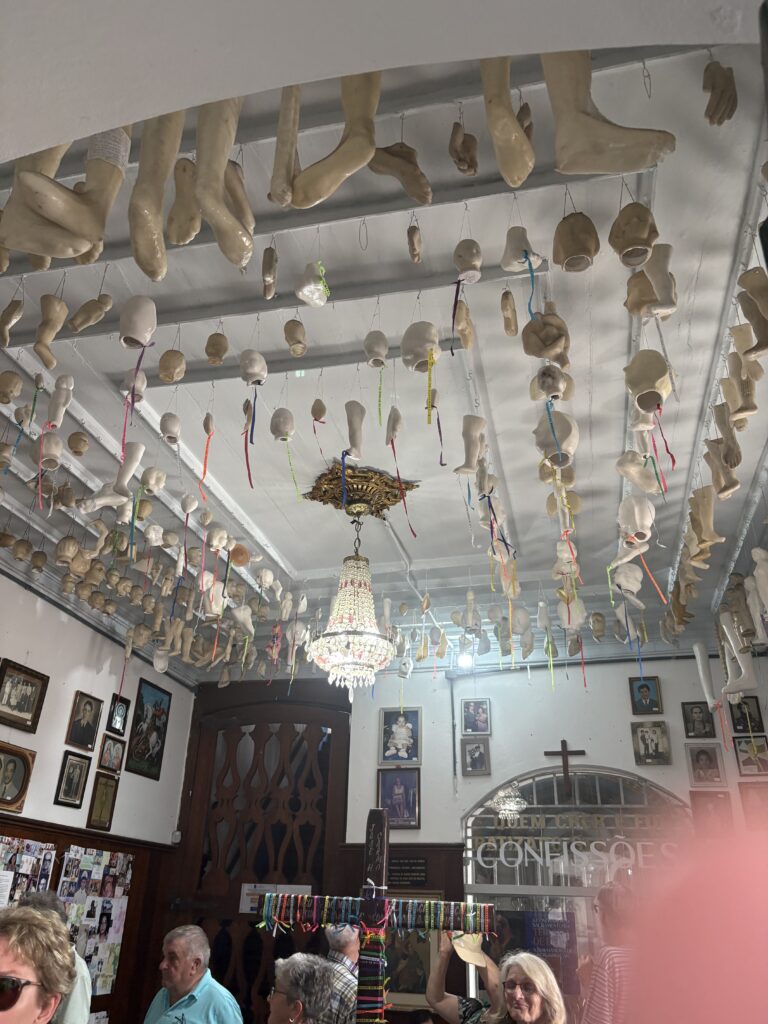
The wax body parts 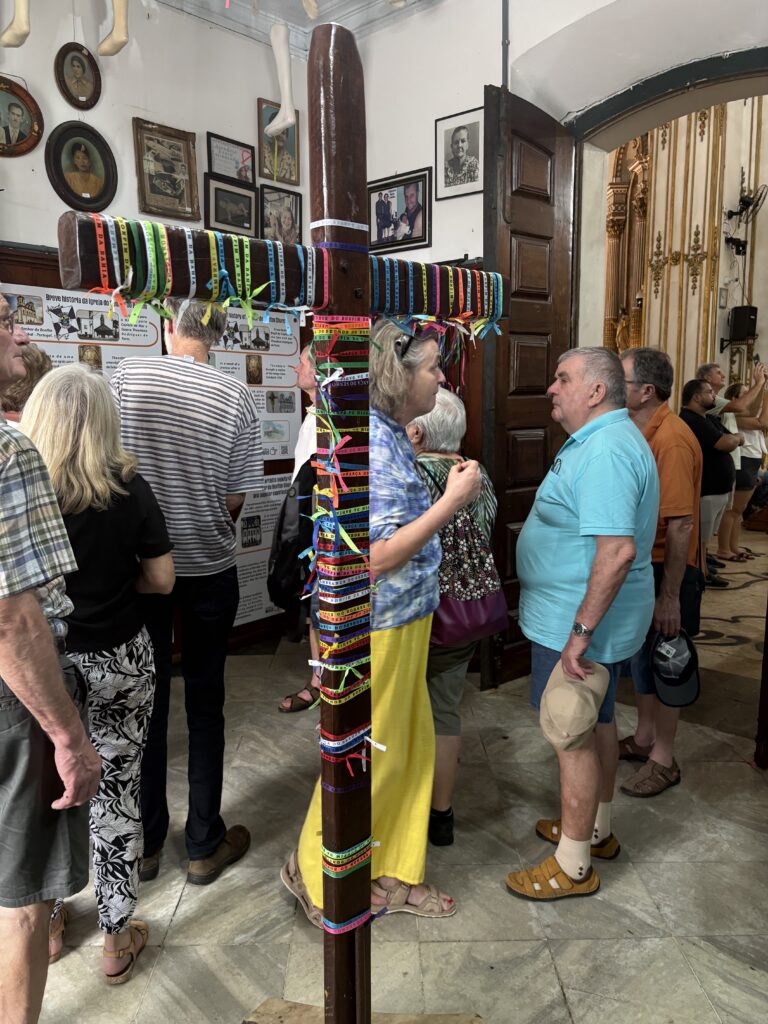
The small section with the body parts 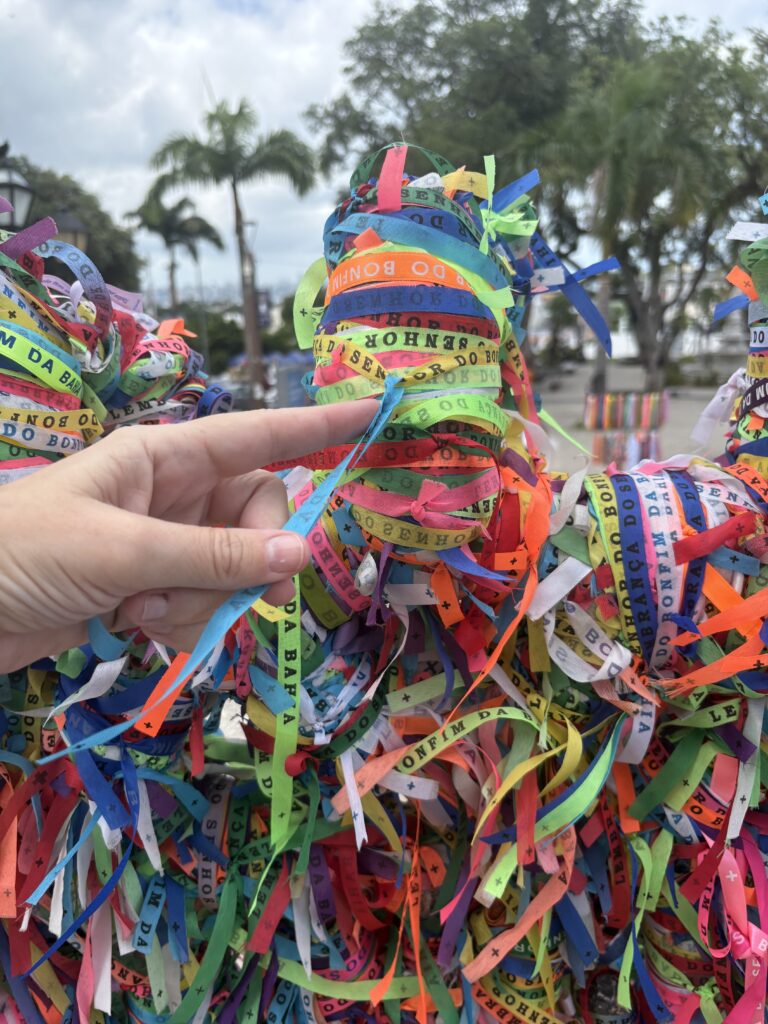
Tying the ribbons for Scally’s crew 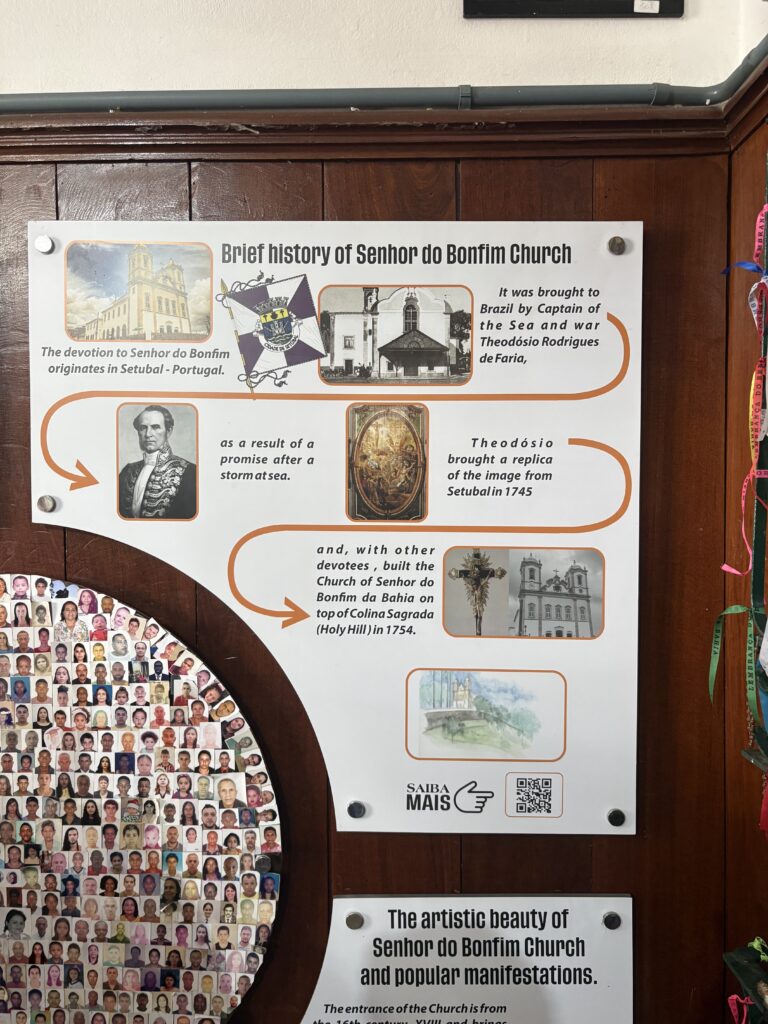
the history 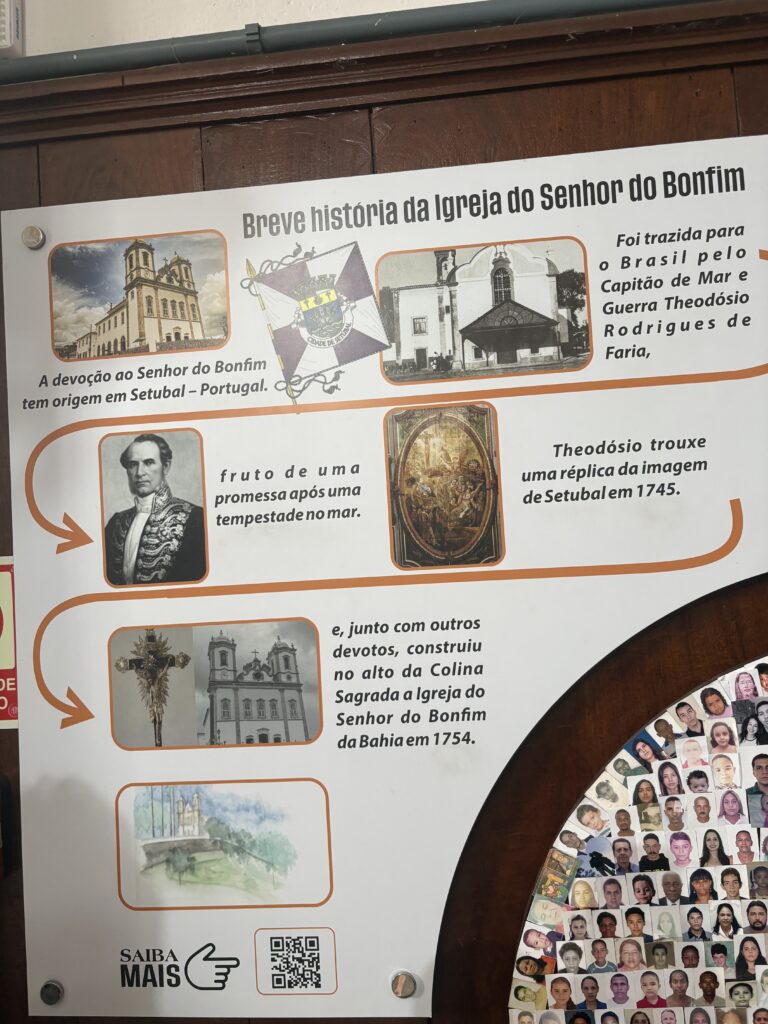
The history