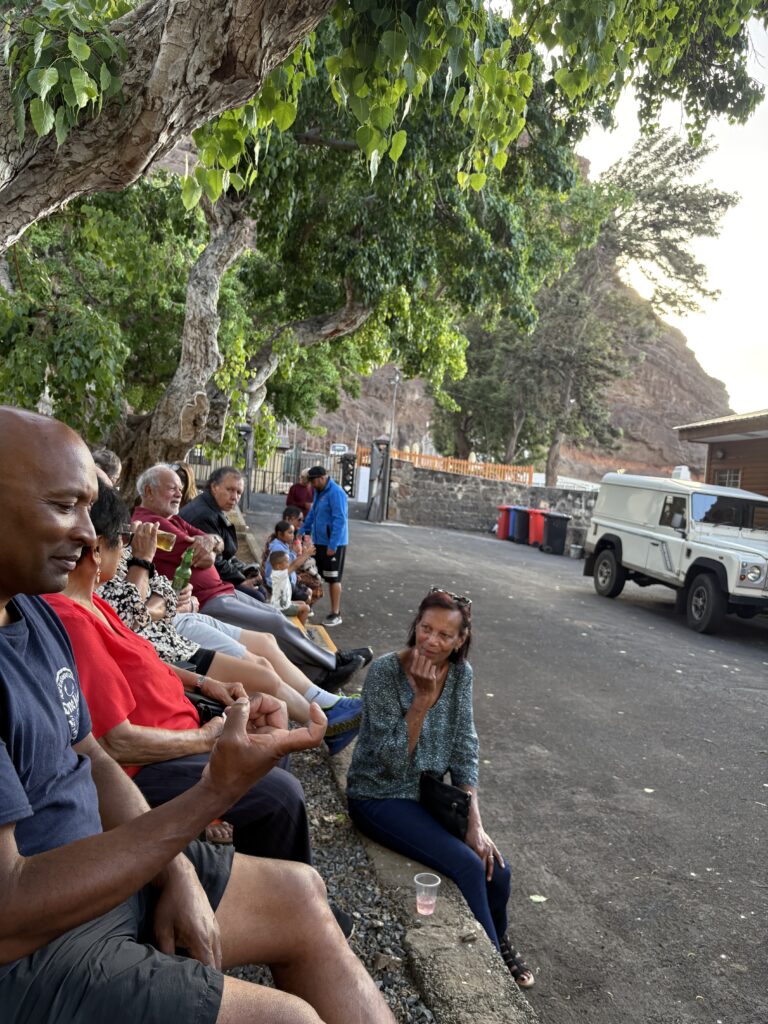
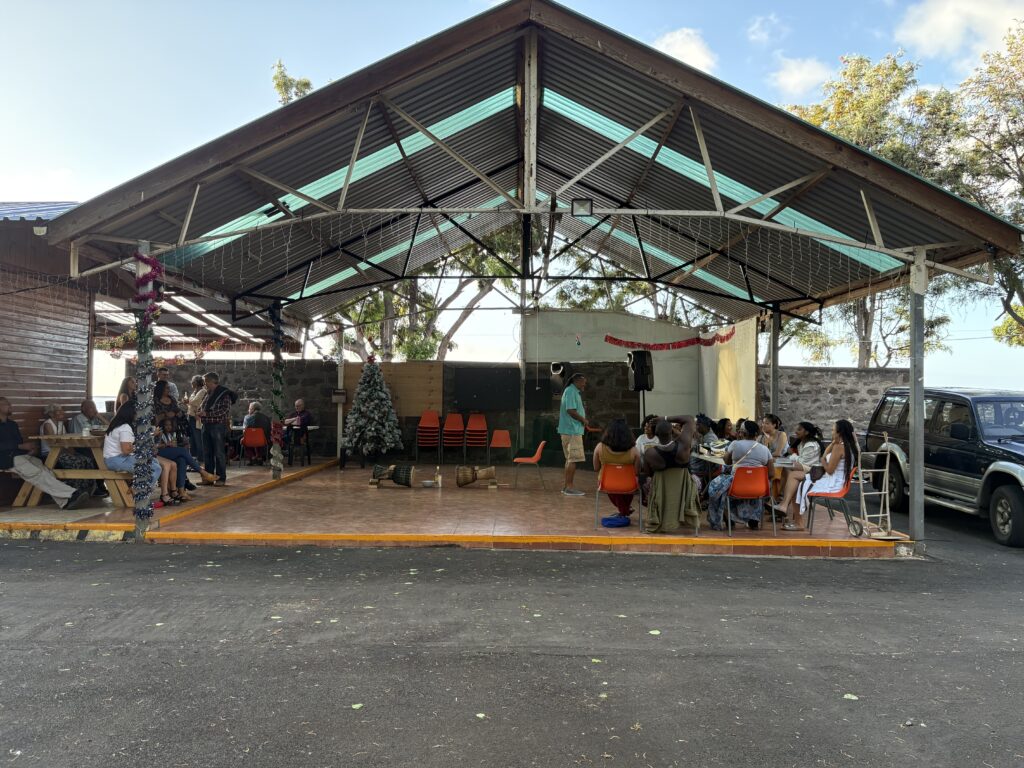
There is only one flight in and out of the island each week, which means that all the guests at the Mantis Hotel usually end up getting to know each other. Some of these included two professors and researchers of Anthropology from the University of Pennsylvania; one professor from the University of the Western Cape; their respective students (around twelve of them); and a group of people from Jamaica, who were accompanying them all. I later found out that the group of musicians and dancers from Jamaica were on the island to honour their ancestors and to perform Kumina, a ritual dance handed down from generation to generation in Jamaica, believed to date back to the mid 1800s.
On meeting and speaking with one of the professors from Pennsylvania, I discovered their reason for being on the island and this was the beginning of my lessons in a field of history and the past thus far entirely unknown to me; the Transatlantic Slave Trade. My knowledge was shamefully non-exisitent and I am eternally grateful that I got to meet this professor, and for her invaluable lecture in the museum; otherwise I would not ever have known.
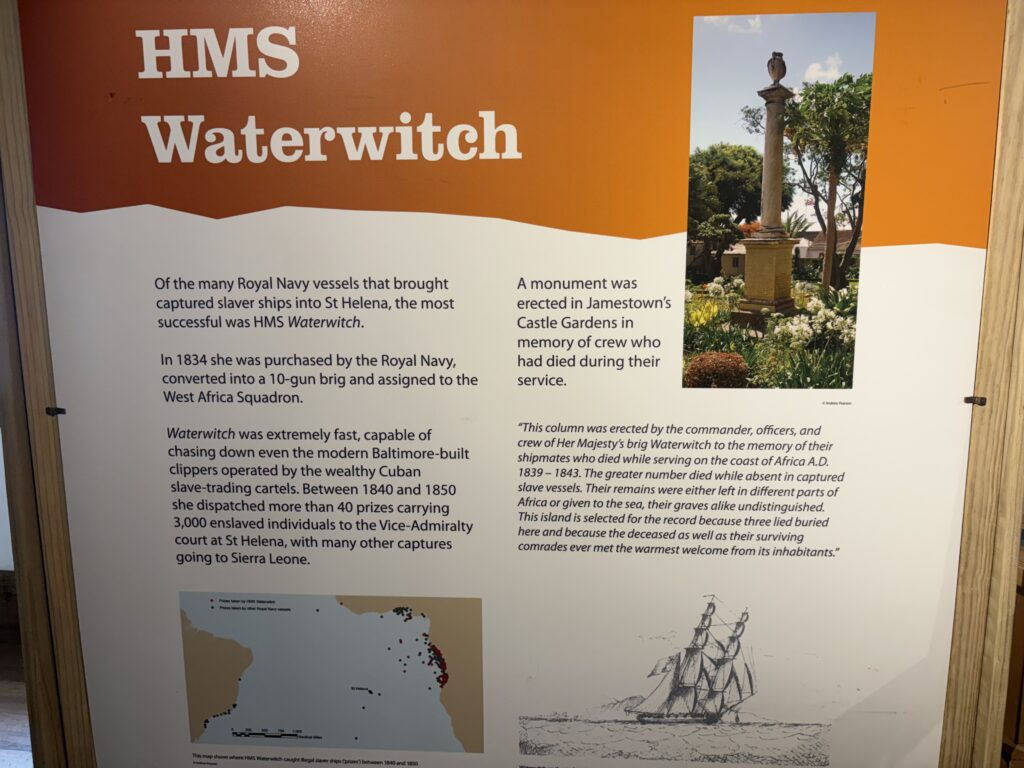
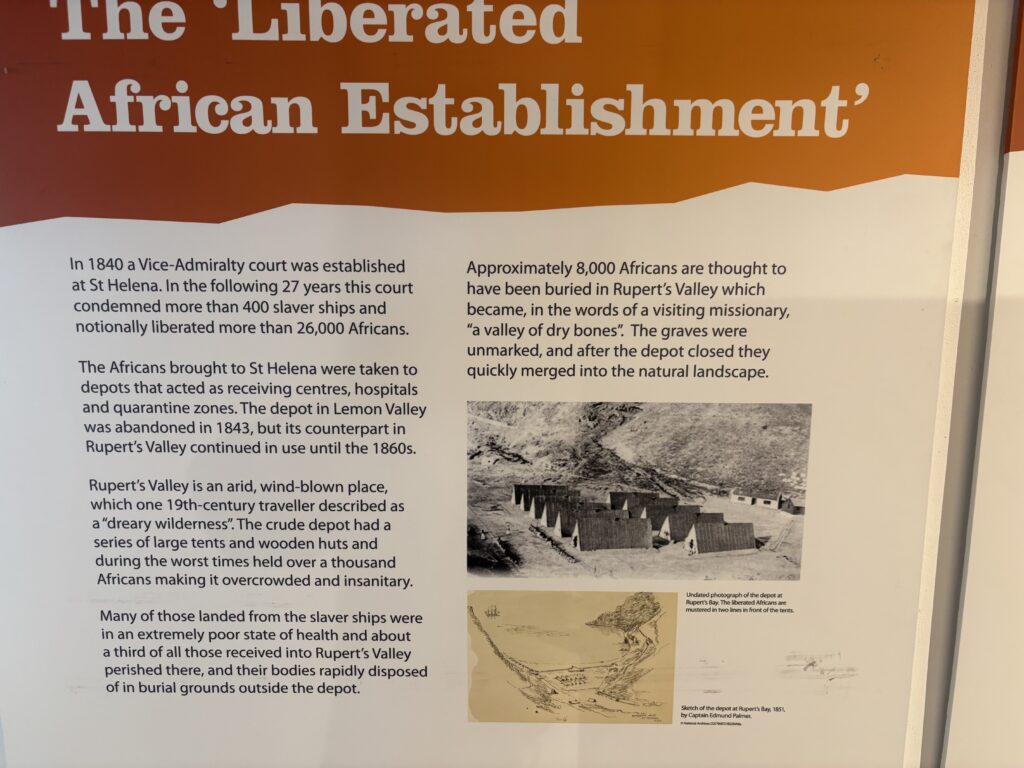
St Helena played a key role in the transatlantic slave trade and its abolition. In the mid to late eighteen hundreds, more than 25’000 “liberated Africans” were placed on the island, “rescued” from slave ships heading to Brazil and Cuba, in an effort by the British to play their part in the elimination of the slave trade. A vice admiralty court was in operation in St Helena at the time, for a period of around thirty years, that condemned slave ships and “liberated” the slaves.
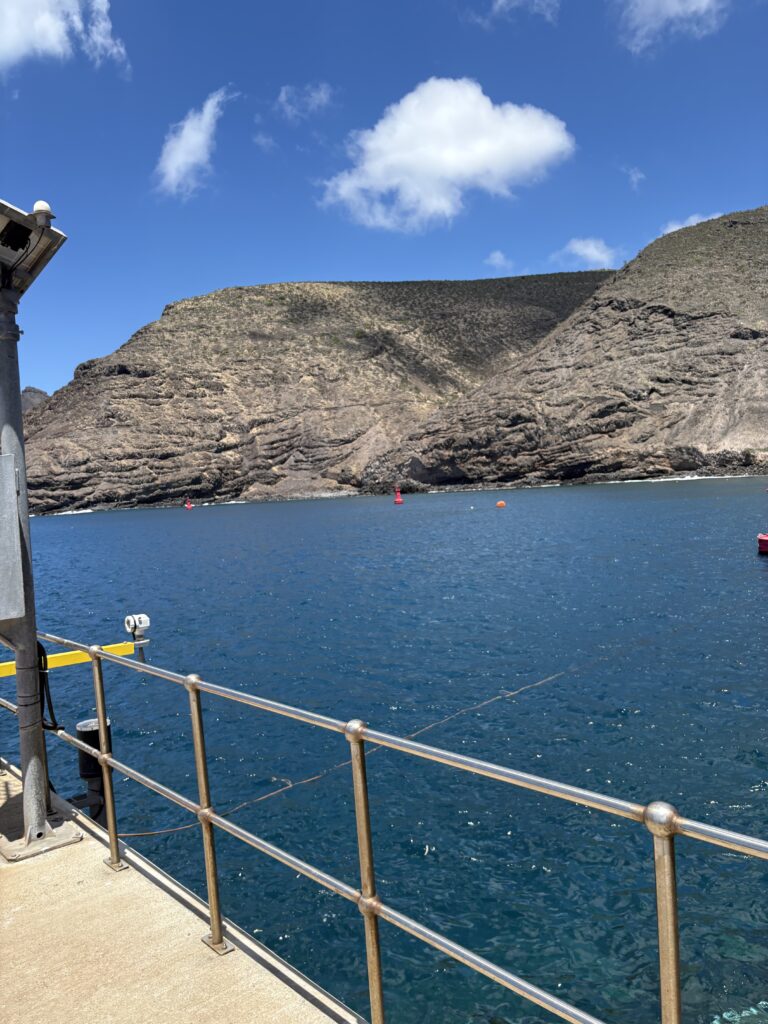
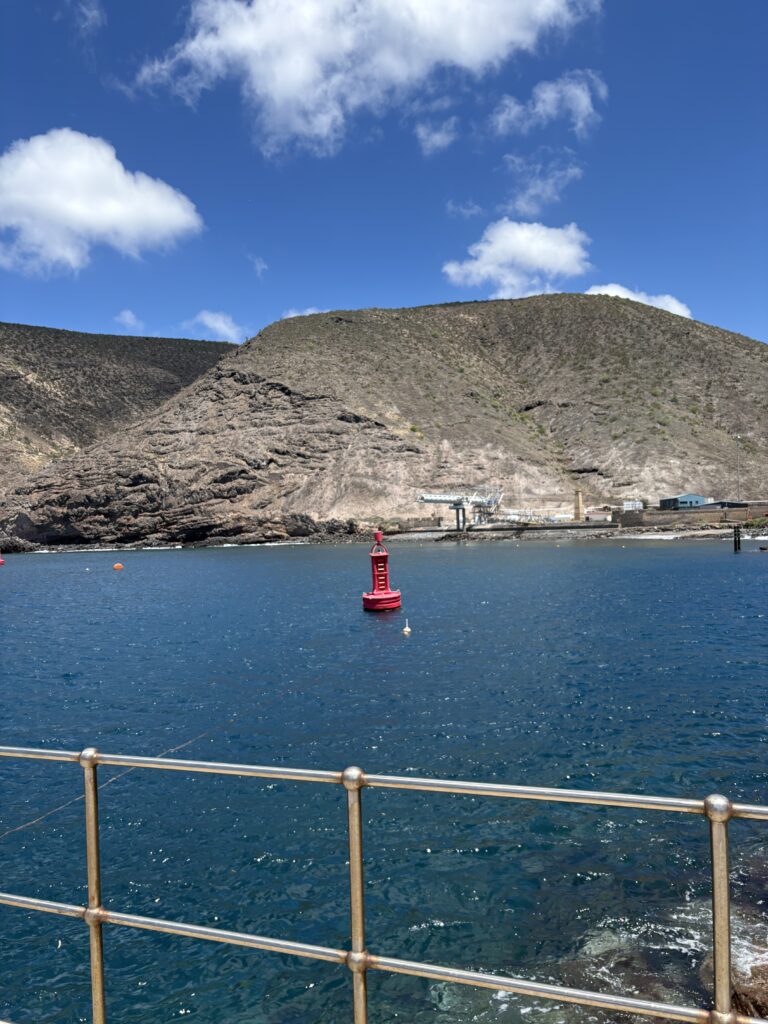
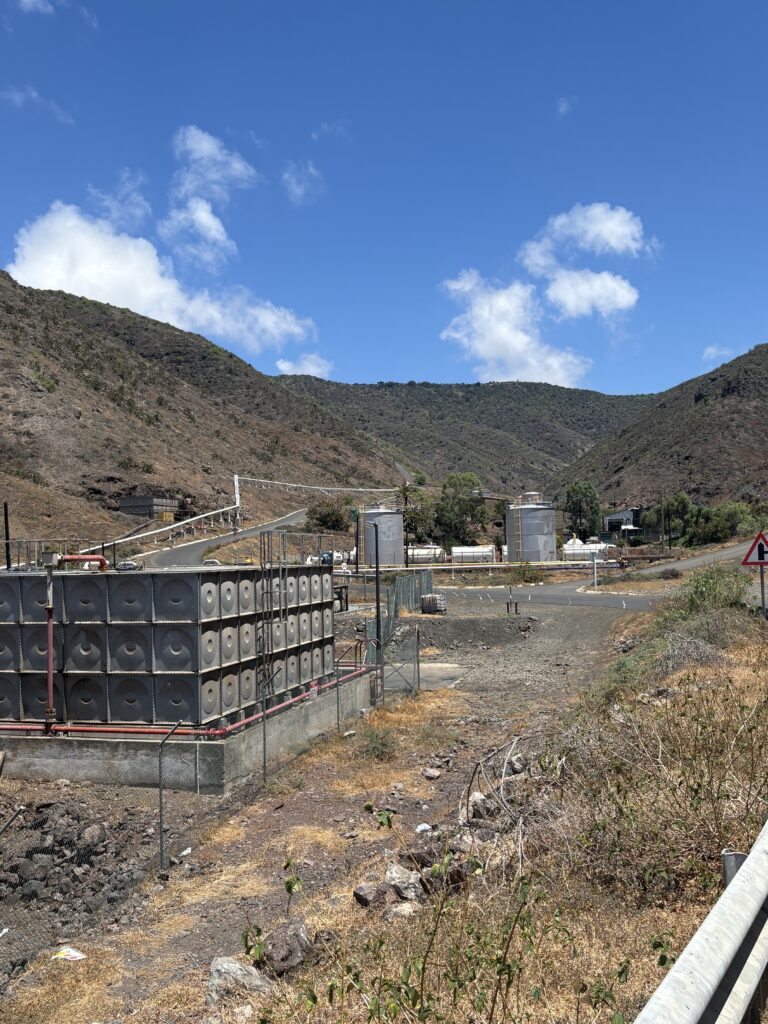
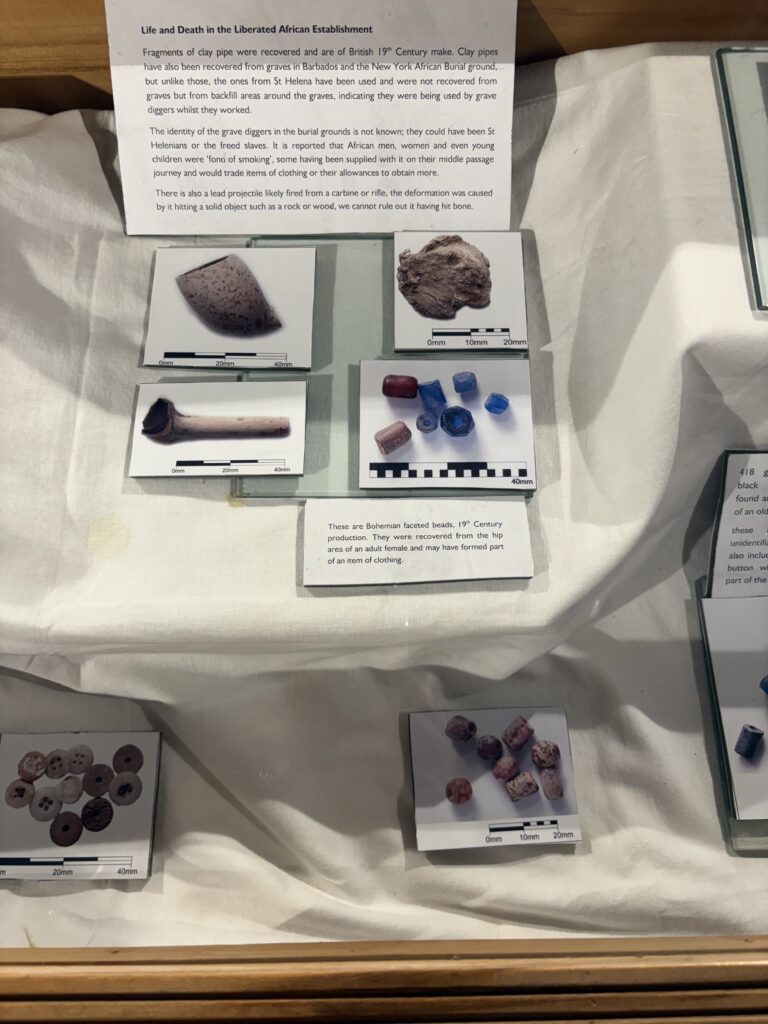
The vast majority of the “liberated” Africans were interred in encampments in Rupert’s Valley, a dreary, arid, wind-blown, remote by virtue of inaccessibility, valley. It is believed that over eight thousand “liberated Africans” are buried in unmarked graves, having died from disease, starvation and neglect.
In the mid 2000’s, while excavation and engineering was being initiated in the valley to create road access to the first airstrip, human remains were found. Archaeologists from abroad were summoned, and further excavations took place. Three hundred and twenty five human remains were discovered and many thousands more are believed to be resting in the valley.
In 2015, the Saints were asked for their opinions on what should happen to the remains that were discovered. The overwhelming majority wanted reburial, in Ruperts, believing that it was important to be as close as possible to where they were originally found.
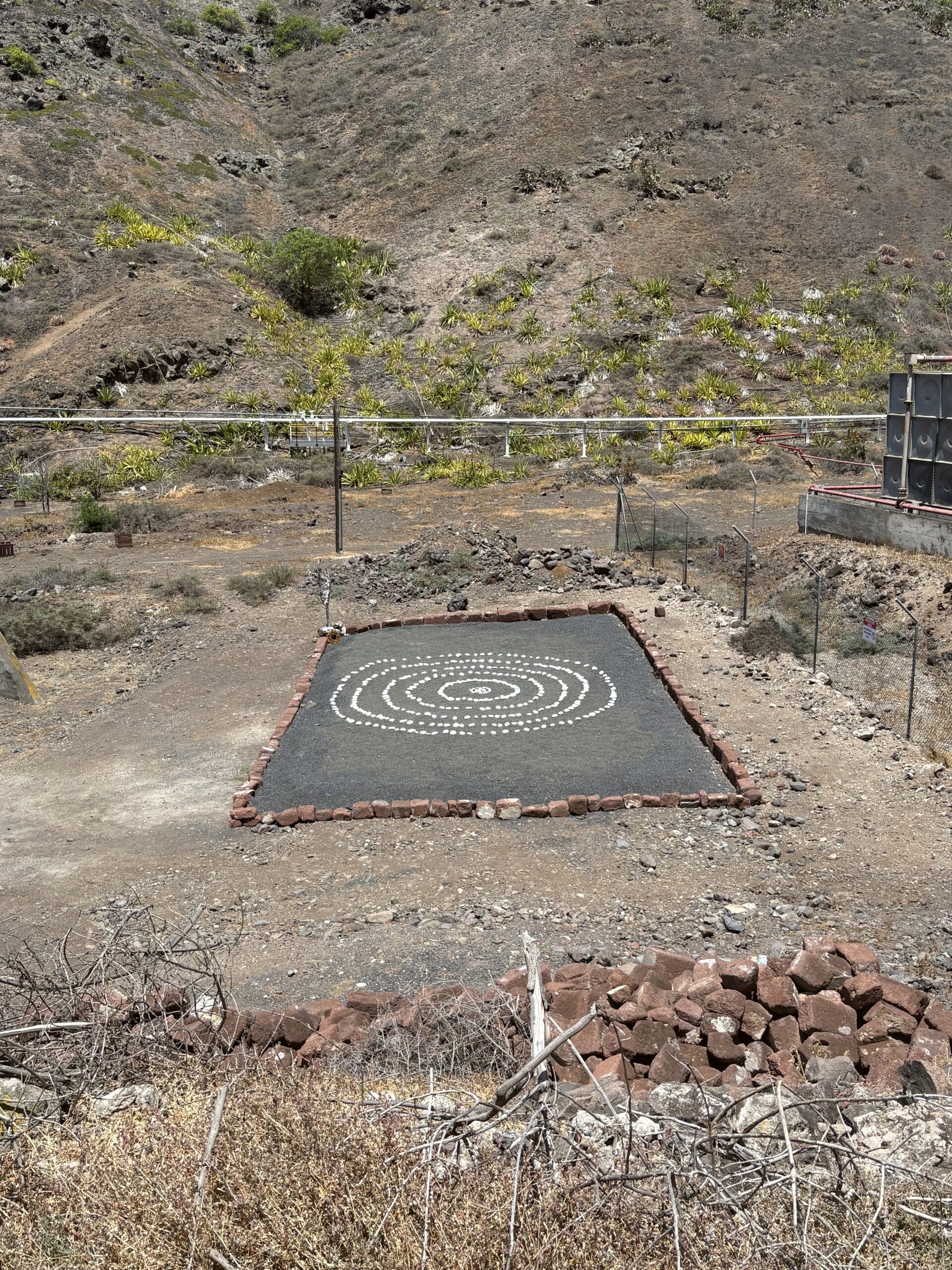
In 2022, the reburial ceremony was held. The memorial site is marked by a ring of stones.
DNA research indicates that the “liberated” slaves originated from Angola, the Congo and Gabon.
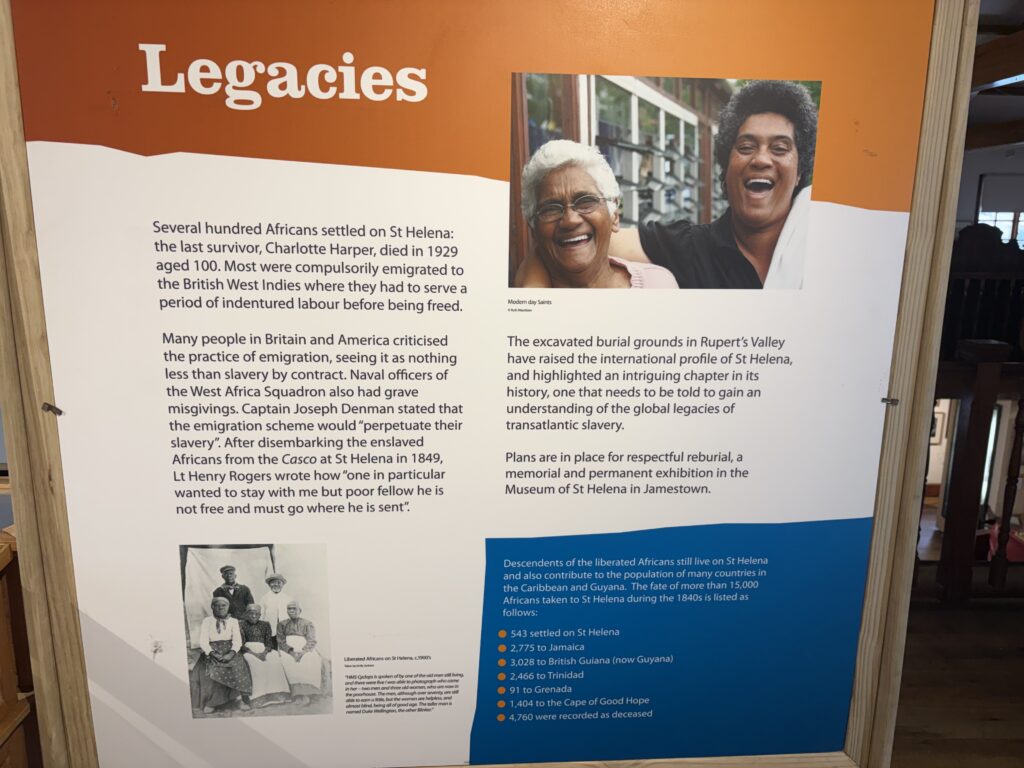
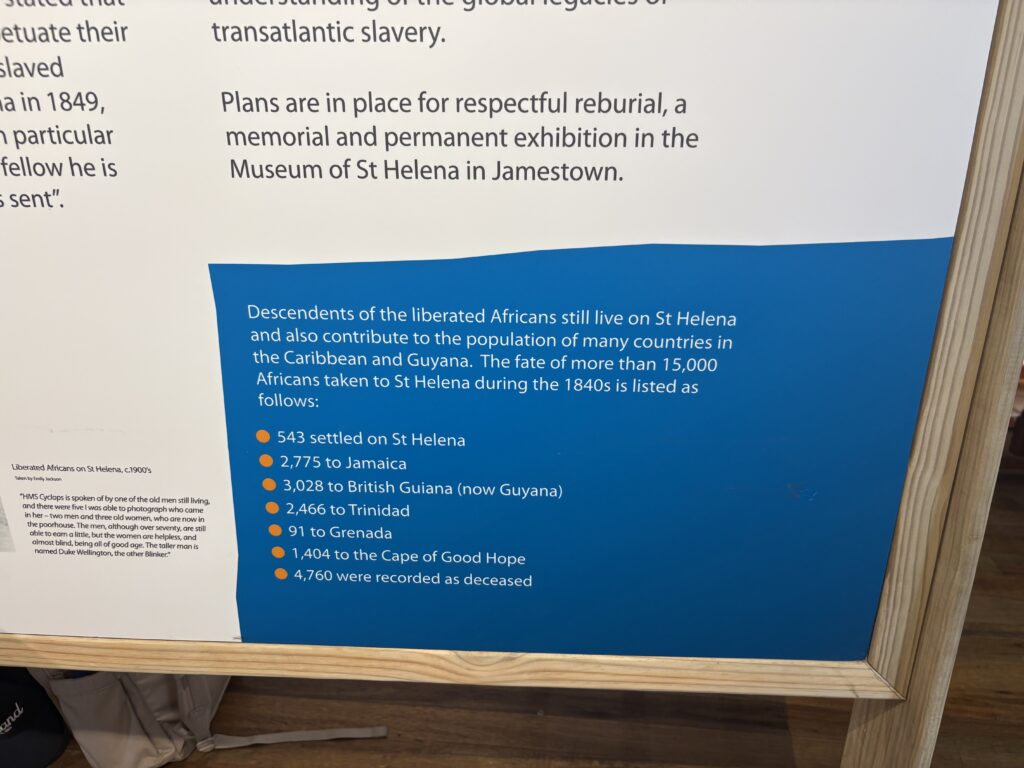
From the twenty five thousand liberated, most were sent to the Caribbean or America for a life of indentured labour, some remained on the island and only very few were returned to Africa. Most of the Portuguese slavers were put on trial on St Helena.
Over three thousand were taken to Jamaica.
Dates: January 2026.

Leave a Reply