Tag: St Helena
-
St Helena, Learning and Lessons in History
There is only one flight in and out of the island each week, which means that all the guests at the Mantis Hotel usually end up getting to know each other. Some of these included two professors and researchers of Anthropology from the University of Pennsylvania; one professor from the University of the Western Cape; their respective students (around twelve of them); and a group of people from Jamaica, who were accompanying them all. I later found out that the group of musicians and dancers from Jamaica were on the island to honour their ancestors and to perform Kumina, a ritual dance handed down from generation to generation in Jamaica, believed to date back to the mid 1800s.
On meeting and speaking with one of the professors from Pennsylvania, I discovered their reason for being on the island and this was the beginning of my lessons in a field of history and the past thus far entirely unknown to me; the Transatlantic Slave Trade. My knowledge was shamefully non-exisitent and I am eternally grateful that I got to meet this professor, and for her invaluable lecture in the museum; otherwise I would not ever have known.
St Helena played a key role in the transatlantic slave trade and its abolition. In the mid to late eighteen hundreds, more than 25’000 “liberated Africans” were placed on the island, “rescued” from slave ships heading to Brazil and Cuba, in an effort by the British to play their part in the elimination of the slave trade. A vice admiralty court was in operation in St Helena at the time, for a period of around thirty years, that condemned slave ships and “liberated” the slaves.
The vast majority of the “liberated” Africans were interred in encampments in Rupert’s Valley, a dreary, arid, wind-blown, remote by virtue of inaccessibility, valley. It is believed that over eight thousand “liberated Africans” are buried in unmarked graves, having died from disease, starvation and neglect.
In the mid 2000’s, while excavation and engineering was being initiated in the valley to create road access to the first airstrip, human remains were found. Archaeologists from abroad were summoned, and further excavations took place. Three hundred and twenty five human remains were discovered and many thousands more are believed to be resting in the valley.
In 2015, the Saints were asked for their opinions on what should happen to the remains that were discovered. The overwhelming majority wanted reburial, in Ruperts, believing that it was important to be as close as possible to where they were originally found.
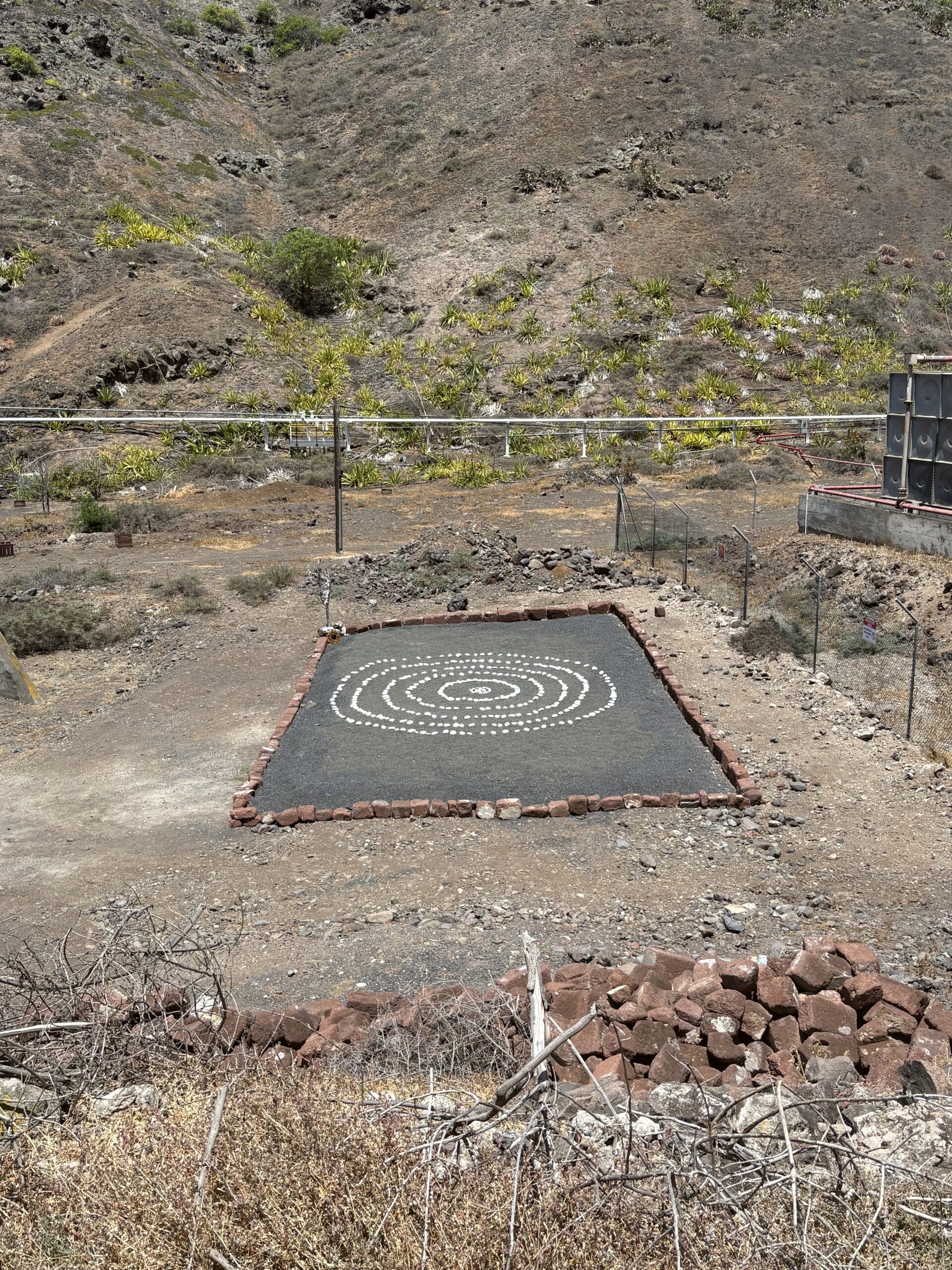
In 2022, the reburial ceremony was held. The memorial site is marked by a ring of stones.
DNA research indicates that the “liberated” slaves originated from Angola, the Congo and Gabon.
From the twenty five thousand liberated, most were sent to the Caribbean or America for a life of indentured labour, some remained on the island and only very few were returned to Africa. Most of the Portuguese slavers were put on trial on St Helena.
Over three thousand were taken to Jamaica.
Dates: January 2026.
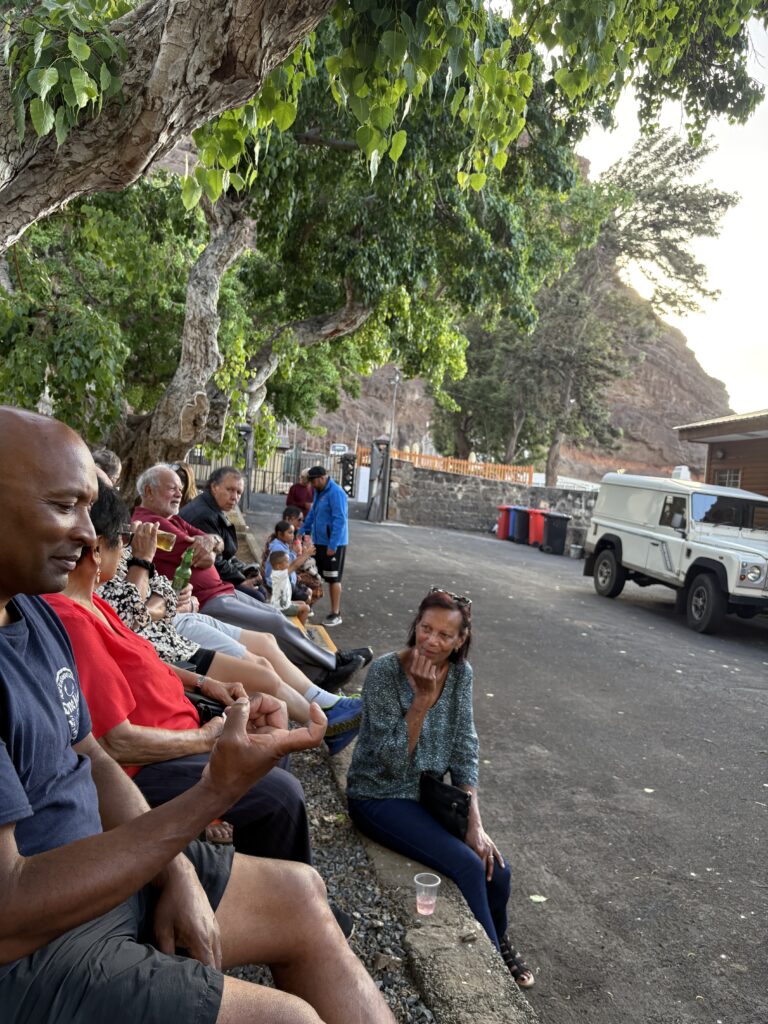
Saints and visitors getting ready to watch Kumina 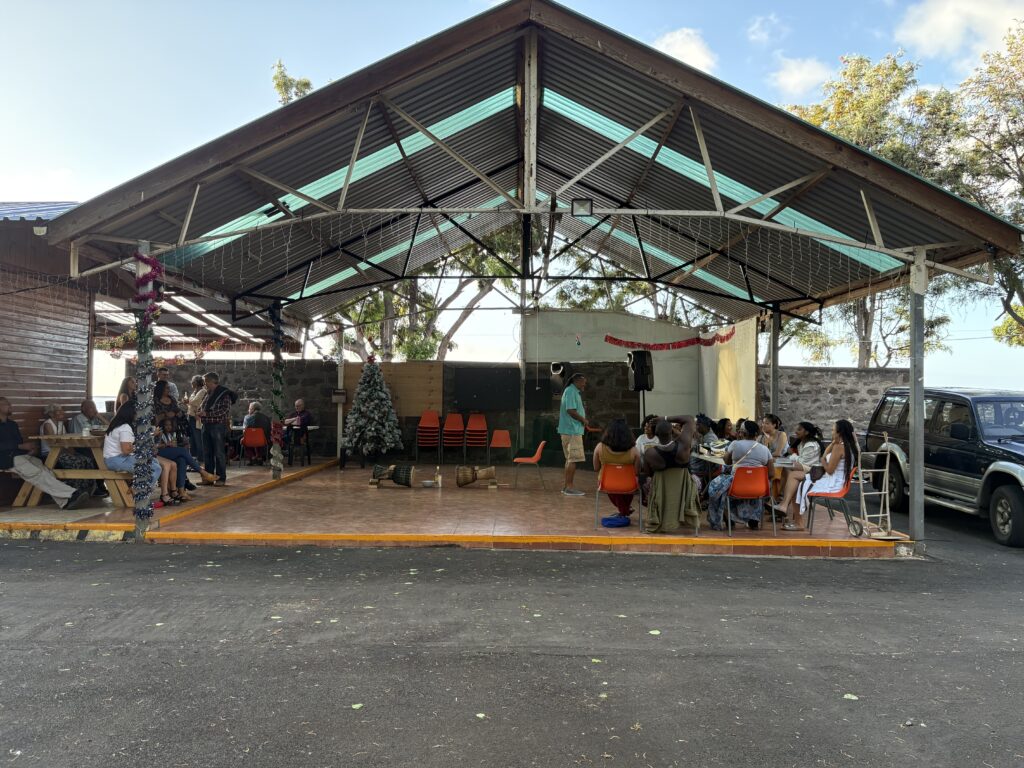
Getting ready for Kumina 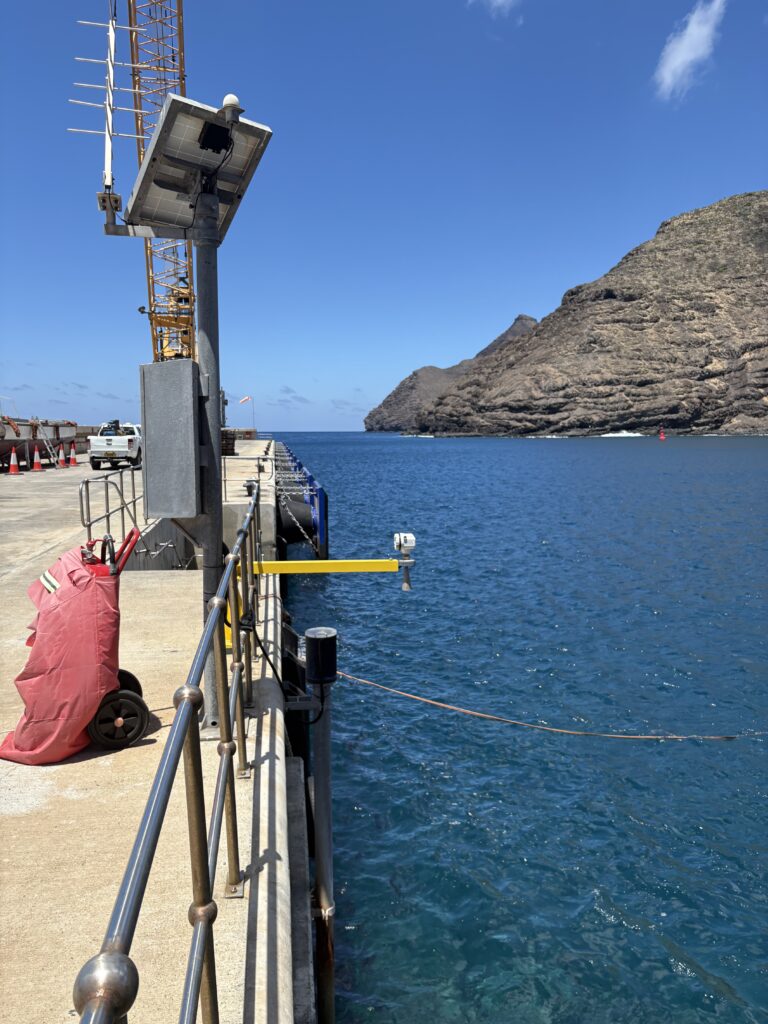
The newly constructed wharf at Ruperts Bay 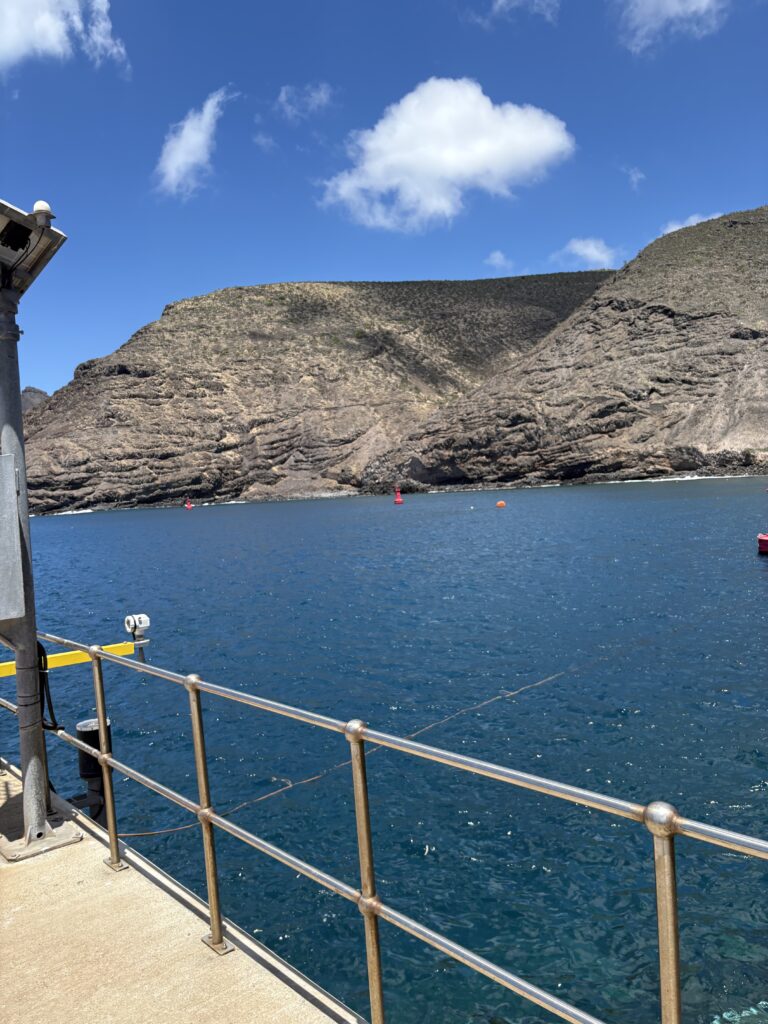
The clear waters of Ruperts Bay 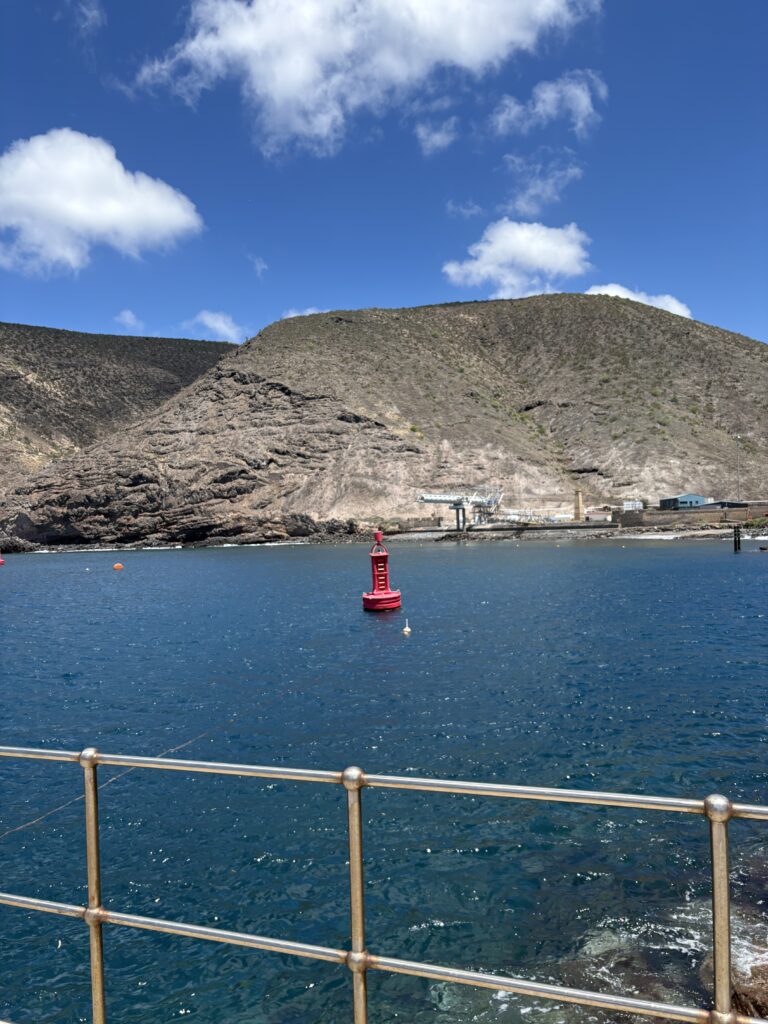
Ruperts Bay 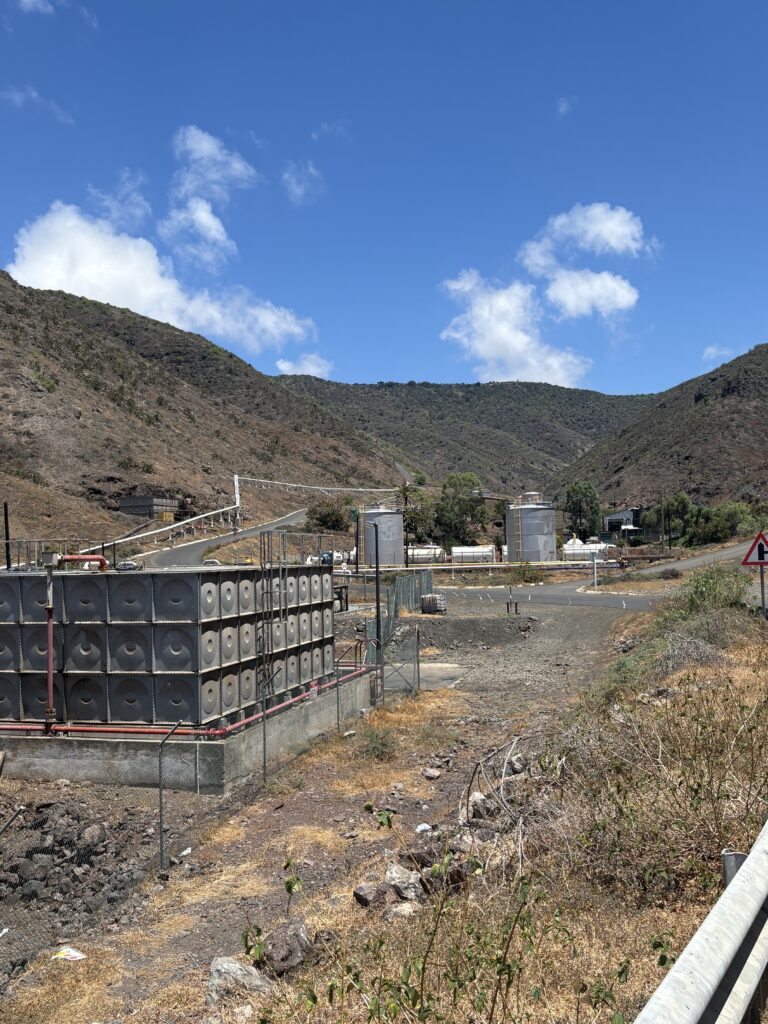
The pipeline from Ruperts Bay leading to the airport 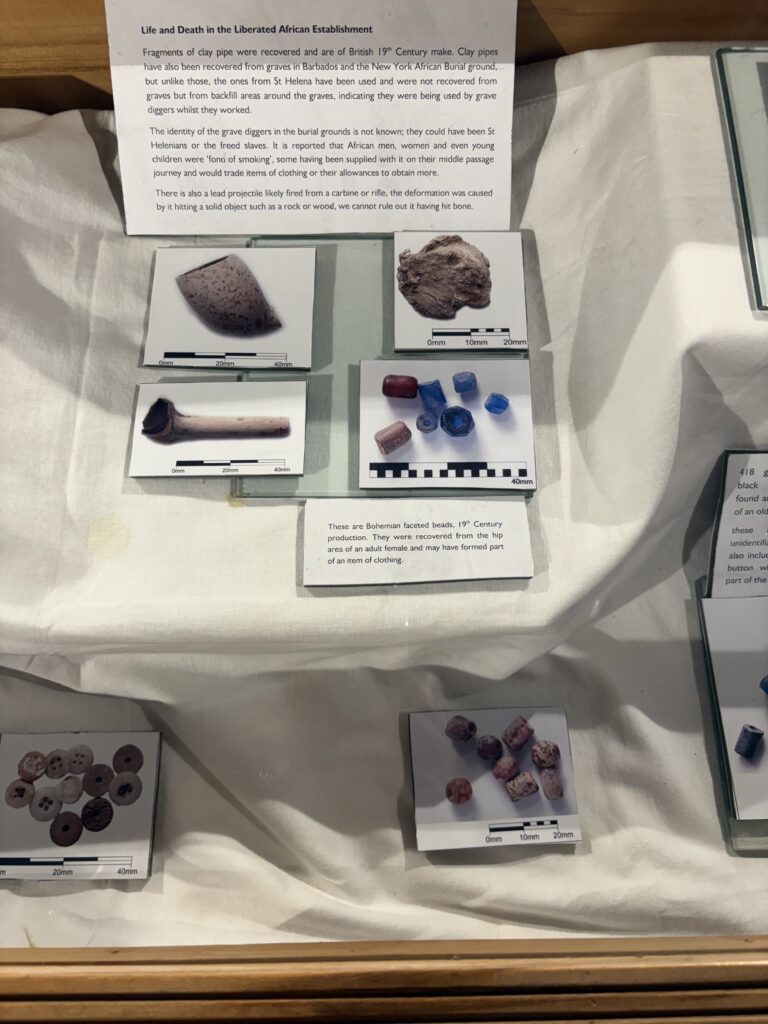
Information from the Museum 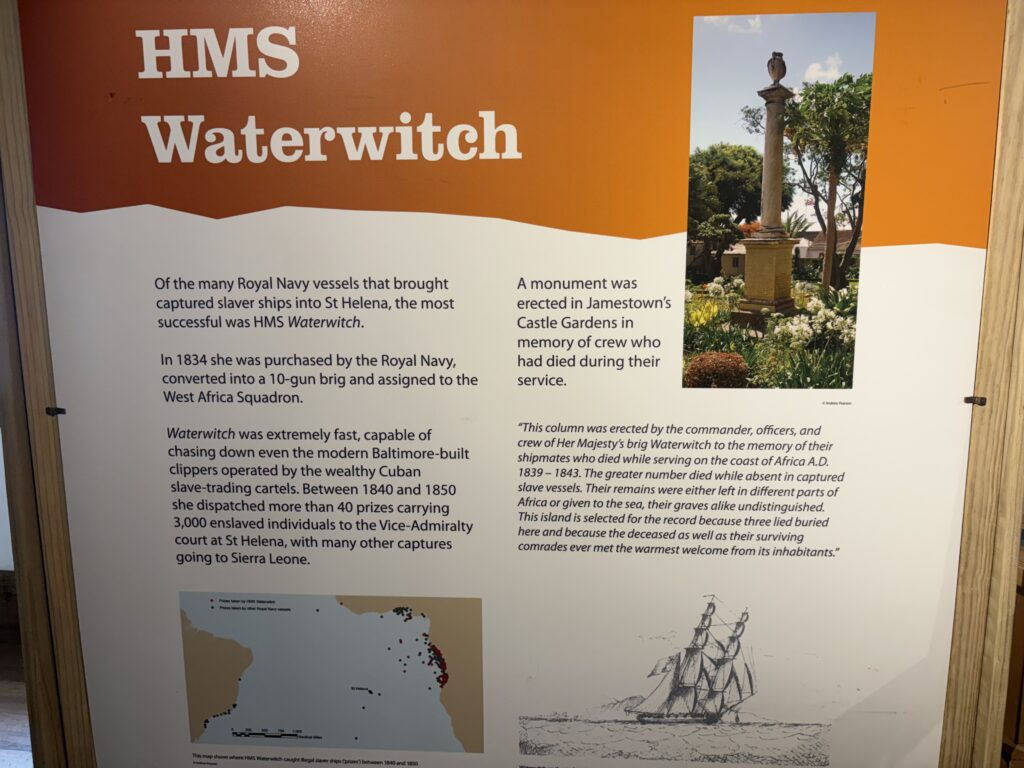
Info from the Museum 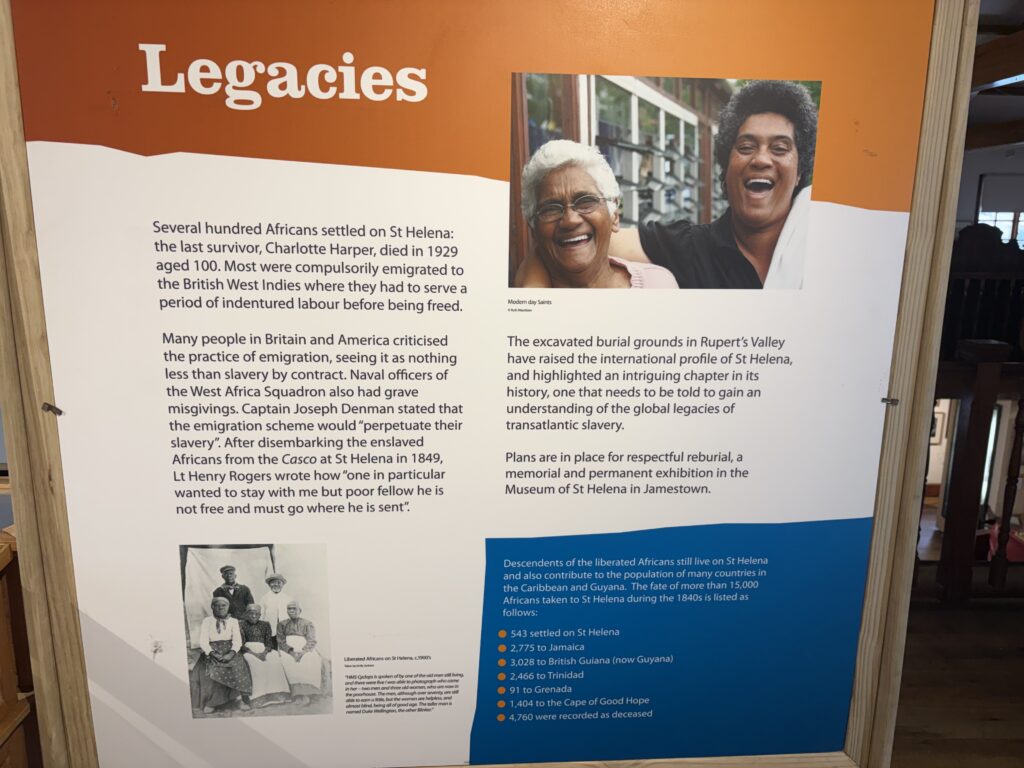
Information from the Museum 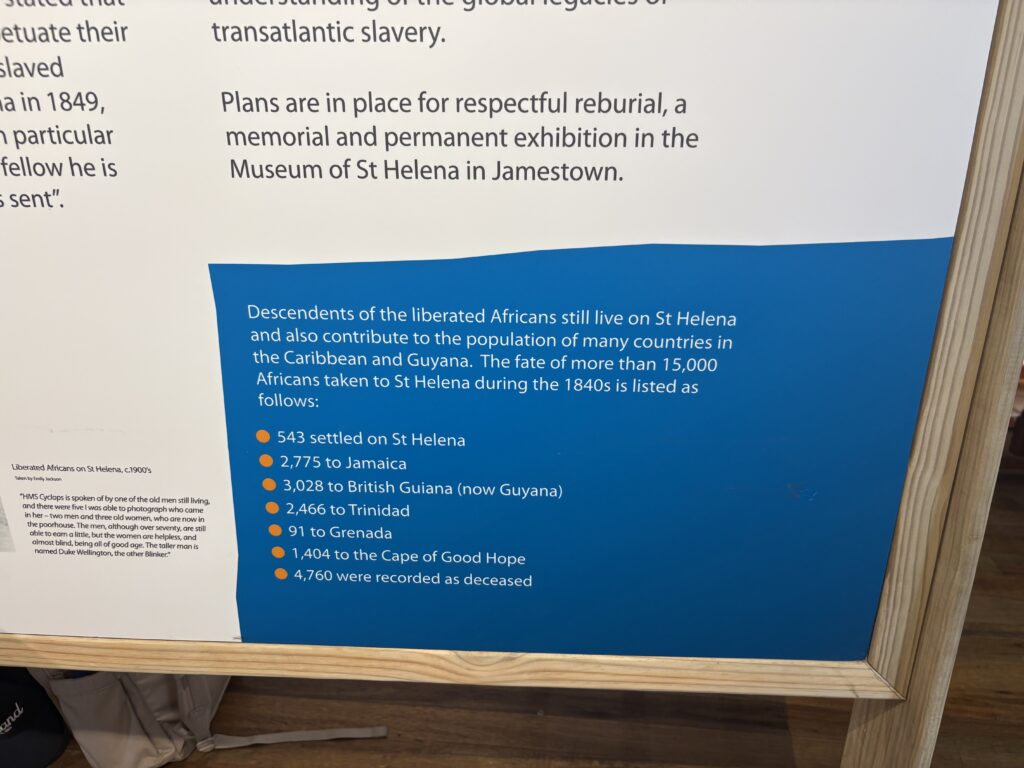
Information from the Museum 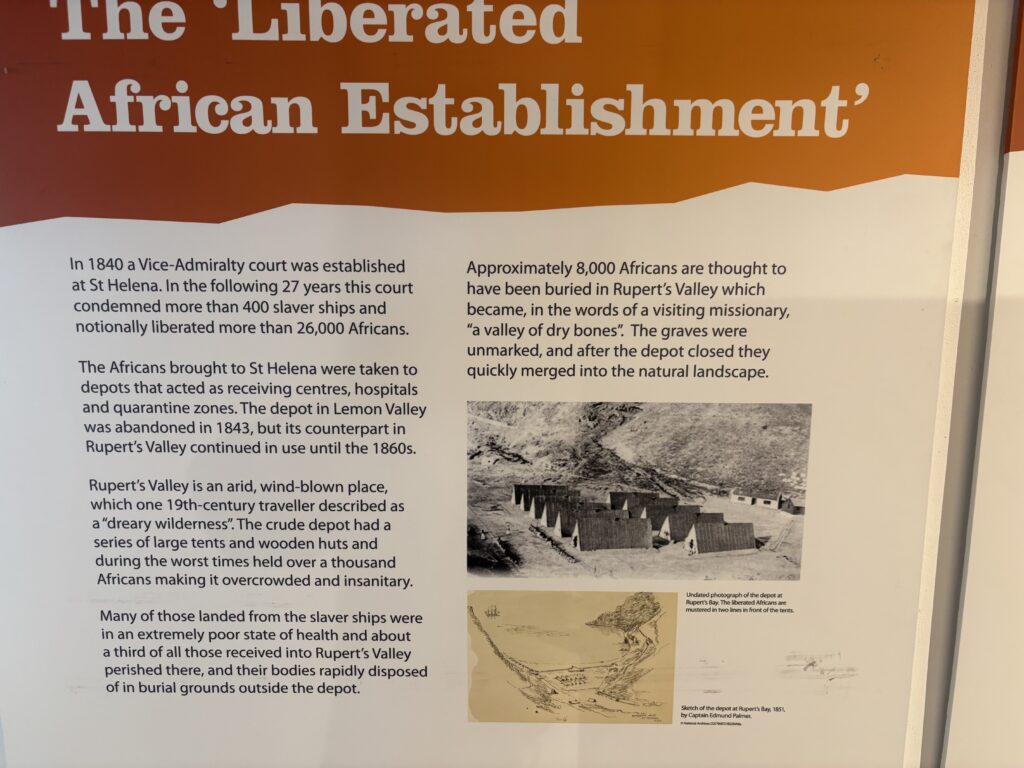
Information from the Museum -
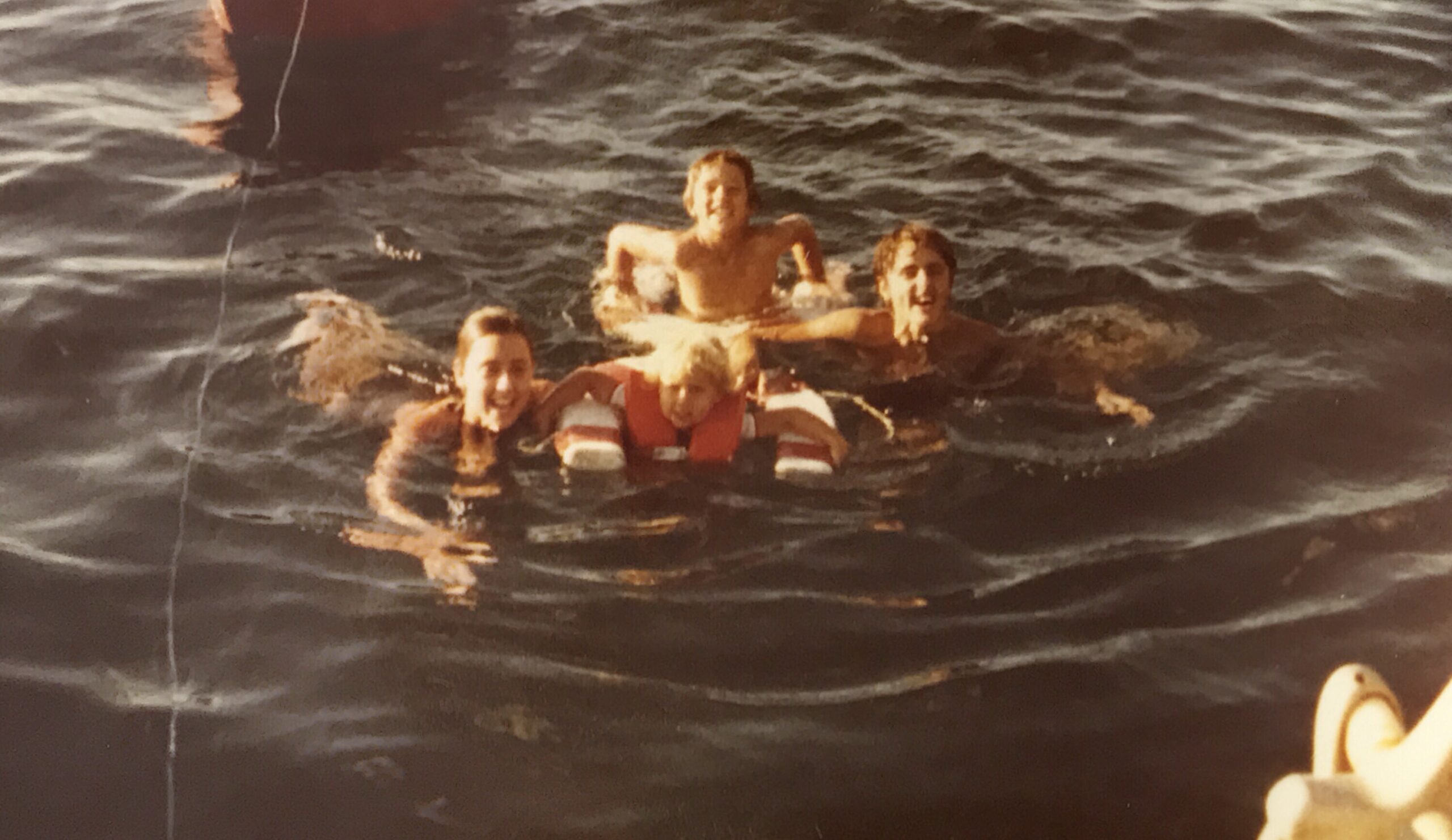
St Helena, Swimming in the Bay
It was late summer when we were in St Helena in 1982, so it was hot and warm. The sea, though, was always very cold, like the South Atlantic typically is. Me and my oldest brother were good swimmers; growing up and going to school in South Africa had taught us that. Swimming is a part of life; compulsory swimming lessons at school in olympic sized pools; taking part in swimming competitions representing your house (mine was Crane and we wore the colour yellow); pools at home and of course, the waves of the Indian Ocean surf at North Beach or Umhlanga.
While living on Scally, we would love to jump overboard into the sea and swim around her. Often, it would be the only way to cool off, as well as to freshen up. Water was rationed on board and fresh water showers non-existent. The water in the bay of Jamestown is crystal clean and entirely unpolluted.
We both have the same distinct memory. Of being in the sea near Scally in Jamestown Bay, swimming and having fun, or maybe we were cooling off and getting washed. Suddenly, while we were diving under, the sea above our heads went unusually and quickly dark. Above us were large rays. Not knowing whether they were dangerous or not, we resurfaced quietly, and slowly without splashing, as silently as possible swam back to get on board.
We knew enough about the potential dangers of visible and invisible marine life. In South Africa, there were shark nets all along the beaches, as well as a famous shark research centre. We’re talking great white sharks. We knew to take great care in the waves of Durban. Not too far away from where we lived, there were crocodiles and hippos patrolling rivers. While on the way to St Helena, at sea, we had been followed by hammerheads in our wake for a few days. We had seen many dolphins jumping and racing us along the bow. So we knew there and then, with the rays swimming above us, to give them the respect and distance they wanted from humans and get out of the water fast.
Now, on my most recent visit in 2026, I dropped into the Marine Research Centre on the wharf to enquire. Some very helpful young researchers working there were were very open and willing to help. They confirmed our memory of these creatures. And named them for me…….. Chilean Devil Rays.
Dates: January 2026 and March 1982
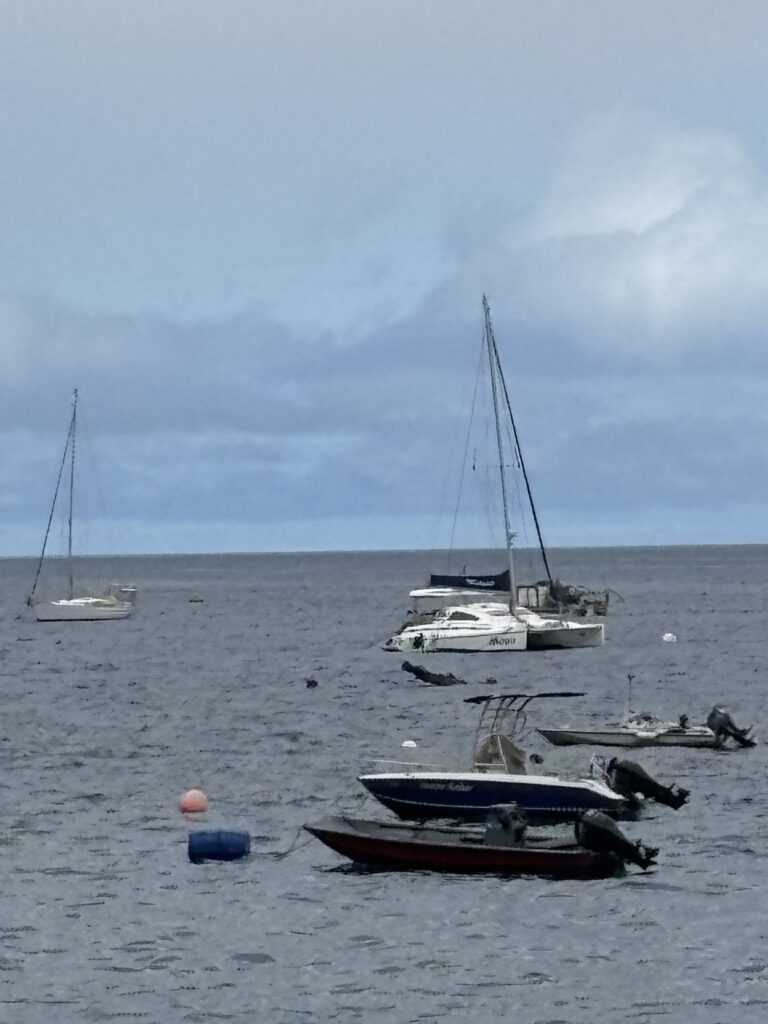
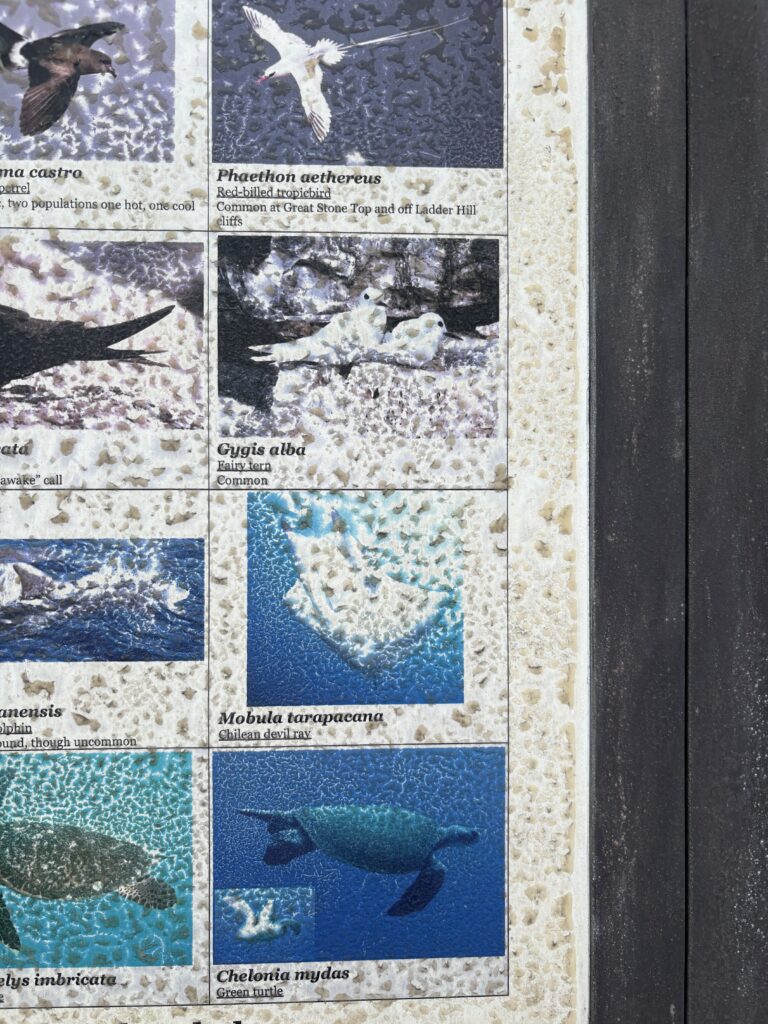
More marine life 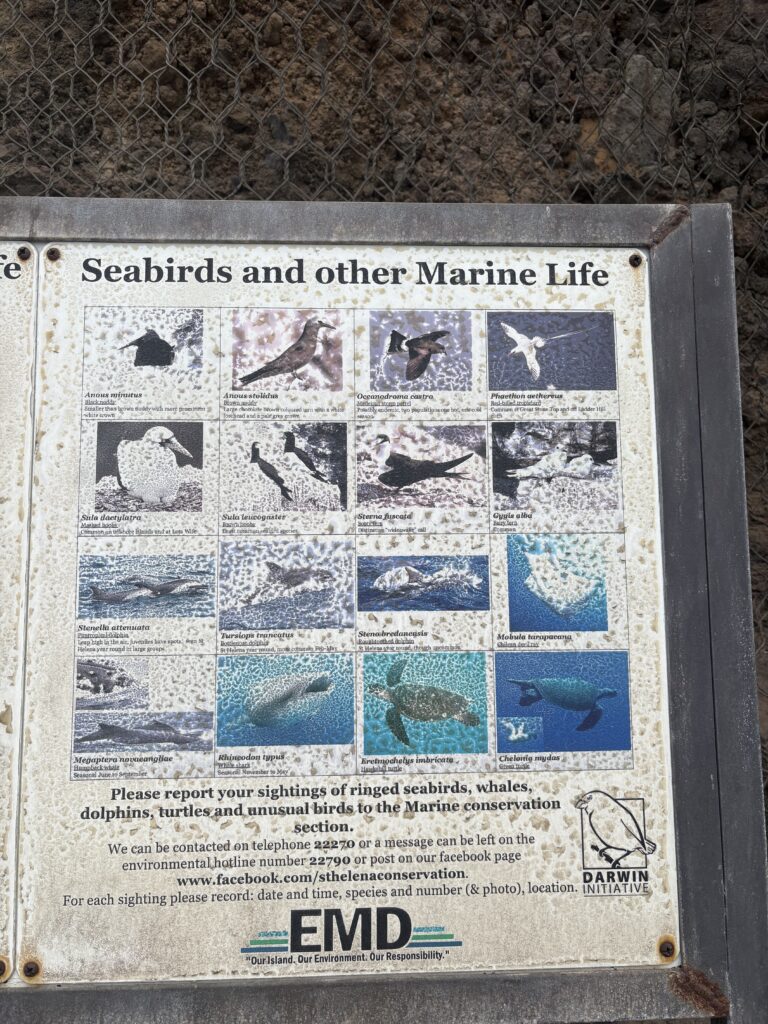
Marine inhabitants and visitors to the island -
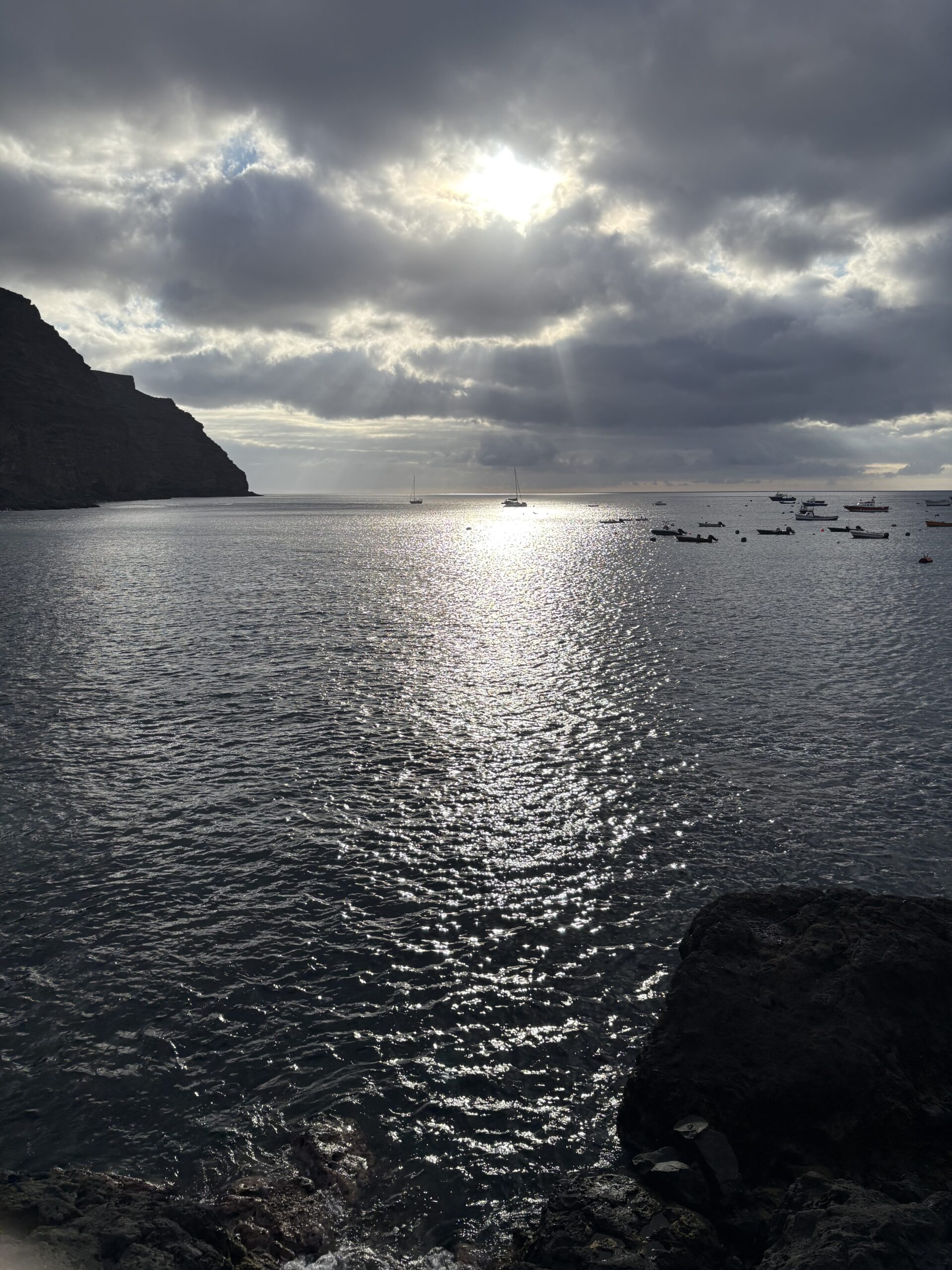
St Helena, and the Bay
I spent many hours walking along the wharf in Jamestown from one end to the other and back again. I stared out over the bay at the fishing boats, yachts, ferries, exposed wrecks and the ocean beyond. I stared down at the turbluent ocean battering the walls of the wharf and the rocks closeby. I stared down the ladders we would have climbed up from the Wag, carefully and calulatingly counting the surge to avoid being pounded against the wall. I watched the ferryman. I watched the fishermen. I watched how the ropes had to be grabbed to ensure safe landing onshore. I stared out at the yachts, much larger than Scally, anchored in the bay, imagining their crew all having dinner onboard, like we did.
The waters in the bay are dark and turbulent. Rough and capricious. Unforgiving. Predictable only in that they are dangerous, deep and not to be underestimated. There are many wrecks and it’s a favourite spot for divers. The ocean is extremely cold and unwelcoming, although people do swim. We did, in 1982. This time, in 2026, I was not brave enough. Maybe if the rest of Scally’s crew had been there, we would have dared.
This bay was our home for around two months in 1982. Each day, we would row the Wag to the shore, and back. We slept onboard to the sound of the waves slapping the side of Scally. It was warm and cosy down below. Going to shore was always an adventure. We had to count the swell, carefully, and each one of us would grab the ropes, or the railings of the steps, and jump ashore. The others would disappear with the receeding wave and wait for the next swell to jump. My youngest brother, aged two, was always carefully gripped in one of our arms, and he knew to hang on tightly. The crew member who had him only had one free arm to grab hold. The last to jump ashore had to make sure that Wag’s painter was with them, otherwise there would be no returning to Scally.
Dates: Early January 2026
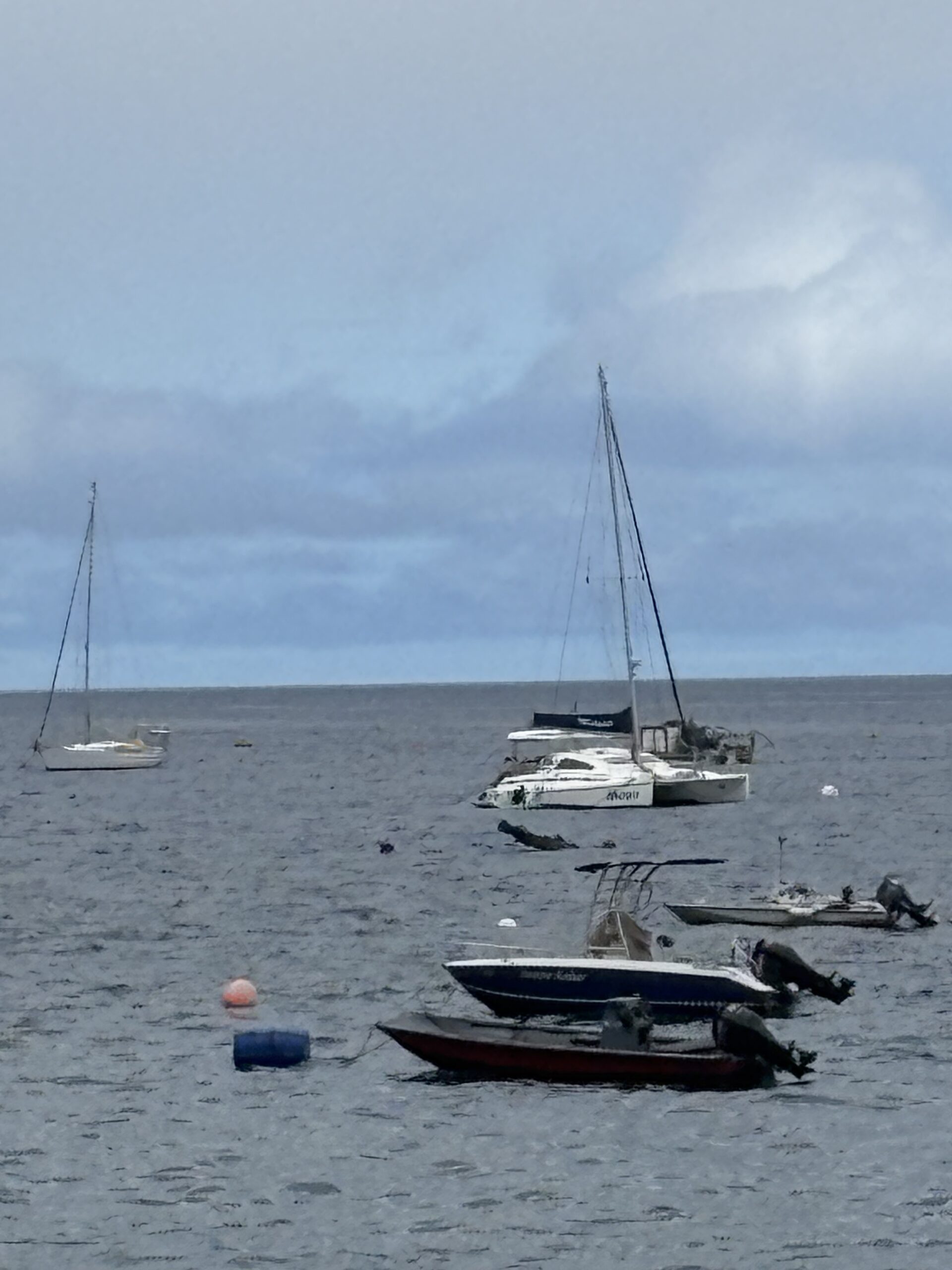
Spot the wreck 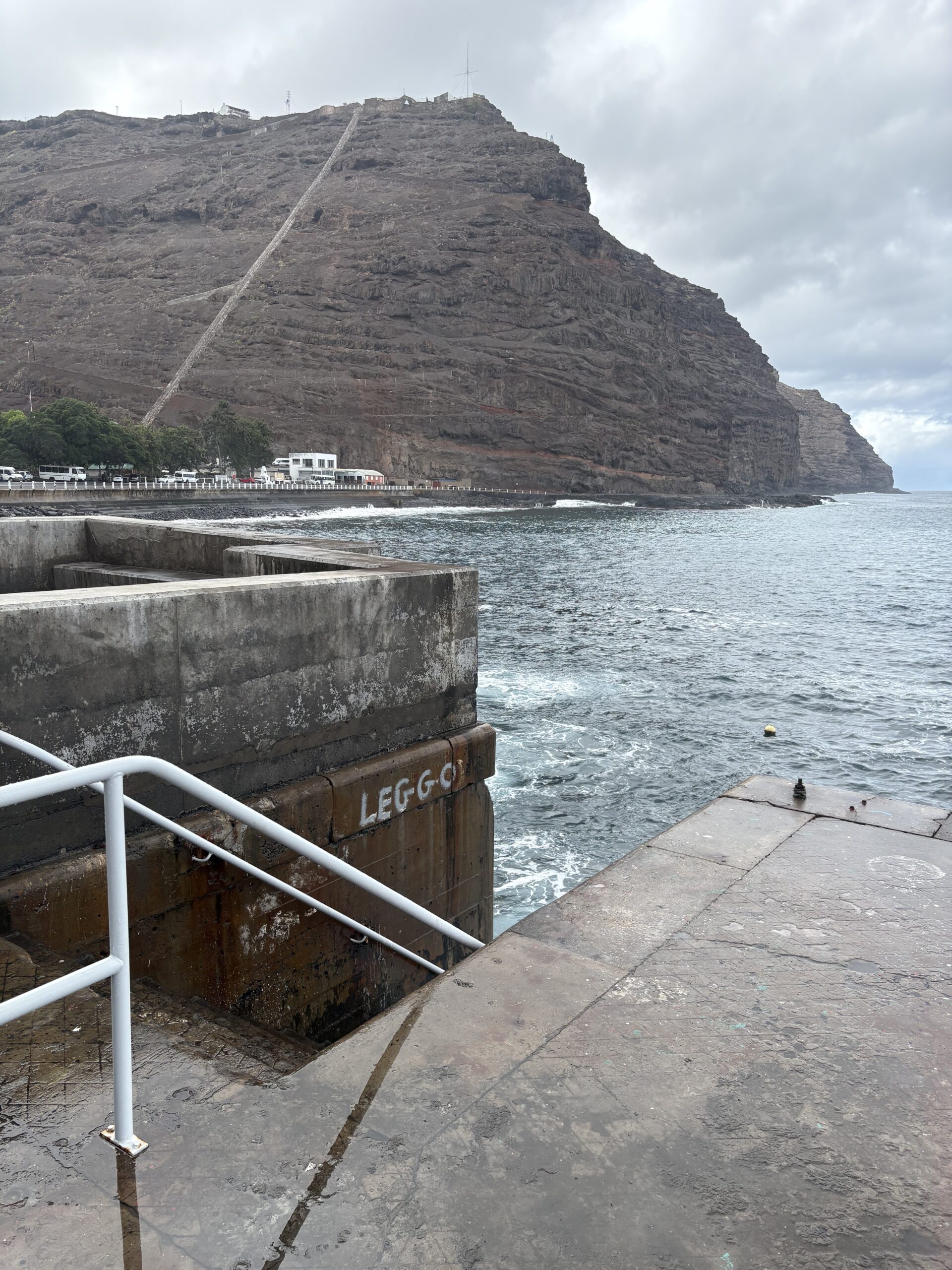
Steps to get onshore 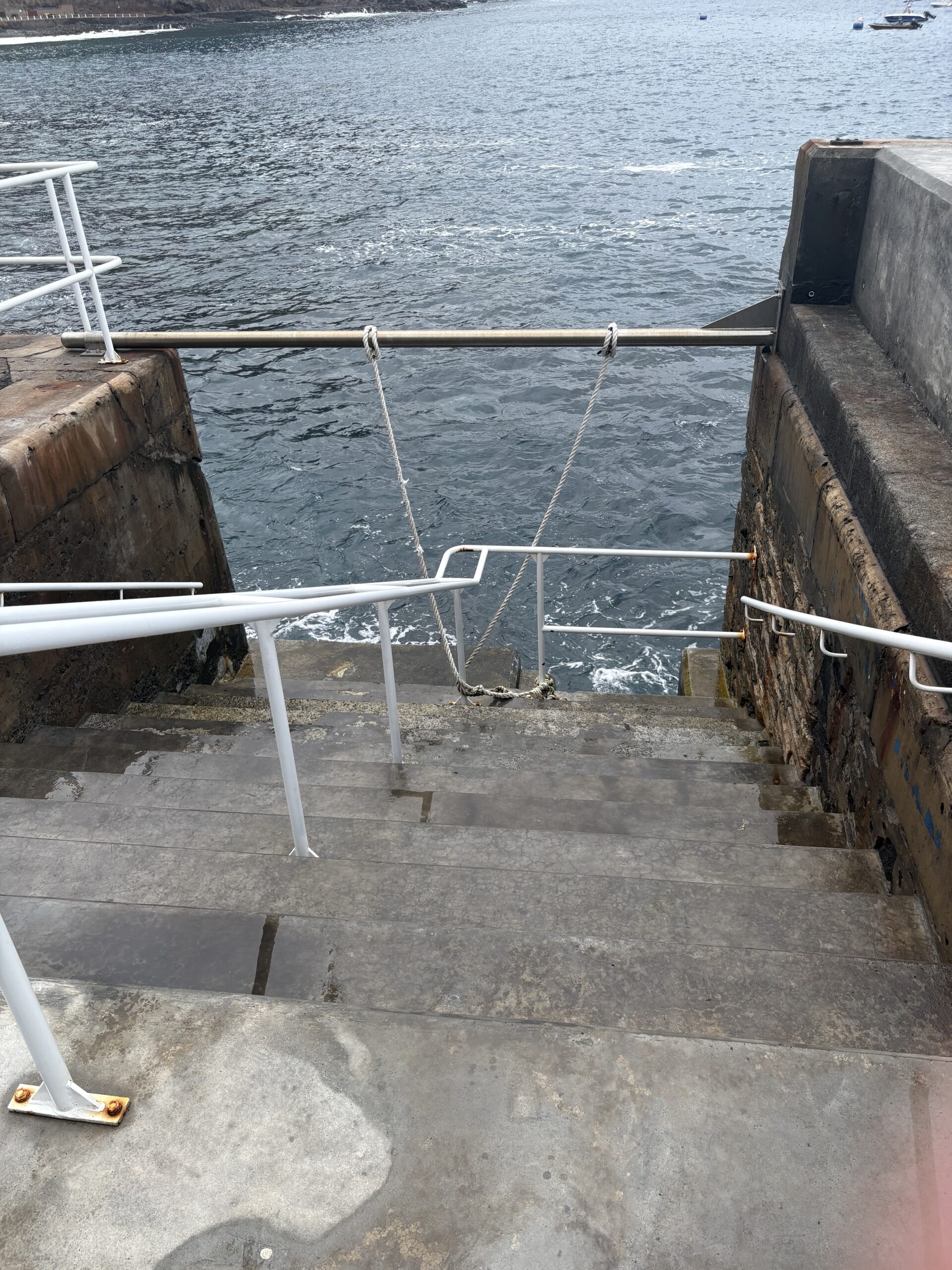
The steps and ropes to get onshore. 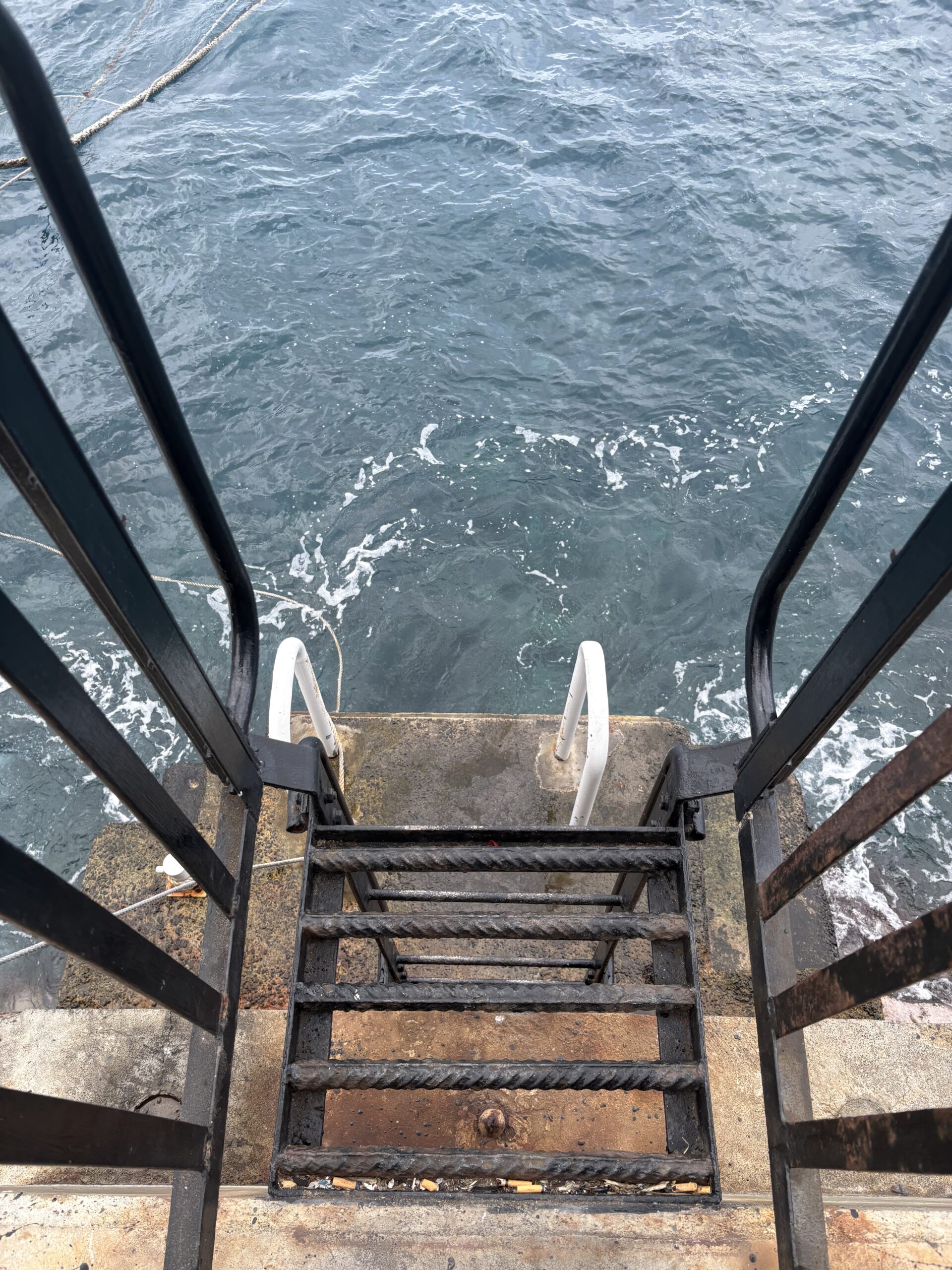
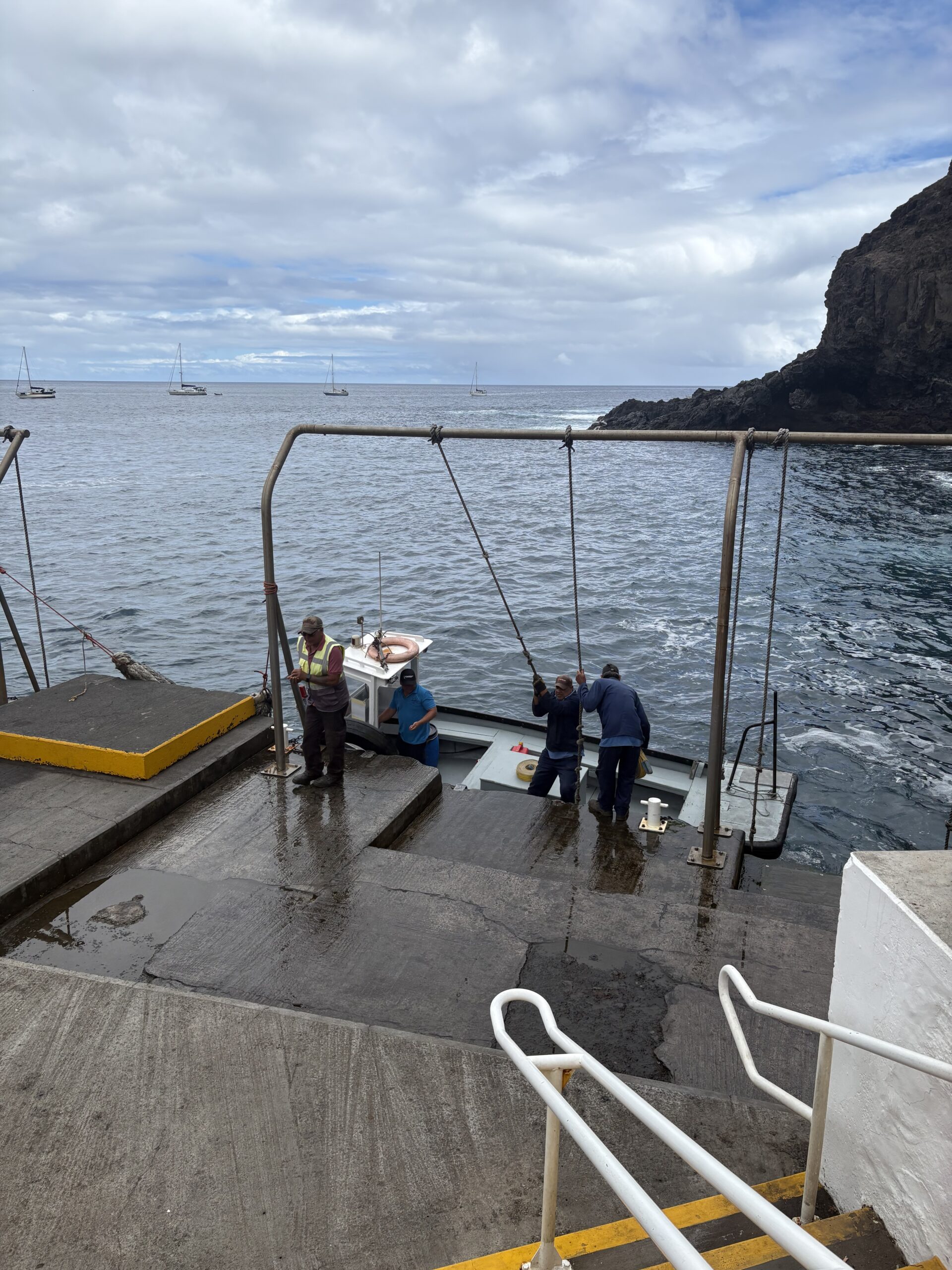
Yachts in the distance 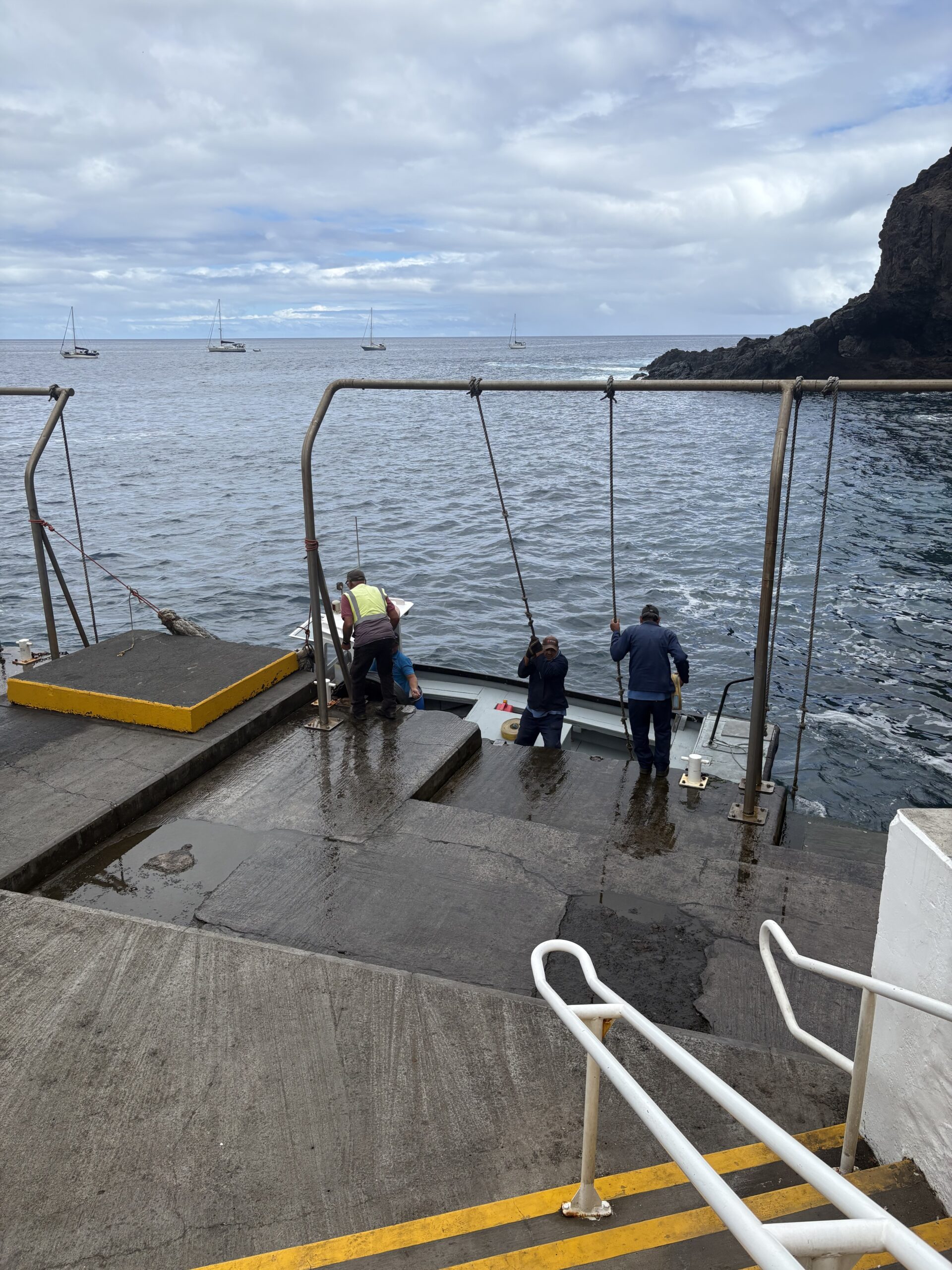
The ferry and ropes to grab 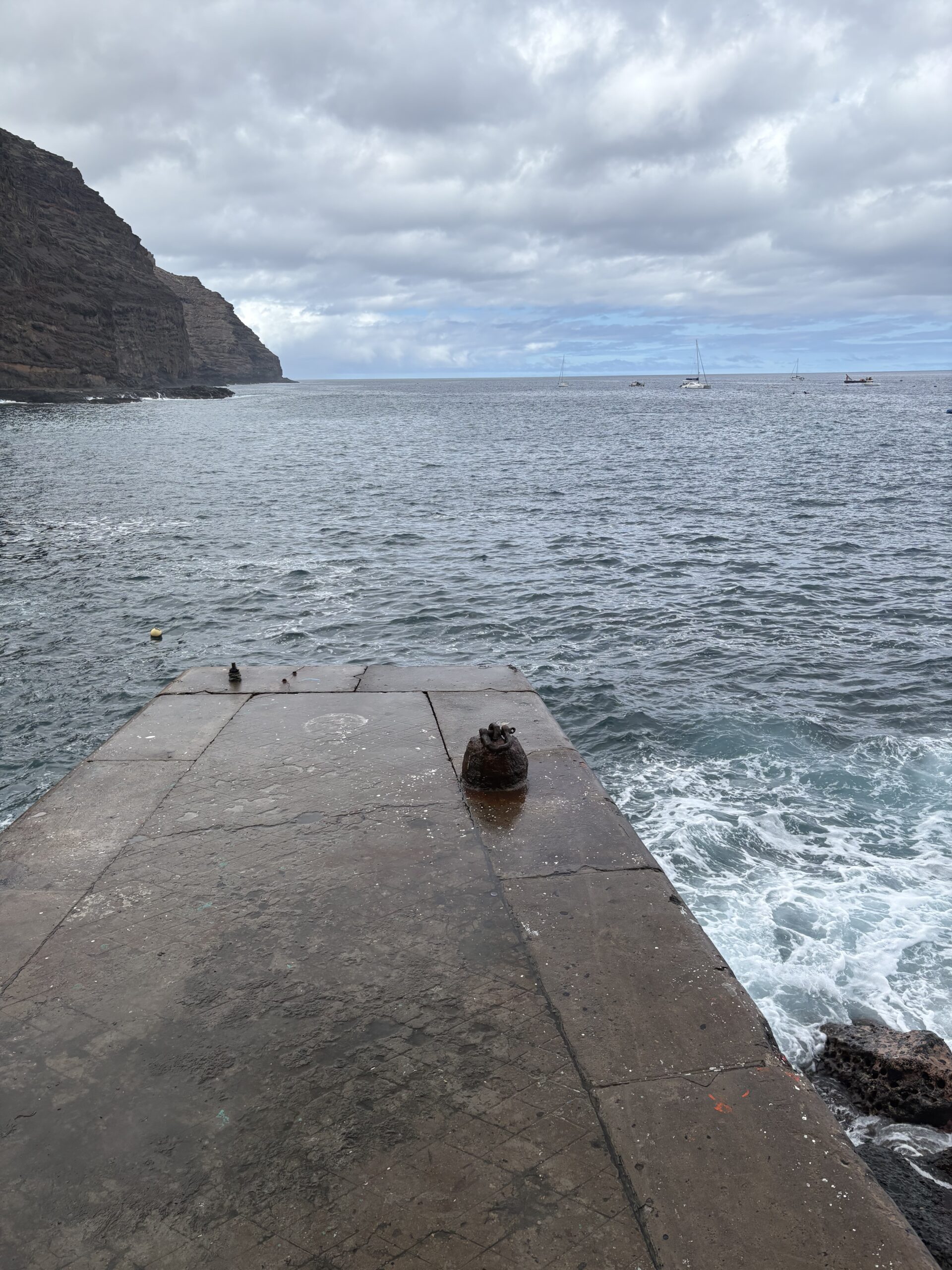
The dark ocean 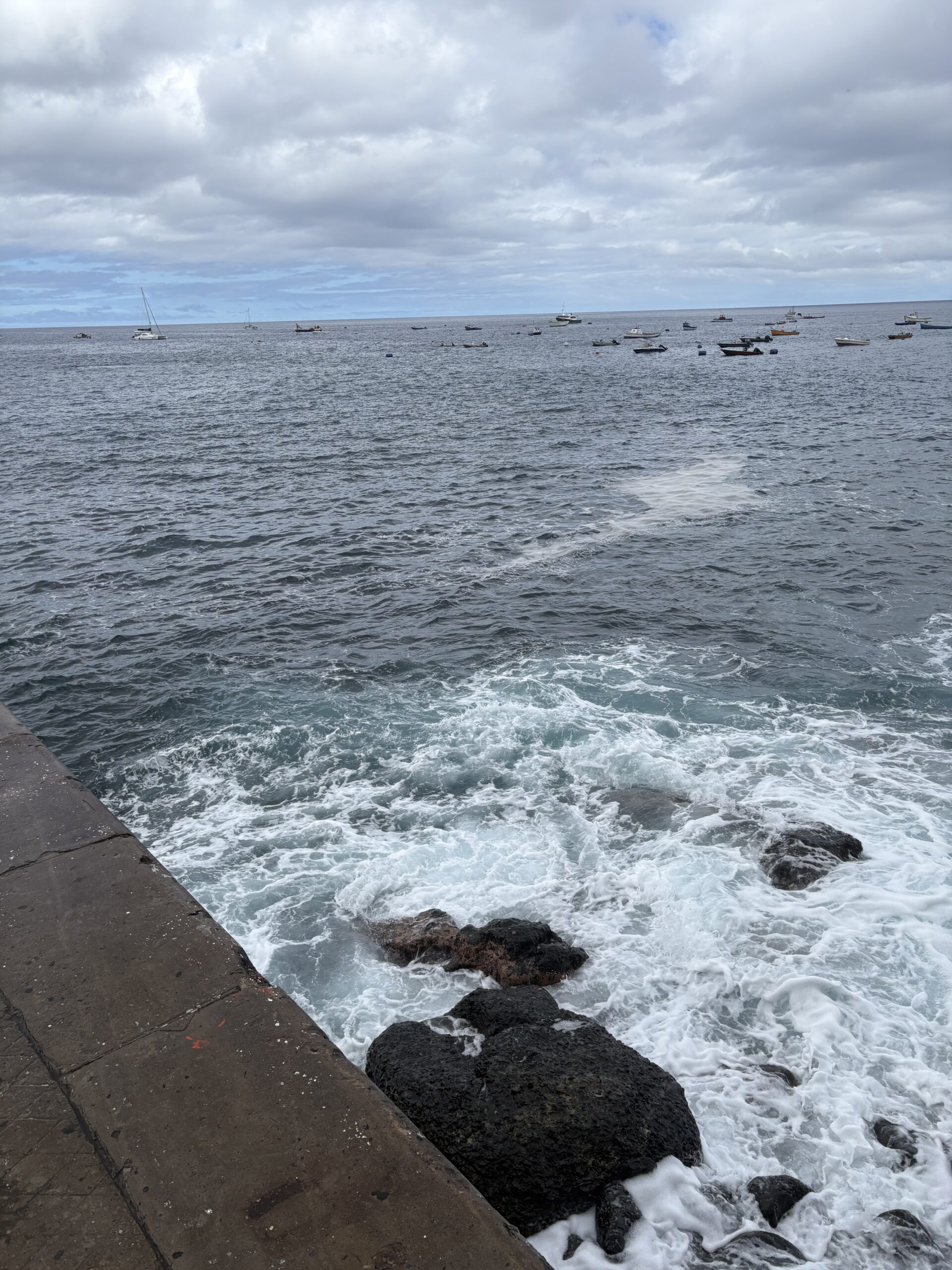
The bay 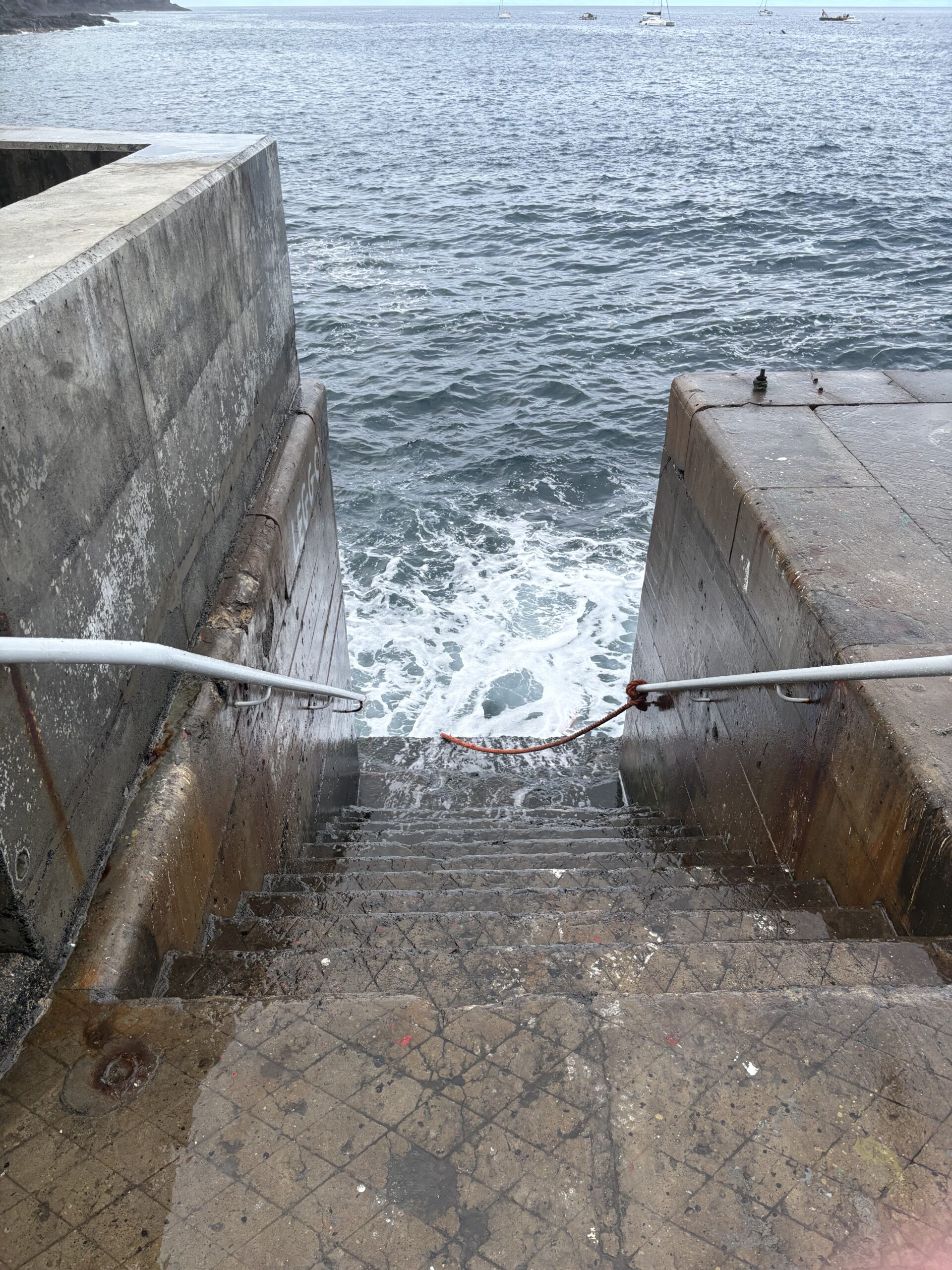
One of the ways onshore 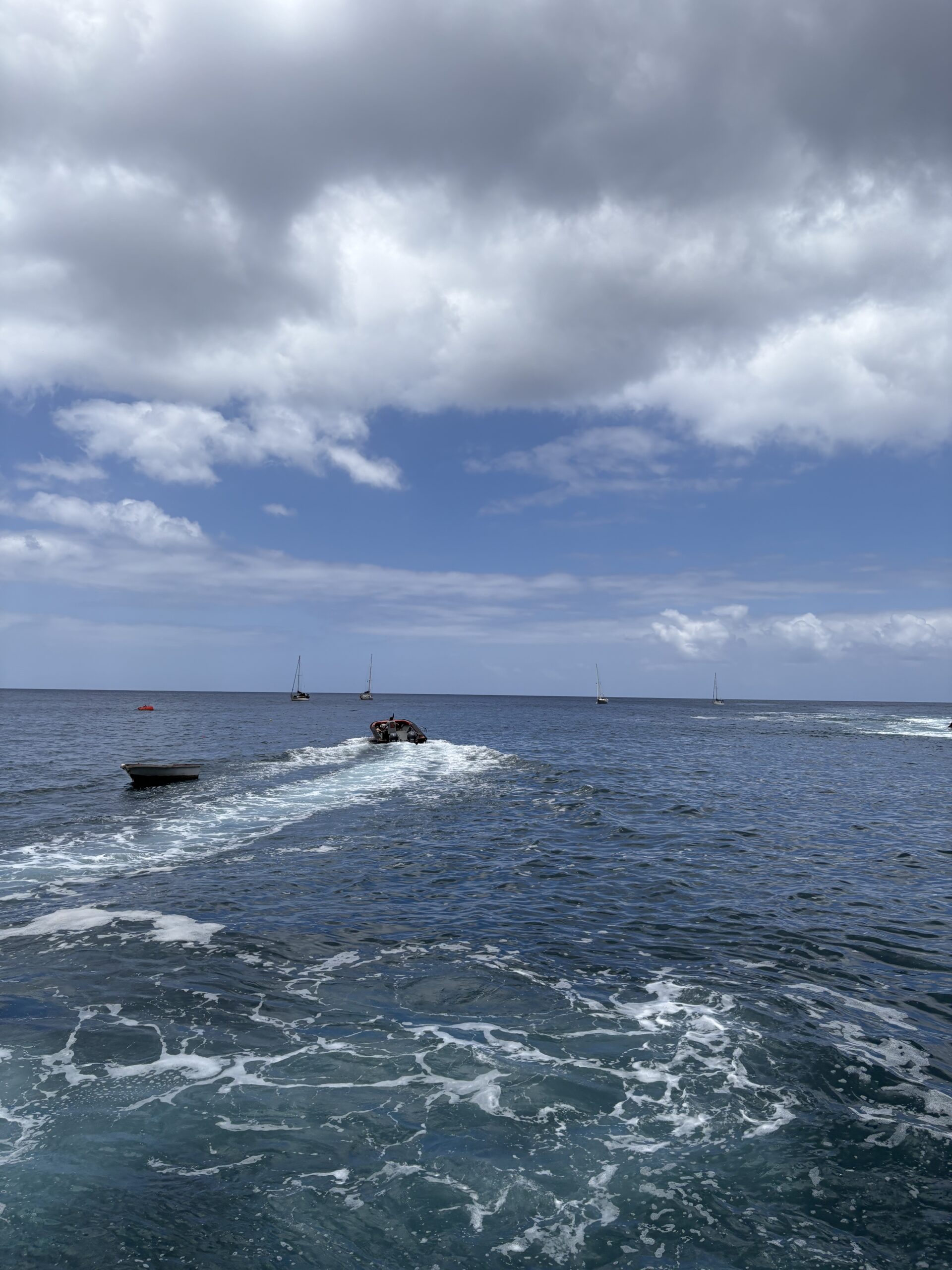
The bay 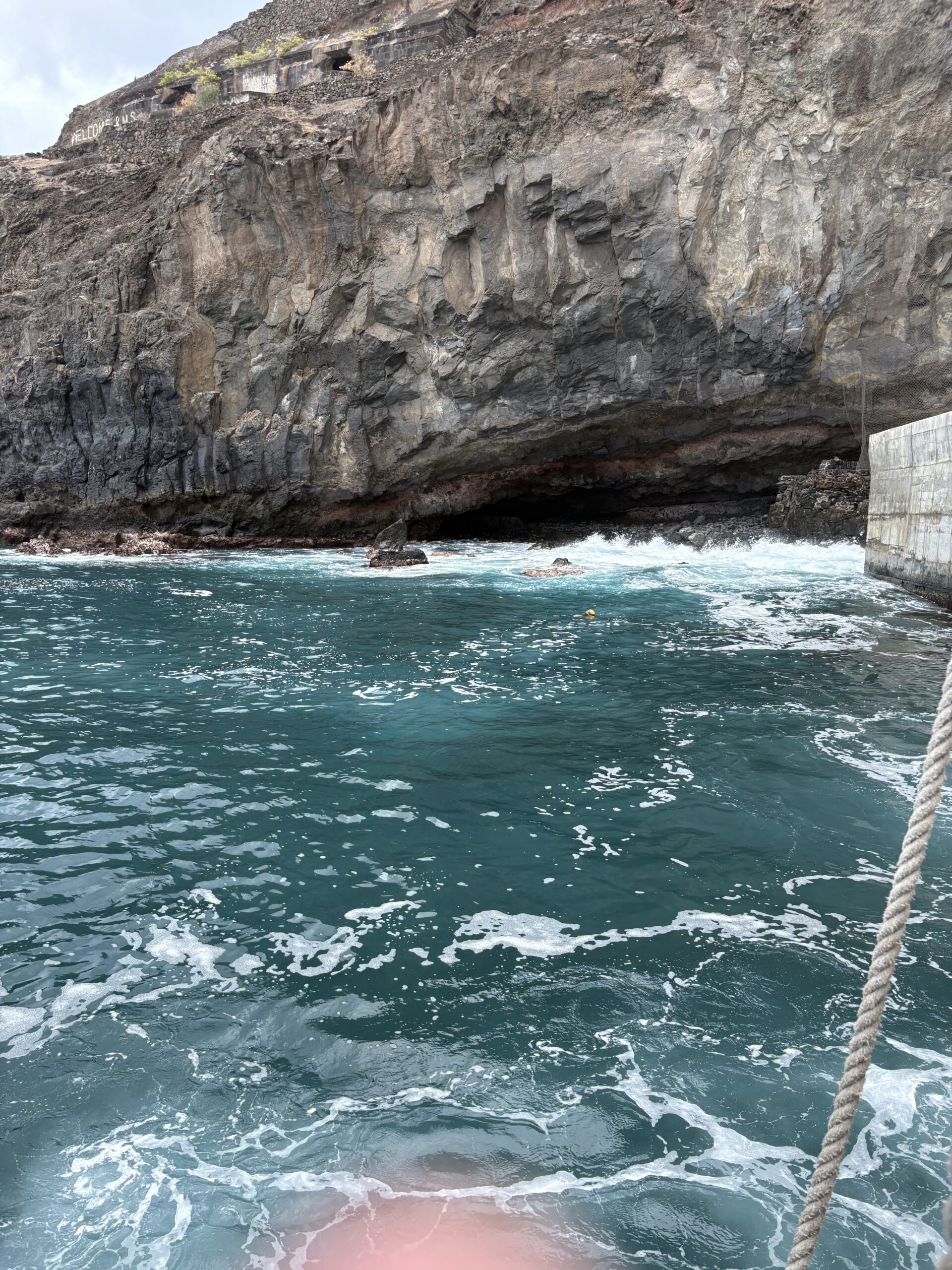
The swirl of the approach 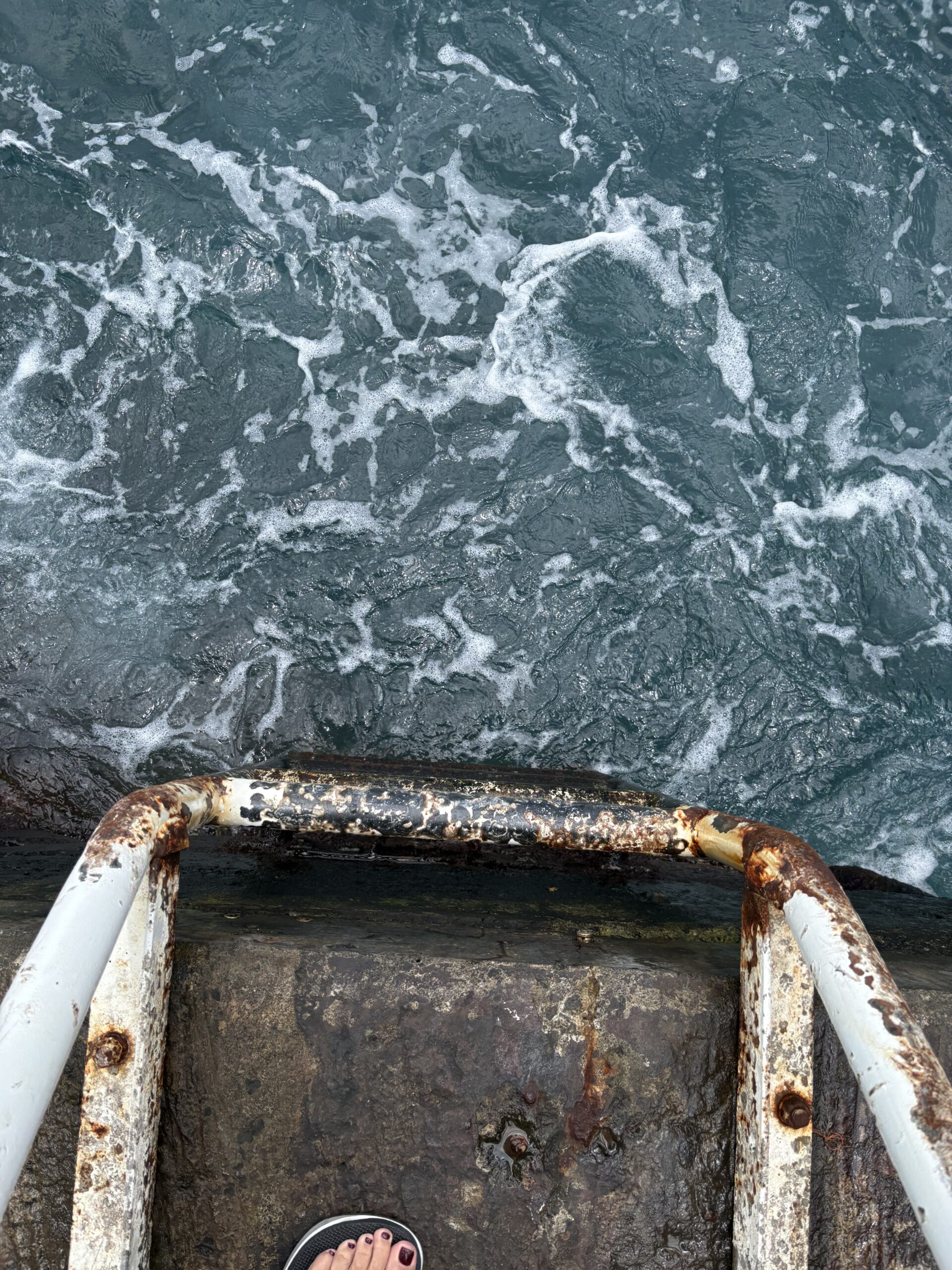
A set of steps to climb ashore 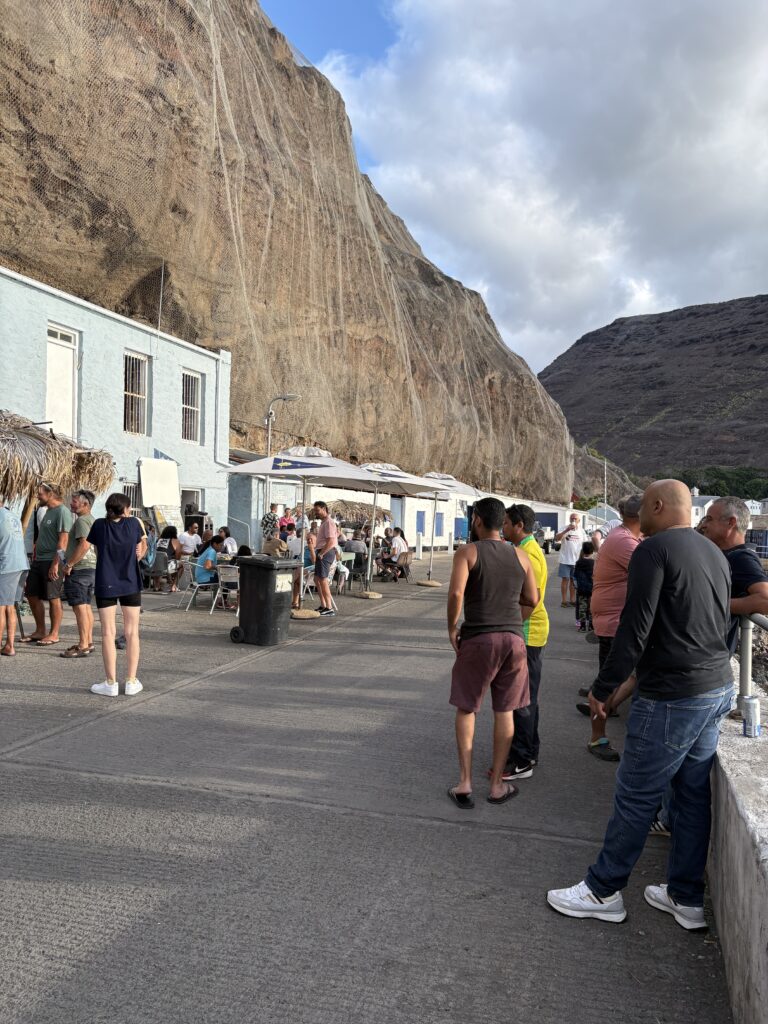
Fish fry night 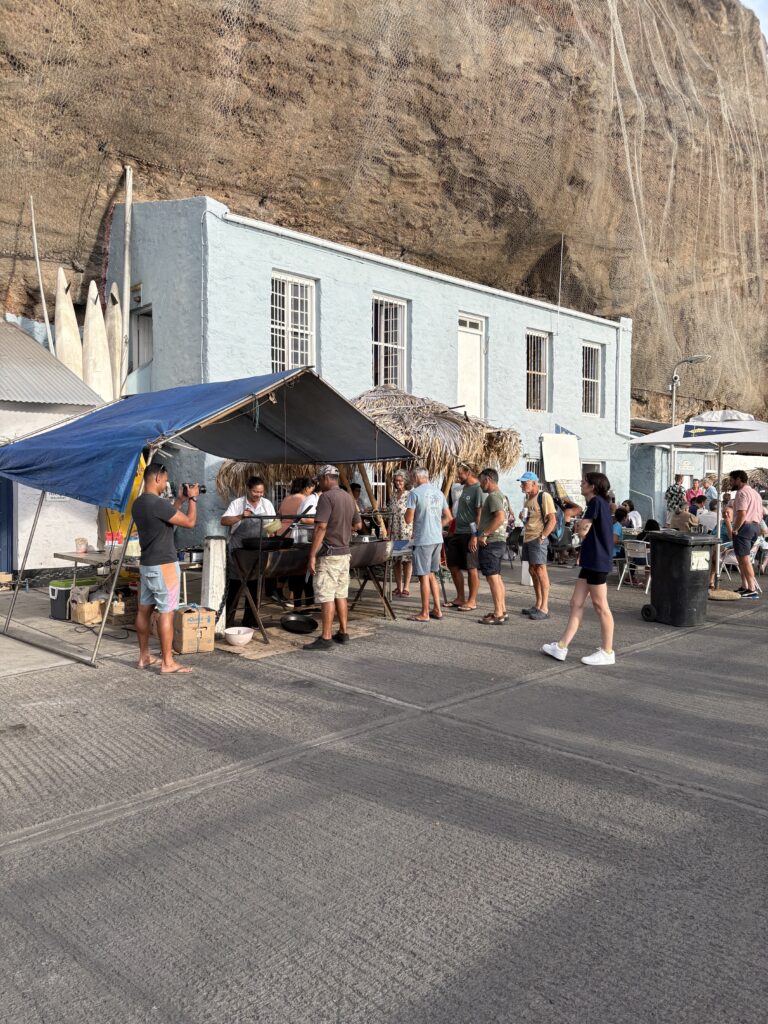
Fish fry night at the yacht club 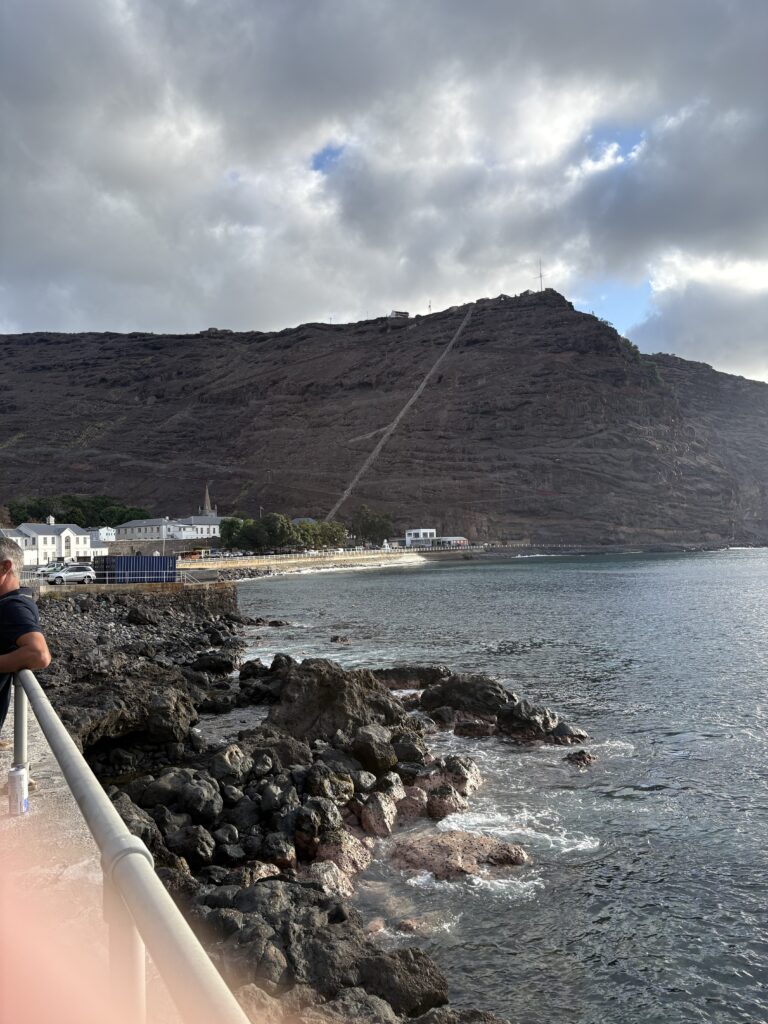
The bay 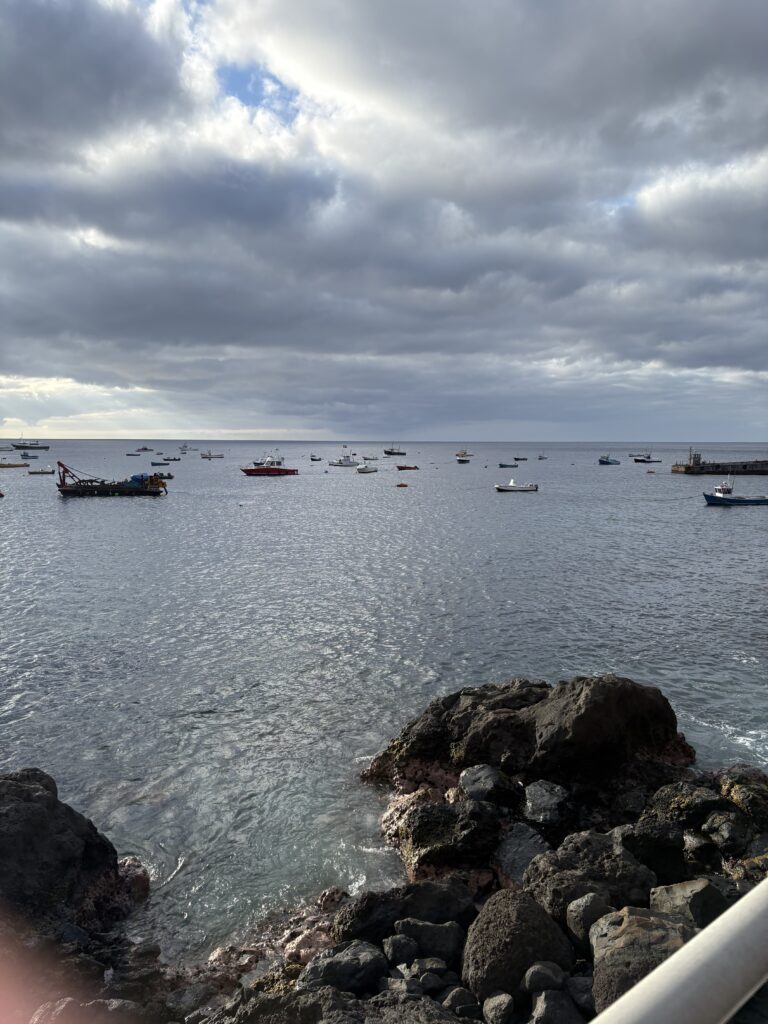
The bay 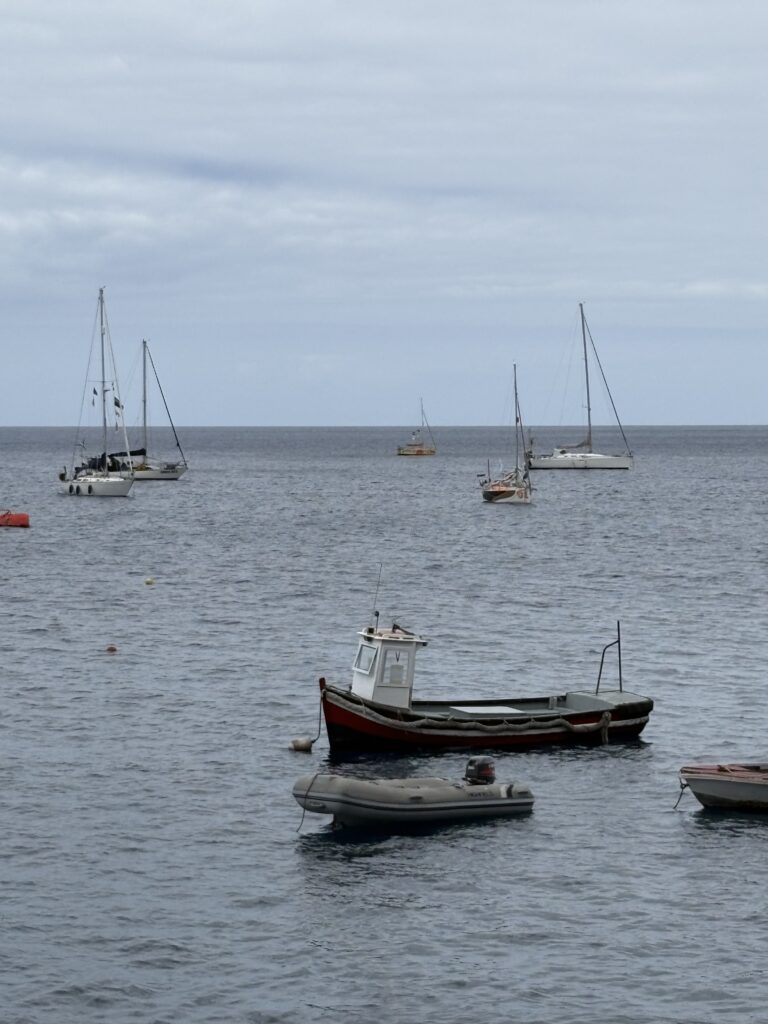
The bay -
St Helena, Plantation House and Jonathan, the Tortoise
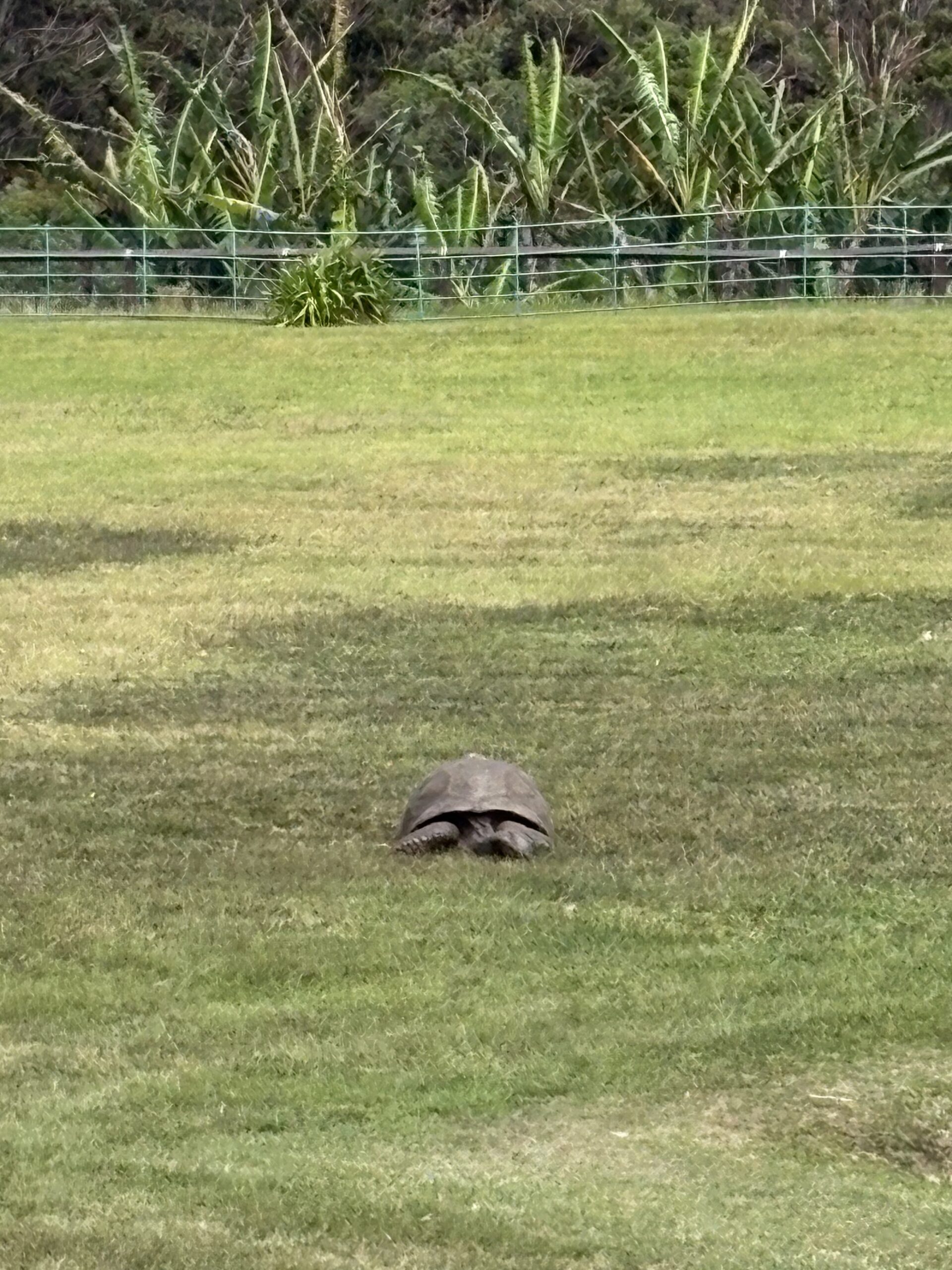
It is said and widely believed that Jonathan, the tortoise, is the oldest living creature on the planet, believed to be over 190 years old. He is a giant Seychelles tortoise, said to have arrived on the island in 1882, with his birth estimated at 1832.
Jonathan, and his companions, there are three of them, all of the same species, live in a protected enclosure in the gardens of Plantation House, the official residence of the Governor of St Helena. (The Governor governs St Helena, Ascension and Tristan da Cunha Islands). No offspring have ever resulted from Jonathan’s female companions, but eggs are often to be found.
Unfortunately, we do not have any photos of our visit to Jonathan in 1982, but all of us remember him vividly.
My tour of Plantation House was with about twelve others, and we had a tour guide, who took us through the various rooms and explained the history of the house, including a corridor with dozens of portraits of past governors. I noted quite quickly, that there has only ever been one woman governor so far. She served from 2016 to 2019. She currently works as a guide in London.
The last room we were guided into was the library, and occupying it were four people and a dog. The dog, a black Labrador, belonged to the Governor and his family. Three adults, one of whom was the Governor’s wife, were restoring old books, carefully, together at a table, and the fourth was a teenager, the daughter of one of the restorers. As an avid reader and lover of books, libraries and book stores, I was fascinated. No one dared speak first; so of course, I had to start. I asked one question after another, and then some of the remaining group members joined in too. Apart from the Governor’s wife, they are volunteers from abroad, spending time every day, for about six months, dedicating their time to rebinding and restoring the books in the library.
Our tour ended with a sit down tea with scones and fruit cake. As soon as we were finished, we were led outside to visit the gardens and Jonathan and his mates.
Dates: January 2026.
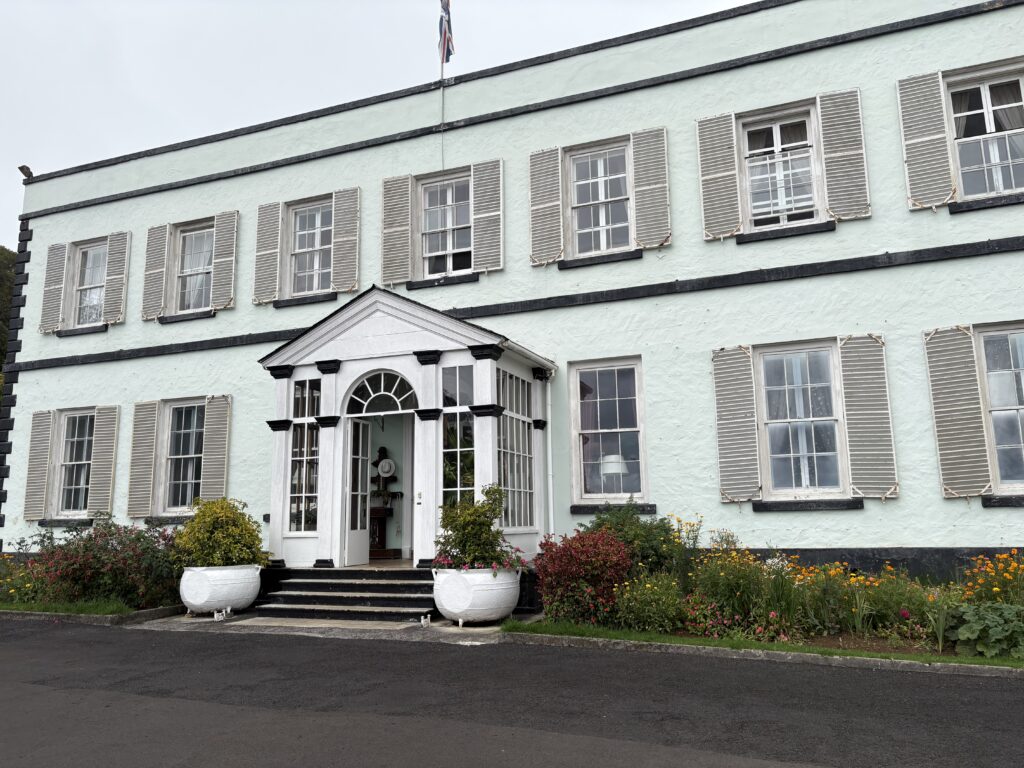
Plantation House 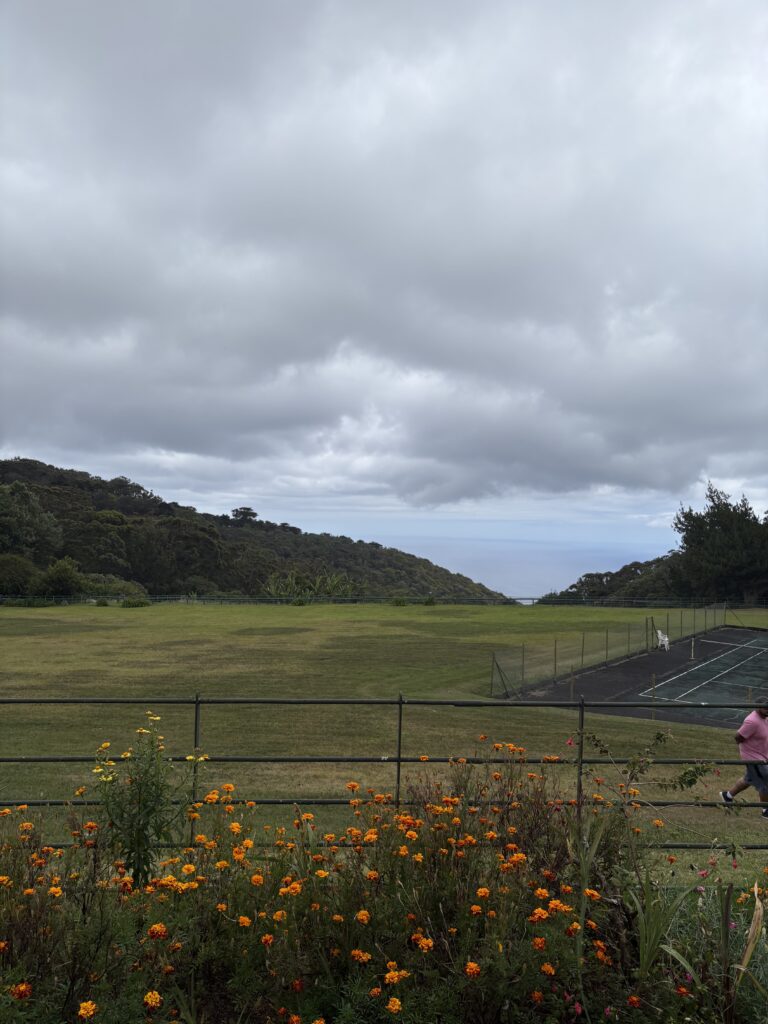
The enclosure for the tortoises 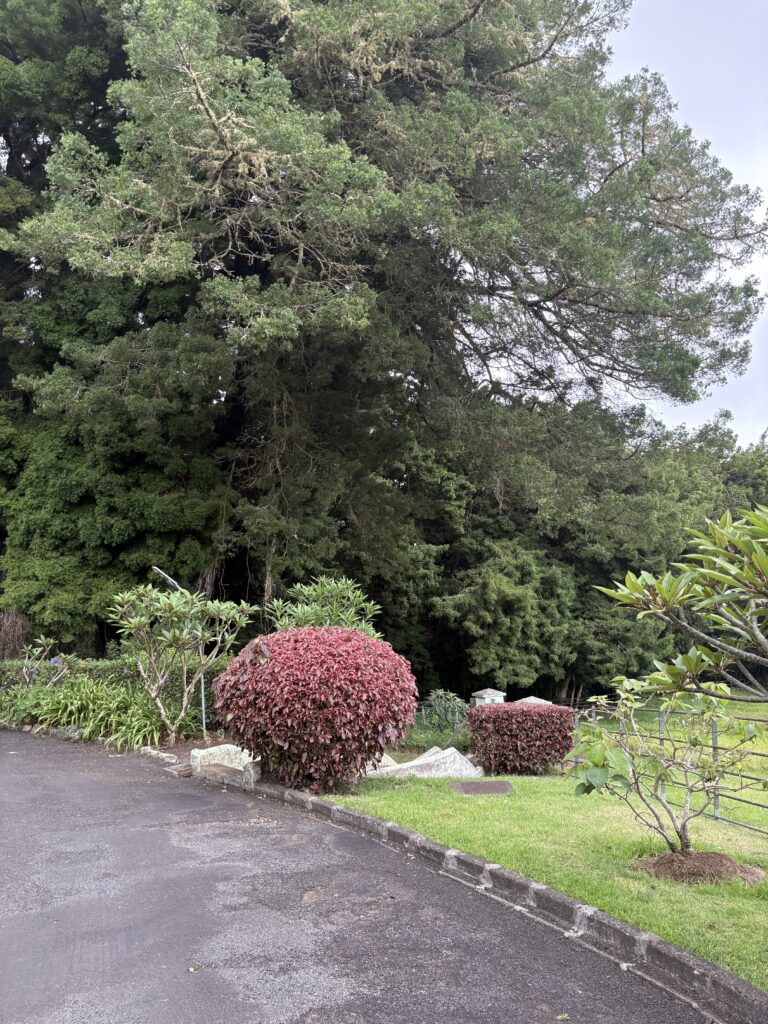
The gardens 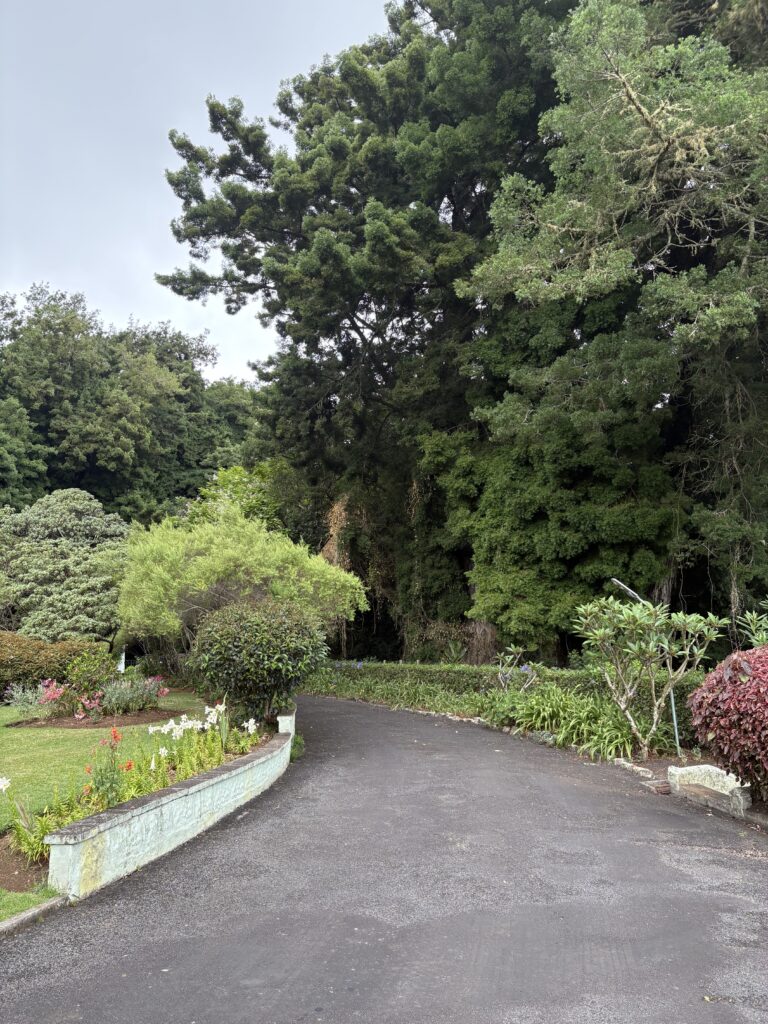
The gardens of Plantation House 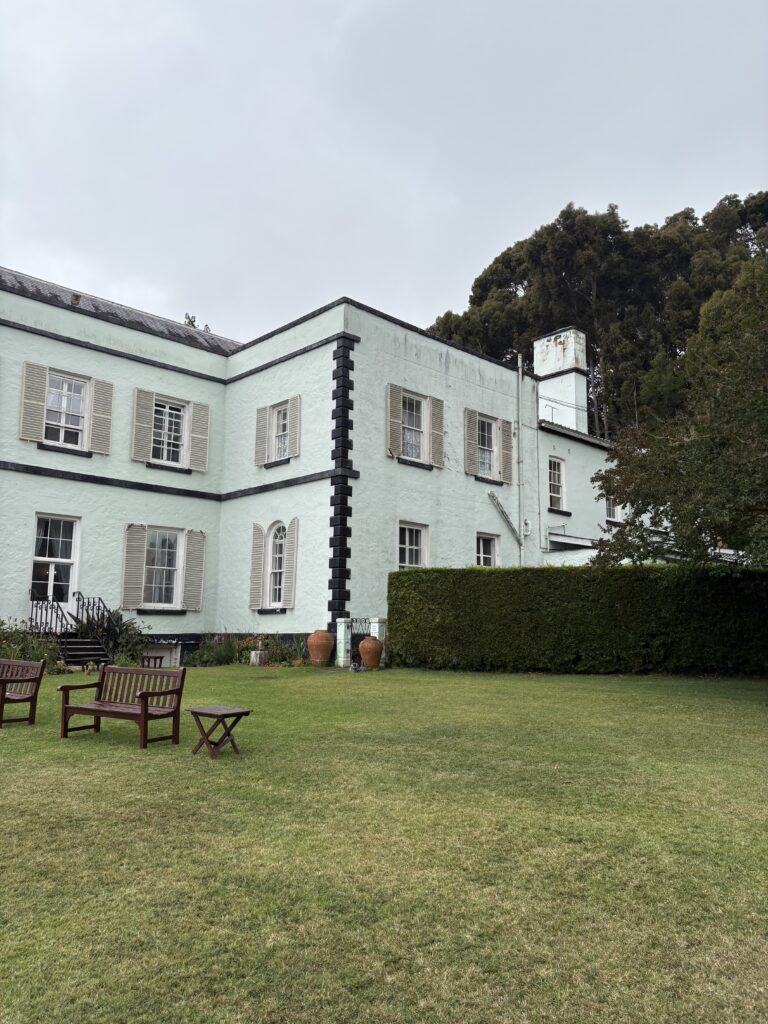
Plantation House 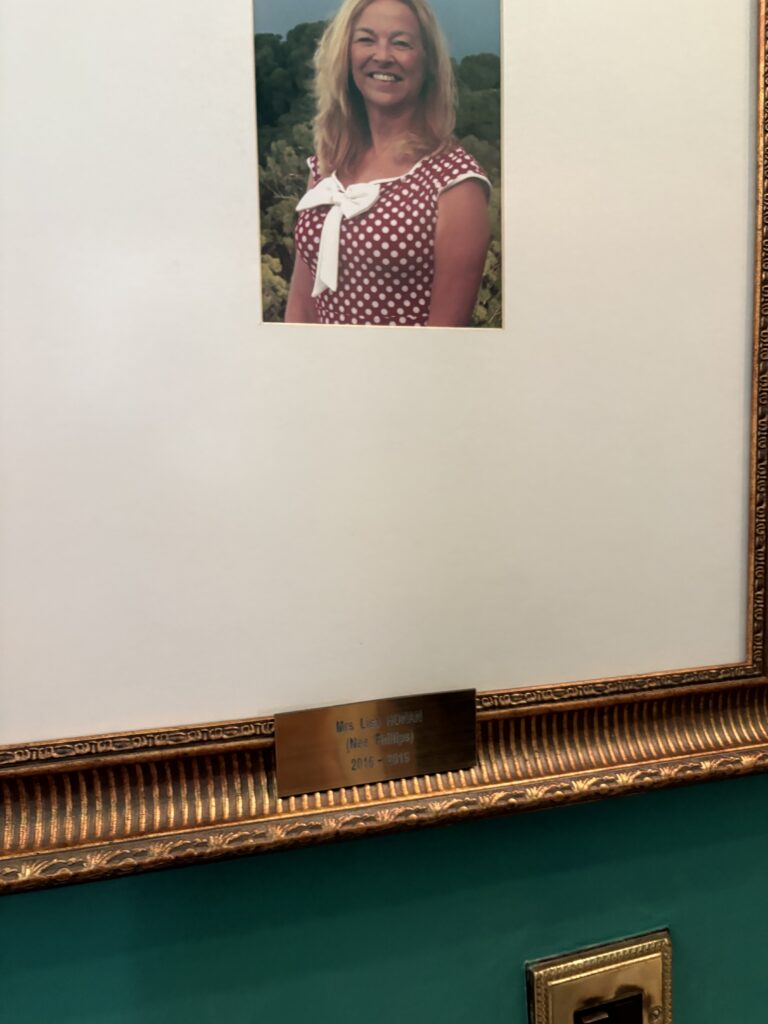
The only female governor so far 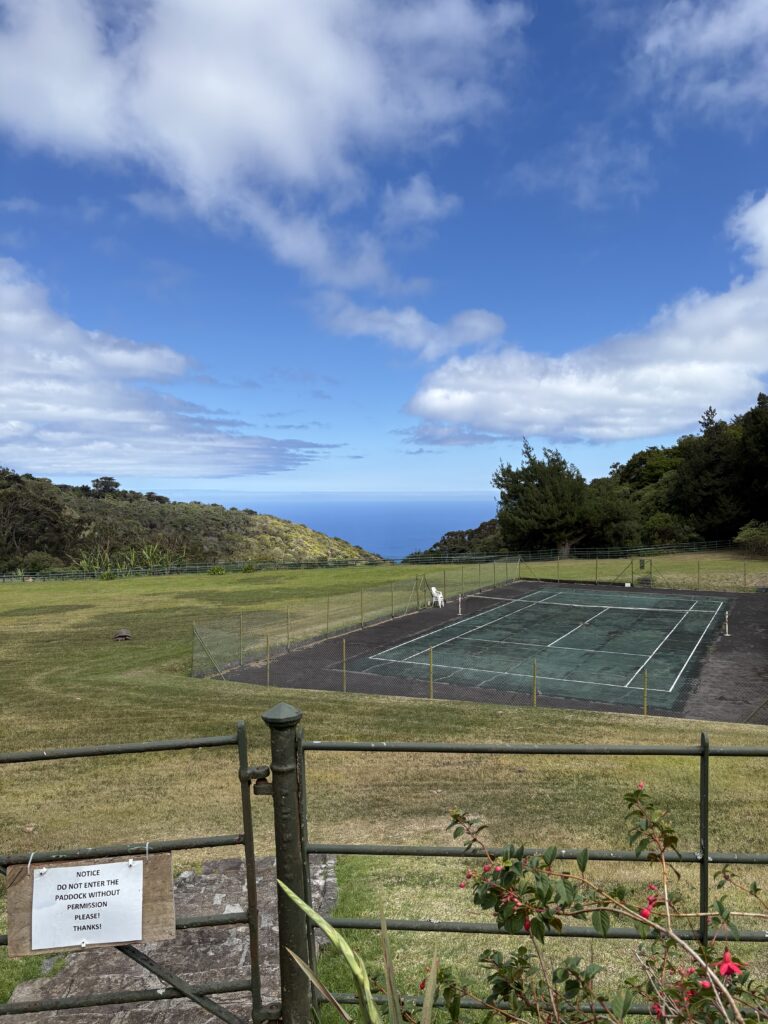
Magnificent views from Plantation House -
St Helena, Jacob’s Ladder
Waking up on my first morning in the Mantis St Helena Hotel, I had a brief, but present, claustrophobic feeling. Oh no, had island fever set in?! I could not leave the island, even if I wanted to, until the next flight came. OK, I could have hitched a ride as a crew member, possibly, on one of the boats anchored in the bay, but that would also take at least two weeks to get anywhere. It was a nagging feeling, always there, and one that I had to surpress, that I was really, very remote. Very far away from anything. I had no mobile phone connection, and wifi only in the hotel, and that was sporadic at best.
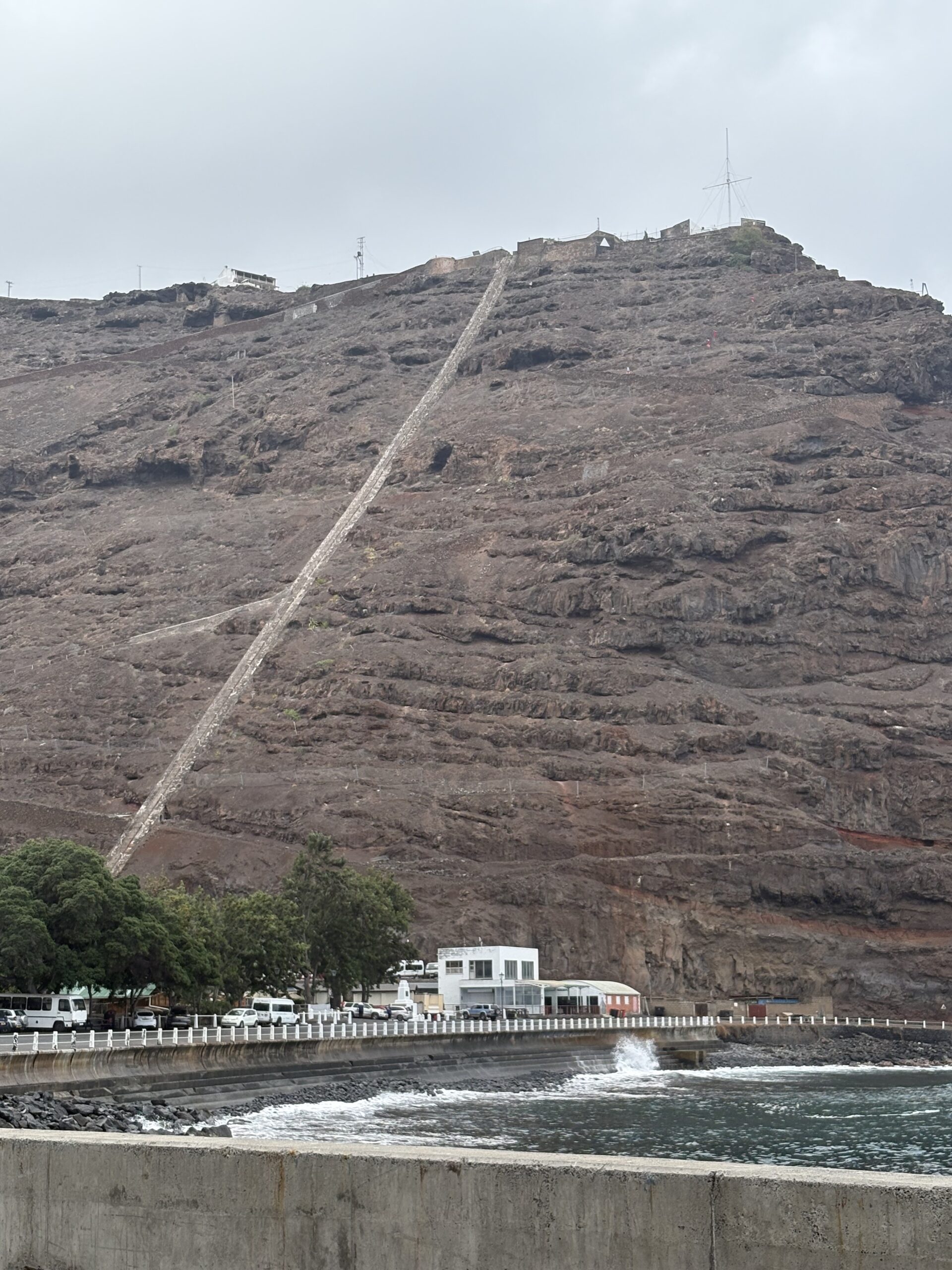
Jacob’s Ladder was visible from my hotel window. My memories came flooding back. In 1982, since we had to stay on the island for more than a couple of weeks to wait for the RMS St Helena to return with sails and much needed engine parts for Scally, my father enrolled us in school. The secondary school was located at the top of Jacob’s ladder.
Me and the oldest of my brothers, both secondary school age, would come ashore every morning, in our sailing clothes, which were mainly shorts, T-shirts and slip slops or bare feet, and climb the ladder, along with all the other secondary school Saints. 699 steps to the top. Coming back down was often sliding down the handrail.
I walked to the first step, located a few metres from my hotel, near the museum and the prison, and stood at the bottom step looking up. It’s steep, very steep. I tried to picture the two of us climbing them every day. I confess, I did not have the courage to climb them again. My knees and hip cause me too much discomfort, and after all, I had climbed them, albeit many many years ago.
I visited the school at the top, by taxi. I would not have remembered it at all, but standing there looking at it, it came flooding back. I was on the top floor, the stranger amongst the Saints. I remembered the exercise books we had been given, and the Maths class, which seemed awfully easy. I remembered not sounding like them; my accent was very different. I remembered their curiosity. I remember being accepted.
I stood, for a good while, remembering.
Dates: I was in January in early January 2026.
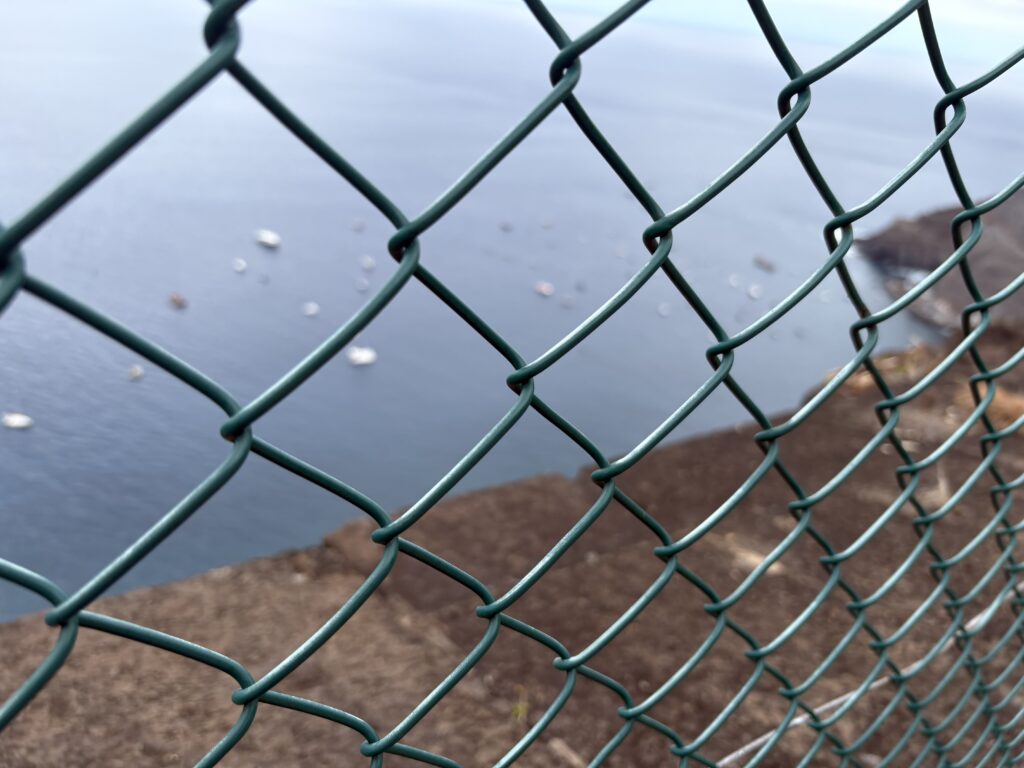
The view from the school 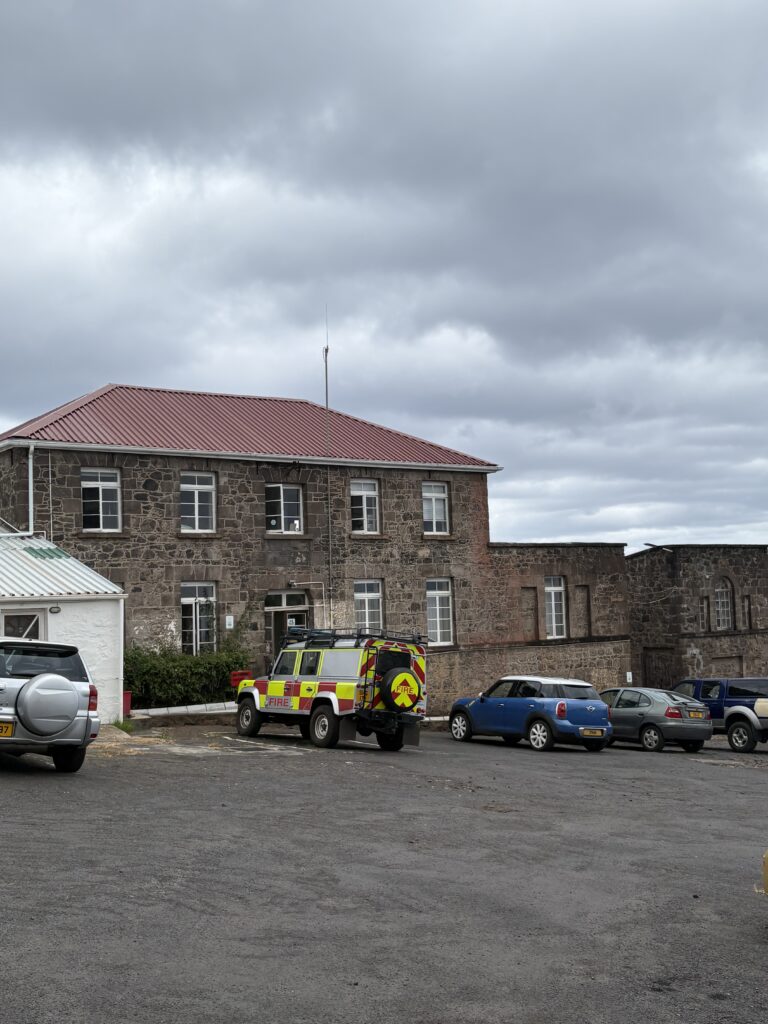
The school 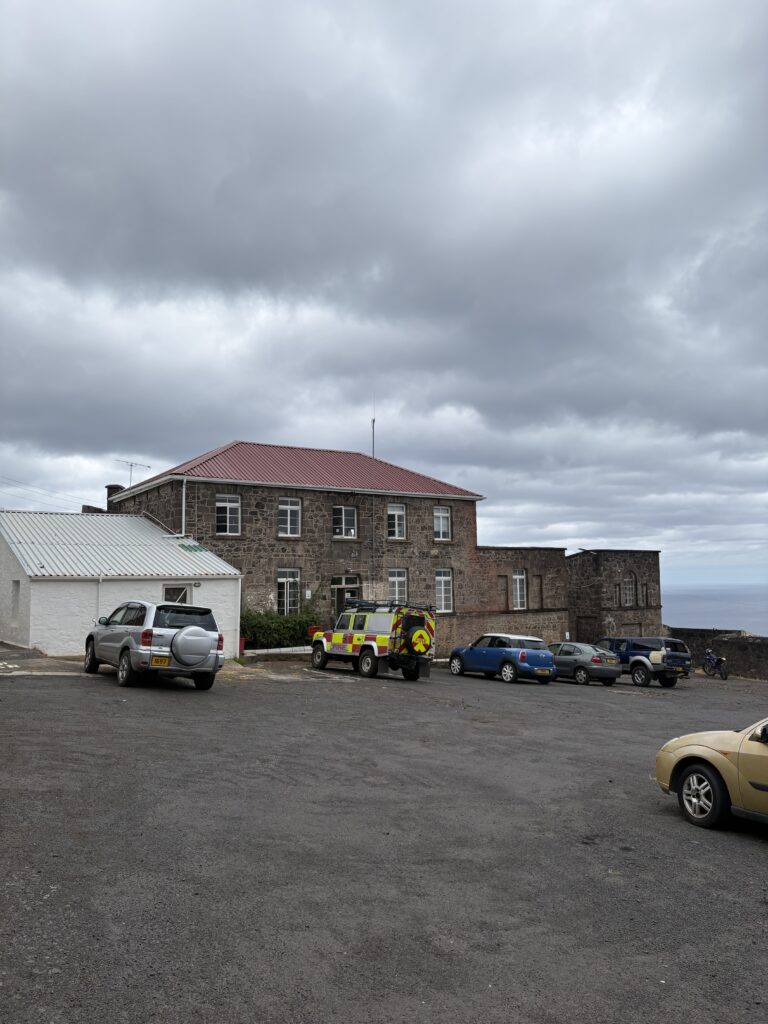
The school 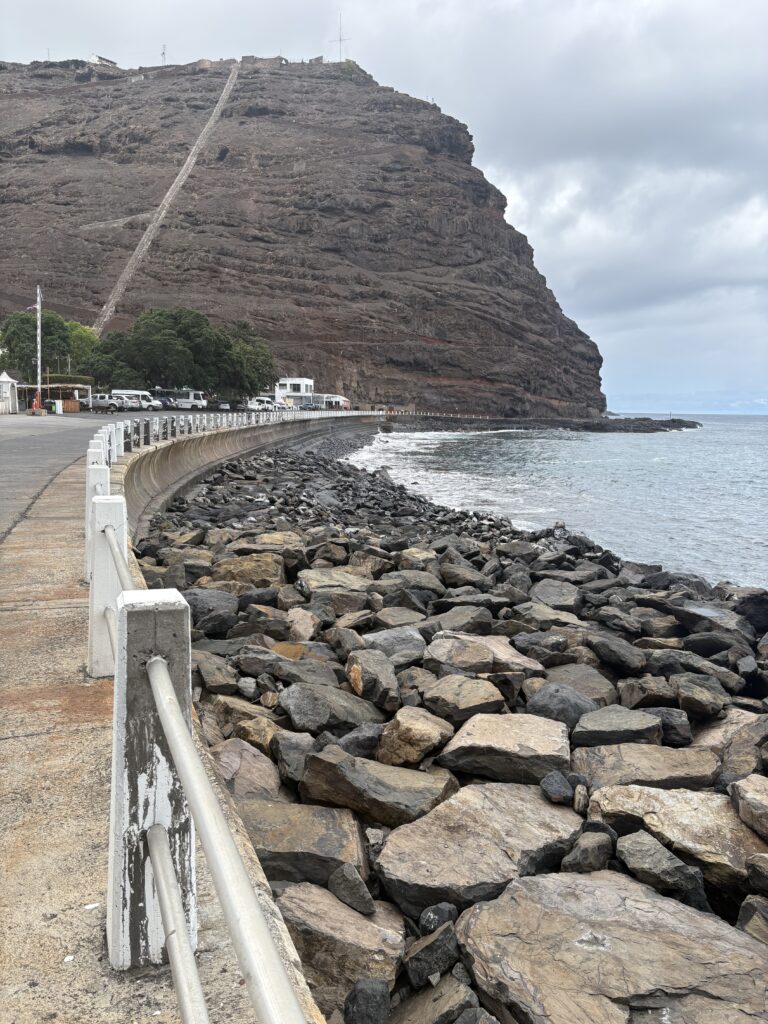
The ladder 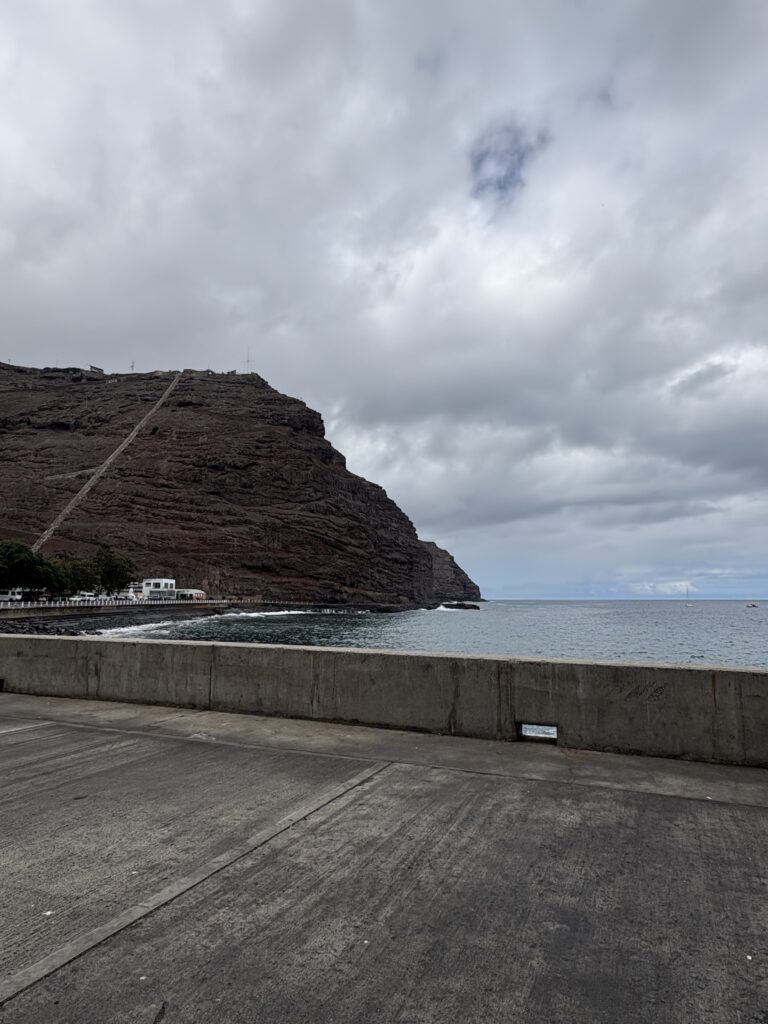
The ladder 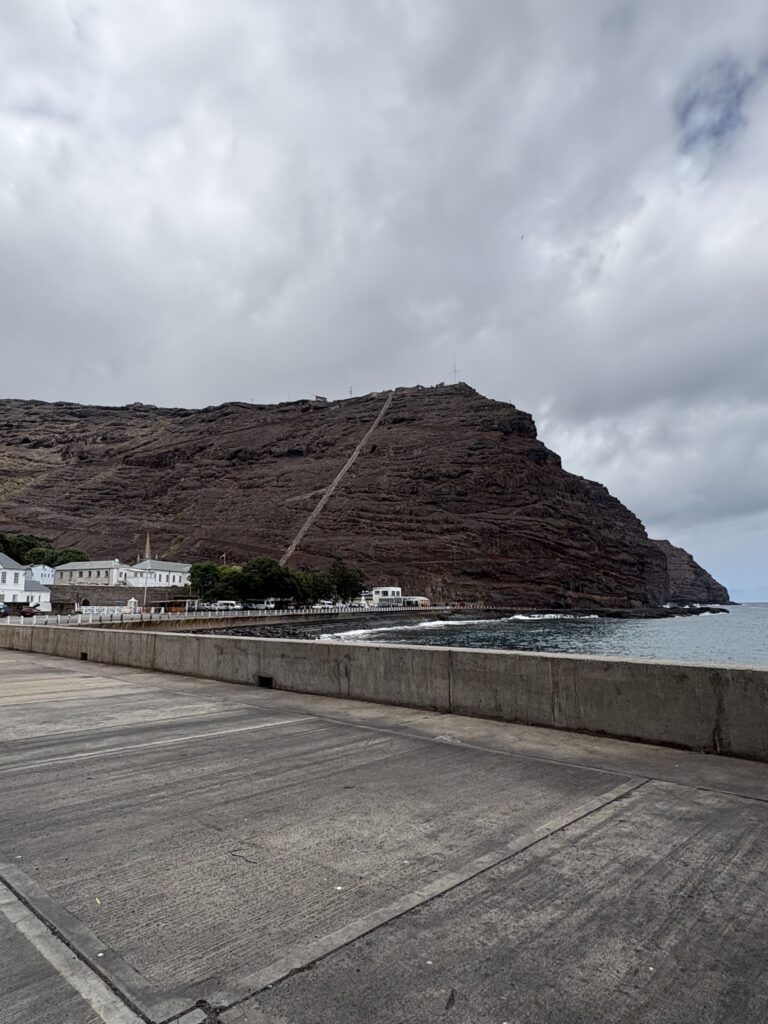
The ladder from the bay 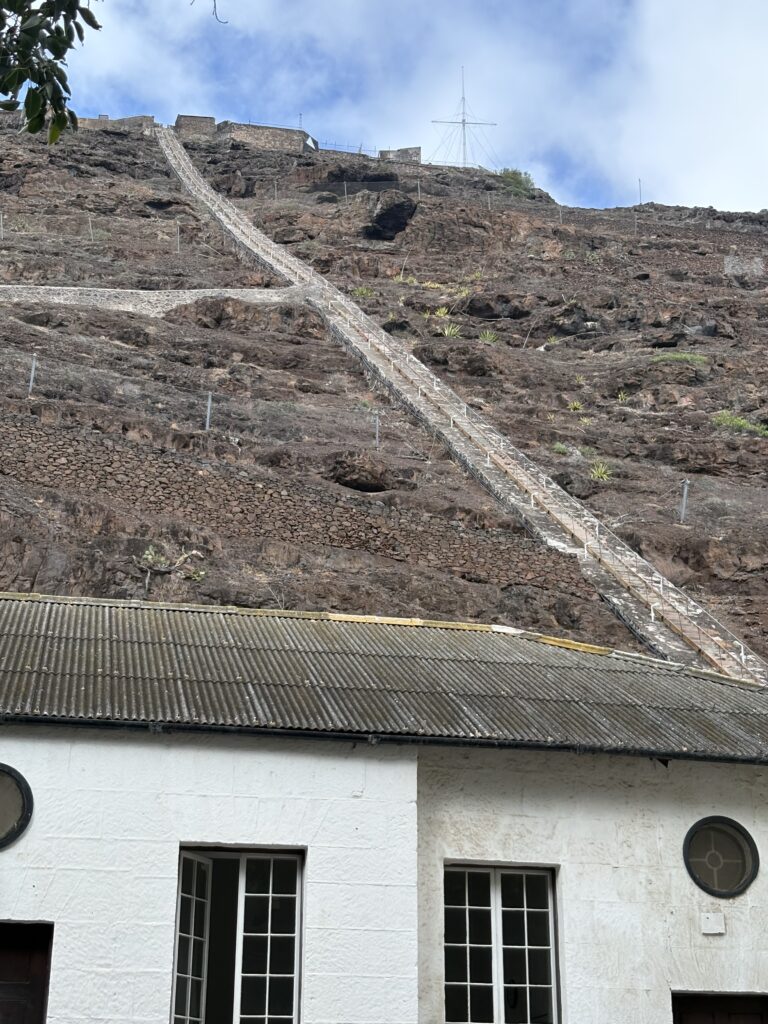
The view of the ladder from my hotel window 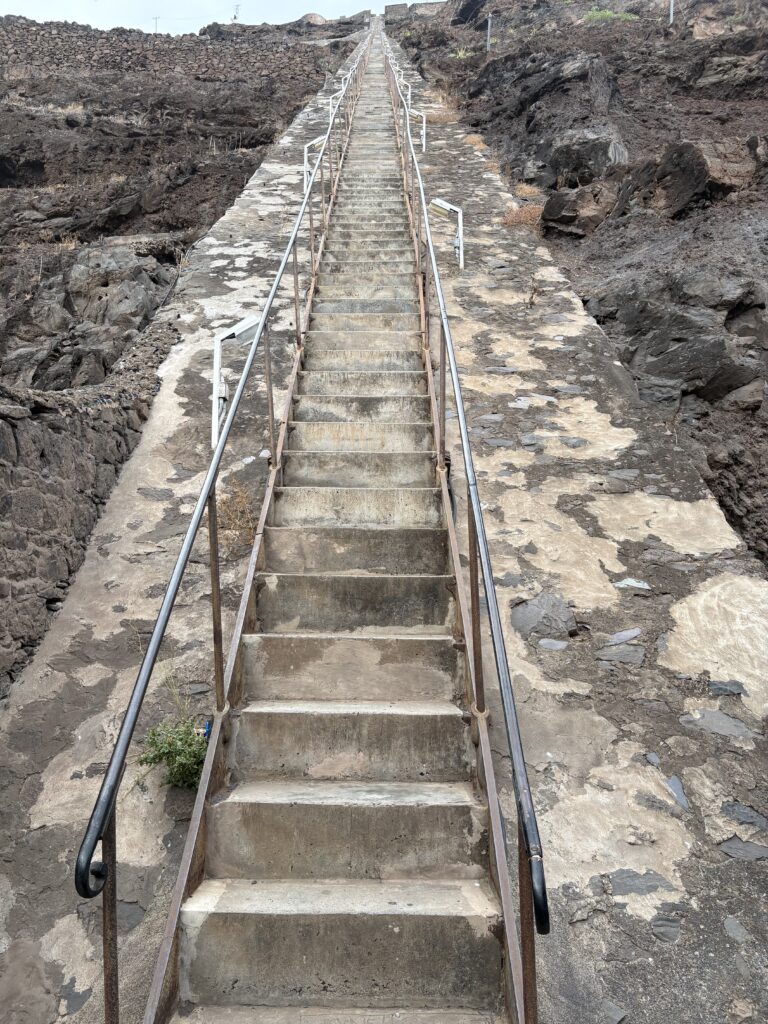
Jacob’s Ladder 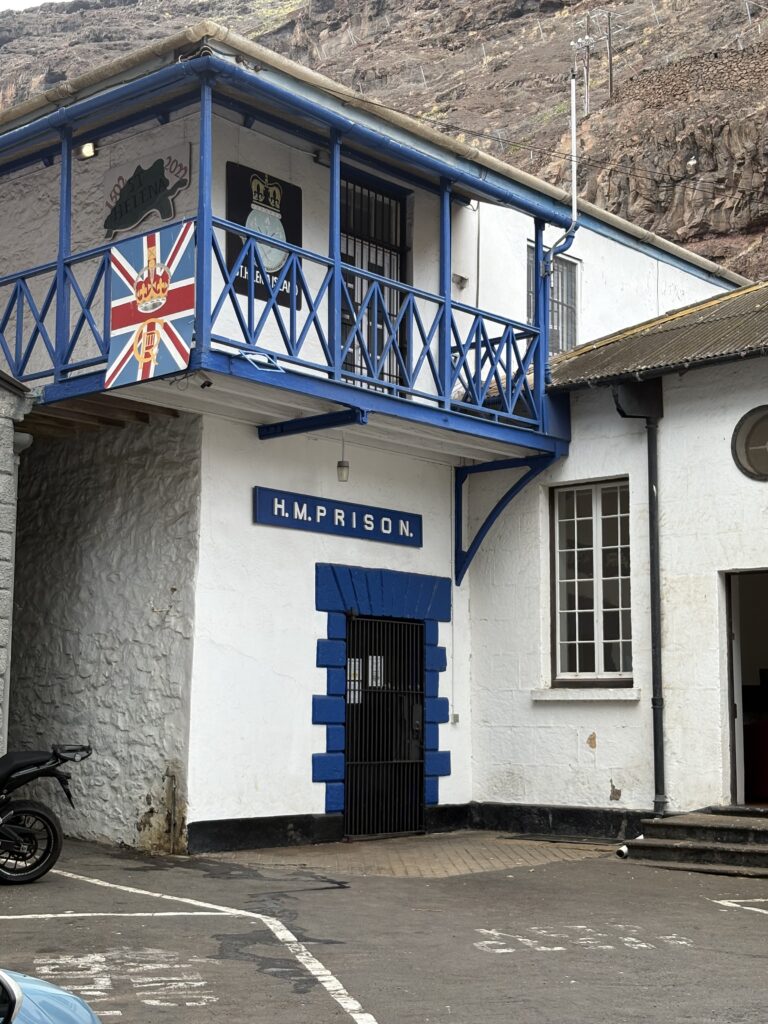
HM Prison in Jamestown -
St Helena, Roast Lunch in Luffkins Springs
Sunday came. I had been on the island for six days thus far. Reception called me from breakfast; there was someone on the phone for me. “Cliff will pick you up at about twelve. He’ll have to pop in quickly to check on one of our guests who’s just checked in, and then he’ll bring you up here for lunch,” said Delia on the other end. I’ll confess, my heart started racing, quite worried at the prospect of a ninety-three year old man, hard of hearing, driving me up the narrow mountain passes to their home. “Have trust and faith,” I kept telling myself.
Cliff arrived. I got into his rather battered Ford station wagon, and off we set. We stopped off to check on the retired RMS St Helena captain, who was visiting the island for a few months, staying in one of the Huxtables’ cottages. Experiencing how Cliff manoevered the Ford station wagon into the narrow lane and reversing it back out again certainly did its bit to allay my fears. He mastered it perfectly. So off we set, up the pass towards Luffkins Springs, in the country. Where I live in the middle of Europe, “country” has a different meaning than here; this was certainly a trip deep into the St Helena countryside. I was pleasantly suprised by how steady Cliff was at the wheel, and how competently he negotiated the passes and narrow bends in the road. Once or twice, he got a bit too close for my comfort to the low wall protecting the road from the steep drop below, and I held my breath, but we made it safe and sound to their home.
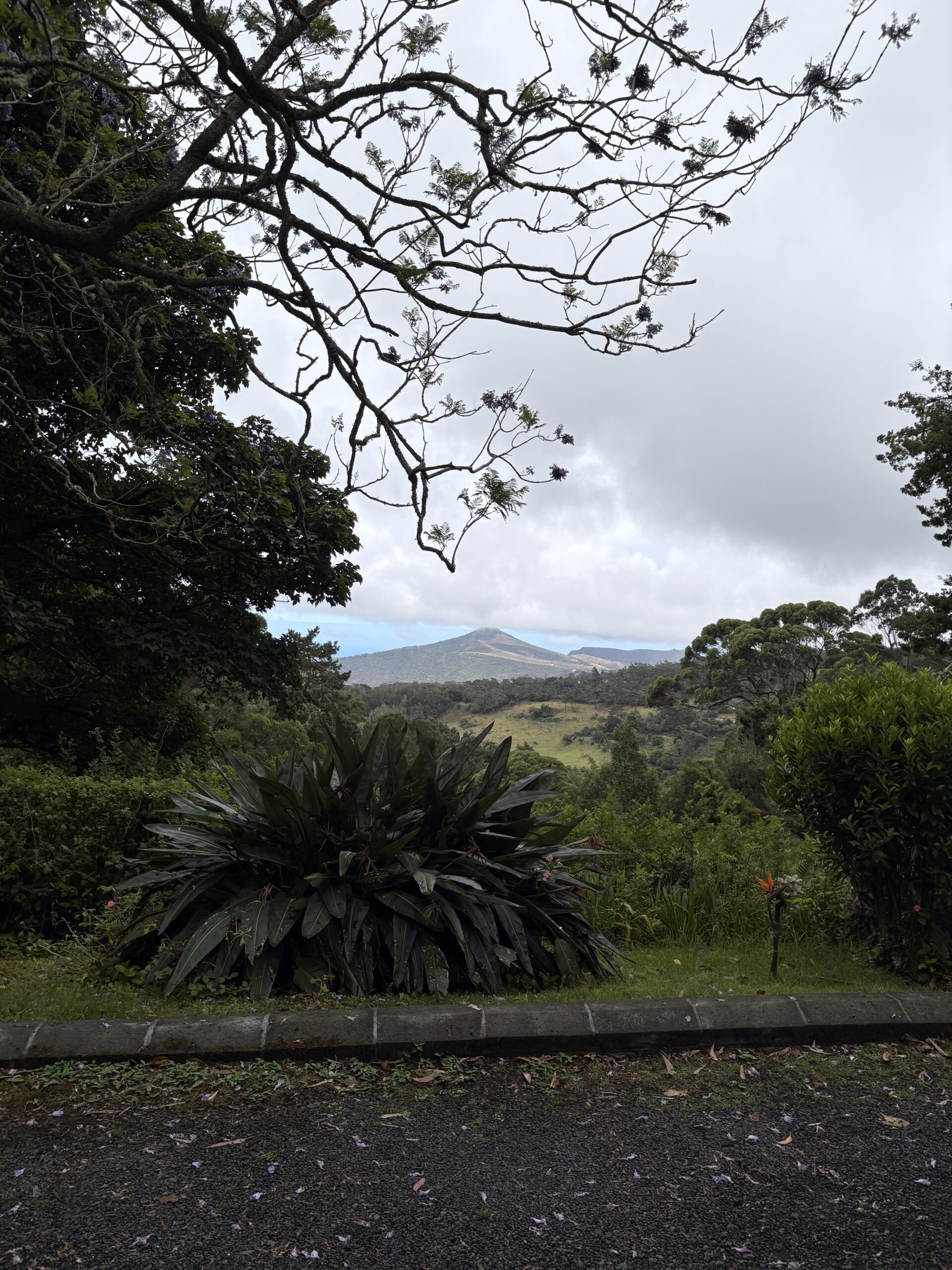
They live in a mini micro-climate, very wet and damp, green and lush, with many ferns, beautiful multi-coloured flowers and tall, heavy trees, loaded with rain droplets waiting for the sun to come out. There was low-hanging fog in the distance. It had rained heavily the night before and the driveway was full of puddles. We came to the gate, but Cliff would not let me help, I was to stay in the car while he got out and opened it, then closed it. Delia was waiting for us in the drive.
Theirs is a warm, comfortable, lived in and welcoming home. There were photos in frames everywhere, of their children and grandchildren, and themselves on visits abroad, mainly to Canada, but also to Portugal, once in the nineties, to visit my family. I was not at home at the time. It reminded me greatly of my aunt’s home in northern England, a home she’d lived in for over sixty years with my uncle and my cousins. Quite clearly a home that had lived many lives; people who’d lived within its walls for many years, children born, growing up and leaving. The elderly remain. I felt very content and happy to be there with these two strangers, who were so familiar. Delia remembered much about us and was happy to share her memories and tales. Cliff spoke little.
Delia had made a delicious roast Sunday lunch for the three of us, and I felt very honoured. I helped to lay the table and Cliff carved the chicken. There was also a home-made lemon meringue pie. Our conversation was relaxed and open. Delia shared the results of her DNA test, the outcome of which claimed at least thirteen different country origins, from India, to Finland.
After an hour or two, Delia suggested a drive around the area. My heart sank for the second time that day. I’m not a “taking a Sunday drive” sort of person, and certainly not with nonagenarian. But I couldn’t say no; they seemed so happy to have my company, and truth be told, I was enjoying myself. These were people who didn’t mince words, who were honest, open and true, who had nothing to hide, who were happy to see me and be in my company, happy to talk about forty four years ago, happy to share, happy to spend their Sunday afternoon, when most others would be taking a nap or reading a book, driving me around the tops of the island, and so off we set. No plan in mind, just a drive around.
It was foggy, and the views of the ocean far below that Delia had so wanted to show me, were hard to find. I was needlessly worried about oncoming traffic; there was none. It was a Sunday after all. After an hour or so, of trying to find ocean views, I decided to call it a day. I was emotionally exhausted and needed some time for reflection. They drove me back down to Jamestown, where we said our goodbyes. I knew this was the last time I would see these lovely people and my heart was heavy. I was grateful for their kindness and warmth.
Dates: Lunch was on Sunday 11th January 2026.
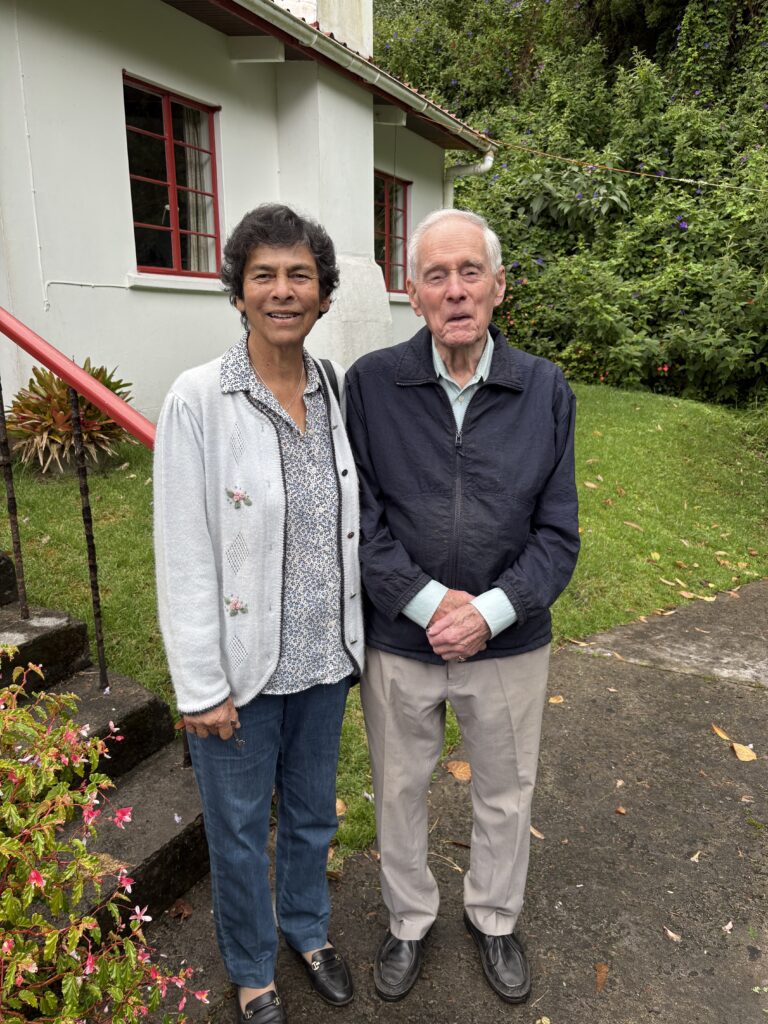
Delia and Cliff 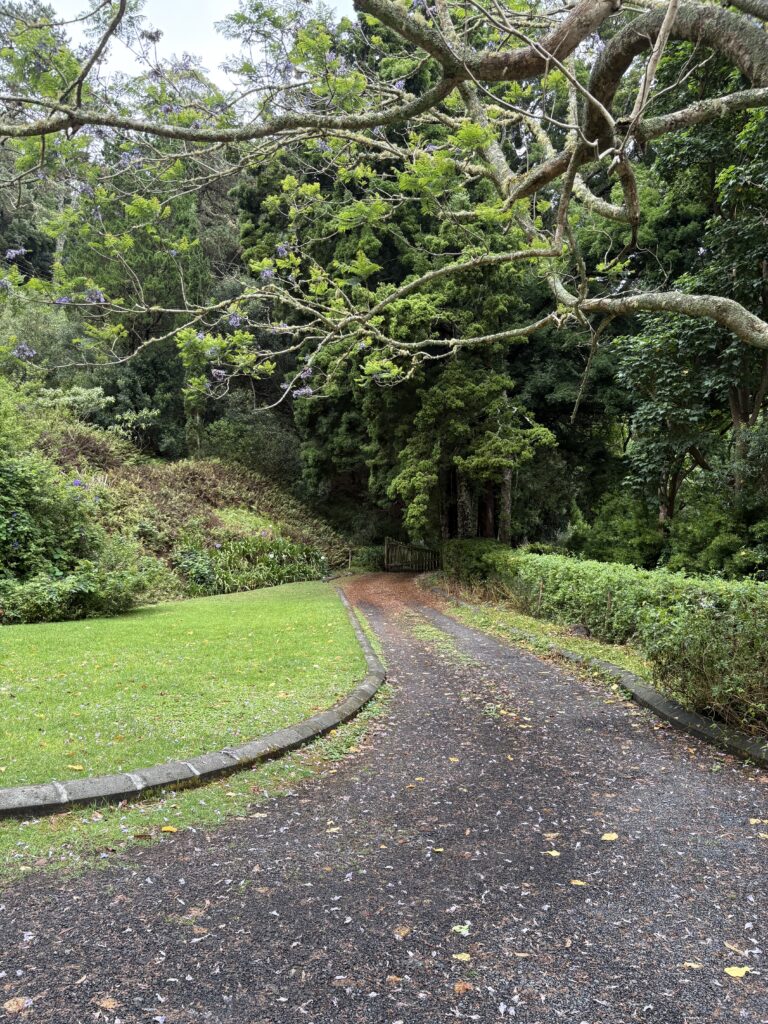
The driveway and the gate 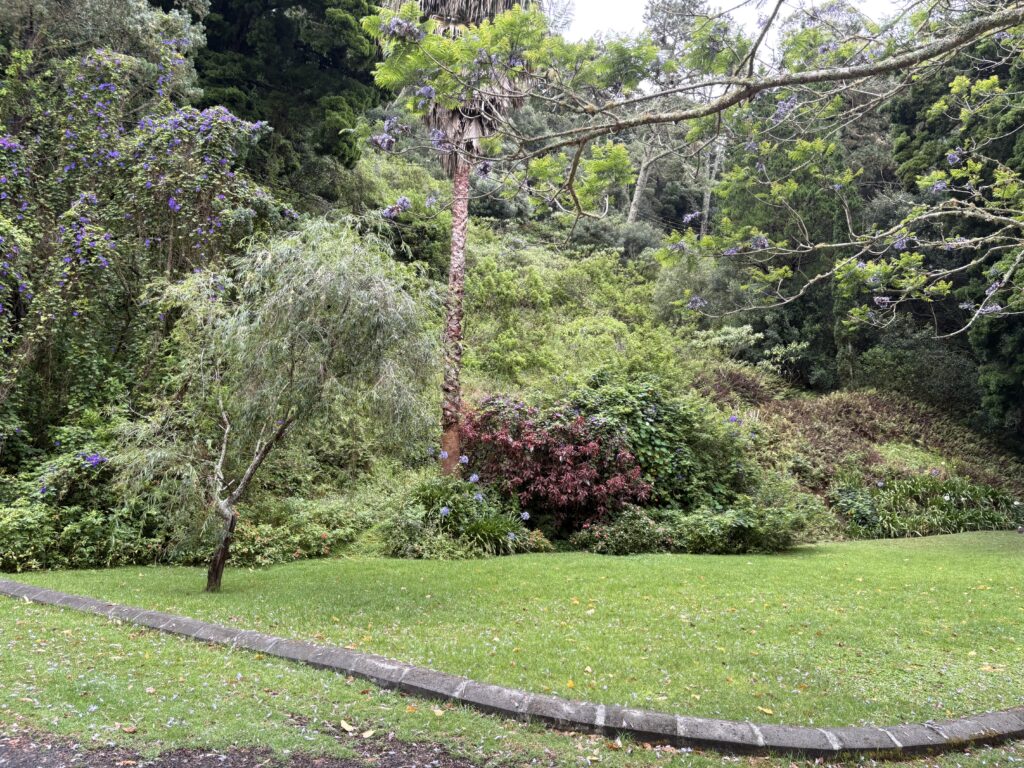
Their garden 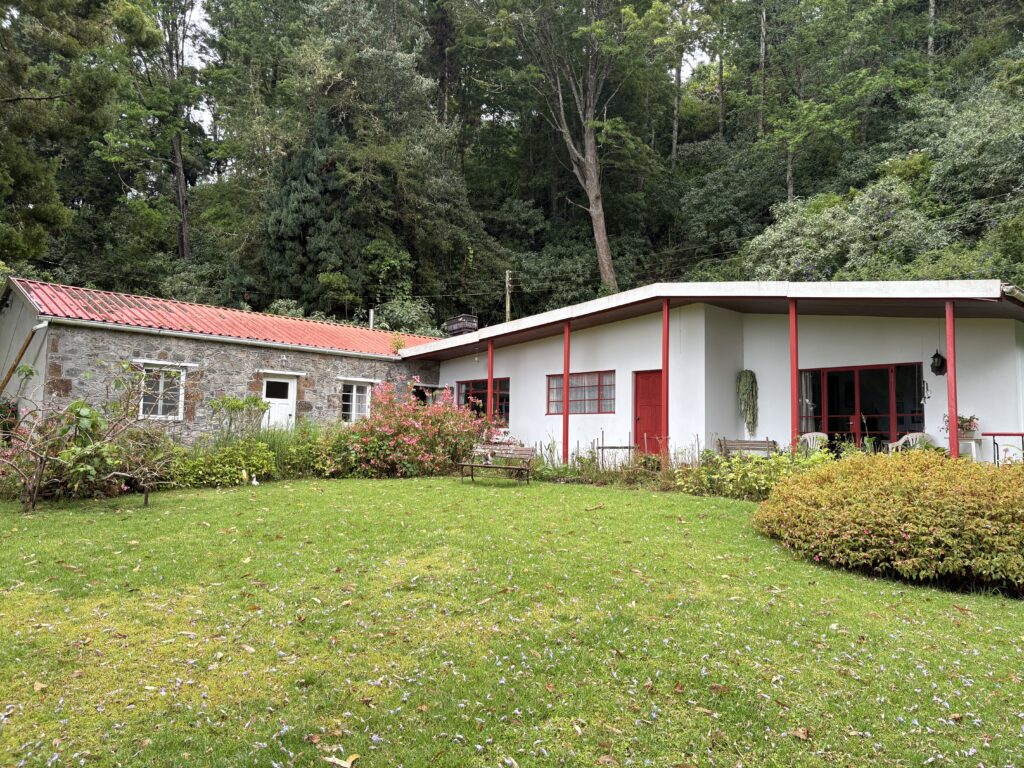
Their home within the trees and forest 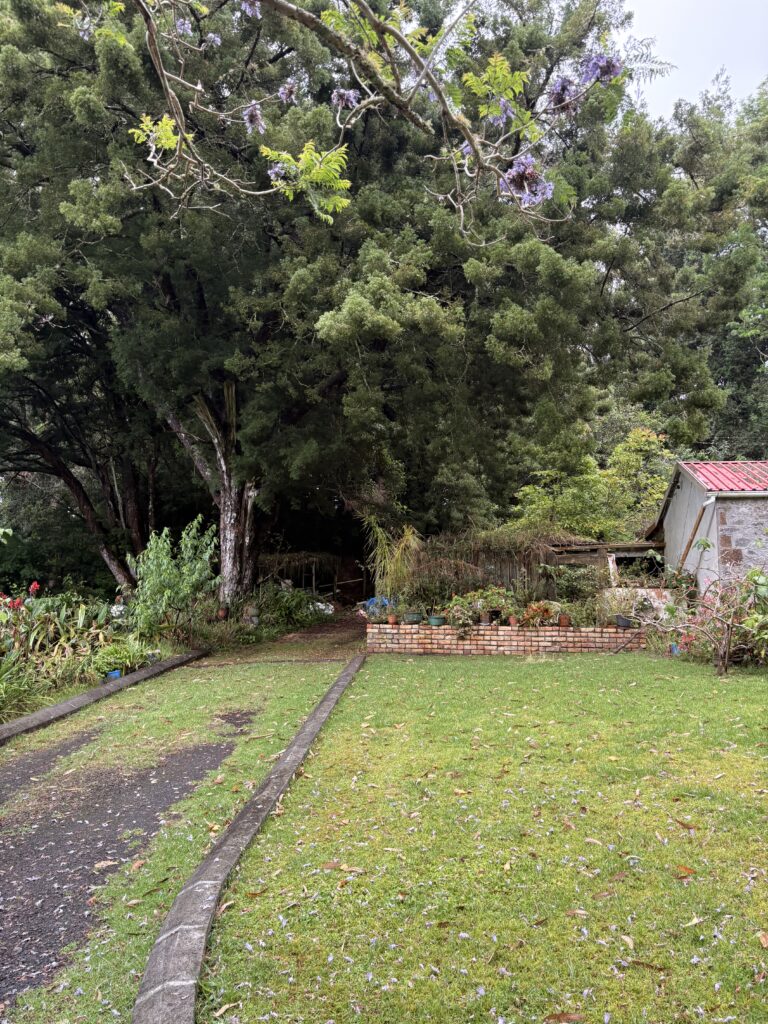
The garden, driveway and huge trees 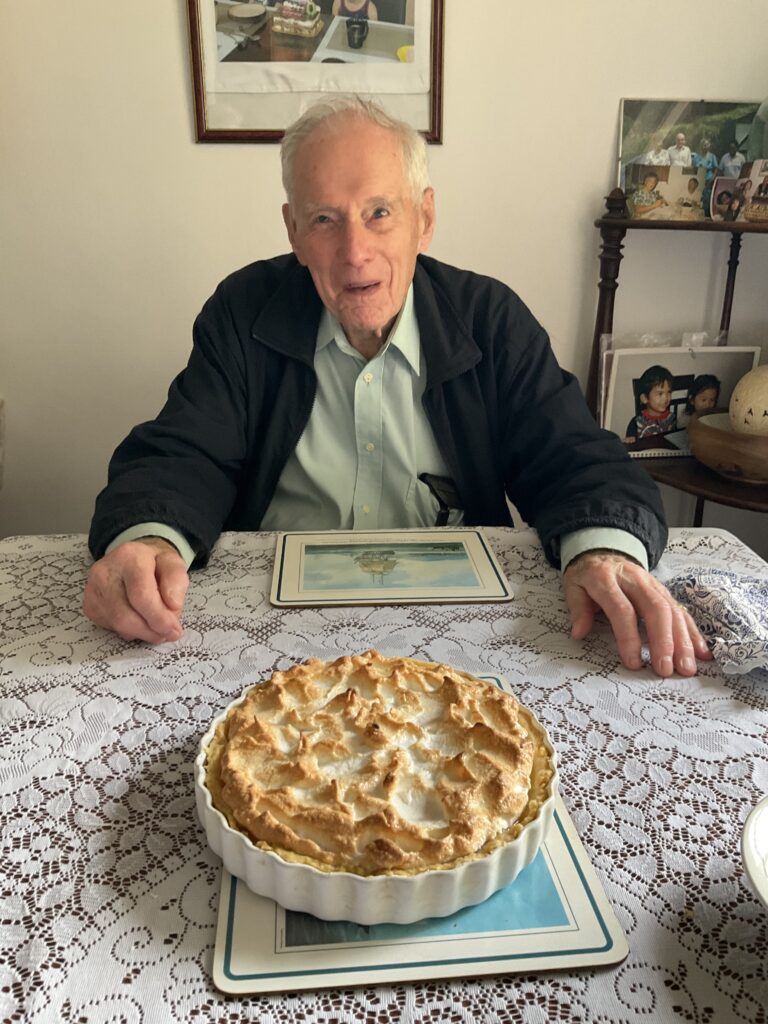
Cliff Huxtable and the famous lemon-meringue pie -

St Helena, Visiting old friends
Scally and her crew stayed moored in the bay at Jamestown for about two months in 1982, from February to April. My parents, during this time, made friends with a family called the Huxtables. Cliff, originally from Canada, Delia, a Saint, and their two children Jane and Robert, who were more or less the same age as Miguel was at the time. Both Delia and Cliff, at the time, were the same age as my parents, more or less. Cliff was a school teacher at the high school. My mother has kept in touch with them all these years; she’s actually very good at keeping in touch with old friends, and in preparation for my visit to St Helena in 2026, I contacted Delia and Cliff to see if they would like to meet.
I arrived on the weekly flight in to St Helena from Cape Town on a Tuesday just after lunch and checked in at the Mantis St Helena Hotel. I had literally only just checked in and taken my bags to my room, when Delia and Cliff arrived at the hotel to meet me.
Delia looked just like my memory of her, she hadn’t seemed to have changed, apart from a few wrinkles on her otherwise youthful face. I could not believe she was eighty. She only had a few streaks of grey in her hair, her eyes were bright and interested, and she had a lovely, winning personality. Cliff, hard of hearing, is now ninety three. They sat together opposite me, a married couple of over fifty years. We had tea and sandwiches in the lobby, and looked over a couple of photos of us all from 1982 that she had brought with her in an album to show me. She asked many questions. About my mother, my brothers and their family, me. They left after an hour or two, with an invitation to lunch that Sunday at their home.
Dates: They visited me on the date of my arrival in St Helena on the 6th January 2026.
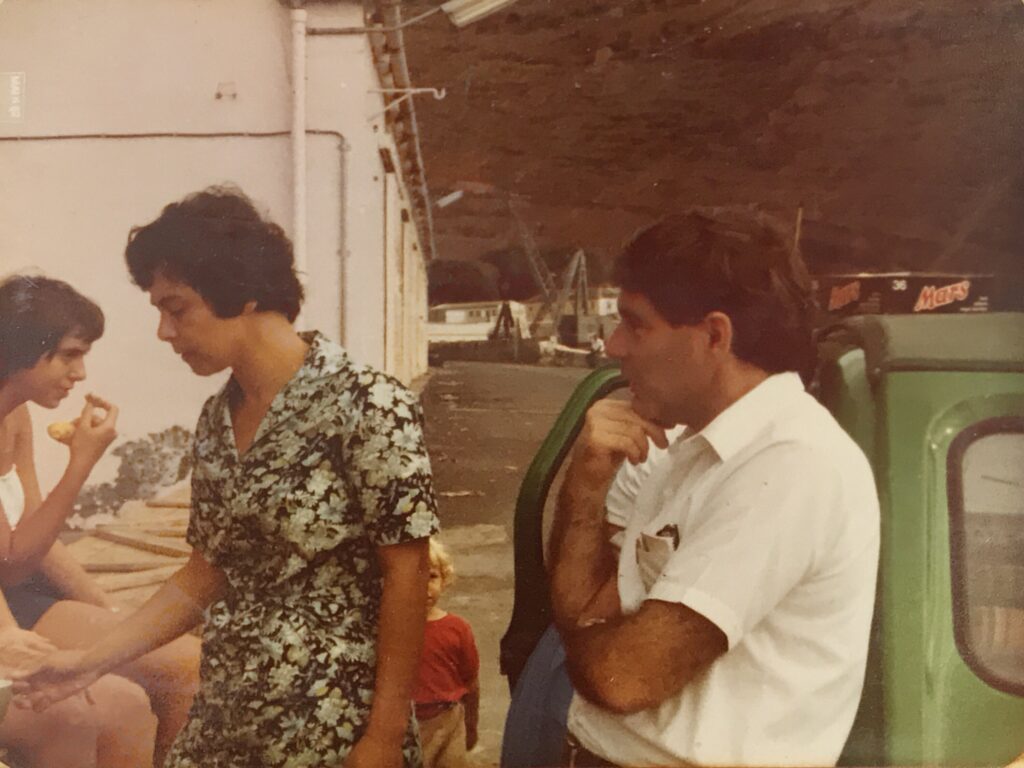
Down by the port. Delia and Cliff plus myself and Filipe. 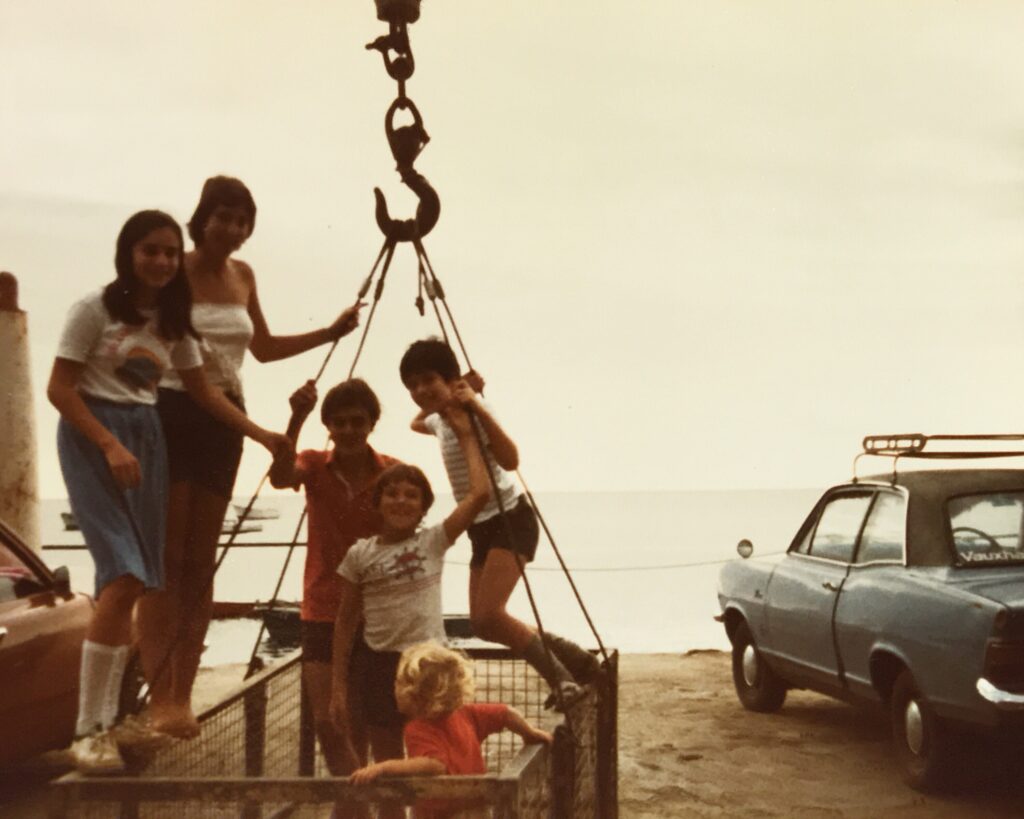
The four of us kids from Scally plus the Huxtable children. 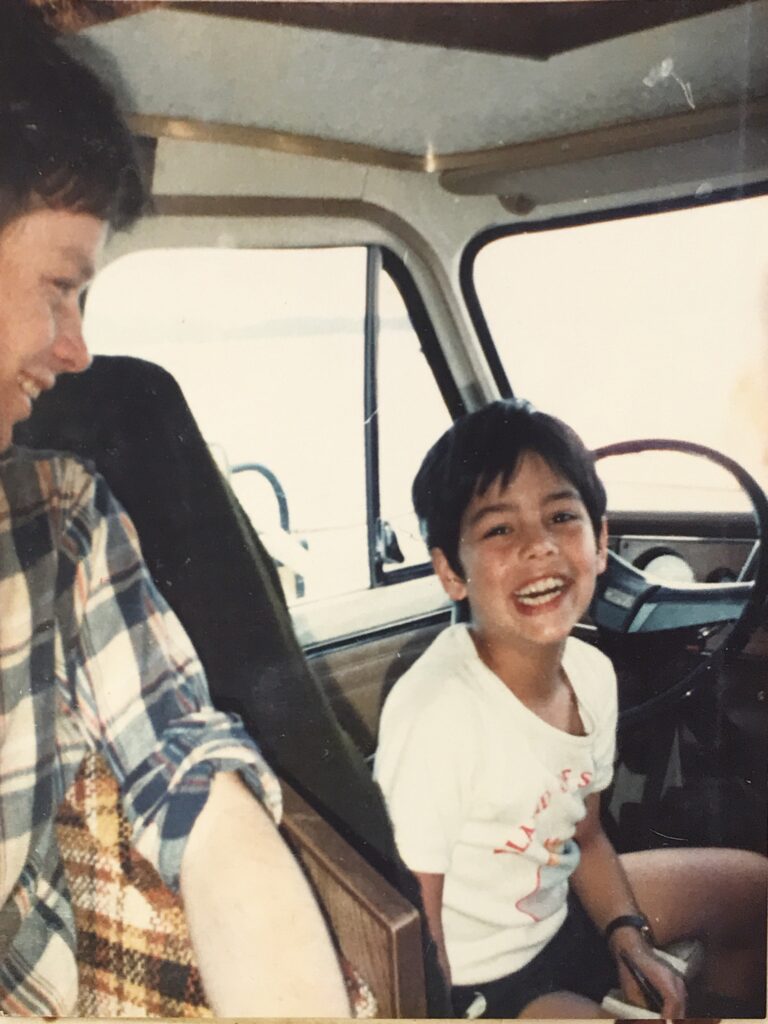
The Huxtable boys. 
My middle brother and Robert 
At the Huxtables House in Luffkins Springs 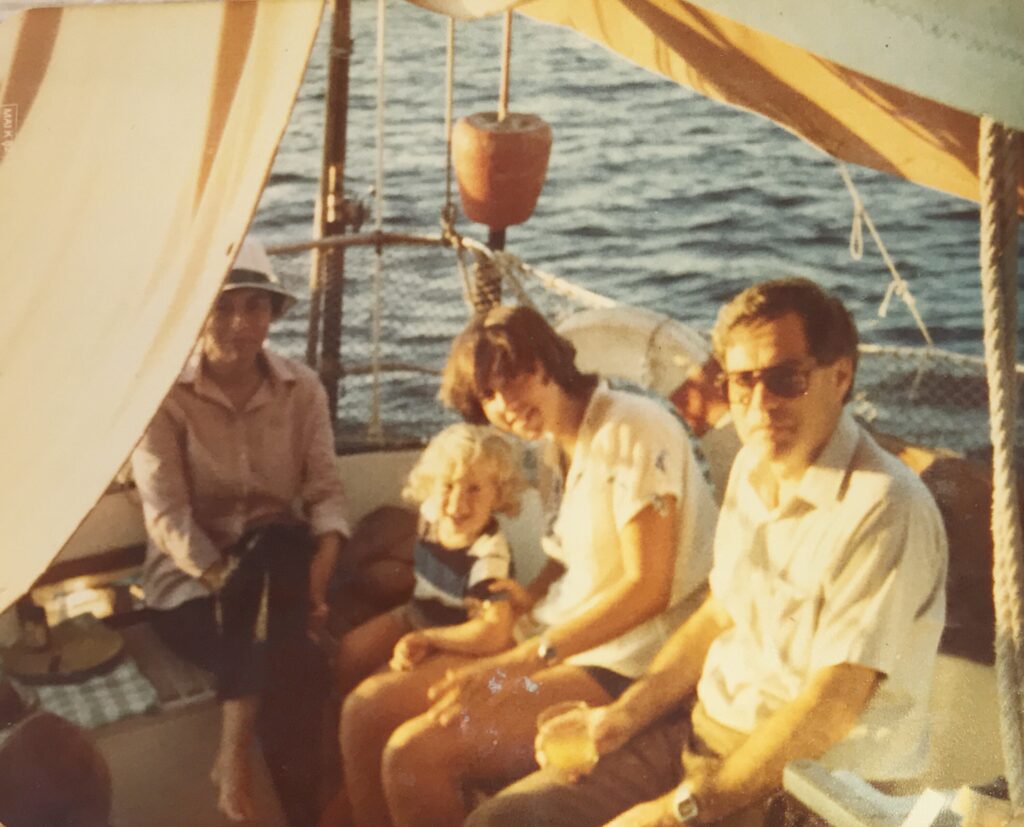
On Scally in Jamestown bay. Myself with my youngest brother and Delia and Cliff Huxtable. -
St Helena, Landing and Arriving
The drive down from the airport to Jamestown was different to anything I had expected, read about or indeed remembered. It’s always like that, though, isn’t it? You can read as much as you like about a place, but nothing can ever compare to actually being there, taking in the sights with your very own eyes, breathing in the air, feeling it, making conversation with the local taxi driver taking me to the only hotel on the island, and in the case of St Helena, taking in the vast expanse of such a small island.
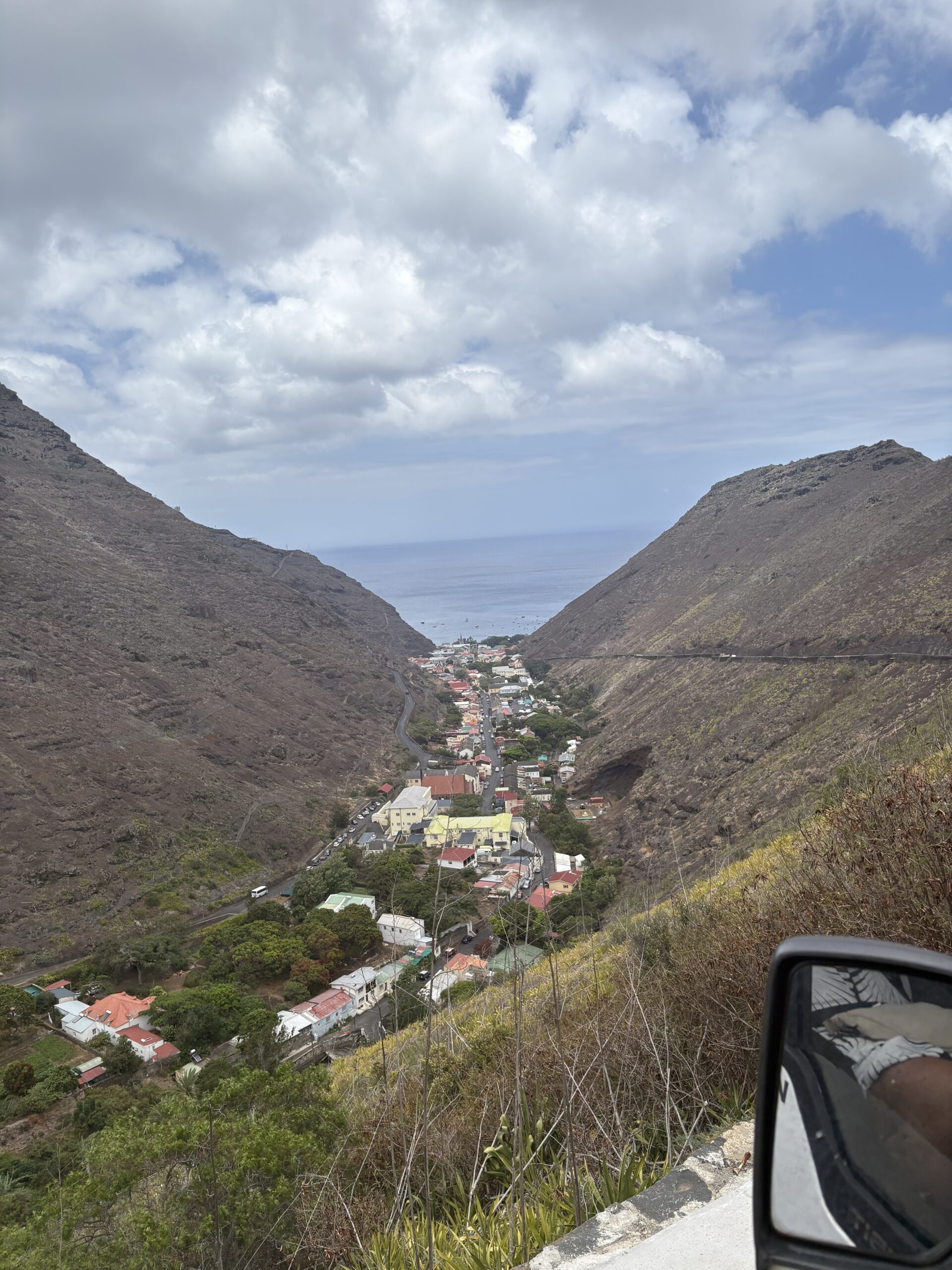
The driver, Craig, took me from the airport on the only road that led to Jamestown, opened in 2017, built by a South African engineering company and financed by the British government. The wide variety of landscapes we went through, in only thirty minutes was vast, from arid, rocky, rugged mountainous terrain, through deep verdant valleys, along narrow mountain passes where vehicles of all sizes had to honk their horns to oncoming traffic and stop regularly in tiny bays for others to pass, to the town of Jamestown and the port.
We arrived in Jamestown. It was very sunny and warm, welcoming. There were vehicles everywhere, most of which looked like they had been inspected for road safety in a different century, and possibly were, vehicles of all descriptions and in all state of repair, parked neatly and tidily in the middle of the Main Street. There is only one Main Street, with its few shops on either side, a single bank, The Bank of St Helena, which issues its own notes and coins, although British pounds are also accepted, a few market stores, the Catholic Church, a prison, a hotel, The Mantis St Helena, where I was staying, the castle, where the governor works, Anne’s place, the local hangout for yachties, the museum, and of course, the bottom of Jacob’s ladder.
My memories all came flooding back.
Dates: I was in St Helena in January 2026.
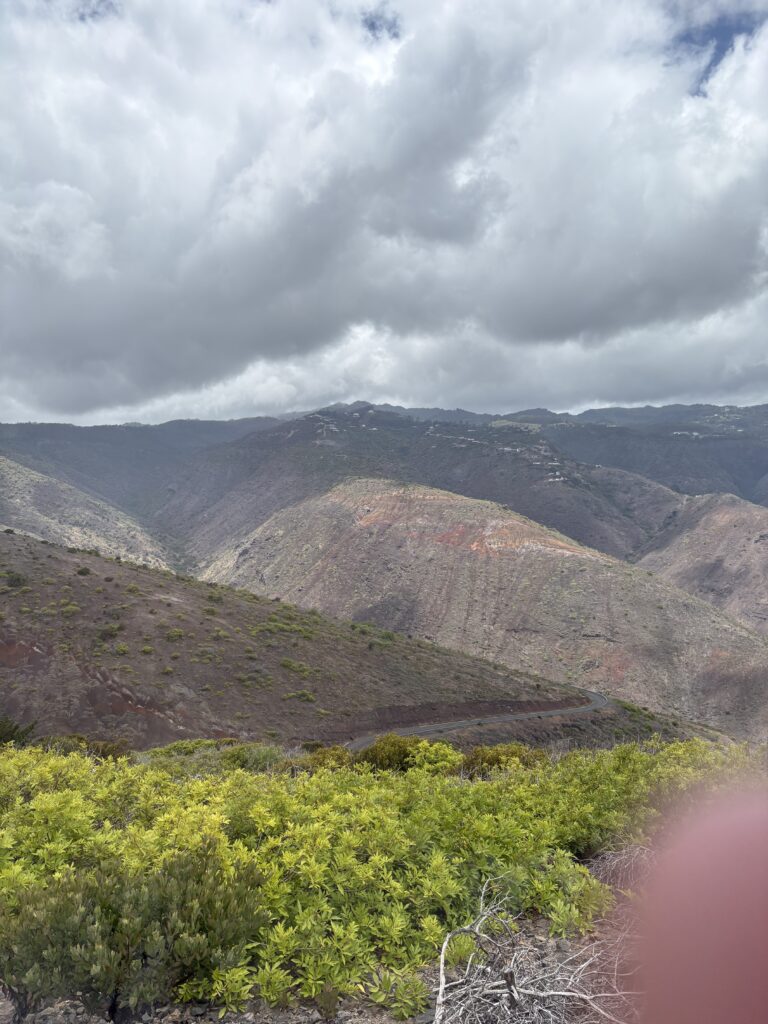
The rugged hills leading from the airport to Jamestown 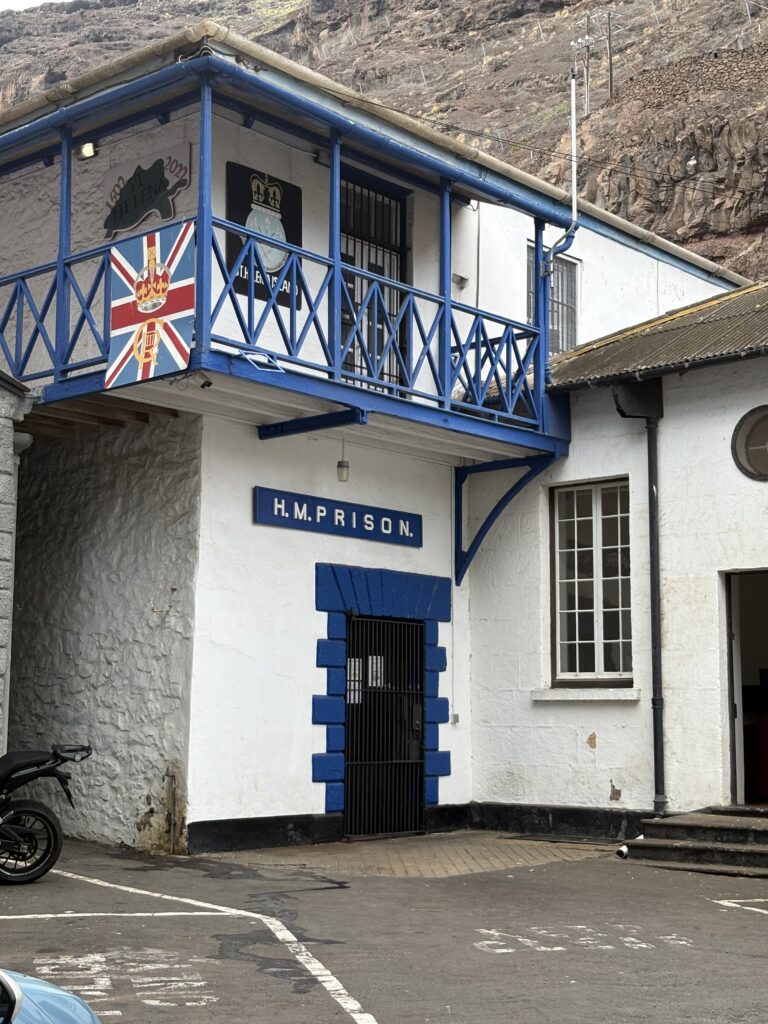
HM Prison in Jamestwon 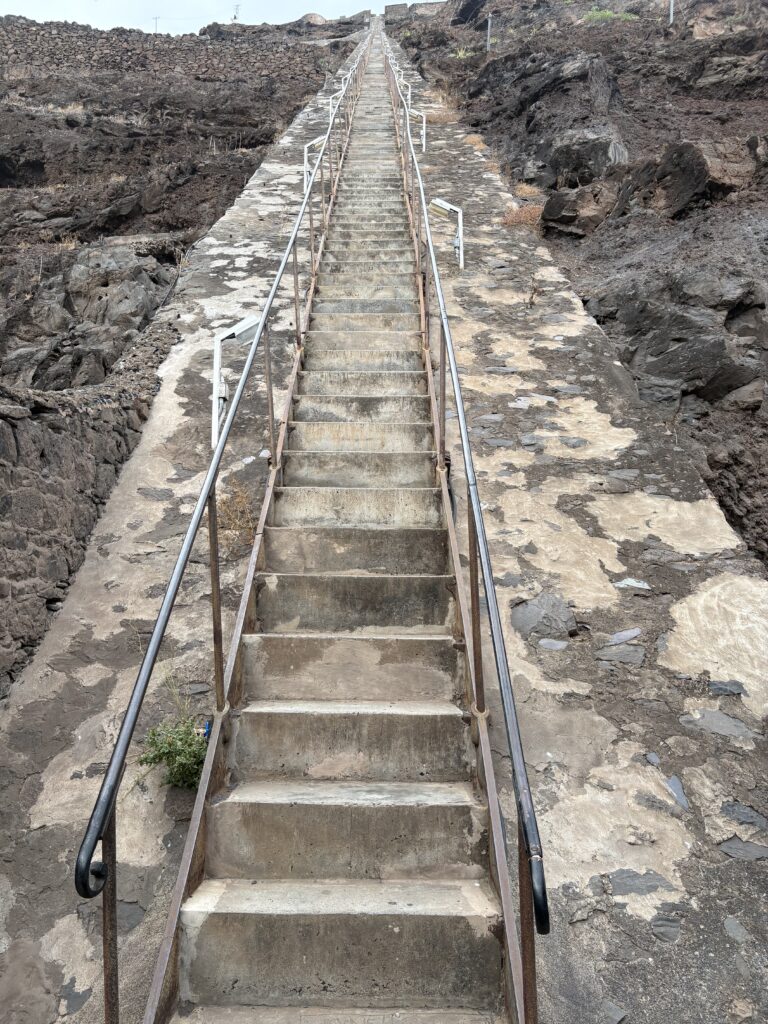
View up the ladder 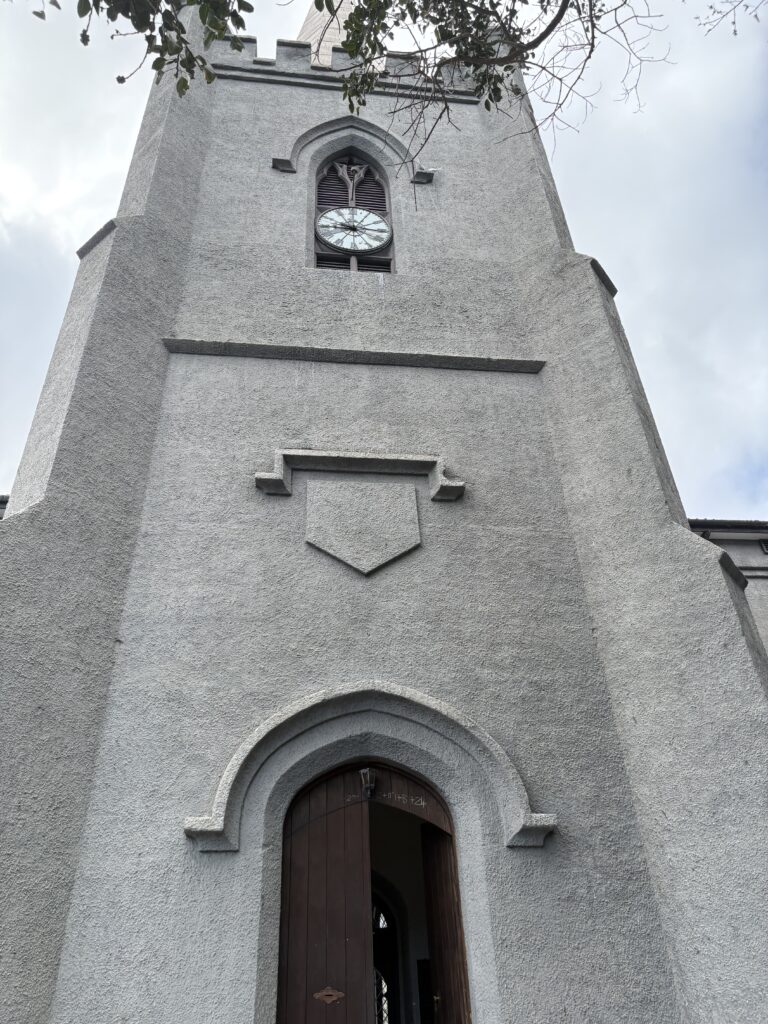
The Catholic Church 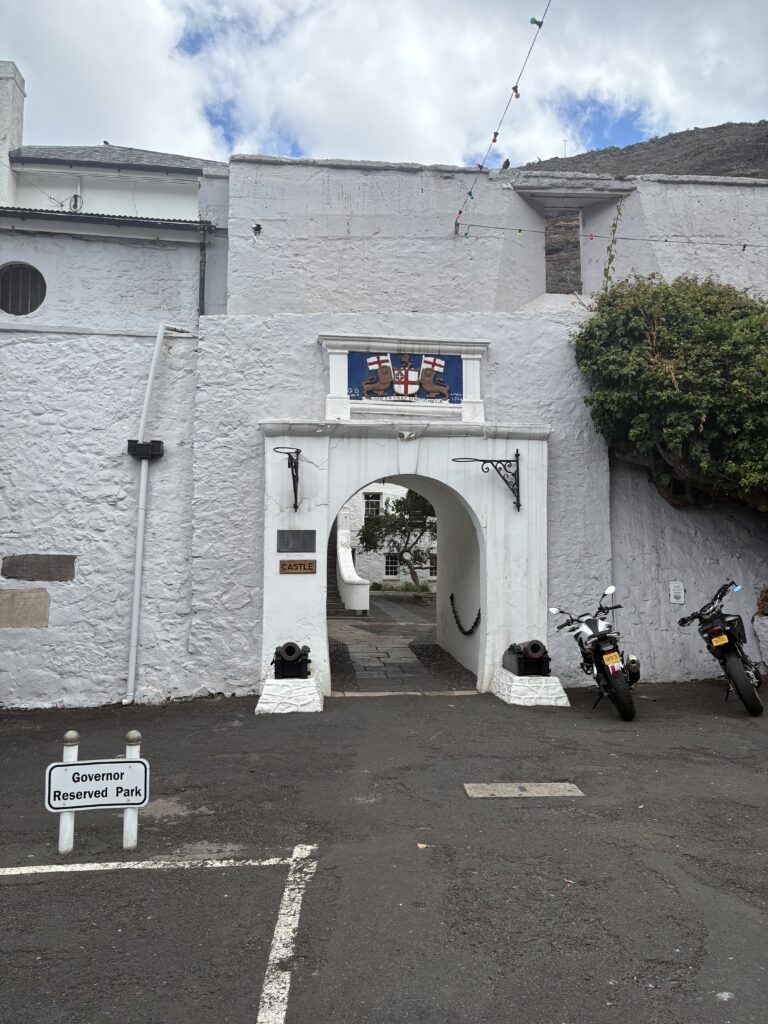
The governors office es at the castle 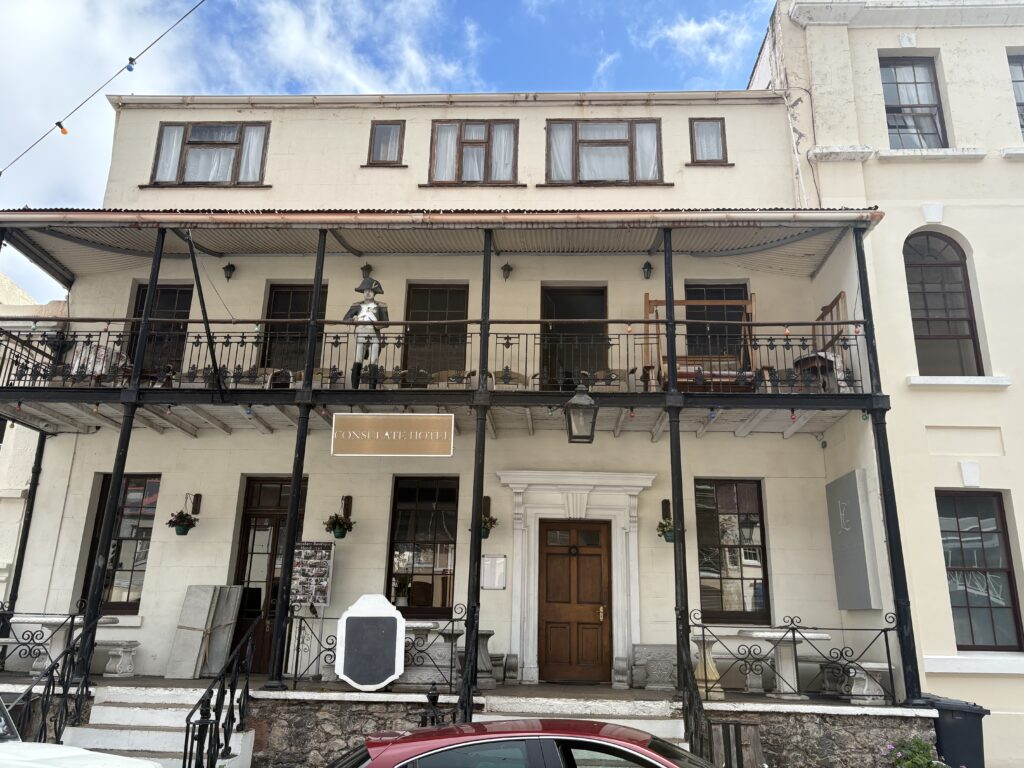
Very old hotel, closed down now 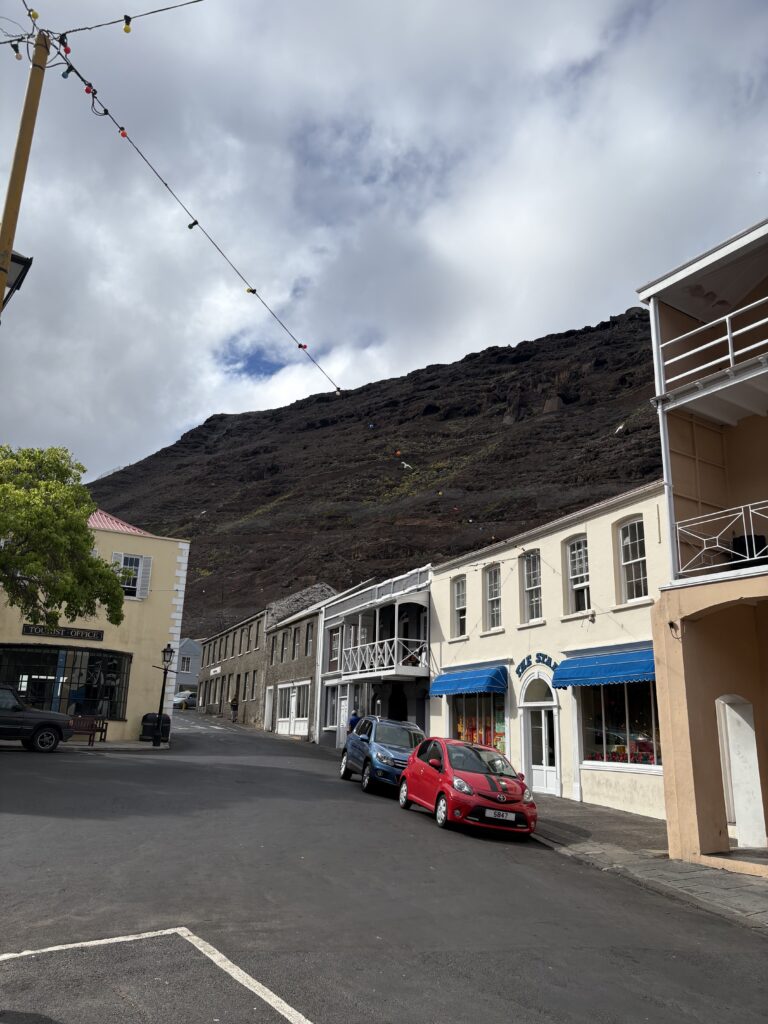
Images of Jamestown 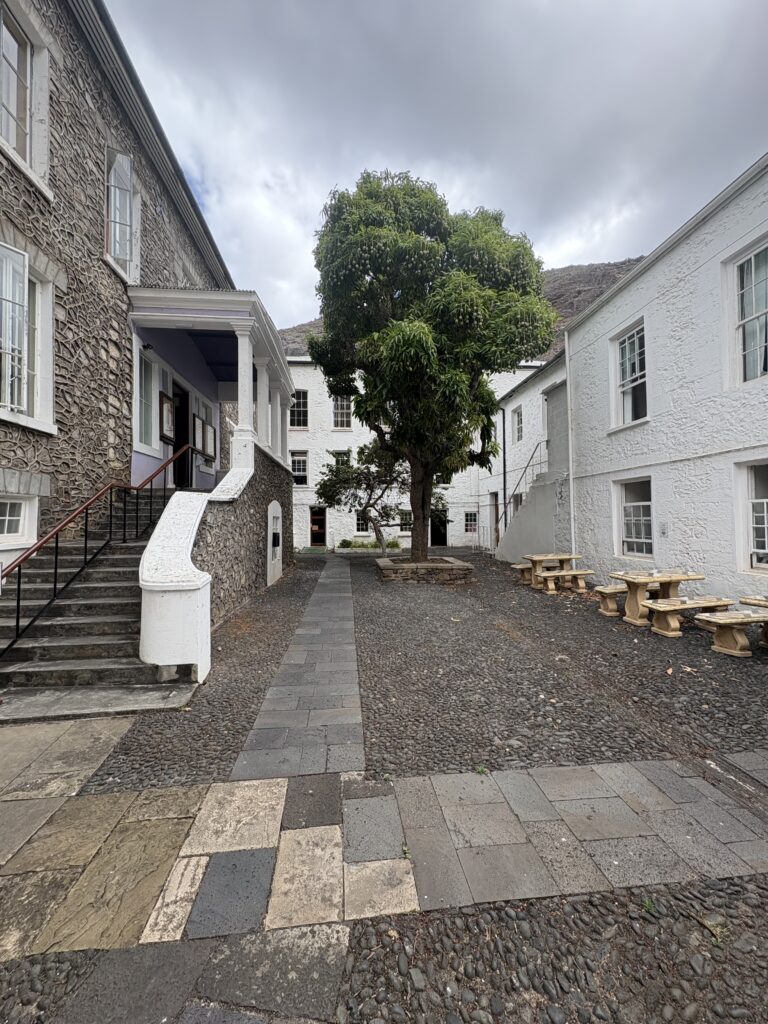
Images of Jamestown 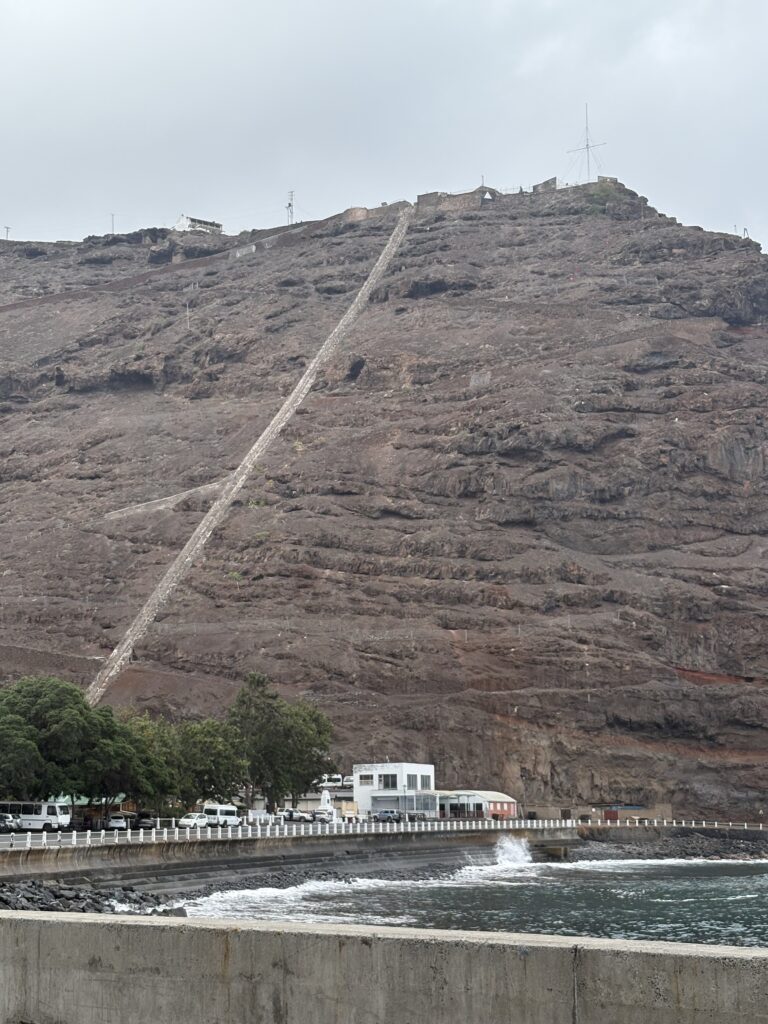
The ladder -
South Africa, Leaving Cape Town in 1982
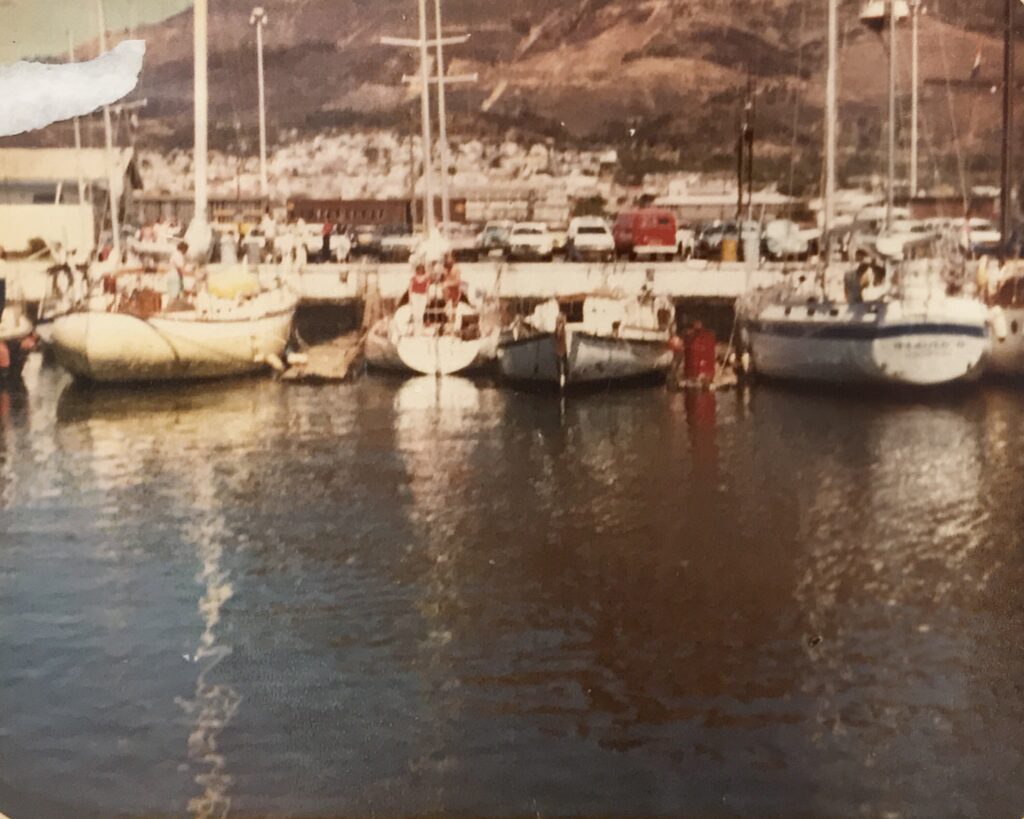
We departed the Royal Yacht Club in Cape Town in February 1982. None of us are entirely sure of the exact date; I have as yet to locate Scally’s logbook amongst my father’s stuff at the farm. We had stocked up on provisions, Scally was all ready and prepared, and were headed off on what was for me, my first long sailing trip on Scally. (My father, mother and oldest of my three younger brothers, who was fourteen at the time, had sailed Scally alone from Durban to Cape Town in January).
None of us knew what was in store of us on the south Atlantic, on what was expected to be a fourteen-day journey to St Helena. Well, maybe my father did, but he didn’t share much with us. Not long out at sea, we all got to experience the unpredictability of the ocean, its unwelcome and highly changeable weather patterns, dark grey and threatening skies above, gales and high winds, heavy rain, stormy and violent seas, and for me, severe sea-sickness.
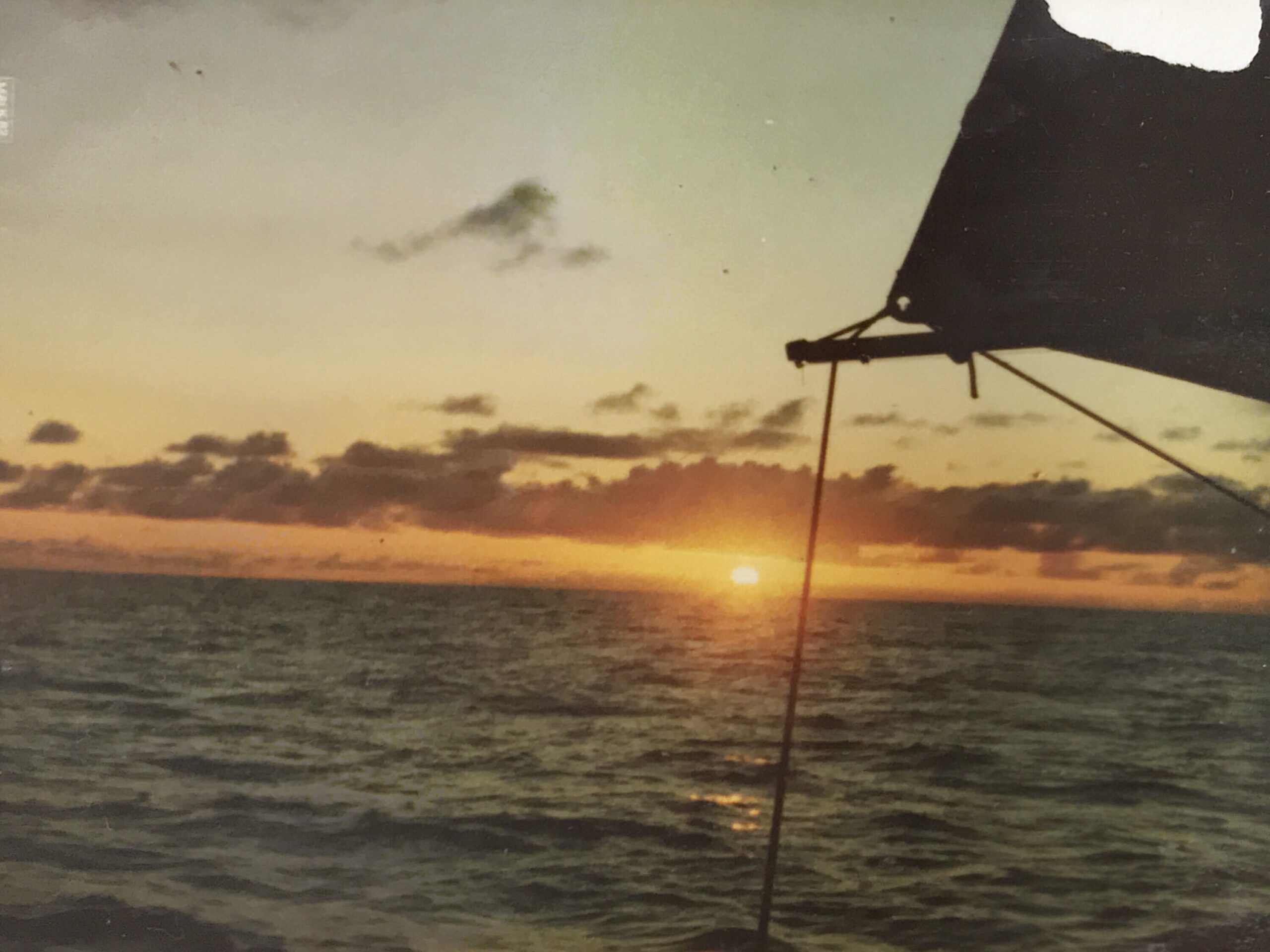
After about ten days of this, the weather finally calmed and cleared, the sun came out, literally and figuratively, and we set about getting ready to sight the island, taking turns sitting on the stanchions on the bow to see who would spot the island first.
After fourteen days, she was in sight, and we anchored, safely, in the bay at Jamestown. Scally, and my father, had brought us safely to our first port of call.
Dates: I left Cape Town in early January 2026.
Departing Cape Town 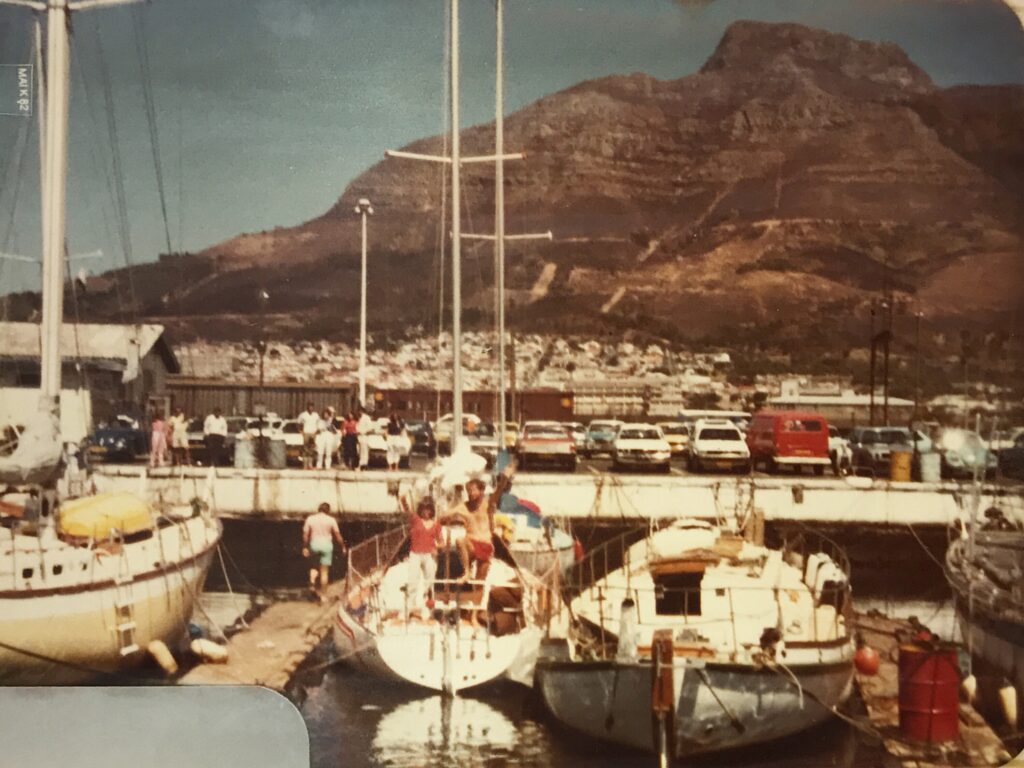
Yachties waving us off 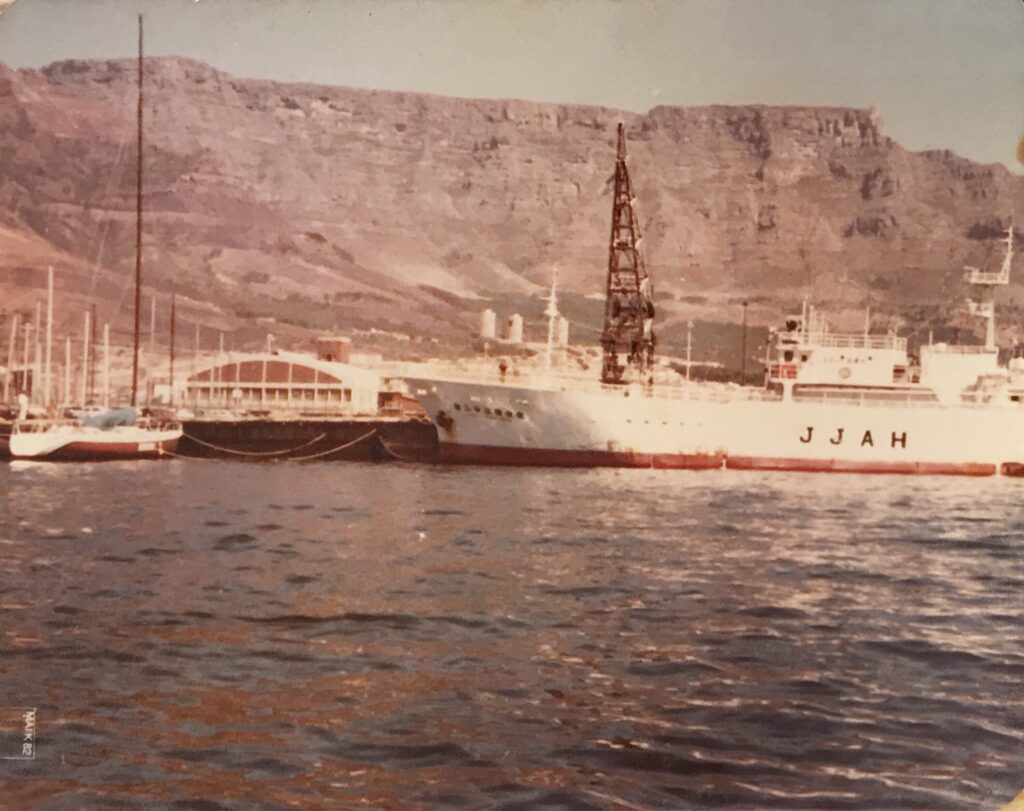
Leaving Cape Town 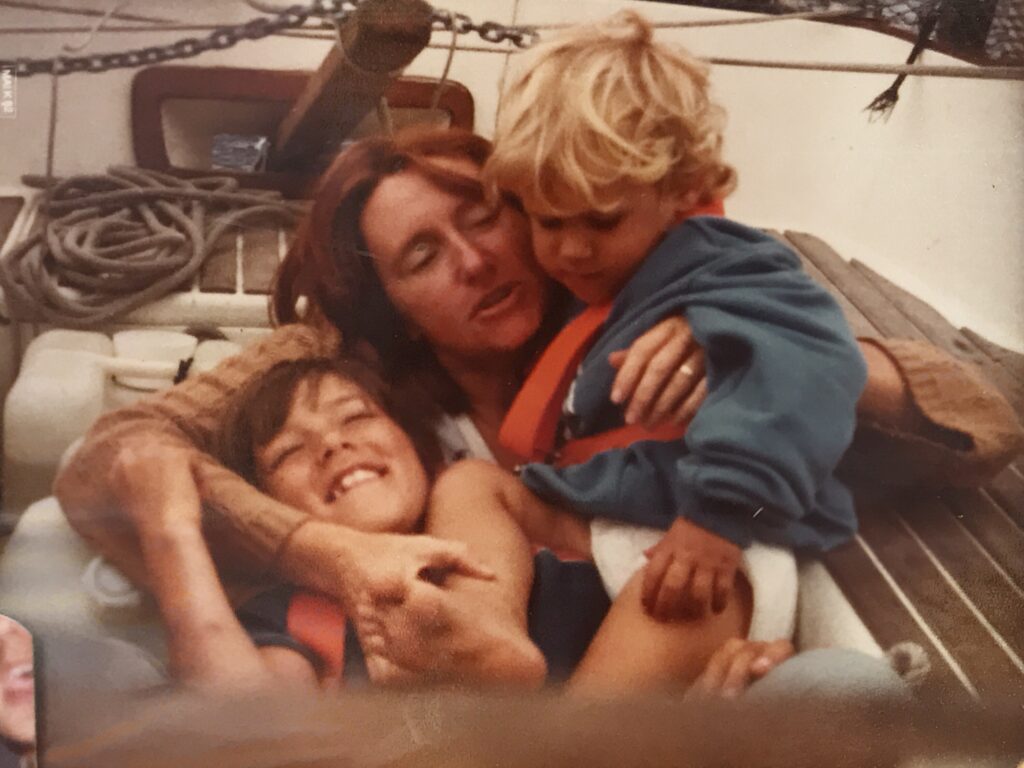
My mother and two younger brothers in the cockpit 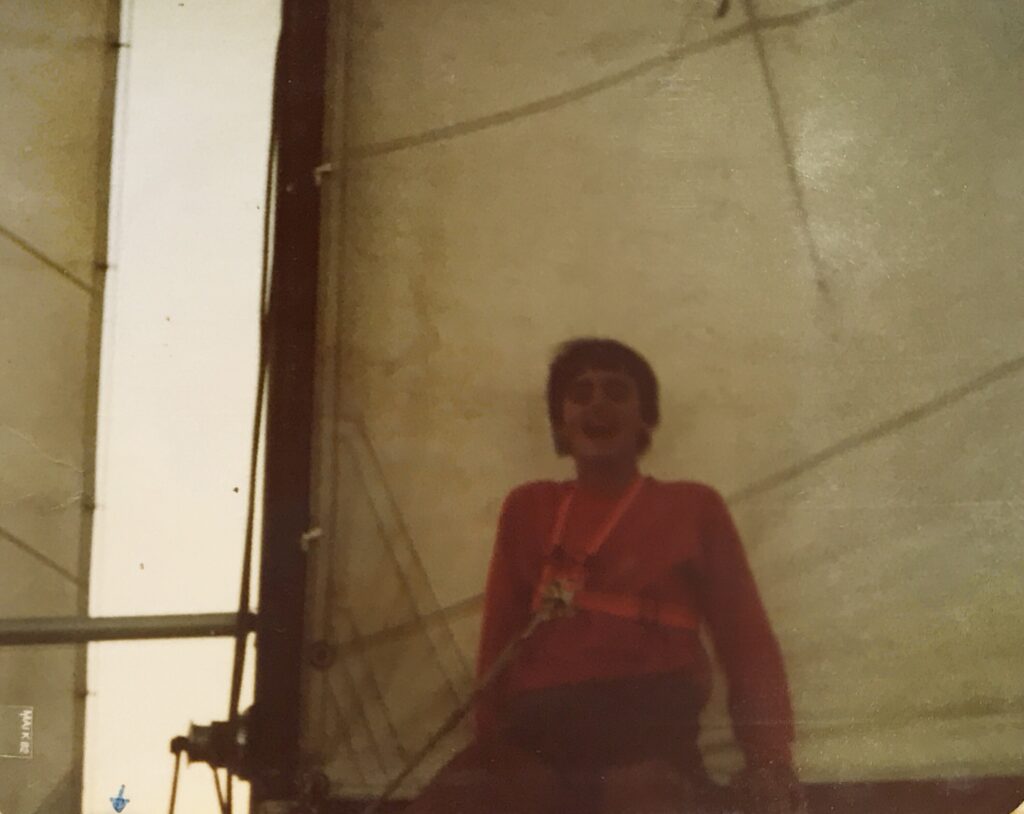
The oldest of my brothers 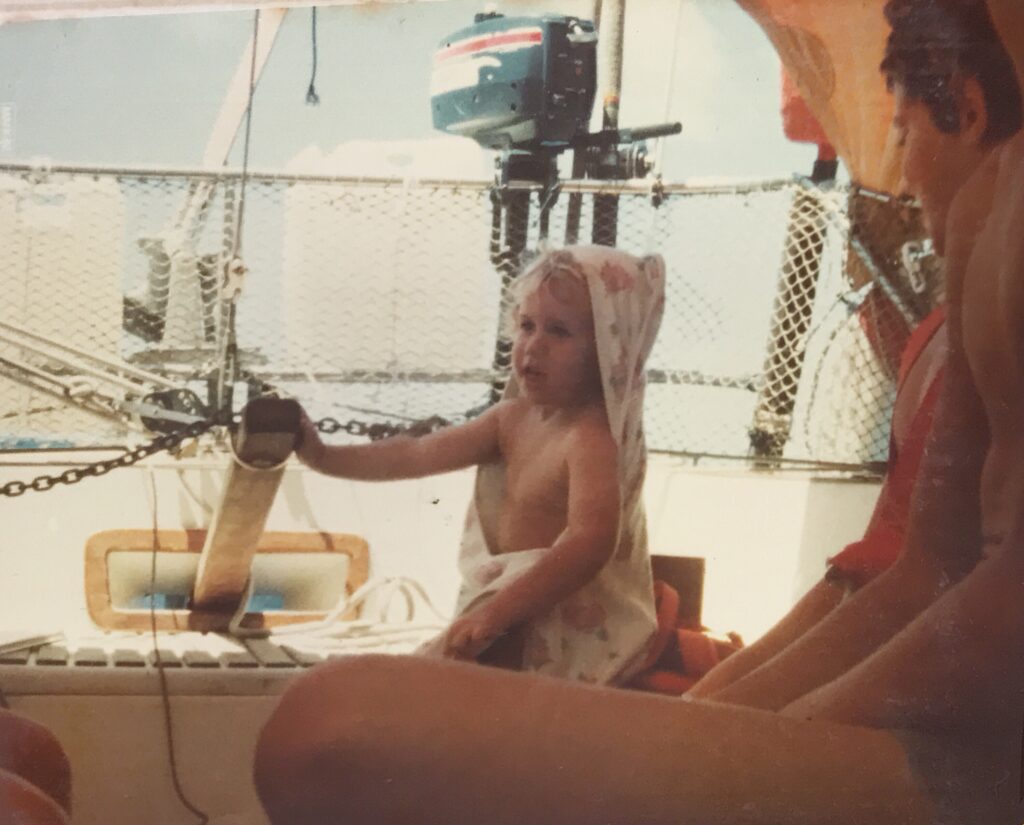
Docked in Jamestown, my youngest brother at the helm 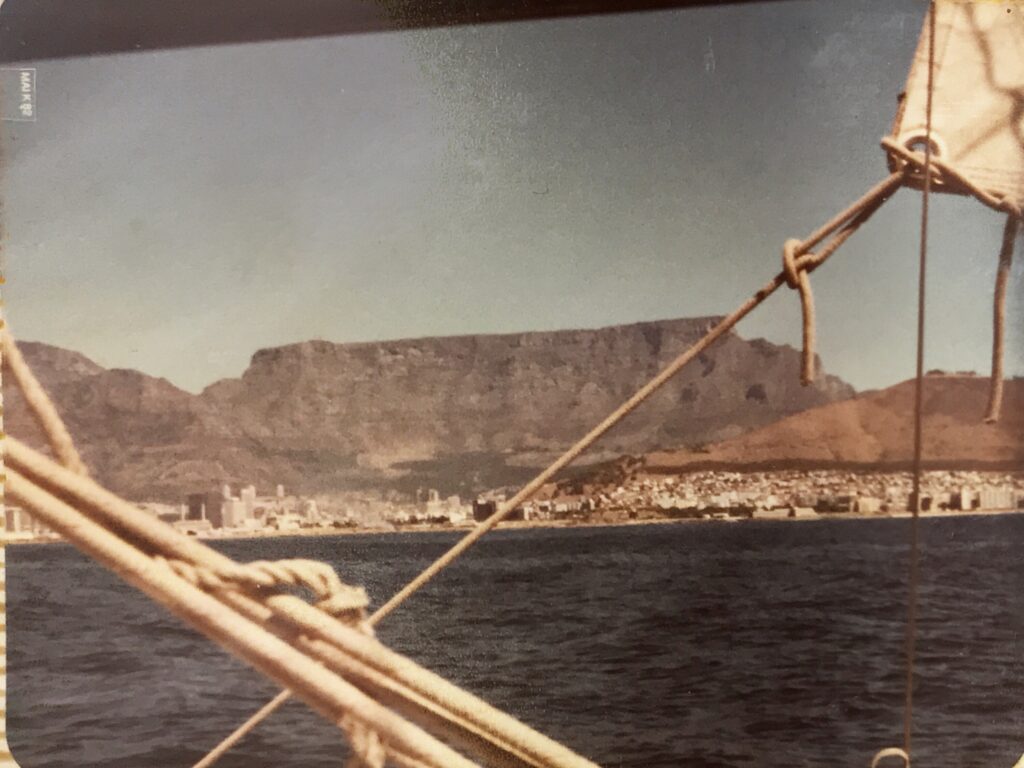
Tabel Mountain Retreating -
South Atlantic Ocean: Flying to St Helena
In 1982, we sailed from Cape Town to St Helena Island. St Helena is the furthest inhabited island from a continent anywhere, making it one of the remotest inhabited islands on the planet. It’s located 12’850 kms from Cape Town, or approximately 1’700 nautical miles. Our trip from Cape Town to St Helena Island, in 1982, on Scally, took us approximately thirteen days, which is an average speed of 130 knots per day, which is good sailing for a 31-footer. This trip, via Airlink from Cape Town, via Walvis Bay, took approximately five hours.
St Helena is a volcanic island, with extremely rugged terrain, dramatic cliffs, steep valleys, variety of microclimates, and a very rich marine life. It was discovered, accidentally, by the Portuguese discoverer, João de Nova in 1502, on his return voyage to Portugal from India.
My flight from Cape Town would fly northwards, along the coast of Africa in the direction of Windhoek, where we would have landed, if weather conditions in the Atlantic required refueling in there. “Weather conditions are favourable, and so we will head out in the direction of St Helena, sit back folks,” announced the captain, and soon headed west heading out across the vast south Atlantic Ocean. I was extremely excited and apprehensive at the same time. It was a rather small plane, not completely full. Some of its passengers knew the route, and were family returning to the island. Others were tourists, like myself, coming for the first, or in my case, second time.
I kept looking out of my window, down to the ocean below, which looked utterly calm and peaceful from such a height, and imagined Scally sailing on these waters, taking us on our fourteen-day adventure across seas to this very same island so many years ago.
Dates: I flew to St Helena in January 2026.
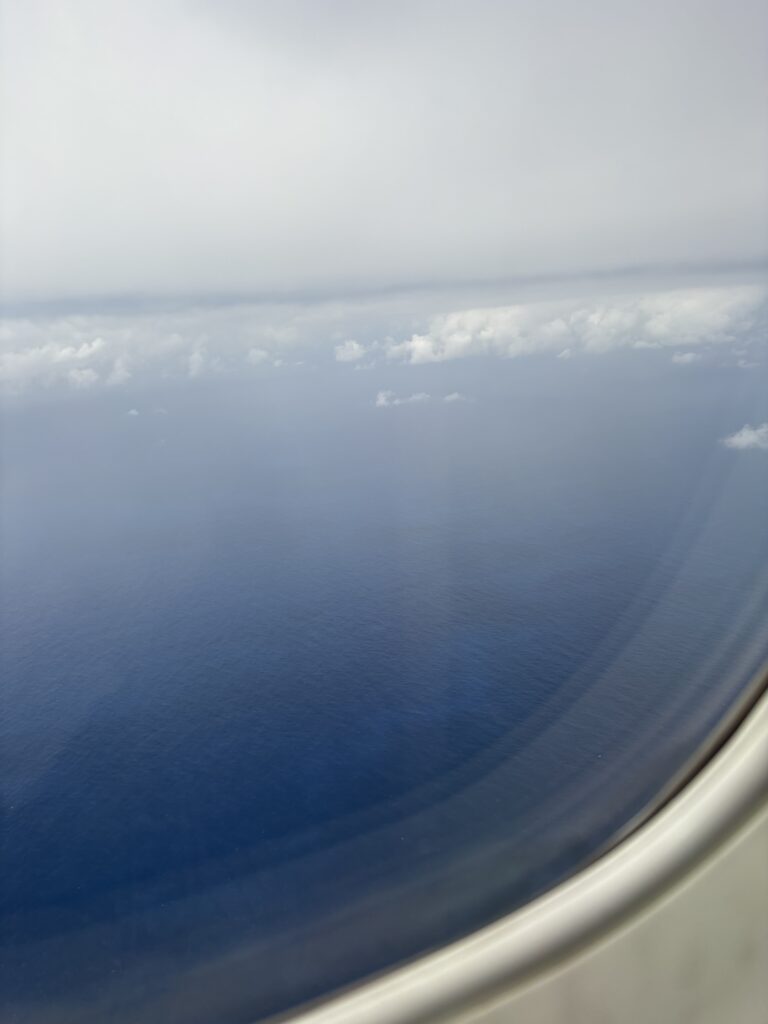
The South Atlantic Ocean seen from the skies 
Different shades of blue in the south Atlantic 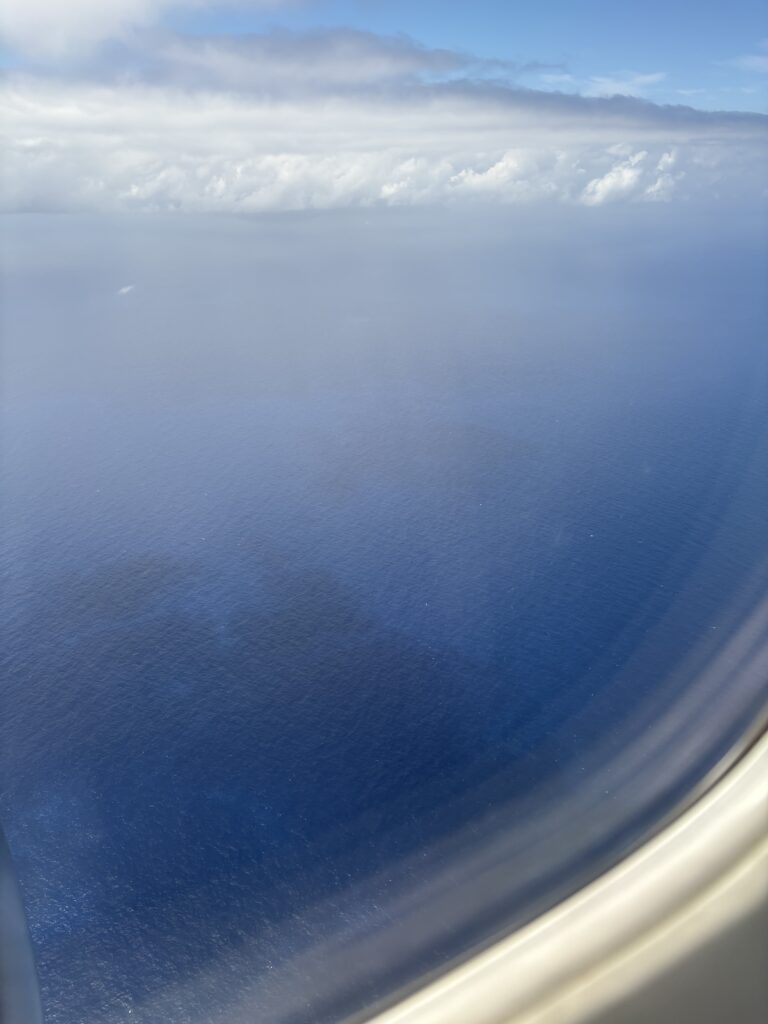
More shades of blue in the mighty Atlantic 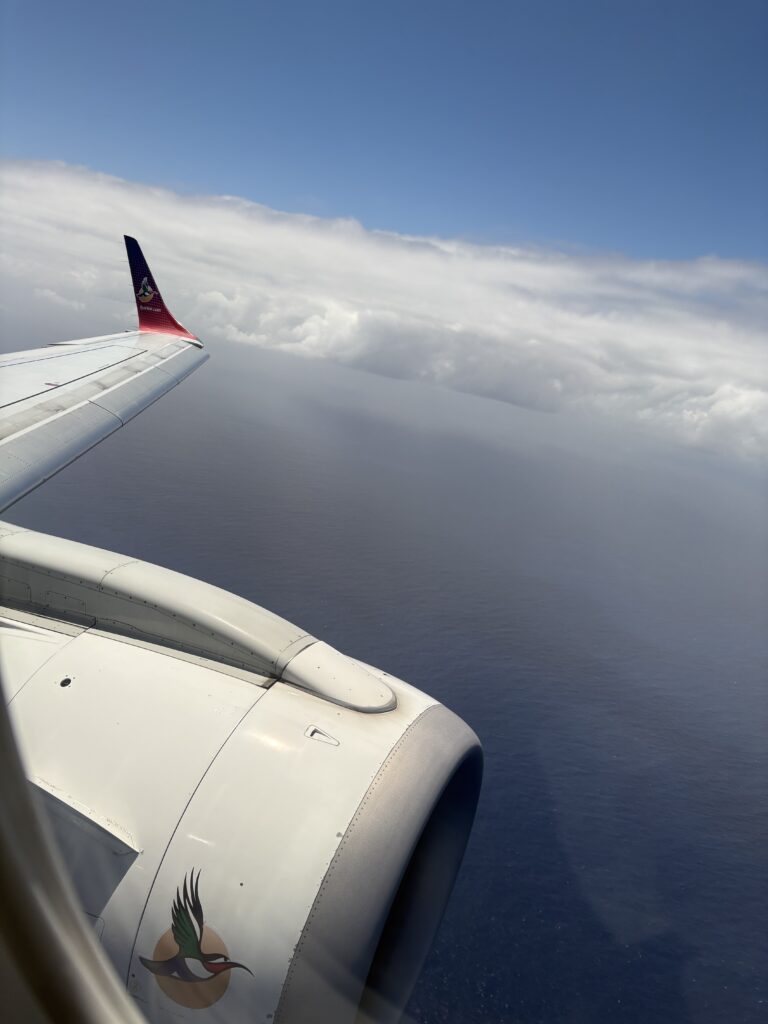
Flying above the south Atlantic 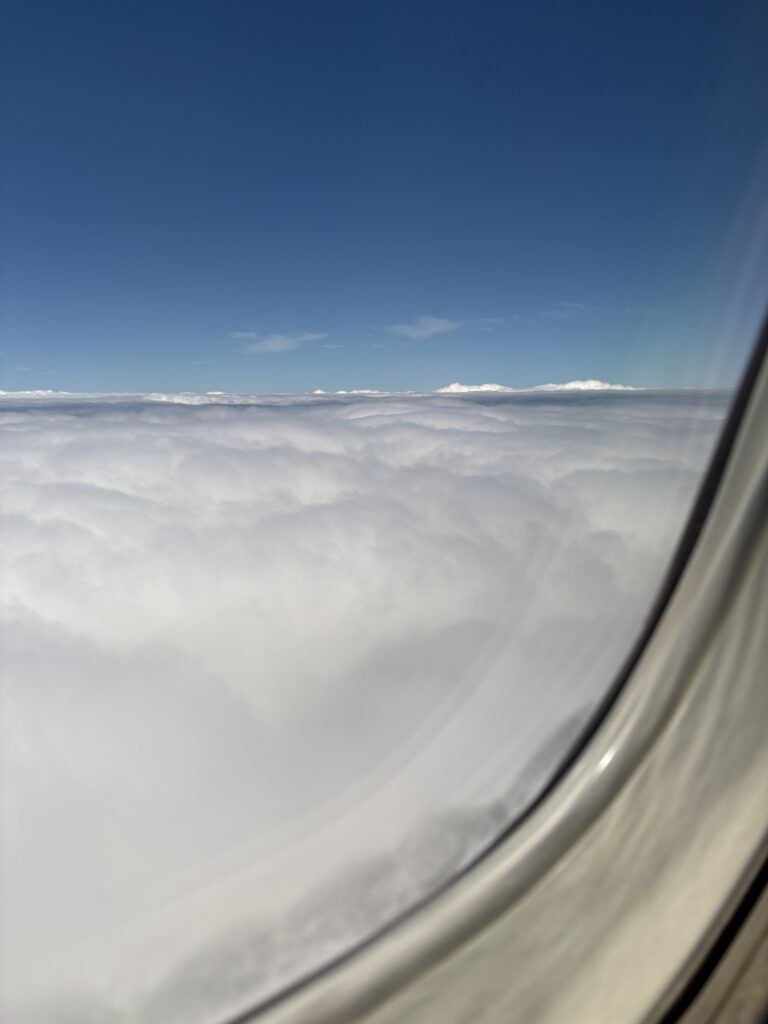
Above the clouds over the south Atlantic 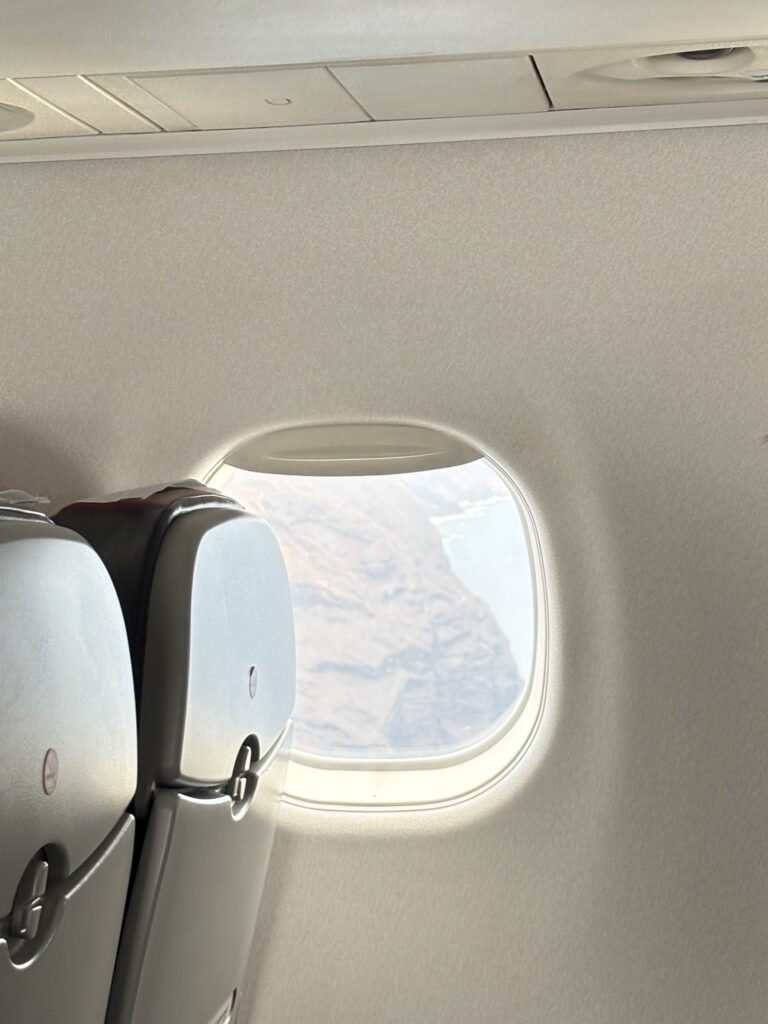
The first glimpse of the island 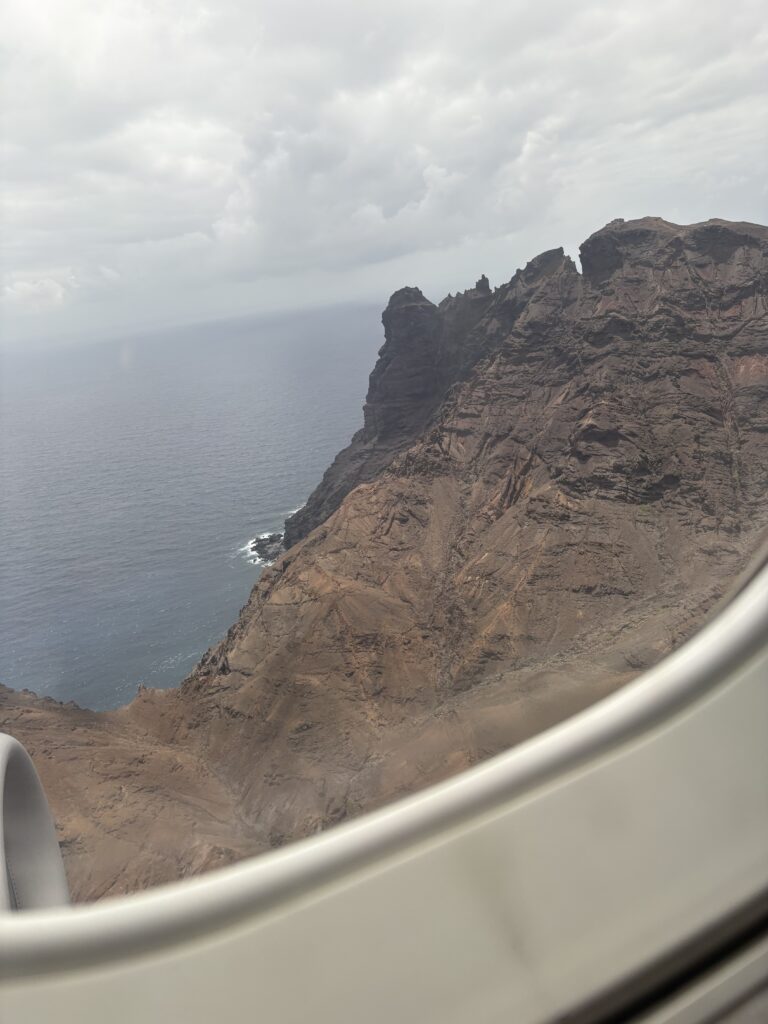
The rocky crags of St Helena 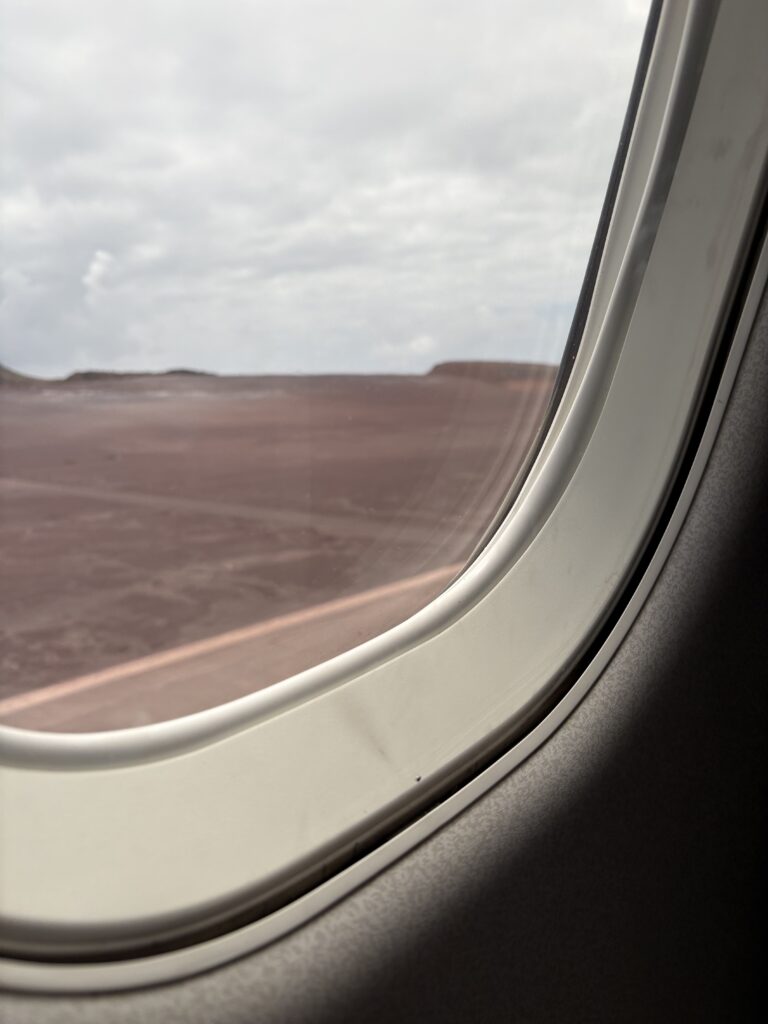
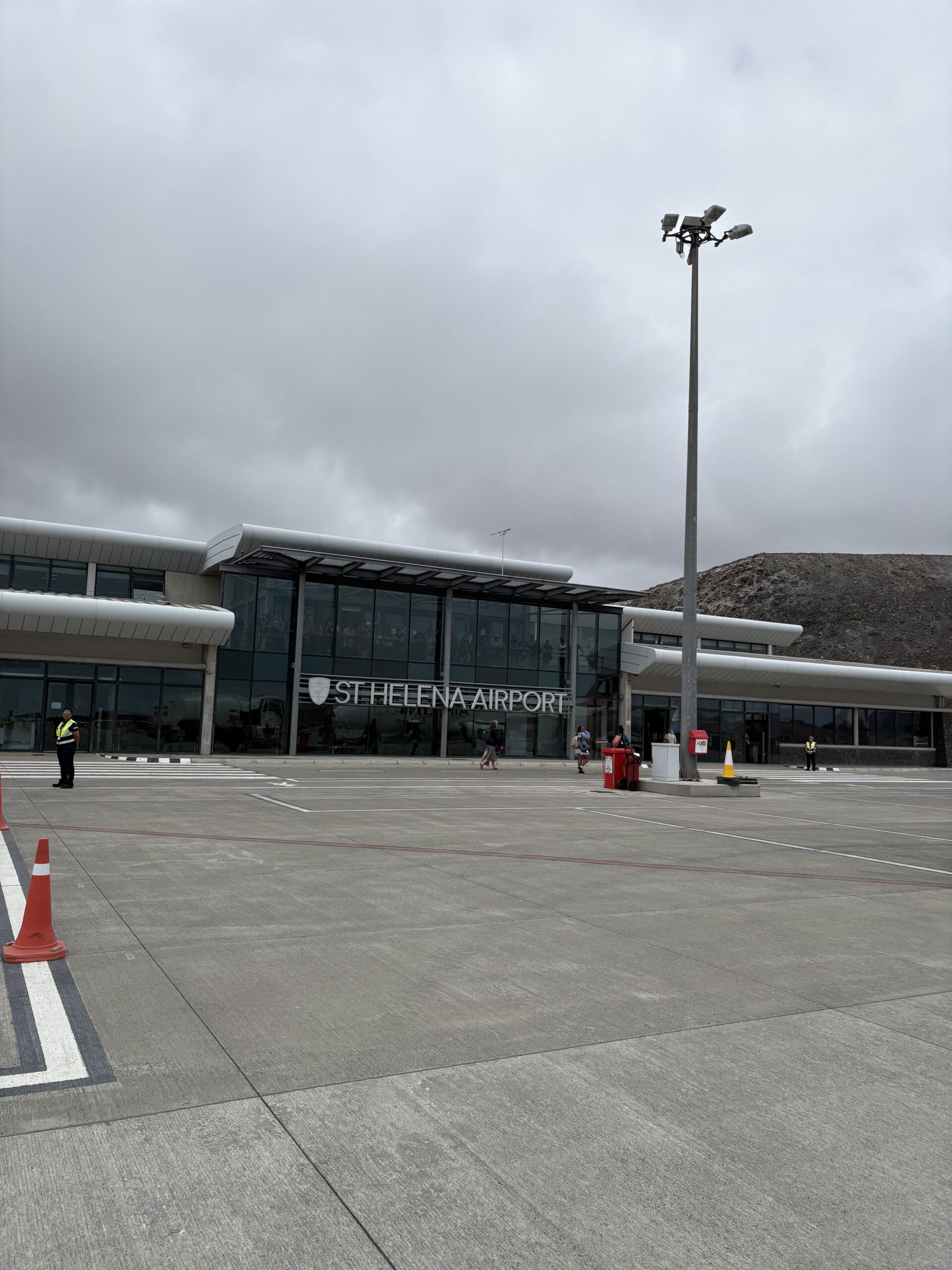
Landing on St Helena 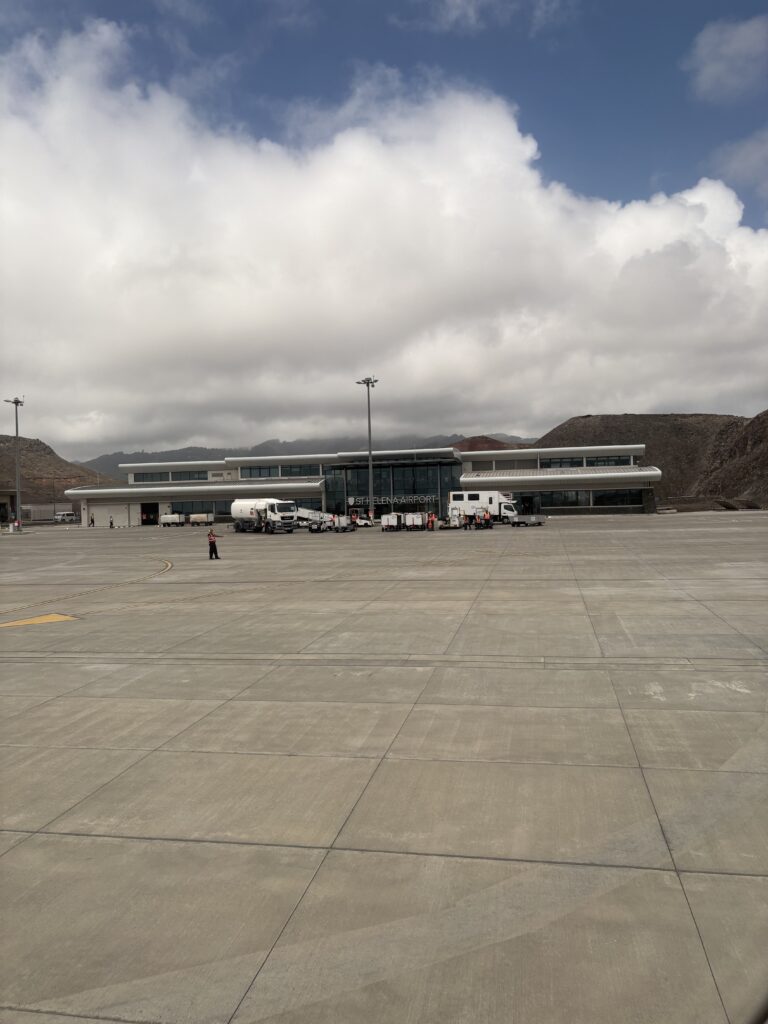
The airport at St Helena 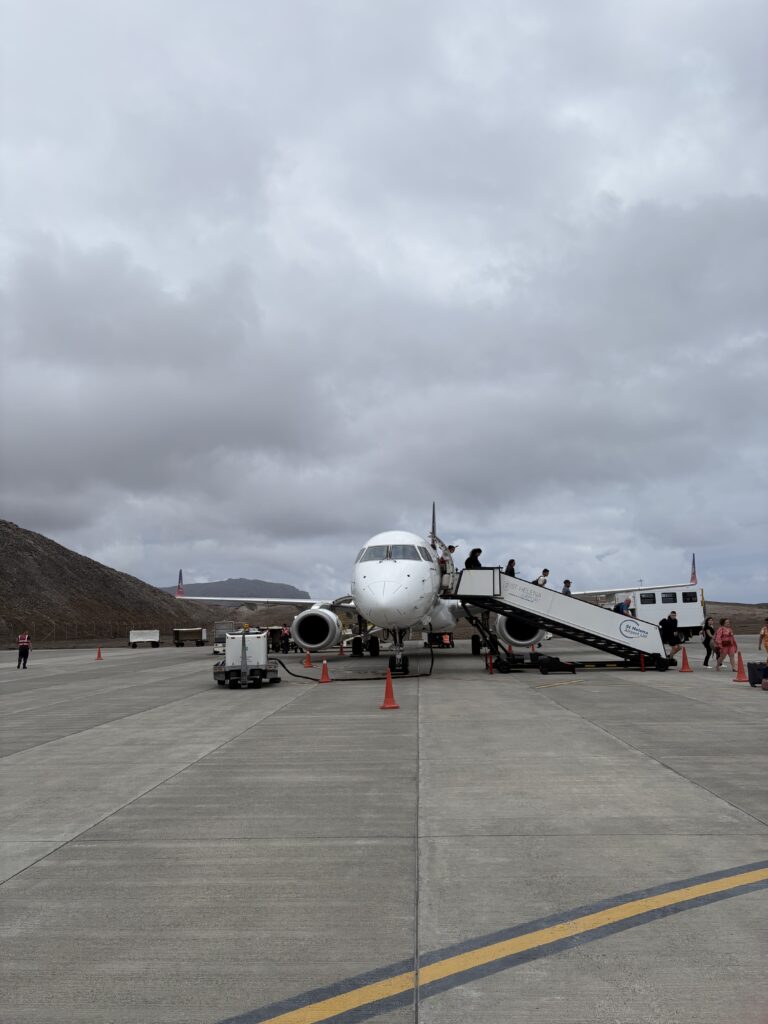
The plane that brought us to St Helena from Cape Town 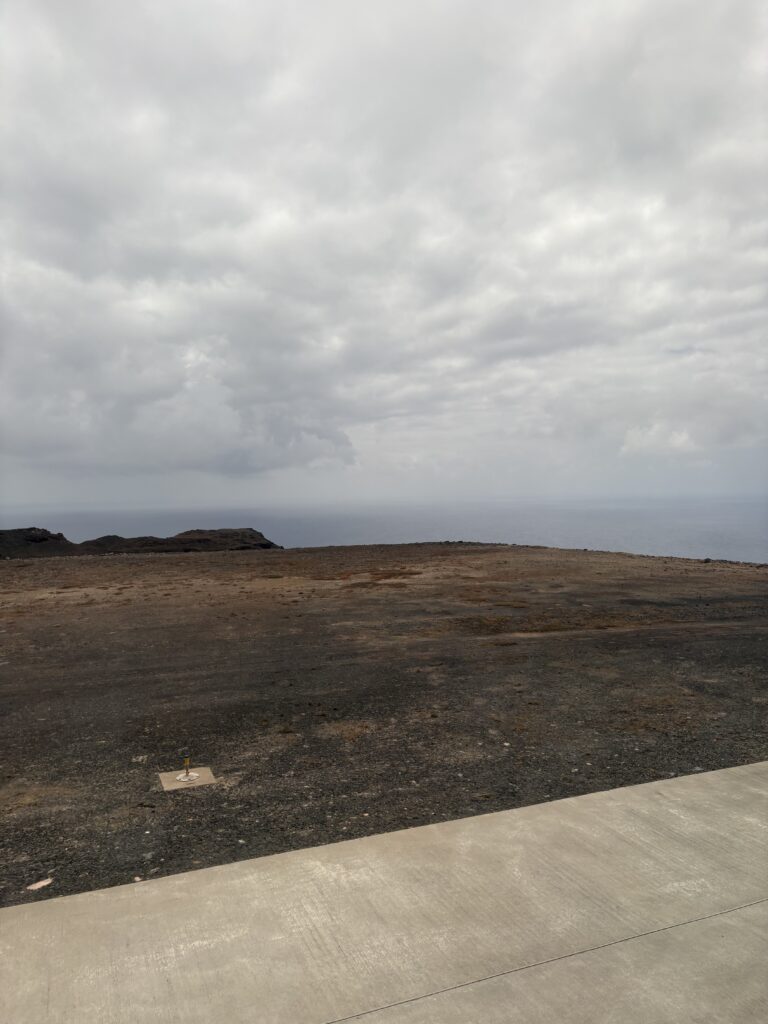
The end of the runway