Tag: Portugal
-
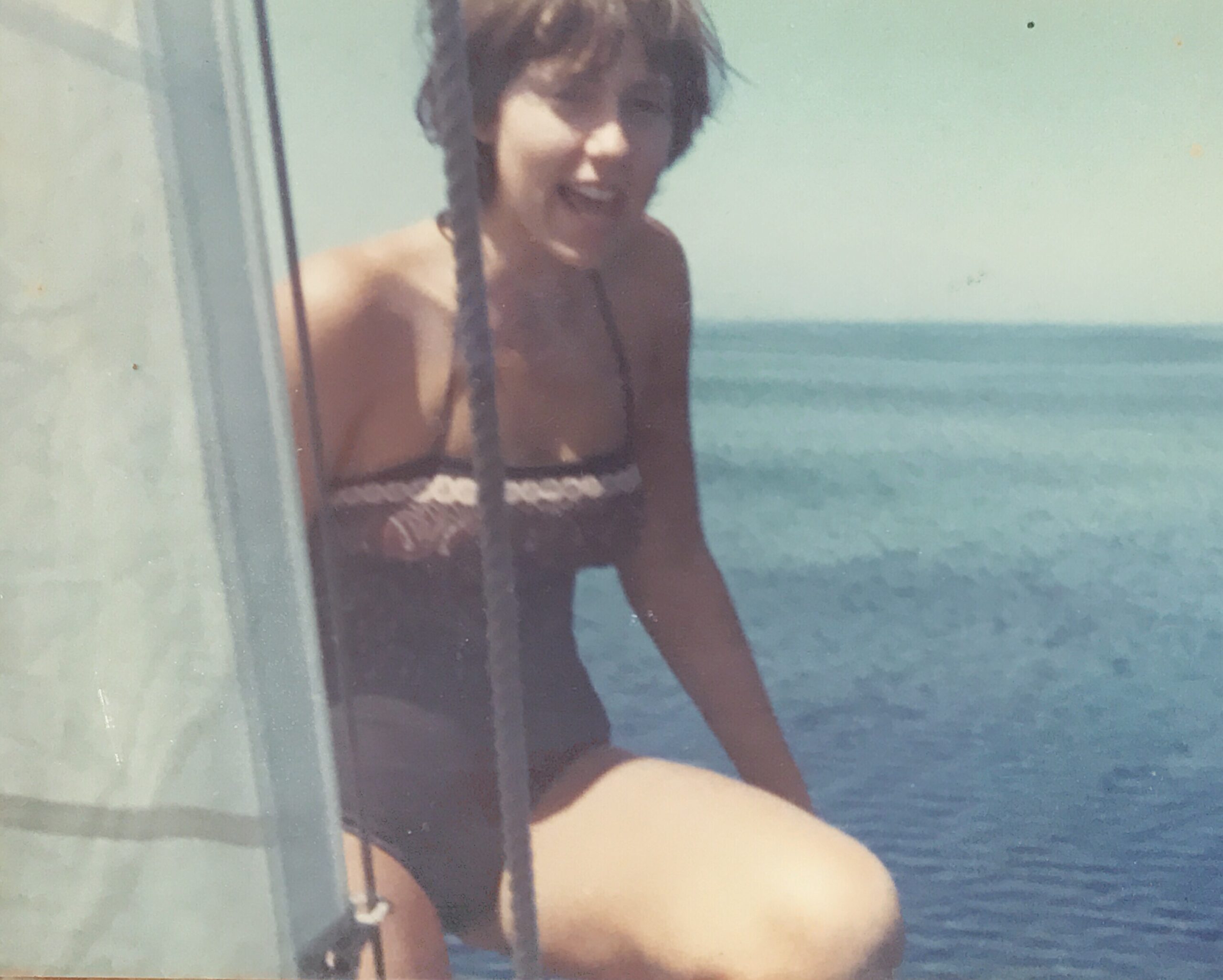
On the Atlantic Ocean: spotting whales
The Azores, and particularly the island of Horta, is an island of whalers. There are outlooks all over the island where spotters would sit and stare out at the ocean for hours until whales were spotted, then call the alarm and out would head the whalers in a small boat with harpoons. Even whalers from the east coast of the United States would make it as far as the Azores in the hunt for whales. I have since come to read that the migration of many species of whales, but particularly sperm whales, passes close by.
I do not know how many days or nautical miles before arriving in Horta that our whale spotting happened, but I remember it distinctly. I have a photo of a whale close by. It’s hard to see, but for me, it brings back all the memories of that scary but exciting day.
We now know that whales can and do attack sailing ships. Maybe my father knew that then too, but us kids certainly didn’t. We suddenly found ourselves in the midst of a pod of sperm whales, each one twice as long as Scally. They are slow and majestic. I don’t remember their eyes looking at us, although I’m sure they did, intelligent species that they are. I do remember their proximity to Scally, that I was frightened but in awe and I remember the smell of their spray when they surfaced. We were certainly very lucky that nothing happened to us or Scally.
In 1982, whaling had not yet been banned worldwide and it was still an industry in the Azores. Scrimshaw was a craft that was handed down from one Azorean generation to the next and much like my country of birth, where elephant tusks were also used for craft in statues, jewellry and other art; even though I am an owner of both, I am happy that both South Africa and Portugal, countries of my birthright, have banned and outlawed all hunting of these two magnificent species of animals.
Dates: 1982
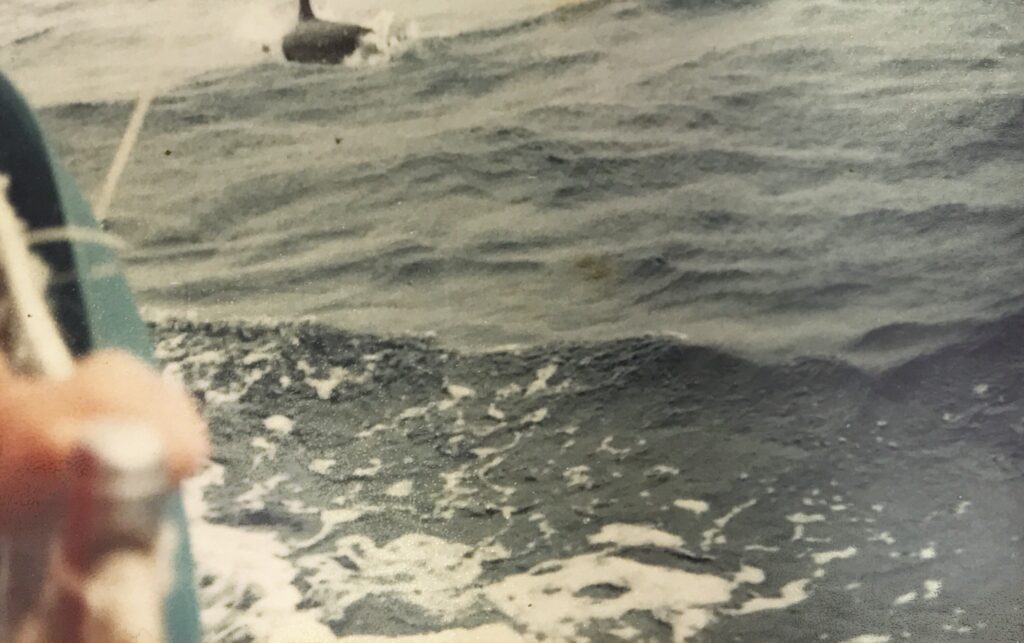
The whales close by -
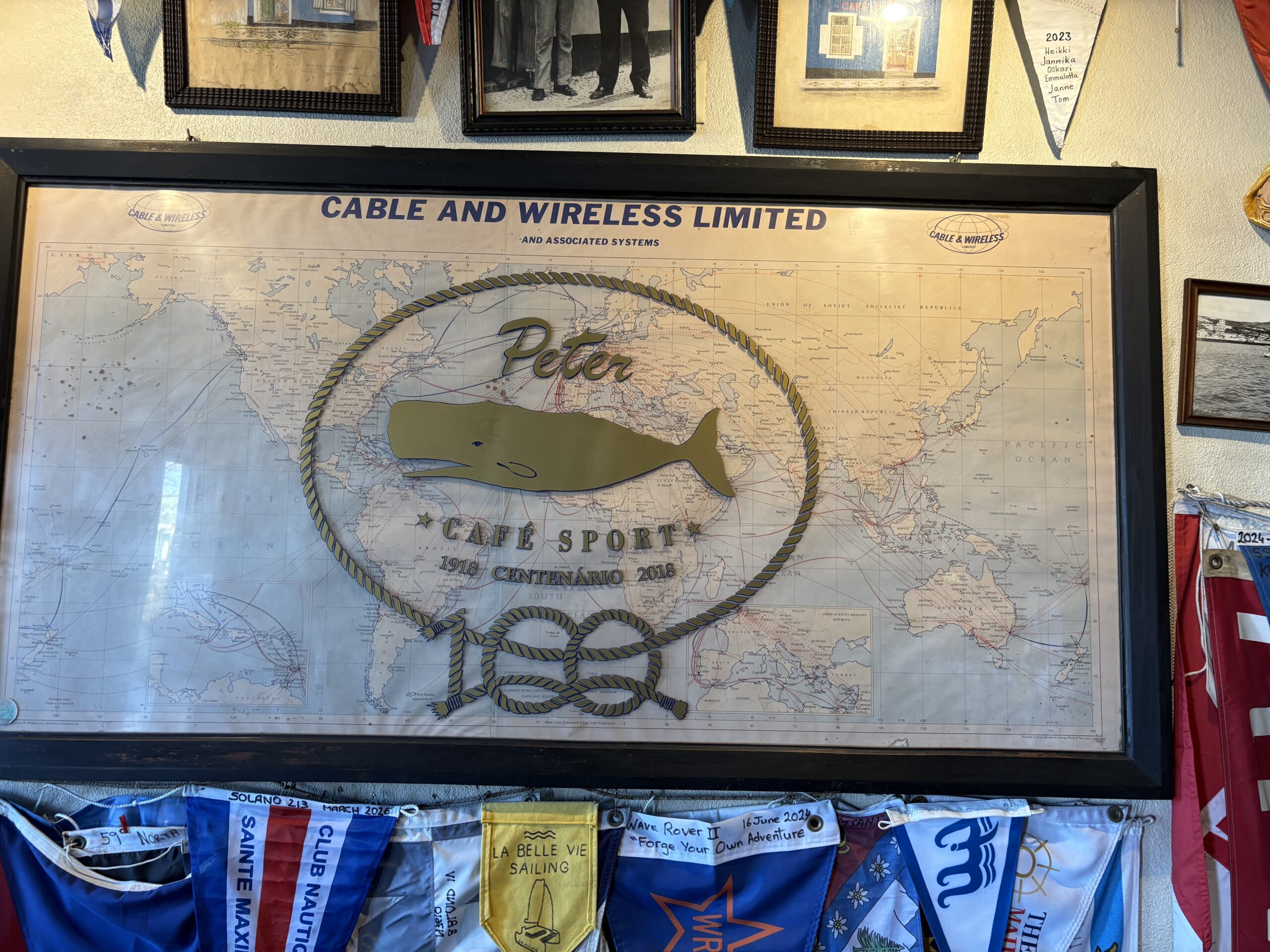
Azores: Peter’s Cafe Sport
This is an iconic cafe for yachties in Horta. It’s still there and currently being run by the original Peter’s nephew. I have a photo of all of us standing outside the cafe From 1982. Of course, a visit this time round was planned.
It’s quite small and dark inside; there are flags of all descriptions hanging from the ceiling; the walls are covered in stickers and photos; there’s a bar where you can order food and drink; there’s a little corner showcasing jewellry and other wares made out of (mostly sperm) whales teeth which you can buy; and upstairs is the scrimshaw museum, which was not open at the time of my visit.
Back in 1982, when we were on Horta, and when whaling was still in full swing by the island fisherman (commercial whaling in the Azores ended in 1984 after the global ban by the International Whaling Commission), I distinctly remember the powerful and foul odour wafting over the channel from Pico, where a whale was being dissected.
My father ordered some scrimshaw items for all of us, and I have both of mine to this day. I had taken it with me to show them at Pete’s Cafe Sport, and they were really amazed to see it. I was lucky it wasn’t confiscated, as I have since come to learn that they can and will be confiscated by customs, since whales are a protected species. I would have hated to lose mine; it’s accompanied me wherever I go for all these years, like a talisman.
I sat and enjoyed a glass of wine by myself, reflecting and imagining us all here all those years ago. Coincidentally, my youngest brother, who was two at the time, and is now in his mid forties and a musician, has been invited to perform live at the cafe more than once. When I mentioned his name, they all knew him.
Dates: March 2026
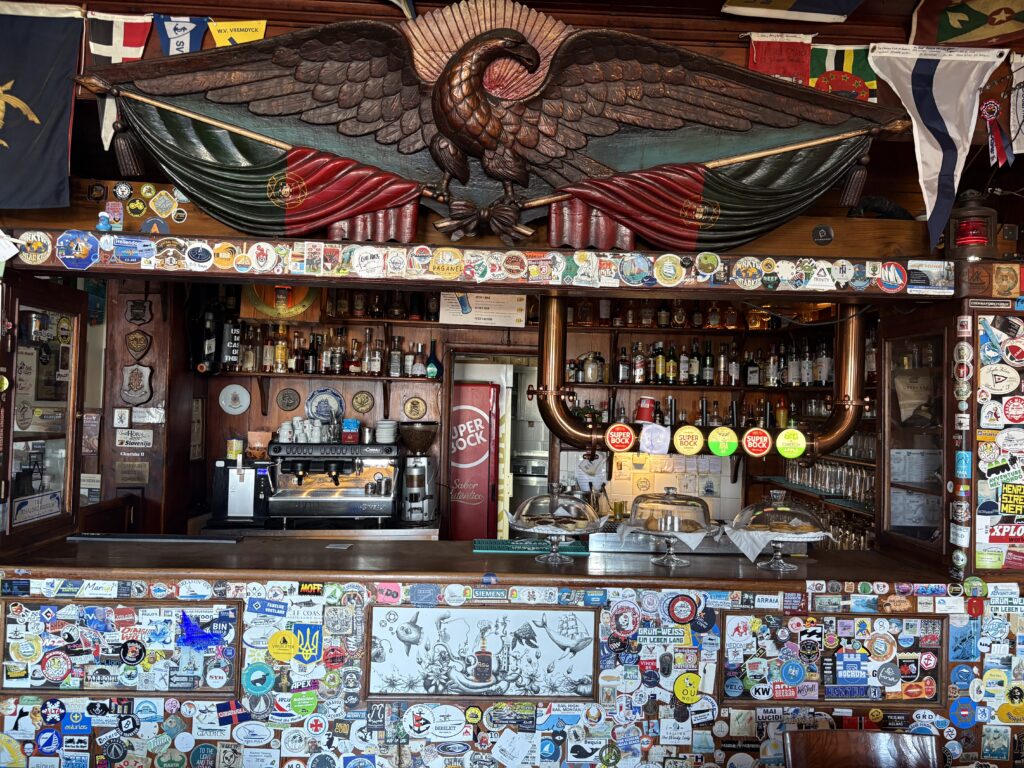
The bar inside the cafe 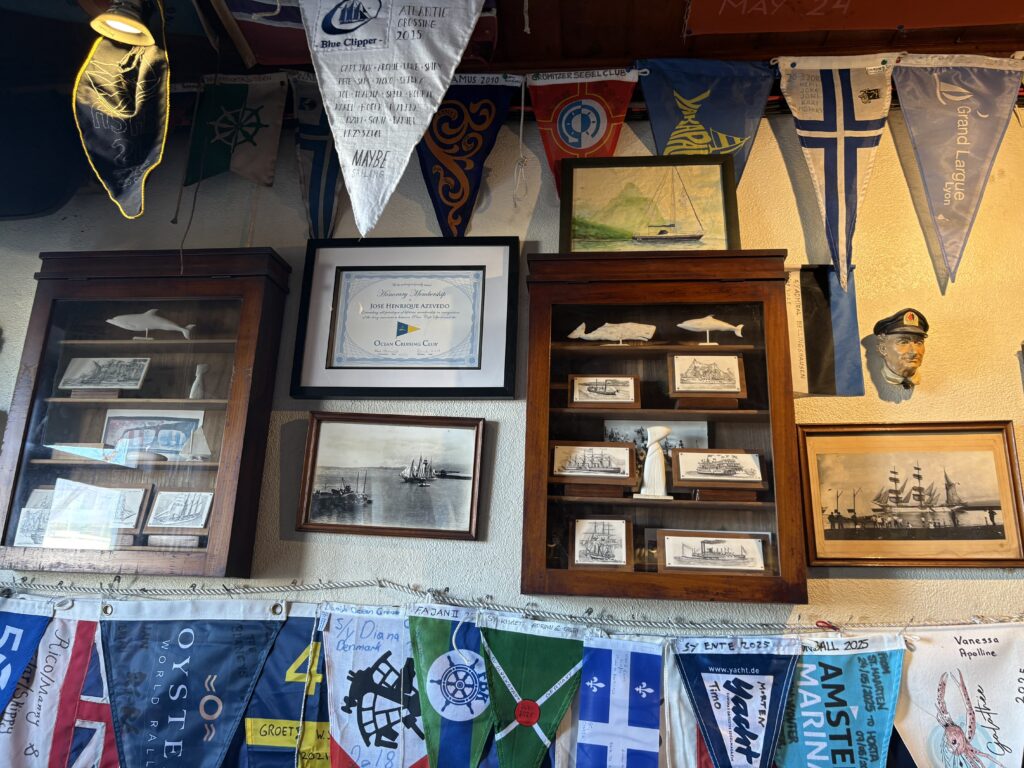
Flags, photos and scrimshaw 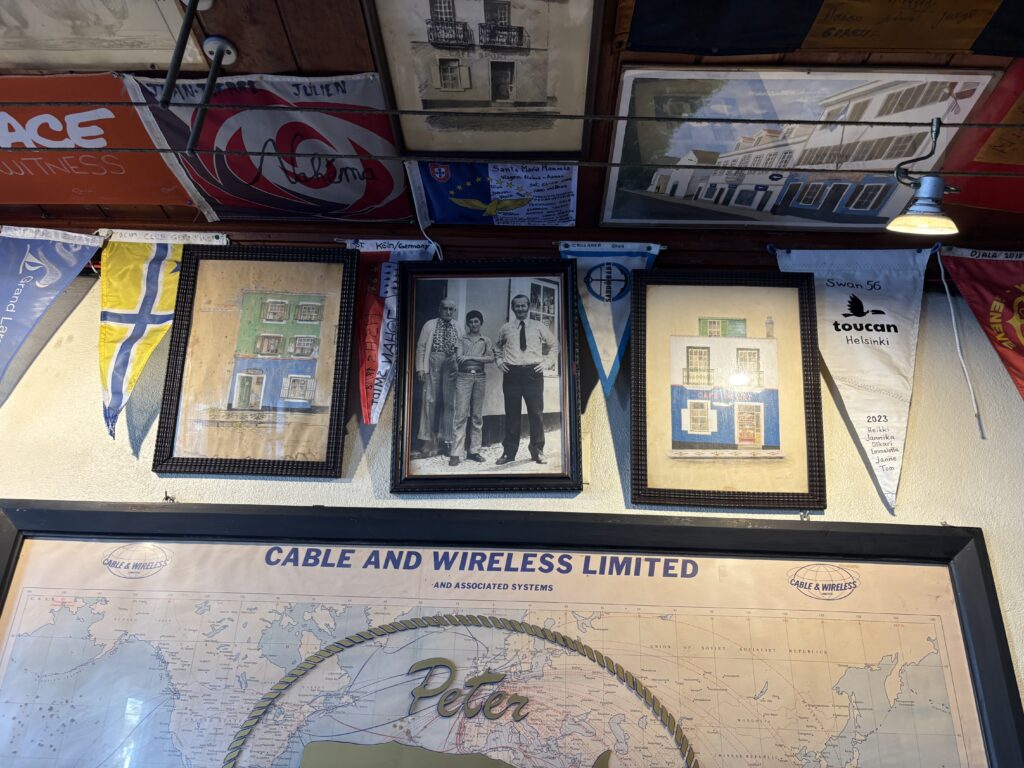
The original Pete 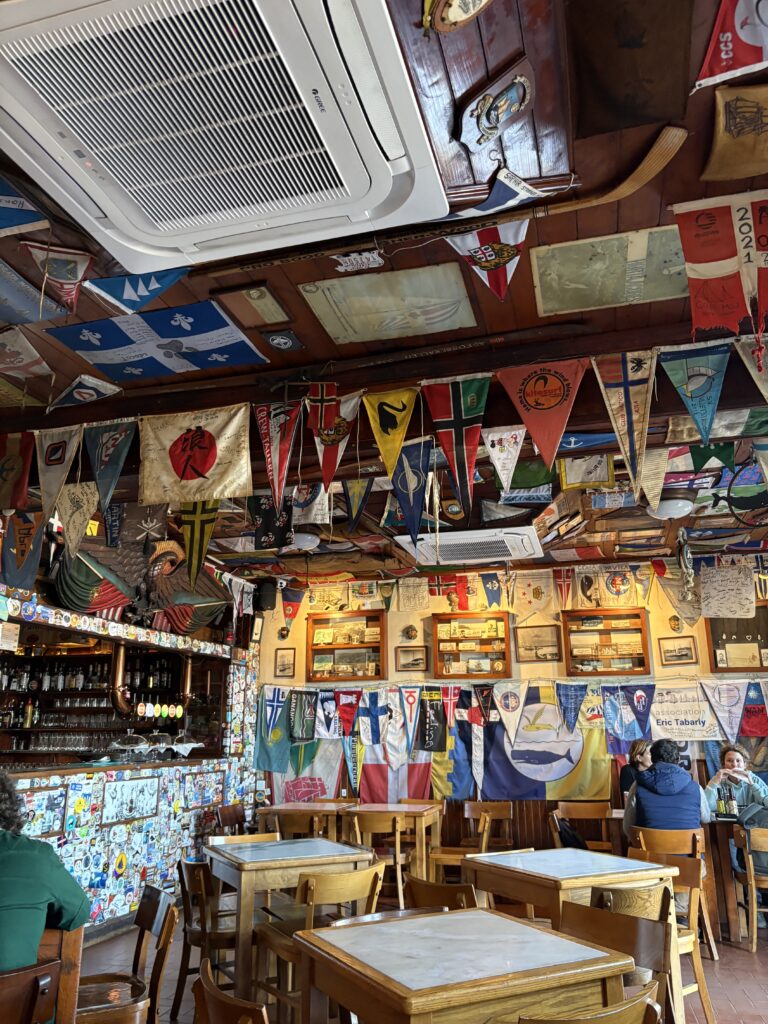
Flags and stickers everywhere 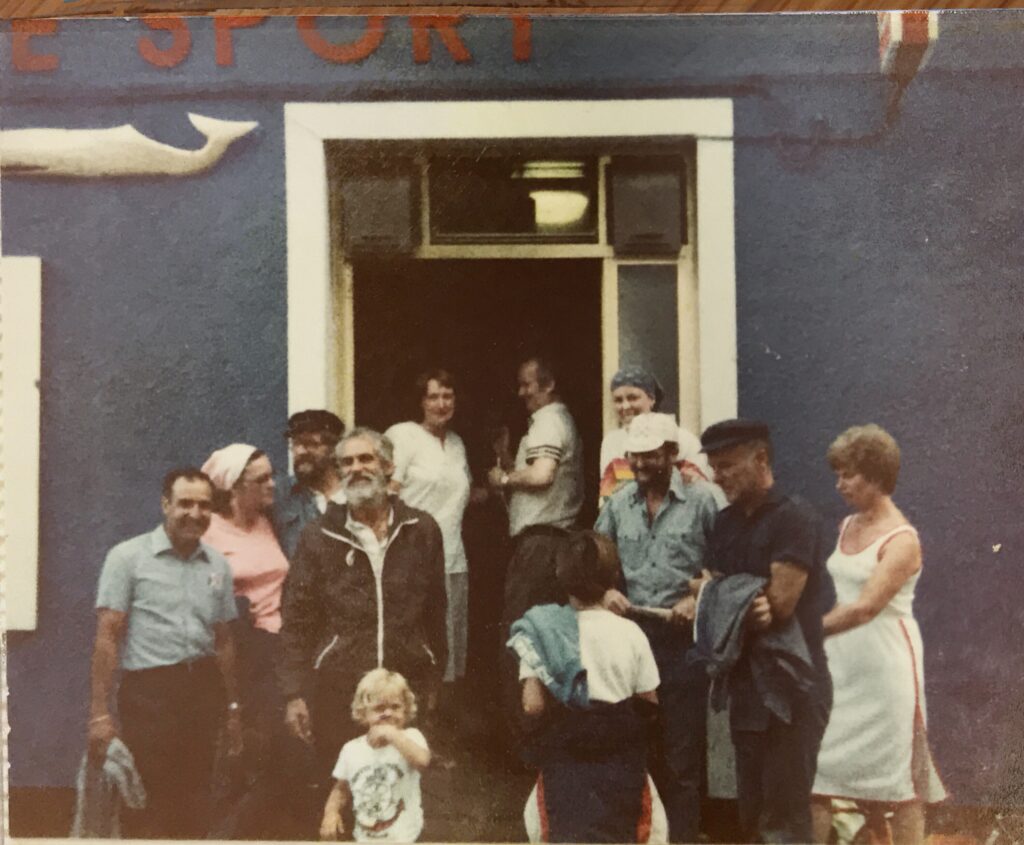
My mother, father, youngest brother and middle brother outside Pete’s Cafe Sport -
Azores: Faial
Horta is an island for yachties. Almost every sail vessel crossing the Atlantic from west to east, heading for Europe or the Mediterranean, will stop at Horta. For us, after spending twenty eight days at sea, it was a sight for sore eyes. I can only imagine the feelings that my father must have had at arriving and finally reaching his home territory safely.
Forty four years ago, we were greeted by and escorted into Faial Harbour by a Portuguese frigate, whose officers had heard over the radio waves that Scally was approaching. I believe either the captain or one of the senior officers was a fellow naval officer from the fifties and sixties when my father himself had been a member of the Portuguese navy.
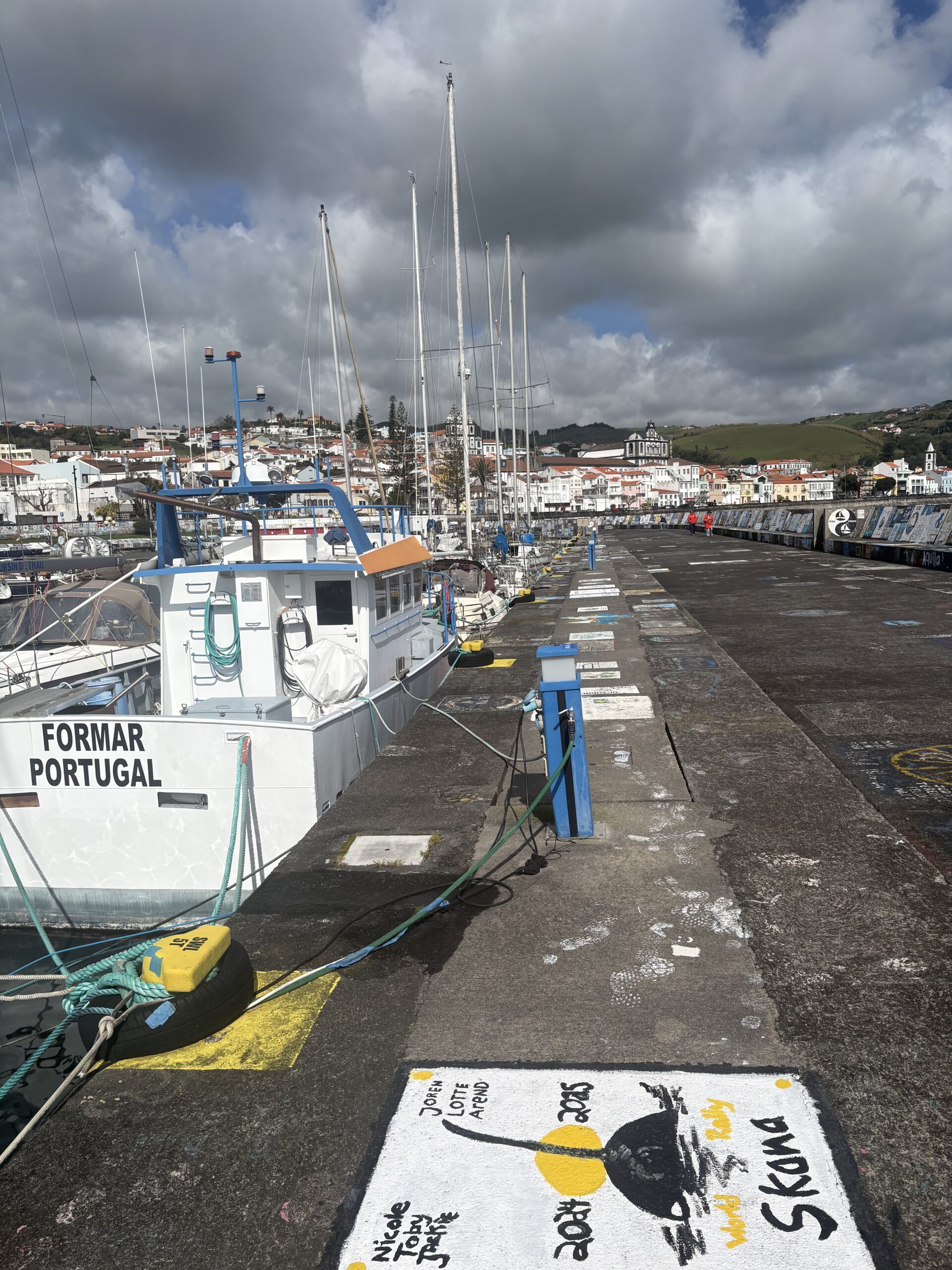
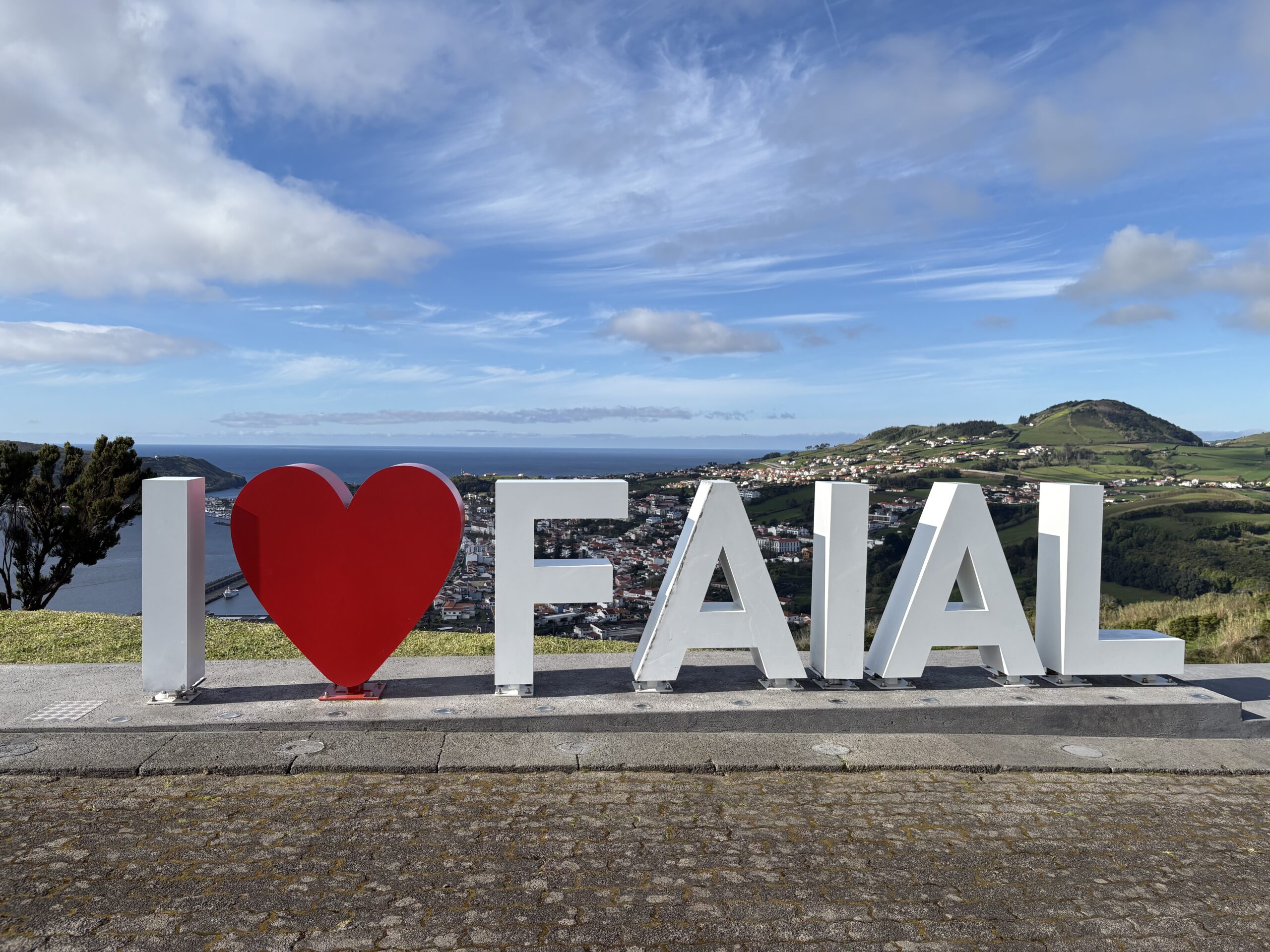
Today’s marina is very different from what it was in 1982, with an entirely new marina having been built with pontoons and jetties. The original sea wall is still there but unfortunately I was not allowed access; it’s restricted to the public because cargo ships tie up alongside.
What still sticks out at first sight, and everywhere you look, is the art work on the walls and pavements, creations by the yachties to memorialise their trip, crew, and time on Horta. We also did one for Scally, but it would have been on the original sea wall and certainly no longer visible after so long. I walked for a couple of hours up and down the quayside and looking out over the marina and boats. Most of the flags were not Portuguese. Most likely boats which had reached Horta and been left there for a while until the crew returned to sail onwards.
I wanted to find two artworks in particular. Spotting them is like trying to find a needle in a haystack. One would belong to one of my closest friends, a very keen and avid sailor from New Zealand, who often sails with us now on Illustrious 6, and who crossed the Atlantic a few years ago. I regretfully could not find that piece of artwork. The second one I did, but only after being told by my brother its approximate location. My oldest brother and his crew arrived in Horta about seven years ago having crossed from the Caribbean. One of the crew members was my niece, his daughter, a teenager at the time, who designed the artwork. She was very happy to know that I had found it.
I honoured all the artworks visible and invisible and all the brave captains, crew members, families and children who reached Horta after crossing the mighty Atlantic.
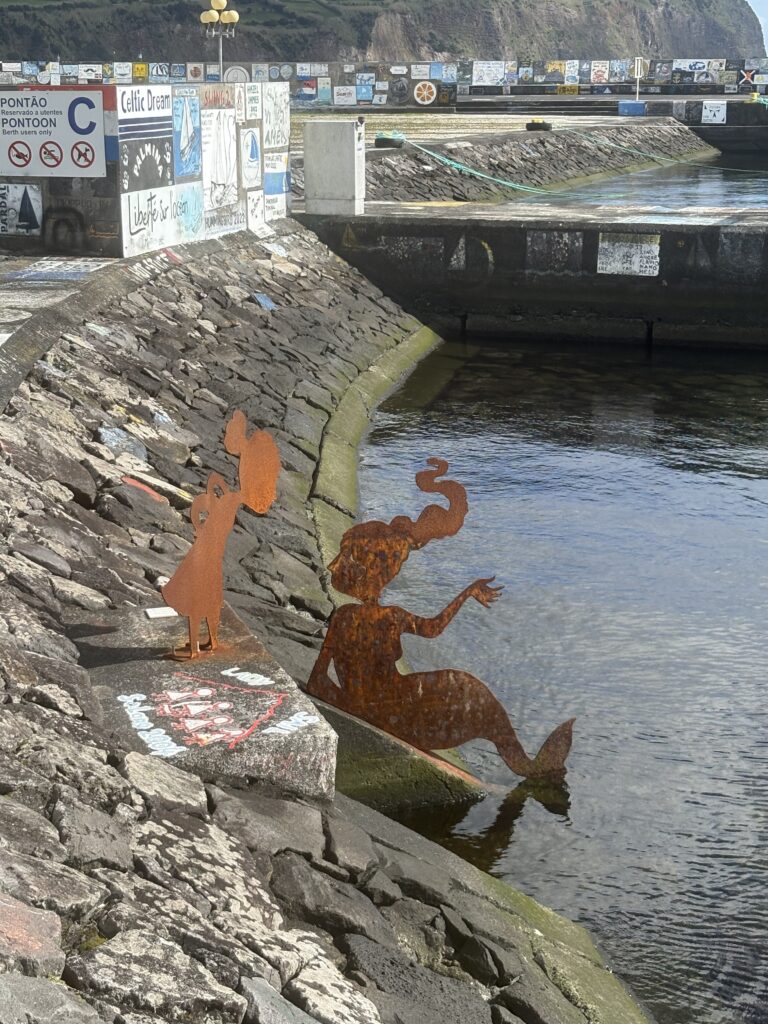
The mermaid and the child playing in the marina 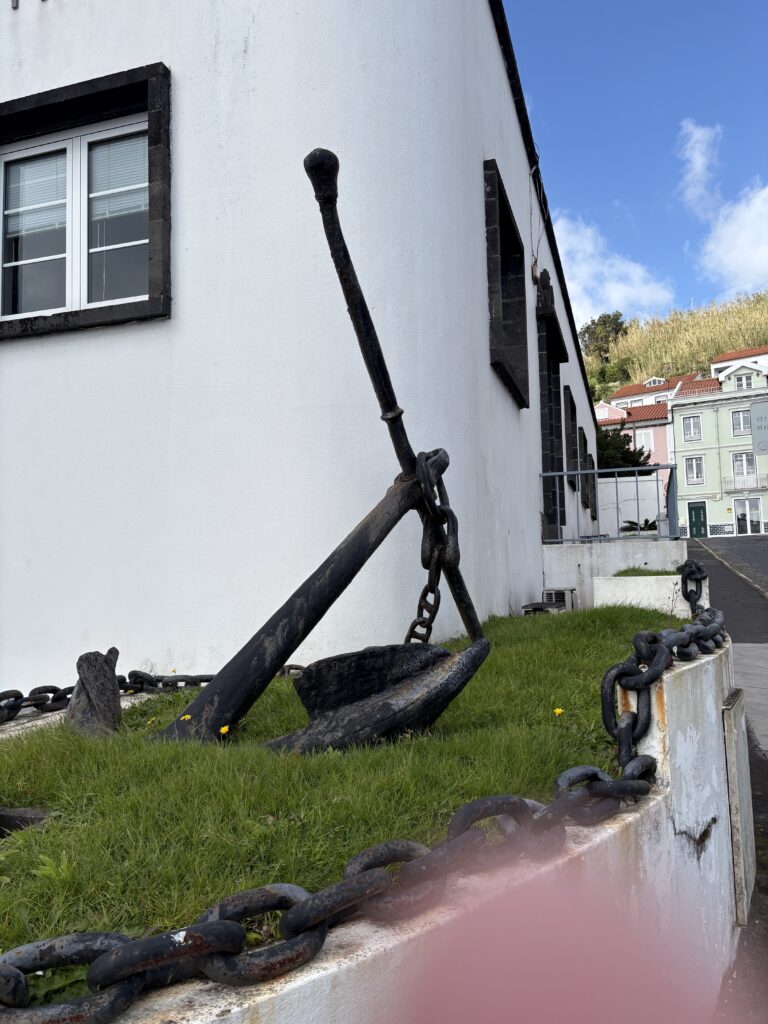
An anchor in the marina 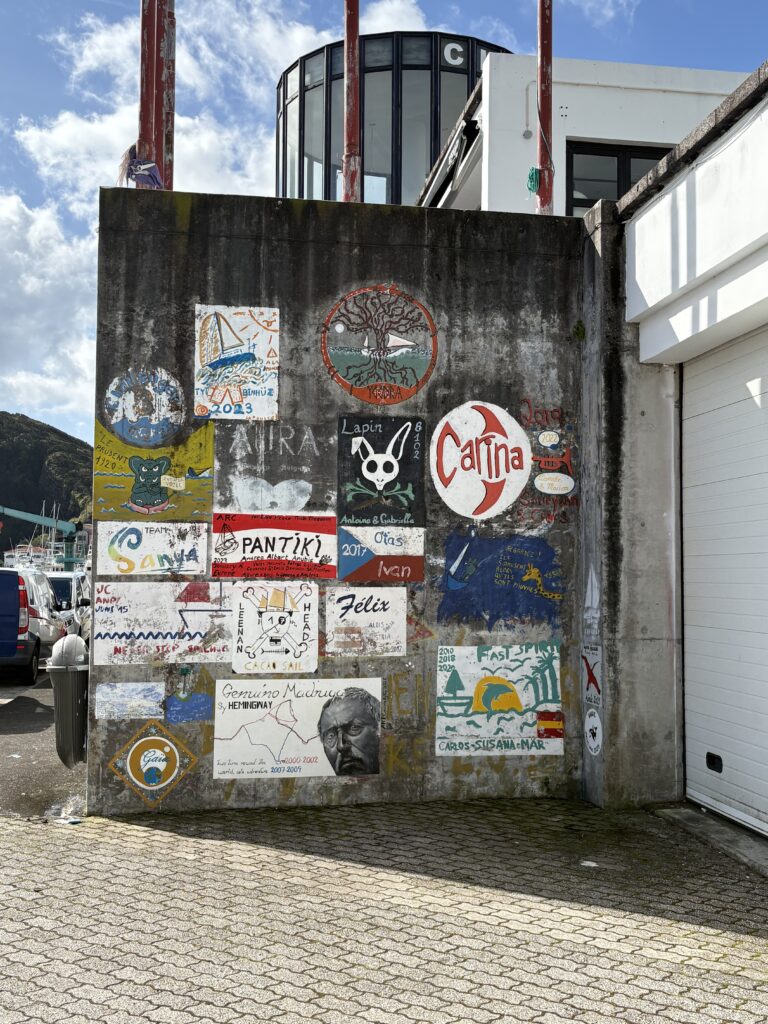
Artwork everywhere 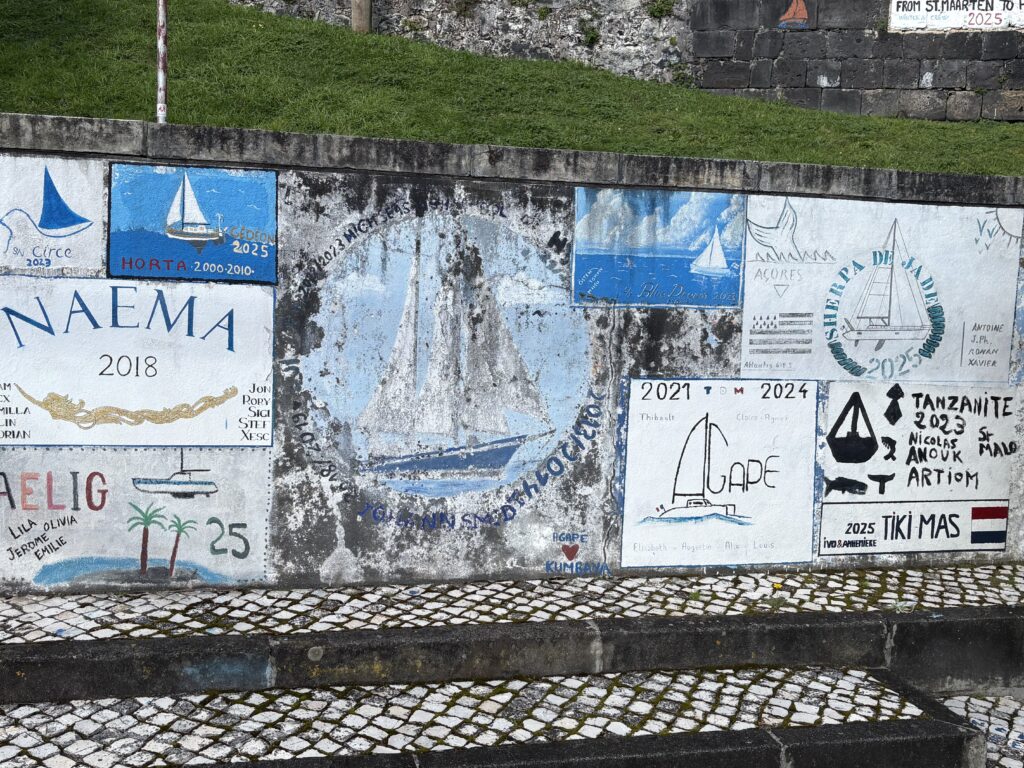
More artwork 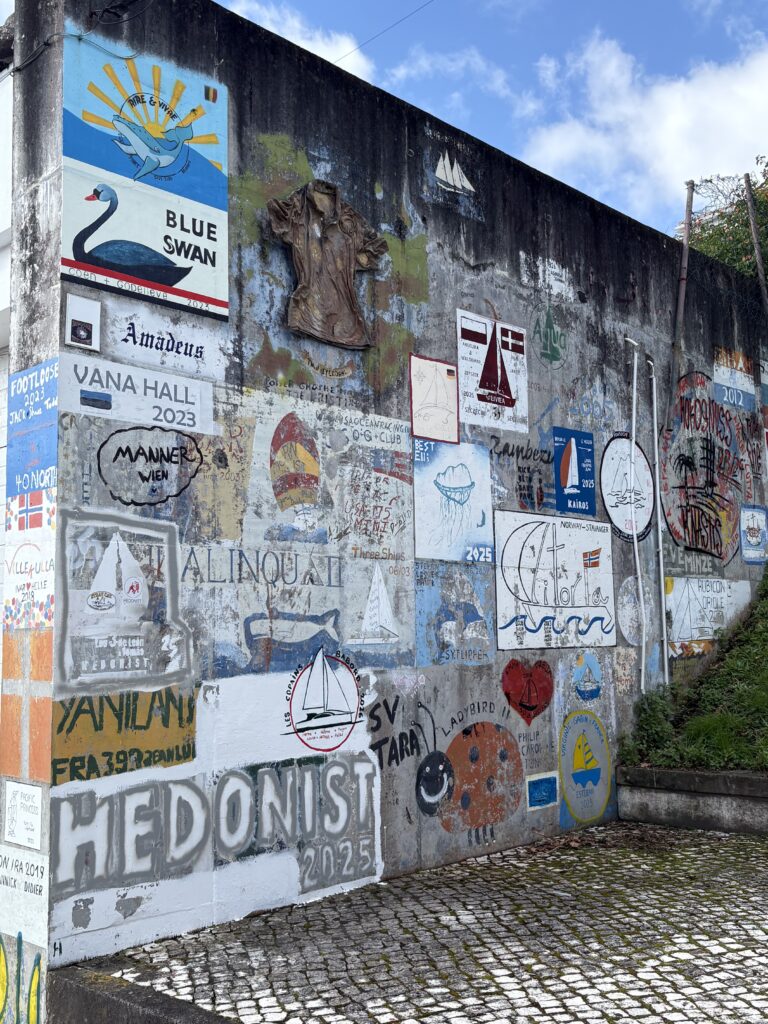
More artwork 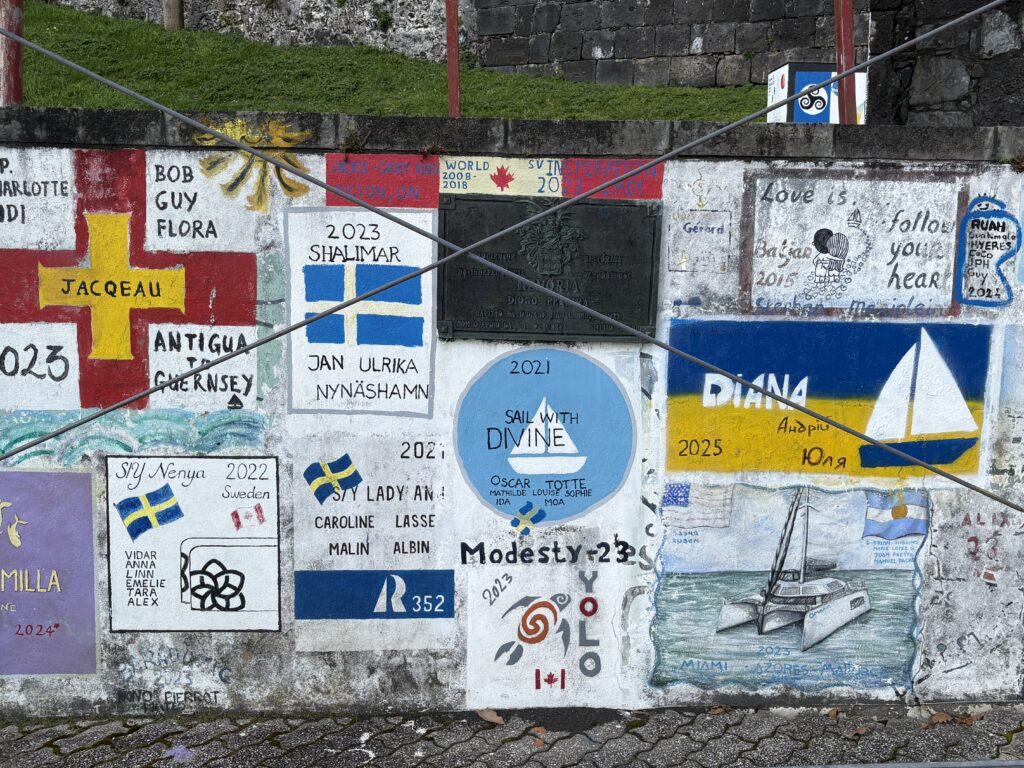
More artwork 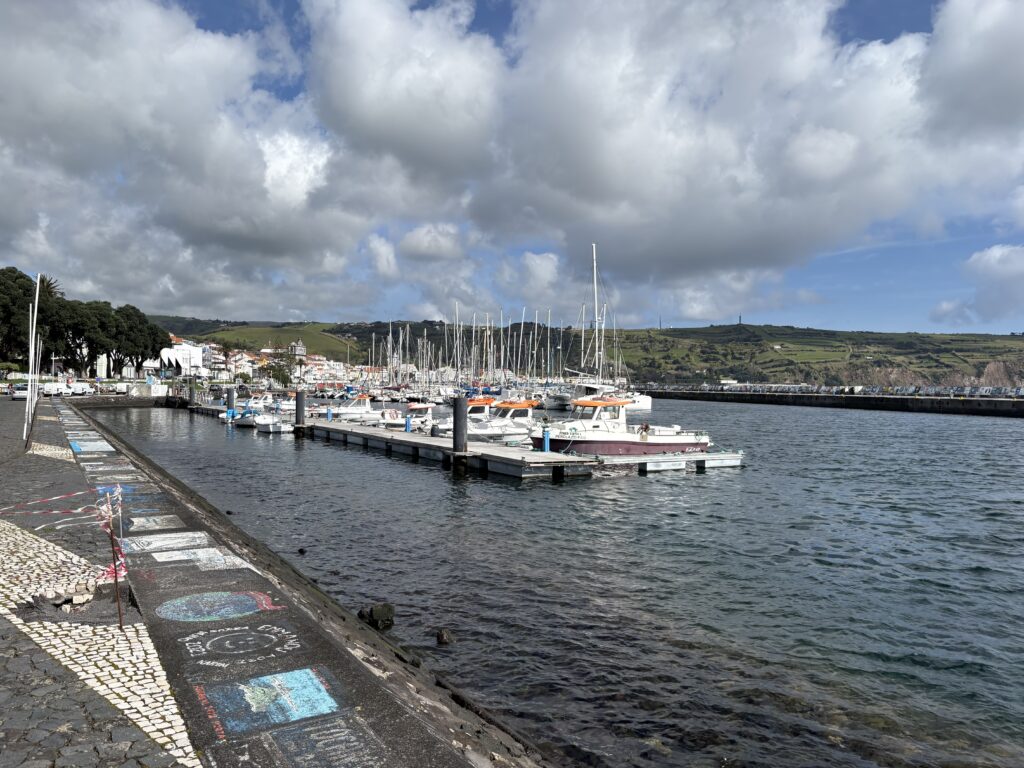
The marina in Horta 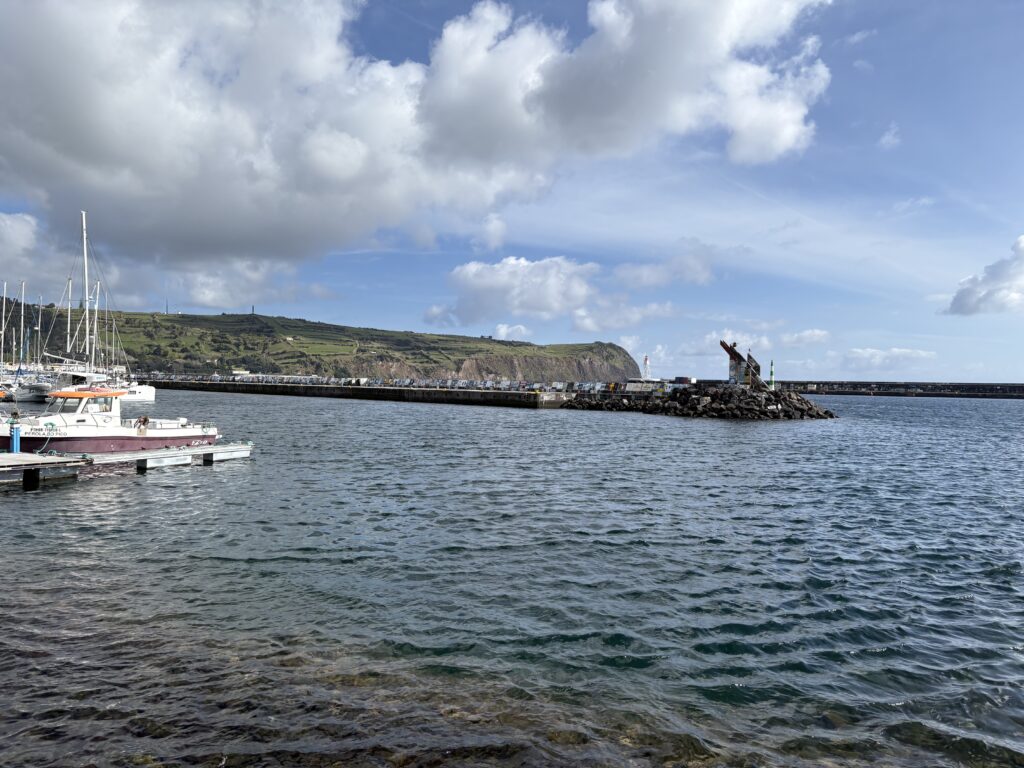
The original sea wall (where Scally was) in the far background. 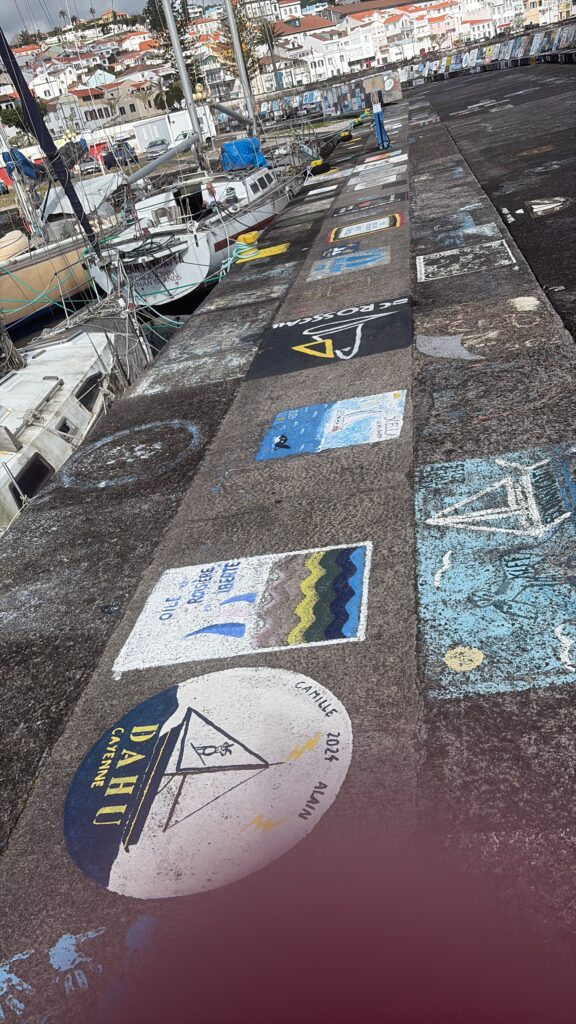
More artwork 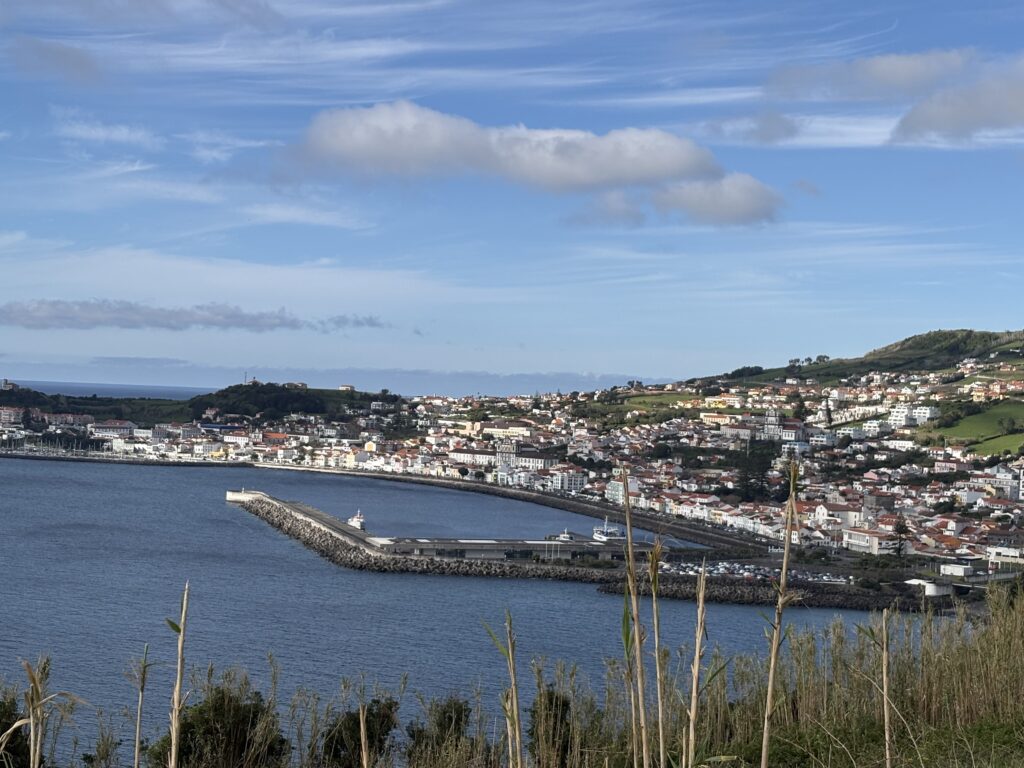
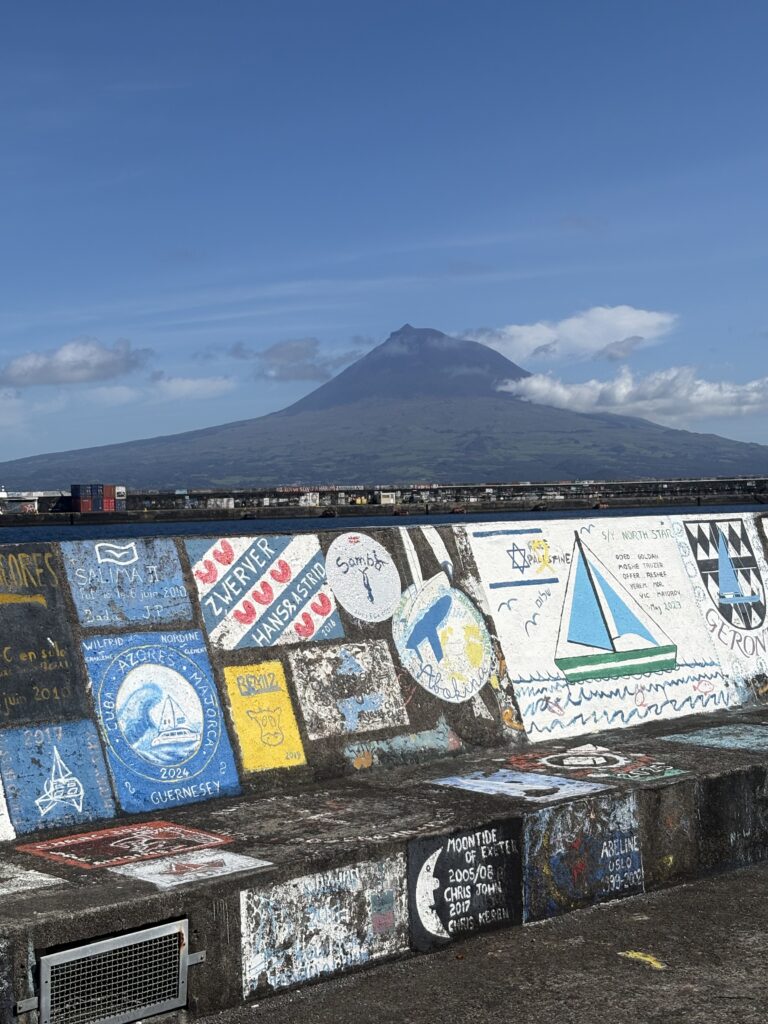
More artwork and the island of Pico in the background. 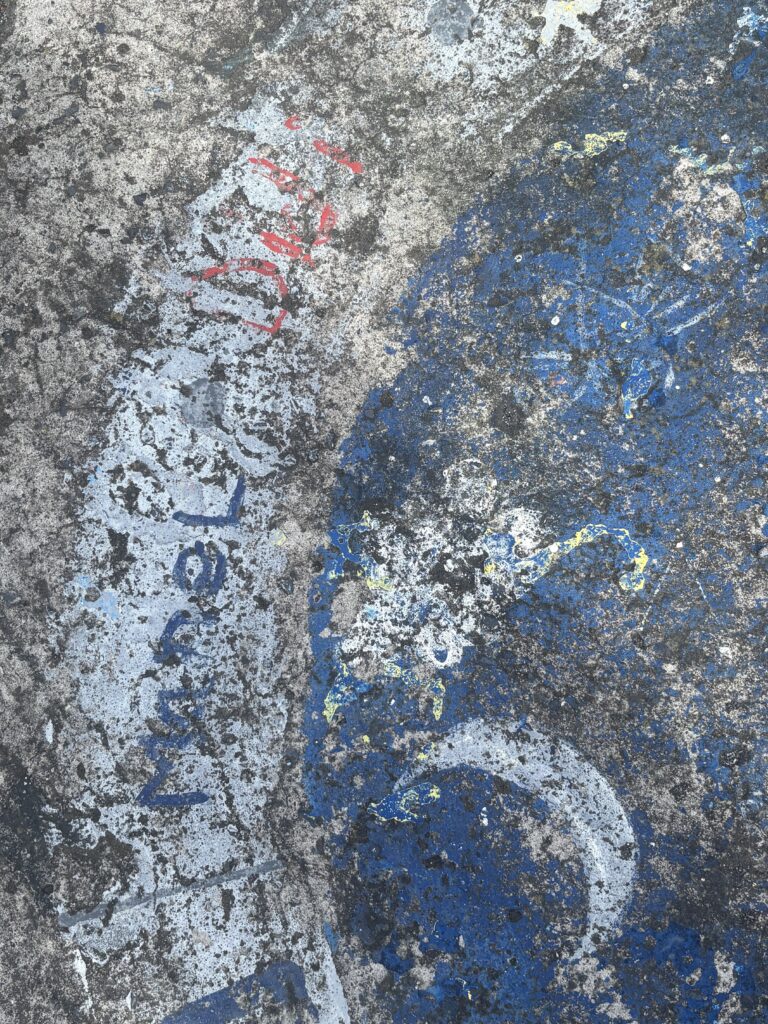
A close up of the artwork of my niece. 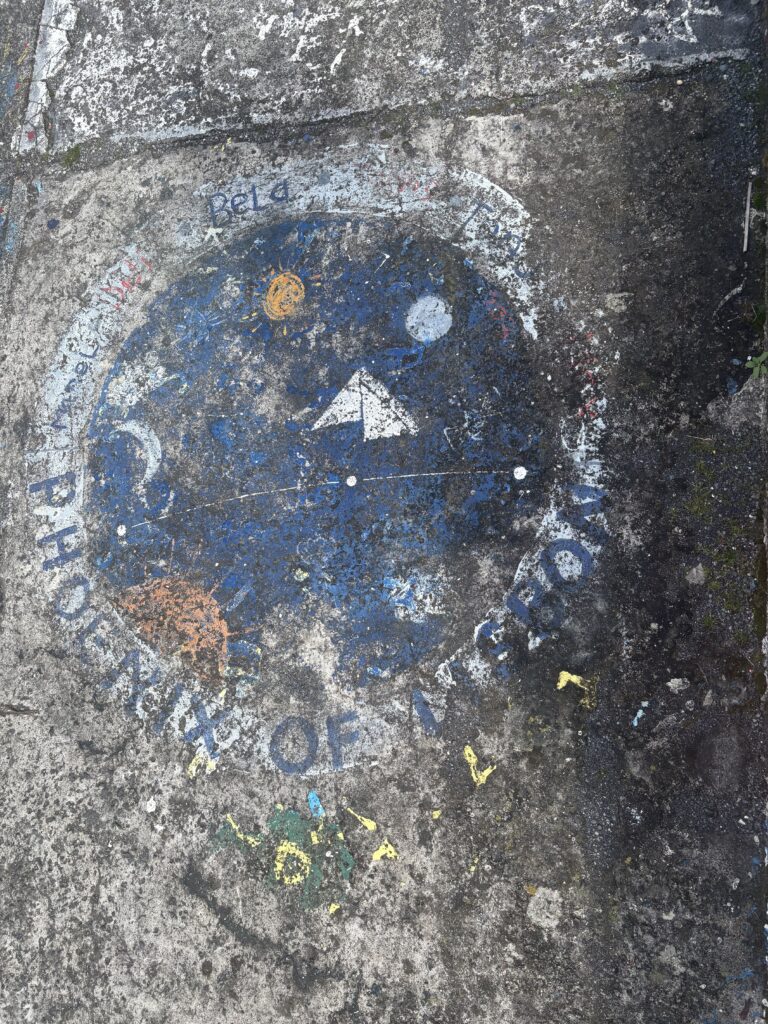
The artwork I found for my niece and brother. 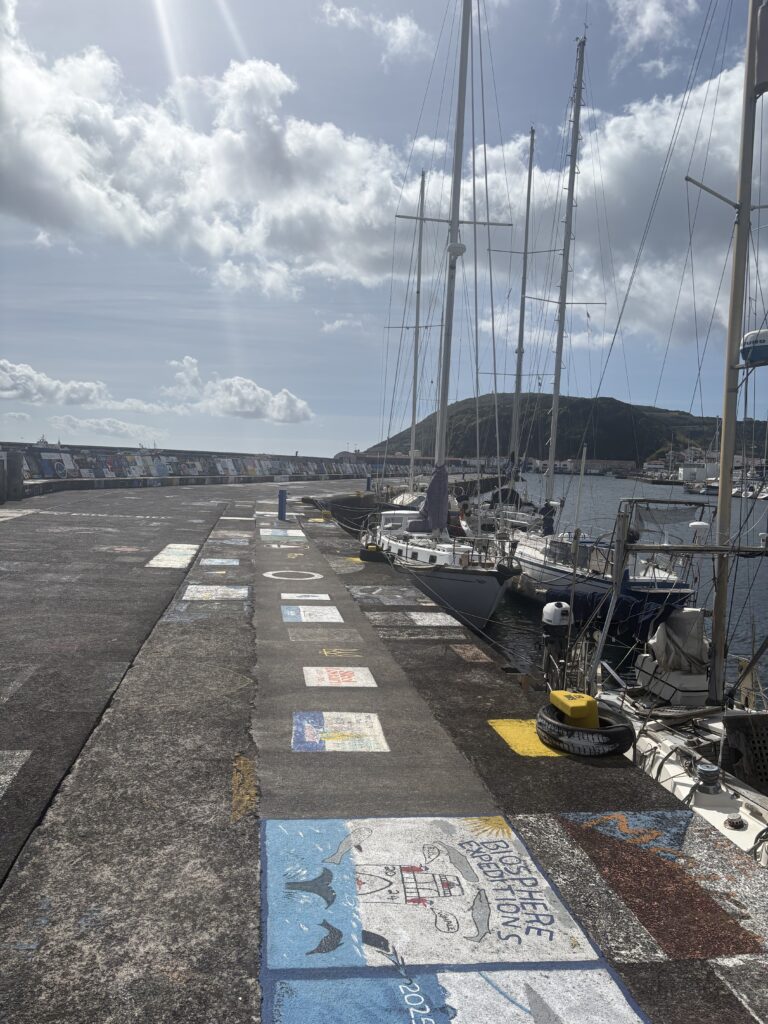
The marina sea wall (not the one where Scally would have been tied alongside) -
Azores: Arrival in Horta
Scally and her crew were at sea for twenty eight days, crossing the Atlantic from Fernando de Noronha islands, off the north east coast of Brazil in the South Atlantic, across the equator into the North Atlantic and arriving safely in the port of Horta on the island of Faial in the Azores in June 1982.
My sabbatical recreation of this trip (not by sea for obvious reasons) visiting all our ports of call, brought me to Horta in 2026. I remembered it clearly, much more clearly than St Helena, Salvador or Fernando de Noronha.
Faial is the most beautiful island, extremely well upkept, clean and tidy, with tiny villages and small colourful houses mostly overlooking the ocean and other islands of the Azores. It’s very green and lush, with many hills and valleys and the bright pink azaleas were in full bloom everywhere. The sun was shining and it was a pleasant twenty degrees with very little wind. The Açoreanos are calm and quiet, quite different to the mainland Portuguese. They are exceptionally friendly and welcoming, like most Portuguese, and open to all my enquiries of what the bay looked like in 1982, what the island was like, how it had changed, and why I was there.
Like St Helena and Fernando de Noronha, the sea is omnipresent, shining and bright, and, calm. The sun was sprinkling its rays on the surface and I needed my hat and sunglasses. I decided on a whim to hire a car and go and find the places we had visited in 1982. Caldeira, the volcano crater; and o Vulcão, the moonscape unlived in area of the island which was created in the fifties out of a volcano eruption. The island is easy to navigate. It’s not very large, and the roads are in extremely good condition, and there are not many cars.
It was a truly beautiful day. I was surrounded by memories of having stood in those places at the age of sixteen, and standing there now. Pure beauty and nature everywhere you look. Whether across the sea to the islands of Pico and São Jorge; or at the stunning rock pools created on the ocean shore at the Vulcão, which a young family was swimming in when I arrived; to the lovely, multi-coloured houses along the way; to the happy waving villagers; to the town of Horta. I very much hope to be back one day.
Dates: March 2026
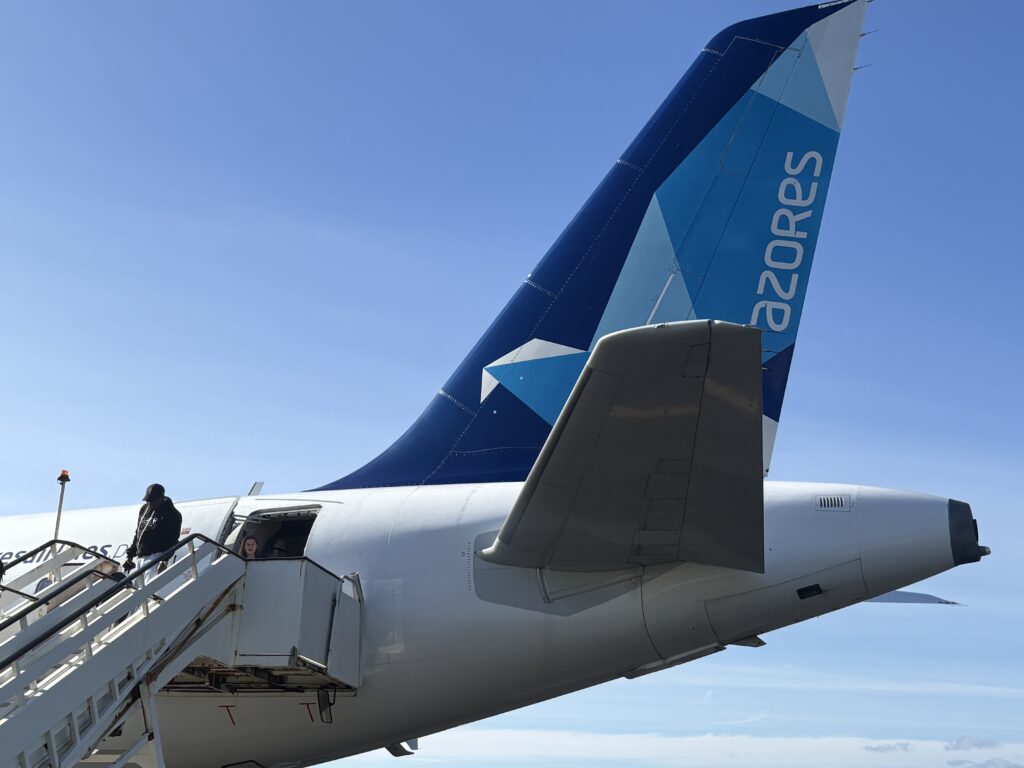
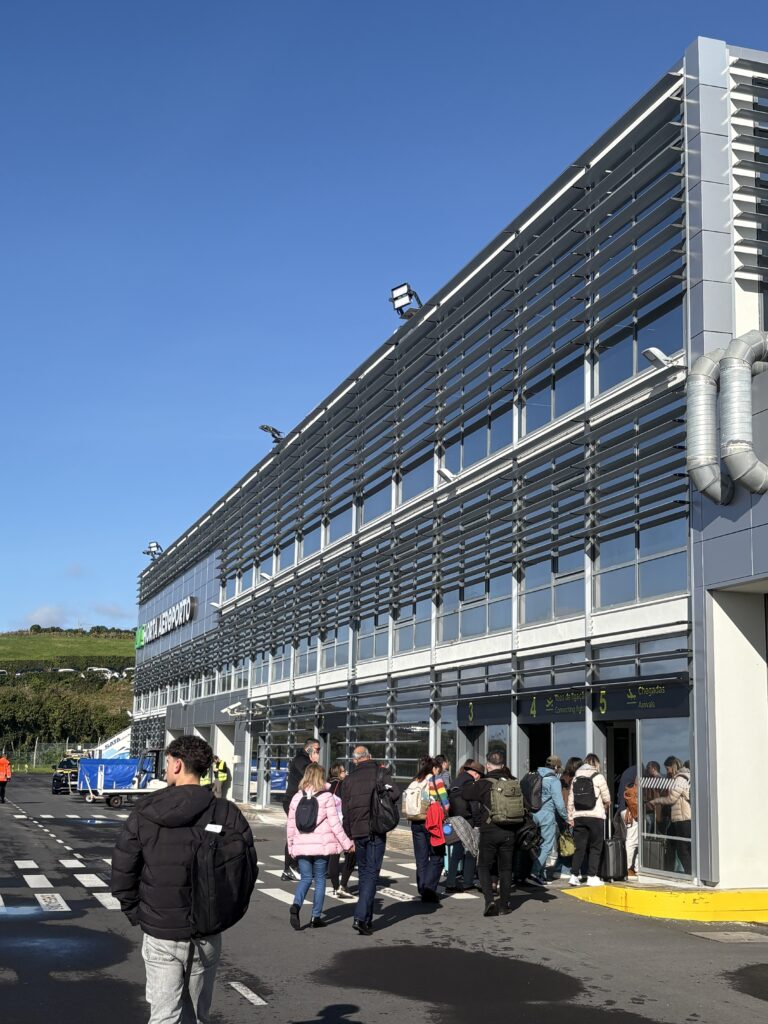
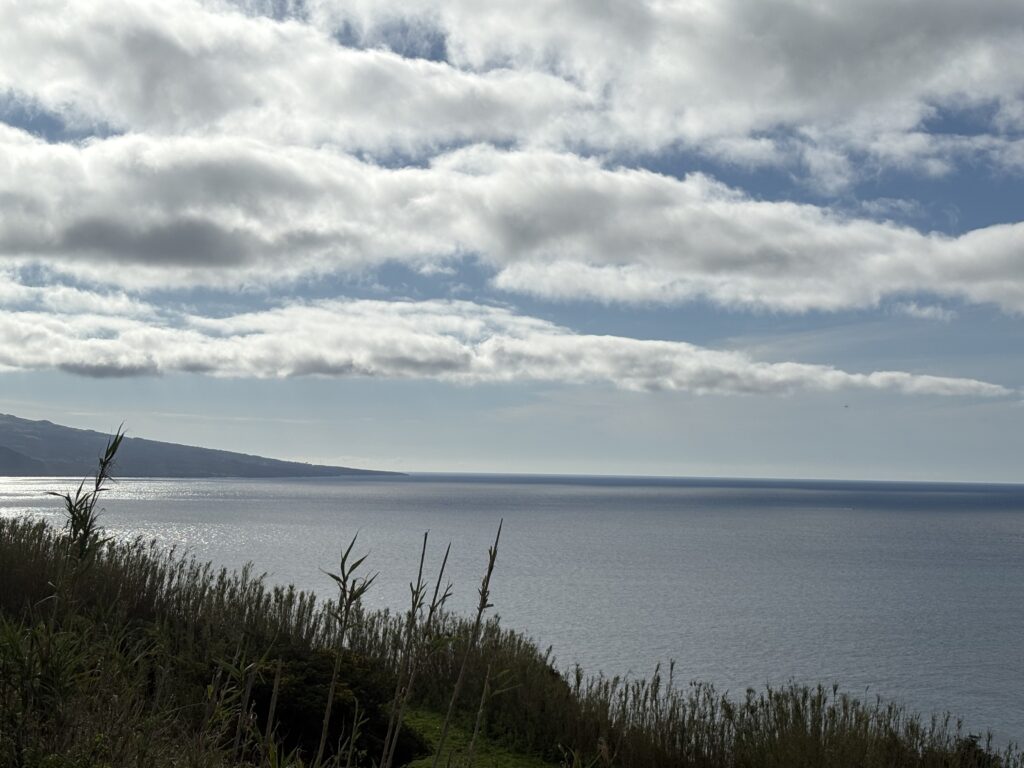
The beauty of the ocean views everywhere 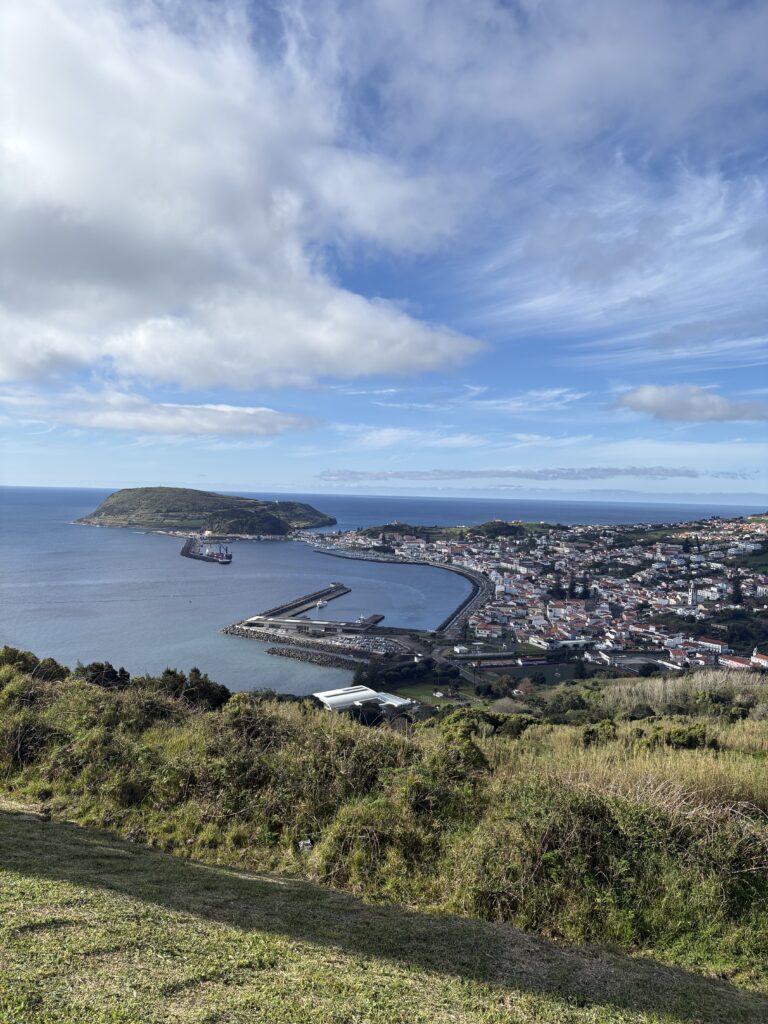
Horta from up above 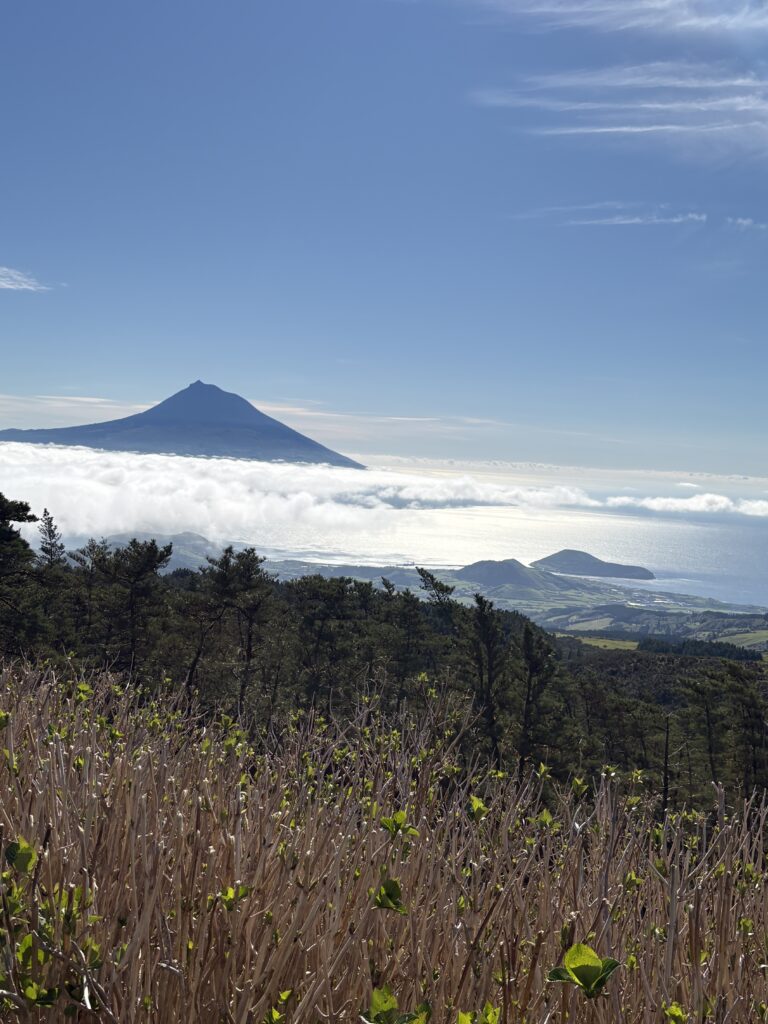
Pico island 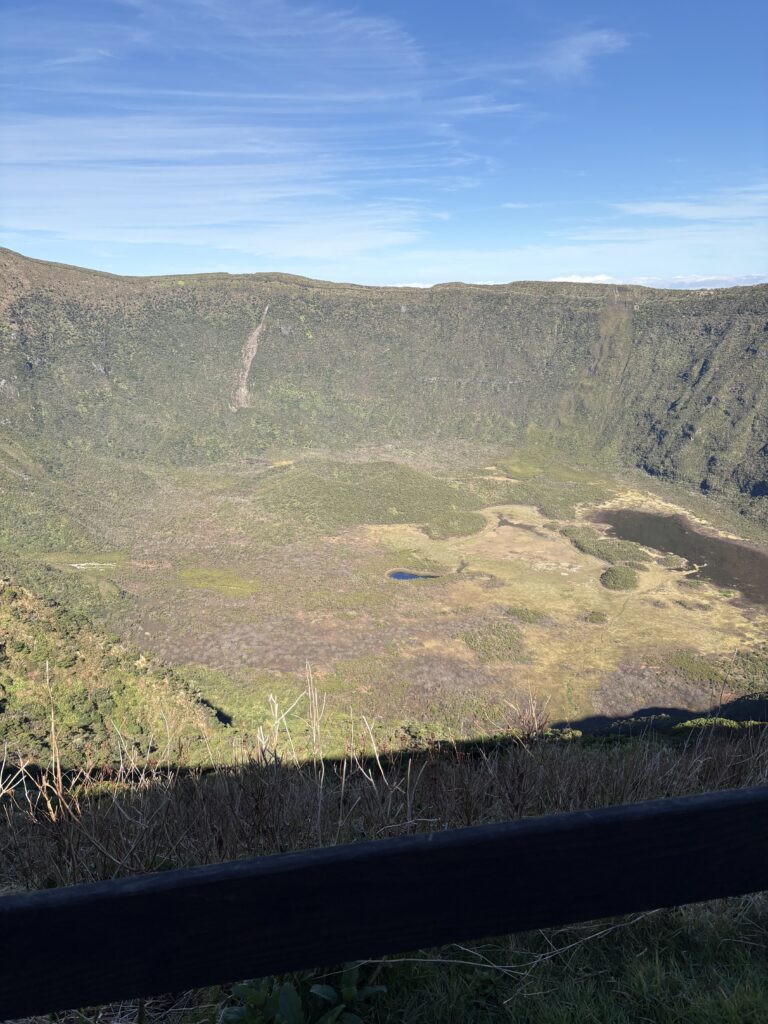
Caldeira, the volcano crater 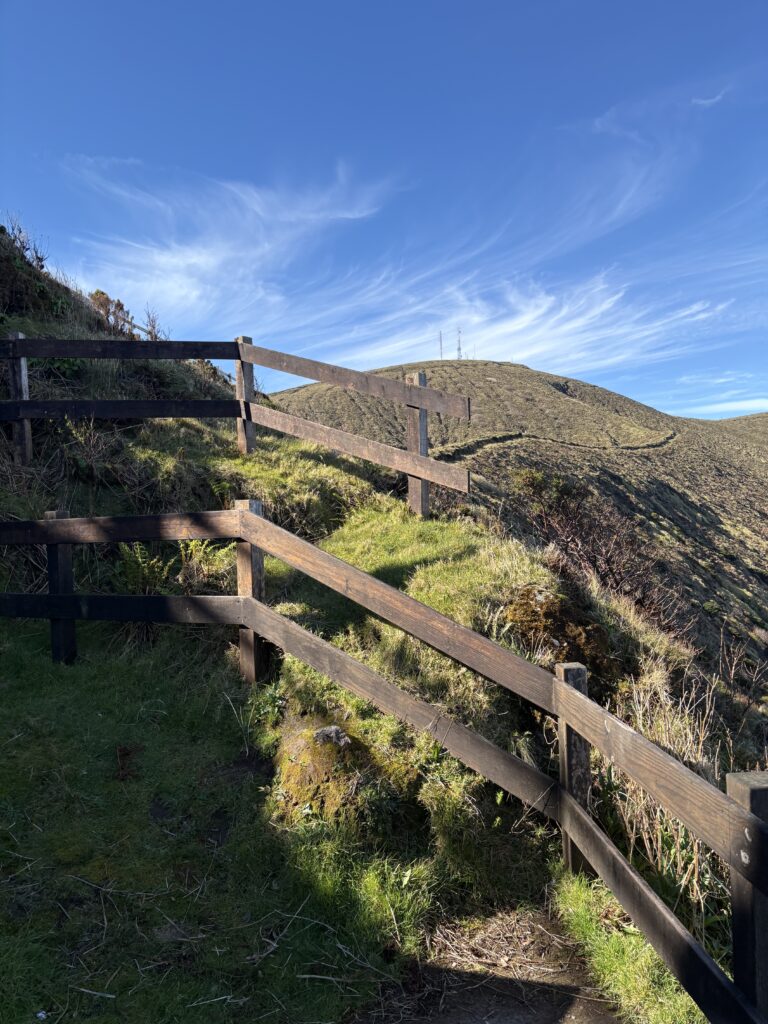
Caldeira 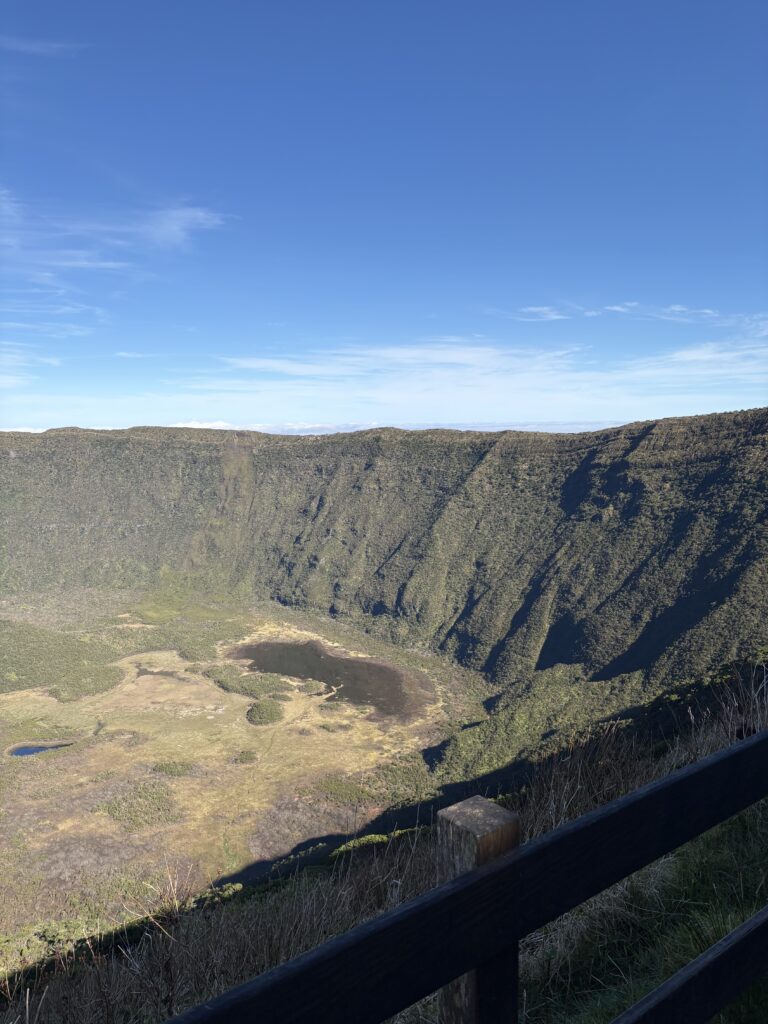
Caldeira 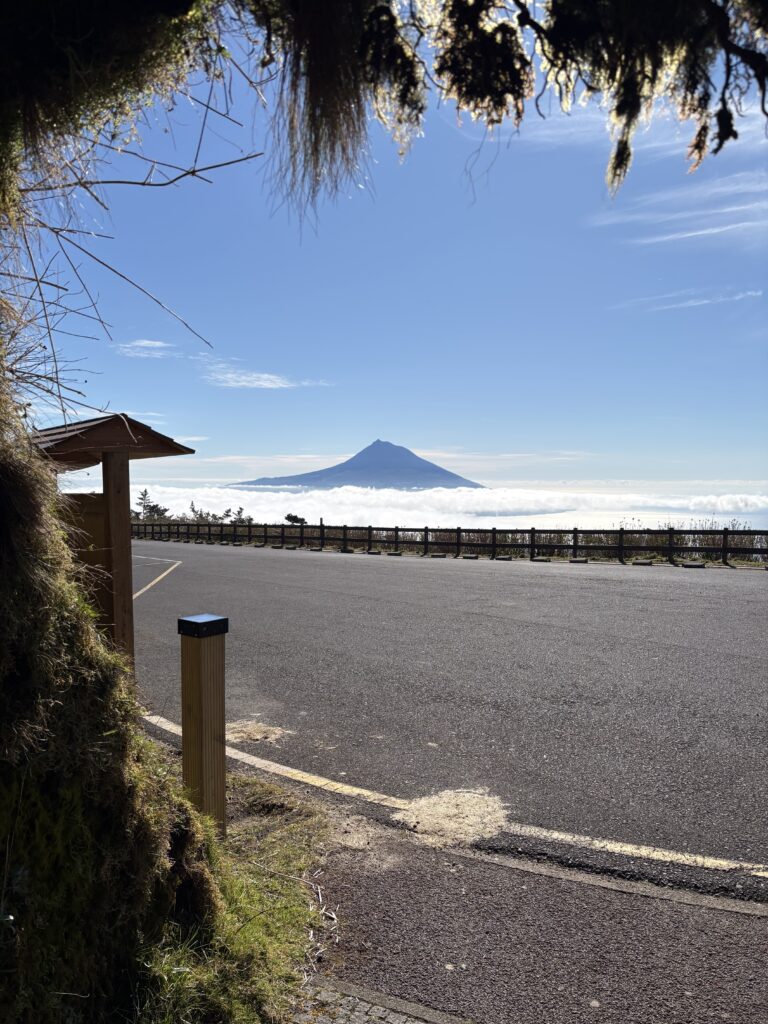
Pico 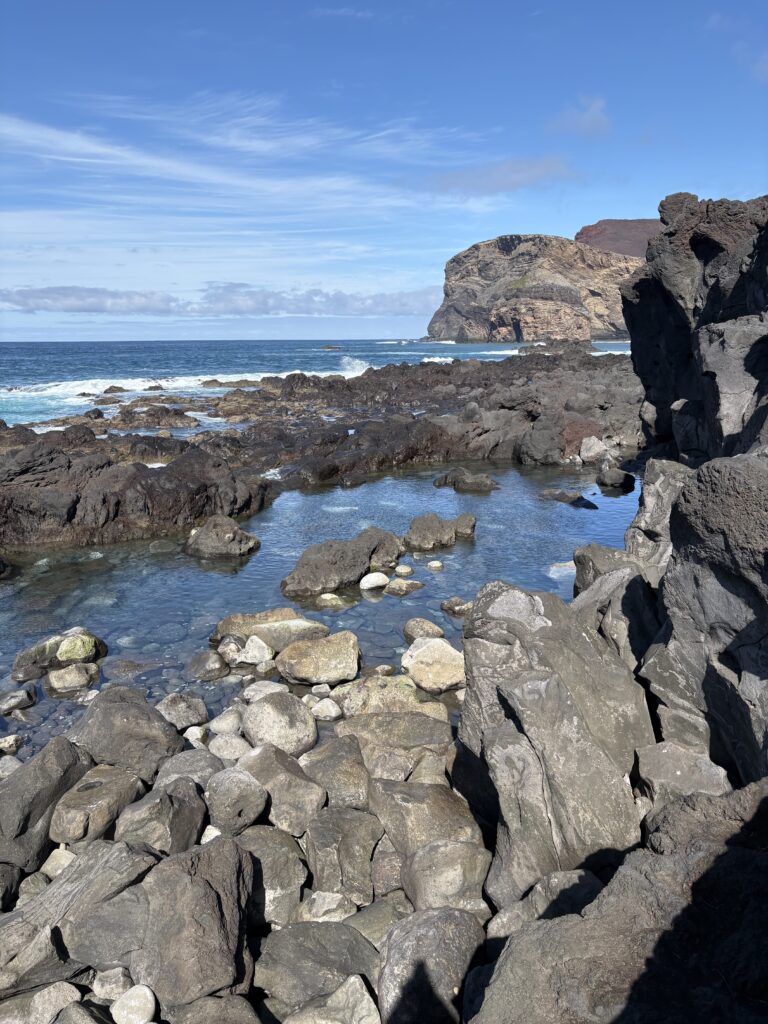
Rock pools at the Vulcão 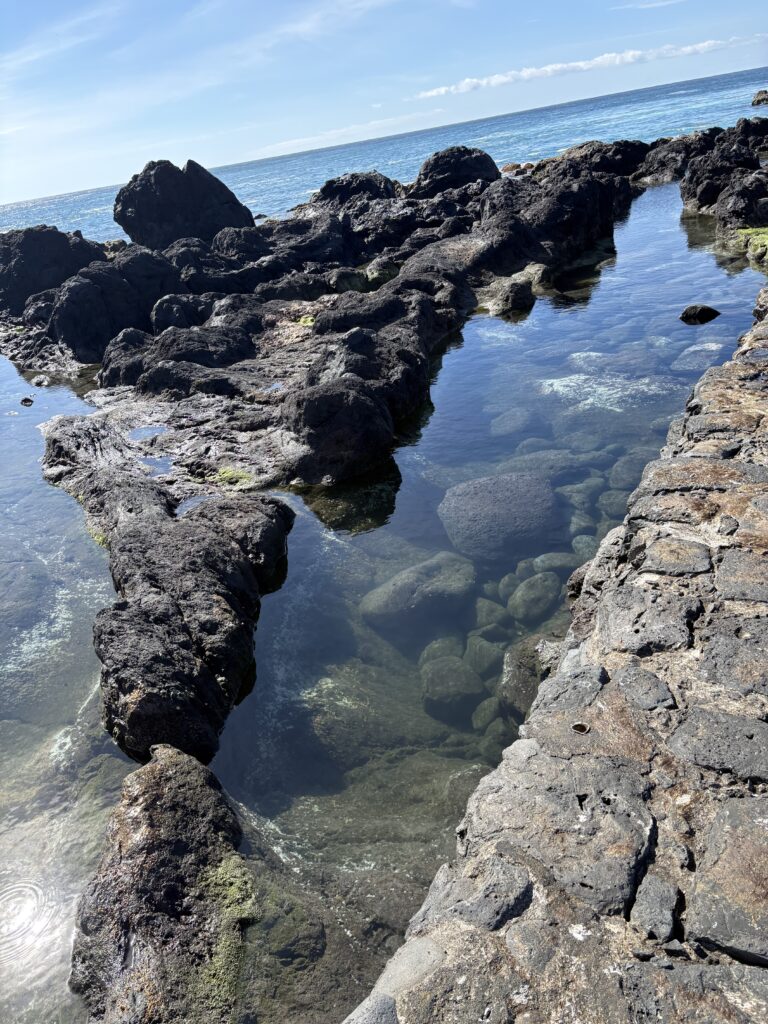
How clear the water is at the rock pools 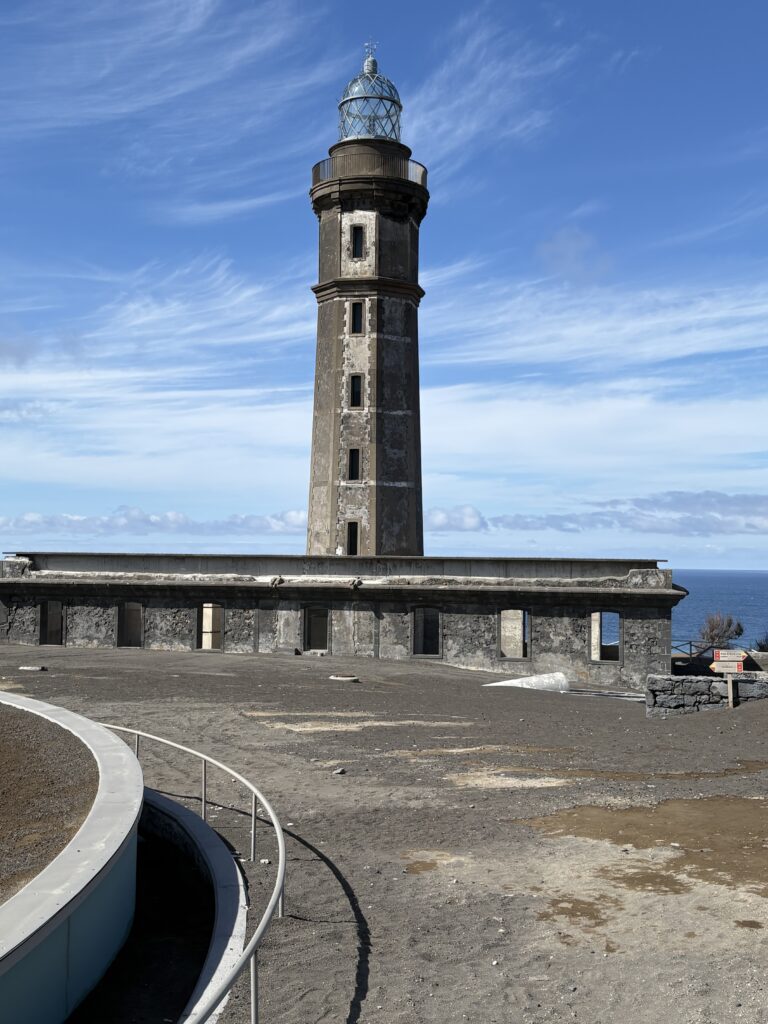
The half buried light house at Vulcão 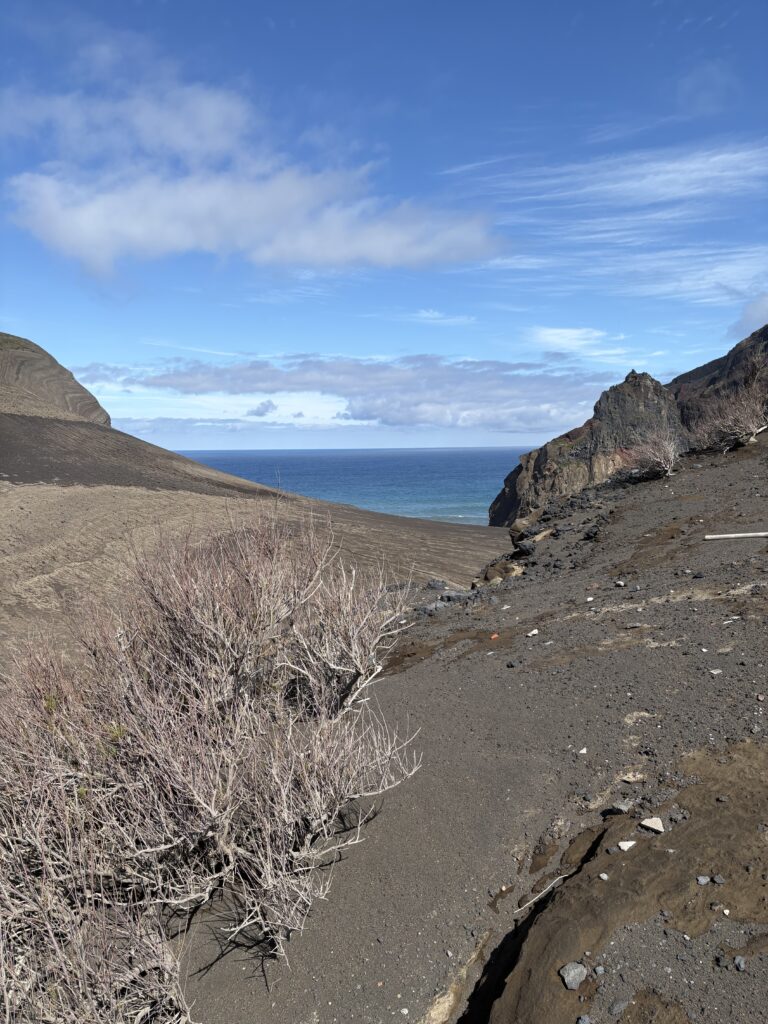
Vulcão 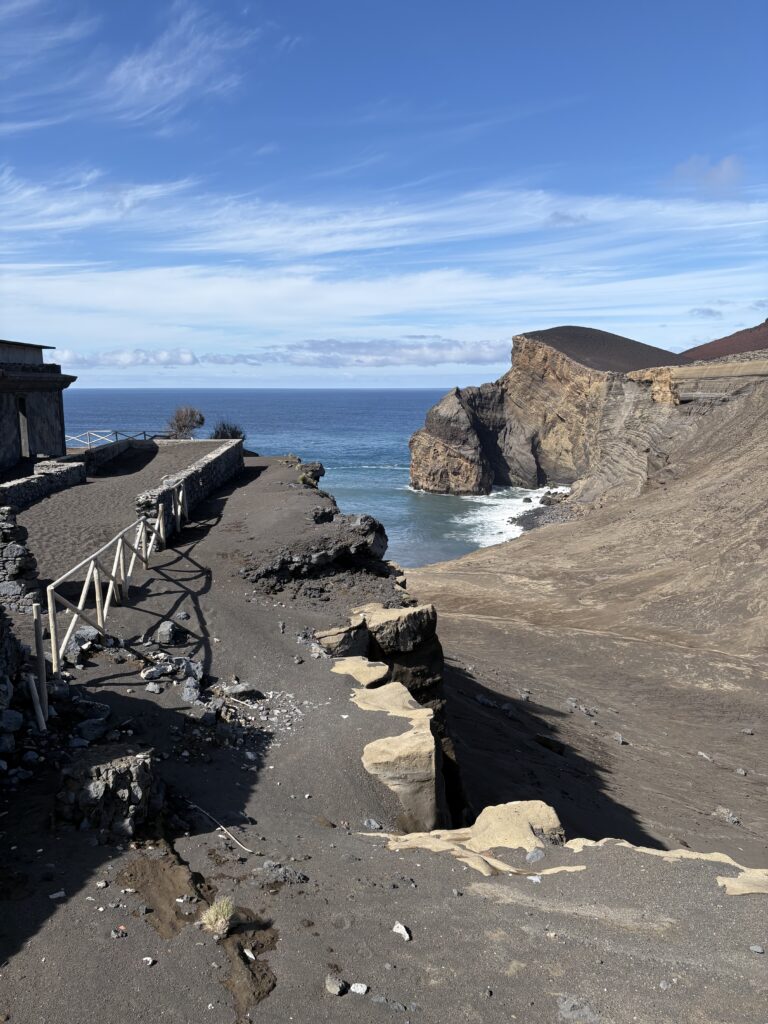
Vulcão and the ocean