Tag: North Atlantic
-
On the Atlantic Ocean: spotting whales
The Azores, and particularly the island of Horta, is an island of whalers. There are outlooks all over the island where spotters would sit and stare out at the ocean for hours until whales were spotted, then call the alarm and out would head the whalers in a small boat with harpoons. Even whalers from the east coast of the United States would make it as far as the Azores in the hunt for whales. I have since come to read that the migration of many species of whales, but particularly sperm whales, passes close by.
I do not know how many days or nautical miles before arriving in Horta that our whale spotting happened, but I remember it distinctly. I have a photo of a whale close by. It’s hard to see, but for me, it brings back all the memories of that scary but exciting day.
We now know that whales can and do attack sailing ships. Maybe my father knew that then too, but us kids certainly didn’t. We suddenly found ourselves in the midst of a pod of sperm whales, each one twice as long as Scally. They are slow and majestic. I don’t remember their eyes looking at us, although I’m sure they did, intelligent species that they are. I do remember their proximity to Scally, that I was frightened but in awe and I remember the smell of their spray when they surfaced. We were certainly very lucky that nothing happened to us or Scally.
In 1982, whaling had not yet been banned worldwide and it was still an industry in the Azores. Scrimshaw was a craft that was handed down from one Azorean generation to the next and much like my country of birth, where elephant tusks were also used for craft in statues, jewellry and other art; even though I am an owner of both, I am happy that both South Africa and Portugal, countries of my birthright, have banned and outlawed all hunting of these two magnificent species of animals.
Dates: 1982
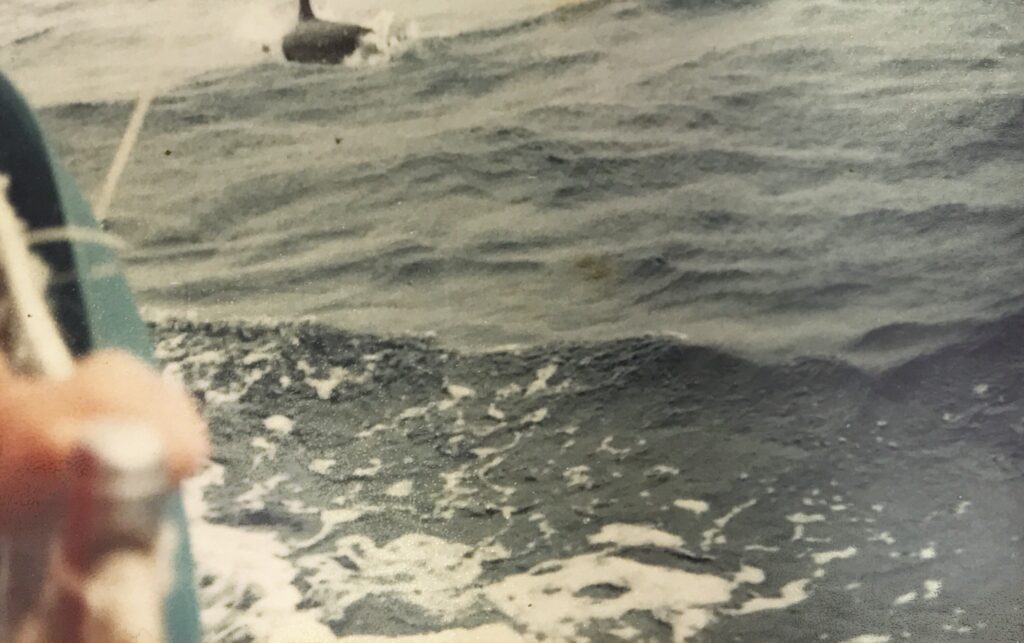
The whales close by -
A day at sea: how we spent our time
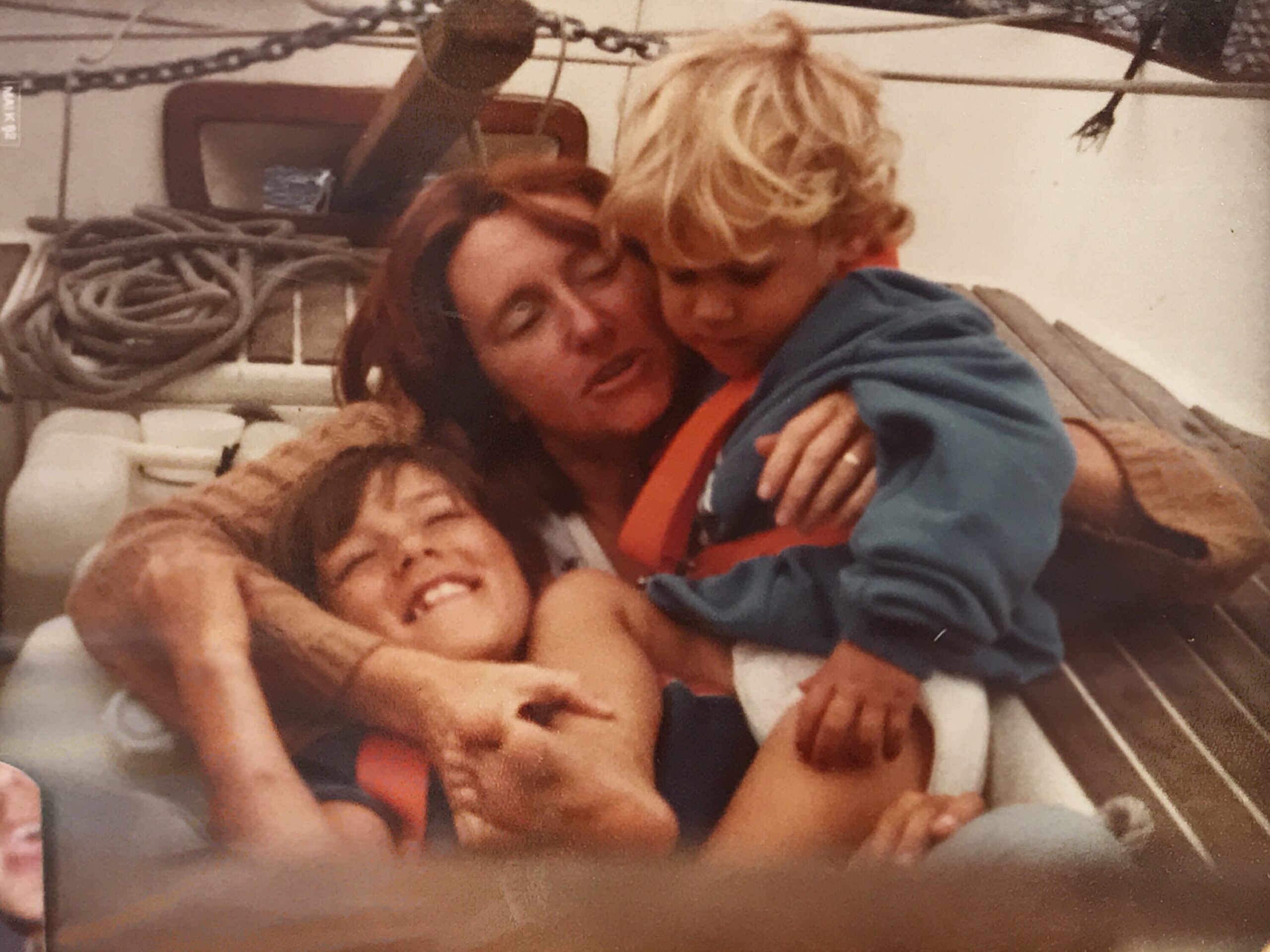
Scally was not a large sailboat, and at a mere 31-feet, space was a premium. When we think about young children nowadays; ages nine and two years old, happily playing and running around their homes or local playgrounds, I find it hard to imagine how difficult it must have been for my two youngest brothers. There were no Ipads, no Disney movies, no distractions of the kind that parents take for granted these days. The two of us older ones had chores to do, which kept us occupied, and also our shifts, which taught us responsibility. They are skills that serve me well to this day.
Our chores on deck included washing and scrubbing the decks daily with salt water pulled up from the ocean in a green canvas bucket tied to a rope and special detergent which lathered in salt water, and a small hand held brush. We began up at the forepeak and worked our way down the port and starboard sides on our hands and knees, to the cockpit and the stern. Other chores included polishing the chrome stanchions to keep rust at bay; winding the lines into round coils on deck to dry them out and make it look nice; checking the jerry cans lining the starboard and portside decks to ensure that they were properly strapped down; keeping the cockpit tidy, and looking out over the horizon to spot potential squalls or other threats. We sang songs, endlessly. Me on the guitar and everyone else joining in. Yellow Submarine. Slip Sliding Away. Country Roads.
Down below, we made our beds every day. Mine and my youngest brother’s had to be stowed away every day because it was needed as sitting space during the day for us to eat round the saloon table. Cleaning and tidying up was also done a few times a day; Scally could get quite messy with the six of us during the day. We played backgammon, trivial pursuit and dominoes for hours on end; read the tomes my father had chosen for us to read on the trip; and sang. We wrote daily in the logbook and observed my father plotting our position on the charts. We made no noise as we listened quietly and carefully to my father connecting with other Ham radio enthusiasts, somewhere in the world. This was our only connection to others and we were all grateful for it. Charlie Tango Delta Romeo India November Alpha. We were all fluent in the international radio alphabet.
Food and drink: water was in limited supply, you never knew when it might run out. One cup of water. There was a powder orange drink which when mixed with water made orange juice; and Coca Cola. My middle brother, aged nine, developed the skill for baking fresh bread in our little oven on gimbals. It was always delicious. Sometimes there was fresh tuna, if we had managed to catch one, and it often lasted for days. There were no fresh vegetables and fruit because after one or two days at sea it went off; so we had tinned instead. We were never hungry.
Exercise: non-existent.
Sleep: a lot.
Contentedness: we were a happy family