Tag: Salvador
-
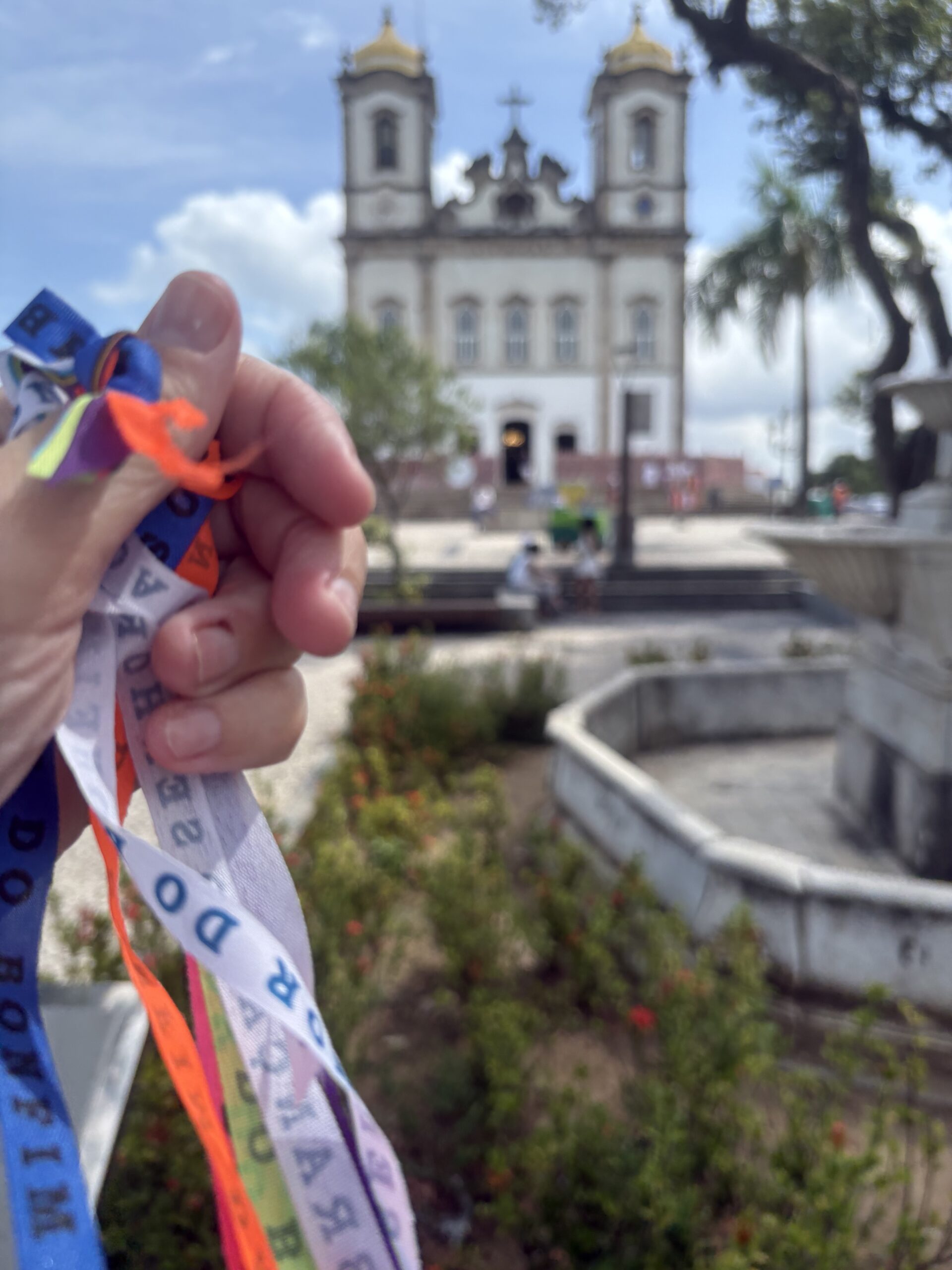
Brazil, Basilica Senhor do Bonfim
I have a photograph of us, taken by my father, standing at the entrance of this church in 1982, and another of my two youngest brothers in the square outside. I have lost many memories of our trip on Scally, but my memories of this church are still vivid. I remember the wax parts of the body, limbs, organs, and every other part of the body you can imagine, internal or external, all made out of wax, to be able to be burnt and sacrificed, in the belief that burning the body part that ails you would heal you, hanging from the ceilings in the aisles. I remember the church being on a hill, majestic and framed by the large blue skies. I remember colourful ribbons that were sold by street vendors outside, and my father buying us each one. I had mine on until it was so tattered it ripped and fell off many months later.
There are so many churches and cathedrals in Salvador, I would love to be able to ask my father why he chose this one to visit. Not my mother, my brother, nor I know the reason. I have to believe that it’s because of my father’s passion for history, the sea, the navigators and a slight dose of superstition.
The captain of a Portuguese war ship, and owner slave ships, Theodosio Rodrigues de Faria made a promise that if he survived a bad storm while at sea, he would bring to Brazil from Setubal, in Portugal, images of Senhor do Bonfim and Nossa Senhora da Guia. This indeed he did, bringing with him a replica from Portugal in 1765. The coloured ribbons were introduced in the early 1800s in an effort to raise money for the church. The ribbons are tied on your wrist and each knot is a prayer made silently. Usually three silent prayers are made. I believe my father chose this church because it originated in his home country and possibly as a talisman against tempests at sea, but we’ll never truly know.
My visit in 2026 was on a warm and sunny day. I was not yet in possession of any reais, Brazilian currency, and was hoping that credit cards would be accepted. Indeed, as soon as I stepped out of the taxi in a side lane, I saw the market stalls, selling amongst other religious artefacts, the prized coloured ribbons I so wanted. I chose a female vendor who smiled at me and seemed friendly. Luckily she accepted all sorts of payment methods and I bought my ribbons and a rosary bead.
Then I walked up to the church. The wrought iron railings at the top of the steps were packed with ribbons and I, too, added six before I entered the church, saying a silent prayer for each of Scally’s crew. I then stepped inside. It was much smaller than I had remembered, and a mass was in full swing. I sat reverently in a pew until the singing had subsided and then got up quietly and moved to the aisles in the hopes of seeing the wax body parts I remembered. They are no longer there. Instead, a small section of the aisle has been dedicated to the wax body parts, along with a description of what they are for. There was a German tourist group with a guide in that section at the time, and I could hear, sense and observe their disbelief at such a tradition.
I spent quite a while in the church, listening to the mass and sharing in the happiness of the singing. It was someone’s birthday because suddenly the priest and congregation launched into a happy birthday. I slowly went back outside and sat in the square for some time, remembering.
I am so glad I came. I was brought up a Roman Catholic. I like visiting churches, no matter which country they’re in. Being inside a church always brings me a sense of peace and tranquility, and reminds me that the quick pace of life outside, at work, in my daily life, and the speed of everything nowadays does not have to be so. It is OK to take time out to be quiet, slow, thoughtful, pensive and reflective.
Dates: February 2026
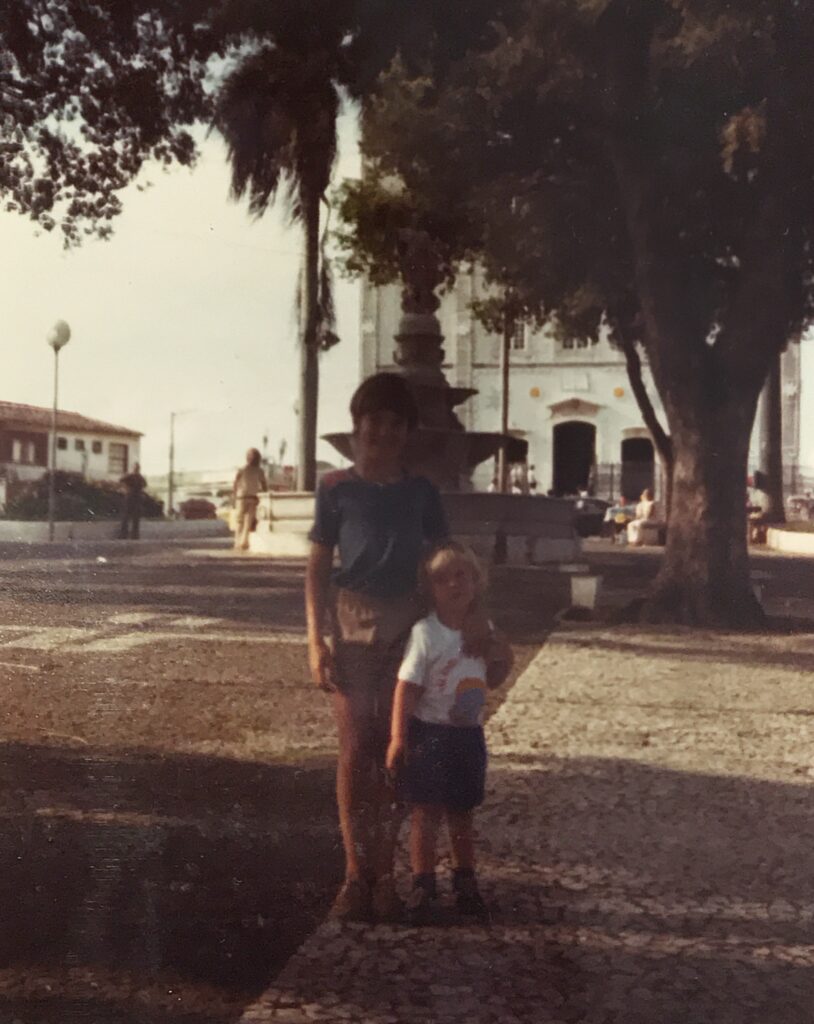
My two youngest brothers outside the church 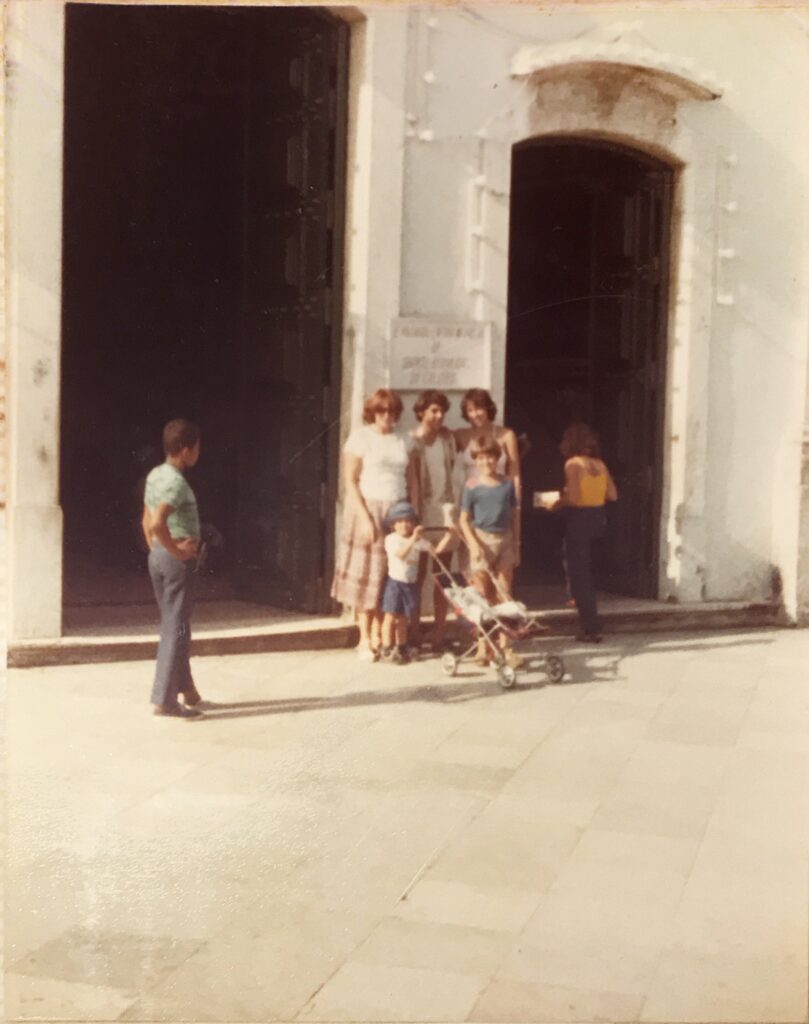
Five crew members outside the church 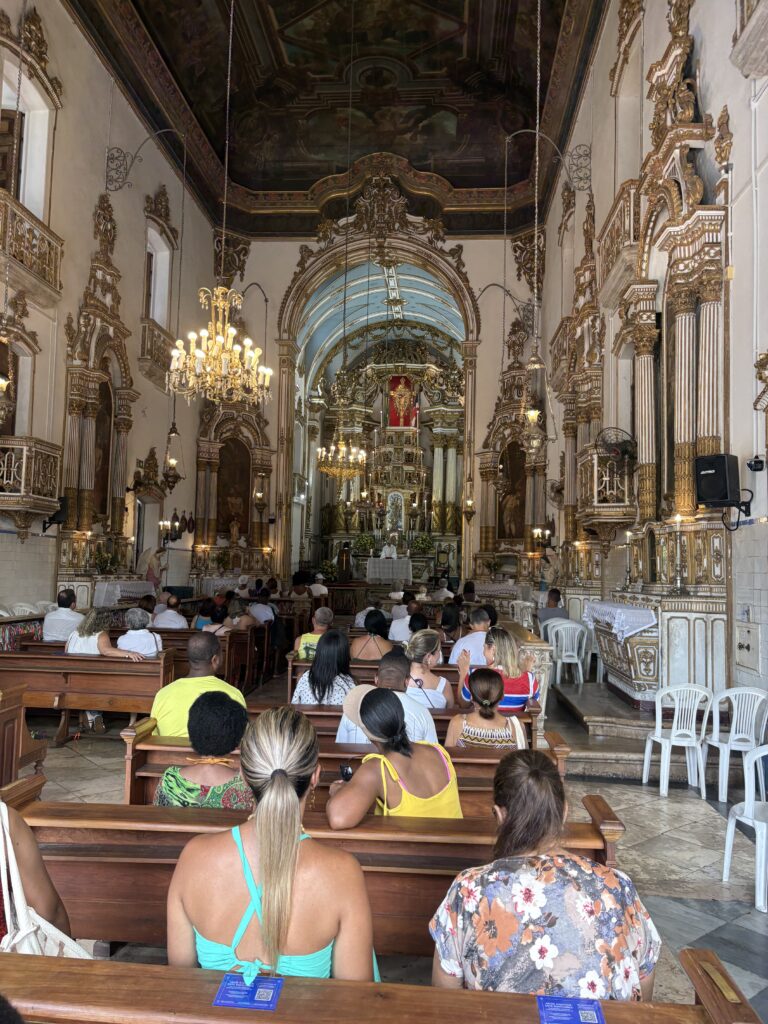
inside the church 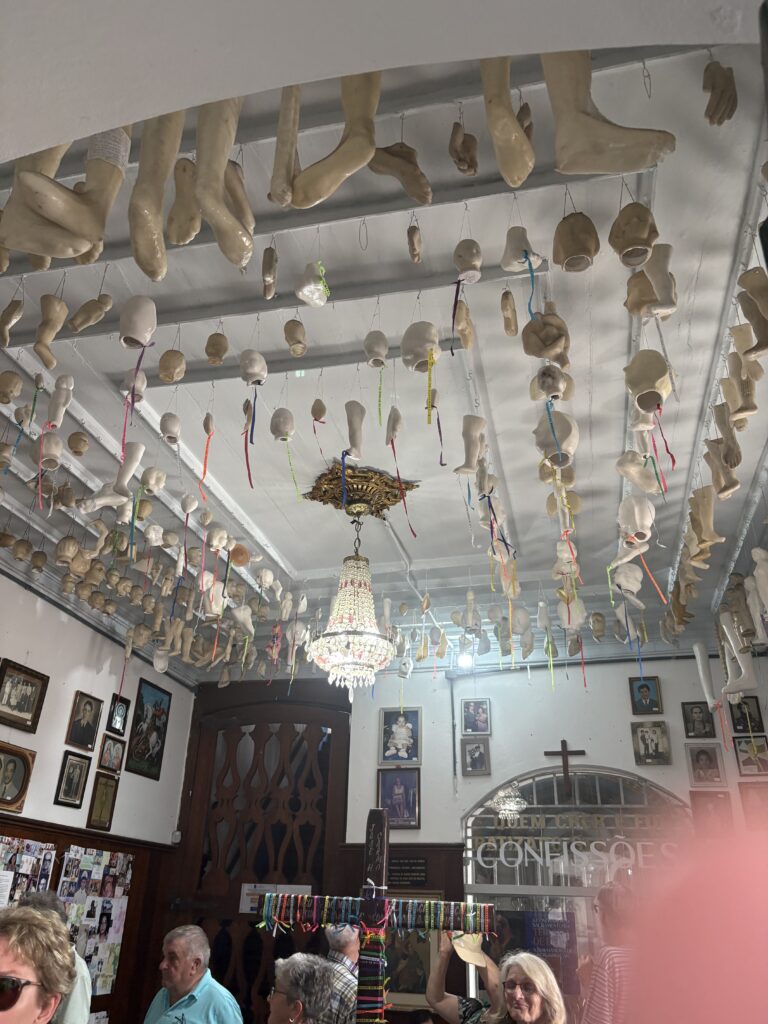
The wax body parts 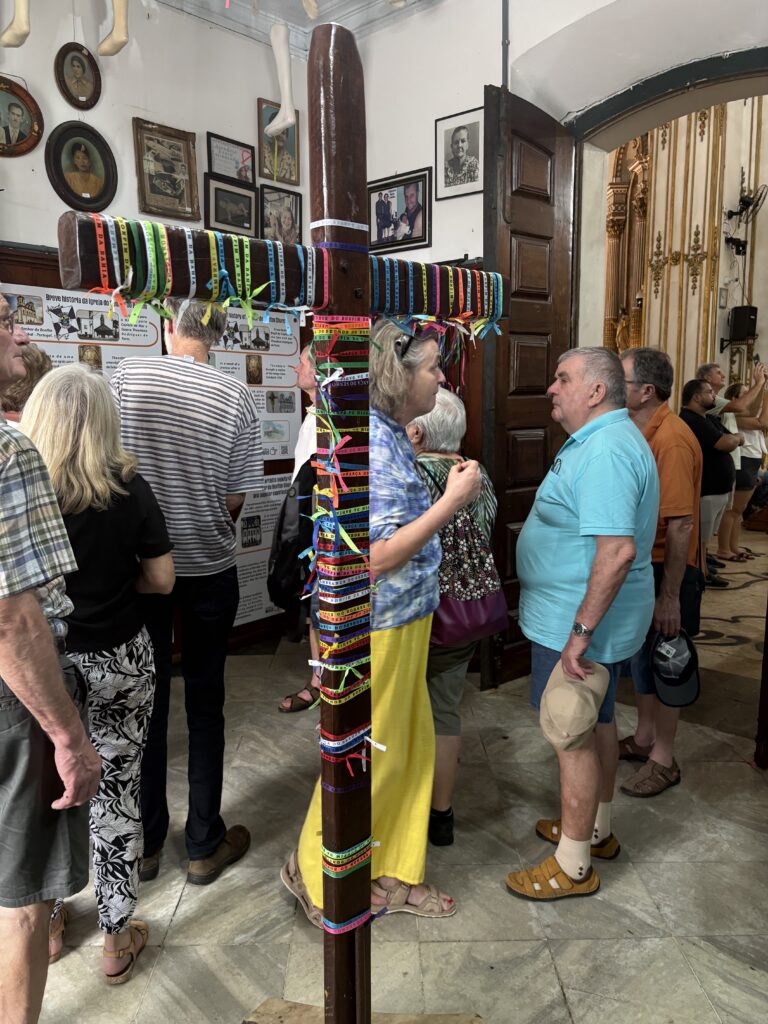
The small section with the body parts 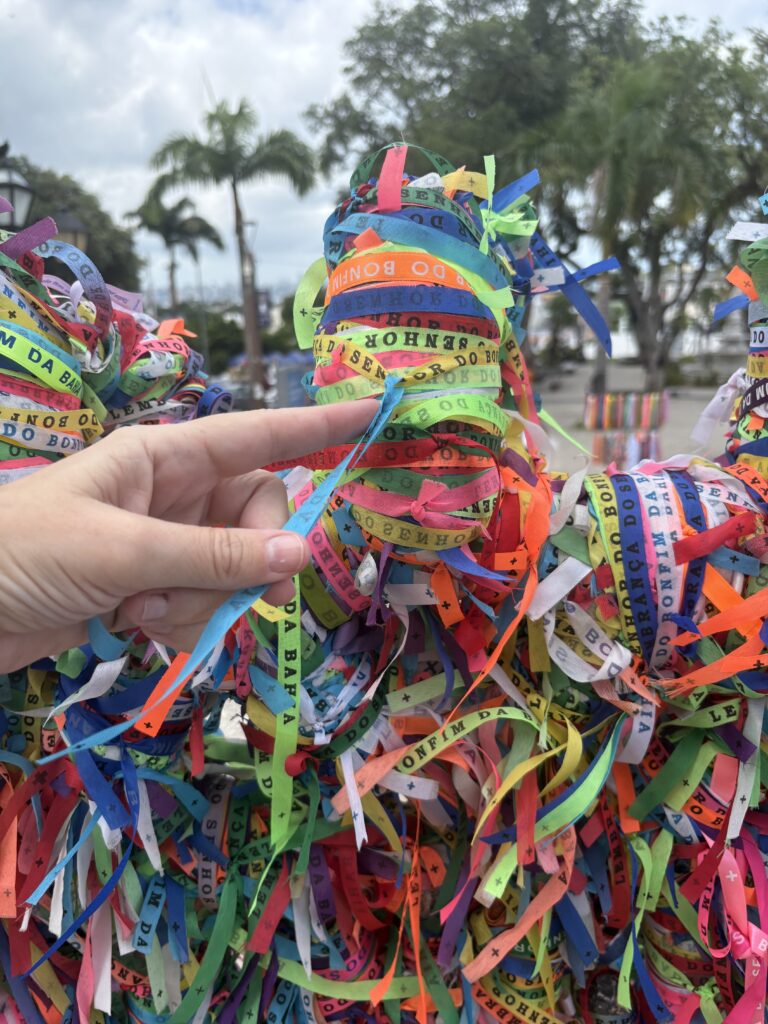
Tying the ribbons for Scally’s crew 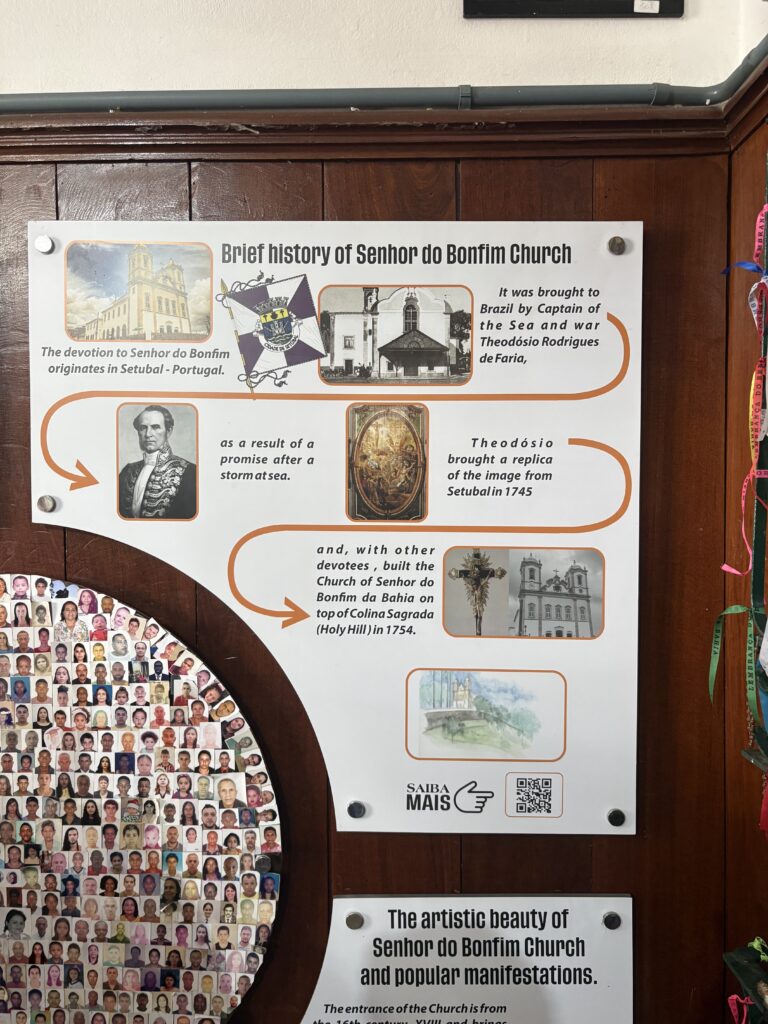
the history 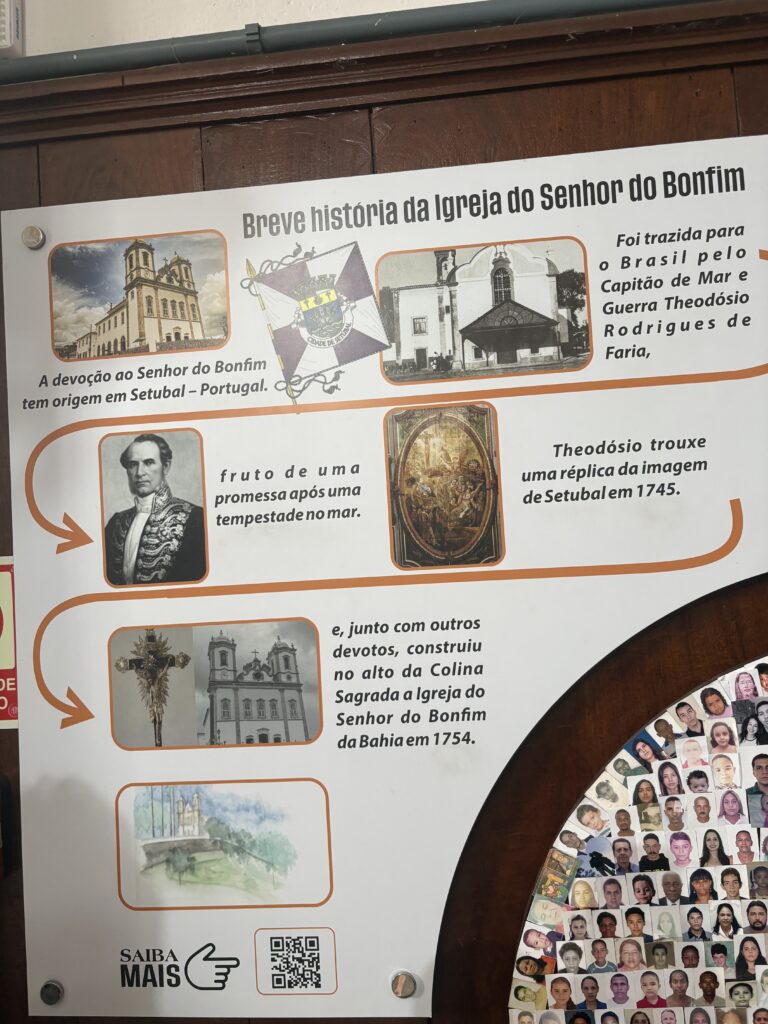
The history