Tag: Island
-
Azores: Faial
Horta is an island for yachties. Almost every sail vessel crossing the Atlantic from west to east, heading for Europe or the Mediterranean, will stop at Horta. For us, after spending twenty eight days at sea, it was a sight for sore eyes. I can only imagine the feelings that my father must have had at arriving and finally reaching his home territory safely.
Forty four years ago, we were greeted by and escorted into Faial Harbour by a Portuguese frigate, whose officers had heard over the radio waves that Scally was approaching. I believe either the captain or one of the senior officers was a fellow naval officer from the fifties and sixties when my father himself had been a member of the Portuguese navy.
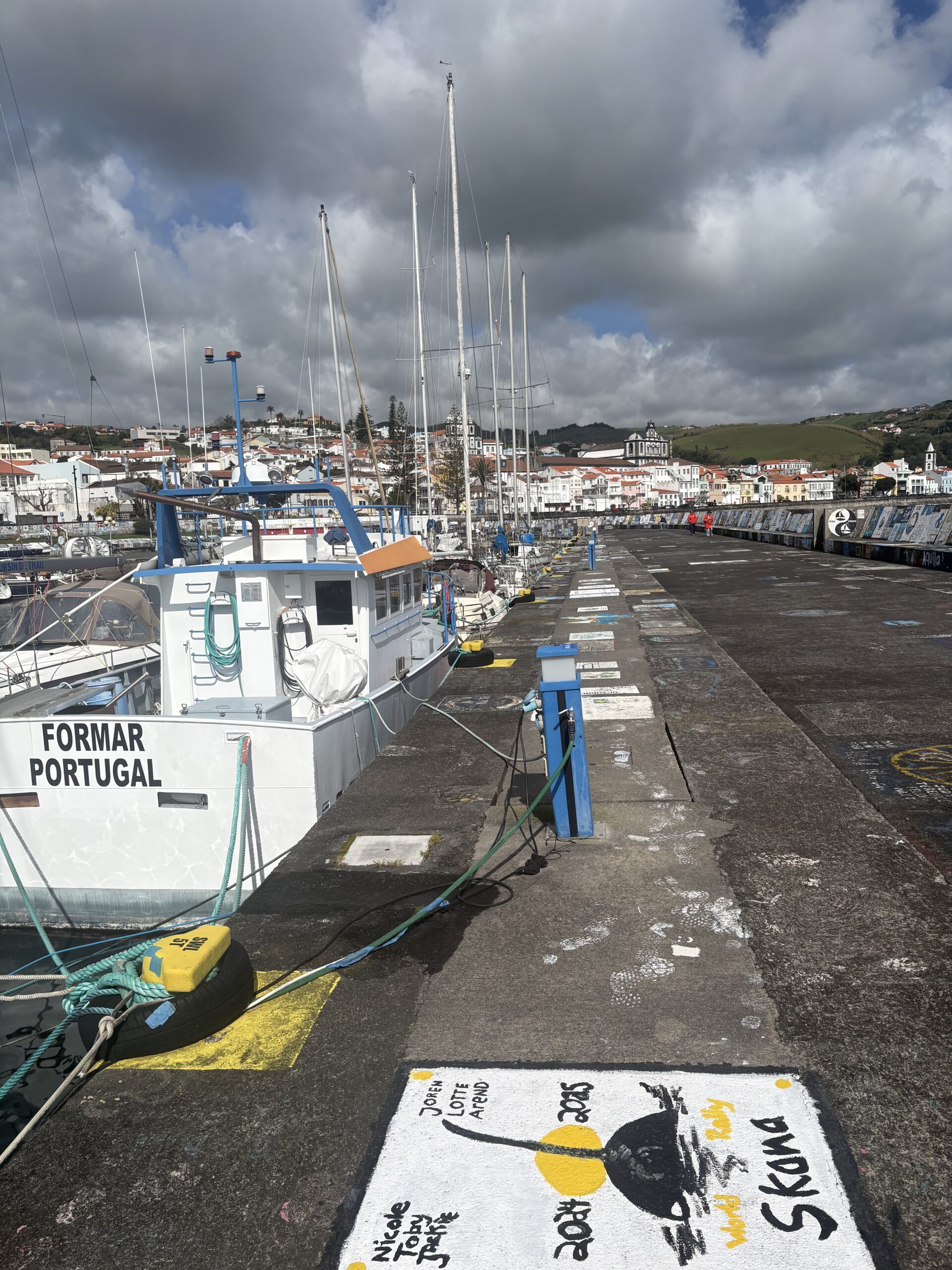
Today’s marina is very different from what it was in 1982, with an entirely new marina having been built with pontoons and jetties. The original sea wall is still there but unfortunately I was not allowed access; it’s restricted to the public because cargo ships tie up alongside.
What still sticks out at first sight, and everywhere you look, is the art work on the walls and pavements, creations by the yachties to memorialise their trip, crew, and time on Horta. We also did one for Scally, but it would have been on the original sea wall and certainly no longer visible after so long. I walked for a couple of hours up and down the quayside and looking out over the marina and boats. Most of the flags were not Portuguese. Most likely boats which had reached Horta and been left there for a while until the crew returned to sail onwards.
I wanted to find two artworks in particular. Spotting them is like trying to find a needle in a haystack. One would belong to one of my closest friends, a very keen and avid sailor from New Zealand, who often sails with us now on Illustrious 6, and who crossed the Atlantic a few years ago. I regretfully could not find that piece of artwork. The second one I did, but only after being told by my brother its approximate location. My oldest brother and his crew arrived in Horta about seven years ago having crossed from the Caribbean. One of the crew members was my niece, his daughter, a teenager at the time, who designed the artwork. She was very happy to know that I had found it.
I honoured all the artworks visible and invisible and all the brave captains, crew members, families and children who reached Horta after crossing the mighty Atlantic.
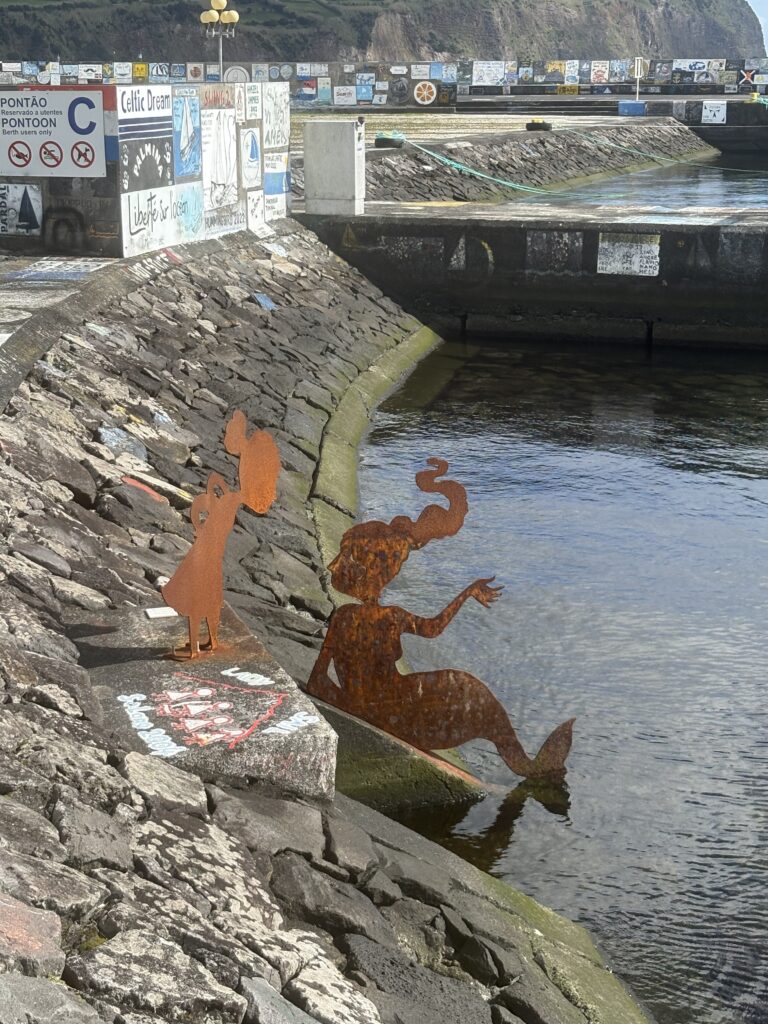
The mermaid and the child playing in the marina 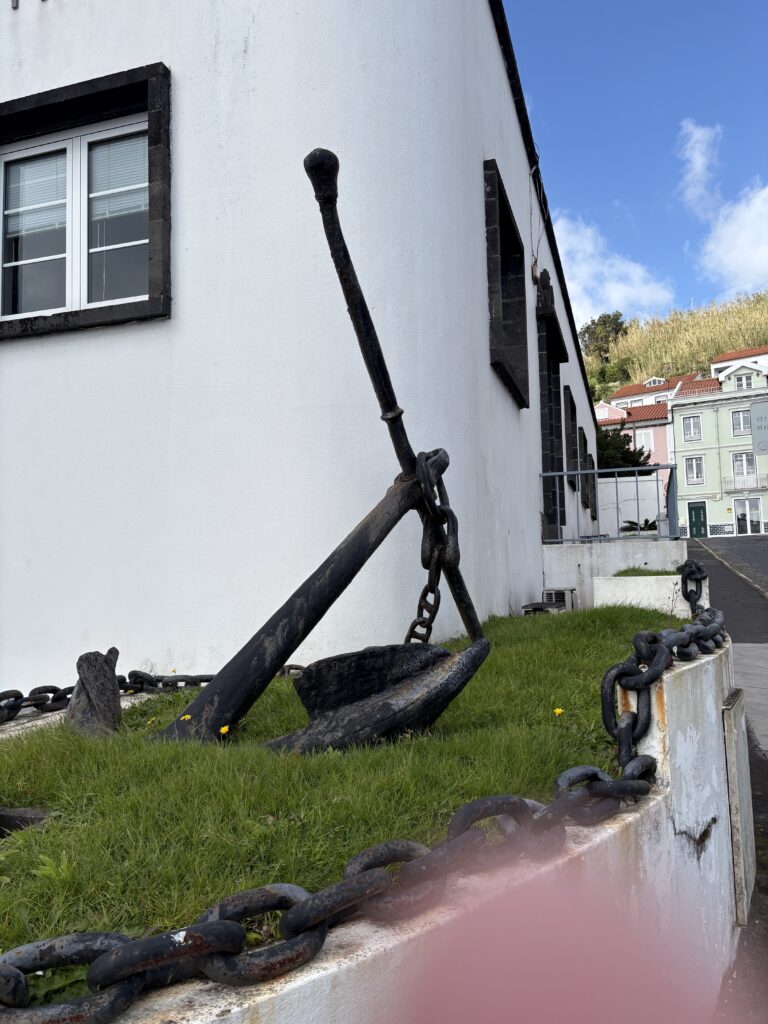
An anchor in the marina 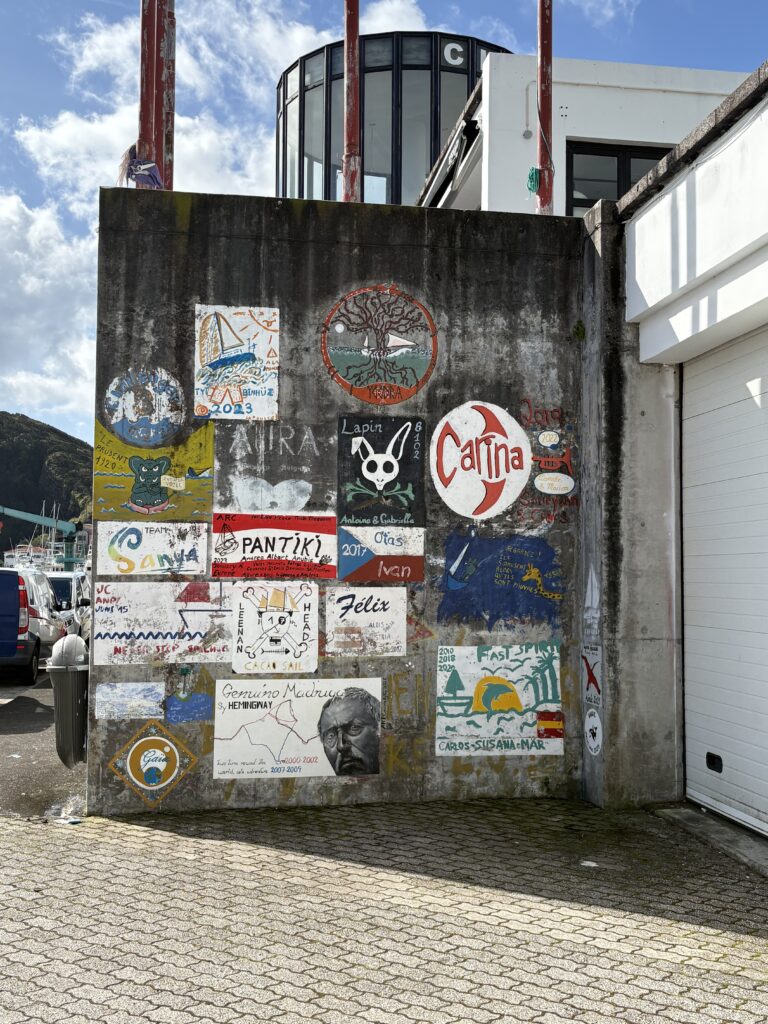
Artwork everywhere 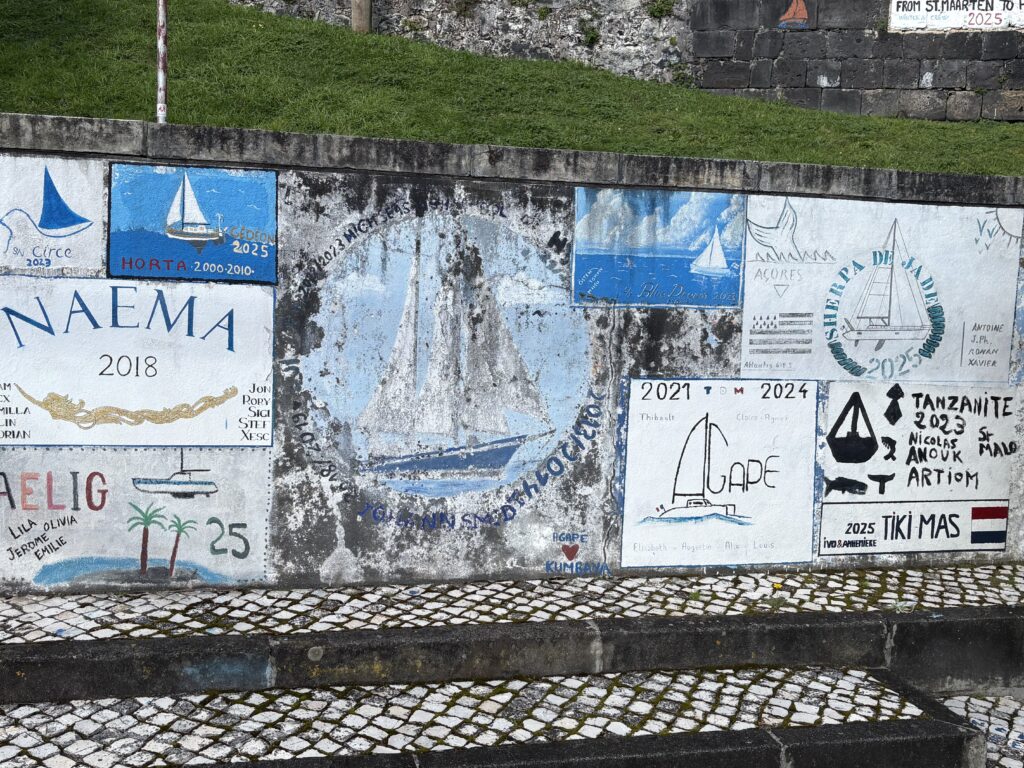
More artwork 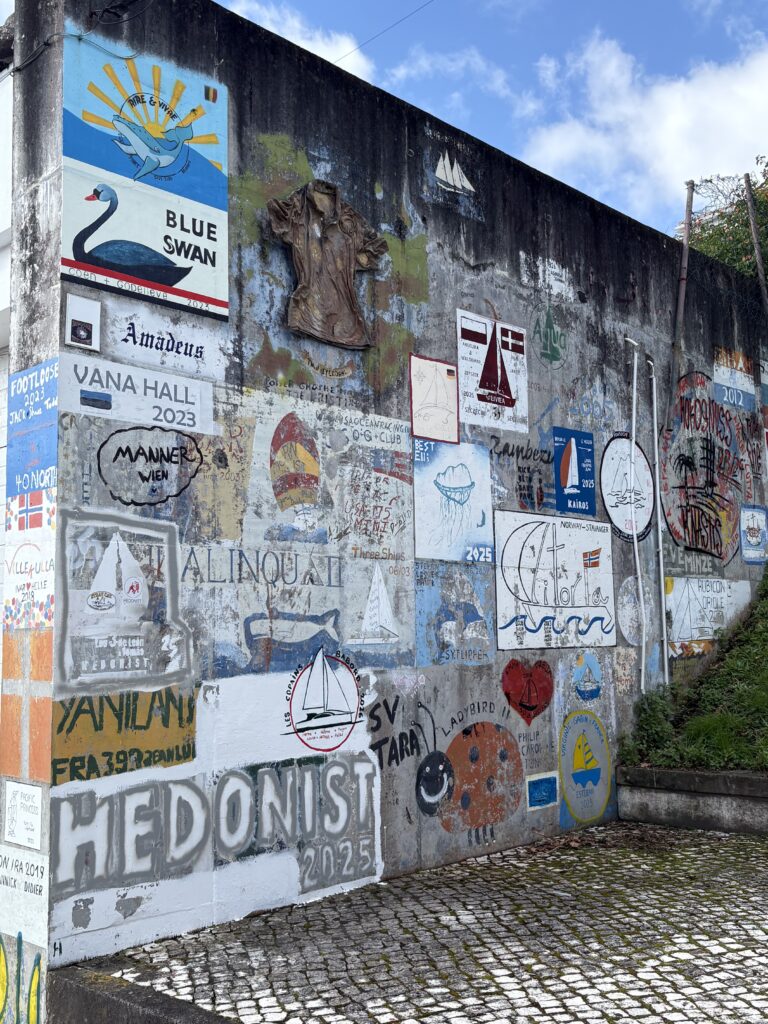
More artwork 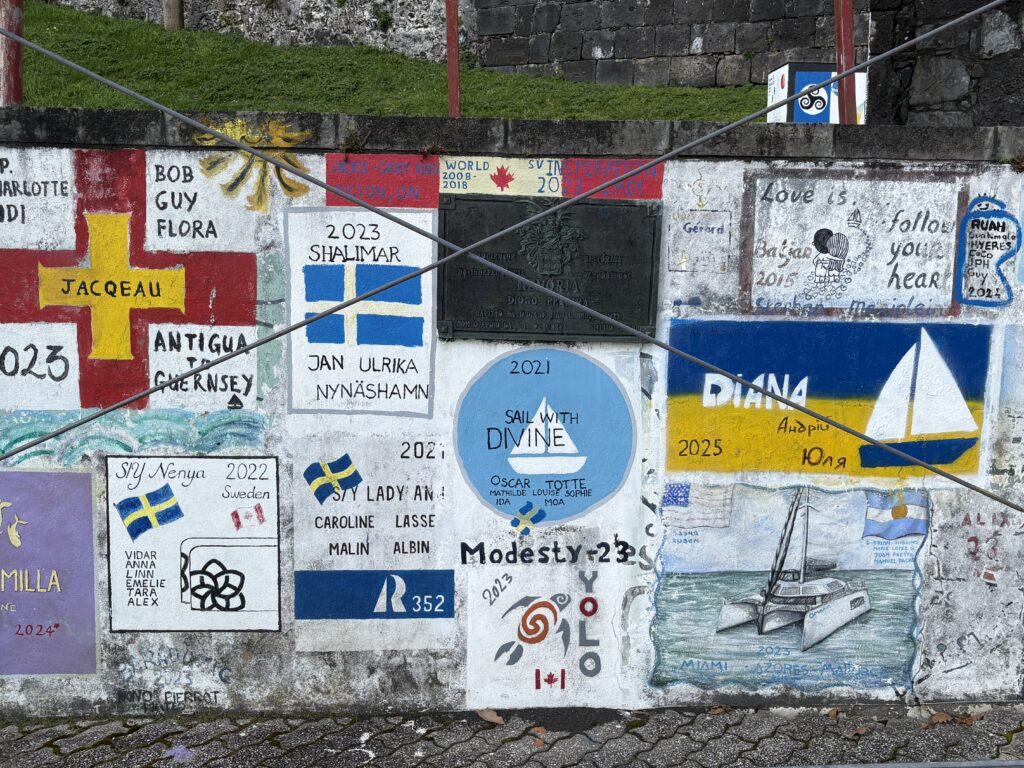
More artwork 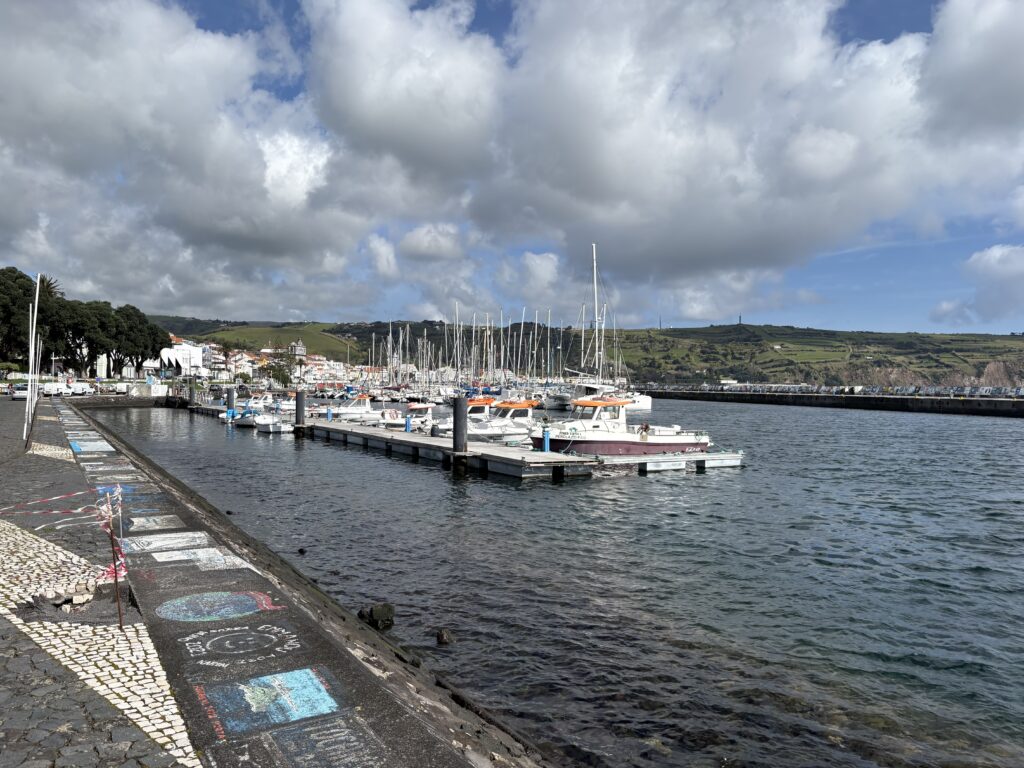
The marina in Horta 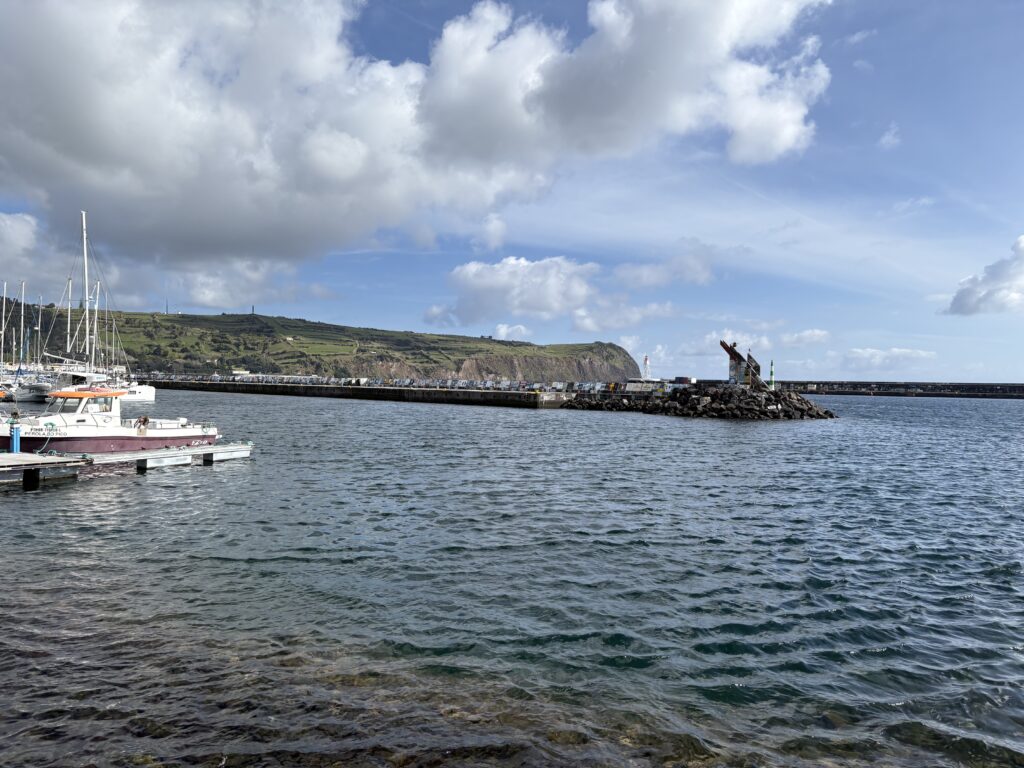
The original sea wall (where Scally was) in the far background. 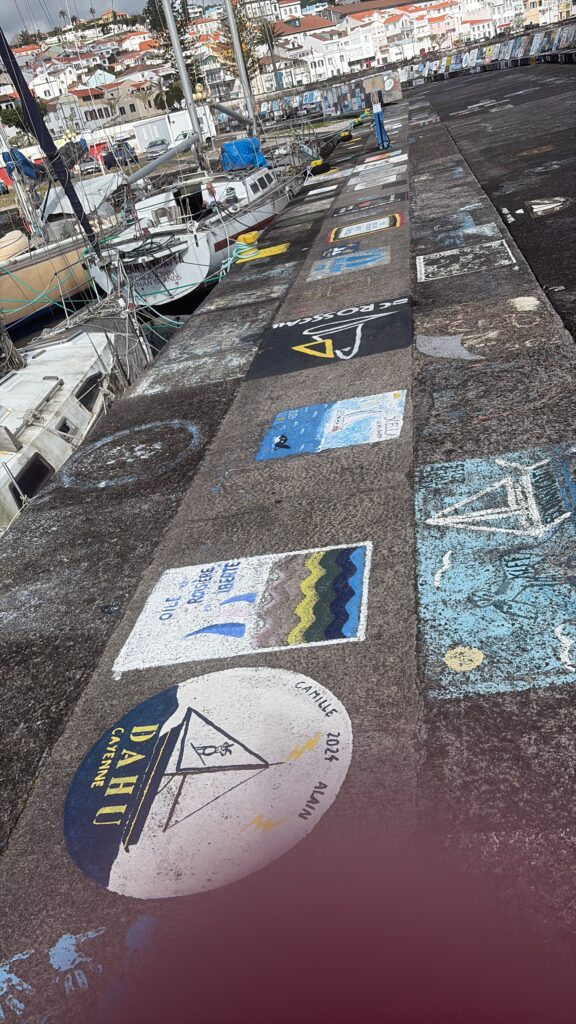
More artwork 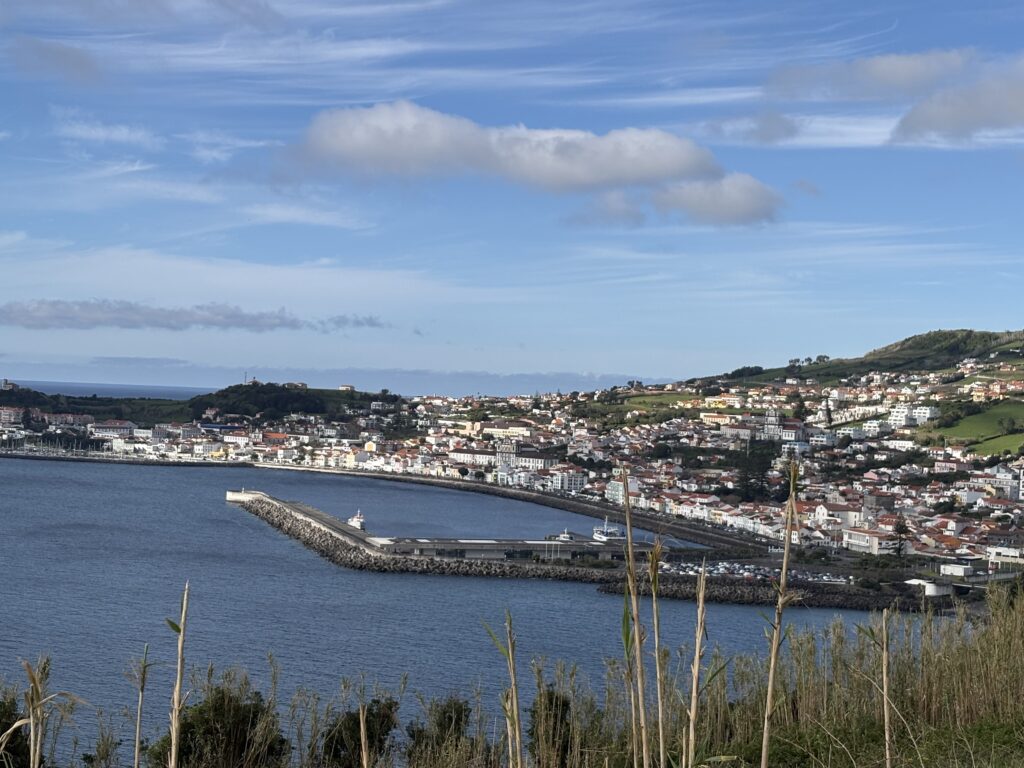
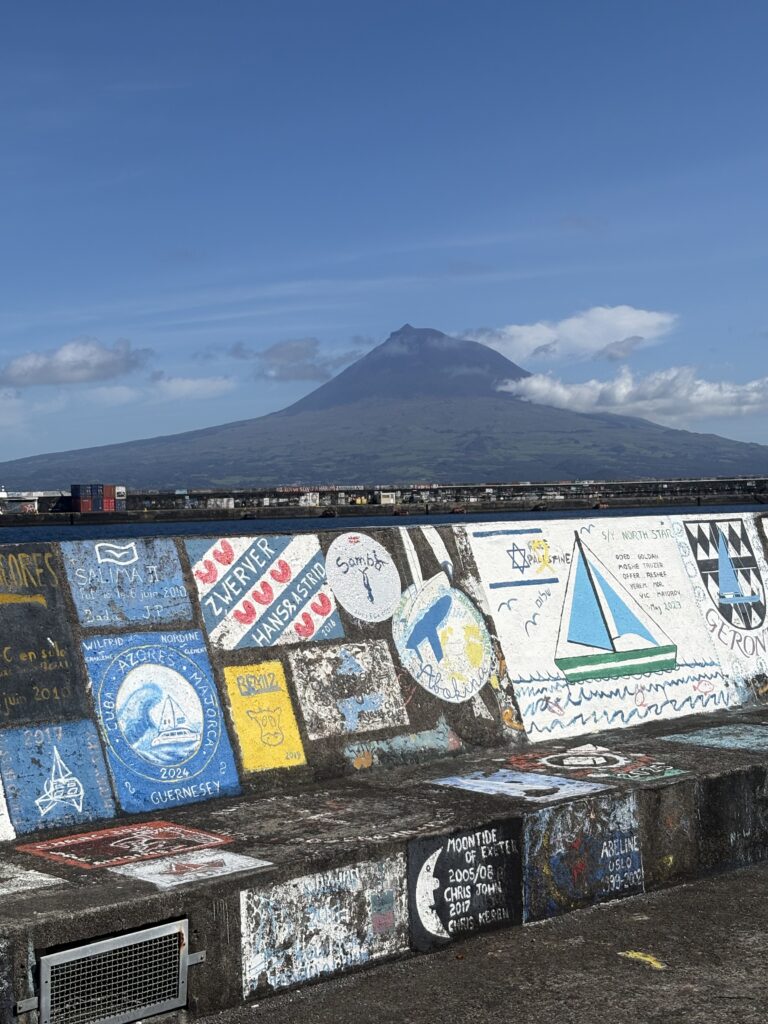
More artwork and the island of Pico in the background. 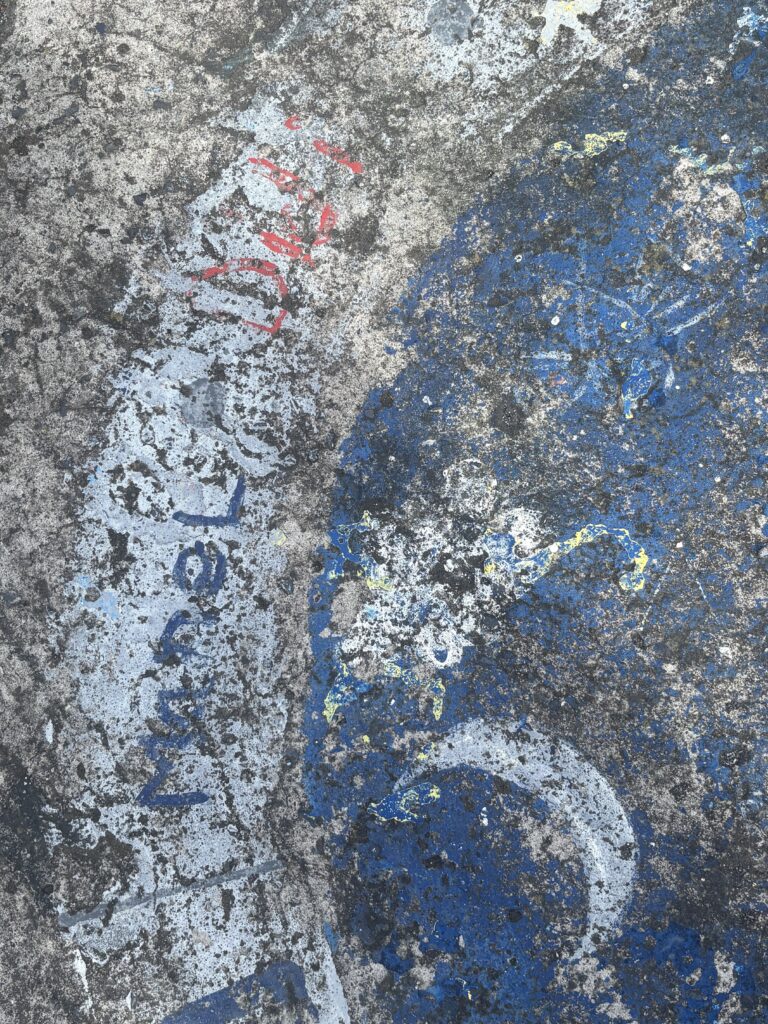
A close up of the artwork of my niece. 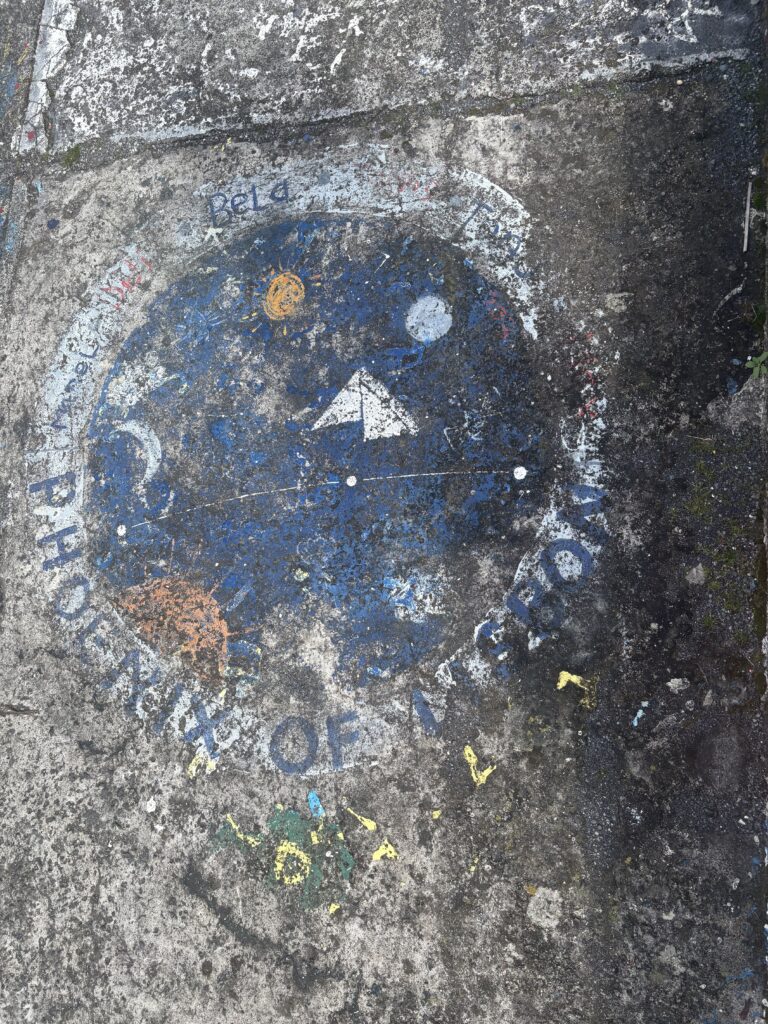
The artwork I found for my niece and brother. 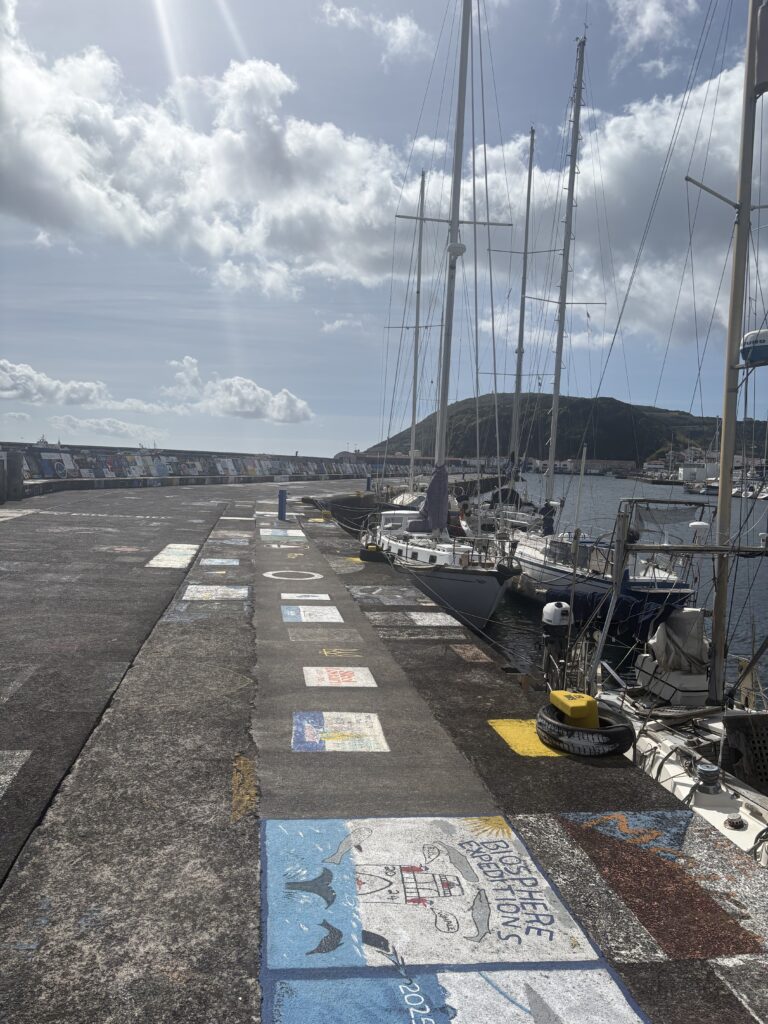
The marina sea wall (not the one where Scally would have been tied alongside) -
St Helena, Landing and Arriving
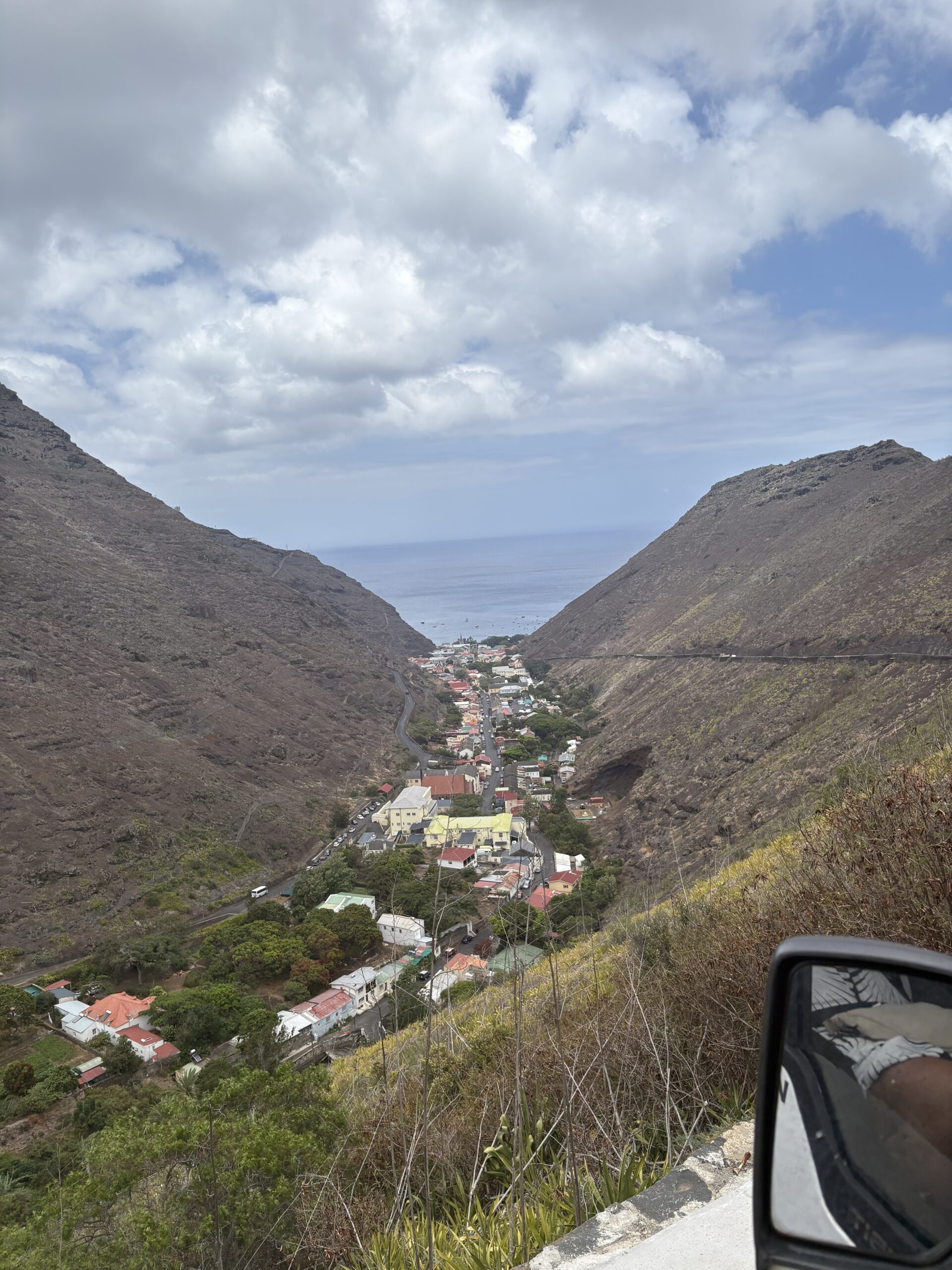
The drive down from the airport to Jamestown was different to anything I had expected, read about or indeed remembered. It’s always like that, though, isn’t it? You can read as much as you like about a place, but nothing can ever compare to actually being there, taking in the sights with your very own eyes, breathing in the air, feeling it, making conversation with the local taxi driver taking me to the only hotel on the island, and in the case of St Helena, taking in the vast expanse of such a small island.
The driver, Craig, took me from the airport on the only road that led to Jamestown, opened in 2017, built by a South African engineering company and financed by the British government. The wide variety of landscapes we went through, in only thirty minutes was vast, from arid, rocky, rugged mountainous terrain, through deep verdant valleys, along narrow mountain passes where vehicles of all sizes had to honk their horns to oncoming traffic and stop regularly in tiny bays for others to pass, to the town of Jamestown and the port.
We arrived in Jamestown. It was very sunny and warm, welcoming. There were vehicles everywhere, most of which looked like they had been inspected for road safety in a different century, and possibly were, vehicles of all descriptions and in all state of repair, parked neatly and tidily in the middle of the Main Street. There is only one Main Street, with its few shops on either side, a single bank, The Bank of St Helena, which issues its own notes and coins, although British pounds are also accepted, a few market stores, the Catholic Church, a prison, a hotel, The Mantis St Helena, where I was staying, the castle, where the governor works, Anne’s place, the local hangout for yachties, the museum, and of course, the bottom of Jacob’s ladder.
My memories all came flooding back.
Dates: I was in St Helena in January 2026.
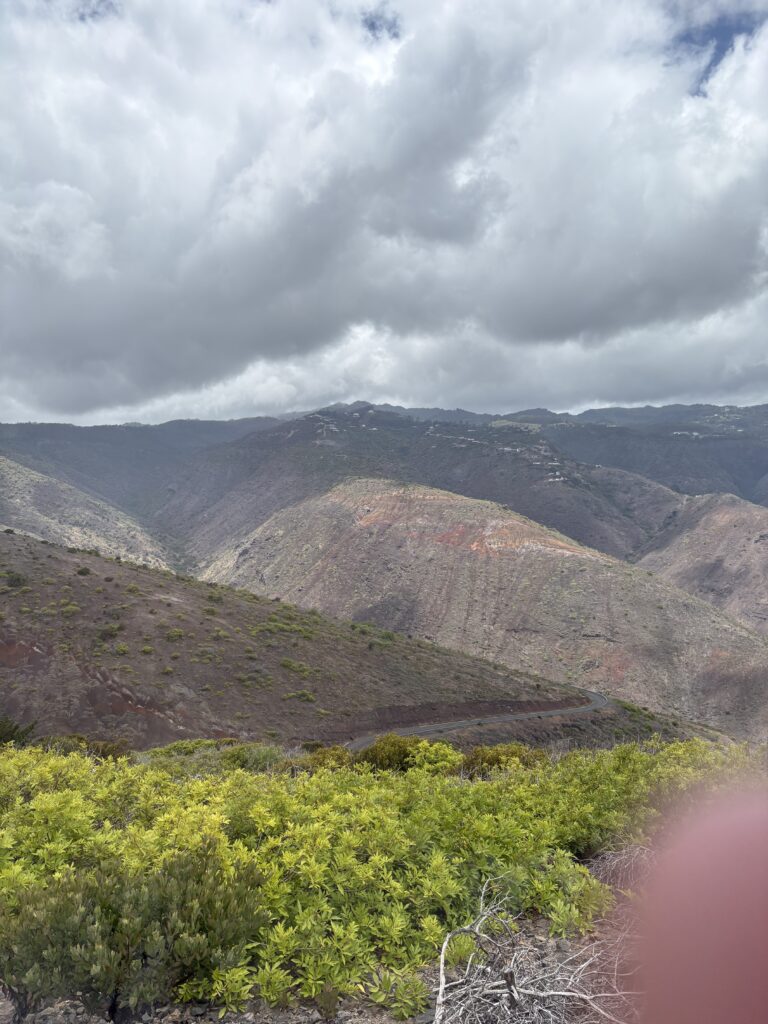
The rugged hills leading from the airport to Jamestown 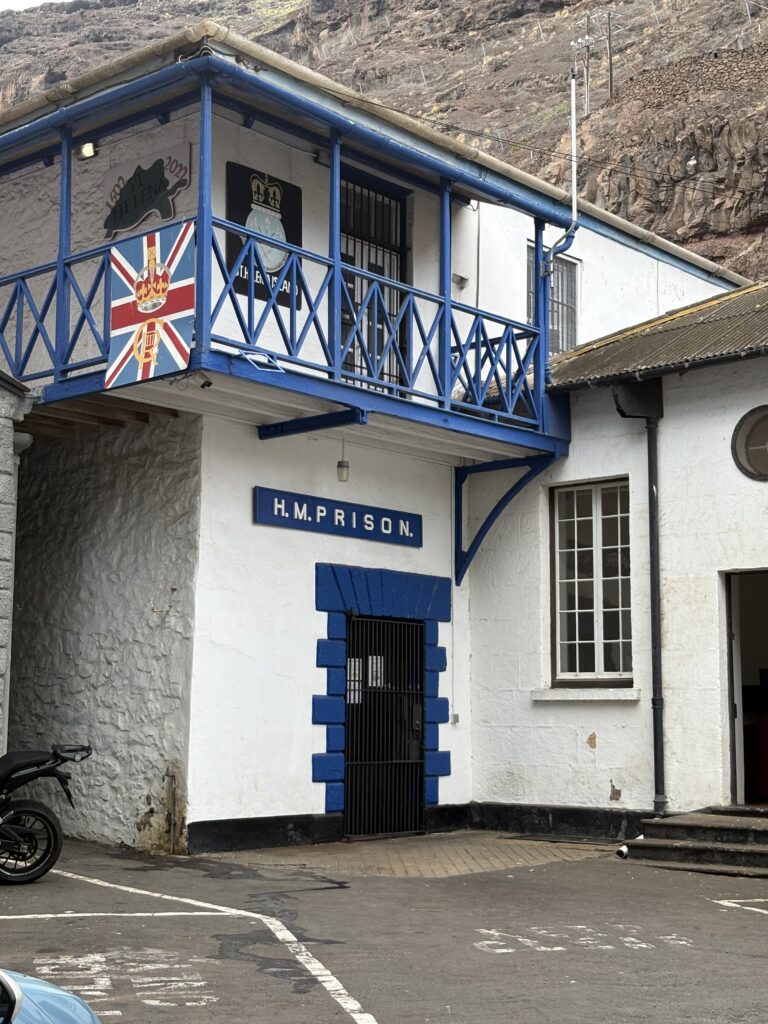
HM Prison in Jamestwon 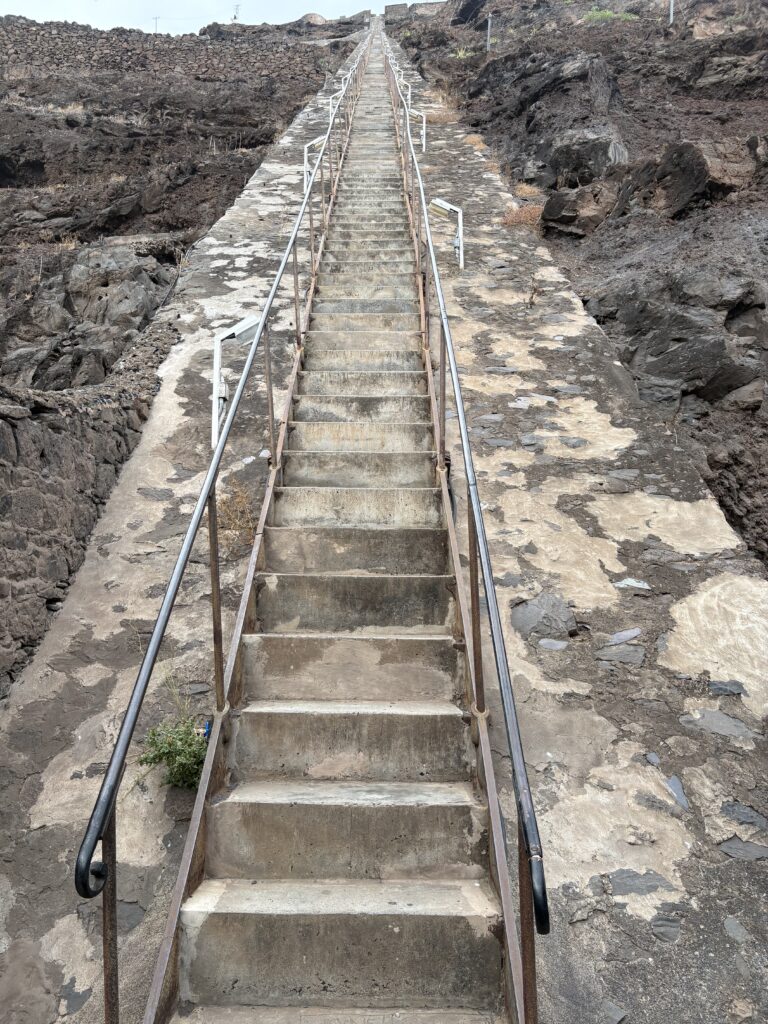
View up the ladder 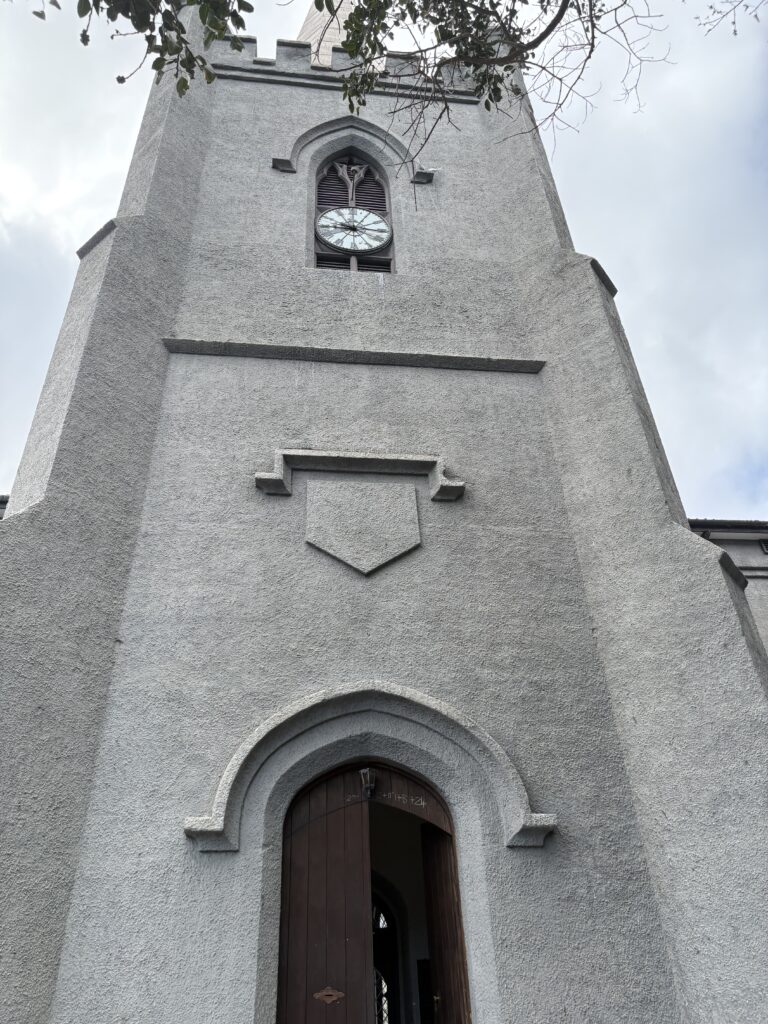
The Catholic Church 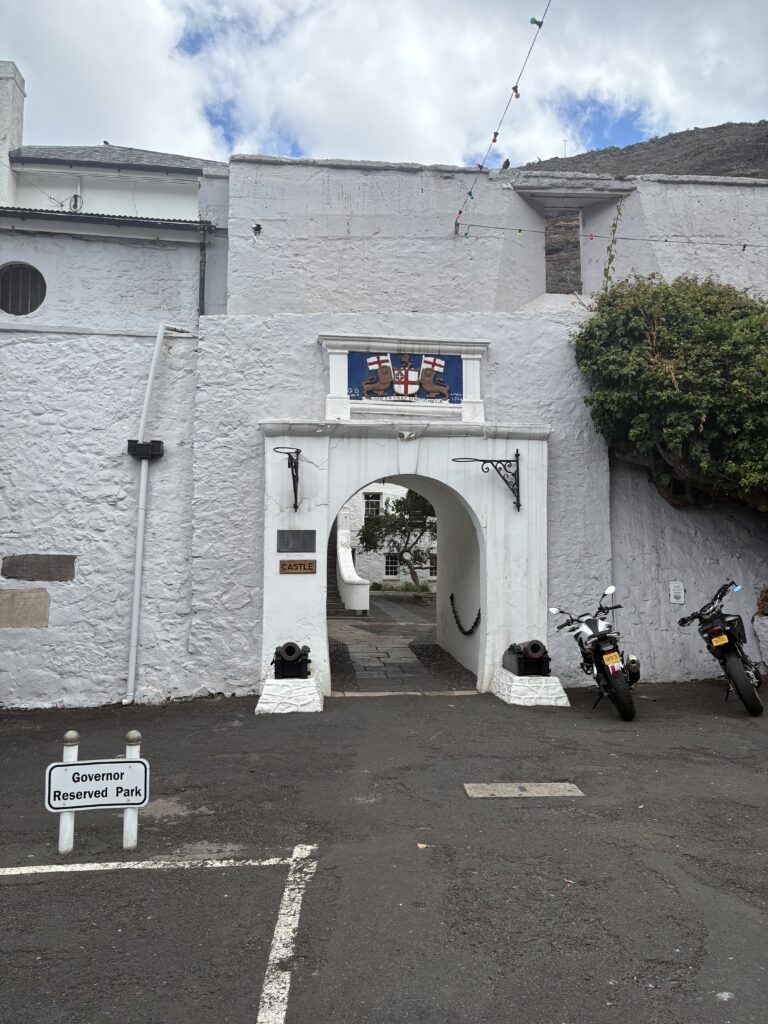
The governors office es at the castle 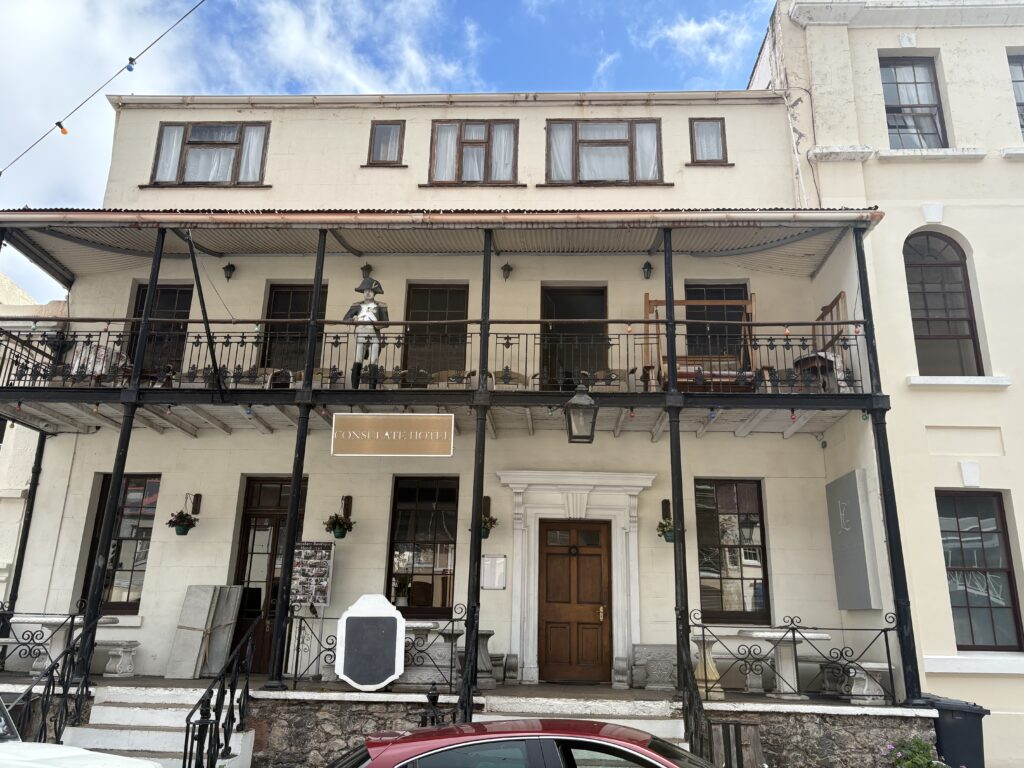
Very old hotel, closed down now 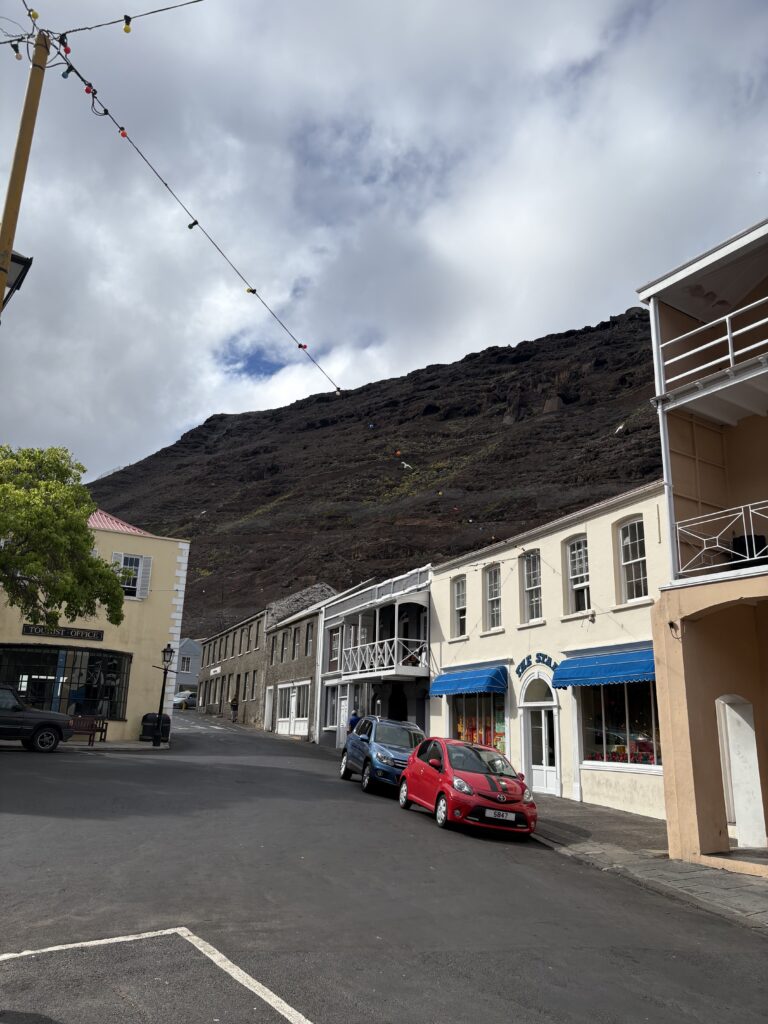
Images of Jamestown 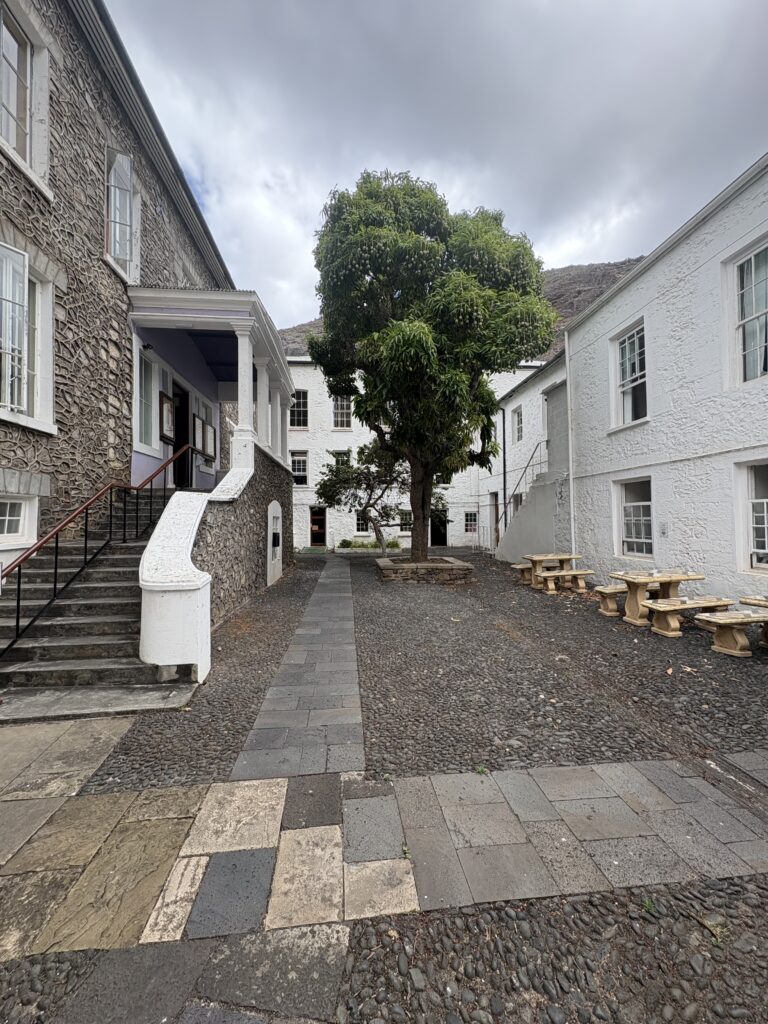
Images of Jamestown 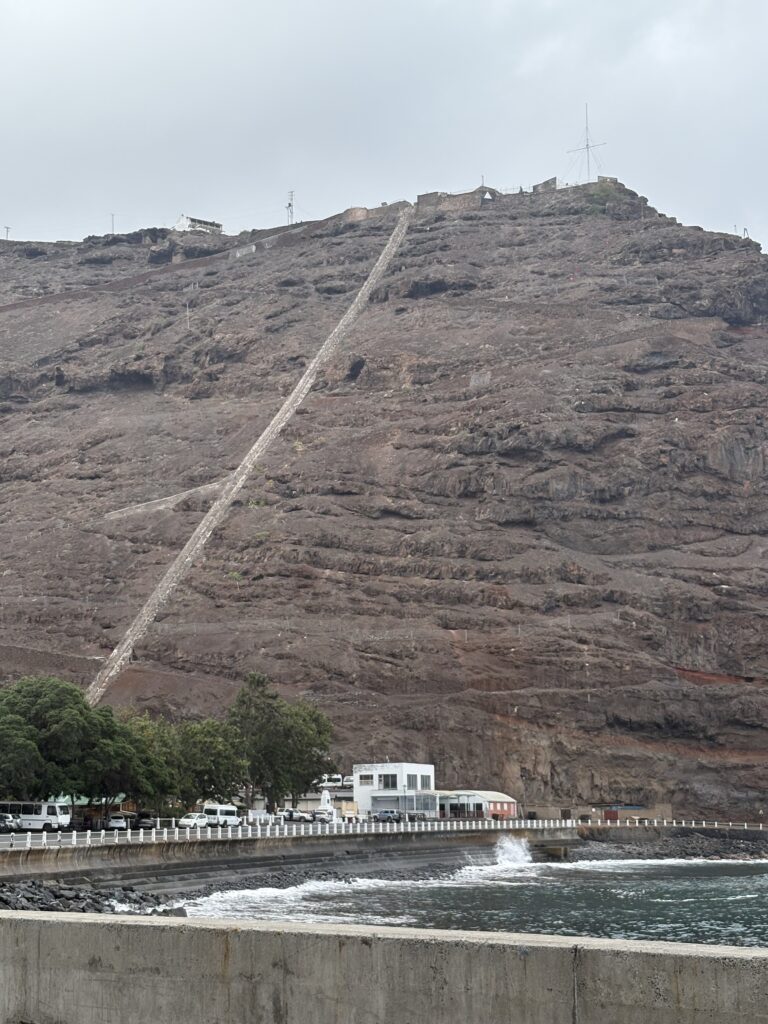
The ladder -
South Africa, Leaving Cape Town in 1982
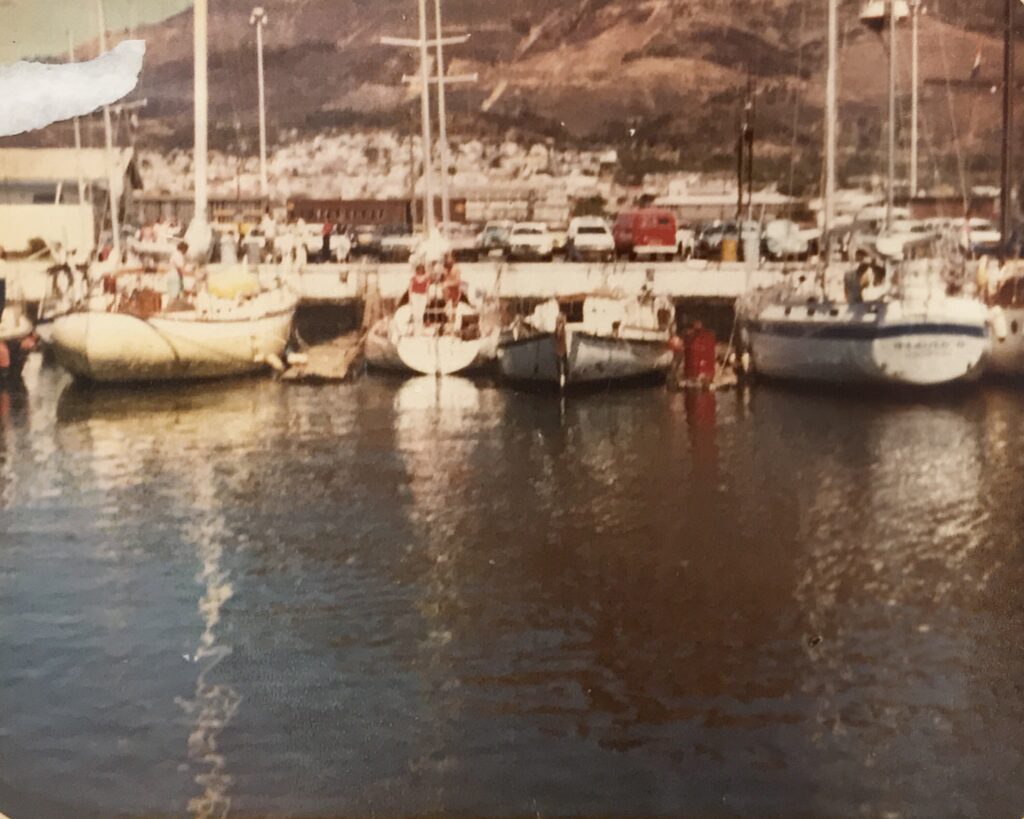
We departed the Royal Yacht Club in Cape Town in February 1982. None of us are entirely sure of the exact date; I have as yet to locate Scally’s logbook amongst my father’s stuff at the farm. We had stocked up on provisions, Scally was all ready and prepared, and were headed off on what was for me, my first long sailing trip on Scally. (My father, mother and oldest of my three younger brothers, who was fourteen at the time, had sailed Scally alone from Durban to Cape Town in January).
None of us knew what was in store of us on the south Atlantic, on what was expected to be a fourteen-day journey to St Helena. Well, maybe my father did, but he didn’t share much with us. Not long out at sea, we all got to experience the unpredictability of the ocean, its unwelcome and highly changeable weather patterns, dark grey and threatening skies above, gales and high winds, heavy rain, stormy and violent seas, and for me, severe sea-sickness.
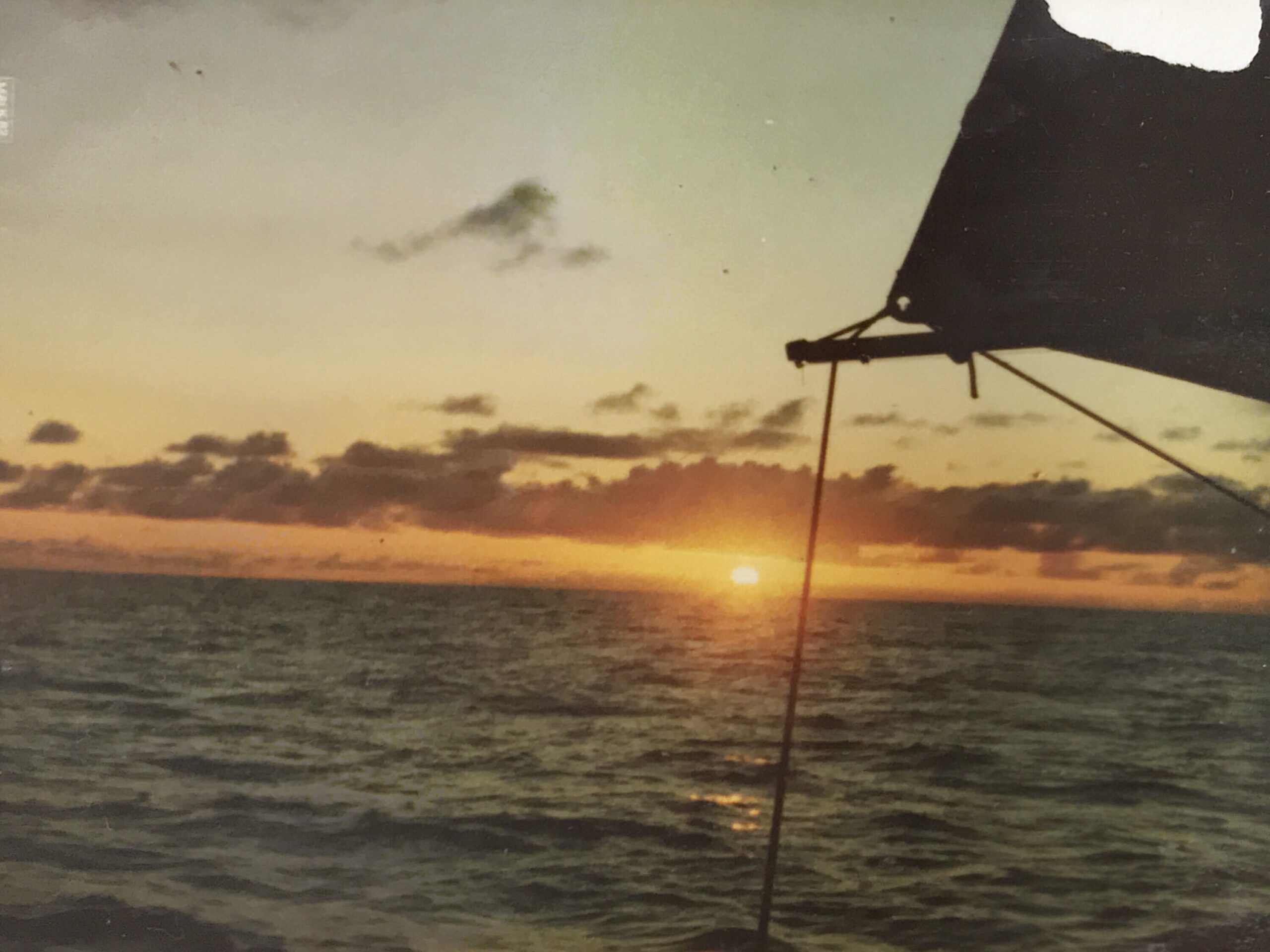
After about ten days of this, the weather finally calmed and cleared, the sun came out, literally and figuratively, and we set about getting ready to sight the island, taking turns sitting on the stanchions on the bow to see who would spot the island first.
After fourteen days, she was in sight, and we anchored, safely, in the bay at Jamestown. Scally, and my father, had brought us safely to our first port of call.
Dates: I left Cape Town in early January 2026.
Departing Cape Town 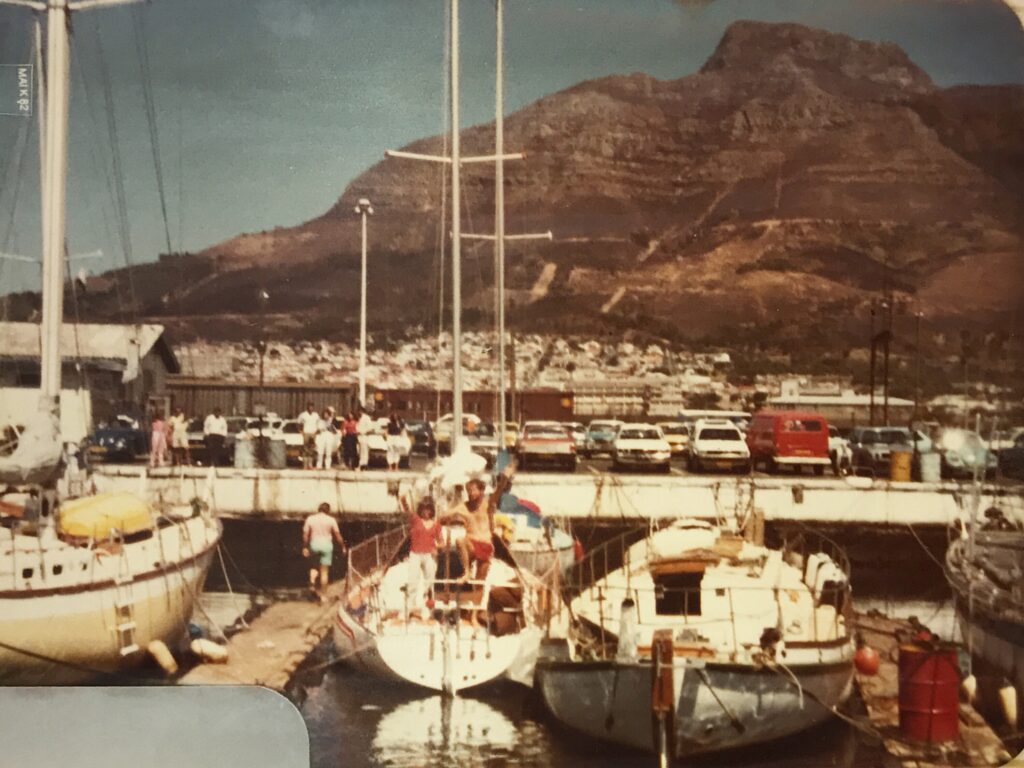
Yachties waving us off 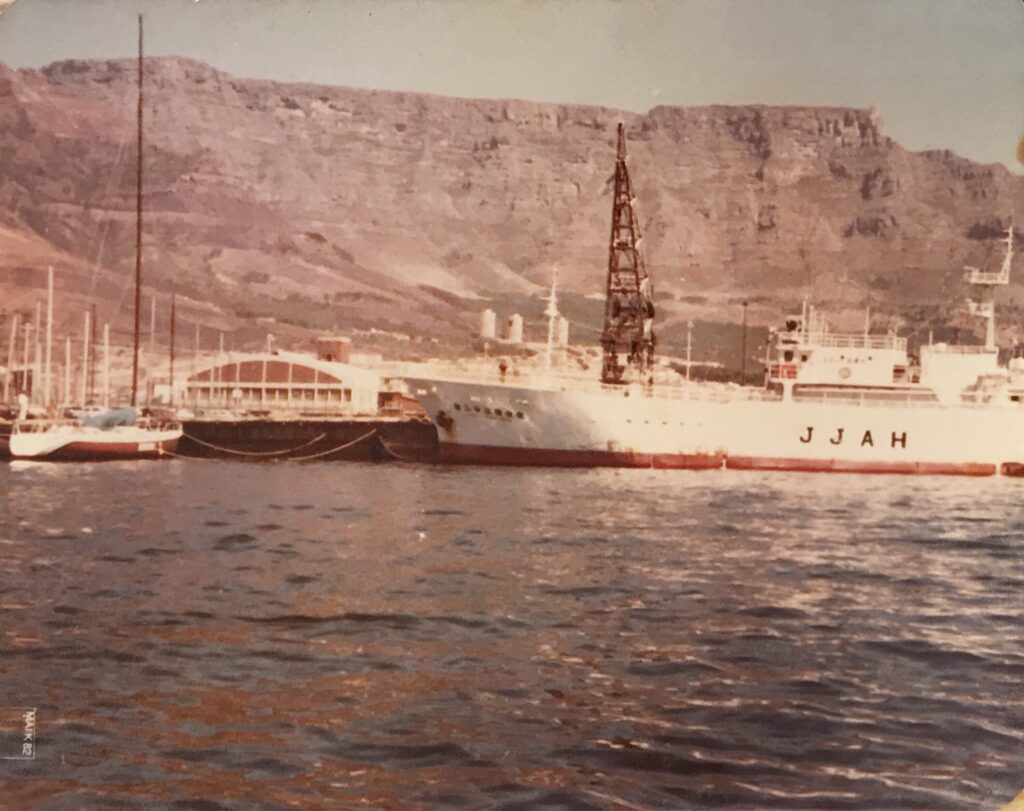
Leaving Cape Town 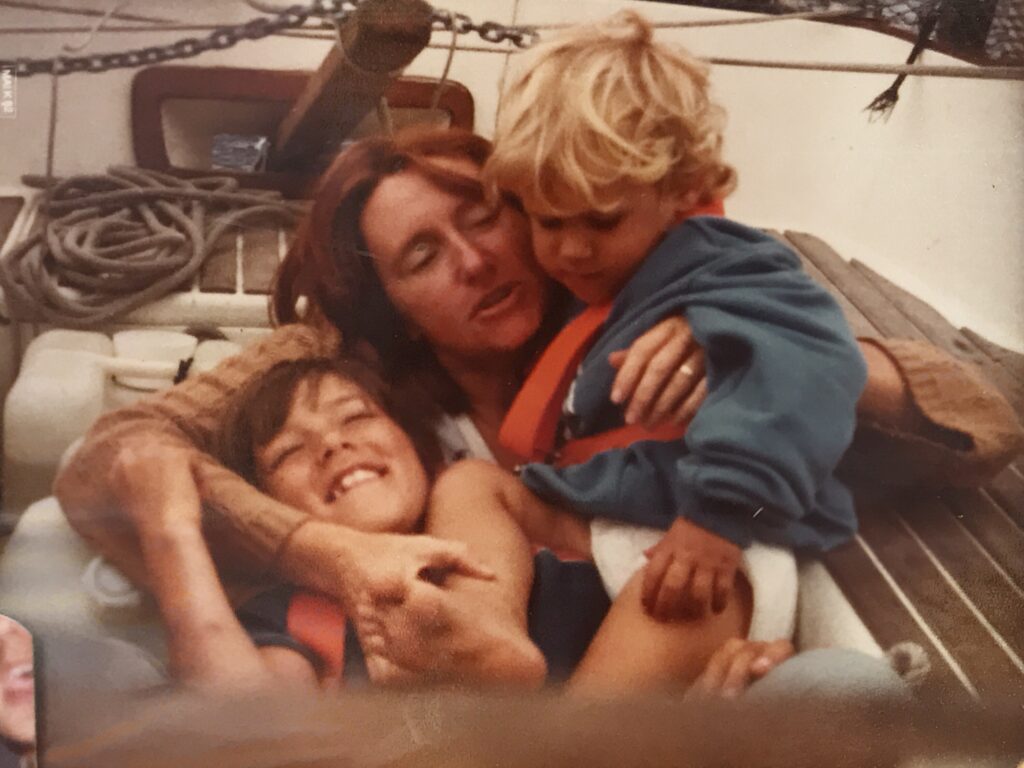
My mother and two younger brothers in the cockpit 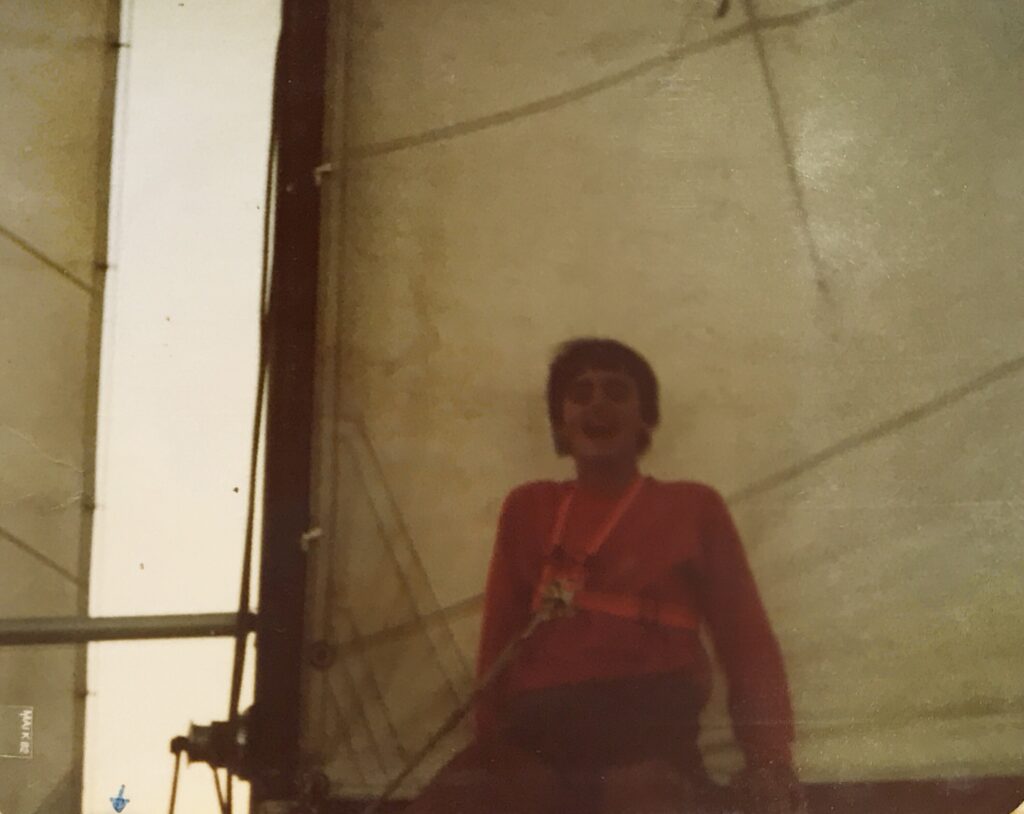
The oldest of my brothers 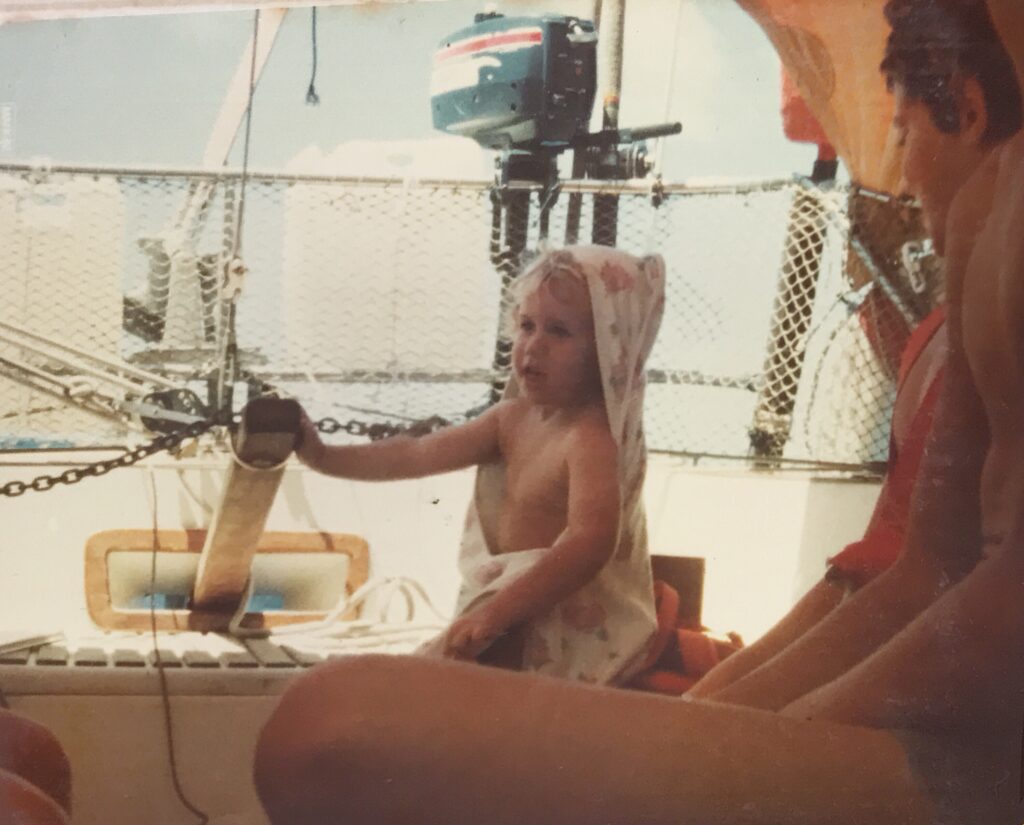
Docked in Jamestown, my youngest brother at the helm 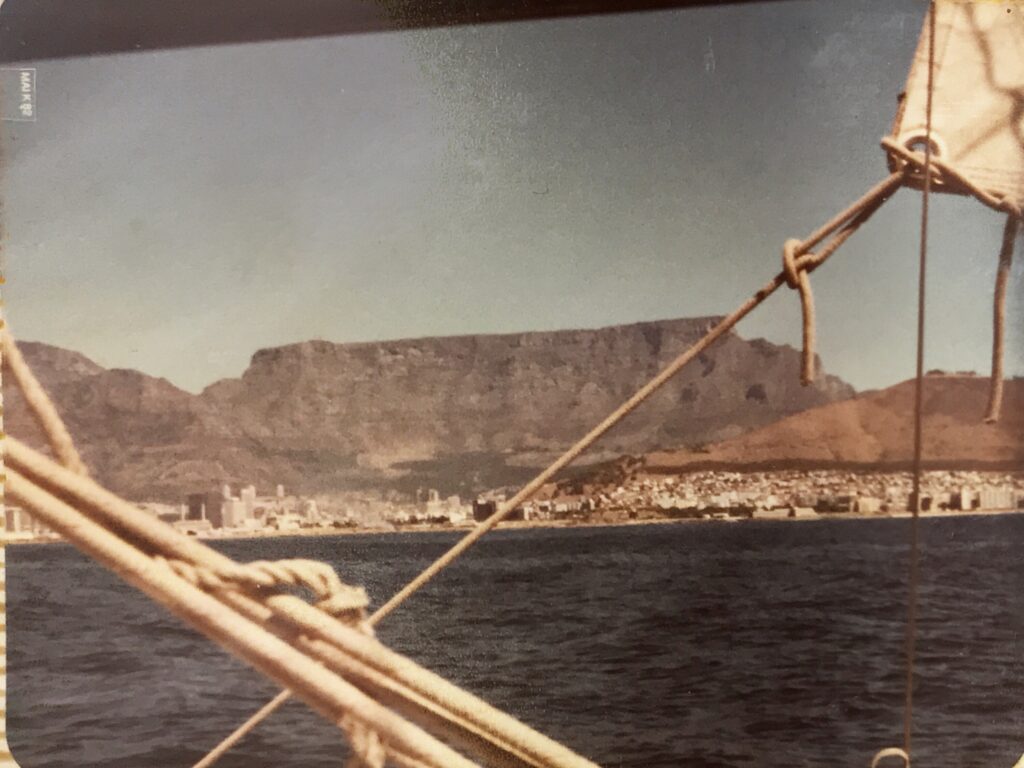
Tabel Mountain Retreating -
South Atlantic Ocean: Flying to St Helena
In 1982, we sailed from Cape Town to St Helena Island. St Helena is the furthest inhabited island from a continent anywhere, making it one of the remotest inhabited islands on the planet. It’s located 12’850 kms from Cape Town, or approximately 1’700 nautical miles. Our trip from Cape Town to St Helena Island, in 1982, on Scally, took us approximately thirteen days, which is an average speed of 130 knots per day, which is good sailing for a 31-footer. This trip, via Airlink from Cape Town, via Walvis Bay, took approximately five hours.
St Helena is a volcanic island, with extremely rugged terrain, dramatic cliffs, steep valleys, variety of microclimates, and a very rich marine life. It was discovered, accidentally, by the Portuguese discoverer, João de Nova in 1502, on his return voyage to Portugal from India.
My flight from Cape Town would fly northwards, along the coast of Africa in the direction of Windhoek, where we would have landed, if weather conditions in the Atlantic required refueling in there. “Weather conditions are favourable, and so we will head out in the direction of St Helena, sit back folks,” announced the captain, and soon headed west heading out across the vast south Atlantic Ocean. I was extremely excited and apprehensive at the same time. It was a rather small plane, not completely full. Some of its passengers knew the route, and were family returning to the island. Others were tourists, like myself, coming for the first, or in my case, second time.
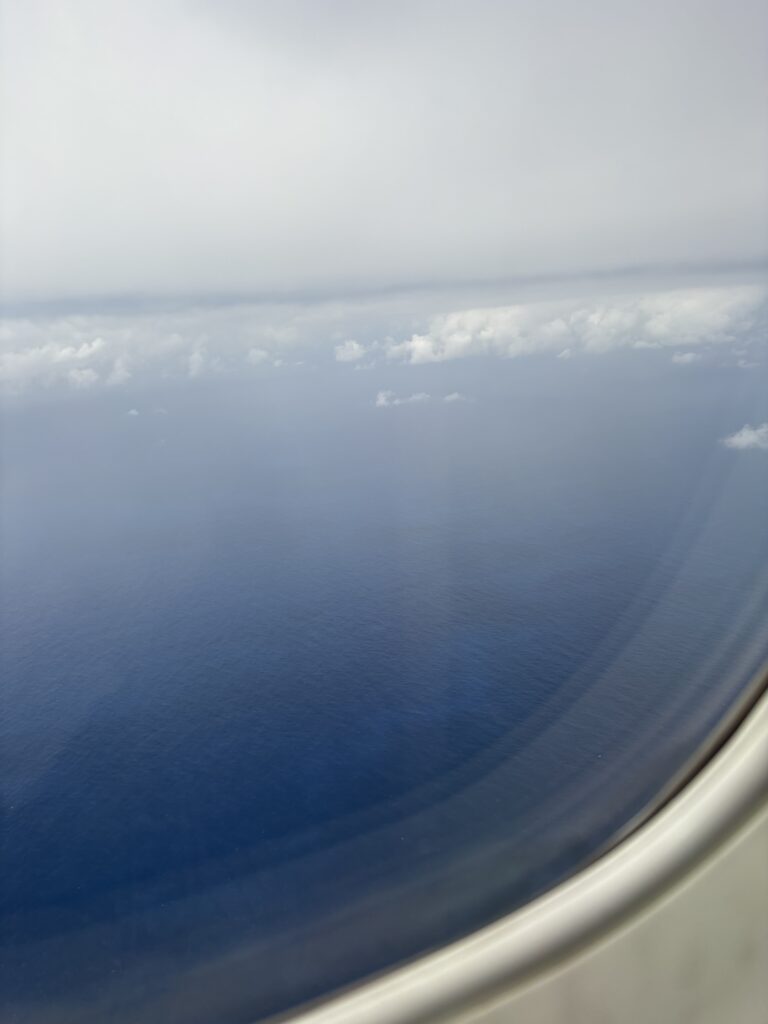
I kept looking out of my window, down to the ocean below, which looked utterly calm and peaceful from such a height, and imagined Scally sailing on these waters, taking us on our fourteen-day adventure across seas to this very same island so many years ago.
Dates: I flew to St Helena in January 2026.
The South Atlantic Ocean seen from the skies 
Different shades of blue in the south Atlantic 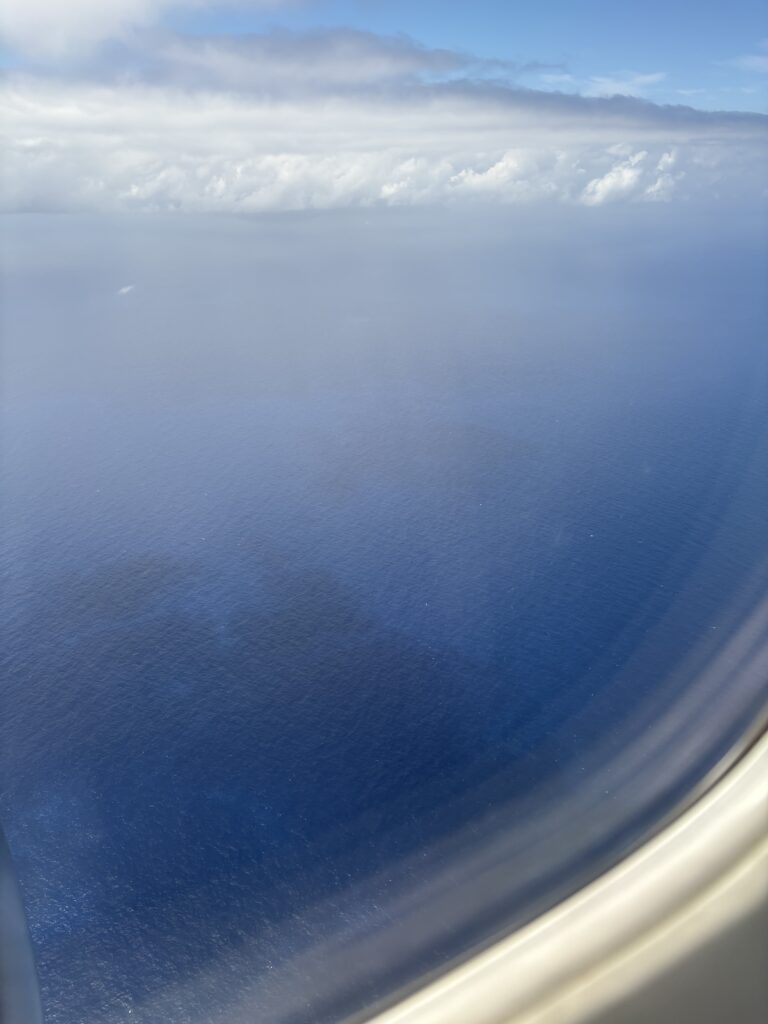
More shades of blue in the mighty Atlantic 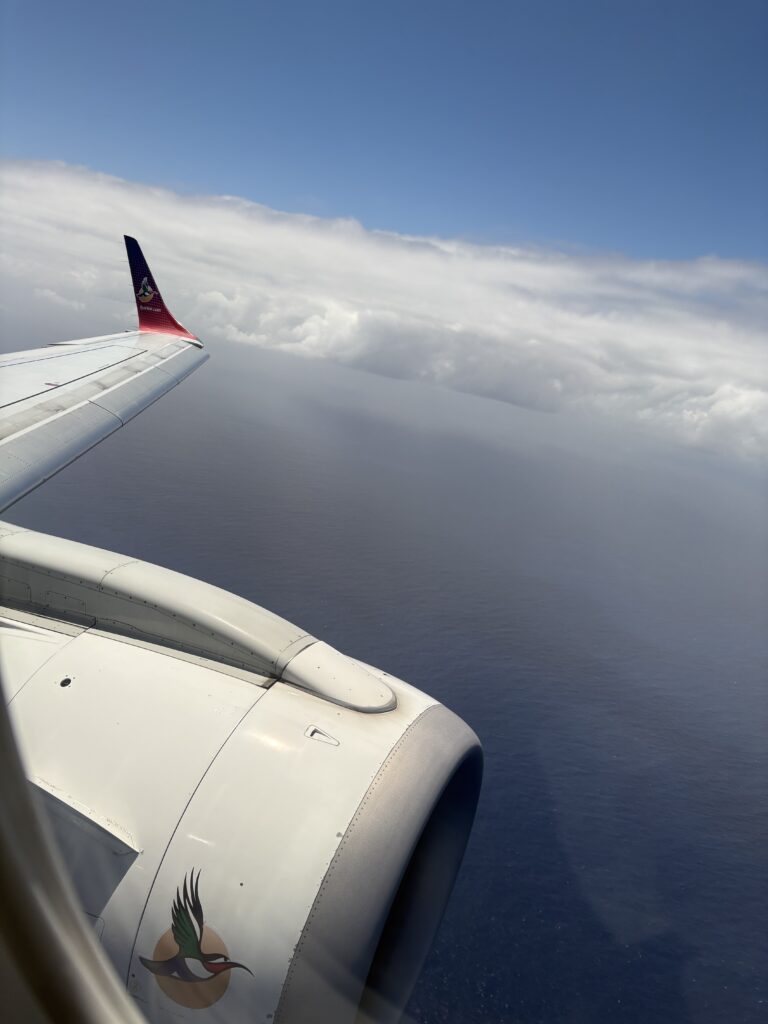
Flying above the south Atlantic 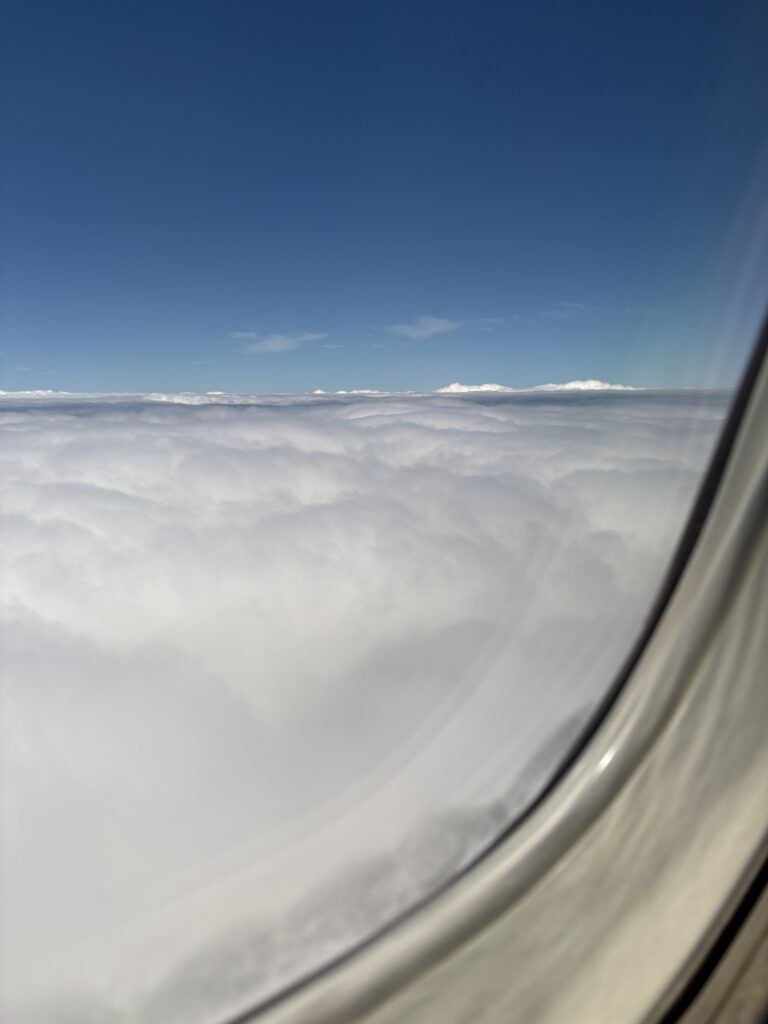
Above the clouds over the south Atlantic 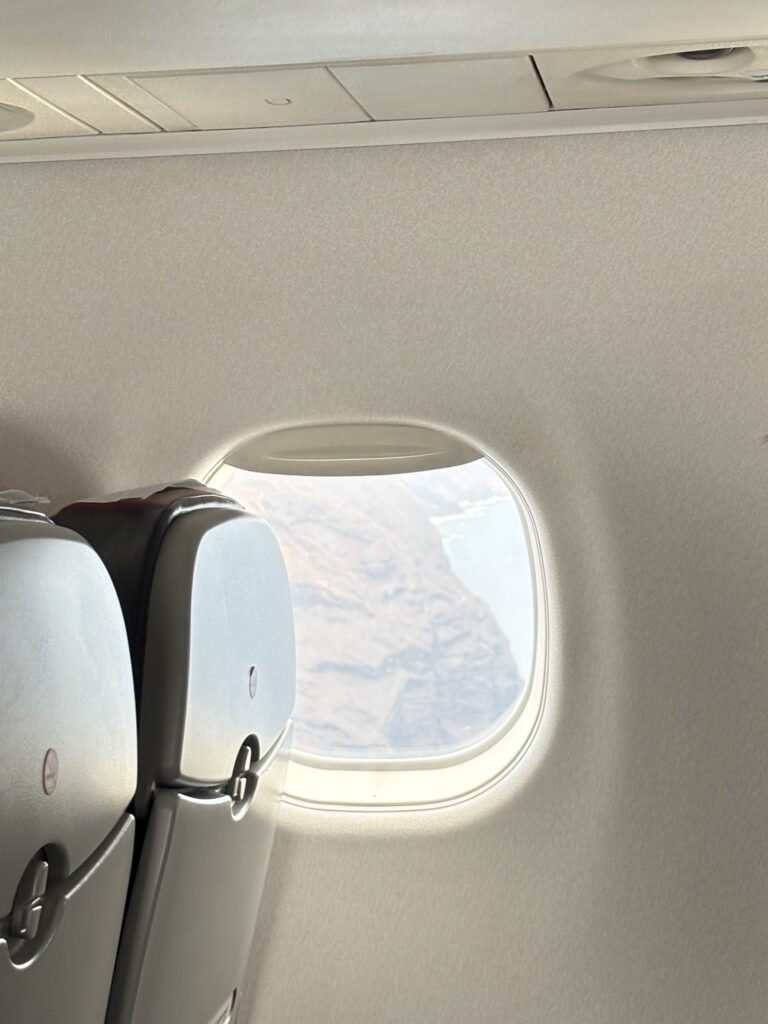
The first glimpse of the island 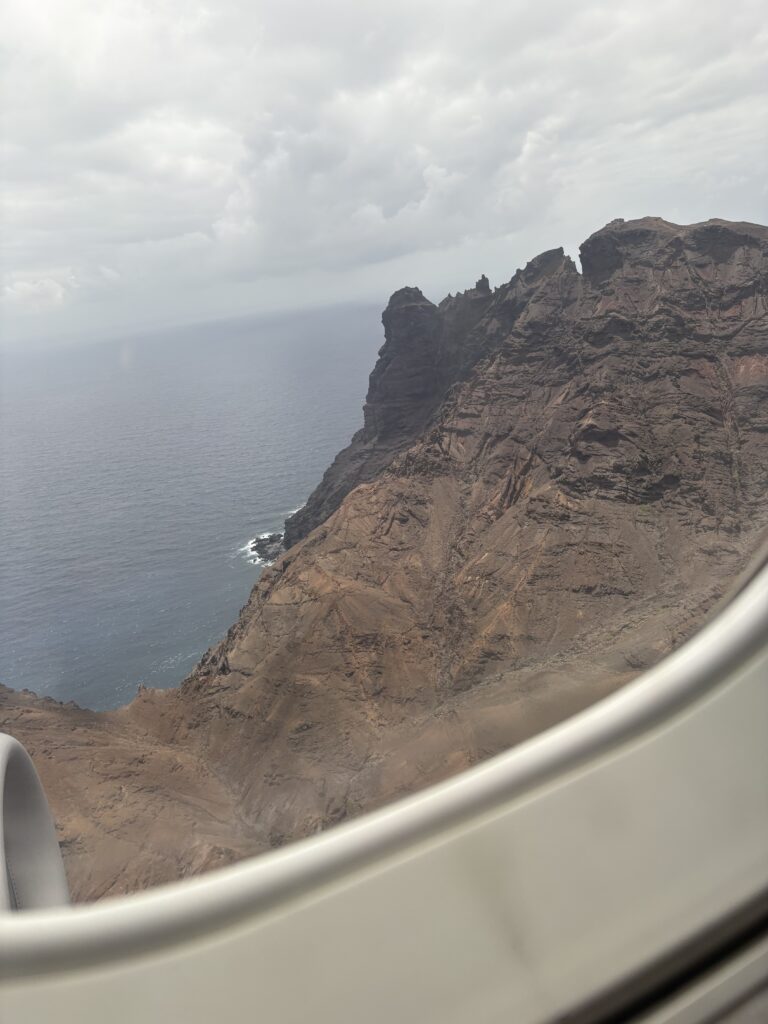
The rocky crags of St Helena 
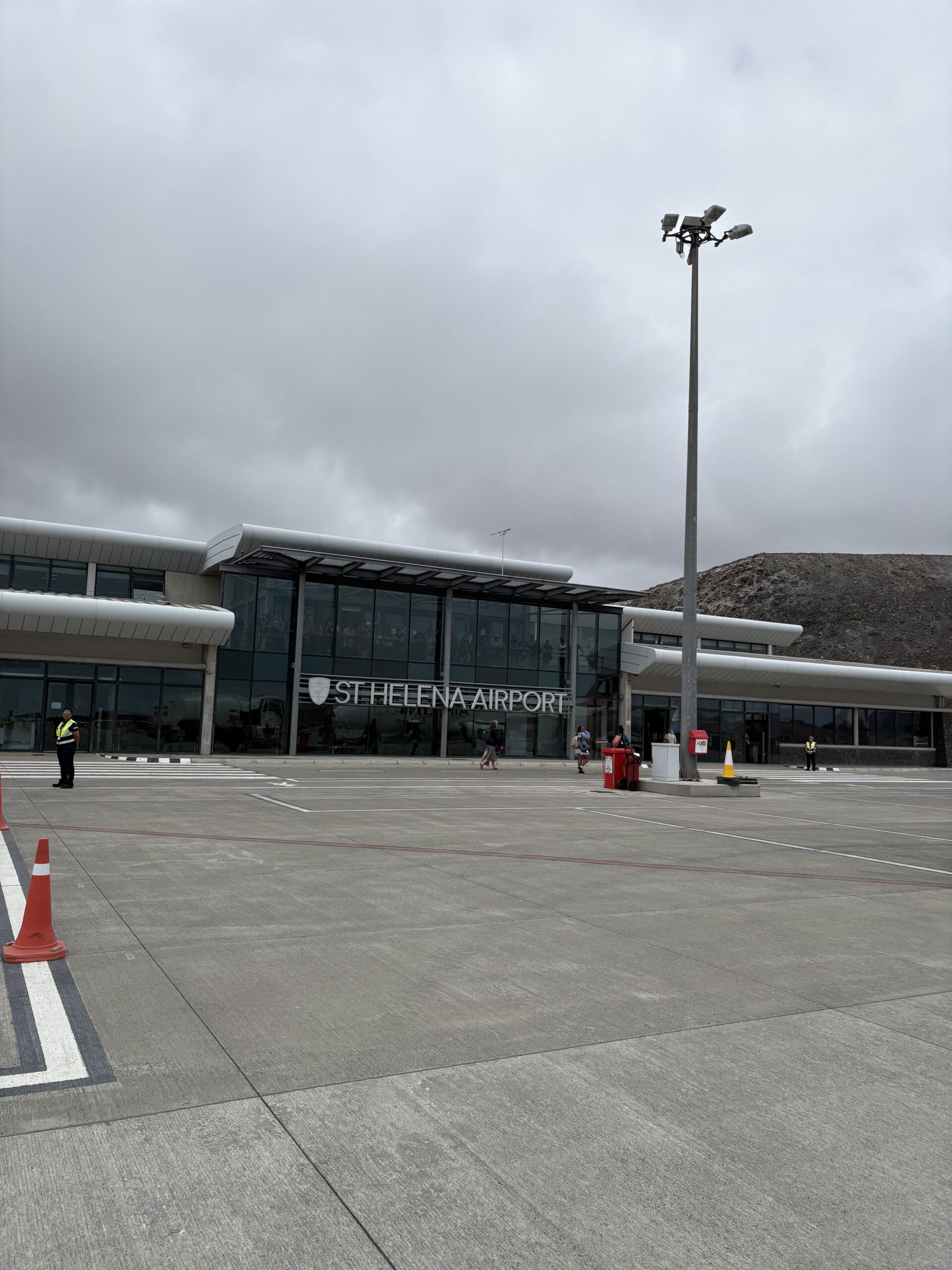
Landing on St Helena 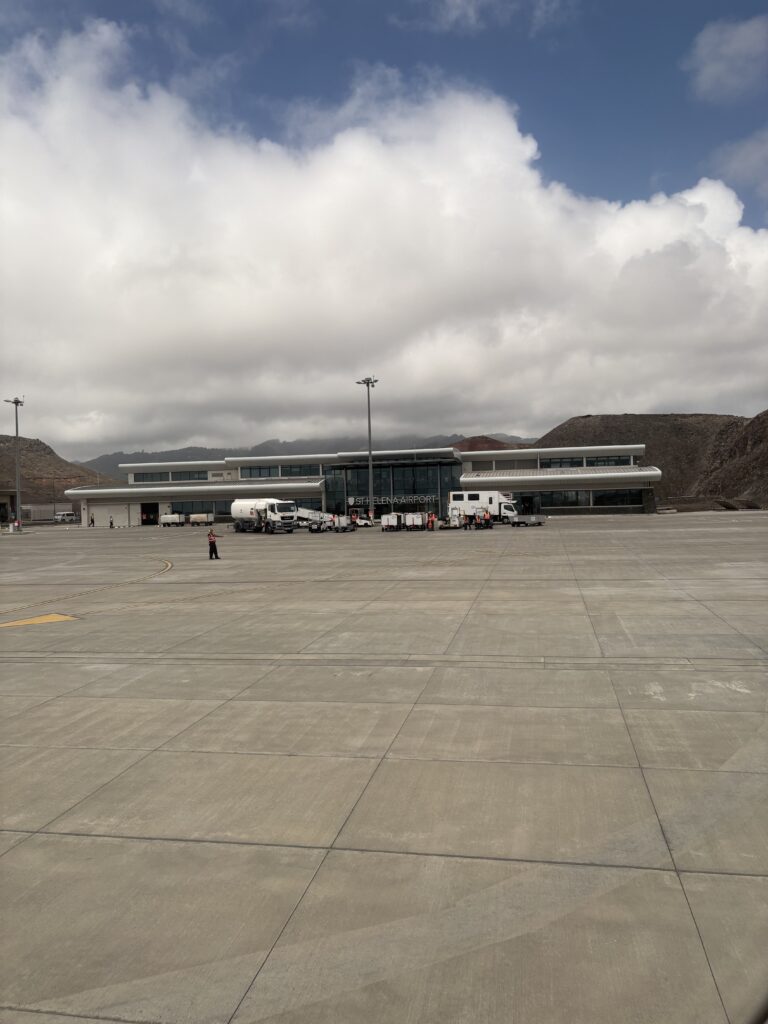
The airport at St Helena 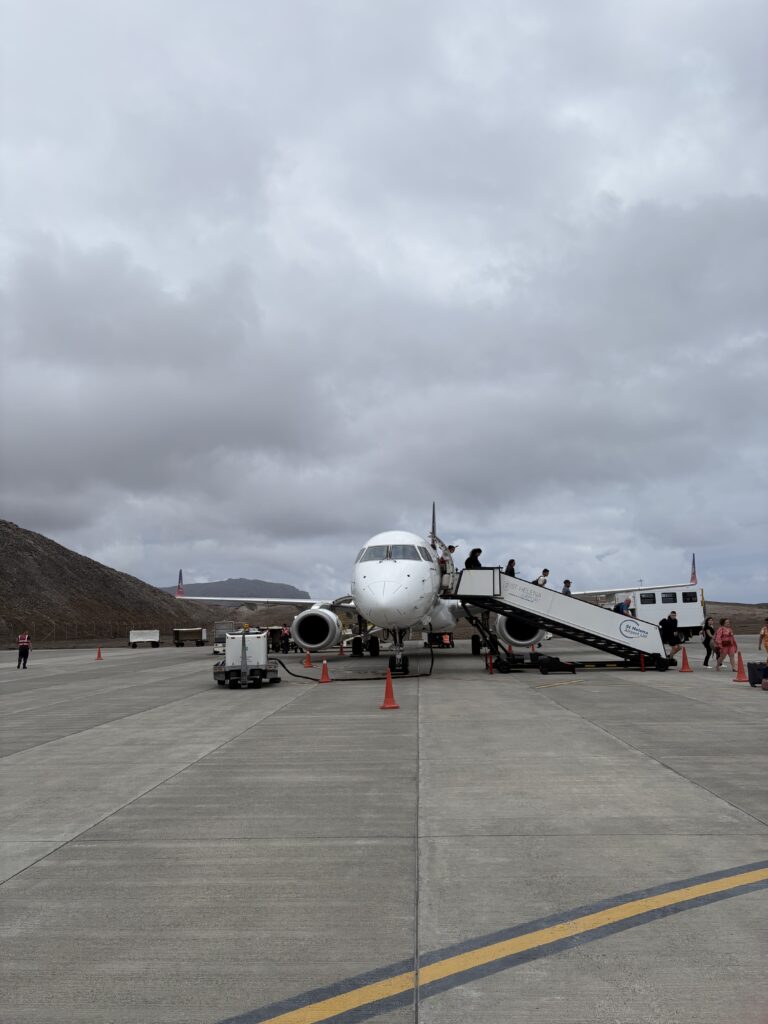
The plane that brought us to St Helena from Cape Town 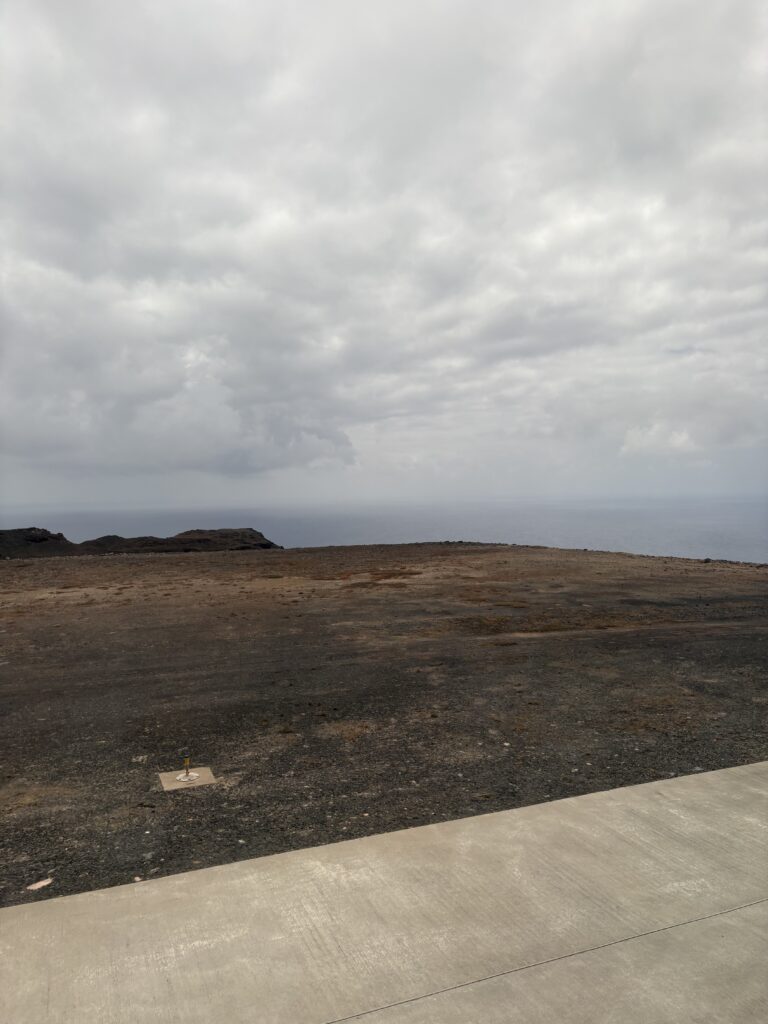
The end of the runway